


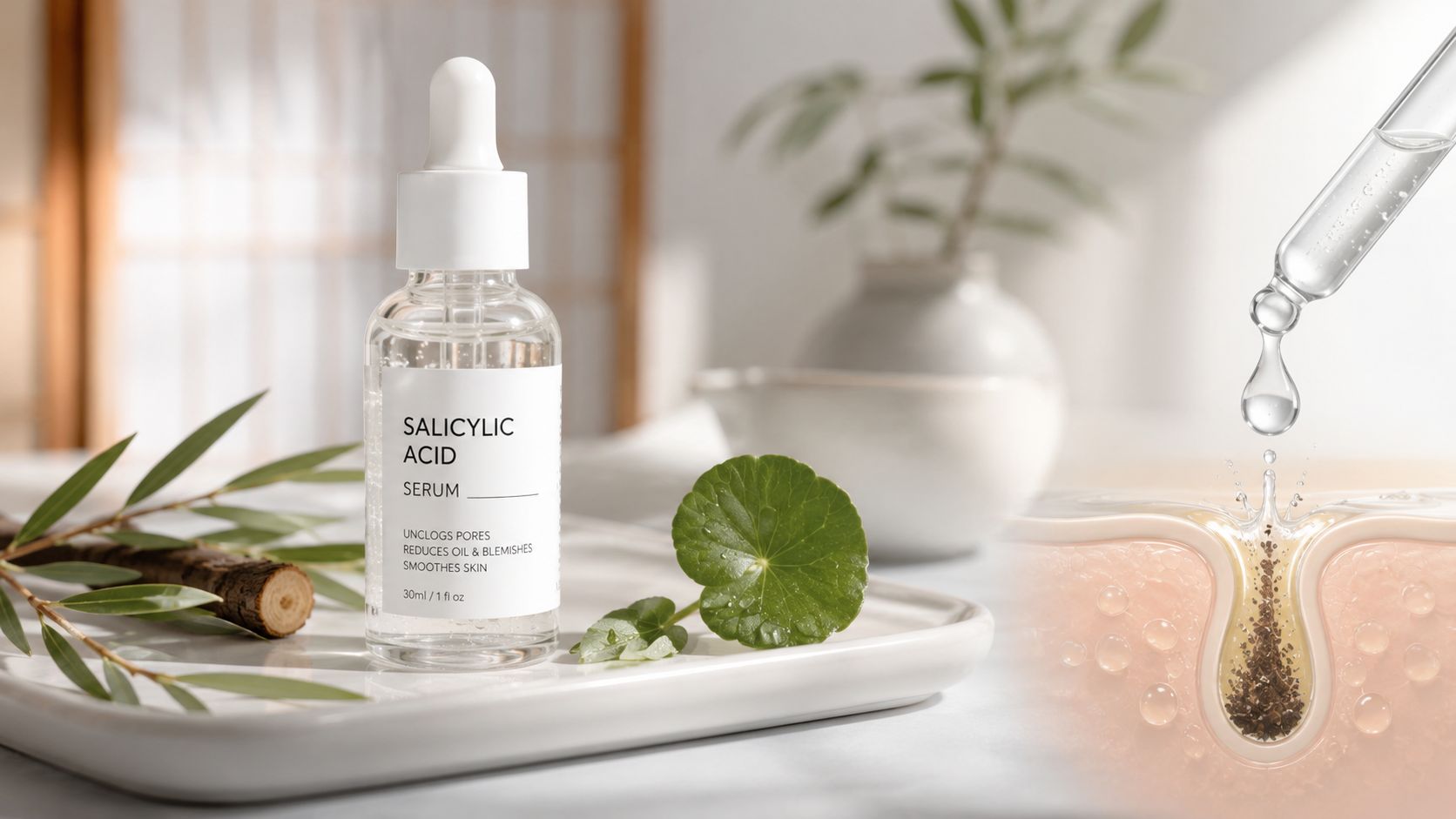
Ever stared at the same stubborn bump and wondered whether salicylic acid is the missing piece, or just another bottle that'll sit on the shelf? The confusion is understandable, especially when acne care blends chemistry, skincare marketing, and a lot of half-truths. If you're shopping from Japan or comparing Japanese skincare labels, it helps to know what this ingredient does before you buy it.
The short version is simple. Salicylic acid acne care is most useful when clogged pores, blackheads, whiteheads, and mild inflammatory breakouts are part of the picture. It's less of a standalone fix for deep hormonal acne, and more of a smart tool inside a routine that protects the skin barrier. For readers who want a structured skincare path, this guide pairs the science with practical product choices, including a useful acne routine framework in this Japanese skincare acne regimen guide and a dermatologist-style overview of acne treatment in Annapolis for broader context.
Is Salicylic Acid the Missing Piece in Your Acne Routine
Salicylic acid typically encounters people at one of three moments. They've just been told to “try a BHA,” they've used a cleanser that didn't do enough, or they're looking at Japanese labels and trying to decode why this ingredient keeps showing up in acne products. The key question isn't whether salicylic acid is famous. It's whether it matches the kind of acne sitting on your face right now.
Salicylic acid acne care makes the most sense when your skin is congested, oily, or prone to small clogs that keep coming back. It's a stronger fit for blackheads and whiteheads than for deep, tender cysts. For those situations, a different strategy is usually needed, even if salicylic acid still plays a supporting role.
There's also a practical reason this ingredient gets so much attention in Japanese skincare. Many Japanese pharmacy and beauty-counter formulas are built around consistency, comfort, and texture, not just actives. That matters because the most effective product is the one you can keep using without wrecking your barrier.
If you want a broader treatment framework, a dermatology visit may be the right next step, especially when acne is persistent or painful. For people who want to understand where salicylic acid fits before escalating, the best approach is to learn the chemistry, then match the formula to the skin concern.
Practical rule: if the main problem is congestion, salicylic acid is worth considering. If the main problem is deep inflammation, it may be only one part of the answer.
What Salicylic Acid Is and Why It Behaves Differently

Salicylic acid is a beta-hydroxy acid, or BHA. That simple label explains a lot. BHAs behave differently from alpha-hydroxy acids like glycolic or lactic acid because salicylic acid is oil-soluble. It can move into sebum-filled pores instead of staying mostly on the skin's surface, which is why it is often chosen for clogged, oily, acne-prone skin.
Why oil solubility matters
A water-based rinse can clear the outer surface, but it will not move through grease very well. Salicylic acid works like a degreaser that can travel into that oily space, loosen the debris, and help keep the pore from clogging again.
That oil-friendly behavior also helps explain why the ingredient became such a staple in acne care. Its history goes back more than 2,000 years, with willow bark use described by Pliny in the first century AD, then later chemical isolation of salicin in the late 1820s and recognition of salicylic acid's ability to soften and exfoliate the stratum corneum in the 1860s historical review.
Why it is not the same as a scrub
Scrubs rely on friction. Salicylic acid relies on chemistry. Instead of scraping the skin, it helps dissolve the compacted material inside the pore and supports turnover in a more controlled way. Many Japanese BHA formulas are built around that idea, so the finish feels polished and low-irritation rather than harsh or peeling.
For a broader comparison with surface acids, this alpha hydroxy acid guide shows why BHAs are usually chosen for pore congestion rather than dullness alone.
Salicylic Acid Acne: The Mechanism Behind It

The simplest explanation is that salicylic acid clears clogged pores. That is true, but it leaves out the part that matters most for understanding why the ingredient helps acne-prone skin. Acne starts when dead skin cells and sebum collect inside the follicle and form a plug. That plug can stay hidden as a microcomedone, then develop into a blackhead, a whitehead, or an inflamed bump. Salicylic acid helps loosen that buildup so the pore does not keep filling in the same way.
It does more than exfoliate
A clinical review of four studies found that 0.5% and 2% salicylic acid solutions reduced primary acne lesions, and some comparative studies reported stronger total lesion reduction than benzoyl peroxide in certain settings review and trial data. A later clinical report on a 1.5% salicylic acid cream found improvement in 95% of patients after 4 weeks, with 20% complete clearing, 30% significant improvement, 15% moderate improvement, and 30% mild improvement, and no side effects in that study same clinical source.
A separate trial of 2% supramolecular salicylic acid in 31 acne patients reported 44.1% total lesion reduction by day 28, which was similar to the 45.6% reduction seen with a benzoyl peroxide and adapalene comparator same clinical source.
It may also calm the acne process itself
Newer mechanistic work adds another layer. In human sebocytes, salicylic acid downregulated the AMPK/SREBP-1 lipogenesis pathway and suppressed NF-κB signaling, which lowered sebocyte lipid production and inflammatory activity mechanistic study. In rabbit-ear lesions, treated skin also showed lower cytokines and fewer major pathogenic proteins around the acne lesions mechanistic study. In plain English, salicylic acid may help in two ways at once, it can reduce the material that blocks the pore and calm some of the inflammatory signals that keep acne active.
That is why the ingredient can help with blackheads, whiteheads, and some small red papules, not just rough texture. It also explains why it often feels different from a simple drying agent.
What this means in practice
A pore with acne behaves a bit like a drain with sticky residue. If you only scrub the outside, the blockage stays in place. Salicylic acid reaches into the oil-filled follicle, softens the compacted material, and may also reduce the oil-making and inflammatory signals that help the lesion persist.
For a routine that respects the barrier, the goal is not to pile on actives. It is to use the right format for the skin in front of you. A cleanser for sensitive skin can be a reasonable starting point if your skin reacts easily, because short contact can lower the chance of overdoing it while still letting the ingredient do some work. In Japanese skincare terms, that often means choosing a wash or a light lotion first, then watching how the skin responds before moving to stronger or longer-contact formulas.
**Key distinction:** comedolytic action clears the clog, anti-inflammatory action helps quiet the lesion. Salicylic acid can do both.
Choosing the Right Concentration and Formula
Salicylic acid looks simple on a label, but the actual product matters as much as the ingredient name. Concentration, vehicle, and whether the formula is leave-on or rinse-off all change how much the skin experiences. A low-concentration wash is not the same thing as a leave-on lotion, even if both say “salicylic acid.”
How to read the bottle
For acne-prone skin, 0.5% to 2% is the most relevant range in the clinical data we have. A low-strength product is often easier to tolerate if your barrier is already stressed, while a 2% formula is the familiar leave-on benchmark for mild comedonal acne. If the skin is sensitive, a cleanser or short-contact formula can deliver a gentler entry point.
Japanese skincare labels often organize these textures as lotion or kesho-sui, gel, cream, and wash. In practical terms, a lotion is usually the most fluid leave-on format, a gel feels lighter and more targeted, a cream adds more cushioning, and a wash gives the shortest contact time.
| Salicylic acid concentrations by skin profile | Best for | Typical vehicle | Notes |
|---|---|---|---|
| 0.5% to 1% | Sensitive skin, barrier-compromised routines, first-time users | Wash, lotion, lightweight gel | Good starting point when irritation is a concern |
| 1.5% | Mild acne with visible improvement goals | Cream, leave-on lotion | Supported by clinical improvement data study |
| 2% | Mild to moderate comedonal acne, recurring blackheads | Leave-on lotion, gel, pads, wash | Common evidence-backed strength review |
| Supramolecular or optimized formulas | More stubborn congestion, users who need a refined texture | Cream or specialty leave-on | Can deliver strong results with a different delivery system trial |
A good shopping rule is to match the format to your tolerance, not your impatience. If your skin is already dry, a strong leave-on formula can backfire fast. For acne-prone users choosing cleansers, this sensitive-skin face cleanser guide is a useful companion.
How to Add Salicylic Acid to Your Routine Without Damaging Your Barrier
Start with dry skin after cleansing. That gives the ingredient a cleaner path into the follicle and reduces the chance of unnecessary stinging from damp-skin application. After that, the routine should shift toward hydration, not more exfoliation.
A simple layering order
Use salicylic acid after cleansing, then follow with a hydrating toner or essence, and finish with a moisturizer that supports the barrier. A hydrating layer helps keep the routine sustainable, especially if you're pairing acne care with Japanese skincare products known for lighter textures. If you already use a hydrating step, this hyaluronic acid serum guide gives a good sense of how to support moisture without making the routine heavy.
Practical rule: if your skin feels tight, hot, or flaky, the routine is too aggressive, even if the product is a well-known acne ingredient.
How often to start
A sensible ramp-up is patch testing first, then applying the product every third night, then every other night if your skin stays calm. Some people can eventually move to nightly use, but there's no prize for forcing speed. The goal is consistency, not punishment.
Purging or breakout
Purging means clogged material is surfacing faster because cell turnover has sped up. It should stay in the same acne-prone zones and settle down over time. A true breakout or irritation reaction looks different, with spreading redness, itching, or worsening bumps in places that don't usually break out. That's the point where you back off or stop.
For skin-texture concerns that sit beyond topical care, some readers also ask about procedural options. A useful background resource is microneedling for pores in Ashburn, especially when pores and post-acne texture are part of the bigger picture.
Salicylic Acid Compared to Other Acne Actives
The right acne active depends on the kind of lesion in front of you. Salicylic acid is the cleanest fit for clogs and mild congestion. Other actives become more useful when inflammation, pigmentation, or maintenance are the bigger issue.
Where it fits in the hierarchy
Benzoyl peroxide is usually stronger for inflamed pimples because it targets the acne process differently. Topical retinoids are the maintenance heavyweights because they keep pores from clogging over time. Azelaic acid tends to be calmer and more gradual, which makes it useful when redness or discoloration matters.
The choice is less about which ingredient is “best” and more about which job you need done. A routine aimed at blackheads and oily buildup might start with salicylic acid. A routine aimed at red breakouts or long-term prevention may need something else added later.
| Active | Best acne type | Time to results | Irritation risk |
|---|---|---|---|
| Salicylic acid | Blackheads, whiteheads, mild comedonal acne | Gradual, with clinical changes seen over weeks | Mild to moderate, depending on formula |
| Benzoyl peroxide | Inflamed pimples and pustules | Often faster for visible inflammation | Moderate to higher |
| Topical retinoids | Maintenance, clogged pores, post-acne patterning | Slower, but foundational | Moderate to higher, especially at first |
| Azelaic acid | Redness-prone acne, discoloration, sensitive routines | Slower and steadier | Usually lower to moderate |
A helpful nuance is that salicylic acid doesn't have to be excluded just because you use another active. Many routines work better when salicylic acid handles congestion and a gentler hydrator cushions the skin around it. For readers comparing acne actives more broadly, this azelaic acid benefits guide is a good next read.
Common Myths and Misconceptions About Salicylic Acid
The biggest mistake is assuming stronger always means better. With salicylic acid, the evidence-backed range is already useful, and pushing higher usually increases dryness before it gives you proportionally better clearing. Acne care rewards restraint more often than escalation.
Myth one, higher percentage means better results
That mindset causes a lot of irritation. The skin barrier doesn't care that a bottle sounds powerful, it only reacts to what it can tolerate day after day. If you need a stronger strategy, that usually means a different active, a different vehicle, or better routine support, not just a bigger number.
Myth two, purging means it's working
Purging gets blamed for everything. A real purge should stay in typical breakout zones and quiet down over several weeks, not spread into itchy, angry, or unfamiliar bumps. If the skin is clearly inflamed, the product isn't “doing its job,” it may be too harsh for you.
Myth three, salicylic acid fixes hormonal acne on its own
It doesn't. Hormonal acne often needs a broader plan, sometimes including a retinoid and sometimes a dermatologist's input. Salicylic acid can still help with the clogged-pore component, but it's rarely the whole answer for deep chin or jawline flares.
The right question isn't whether salicylic acid is strong enough. It's whether it matches your acne type and your barrier's tolerance.
A 2025 clinical study cited in the literature also points to newer salicylic-acid gel formulations improving lesions, sebum, and barrier metrics, which is another reminder that formulation matters as much as the acid itself clinical review discussion. That nuance matters because the same ingredient can feel gentle in one product and irritating in another.
A Practical Starter Plan and Where to Find It in Japanese Skincare

A good starter plan respects the barrier first. Week one is for patch testing and keeping the rest of the routine gentle. Week two can introduce salicylic acid every third night if the skin stays calm, week three can move to every other night, and week four is when you decide whether to maintain, slow down, or change formula.
A simple routine frame
Use a mild cleanser, then salicylic acid, then a hydrating toner or essence, then a moisturizer, then daily sunscreen. If you're acne-prone and also reactive, the safest routine is the one that stays boring enough to repeat. Salicylic acid doesn't need a crowded supporting cast.
Japanese formulas often make this easier because many are designed with comfortable textures and barrier-friendly co-ingredients. That can include soothing additions such as allantoin, dipotassium glycyrrhizinate, or centella-style calming ingredients, depending on the brand and formula. In a shopping context, that's where a curated retailer like Buy Me Japan can be practical, since you can compare Japanese-acne cleanser, lotion, gel, and cream formats in one place without guessing which texture suits your skin.
What to look for first
Start with a 1% BHA lotion, a 2% gel, or a wash if your skin is sensitive. If your skin is oily and resilient, a leave-on formula may be the better fit. If your skin gets dry easily, a cleanser or shorter-contact product is usually the smarter first step.
The bigger idea behind Japanese skincare is consistency over aggression. That mindset fits salicylic acid well because the ingredient works best when it's sustainable, not when it burns your face into submission. Choose the formula you can use steadily, then let the routine do its job.
If you want to build a calmer, smarter acne routine with authentic Japanese skincare, explore Buy Me Japan's curated beauty selection and compare salicylic acid cleansers, lotions, and gels that fit different skin types. Start at Buy Me Japan to find formulas that support clearer skin without sacrificing barrier comfort.


Share:
Japanese Bath Products: Types, Ingredients & How to Choose
Japanese Herbal Tea Guide: Varieties, Brewing, and Buying