


“Japanese conditioner” isn't one clearly defined product type, and choosing by a famous brand alone can send you toward the wrong formula. Japanese hair care is easier to understand when you start with the result you want, such as smoother damaged lengths, lighter care for fine hair, frizz control, scalp comfort, or support for hair that feels less resilient with age.
Japan remains one of the world's largest and most mature hair-care markets, with estimated annual retail sales of roughly ¥1.2–1.5 trillion, or about USD 8–10 billion, according to Japan hair-care market estimates. The market has relatively slow volume growth, but premium formulations continue to support value. That's why the most useful question isn't “Which Japanese conditioner is the best?” It's “Which format and ingredient system fit my hair?”
Why a Japanese Conditioner Deserves a Different Buying Lens
A Japanese conditioner is not automatically better because it comes from Japan. The useful distinction is whether its formula matches your hair goal. Japanese ranges commonly separate moisture, repair, smoothness, scalp care, volume, or frizz control, so shoppers often choose by function before considering the brand.
That approach also prevents a common translation mistake. Two products may both be called conditioner while differing in weight, contact time, and intended use. A light rinse-off formula can provide slip without flattening fine hair, whereas a richer treatment can coat and soften bleached or heat-styled lengths. Neither is universally superior. Each is built for a different job.
Why formula design matters
The feel of a premium Japanese conditioner often comes from its conditioning system, not from a higher price. Cationic surfactants carry a positive charge that helps them cling to negatively charged, rough areas of the hair fibre. The result is similar to smoothing small lifted scales on a surface: less friction, easier detangling, and a more polished finish. This can feel luxurious, but a rich coating may leave fine or oily hair limp if the formula is too heavy.
Market analysis describes Japan's hair-care category as having limited volume growth while still gaining support from premiumization, as shoppers continue to choose more specialized or functional products. The pattern appears in the Japan hair-care market analysis. Price therefore signals neither quality nor suitability on its own. A daily conditioner and an intensive treatment can differ in concentration, texture, packaging, and routine.
Practical rule: Identify the hair goal first, then compare formulas within the format designed for that goal.
For wider context, Buy Me Japan's guide to Asian beauty products offers another way to view regional beauty shopping. Familiar branding can help you shortlist products, but the formula's function should make the final decision.
The Main Types of Hair Conditioner Japan Offers
Japanese product translations can make conditioner formats look more complicated than they are. Start by identifying whether the product is designed to be rinsed out immediately, left on for deeper conditioning, applied after washing without rinsing, or used occasionally as a mask.
| Format | Japanese Label | Contact Time | Best For |
|---|---|---|---|
| Rinse-off conditioner | リンス, コンディショナー | About 1–2 minutes | Everyday softness and detangling |
| Treatment conditioner | トリートメント | About 3–5 minutes | Dry, heat-styled, or damaged lengths |
| Leave-in conditioner | 洗い流さないトリートメント | No rinse | Frizz control and lightweight slip |
| Hair mask | ヘアマスク, 集中ケア | Occasional deeper care | Coarse, porous, or very dry ends |
| Scalp conditioner or serum | スカルプケア | Product dependent | Root-focused hydration or oil balance |
Rinse-off conditioner
A standard リンス or コンディショナー is the simplest starting point. Apply it after shampoo, keep it on briefly, and rinse thoroughly. It's usually the most practical choice for daily use, especially if your hair is fine or your main concern is ordinary tangling rather than visible damage.
Treatment and mask formats
A トリートメント generally signals a richer conditioning step. It may suit hair exposed to bleaching, coloring, frequent heat, or rough detangling. A ヘアマスク sits at the intensive end of the range and is better used as an occasional supplement than as an automatic daily layer.
Treatment doesn't necessarily mean medical repair. In cosmetic language, it usually refers to a more substantial conditioning experience, improved manageability, or a richer formula.
Leave-in and scalp care
洗い流さないトリートメント means “treatment that isn't rinsed out.” These products are often milks, lotions, creams, or oils used on towel-dried hair. They can add surface smoothness without requiring another shower step.
Scalp-focused products are different. They're designed for the roots and scalp area, so they shouldn't be confused with a length conditioner that may feel heavy near the scalp. If you're comparing a complete routine, this Japanese shampoo and treatment guide provides useful context for how shampoo and conditioning steps work together.
Key Ingredients That Make Japanese Conditioners Work
The soft, slippery feel associated with many premium Japanese conditioners comes from a carefully balanced ingredient system. The central pairing is a cationic surfactant and a fatty alcohol, supported by silicones, oils, or other film-forming materials.
Cationic surfactants create detangling slip
Hair fibers tend to carry a negative surface charge, especially when they're weathered or damaged. Cationic surfactants carry a positive charge, allowing them to adsorb to the hair surface. Technical literature describes this chemistry as useful for static control, wet feel, spreadability, and easier rinsing, as explained in technical literature on Japanese-style conditioner structure.
Common names include behentrimonium chloride and steartrimonium chloride. You may also see amine-functional conditioning agents. These ingredients aren't included merely to make a conditioner feel luxurious in the hand. Their role is to reduce friction and improve combability.
A published Japanese conditioner benchmark lists behentrimonium chloride at 1.5%, steartrimonium chloride at 1.1%, and stearyl alcohol at 4.0%, with water making up the remainder. The formula demonstrates that a conditioner can rely on a relatively small active phase, supported by structuring ingredients, rather than needing a large amount of every conditioning agent. The benchmark appears in the Journal of the Society of Cosmetic Chemists of Japan.
Fatty alcohols build the cream
Ingredients such as stearyl alcohol, cetearyl alcohol, and behenyl alcohol aren't the same as drying alcohols. In conditioner formulas, long-chain fatty alcohols help create body, cushion, and the thick cream texture that spreads through wet hair.
Together, cationic surfactants and fatty alcohols can form a lamellar gel network. In plain language, the formula contains layered structures that help distribute conditioning agents across the hair instead of leaving an uneven, oily coating. This structure contributes to the smooth application and soft-rinsing feel often associated with Japanese formulas.
Silicones and oils finish the surface
Silicones such as dimethicone or cyclomethicone can reduce friction between the hair and comb. Oils such as camellia, argan, or jojoba may add emollience and shine, but oils alone don't replace the detangling function of cationic conditioning agents.
For a practical example of how oil-based hair care fits into a Japanese routine, see this guide to honey and hair oil care. The key is balance. A rich oil can help dry ends, while a fine-haired shopper may prefer a lighter conditioning base and a smaller amount of finishing product.
How to Match Conditioner Type to Your Hair
Hair texture changes the amount and format you need. A coarse, porous strand can often tolerate a richer cream, while fine hair may look flat when the same product is applied from root to tip.
| Hair Profile | Best Conditioner Format | Key Ingredient Cue |
|---|---|---|
| Dry or porous hair | Rich rinse-off treatment or mask | Cationic surfactants, fatty alcohols, conditioning oils |
| Oily or fine hair | Lightweight rinse-off conditioner or leave-in lotion | Light conditioning polymers and a fluid texture |
| Chemically damaged or heat-styled hair | Treatment followed by optional leave-in | Behentrimonium chloride, silicones, amine-functional conditioners |
| Color-treated hair | Gentle conditioner or targeted treatment | Conditioning agents with a smooth, non-stripping feel |
| Aging or scalp-conscious hair | Scalp-focused product plus light length conditioner | Root-care positioning, lightweight conditioning, balanced moisture |
Dry and porous lengths
Look for a richer cream, especially if your ends feel rough, expand in humidity, or catch on a comb. Behentrimonium chloride and fatty alcohols are useful ingredient cues because they point toward a formula built for deposition and slip. A mask can be helpful when ordinary rinse-off care doesn't provide enough softness, but use it mainly on the lengths and ends.
Fine or oily hair
Choose a lotion-like conditioner or a lightweight rinse-off texture. Apply less product and keep it away from the roots unless the label specifically identifies the product as scalp care. Over-conditioning can flatten volume and make clean hair feel coated, even when the conditioner itself is well formulated.
Damaged, colored, or heat-styled hair
A treatment format may make more sense than a basic rinse. Look for a substantial conditioning system, including cationic surfactants and, where suitable for your preference, silicones that help reduce combing friction. If your hair is color-treated, focus on gentle handling, thorough rinsing, and avoiding aggressive towel rubbing rather than expecting conditioner to reverse structural damage.
For more guidance on choosing care around flyaways and texture, read this Japanese shampoo guide for frizzy hair.
Aging or scalp-conscious hair
Separate the scalp question from the length question. A scalp-focused product may be more appropriate at the roots, while a light conditioner can support softness through the mid-lengths and ends. Hair that feels finer with age may need less weight, not more, so a dense mask used too frequently can work against the desired volume.
Before buying, check the first three listed ingredients and assess the texture if you can see or handle the product in person. Those two clues often tell you more than a broad word such as “premium.”
Japanese Conditioner Brands Worth Knowing
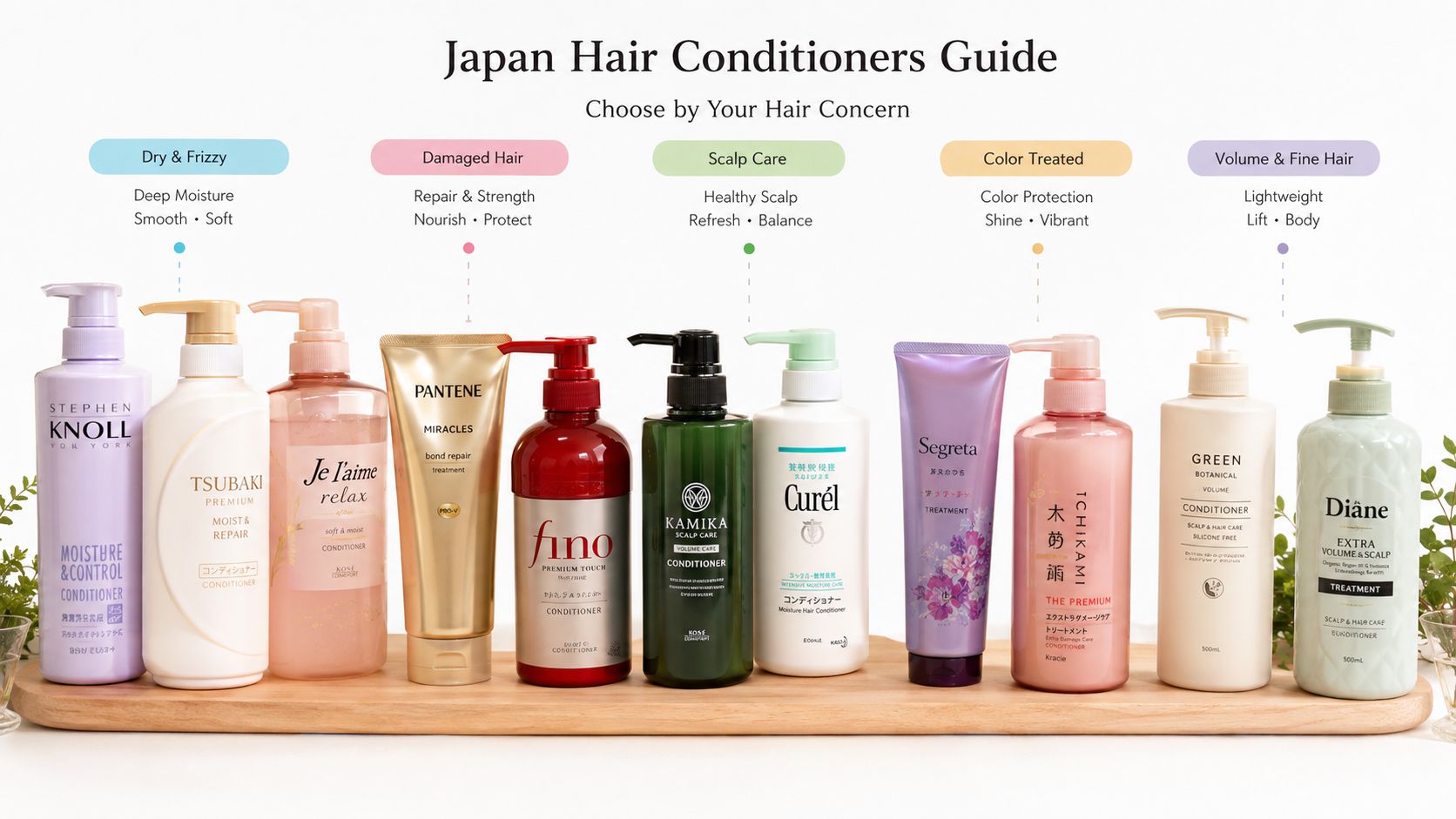
Brand names are useful only after you know the format and hair goal you're seeking. The lines below are best understood as different entry points, not as a ranking. Product names and current catalog status should be checked on the relevant Buy Me Japan product or collection page before purchase, because available variants can change.
| Hair Goal | Brand / Line | Typical Texture |
|---|---|---|
| Deep repair and shine | Shiseido Fino Premium Touch | Dense mask-like cream |
| Damage-focused daily care | Tsubaki Damage Care | Rich conditioner or treatment texture |
| Salon-style smoothing | Milbon Deesse's Elujuda | Lightweight leave-in milk or salon-style care |
| Specialized salon smoothing | Aujua | Line-specific professional textures |
| Accessible everyday care | Kao Essential | Light to medium rinse-off texture |
| Accessible smoothness | Asience | Cream conditioner texture |
| Professional salon care | Inebrya | Treatment-oriented salon texture |
| Professional moisturizing care | Loma | Rich, polished conditioning texture |
| Botanical-leaning daily use | Ichikami | Soft cream with a daily-care feel |
| Botanical-leaning daily use | Botanist | Range-dependent, from light to richer cream |
Repair and shine
Shiseido Fino Premium Touch is the precise product name to search when you're considering an intensive mask-style format. Its dense texture signals a product intended for concentrated care rather than a weightless daily rinse. Tsubaki Damage Care belongs in the damage-focused group, with a richer conditioning direction suited to lengths that need more slip.
Smoothing and salon formats
Milbon Deesse's Elujuda is associated with salon-style smoothing and leave-in care, so shoppers should pay attention to whether they're choosing a milk, oil, or rinse-off product. Aujua is also better approached by hair concern than by brand familiarity, because different lines can be designed around different texture needs.
Everyday and botanical-leaning options
Kao Essential and Asience fit the accessible everyday-care side of the comparison. They may appeal to shoppers who want a straightforward rinse-off step rather than a dense weekly mask. Ichikami and Botanist offer botanical-leaning positioning for shoppers who prefer that style of daily routine.
If you're specifically considering a deeper treatment format, this Ichikami hair mask guide can help you assess whether a mask is appropriate for your texture and styling habits. Whichever line you choose, verify the exact variant, ingredient list, and current product page rather than relying on a brand name alone.
How to Use Conditioner the Japanese Way
A good formula can underperform if it's applied to the wrong area or rinsed before it has a chance to spread. Japanese conditioner routines generally work best when shampoo removes buildup first, then the conditioner is distributed through the lengths with enough contact time to coat the strands evenly.
Apply from the mid-lengths downward
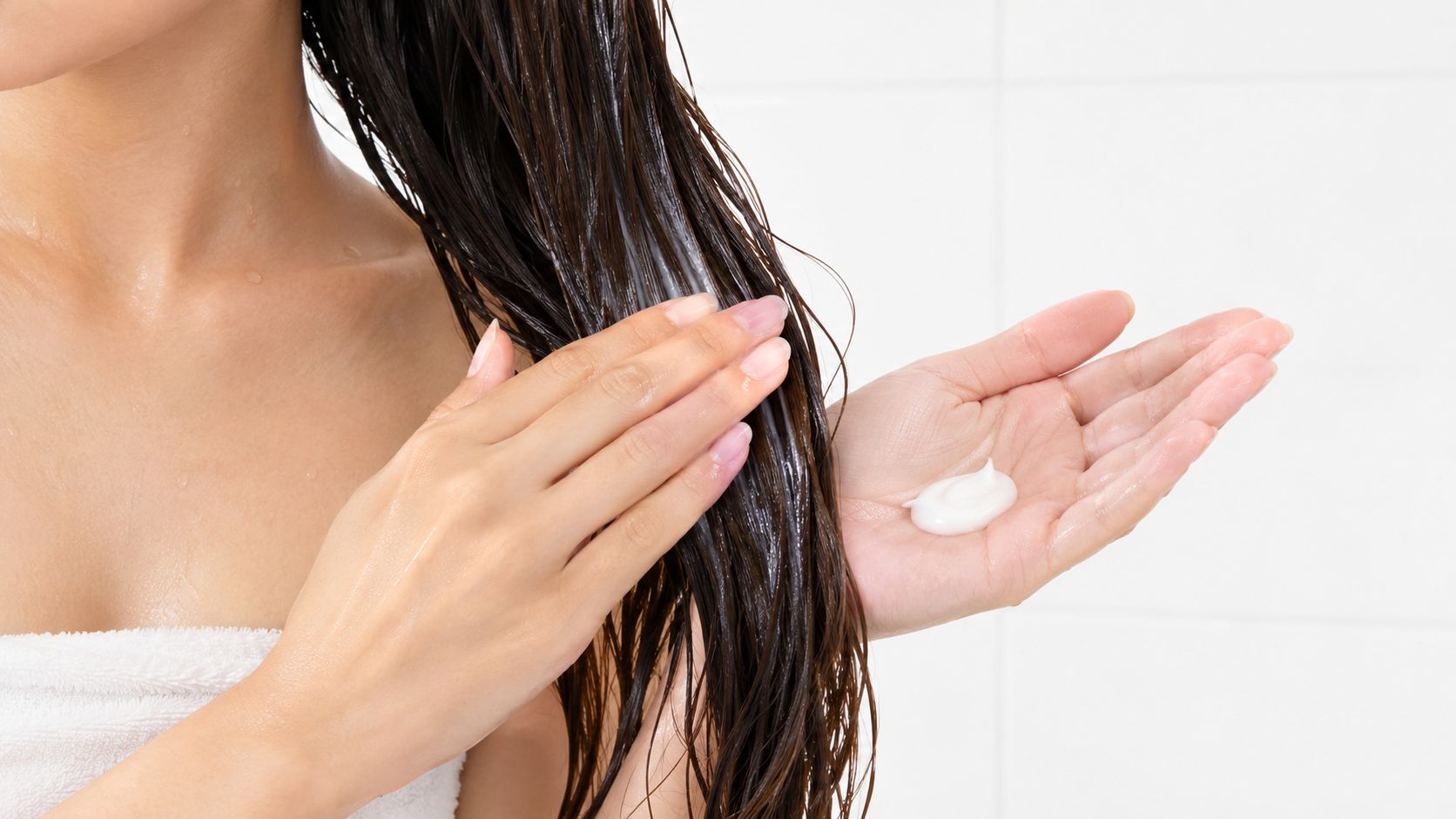
For medium-length hair, begin with roughly a 10-yen coin-sized amount. Use less if your hair is fine, and more if it's very long or thick. This is a starting point, not a fixed measurement, because hair density and porosity determine how much product the strands can accept.
Squeeze out excess water after shampooing. If the hair is dripping wet, the conditioner may slide off before it distributes properly. Warm the product between your palms, then smooth it from the mid-lengths to the ends. Avoid the scalp unless you're using a product specifically designated for scalp care.
Respect the formula's timing
A standard rinse-off conditioner generally needs about one to three minutes. A treatment or mask may need five to ten minutes, depending on its label directions. Leaving a regular rinse-off formula on much longer doesn't automatically improve the result and may leave fine hair feeling coated or waxy.
Use a wide-tooth comb or your fingers to gently distribute the product if your hair tangles easily. Don't pull through knots forcefully. The conditioning system is intended to lower friction, but rough handling can still create unnecessary mechanical stress.
Conditioner should feel like a controlled coating step, not a scalp treatment by default.
Rinse and layer carefully
Rinse with lukewarm water until the hair feels smooth but not slippery with residue. A simple order is:
- Shampoo, focused on the scalp and roots.
- Rinse thoroughly so cleansing residue doesn't interfere with the next step.
- Conditioner or treatment, applied mainly to the lengths.
- Optional leave-in, used sparingly after towel drying.
- Gentle drying, with no rough back-and-forth rubbing.
If oiliness is your concern, don't solve it by applying richer conditioner near the scalp. Adjust the cleansing step and keep the conditioning product on the areas that need softness.
Reading Japanese Labels and Buying Safely
Japanese cosmetic labels are designed to give shoppers structured product information, but international buyers may need to recognize the categories before they can interpret them. Ingredients are normally listed in Japanese and shown in descending order by quantity, as described in Japanese cosmetic labeling guidance.
Identify the product category
Look for terms such as:
- コンディショナー, a conditioner
- トリートメント, a treatment
- ヘアマスク, a hair mask
- スカルプケア, scalp care
The exact naming can vary by product, so read the use instructions as well as the front label. The Household Goods Quality Labeling Act covers information such as components, performance, usage, storage conditions, and other quality details, as explained in the English translation of Japan's labeling law.
Read the ingredient order
A richer formula may list cationic conditioning agents, fatty alcohols, silicones, or oils relatively high in the ingredient statement. That doesn't make a short ingredient list automatically better, and it doesn't guarantee that a particular product will suit your hair. Use the order as a clue to the formula's structure, then compare it with the product's texture and stated purpose.
Certain Japanese products may also display distributor details, brand information, manufacturing codes, and, where applicable, an expiration date. Check the outer packaging rather than relying only on a translated marketplace description.
Use a simple safety check
Before checkout, confirm:
- Japanese labeling: The product has a readable Japanese label or clear packaging information.
- Distributor details: Primary distributor information is present where required.
- Exact variant: The product name, size, scent, and refill or bottle format match your selection.
- Ingredient visibility: The current ingredient list is available for review.
- Purchase source: The seller provides clear product details, secure payment, and traceable shipping information.
Buy Me Japan presents Japanese beauty and personal-care products through an online shopping experience that includes product information, secure payments, tracked shipping options, and customer-service support. Those details are useful for international shoppers who want a clearer purchase trail than an unverified listing provides.
Choosing the Right Hair Conditioner Japan Pick for You
Start with three questions: What result do I want, what is my hair texture, and what does my routine expose it to? This keeps the decision practical and prevents you from buying a rich treatment when you need lightweight daily detangling.
| Primary Goal | Texture | Starting Point | Ingredient or Texture Cue |
|---|---|---|---|
| Repair dry or damaged lengths | Medium to coarse | Treatment or mask | Cationic surfactants, fatty alcohols, silicones |
| Control frizz | Medium or coarse | Rinse-off conditioner plus optional leave-in | Smoothing cream, conditioning polymers, light silicone |
| Preserve volume | Fine | Lightweight rinse-off or lotion | Fluid texture, modest application |
| Support scalp comfort | Any texture | Designated scalp-care product plus length conditioner | Scalp-care positioning, separate root and length use |
| Care for colored hair | Fine to coarse | Gentle rinse-off or treatment | Smooth conditioning system and careful handling |
| Add shine to less resilient hair | Fine to medium | Light conditioner or leave-in milk | Lightweight film-formers and controlled moisture |
Daily heat use, frequent swimming, and professional coloring all increase the need for thoughtful detangling and surface protection. They don't automatically mean you need the richest product available. A fine strand may need a lighter formula used consistently, while coarse porous ends may respond better to a treatment used with measured contact time.
The goal determines the formula, but texture determines the amount. Read the first three ingredients, check whether the product is rinse-off or leave-in, and avoid applying a dense mask from roots to ends unless the directions specifically support that use.
A sensible first purchase is one rinse-off conditioner or treatment matched to your main concern. If the lengths still need more control after drying, add a small amount of leave-in care rather than stacking several heavy products immediately.
For a focused starting point, explore the Buy Me Japan hair-care collection, check the exact conditioner or treatment variant, and compare its label with your hair goal before ordering. Buy Me Japan makes authentic Japanese beauty and lifestyle products available through a convenient online store, with secure payments, tracked shipping options, and customer support for international shoppers.
Visit Buy Me Japan to explore Japanese conditioner, treatment, mask, and leave-in options by hair concern. Start with one format that matches your main goal, then build your routine only if your hair still needs additional moisture or control.


Share:
Japanese Hand Cream for Dry Skin How to Choose Wisely