


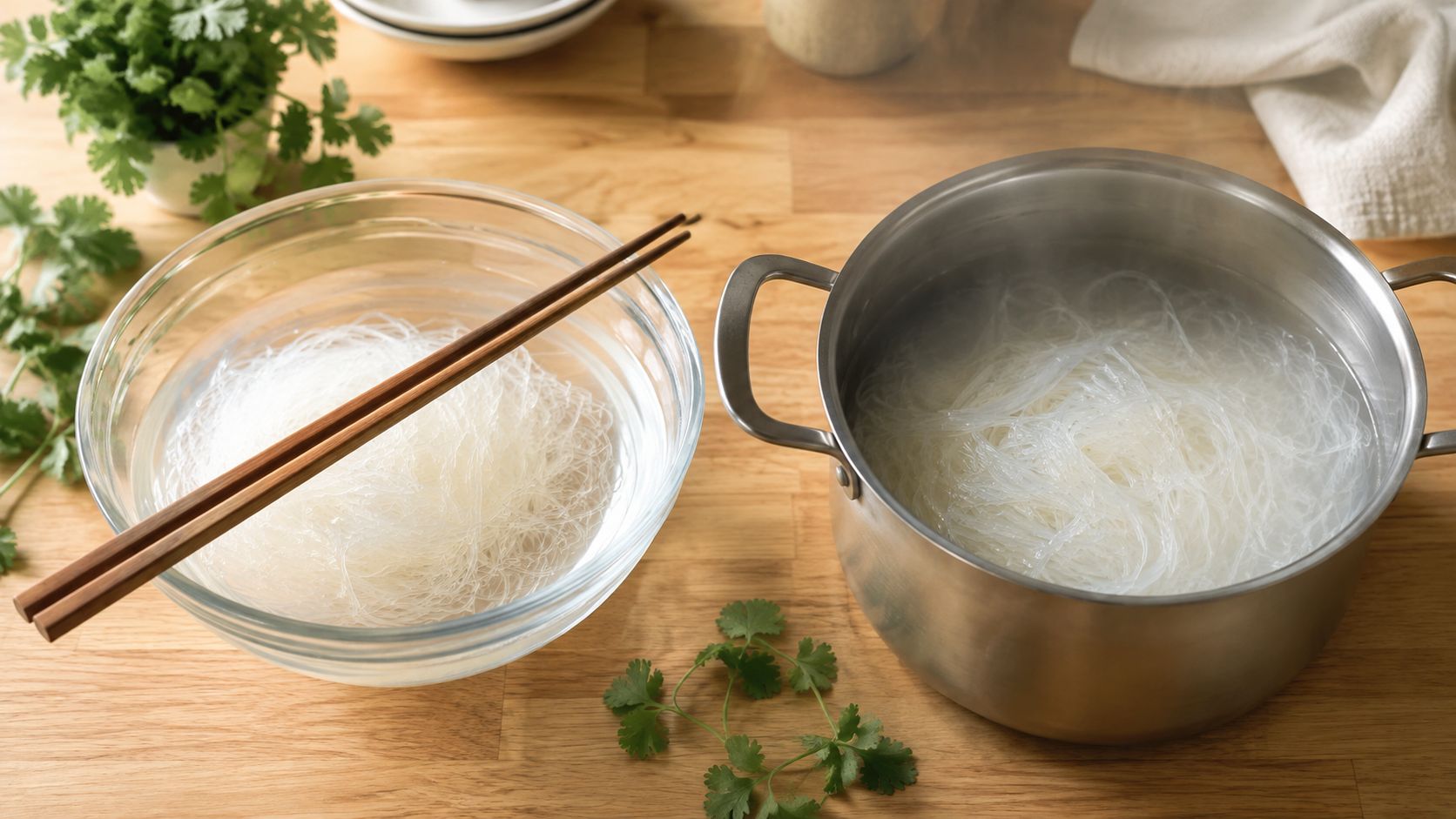
You've soaked the noodles, stirred the pot, and ended up with one sticky clump instead of separate, springy strands. If you're wondering, “How do you cook bean threads without ruining them?”, the answer depends less on one universal cooking time and more on the dish you're making.
This guide explains when to soak, when to briefly boil, and when to let hot broth or sauce finish the noodles. It also covers bean threads sold as glass noodles, cellophane noodles, vermicelli, or Japanese harusame, with practical texture cues for stir-fries, soups, and salads.
Introduction to Bean Threads and Why Cooking Method Matters
You lift a bundle of noodles from the pot and find one sticky clump instead of separate strands. Bean threads, also called glass noodles or cellophane noodles, are made from mung bean starch, so they hydrate quickly and turn translucent. Unlike wheat noodles, they need little boiling. Too much heat can make them sticky, fragile, or difficult to separate.
For many dishes, soaking in hot water for 10–15 minutes softens the strands while avoiding the prolonged heat that causes clumping. The Heart Foundation's vermicelli skill card describes this soak-first approach. The correct method depends on the noodles' next destination: a stir-fry may finish them in the pan, soup can soften them in broth, and a salad usually needs tender strands before dressing.
Bean threads have a long culinary history across East and Southeast Asia. One historical account places their development in the Tang Dynasty, 618–907 AD. Nutrition references commonly describe a cooked serving of about 1 cup, roughly 190 g, as containing around 160 calories, about 39.3 g of carbohydrates, and almost no fat or protein. A detailed longkou vermicelli technique guide also connects their light texture with quick soaking and finishing in stir-fries.
Japanese cooks may call them harusame, meaning “spring rain.” Packages elsewhere may say bean threads, glass noodles, cellophane noodles, or vermicelli. The labels differ, but the rule stays consistent: hydrate the strands according to how much more cooking they'll receive in the finished dish.

For help finding Japanese ingredients, see this Japanese food shopping guide for the USA. Decide whether the noodles will be stir-fried, added to soup, or dressed as a salad before choosing how to prepare them.
Choosing the Right Way to Prepare Bean Threads for Your Dish
Different recipes recommend different prep times because they target different dishes. A stir-fry needs strands that can finish in the pan, while a salad needs noodles that are already tender. This bean-thread cooking guide frames the decision around the texture required at serving time, rather than one universal cooking method.
| Method | Best For | Time and Key Cue |
|---|---|---|
| Warm soak | Stir-fries and dishes where sauce or heat will finish the noodles | Soak for 10–30 minutes until pliable, then drain before tossing |
| Brief boil | Salads or recipes requiring fully tender noodles before mixing | Boil briefly, from about 30 seconds to 3 minutes, and stop when translucent and still firm |
| Cold-water start | A gentle stovetop alternative | Bring to a boil, remove from heat, cover for 3–5 minutes, then drain and rinse |
| Microwave | Small-batch preparation when you don't want to use the stove | Barely cover with water, start at 6 minutes, then extend in 2-minute increments until tender but firm |
For a stir-fry, choose a quick warm soak. The strands should bend and separate without snapping, but they should still feel somewhat firm. The hot pan, vegetables, and sauce provide the final cooking. Fully soft noodles can break apart as you toss them.
A short boil suits a salad or another mixture that will receive little additional heat. For a Chinese-style bean-thread salad, soak the noodles in clean water for 10–15 minutes, then boil them for about 30 seconds. Add another 30 seconds for a softer texture. China Sichuan Food's bean-thread salad method stresses prompt draining because hydrated strands become fragile quickly.
Soup follows a different path. Soak the noodles until flexible but still firm, then add them directly to the hot broth or sauce. They absorb flavor while finishing in the liquid, so separate boiling is often unnecessary. For a soup that will simmer longer, use a shorter soak and check the strands early.
A Japanese-style pantry pairing can combine tender bean threads, vegetables, and a savory dressing. Yugeta Shoyu Whole Bean Soy Sauce Glass Bottle 360ml is brewed in Saitama Prefecture using non-GM, locally sourced soybeans and wheat. Its listed ingredients are soybeans, wheat, and salt, and its full-bodied flavor suits noodles that readily absorb sauces.

For broader Japanese cooking ideas, this guide to using a river light wok offers context on pan heat and finishing technique. The final question is simple: how much heat will the noodles receive after hydration? Use that answer to choose soaking, brief boiling, or no separate pre-cooking.
How to Soak and Boil Bean Threads Without Overcooking
Start by placing the dried noodles in a bowl of warm water. For a dependable, firm result, soak them for 20–30 minutes, as recommended in this step-by-step bean-thread guide. If you're preparing a delicate salad or need a faster hydration stage, a hot-water soak of 10–15 minutes can also work.

Prepare the strands for the pan or bowl
Once the noodles are pliable, lift them from the water and cut them into manageable lengths with kitchen scissors. Cutting them while they're hydrated is easier than trying to shorten a tangled mass after cooking, and shorter strands are easier to combine evenly with vegetables, broth, or dressing.
For a firm, springy finish, bring a pot of water to a boil and add the soaked noodles for 2–3 minutes. Watch the strands rather than relying only on the clock. They're ready when they look translucent, bend easily, and still offer gentle resistance when lifted or tasted.
Drain immediately. A brief rinse under cool water removes surface starch and slows carryover cooking, which is particularly useful when the noodles are heading into a salad or stir-fry.
Texture check: Stop cooking when the strands are translucent and pliable, not when they feel completely soft in the pot.
An alternative stovetop approach starts with cold water. Place the noodles in the water, bring it to a boil, remove the pot from the heat, cover it, and let the noodles sit for 3–5 minutes. Drain and briefly rinse under cool water. This method is useful when you want a softer, more gradual finish without keeping the noodles at a rolling boil.
You can also use a microwave-safe container. Add just enough water to barely cover the noodles, heat for 6 minutes, and continue in 2-minute increments until the strands are tender but still firm. Microwave power and container shape can affect the result, so texture remains the final test.
For a Japanese-inspired vegetable dish that uses a similar approach to gentle cooking and seasoning, see this recipe for nishime. Keep the same discipline with bean threads: hydrate them fully, expose them to direct heat briefly, and drain as soon as they reach the desired bite.
Using Bean Threads in Stir Fries Soups and Salads
The same bean threads can behave very differently at the table. A hot wok supplies direct heat, broth finishes cooking gently, and a salad needs strands that can hold dressing without turning limp. Choose the final cooking stage first, then prepare the noodles to arrive there with some firmness.

Stir-fries
Soak bean threads until they bend easily, then drain them thoroughly before adding them to the wok. If you briefly boil them instead, drain them as soon as they become flexible. Cook the vegetables and other ingredients first, then add the noodles for the final toss so the sauce coats them without giving them time to collapse.
Look for glossy, translucent strands with a springy bite. Add sauce gradually because bean threads absorb liquid quickly, and keep the pan moving so they do not stick. A small amount of Japanese sesame oil works with soy-based sauces, vegetables, and bean threads while keeping the seasoning from becoming too heavy.
Soups
Soup usually needs no separate boil. Soak the noodles until they bend, drain them, and place them directly into hot broth while they still feel slightly firm. The broth supplies the remaining heat and moisture, so boiling the noodles first can leave them fragile before they reach the bowl.
This approach suits clear soups, chicken-based bowls, and vegetable broths. Add the noodles near serving time, especially when the pot will stay hot, so the strands remain separate instead of softening into a dense mass.
Salads
Salads call for a little more preparation because the noodles must be tender before they meet crisp vegetables and dressing. Soak them in clean water for 10–15 minutes, boil for about 30 seconds, then add another 30 seconds only for a softer result. Drain promptly when the strands look translucent and pliable, following a detailed Chinese bean-thread salad method.
Rinse briefly under cool water, drain well, and cut the noodles if their length makes mixing difficult. Toss them with dressing while they are still flexible, then add the vegetables. The dressing helps separate the strands, while adding vegetables afterward reduces the chance of one large clump.
For recording a bowl containing noodles, broth, vegetables, and sauce, see this practical guide to handling soups and stews in calorie apps. The cooking principle is simple: soak, briefly boil, or skip pre-cooking according to the heat the finished dish will provide.
Common Problems With Bean Threads and How to Fix Them
Bean threads are easy to overcook because mung bean starch absorbs water quickly. Long boiling turns their springy bite into a soft, sticky texture. Use the final dish as your guide: soak them when they need to stay flexible, briefly boil them when they need a little more tenderness, and let hot broth or sauce finish the cooking. They should look translucent and bend without breaking.
If the noodles are sticky
Drain them as soon as they reach the right texture, then rinse briefly under cool water. Separate strands gently with clean fingers or chopsticks, and toss them with a small amount of oil before adding sauce. Reheating them in a dry pan usually makes them tougher and stickier, so add moisture instead.
If they clump into a ball
A clump usually forms when hydrated noodles sit undrained or remain over heat. Rinse the mass under cool water, loosen it gradually, and cut the strands shorter if they are difficult to distribute. The pasta image from IFM Gourmet Food Store offers a useful visual reminder that separated strands mix more evenly than one dense bundle.
If the center is still brittle
The noodles have not hydrated evenly. Re-soak only the firm portion in warm water until flexible, or return it briefly to hot water and check often. Extending the cooking time for the whole batch can make the already-soft strands fragile before the hard centers catch up.
Quick rescue: Cool the noodles, separate them gently, and correct only the underdone portions. One firm section does not require sacrificing the entire batch.
Storing Leftovers and Choosing Authentic Japanese Bean Threads
Bean threads suit cooks who want a versatile pantry ingredient for quick soups, fresh salads, and vegetable stir-fries. When shopping, check the ingredient information for a mung bean starch base and choose packaging from a reputable producer. The names may vary, so focus on the noodle composition and the texture you want after hydration.
Keep unopened dry noodles in a cool, dry pantry according to the package's storage guidance. Once cooked, store them refrigerated in a clean, covered container. Plain noodles are easier to reuse than noodles already coated in sauce, since sauce can encourage sticking and makes the strands harder to adapt to a different dish.
For Japanese ingredients and pantry additions, Japanese food takeaway supplies can provide useful context on serving and handling. Buy Me Japan offers an international marketplace for Japanese food, drinks, beauty, and lifestyle products, with items shipped directly from Japan and product reviews available for shopper reference. You can browse shirataki rice and where to buy it for another Japanese noodle and rice-style pantry comparison.
The simplest rule is reliable: soak first, boil briefly only when the recipe needs it, and let hot soup or sauce finish the strands. Once you learn to look for translucent, pliable noodles with a little spring, bean threads become much easier to prepare.
Buy Me Japan curates Japanese food, drinks, beauty, and lifestyle products for international customers, with products shipped directly from Japan and quality-focused shopping information. Visit Buy Me Japan to explore Japanese pantry ingredients and choose the products that will make your next bean-thread soup, salad, or stir-fry easier to prepare.



Share:
Where to Buy Pearl Sago Online and In-Store
Bread Maker with Stainless Steel Pan: Ultimate Buyer's Guide