


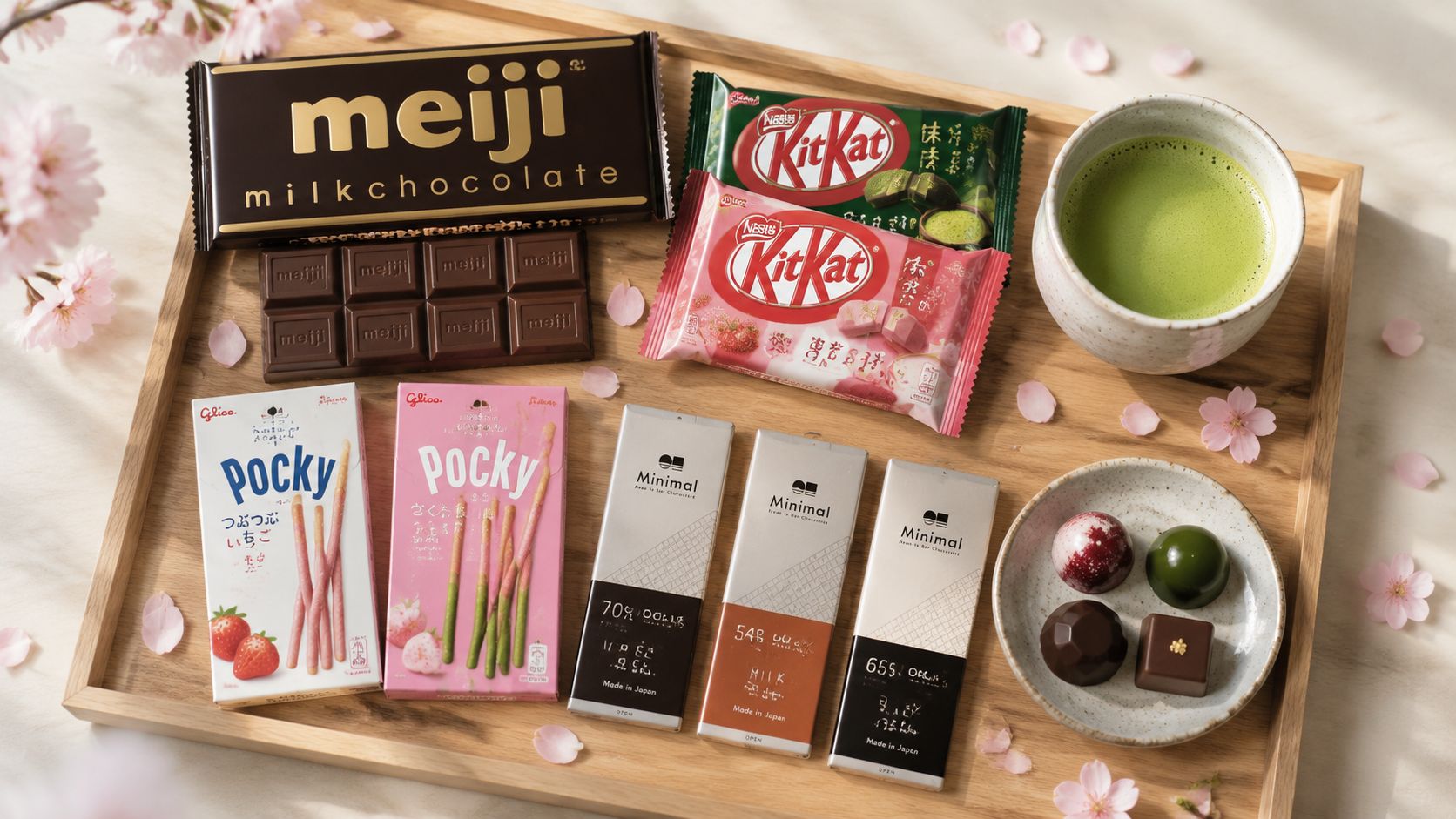
You're probably here because you've seen a Japanese chocolate online, in a travel video, or on a friend's snack haul and thought, why does it look so much more interesting than the chocolate I usually buy?
That reaction makes sense. Japanese chocolate isn't just about sweetness. It often puts equal attention on texture, balance, packaging, and seasonality. A simple bar can feel softer, cleaner, or more delicately layered than what many international shoppers expect.
Part of the fun is that Japanese chocolate can also feel confusing at first. The shelves are packed with names like Meiji, Lotte, Glico, and Morinaga, plus seasonal releases, gift boxes, and regional specialties. Once you understand how Japan approaches flavor and mouthfeel, the whole category becomes much easier, and much more enjoyable, to explore.
An Introduction to the World of Japanese Chocolate
You step into a convenience store in Japan for a quick drink, then pause in front of the chocolate shelf for ten minutes. One box promises a crisp snap. Another is built around a whipped filling that disappears almost instantly. A third appears only in winter, because the texture is meant to soften at a lower temperature and feel richer on the tongue.
That moment of surprise gets to the heart of Japanese chocolate. The category is wide, but it is not random. Many brands are shaped by the same food values that guide wagashi, tea sweets, and even everyday packaged snacks. Balance matters more than force. Seasonal timing matters. Texture is treated almost like a flavor of its own.
Chocolate has been part of Japan's modern food culture since the late 19th century, and over time it shifted from an imported novelty to an everyday pleasure. What makes the local scene stand out today is not just the number of brands on the shelf. It is the care given to mouthfeel, portion size, and the way a sweet fits a particular moment, after lunch, on a train, with coffee, or as a small cold-weather treat.
Why texture matters so much in Japan
In Japan, chocolate is often designed the way a good meal is designed. Contrast keeps each bite interesting. A clean snap can make a piece feel fresher. An airy center can make sweetness feel lighter. A biscuit base can slow the melt and add rhythm, the same way a crunchy topping changes the experience of soft ice cream.
That is why Japanese chocolate can feel unusually precise. Instead of asking only whether something is milk, dark, or white, shoppers often notice a different set of details.
- How it melts: Some chocolates are made to dissolve quickly and leave a clean finish rather than a heavy coating on the palate.
- What texture sits underneath: Wafer, biscuit, puffed rice, nut, and cookie layers change sweetness, aroma, and bite.
- What season it belongs to: Cooler months invite denser, creamier chocolates, while spring releases often lean softer, lighter, or more floral.
This approach comes from a broader Japanese idea of eating pleasure. Subtlety does not mean blandness. It means each element has room to register. Seasonality does not mean a decorative flavor added for marketing. It often shapes the actual structure of the product, from how firm the chocolate is to whether the filling feels fresh, mellow, or rich.
If you enjoy seeing how Japanese taste and design show up across everyday items, this guide to products in Japan offers useful context beyond sweets.
For visual inspiration, I also like the product presentation shown by IFM Gourmet Food Store, because it captures how chocolate is often treated here as both a snack and a small aesthetic pleasure.
Japanese chocolate makes the most sense when you ask what kind of texture, mood, and season the product is trying to express.
Understanding the Four Worlds of Japanese Chocolate
You walk into a Japanese department store food hall in winter, then stop by a convenience store on the way home, then pick up a station souvenir before a weekend trip. All three places sell chocolate, but they are solving different cravings. Once you see those differences clearly, Japanese chocolate brands stop feeling like one big category and start feeling like four distinct worlds, each shaped by a different idea of pleasure.

Mass market favorites
This is the everyday world. It lives in convenience stores, supermarkets, drugstores, and station kiosks. The goal is not grandeur. The goal is repeatable satisfaction, a chocolate you can enjoy with coffee at work, keep in a desk drawer, or share casually.
What makes this category feel so Japanese is the attention to balance. Even inexpensive products often care about how quickly the chocolate melts, how cleanly it finishes, and what happens in the second bite, not just the first. A biscuit base, a puffed rice center, or a thin shell around a soft filling can make a sweet snack feel lighter and more precise.
That same love of contrast shows up across Japanese candy more broadly. If you enjoy sweets that play with texture and timing, this guide to sour Japanese candy with the same love of texture and surprise is a fun companion.
Typical examples include:
- Bars and tablets: Simple formats that let you notice differences in sweetness, milkiness, and melt
- Chocolate snacks: Pocky, chocolate biscuits, and bite-size pieces built around crunch as much as cocoa
- Convenience-store finds: Small, seasonal, easy-to-carry chocolates made for everyday routines
Premium department store chocolate
Premium chocolate in Japan often expresses restraint rather than excess. The box matters. The pacing matters too. Pieces are usually portioned so each one feels deliberate, almost like a small wagashi sweet or a carefully brewed cup of tea.
This helps explain why flavors can seem subtle at first. Many premium Japanese chocolates are designed to unfold gently instead of hitting with immediate sugar or heavy richness. You notice aroma, then texture, then the aftertaste. It is a gift-friendly style, but it is also a very Japanese way of building flavor. Quiet, layered, and controlled.
Artisanal bean-to-bar makers
Bean-to-bar makers focus on cacao itself, but the Japanese approach often adds another layer. Many craft producers are interested in clarity. They want you to taste the bean's acidity, fruit notes, roast character, or dryness without muddy sweetness covering everything up.
For anyone new to this category, it helps to compare it to specialty coffee. The point is not merely “stronger” or “more premium.” The point is distinct character. Japanese makers often sharpen that character through careful roasting and very fine textural control, so the chocolate feels polished even when the flavor profile is bold.
Regional specialties and omiyage
Regional chocolate works like edible memory. A box from Hokkaido, Kyoto, or Okinawa is rarely just about cocoa. It carries a place, a season, and a social ritual, because omiyage is meant to be brought back, shared, and talked about.
Local ingredients and local identity play a more direct role. Fruit, tea, roasted grains, sweet potato, or regional dairy can all shape the flavor. Packaging is part of the experience too, because omiyage needs to travel well, portion neatly, and feel appropriate to give. In Japan, good chocolate often succeeds because it tastes good and because it fits the moment in which it is eaten, shared, or gifted.
Profiles of Japan's Most Famous Chocolate Brands
Some brands define the everyday taste of chocolate in Japan. You'll see them in family kitchens, convenience stores, offices, school bags, and seasonal displays. They don't all aim for the same result, and that's exactly why they're worth learning one by one.
Meiji
Meiji is one of the foundational names in Japanese chocolate. If you want to understand what many people think of as a classic Japanese milk chocolate profile, this is a smart starting point.
Its bars are often associated with balance. Not too bitter. Not aggressively sweet. Just smooth and approachable. Meiji also works well if you like chocolates that feel neat and dependable rather than flashy.
Products under the Meiji name can range from straightforward bars to more playful snack forms. That range helps explain why Meiji feels so woven into daily life.
Lotte
Lotte is especially loved for creamy, comforting chocolate. Ghana Milk Chocolate is one of its best-known products and a good example of Japan's preference for rounded, easy-drinking flavors in chocolate form.
Lotte often appeals to people who want softness over sharpness. If you find some international milk chocolates too sugary or too heavy, Lotte can feel gentler.
Glico
Glico is impossible to ignore because of Pocky. Technically, Pocky is more than chocolate alone. It's a chocolate snack system: crisp biscuit stick, thin coating, clean finish, easy sharing.
That structure says a lot about Japanese snack design. The pleasure comes from contrast. Dry crunch, smooth coating, and a portion size that encourages another bite without feeling overwhelming.
If you're curious about another iconic Japanese sweet with a very different texture, this article on Fujiya Milky candy is a nice companion read.
Morinaga
Morinaga has a long history and a distinct feel. Many of its chocolates emphasize softness and a gentle melt. DARS is a good example. The small cube format invites slow eating, and the texture is often the main attraction.
Morinaga also tends to do well with people who like bite-sized control. Instead of committing to one full bar, you can enjoy chocolate in small, measured pieces.
A lot of first-time buyers assume Japanese brands differ mainly by packaging. In practice, the bigger difference is often mouthfeel.
Comparison of Major Japanese Chocolate Brands
| Brand | Signature Product | Key Flavor/Texture Note | Best For |
|---|---|---|---|
| Meiji | Meiji Milk Chocolate | Balanced sweetness, smooth classic profile | First-time explorers |
| Lotte | Ghana Milk Chocolate | Creamy, mellow, comforting | Fans of soft milk chocolate |
| Glico | Pocky | Crisp biscuit with light chocolate coating | Sharing and casual snacking |
| Morinaga | DARS | Small pieces with a soft, easy melt | Slow snackers and texture lovers |
How to decide which to try first
Use your usual snack habits as the guide.
- If you want a benchmark: Start with Meiji.
- If you love creamy milk chocolate: Pick Lotte.
- If you prefer crunch and portability: Go with Glico.
- If you like bite-size pieces that melt gently: Choose Morinaga.
This sounds simple, but it saves people from buying at random and feeling underwhelmed. Japanese chocolate brands are often subtle. Picking by texture first gives you better odds of finding a favorite.
Discovering Japan's Premium and Artisanal Scene
Once you move beyond convenience-store staples, Japanese chocolate starts showing another side of itself. Premium and artisanal makers don't just sell sweetness. They sell precision, mood, and craftsmanship.
What premium means in Japan
In many markets, premium chocolate means darker cacao, stronger flavor, or a higher-end label. In Japan, premium often includes those things, but it also includes presentation, finish, and timing.
A premium chocolate box here might feel luxurious because each piece is measured, cleanly shaped, and designed to be eaten slowly. Packaging matters because gifting matters. Texture matters because refinement matters.
You'll often notice a few recurring signals:
- Careful portioning: Small pieces invite attention rather than speed
- Polished packaging: The box often feels gift-ready without extra wrapping
- Balanced flavoring: Matcha, fruit, nuts, or liqueur notes are usually integrated gently
The appeal of nama and crafted textures
One of Japan's best-known premium directions is extremely soft chocolate, often associated with fresh cream styles and a silky melt. These products can feel almost halfway between chocolate and dessert.
That style reflects a broader Japanese preference for delicate texture. A premium chocolate isn't always trying to impress with force. Sometimes it aims for quiet elegance.
If you enjoy the visual side of handmade sweets, this guide on how to improve your chocolate designs is an interesting look at decorative techniques that pair nicely with premium confectionery thinking.
Premium Japanese chocolate often wins people over with restraint. The experience feels composed, not overloaded.
Bean-to-bar in the Japanese context
Japan's artisanal bean-to-bar scene brings a different energy. These makers often highlight cacao origin and production choices more openly. Their bars can be more direct, more experimental, and sometimes less sweet than mainstream Japanese chocolate brands.
This part of the market appeals to curious eaters. If mass-market Japanese chocolate is about comfort, bean-to-bar often leans toward discovery.
For pairing, matcha is especially useful because its bitterness and umami can steady sweeter chocolates. If that sounds appealing, this introduction to Ujido ceremonial blend matcha helps explain why tea and chocolate can work so well together.
The Hunt for Seasonal Flavors and Limited Editions
Seasonality is one of the great pleasures of shopping in Japan. Chocolates change with the calendar, and that creates a sense of movement that many international shoppers aren't used to.

Why limited editions matter so much
In Japan, limited edition often appears as gentei, which means something available only for a particular period, region, or event. That doesn't just create urgency. It creates emotional context.
A sakura chocolate belongs to spring. A chestnut or sweet potato release feels right in autumn. Winter is when richer and deeper styles often make more sense. These aren't random flavor swaps. They mirror how Japanese food culture follows the seasons.
Common seasonal patterns include:
- Spring tastes: Sakura, strawberry, lighter floral notes
- Summer styles: Citrus, mint, brighter refreshing profiles
- Autumn moods: Sweet potato, chestnut, roasted flavors
- Winter favorites: Rich creamier chocolates and dessert-inspired combinations
The result is that buying chocolate in Japan can feel a little like following a seasonal menu.
Why collectors love the chase
Part of the appeal is that you may only get one window to try a flavor. A product can appear in convenience stores for a short time, then vanish until next year, or disappear entirely.
That makes discovery feel personal. You remember where you found it, when you ate it, and what season it belonged to.
Here's a quick look at how Japanese snack culture captures that excitement on screen.
Seasonal Japanese chocolate isn't only about novelty. It's about eating in rhythm with the year.
How to Choose Pair and Gift Japanese Chocolate
You are standing in a Japanese department store food hall with ten minutes before meeting a friend. One box looks polished and formal. Another is playful and packed with tiny wrapped pieces. A third promises matcha, but the primary difference is not the flavor on the label. It is the texture, the mood, and the occasion it suits.

Choosing well gets much easier once you read Japanese chocolate the way people here often read wagashi or tea. Flavor matters, of course, but so do mouthfeel, balance, portion size, and timing. Japanese makers often aim for harmony rather than sheer intensity, so a lighter chocolate can feel more complete than a louder one if it matches the setting.
Choose by texture first
This is the step many visitors miss.
In Japan, texture often carries as much meaning as flavor. A crisp chocolate with biscuit or wafer feels casual and social. A smooth ganache or neatly finished square feels quieter, more focused, and better for slow tasting. Powdered matcha coatings, airy whipped centers, and layered crunch all reflect a broader food culture that pays close attention to contrast.
A simple way to choose is to ask three questions:
-
What kind of bite do you want?
For a clean chocolate experience, choose bars, tablets, or simple squares. For contrast and movement, choose wafer, biscuit, nut, or puffed rice styles. -
How gentle or rich should it feel?
Milk chocolate usually reads as softer and rounder. Darker or premium bars often have a drier finish, clearer cacao notes, and less obvious sweetness. -
Will you eat it slowly or share it easily?
Small wrapped pieces work well for offices, trains, and gift bags. Boxed assortments or single-origin style bars suit slower tasting at home.
Texture works like the rhythm section in music. You may notice the melody first, but texture is what sets the pace.
Pairing ideas that actually work
Japanese chocolate usually pairs best with drinks that leave room for detail. If the drink is too sweet or heavy, the quieter notes disappear.
- Green tea: Matcha and sencha suit creamy milk chocolate, white chocolate, and filled pieces because their bitterness keeps the sweetness in check
- Black coffee: A good match for biscuit chocolates, nutty bars, and caramel-leaning flavors
- Hojicha: Its roasted character fits chocolates with sesame, hazelnut, brown sugar, or toasty wafer notes
- Dessert wine: Best with darker bars, truffles, or boxed chocolates meant for after-dinner gifting
If you enjoy serving chocolate with wine, McLaren Vale Cellars' pairing advice gives useful general principles that also apply to Japanese gift boxes.
Gifting in the Japanese style
A good chocolate gift in Japan feels considerate before it is even opened. The wrapping is tidy. The portions are easy to share. The style matches the relationship.
That is why packaging matters so much here. Individually wrapped pieces are practical, but they also signal care. A seasonal box feels personal because it shows attention to timing. A premium assortment works well for hosts, teachers, or business settings because it is polished and easy to present without explanation.
These quick guidelines help:
- For casual gifts: Choose familiar brands, approachable flavors, and easy-to-share packs
- For close friends or hosts: Choose limited seasonal flavors or regional specialties that feel specific and memorable
- For formal gifting: Choose boxed assortments with clean presentation and balanced flavors
- For warm weather or travel: Choose sturdier chocolates over very soft filled pieces
If you are putting together a larger food gift, this guide on where to buy Japanese snacks online can help you build a box with the right mix of chocolate and savory treats.
The best Japanese chocolate gifts match the moment, not just the brand name.
Storage and handling basics
Storage matters because many Japanese chocolates are designed around delicate textures. A crisp shell, a melt-fast filling, or a fine powder coating can change quickly in heat or humidity.
- Keep it cool: Warm rooms can soften structure and dull the finish
- Avoid direct sunlight: Light and heat affect both texture and flavor
- Check before refrigerating: Some chocolates do better in a cool room than in a very cold fridge
- Let premium pieces sit briefly before eating: A short rest at room temperature helps aroma and texture open up
A few careful choices make a big difference. Once you start choosing by texture, occasion, and balance, Japanese chocolate becomes much easier to buy well and much more fun to give.
Conclusion How to Buy Authentic Japanese Chocolate Abroad
You are standing in front of an online shop outside Japan, looking at matcha bars, strawberry-coated bites, whisky truffles, crisp biscuit sticks, and neat little gift boxes you cannot read at a glance. The easiest way to buy well is to start with how Japanese chocolate is meant to feel in the mouth.
Japanese chocolate often follows the same philosophy you see across Japanese food more broadly. Balance matters more than intensity. Texture matters as much as flavor. Seasonality is part of the pleasure. A kinoko-shaped biscuit snack, a nama-style square, and a sakura-season bar may all use chocolate, but they aim for different experiences. One gives you crunch and playfulness. One focuses on quiet melt and freshness. One captures a brief moment in the calendar, much like spring wagashi or autumn chestnut sweets.
For shoppers abroad, the challenge is usually practical. Limited editions disappear quickly, regional products do not always travel widely, and unfamiliar packaging can make ordinary resellers look as convincing as trusted specialists.

A good approach is to buy from Japan-focused stores that explain what they stock and why it matters. If you want to build a broader order around sweets and savory treats, this guide on where to buy Japanese snacks online gives a useful starting point.
Try a small mix instead of chasing a single famous name. A classic supermarket favorite shows you everyday Japanese taste. A premium box shows you the country's attention to finish and mouthfeel. One seasonal item shows how strongly Japanese confectionery ties flavor to time of year. That combination gives you a clearer picture of the chocolate scene than any one brand can on its own.
If you'd like to shop authentic Japanese products directly from Japan, Buy Me Japan is a convenient place to explore curated snacks, sweets, beauty, and lifestyle items with a focus on genuine Japanese brands and dependable international access.



Share:
Seaweed Snacks Nutrition: Benefits & Best Choices for 2026
Find Your Next Starbuck Tumbler Japan: 2026 Collector's