


You brush your hair, and the ends puff out. The top looks flat, the mid-lengths feel rough, and every photo seems to show someone else with smooth, glossy hair that never fights back. If that sounds familiar, you're probably looking at Japanese hair care for one reason. You want something that feels more thoughtful than a basic shampoo.
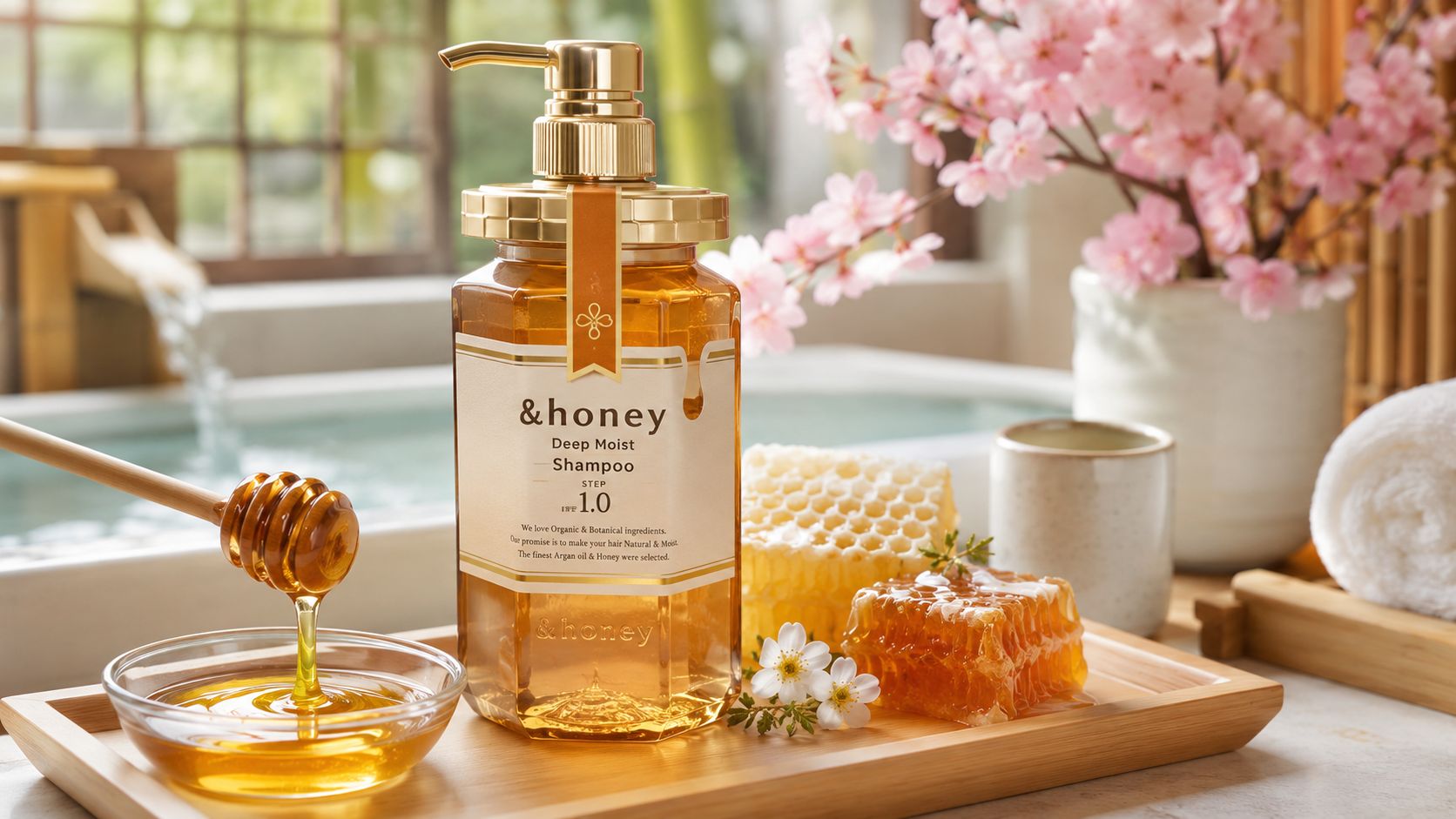
That's where & Honey shampoo catches people's attention. In Japan, the brand built its identity around honey-based moisturizing technology, and its well-known Deep Moist Shampoo 440 ml is marketed with a formula that is 90% moisture essence and combines three honey types with argan oil, royal jelly, and hyaluronic acid, as described in the Deep Moist Shampoo product details. It isn't presented as a simple sweet-smelling shampoo. Honey is the functional heart of the brand.
Many readers also discover & Honey while exploring the larger Japanese self-care world. If you enjoy the ritual side of hair care, this guide on where to find a Japanese head spa gives helpful context for why scalp care and moisture balance matter so much in Japan. For a broader look at the category, Buy Me Japan also has a useful article on why Japanese haircare is so good.
Your Introduction to & Honey Shampoo

A lot of international shoppers first meet & Honey in a very ordinary moment. They're standing in the shower with hair that feels dry at the ends but still somehow frizzy on the surface. Then they see this round, elegant bottle from Japan and wonder if it's actually different or just pretty packaging.
With & Honey, the answer is that the formula concept matters. The brand became recognizable in J-Beauty because it treats honey as a central moisture ingredient, not a decorative extra. That gives the line a clear identity. It's for people who want softness, slip, and a more hydrated feel in their hair routine.
Why it stands out in J-Beauty
Japanese hair care often focuses on texture and finish, not only cleansing. That's one reason & Honey has become so easy to remember. The line connects ingredient story, daily use, and hair feel in a simple way.
Three things usually draw people in:
- Moisture-first design that prioritizes hydration and softness
- Ingredient-led identity built around honey rather than fragrance marketing
- Easy entry point for shoppers curious about Japanese shampoo but unsure where to start
& Honey makes the most sense when your main goal is smoother, more comfortable hair, not a squeaky-clean, stripped finish.
What makes shoppers hesitate
The same thing that attracts people can also make them pause. If a shampoo sounds rich and moisture-heavy, won't it be too much for fine hair or oily roots?
That concern is valid. It's also why & Honey deserves a more careful explanation than “good for dry hair.” Some lines are easier to wear than others, and how you use them matters just as much as which bottle you buy.
The Science Behind & Honey's Moisture Formula
The easiest way to understand & Honey shampoo is to think about what dry hair usually lacks. It doesn't just need cleansing. It often needs help holding onto moisture and feeling smoother on the surface.
&honey Deep Moist Shampoo is positioned around a high-humectant, multi-honey system made of 50% manuka honey, 30% acacia honey, and 20% raw honey, according to the ingredient breakdown for &honey Deep Moist Shampoo. That same breakdown also highlights glycerin, honey, panthenol, arginine, and argan oil as key functional ingredients.
What the honey blend is doing
Honey is useful in hair care because it behaves like a moisture-binding material. In simple terms, it helps support water retention on the hair surface instead of acting like a harsh cleanser.
That matters most when hair feels:
- Rough after washing
- Puffy in humidity
- Dull from dryness or processing
- Hard to detangle without breakage
When a formula pairs humectants with softening ingredients, hair often feels less scratchy and more flexible. That smoother feel can also help hair reflect light more evenly, which is why hydrated hair usually looks shinier.
Practical rule: If your hair problem is dryness, frizz, or a stiff feel after shampooing, a moisture-focused formula usually helps more than a strong volumizing wash.
Why the support ingredients matter
The honey story gets most of the attention, but the supporting ingredients are a big part of the experience.
- Glycerin helps pull moisture into the routine.
- Panthenol is often appreciated for improving softness and manageability.
- Arginine supports a conditioned feel.
- Argan oil adds emolliency, which can make hair feel less coarse.
This is why & Honey doesn't behave like a stripped-down daily cleanser. It's built to leave a softer after-feel.
If you like ingredient-focused Japanese hair care, Buy Me Japan's guide to honey oil hair care gives useful background on how moisture and oil can work together rather than against each other.
What this means in real life
A shampoo like this is usually strongest when used with a clear goal. That goal is not maximum lift at the roots. It's a smoother hair fiber, less roughness, and a more polished finish.
For dry, frizz-prone, or chemically processed hair, that can feel like a relief. For someone who wants airy volume above all else, it may feel richer than expected.
How to Choose Your Perfect & Honey Shampoo Line
The hardest part of shopping for & Honey shampoo isn't understanding the brand. It's choosing the right bottle. The packaging is beautiful, but the lines can blur together if you're new to Japanese hair care.

A simple way to choose is to ignore the bottle color at first and ask one question. What bothers you most right now: dryness, frizz, heaviness, or damage?
Choosing by hair goal
Here's a practical comparison to make the lines easier to sort.
| Line Name | Primary Benefit | Best For Hair Type | Scent Notes |
|---|---|---|---|
| Deep Moist | Rich moisture and softness | Dry, frizzy, coarse, or processed hair | Honey-forward, warm and sweet |
| Melty Moist Repair | Smoother feel and easier control | Frizz-prone or hard-to-manage hair | Floral honey style, often associated with rose tones |
| Silky Smooth | Lighter smoothing | Fine hair, tangles, or hair that gets weighed down easily | Fresher, cleaner-feeling sweet scent |
| Creamy EX Damage Repair | More cushioned, repair-focused feel | Damaged or overworked hair needing extra softness | Creamy sweet scent profile |
| Milky Precious EX | Honey-derived cleansing and moisturizing with a repair-oriented direction | Hair that feels dry and damaged, especially if you want a newer formula concept | Milky, soft sweet profile |
Not every line will feel the same on every head of hair. Two people with “dry hair” can still need different things. One may need stronger smoothing for frizz. Another may need repair support because their ends feel worn out from coloring or heat styling.
The classic line most people start with
Deep Moist is the line that introduced many shoppers to the brand. It's the easiest place to begin if your hair feels thirsty, rough, or fluffy after washing. This is the bottle people usually mean when they talk about the signature & Honey experience.
If your hair already gets limp easily, Deep Moist may still work, but it often works better when paired with a lighter routine. Some people use the shampoo and skip a richer matching treatment on certain wash days.
For readers comparing Japanese shampoo families more broadly, this guide to the best Japanese shampoo and conditioner helps place & Honey alongside other popular options.
Here's a quick visual if you want to see the line family in action:
The newer repair-focused direction
The brand hasn't stayed frozen in one idea. The &honey Milky Precious EX Shampoo launched in October 2024 and is described as using honey-derived cleansing and moisturizing ingredients, as noted in this overview of the Milky Precious EX launch. What matters here isn't just the new name. It suggests a broader move into milky, repair-oriented care, rather than only the original moisture-retention identity.
That's useful if you've looked at the classic range and thought, “I understand the moisture idea, but what if my hair is also damaged?”
Newer & Honey lines are worth watching when you want a different finish, not just a different scent.
A simple way to self-select
If you want the shortest version, use this filter:
- Choose Deep Moist if your hair feels dry first and everything else second.
- Choose Melty Moist Repair if frizz and shape control frustrate you most.
- Choose Silky Smooth if your hair is finer and you're nervous about heaviness.
- Choose Creamy EX Damage Repair or Milky Precious EX if damage repair is your top concern.
That kind of sorting saves a lot of disappointment. & Honey usually performs best when the line matches your texture and daily styling habits.
Is & Honey Right for Your Hair Type?
This is the question many reviews avoid. People hear “moisturizing” and assume that automatically means “better.” It doesn't. The right shampoo depends on what your hair needs and what your scalp can tolerate comfortably.
One of the most important gaps in existing coverage is whether & Honey is too rich for fine or oily hair. That concern is called out directly in this discussion of the honey haircare ritual and hair-type tradeoffs, which notes that shoppers increasingly choose products based on hair texture and scalp concerns.
When & Honey makes sense
& Honey usually fits well if your hair has one or more of these signs:
- Dry lengths that feel brittle or rough
- Frizz-prone texture that expands after washing
- Processed hair from coloring or frequent heat use
- Hair that tangles easily and needs more slip
In these cases, a humidity-sealing, honey-rich formula can feel supportive rather than heavy.
When you should be more selective
If your scalp gets oily quickly or your hair is very fine, the formula style may need a lighter touch. That doesn't mean you need to avoid the brand. It means you should use it strategically.
Try these adjustments:
- Pick a lighter line: Silky Smooth is often the safer starting point.
- Focus on the scalp first: Use only the amount you need for cleansing, not extra product for more foam.
- Keep richer products on the ends: If you pair with a treatment, don't drag it up to the roots.
- Alternate wash days: Some people prefer a simpler or clearer-feeling shampoo in rotation.
If your roots get oily but your ends are dry, your routine doesn't have to be all rich or all light. You can build around both needs.
Dry scalp is not the same as oily hair
Many people find this confusing. A scalp can feel uncomfortable while the hair itself still gets flat or greasy. That's why choosing only by “dry” or “oily” can lead to the wrong purchase.
If scalp comfort is your main issue, this guide to the best shampoo for dry scalp helps separate scalp concerns from hair-length concerns.
The honest answer is simple. & Honey is not only for one hair type, but it is not equally ideal in the same way for everyone. The richer your formula choice and styling routine, the more important technique becomes.
How to Use & Honey Shampoo for the Best Results
Good Japanese hair care often feels ritualistic, but the technique is practical. You don't need a complicated routine. You need a calm, consistent one.

A simple wash routine
-
Wet thoroughly first
Your hair should be fully saturated before shampoo touches it. This helps spread product more evenly and reduces the urge to overuse it. -
Lather in your hands
Don't pour shampoo straight onto one spot. Work it between your palms first, then distribute it across the scalp. -
Massage the scalp, not the lengths
The cleansing step belongs at the scalp. The lather that runs through the ends is usually enough for the rest of the hair. -
Rinse patiently
Moisture-rich shampoos can feel plush. Make sure you rinse until the hair feels clean but not squeaky.
How to layer the rest of the routine
The shampoo works best when the rest of the routine matches your hair goal.
- Use a matching treatment if your lengths feel rough or tangled.
- Keep conditioner below the ears if your roots flatten easily.
- Add a small amount of hair oil only to the driest sections if you want more shine and control.
Small adjustments that change the result
Some people decide a shampoo is too heavy when over-application is the issue. Fine hair especially benefits from restraint.
A rich shampoo doesn't need a rich routine every single step of the way.
If your hair is medium to thick, you may enjoy the full paired system. If your hair is fine, try shampoo plus a light conditioner first, then decide whether you need a richer treatment or oil later.
Comparing & Honey with Other Top Japanese Shampoos
Japanese hair care isn't built around one single philosophy. That's why comparing & Honey with other well-known brands can be helpful.

& Honey compared with Tsubaki
Tsubaki is often associated with a sleek, glossy finish and a more polished look. If your goal is smoothness with a salon-like finish, both brands can appeal. The difference is feel and story.
& Honey leans into honey-based moisture retention and softness. Tsubaki often attracts shoppers who want a smooth, elegant finish centered around a different ingredient philosophy.
& Honey compared with Ichikami
Ichikami tends to appeal to shoppers who like the idea of Japanese botanical care. It often feels closer to a traditional herbal direction in branding and experience.
If you want your shampoo to feel moisture-led and cushiony, & Honey usually makes more sense. If you prefer a lighter botanical identity and a different sensory profile, Ichikami may feel more natural to you.
Where Fino fits in
Shiseido Fino is not really a shampoo comparison in the strict sense because many people use it as a treatment mask rather than a cleanser. Still, shoppers often cross-shop it because they want softer, shinier hair.
A useful way to approach this is:
- Choose & Honey when your starting point is the shampoo step and daily moisture support.
- Choose Fino as a treatment add-on when your focus is a richer care step after cleansing.
- Choose Tsubaki or Ichikami when you prefer a different ingredient story or finish.
One factual way to buy within this category is to use a retailer that clearly lists Japanese hair care lines and product-specific pages. For example, Buy Me Japan carries Japanese beauty and hair care brands including & Honey, which makes it easier to compare line families while staying inside the same product ecosystem.
The better question isn't “Which Japanese shampoo wins?” It's “Which one matches the way my hair behaves after wash day?”
Your Guide to Buying Authentic & Honey in 2026
When people buy & Honey shampoo internationally, they usually worry about two things. Is it authentic, and am I choosing the right version?
The first concern matters because popular Japanese beauty products often circulate through many marketplaces. Product names can look similar, and older packaging can confuse first-time buyers. The second concern is just as important. A genuine product can still disappoint if the line doesn't match your hair type.
What to check before you buy
- Match the line to your hair concern before you fall in love with the bottle design.
- Read the full product name because Deep Moist, Melty, Silky, and repair-focused versions serve different needs.
- Buy through a Japan-focused retailer that specializes in Japanese products and provides clear product labeling.
If you want a broader overview of how to judge Japan-focused retailers, this guide to the best online Japanese stores is a useful starting point.
Quick pre-purchase answers
If your hair is fine, start lighter. If your hair is dry or frizzy, start richer.
A few common questions come up again and again:
-
Is & Honey only for very dry hair?
No. But the richer lines usually suit dry, frizzy, or processed hair more naturally than very fine oily hair. -
Should you buy the full set immediately?
Not always. If you're unsure about heaviness, start with the shampoo and add other steps later. -
Why buy from Japan at all?
Because Japanese hair care is often formulated and packaged with a specific hair-finish philosophy in mind, and many shoppers want the original domestic product experience.
The safest buying mindset is simple. Choose based on texture, not hype. & Honey is at its best when the formula style matches your real wash-day habits.
If you're ready to shop Japanese hair care with a clearer idea of what suits your hair, Buy Me Japan is a practical place to browse authentic & Honey products and compare other Japanese beauty lines from one store.


Share:
Softymo Cleansing Foam: A Complete Japanese Beauty Guide
Hada Labo Gokujyun Cleansing Oil: Your Guide to Radiant Skin