


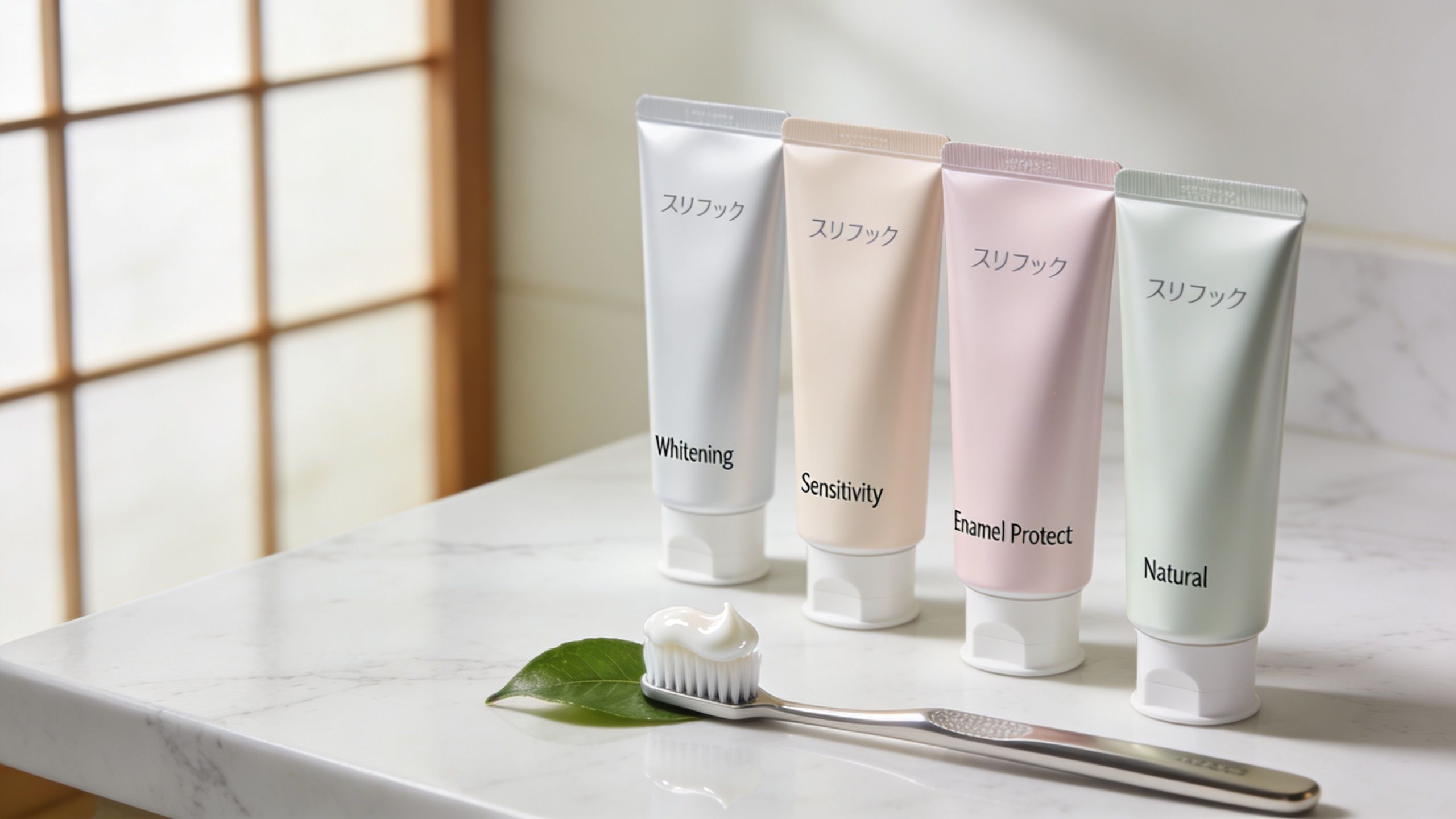
You're probably here because you opened a Japanese toothpaste page, saw words like hydroxyapatite, medicated gum care, whitening, enzyme plaque removal, and realized this category is much more technical than it first looks.
That's normal. Japanese oral care is easy to admire and surprisingly hard to decode if you don't already know which ingredient matches your real need.
A lot of people search for the best toothpaste in japan when what they need is something narrower: a whitening formula that won't feel harsh, a sensitivity toothpaste that doesn't taste medicinal, or a gum-care option that does more than just freshen breath. Japanese brands are strong at exactly that kind of specialized everyday care. If you already enjoy ingredient-led Japanese beauty, the same logic applies here, just in a more functional category, much like the approach behind many Japanese cosmetic brands.
Your Guide to Navigating Japanese Toothpaste
Walk into a Japanese drugstore, or browse a Japanese marketplace online, and the toothpaste aisle can feel almost too good. Sleek tubes. Clean packaging. Claims about whitening, plaque, gums, enamel, breath, and sensitivity, often on the same box.
That variety is part of the appeal, but it's also where shoppers get stuck. Many international buyers assume Japanese toothpaste is mostly about whitening. In practice, that's only one slice of the category.
The better way to shop is to stop asking which tube is most famous and start asking which active ingredient fits your mouth. That sounds clinical, but it makes the whole category easier to understand.
Here's the quick reality. A whitening-focused formula may be a poor choice if your teeth are already sensitive. A plaque-control toothpaste may be the smarter buy if your main problem is gumline buildup rather than surface stains. A hydroxyapatite formula may suit someone who wants a cleaner-looking smile without relying on a more polishing-heavy feel.
Practical rule: Pick your toothpaste by primary concern first, flavor and branding second.
That's how dentists and informed shoppers usually narrow the field. Once you do that, Japanese toothpaste becomes much less overwhelming and much more useful.
Why Japanese Toothpaste Is a World Apart
Japanese toothpaste stands out because the category is built around prevention, daily compliance, and multi-benefit formulation. The best products don't just chase a bright-smile claim. They're often designed to handle several jobs at once, including cavity prevention, enamel support, breath freshness, plaque control, and gum comfort.

Why prevention matters more in Japan
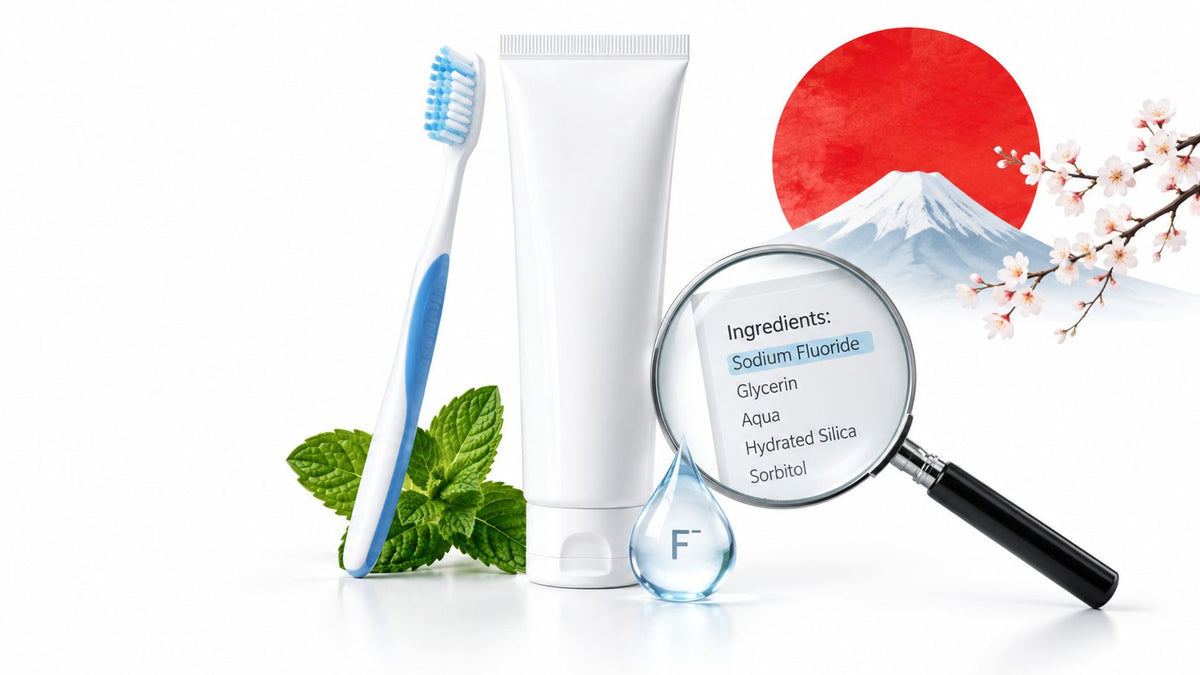
One reason this category developed differently is simple. In Japan, fluoride application is used mainly through toothpaste, mouth rinses, and professional treatments, because community water fluoridation is not implemented, according to this PMC review on fluoride use in Japan. That makes toothpaste a primary everyday prevention tool rather than an optional cosmetic extra.
That changes how brands formulate. If toothpaste carries more of the daily prevention burden, consumers expect more from it. They don't want a product that only whitens or only freshens. They want one tube to earn its place on the sink.
This is also why Japanese oral care often feels similar to broader Japanese beauty standards. The emphasis isn't usually on dramatic instant transformation. It's on consistent, refined maintenance that supports long-term appearance and health.
What works well in Japanese formulas
Japanese toothpaste is often strongest when it combines a clear active system with a comfortable user experience. That means:
| What to look for | Why it matters |
|---|---|
| Fluoride-focused formulas | Best for shoppers who want cavity prevention as their baseline priority |
| Hydroxyapatite formulas | Useful when enamel support and lower-abrasion whitening are higher priorities |
| Enzyme plaque systems | Better suited to people focused on plaque breakdown and gumline care |
| Multi-benefit medicated formulas | Helpful when you want one toothpaste to cover everyday prevention plus a secondary concern |
What doesn't work is buying based on packaging alone. Japanese toothpaste labels often look elegant and minimal, but the tubes can be very different in function.
The smartest Japanese oral-care purchase usually isn't the most hyped one. It's the one whose active ingredients match the problem you actually have.
How to Choose Your Perfect Japanese Toothpaste
The Japanese toothpaste market is highly competitive, with product rankings often featuring multiple lines from major brands like Lion and Sunstar. That reflects a category with several established leaders and distinct use cases rather than one universal winner, as noted in this Tsunagu Japan roundup of popular Japanese toothpaste brands.
So don't shop for “the best” as if everyone needs the same thing. Shop for the best match.
Start with your main goal
Use this quick comparison first.
| Your main concern | Ingredient or formula type to prioritize | Usually a weaker choice |
|---|---|---|
| Surface stains and dullness | Hydroxyapatite or gentle polishing whitening formulas | Very strong-feeling formulas if you already have sensitivity |
| Sharp pain with cold or sweets | Sensitivity-focused formulas, often with potassium nitrate if listed, plus low-abrasion support | Whitening-first pastes with little sensitivity focus |
| Wanting stronger-looking enamel support | Hydroxyapatite formulas, with fluoride if that matters to you | Purely cosmetic whitening claims with no clear protective angle |
| Sticky plaque and gumline concerns | Anti-plaque or gum-care formulas, including enzyme-led systems | Basic fresh-breath tubes with no clear active claim |
Read the claim, then read the ingredient logic
Japanese packaging often highlights the front-facing benefit first. That's helpful, but it's still marketing language. You want to translate it into mechanism.
If a toothpaste says whitening, ask how. Is it polishing stains off the surface, or supporting a smoother enamel surface through mineral deposition?
If it says gum care, ask whether it's mainly targeting plaque, inflammation, or both.
If it says medicated, ask what the active purpose likely is. In Japan, medicinal toothpaste actives can include fluoride, antiplaque ingredients, and anti-inflammatory agents. That's why ingredient-first shopping is more reliable than star ratings alone.
A simple decision flow that works
- If your teeth hurt, prioritize sensitivity and low-abrasion support first.
- If your smile looks dull but doesn't hurt, start with whitening technology that won't feel harsh.
- If your gums bleed or feel tender, move plaque and gum care ahead of cosmetic goals.
- If nothing feels urgently wrong, choose a strong prevention-focused everyday fluoride formula.
For a broader dentist-style framework on label reading and claim evaluation, this toothpaste buying guide is a useful companion resource.
Common mistakes buyers make
- Chasing whitening first: If your teeth are sensitive, this often leads to disappointment.
- Assuming all Japanese toothpaste is the same: It isn't. The differences are functional, not just cosmetic.
- Overvaluing flavor and foam: A pleasant texture helps compliance, but it doesn't tell you much about performance.
- Ignoring gum needs: A lot of adults need plaque and gum support more than “extra whitening.”
The best toothpaste in japan is usually the one that solves your most annoying daily issue without creating a new one.
Top Formulations for Whitening and Stain Removal
If your goal is a cleaner, brighter smile, Japanese toothpaste gets especially interesting. The best formulas usually split into two different approaches. One relies on remineralizing or enamel-supporting technology, and the other relies more on gentle polishing.

Hydroxyapatite for brightness without a harsh feel
Hydroxyapatite has been a gold-standard toothpaste ingredient in Japan for over 40 years, and the ingredient is widely positioned for enamel support and whitening through mineral deposition rather than aggressive abrasion, as described in this Japanese toothpaste guide covering hydroxyapatite.
That's the key distinction. A hydroxyapatite whitening toothpaste isn't usually trying to bleach teeth. It's trying to improve the surface so stains don't dominate the appearance as much and the enamel looks smoother and cleaner.
A classic example is Apagard Premio Toothpaste. It's the type of product I'd point someone toward if they want whitening but are wary of anything that feels scratchy or over-polished.
This approach tends to work best for:
- People with tea or coffee dullness
- Shoppers who dislike “strong whitening” toothpastes
- Anyone who wants enamel support and cosmetic improvement in one tube
A good hydroxyapatite toothpaste usually gives a refined, gradual result. It's better for people who want their teeth to look cleaner, not artificially processed.
Gentle polishing formulas and when they suit you
Some Japanese whitening toothpastes lean more on fine polishing systems. These can be effective for lifting everyday surface stains, especially if your main issue is external discoloration from drinks or smoking history.
They can be a good fit if your teeth aren't especially sensitive and you want a fresher, more immediately polished feel. They're a weaker fit if enamel comfort is already a concern.
That trade-off matters. A lot of whitening disappointment comes from buying the wrong mechanism, not necessarily a bad product.
For readers comparing cosmetic whitening with stronger bleaching-style approaches used in professional settings, this overview of Toothfairy dental whitening helps clarify the difference between stain management and peroxide-led whitening.
A quick comparison of whitening styles
| Whitening approach | Best for | Less ideal for |
|---|---|---|
| Hydroxyapatite-based | Dullness, enamel-conscious whitening, smoother-feel formulas | Shoppers expecting dramatic bleach-like change |
| Gentle polishing formulas | Surface stain removal and a cleaner-feeling finish | Teeth that already react badly to whitening products |
People who already use Japanese skincare to improve tone gradually often understand this instinctively. Oral care can follow the same logic. You can think of hydroxyapatite-led whitening as the dental version of steady surface refinement, similar in mindset to how Japanese beauty routines approach dark spot care.
A short visual explainer can help if you're new to the category:
What usually doesn't work
The wrong way to buy whitening toothpaste is to look for the boldest whitening word on the package and stop there.
If you want the best toothpaste in japan for whitening, ask these questions instead:
- Is the whitening claim based on remineralization or polishing?
- Do I also need enamel support?
- Do my teeth usually become sensitive after whitening products?
- Am I expecting brightness improvement, or bleach-style shade change?
That last point matters most. Japanese whitening toothpaste is often excellent for stain management and everyday refinement. It isn't the same thing as a peroxide whitening treatment.
Best Options for Soothing Sensitive Teeth
Sensitivity is one of the easiest problems to misunderstand. People often describe it as “my teeth can't handle whitening toothpaste,” but the actual issue is usually exposed dentin, weakened surface comfort, or a formula that feels too aggressive for their current condition.
The first rule is simple. If cold drinks, sweets, or brushing pressure trigger that sharp flash of pain, stop treating whitening as your main priority for a while.

Two ingredient paths that matter
Sensitivity toothpastes usually help in one of two ways.
One route is nerve calming, commonly associated with ingredients such as potassium nitrate when a brand uses that approach. The other route is surface repair and tubule coverage, where hydroxyapatite becomes especially interesting because it's positioned around mineral support rather than a harsher whitening feel.
That means a Japanese sensitivity-friendly toothpaste may not always scream “sensitive” in a familiar Western way. Sometimes the better fit is a low-abrasion enamel-supporting product that happens to reduce reactivity because the tooth surface feels better protected over time.
How to choose if your teeth react easily
If your sensitivity is occasional and mostly triggered by whitening products, start with a gentler hydroxyapatite formula before trying a stronger stain-focused tube again.
If your sensitivity is frequent and tied to temperature, look for a formula marketed more directly around sensitivity relief or medicated comfort rather than beauty-style whitening.
A lot of buyers also do better when they simplify the rest of their routine:
- Use a soft-bristle brush: Brushing harder won't clean better.
- Spit, don't aggressively rinse: That helps actives stay on the teeth longer.
- Avoid rotating three strong formulas at once: Too much experimentation can make it hard to tell what's helping.
- Give one toothpaste time: Sensitivity support usually isn't an overnight category.
If your teeth are reactive, the best toothpaste is often the one you can use consistently without flinching.
Best formula styles for different sensitivity profiles
| Sensitivity pattern | Better toothpaste style |
|---|---|
| Pain after whitening products | Hydroxyapatite-based, lower-abrasion formulas |
| Cold sensitivity at the gumline | Dedicated sensitivity or gum-support formulas |
| General tenderness with brushing | Mild, low-foam, comfort-first toothpaste with no strong whitening focus |
If you already know your skin reacts easily, your mouth often behaves the same way. People who prefer low-irritation skincare usually understand this trade-off well, and the same gentler mindset behind Japanese skincare for sensitive skin translates nicely to oral care.
For a broader look at when home care is enough and when you may need more targeted support, this guide to professional dental care for sensitivity is useful context.
What usually makes sensitivity worse
The worst mismatch is a toothpaste that promises intense whitening and leaves your teeth feeling “squeaky” in an unpleasant way. That sensation may feel clean at first, but many sensitive users read it as a warning sign.
Another mistake is changing formulas too quickly. A lot of people use one sensitivity toothpaste for a few days, decide it's not dramatic enough, then bounce back to a harsher whitening product.
What usually works better is steadiness. Pick a sensitivity-friendly Japanese formula, use it regularly, and let comfort become the benchmark rather than instant brightness.
Advanced Care for Gums and Plaque Prevention
Some people don't need more whitening at all. They need better plaque control. If your gums look puffy, bleed when flossing, or feel irritated around the gumline, the best toothpaste in japan may be a gum-care formula rather than a cosmetic one.
Japanese oral care becomes especially technical in this regard.

Enzyme plaque removal versus standard plaque claims
Lion's CLINICA PRO line is marketed as one of the only toothpastes in Japan formulated with an enzyme active ingredient designed to break down and remove plaque, according to Lion's oral care product information. That makes it technically distinct from standard fluoride-centered formulas.
That distinction matters because not all anti-plaque claims work the same way. Some products focus on general preventive support. An enzyme-led formula is more targeted in how it approaches the plaque film itself.
If you often feel that your teeth start looking coated again too quickly after brushing, this type of formula is worth special attention. It's particularly relevant for people whose main complaint is buildup near the gumline rather than visible staining on the front teeth.
Gum support isn't just one thing
Japanese medicated gum-care toothpastes can also include anti-inflammatory support alongside plaque-focused care. This is why “gum toothpaste” is too broad a label on its own.
You might be dealing with:
- Plaque accumulation
- Tender or reactive gums
- A need for both cleaning support and calming support
That's why gum-care buying should be symptom-led.
| If your main issue is... | Better direction |
|---|---|
| Heavy plaque film | Enzyme or antiplaque-focused formulas |
| Tender gums with routine brushing | Medicated gum-care formulas with anti-inflammatory positioning |
| Bad breath linked to buildup | Plaque-first formulas rather than cosmetic mint-heavy tubes |
Don't buy gum-care toothpaste for the mint. Buy it for the plaque strategy.
Who should consider Clinica-style formulas
An enzyme-based option such as the Clinica Pro family makes sense for shoppers who:
- Brush regularly but still feel persistent buildup
- Want a more technical plaque-control mechanism
- Care about gumline cleanliness more than whitening claims
It may be less compelling if your main issue is sensitivity or enamel appearance. In that case, a hydroxyapatite or sensitivity-focused formula is usually a better first step.
What tends to disappoint in this category
The most common mistake is treating chronic plaque concerns like a freshness problem. Strong mint can make a toothpaste feel effective, but cooling sensation and actual plaque strategy aren't the same thing.
Another weak choice is buying a whitening-first toothpaste when your gums are already irritated. If brushing already feels uncomfortable, a more plaque-aware or gum-supportive formula is usually the smarter reset.
For many adults, gum care is where Japanese toothpaste is at its best. The formulas often feel more specialized, more intentional, and less generic than the standard “all-in-one” products common elsewhere.
Your Guide to Buying Japanese Toothpaste Online
Buying Japanese toothpaste online gets easier once you know what to screen for. Start with the product's primary claim, then match it to the ingredient logic. Whitening should mean more than “bright smile.” Sensitivity should suggest comfort or repair. Gum care should point to plaque control or anti-inflammatory support.
Product pages also matter. Look for clear photos of the tube and box, ingredient details where available, and enough description to tell whether the formula is cosmetic, medicated, fluoride-led, hydroxyapatite-led, or plaque-focused. If a listing only says “popular in Japan” and little else, that's not enough for a smart purchase.
A reliable store also reduces a major risk for international buyers, which is confusion around authenticity and old stock. Curated Japan-based retailers usually make this much simpler than random marketplace sellers. If you're comparing where to shop, this guide to the best online Japanese stores gives useful context.
A final tip. Don't buy three radically different toothpastes at once unless you already know how your teeth respond. Start with the one that fits your biggest issue. That's how you find the best toothpaste in japan for you, not just the most talked-about tube.
If you want authentic Japanese toothpaste and other carefully selected Japanese beauty and lifestyle products shipped directly from Japan, Buy Me Japan is a practical place to shop. It makes it easier to find genuine products, compare trusted Japanese brands, and buy with more confidence than you'd usually get from mixed third-party listings.


Share:
Honey Oil Hair Guide: The Japanese Secret to Shine
Baking Soda Soap: Skincare Guide & Japanese Alternatives