


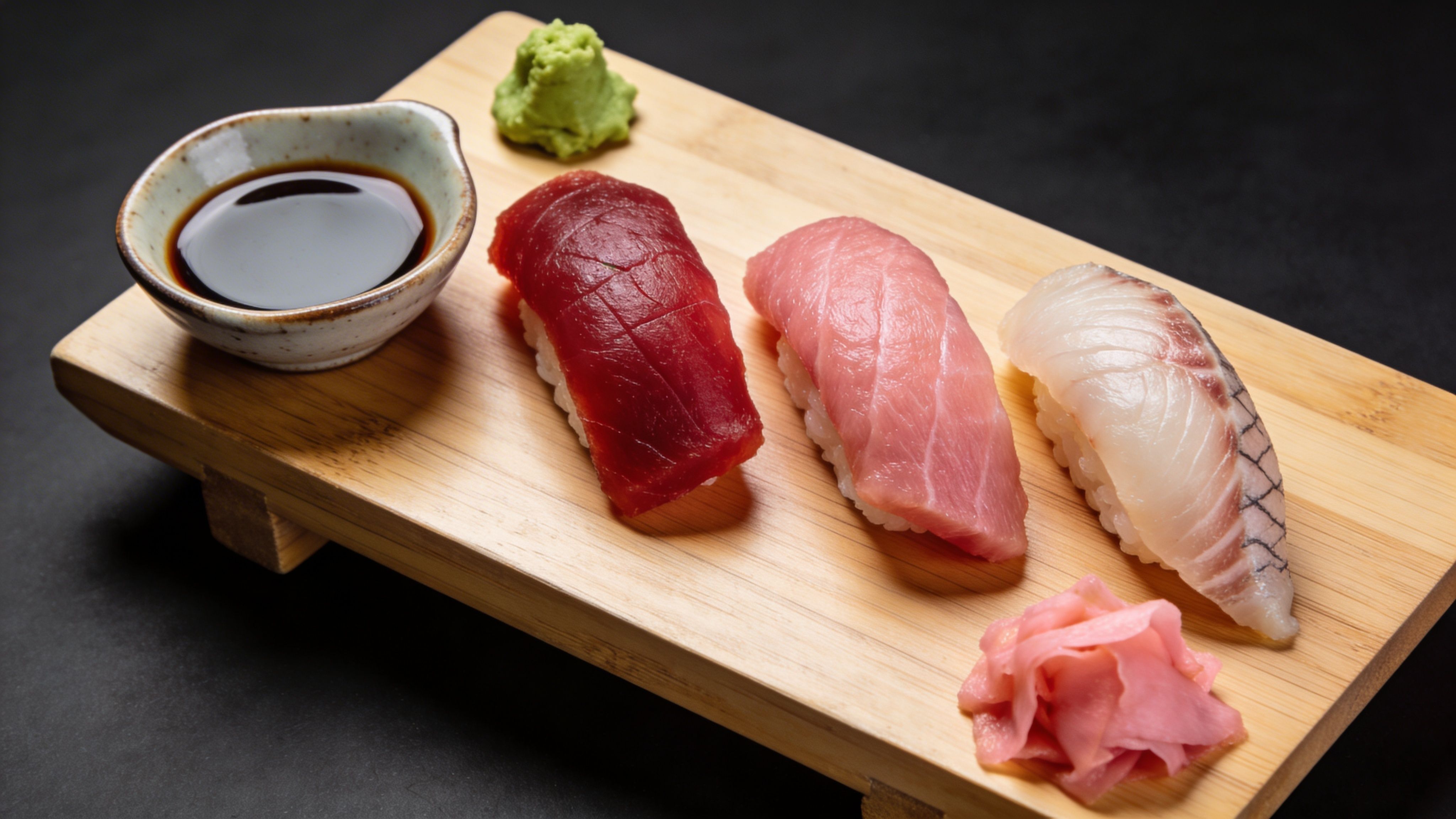
You’re probably here because you saw the word maguro on a sushi menu, a Japanese grocery listing, or a restaurant reel online and thought, “I know tuna, but what exactly is maguro?”
That question comes up all the time, especially when a menu starts layering on terms like akami, chutoro, and otoro. For many international diners, maguro feels familiar and mysterious at the same time.
In Japanese cuisine, maguro isn’t just a generic fish name. It’s one of the clearest examples of how Japan treats ingredients with precision, respect, and deep culinary memory. Once you understand the fish, the cuts, and the way it’s served, the whole sushi experience starts to make much more sense.
An Introduction to Maguro The King of Sushi
You sit down at a serious sushi counter. The chef places the menu in front of you. You recognize salmon, maybe eel, maybe shrimp. Then one word keeps appearing: maguro. Under it are other words you may not know yet, such as otoro and chutoro.
That small moment of confusion is normal.

In the simplest sense, maguro means tuna in Japanese. But in practice, it means much more than that. It can refer to different tuna species, different parts of the fish, and very different eating experiences depending on fat content, texture, and preparation.
In Japan, maguro holds exceptional cultural and commercial importance and is described as the most popular fish in the country, with global consumption continuing to expand beyond Japan as more diners discover it and seek healthier seafood choices. The same guide also notes that moderation matters because of potential heavy metal concerns, especially with frequent consumption (Japanese Taste’s maguro guide).
Why maguro matters so much
Maguro sits at the heart of Japanese sushi culture because it offers range.
A single fish can give you lean, iron-rich red flesh with a clean finish. It can also give you soft, marbled belly cuts that feel almost buttery on the tongue. Few seafood ingredients move across that spectrum so beautifully.
If you’re still building your Japanese food vocabulary, it helps to understand that maguro also teaches you a lot about umami, the savory depth that makes Japanese food so compelling. This guide to what is umami flavor is a useful companion if you want to understand why one piece of tuna can taste gentle and another can feel rich and lingering.
Maguro is one of the best examples of how Japanese cuisine rewards attention. The more closely you look, the more clearly you taste.
A better way to think about it
Don’t think of maguro as one fixed thing.
Think of it as a category with its own hierarchy, language, and traditions. That’s why a diner can love one piece of tuna sushi and dislike another, even though both are technically “tuna.”
Understanding the Different Maguro Species
The first thing to know is that when Japanese people say maguro, they may be speaking broadly about tuna, or very specifically about a prized variety. That’s where many first-time diners get lost.

Hon maguro
Hon-maguro usually refers to bluefin tuna, especially the premium bluefin associated with top-tier sushi.
This is the fish people are usually talking about when they speak with awe. It’s the most sought-after type of maguro. According to Bluefina, the record bluefin weighed 1,496 pounds, and in 2019 a single bluefin sold for $3 million at auction in Japan, which shows how prized this fish has become in the culinary world (Bluefina on maguro).
Its appeal comes from balance. Hon-maguro can offer excellent lean meat, but it’s especially famous for the marbled toro cuts that sushi lovers chase.
Kihada
Kihada means yellowfin tuna.
It’s often lighter in flavor and less fatty than bluefin. That doesn’t make it inferior in every case. In fact, many diners enjoy kihada because it tastes clean, bright, and easy to understand. If you’re someone who finds very fatty fish overwhelming, kihada can be a better place to start.
You’ll often see this kind of tuna in more everyday sushi settings, casual sashimi platters, and pantry products.
Mebachi
Mebachi is bigeye tuna.
It often lands somewhere between lean and rich. It usually gives you more depth than a very light tuna, while staying more restrained than the richest bluefin belly cuts. For many sushi eaters, mebachi feels like the middle road.
That middle position is part of its charm. It can satisfy people who want more flavor without going all the way into the luxurious weight of otoro.
For a closer look at Japanese seafood beyond raw fish counters, this article on Japanese dried fish snacks shows how broad Japan’s fish culture really is.
Why species changes the whole experience
Two pieces of “tuna sushi” can taste very different because they may come from different species before cut even enters the conversation.
That’s why experienced sushi chefs care about naming fish accurately. The species affects:
- Fat level. Some tuna are naturally leaner.
- Texture. Some cuts feel firmer, others softer.
- Flavor style. One may taste clean and mineral. Another may taste rich and lingering.
- Price. Rarity and prestige matter a great deal in Japanese seafood culture.
A short visual helps make the distinction easier:
One more detail worth knowing
In Japanese usage, names can also reflect age and size. The Bluefina guide notes that bluefin may be classified by stage, beginning as “Meji,” becoming “Chubou” at roughly 40kg between 2-5 years old, and called “Maguro” once it exceeds 50kg. The largest fish may reach 3 meters and 600kg or more in that classification system.
That detail tells you something important. Japan doesn’t approach tuna casually. It approaches it with fine distinctions, because those distinctions affect taste, value, and how the fish is appreciated at the table.
The Three Famous Cuts Akami Chutoro and Otoro
If species tells you what kind of tuna you’re eating, the cut tells you what kind of experience you’re about to have.
That’s the next leap in understanding what is maguro. A sushi chef isn’t only choosing tuna. The chef is choosing a specific part of the fish.
Akami
Akami is the lean red meat.
It usually comes from the back and upper body. This is the cut many diners think of when they picture classic tuna sashimi. It’s deep red, firm, and clean-tasting. The flavor is more direct than lush.
Akami is often the cut that wins over people who say they “don’t like fatty fish.” It has structure. It chews with purpose. It tastes fresh rather than indulgent.
Chutoro
Chutoro sits in the middle.
It comes from the side of the belly area and contains a moderate amount of fat. Chutoro often sparks a love for maguro in many. Chutoro gives you more richness than akami, but it still keeps enough firmness to feel balanced.
If akami is all clarity and otoro is pure luxury, chutoro is harmony.
Ordering tip: If it’s your first high-end tuna experience, chutoro is often the safest first choice. It shows you the signature richness of maguro without overwhelming your palate.
Otoro
Otoro is the richest, fattiest cut, usually from the lower belly.
This is the piece that seems to soften almost instantly in the mouth. The marbling is what creates that melting quality. It’s luxurious, heavy in the best way, and usually the most expensive of the standard cuts.
Sushi-pedia notes that the location of the cut directly affects both texture and price. It also points out that rare delicacies such as noten from the forehead and kama toro from the collar are highly prized, and that top fatty cuts such as otoro can exceed $100/kg at auction. The same source explains that super-freezing at -60°C is critical for preserving premium quality for international markets (Sushi-pedia on maguro cuts).
Why fat changes taste so much
Fat doesn’t just make tuna richer. It changes texture, aroma, and the speed at which flavor spreads across your palate.
Lean tuna asks you to pay attention. Fatty tuna almost announces itself immediately.
That’s why one person may call akami elegant while another calls it plain. It’s also why one person may find otoro sublime while another finds it too rich. Neither is wrong.
Maguro Cuts Compared
| Cut | Part of Tuna | Fat Content | Color | Taste & Texture |
|---|---|---|---|---|
| Akami | Back and upper lean sections | Low | Deep red | Clean, meaty, firm, slightly iron-rich |
| Chutoro | Mid belly and side belly area | Medium | Pink to light red with marbling | Balanced, smooth, richer but still structured |
| Otoro | Lower belly | High | Pale pink with heavy marbling | Soft, buttery, melting, intensely rich |
Rare cuts you may see on serious menus
Some counters go beyond the famous three.
You may encounter:
- Noten. Forehead meat, rare and prized.
- Kama toro. Collar meat, rich and flavorful.
- Negitoro. Minced fatty tuna, often served with scallions.
- Zuke maguro. Tuna marinated in soy-based seasoning.
These names can feel intimidating at first, but they all follow the same logic. Different parts of the fish create different textures, and Japanese cuisine names those differences instead of flattening them into one generic label.
Common Ways Maguro is Served in Japan
Once you understand the fish and the cuts, the menu starts looking much friendlier. You can see not just what maguro is, but how Japanese cooks and sushi chefs choose to present it.

Nigiri and sashimi
The purest ways to eat maguro are nigiri and sashimi.
Nigiri places a slice of tuna over seasoned rice. Sashimi serves the fish on its own. In both forms, the goal is simple. Let the fish speak clearly.
With akami, that means a direct, fresh, savory bite. With chutoro or otoro, it means allowing the fat to warm slightly and release aroma as you eat.
Donburi and negitoro
Maguro also appears in rice bowls.
A tekkadon is a bowl of tuna sashimi over rice. It’s less formal than sushi, but it can be every bit as satisfying. It gives you a way to enjoy good tuna in a fuller, more everyday meal.
Negitoro is another favorite. It’s minced fatty tuna, usually mixed or served with scallions. Soft, rich, and easy to eat, it’s often the tuna dish that wins over people who are nervous about sashimi because the texture feels less severe and more comforting.
Cooked preparations
People outside Japan sometimes assume maguro must be eaten raw. That isn’t true.
Some cuts are grilled. The collar, or kama, is especially loved for this. When cooked, it becomes rich and savory in a different way, closer to roasted fish than delicate sashimi.
That range is one reason tuna remains so central to Japanese eating. It works at the highest sushi counter, but it also works in home cooking and everyday meals.
Good maguro doesn’t have to mean formal dining. In Japan, it can be elegant, casual, celebratory, or practical.
High-quality canned maguro
This surprises many first-time shoppers. Japanese tuna culture also includes very good canned options.
A quality Japanese canned tuna product can be useful for:
- Onigiri fillings for quick lunches
- Japanese-style tuna salad with mayo and seasonings
- Rice bowls topped with soy sauce, nori, and scallions
- Simple pantry meals when fresh fish isn’t practical
Canned tuna allows international diners to enjoy Japanese tuna culture at home without needing access to a sushi counter. Good canned tuna from Japan often aims for cleaner flavor and better texture than the flat, watery image many people associate with standard supermarket tins.
If you enjoy roe and other seafood toppings, this guide on tobiko vs masago pairs nicely with a deeper dive into sushi toppings and texture.
A useful way to choose
If you want the purest expression, choose sashimi.
If you want balance, choose nigiri.
If you want comfort, choose donburi.
If you want convenience at home, look for thoughtfully made canned Japanese tuna and build the bowl yourself.
The Nutritional Value and Health Aspects of Maguro
Maguro’s popularity isn’t only about taste. Many diners are also drawn to it because tuna is associated with protein and beneficial fats.
That said, this is one of those foods where enjoyment and awareness should go together.
Lean cuts and fatty cuts
Akami and toro don’t just taste different. They also offer a different eating profile.
Leaner cuts such as akami tend to feel lighter and more direct. Fattier cuts such as chutoro and otoro feel richer because of their higher fat content. That fat is part of why tuna is often discussed as a seafood source of omega-3s.
One verified source in the research set notes that maguro can be a strong omega-3 source and that raw tuna for sushi needs careful handling to ensure safety, especially around temperature control and freshness standards (Matcha on sushi-grade tuna and food safety).
What sushi-grade really means in practice
“Sushi-grade” isn’t just a marketing phrase diners should accept blindly.
For raw preparations, it signals that the fish has been handled with close attention to freshness and temperature. That matters because raw tuna is only enjoyable when texture and safety are protected from the beginning of the supply chain to the moment it reaches your plate.
Moderation matters
A balanced view is the best view here.
The same body of verified material notes concerns around mercury and recommends moderation, including limiting intake to no more than 100 grams per meal or eating maguro no more than once weekly in order to reduce heavy metal accumulation, as summarized in the beginner-focused maguro guide cited earlier in this article.
For people who are building more structured eating habits, it can also help to place seafood meals within broader high-protein, low-carb meal plans so variety stays high and you don’t rely too heavily on one ingredient.
A practical way to enjoy it
You don’t need to think of maguro as an everyday staple to appreciate it well.
A good rhythm is to treat it as a special seafood choice, enjoy high-quality portions, and vary the rest of your diet with other fish and proteins. If you’re curious about the broader nutritional logic of Japanese eating, this article on is Japanese food healthy what really makes it so powerful is worth reading.
Maguro Sustainability and Seasonality
A serious conversation about maguro has to include sustainability.
Bluefin tuna is admired for good reason, but admiration alone isn’t enough. If demand grows without care, the fish becomes harder to protect.
Why responsible choices matter
One of the verified materials notes a major gap in many maguro guides. They celebrate taste and prestige but often skip sustainability. It also states plainly that some tuna species, including Pacific bluefin, face population pressures from overfishing and that responsible consumption matters for the future of this food tradition (Shiros on sustainable maguro choices).
That doesn’t mean diners need to stop being curious. It means curiosity should include sourcing.
What to look for as a consumer
If you’re buying tuna or ordering it often, ask better questions.
Look for:
- Species information. “Tuna” is too vague.
- Origin details. A transparent seller should know where it comes from.
- Handling information. Especially important for raw use.
- Sustainability signals. Certifications, fishery details, or clearer sourcing practices.
When seafood shoppers start asking these questions, sellers have more reason to provide real answers.
A respectful approach to Japanese food includes respect for the ingredients and for the waters those ingredients come from.
Seasonality in the Japanese mindset
Japanese cuisine values shun, the idea that foods have a best season.
With maguro, seasonality isn’t always simple to summarize for every species and region, but the mindset still matters. Tuna is not only judged by species and cut. It’s judged by when and where it is at its best. Serious buyers and chefs pay attention to that.
If sustainability is part of how you shop, it’s often helpful to think beyond one issue at a time. Packaging and food-contact concerns matter too. This guide on how to avoid microplastics in food offers broader context for people trying to make more thoughtful food choices overall.
A Shoppers Guide to Japanese Tuna
Reading about maguro is one thing. Buying it well is another.
If you’re shopping fresh tuna locally, start with your senses and your seller.
What to look for
Fresh tuna for raw use should look vibrant, not tired. Texture should appear firm rather than slack. The smell should be clean.
Ask direct questions:
- Is it intended for raw consumption?
- How was it stored?
- When was it cut?
If the seller can’t answer clearly, move on.
Storing it at home
Tuna is not a fish to buy casually and leave in the refrigerator for too long.
Keep it cold, keep it wrapped properly, and plan to eat it promptly. If you buy frozen sushi-quality tuna, thaw it carefully according to seller guidance and avoid repeated temperature swings.
Building a Japanese-style tuna meal
Even simple tuna becomes more convincing when the supporting ingredients are right.
For home meals, focus on authentic pantry basics such as:
- Soy sauce for dipping or marinating
- Wasabi for heat and aroma
- Rice with proper seasoning for bowls or nigiri-style experiments
- Nori and scallions for donburi or negitoro-style toppings
If you’re shopping for those staples from Japan, this guide to Japanese food products online is a practical starting point.
Fresh isn’t the only valid path
If high-quality raw tuna isn’t easy to find where you live, don’t force it.
Japanese pantry tuna, seasonings, and rice-based dishes can still give you an authentic route into maguro culture. It’s better to make a good rice bowl with quality ingredients than to buy questionable raw fish and hope for the best.
Your Maguro Questions Answered
Is maguro the same as tuna
Broadly, yes. Maguro is the Japanese word for tuna. In real dining situations, though, it often carries more detail than the English word “tuna” does because it may imply a specific species, cut, or quality level.
What should a first-time diner order
If you want a clean, classic taste, start with akami. If you want more richness without going all the way to full-fat luxury, choose chutoro.
Why does Japanese canned tuna often taste different
Because product style, oil or broth choice, tuna quality, and intended use can differ a lot from standard mass-market canned tuna. Japanese pantry products are often designed with rice dishes, sandwiches, salads, and onigiri in mind.
Is the most expensive cut always the best
Not necessarily.
Otoro is famous for a reason, but some diners prefer the clarity of akami or the balance of chutoro. “Best” depends on your palate, not just the market price.
If you want to bring authentic Japanese food into your home with confidence, Buy Me Japan is a practical place to start. It offers Japanese pantry staples, seafood-friendly seasonings, and trusted products shipped directly from Japan, which makes it easier to build a more authentic maguro experience wherever you live.


Share:
Perfect Whip Cleanser Guide for Flawless Japanese Skincare
&honey Hair Oil: Japanese Beauty Secret for Hydrated Hair