


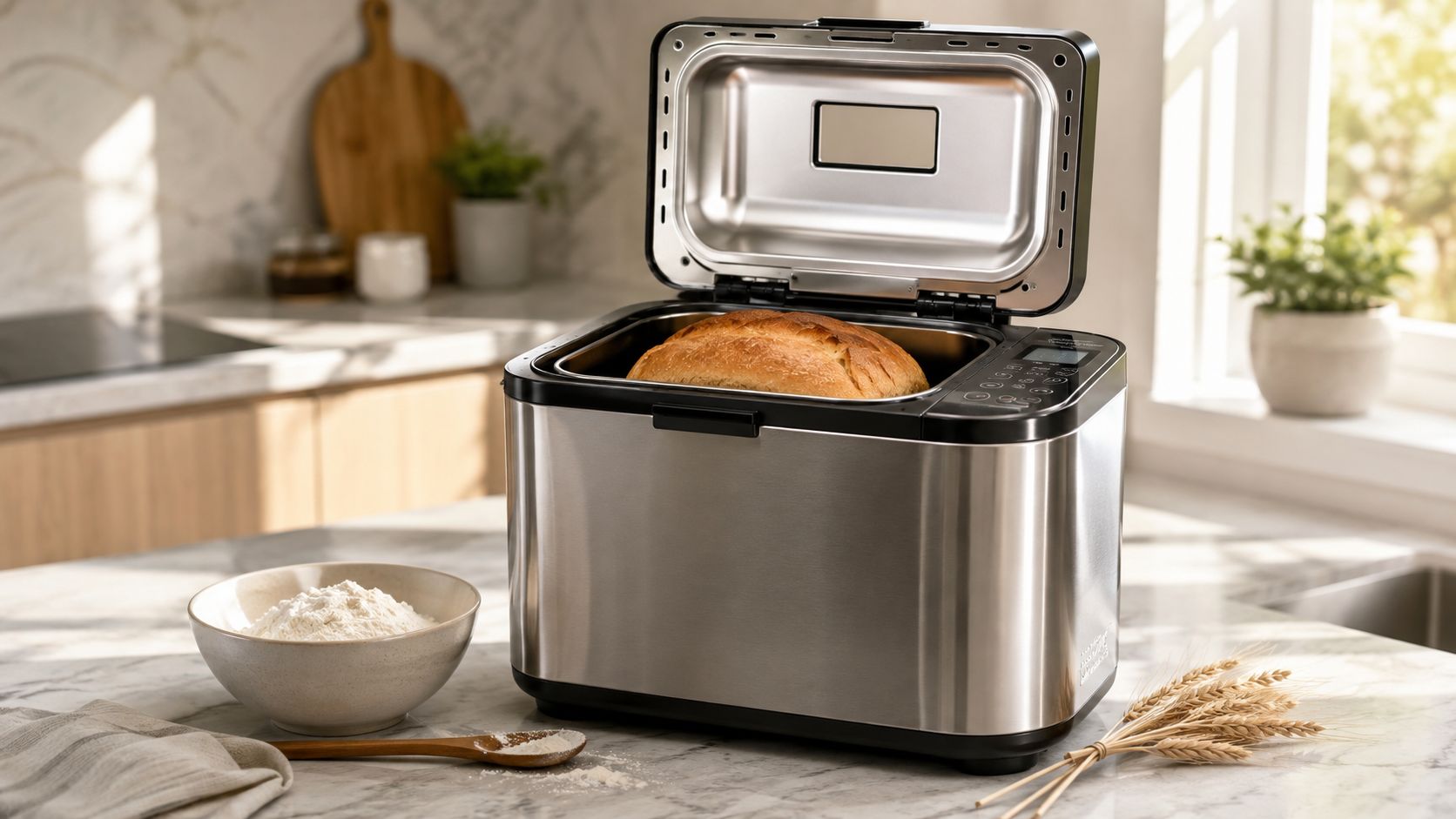
A bread maker with a stainless steel pan sounds like the obvious upgrade from non-stick, but the biggest surprise is that bare stainless steel usually makes loaf release harder, not easier. You gain a pan that doesn't depend on a coating, yet you must manage dough, moisture, heat, and cleaning more carefully.
Japanese home bread machines provide useful context. Panasonic says it built on Japan's first household self-contained breadmaker, released in 1986, and became the first brand to sell breadmakers worldwide in 1987. By 2017, Panasonic said its breadmaker production had reached 10 million units (Panasonic's history and stainless-steel-pan context). That history explains why coated pans became the norm, and why stainless-steel models remain a specialist choice.
This guide focuses on the decision that matters: whether the durability and uncoated surface justify more demanding release and baking behavior. You'll learn how stainless steel affects browning, which machine features matter, how to adjust recipes, and who should buy one from Japan.
What Makes a Bread Maker With Stainless Steel Pan Different
Stainless-steel bread makers exist mainly because coated pans eventually wear, not because stainless steel automatically produces better bread. Traditional bread machines were built around coated non-stick pans, and stainless-steel-pan models arrived later as a response to durability, coating-wear concerns, and demand for uncoated food-contact surfaces.
Home bread machines moved from a niche Japanese innovation into a global appliance category after the late 1980s. That timing matters. Manufacturers had already developed machines around PTFE-coated pans, which offered a practical advantage that home bakers immediately notice: dough and baked loaves release with relatively little effort.

Why stainless steel entered the category
One manufacturer describes PTFE-coated surfaces as the standard for bread-machine pans for more than half a century, with conventional non-stick coatings used in cookware since the 1940s (Sana Smart Bread Maker product information). The same manufacturer presents an uncoated stainless-steel pan as a response to customers who want to avoid a coating altogether.
That choice solves one problem while creating another. A coating can chip, flake, or abrade through kneading and repeated baking. Bare stainless steel doesn't have that coating to wear away, but dough can bond directly to the metal, particularly when the recipe is sticky, enriched, or low in oil.
My practical view: choose stainless steel for long-term pan durability and an uncoated interior, not for effortless release.
Availability is another issue. Stainless-steel-pan bread makers remain rare, and one manufacturer describes its Smart Bread Maker as the only home bread machine on the market with an uncoated stainless-steel pan. Sana's range also distinguishes between models, with stainless-steel baking pans and kneaders listed for the Standard and Exclusive versions rather than the Basic model (Sana's stainless-steel pan range).
For international shoppers, that scarcity makes specifications especially important. A machine described as “stainless steel” may use a fully uncoated pan, a stainless-clad construction, or a coated interior with a stainless exterior. Read the product description carefully, then confirm whether the dough-contact surface is genuinely uncoated.
If you're comparing Japanese kitchen equipment more broadly, the material decision also appears in products such as this guide to a stainless steel carafe, although a bread pan has different release and heat requirements.
How Stainless Steel Changes Heat and Browning in Bread
Stainless steel changes the loaf before you taste it. Pan material affects how quickly heat reaches the dough, how the base browns, and whether the crust develops evenly.
304 stainless steel has thermal conductivity of about 16.2 W/m·K at room temperature and about 21.5 W/m·K at 500°C (stainless-steel heat distribution data). That is much lower than aluminum-cored construction, so a solid stainless pan spreads heat less efficiently.

Solid stainless steel versus stainless-clad construction
A solid stainless-steel pan offers corrosion resistance, structural strength, and an interior without a coating. It handles repeated kneading and baking without depending on a surface layer that can wear down.
Heat distribution is the compromise. A pan that transfers heat slowly or unevenly may produce a darker bottom while the upper crust remains lighter. Stainless-clad construction, particularly with a more conductive core, can spread heat more consistently while keeping stainless steel against the dough.
Check the construction, not only the product title. Two machines may advertise a stainless-steel pan yet bake noticeably different crusts because their layers and cores differ.
Why machine design matters
A bread maker can offset stainless steel's slower heat spread through its temperature and program design:
- Lower baking temperatures can limit heavy bottom browning.
- Moisture retention can keep the dough surface flexible longer.
- Multi-layer construction can distribute heat more evenly.
- Program control can coordinate kneading, proofing, and baking more precisely.
One stainless-steel-pan machine lists a maximum temperature of 230°C and a normal baking range of 150–180°C. Those specifications show why the bake cycle matters, as noted in the Sana Smart Bread Maker specifications. A machine built around moderate, controlled heat can produce a more even loaf than one that drives intense heat into a poorly spreading pan.
Crust settings matter too. A darker program may correct a pale loaf, but it can intensify browning at the base of a solid stainless pan. Begin with the standard program, inspect the first loaf, then change one setting at a time. If the base darkens before the top, reduce the crust setting or choose a gentler bake program rather than changing the recipe immediately.
Imported appliances require the same practical check. Confirm power requirements, plug type, and shipping specifications before buying. The guidance also applies when comparing an electric kettle from Japan, since a Japanese machine may not work directly with every country's electrical supply.
Stainless Steel Compared to Non-Stick and Ceramic Pans
Choose the pan material by deciding which problem you would rather manage. Stainless steel avoids concern about coating wear, non-stick offers the easiest loaf release, and ceramic occupies the middle ground. Bare stainless steel also changes baking results, because dough hydration, release technique, and machine settings matter more than they do with a coated pan.
A fully uncoated stainless pan demands the most attention during release. Plain steel does not provide the low-friction surface associated with non-stick, so sticky dough can cling to the sides or collect beneath the kneading paddle. Ceramic may provide a non-PTFE option, but check whether its surface is bonded over another material and whether the pan is actually uncoated.
Bread Maker Pan Materials Compared
| Material | Release Performance | Expected Lifespan | Cleaning | Key Trade-off |
|---|---|---|---|---|
| Uncoated stainless steel | Requires recipe and technique control; sticking is possible | Strong resistance to coating wear and repeated heat | Soak, soften residue, and use non-abrasive tools | Durable surface, more demanding release |
| PTFE-coated non-stick | Usually the easiest release | Coating can abrade through kneading and repeated bake cycles | Gentle hand washing and careful utensil use | Convenient release, surface-wear concern |
| Ceramic-coated | Often easier release than bare steel | Depends on the coating and maintenance | Follow the manufacturer's care instructions | Non-PTFE positioning may come with coating-care limits |
Independent bread-machine guidance identifies coating wear as a common failure mode in conventional pans. It also reports that heavy users may replace coated pans every 2–4 years (bread-machine pan wear guidance). That timeframe does not predict every pan's service life, but it makes replacement-part availability part of the ownership calculation. A cheaper machine can cost more if its coated pan is difficult to replace.
The safety question needs precision
A stainless-steel pan suits buyers who want an uncoated food-contact surface, but it does not automatically make baking easier. Non-stick is not automatically unusable either. Compare the machine's temperature range, pan construction, care instructions, and the release work you are willing to do.
One manufacturer explains that its basic model uses PTFE within its listed operating conditions, while stainless versions target buyers seeking an uncoated option (Sana Smart Bread Maker technical explanation). That distinction is more useful than declaring one material universally safe or superior.
Bare stainless also resembles other durable cookware that rewards technique over effortless release. A Japanese cast-iron frying pan illustrates the same trade-off. Bread-machine pans work differently, but longevity and convenience still require separate evaluation. Choose stainless if you accept careful greasing, suitable dough hydration, and occasional cleanup. Choose non-stick if reliable release is your priority. Choose ceramic only after confirming its construction and maintenance requirements.
Key Features to Look for in a Bread Maker With Stainless Steel Pan
A stainless pan does not make every bread maker a good buy. I would judge the machine by pan construction, kneading reliability, program control, and replacement support before paying for extra menu functions. Bare steel changes release and browning, so the right machine must give you enough control to manage both.
Confirm the food-contact surface
Read the specification sheet closely. Look for exact wording such as “uncoated stainless steel pan,” “SUS 304,” or “18/8 stainless steel.” Some designs use SUS 304, also called 18/8 stainless steel, with glass lids intended to help reduce sticking and retain moisture. Treat that as a design detail, not a promise of effortless release.
A stainless exterior does not prove that the dough touches stainless steel. Ask whether the interior is bare steel, ceramic, or coated. If the listing avoids that answer, assume the material claim is incomplete and ask the seller before ordering.
Inspect the kneading system
With no coating to buffer contact, the kneader and its fit matter more. The mechanism should turn dense dough without constant scraping against the pan. Check whether the kneader is stainless steel, whether the shaft seal can be replaced, and whether the kneader comes out cleanly after baking.
Pan geometry affects removal too. Straight sides can make a loaf easier to lift, while deep corners can hold dough and baked crust. A glass lid lets you watch proofing and can help retain moisture, but it does not prevent sticking. Plan to use suitable hydration and greasing rather than relying on the lid or pan material.
Prioritize adjustable programs
Look for these controls:
- Crust control, to reduce aggressive browning when the base darkens too quickly.
- Custom bake settings, to shorten or moderate the bake after testing.
- Separate knead, rise, and bake stages, for recipe adjustments and dough experiments.
- Delayed start and timer functions, only if the selected program can safely hold the ingredients.
- Pause or manual intervention, so you can remove the kneader or reshape dough when the recipe permits.
Match capacity to your usual batch. A pan that is too large can produce a squat loaf with more exposed surface, while an oversized dough batch may touch the lid or bake unevenly. Follow the manufacturer's stated capacity instead of estimating from the pan's outside measurements.
Treat replacement support as a buying requirement
Stainless steel can avoid coating wear, but seals, kneaders, drive parts, and lids still age. Before an international order, confirm that replacement pans and kneaders are listed, delivery reaches your location, and the instructions are usable for you.
Buy Me Japan is one option for Japanese products and direct-from-Japan purchasing. Verify the exact bread-maker listing, voltage, plug, warranty terms, and replacement-part policy before paying. Long-term parts access belongs in the purchase price calculation. A machine that costs less but leaves you searching for a pan is not the cheaper choice.
Adjusting Dough and Machine Settings for Stainless Steel Results
My first stainless-pan loaf would have been easier to release if I'd treated the recipe as a fixed formula. Bare steel rewards small adjustments, especially with enriched doughs that contain milk, sugar, butter, or eggs.
Start with a dough that has enough moisture to remain supple but isn't so wet that it smears against the pan walls. Add fat in a controlled way, because oil or butter can reduce direct adhesion between the baked loaf and the steel. Don't compensate by flooding the pan with oil. Excess fat can alter the crumb and may collect around the kneader shaft.
A practical enriched-dough approach
For a sweet, enriched loaf, I'd use this sequence:
- Use the machine's standard recipe first. Change only one variable after the initial bake.
- Watch the dough during kneading. It should gather into a soft mass rather than remain a liquid paste.
- Increase hydration modestly if the dough looks dry and tears. Dry dough can press firmly against the pan and bake into a dense lower crust.
- Add a little more fat if release is poor. Keep the change small so you can identify its effect.
- Choose a lighter crust setting for the first trial. Stainless steel can make bottom browning more noticeable.
- Allow a short rest before removal. A brief cooling period can help the crumb firm and reduce tearing.
A bread maker's program also matters. If the machine lets you reduce bake intensity or adjust timing, start conservatively. If the bottom browns before the center finishes, the issue may be heat distribution rather than inadequate baking.
Keep kitchen comfort separate from baking assumptions. For example, Yuskin I Medicated Cream For Itchy Skin 110g is cataloged as a steroid-free cream containing Crotamiton, Diphenhydramine, Glycyrrhetinic acid, glycerin, and olive oil for itchy skin, but it has no connection to bread-pan performance or food preparation.
Release technique matters as much as recipe design
Don't attack a stuck loaf immediately with a knife. Disconnect the pan according to the machine's instructions, let it cool enough to handle, and gently loosen the sides with a suitable silicone or wooden tool if the manufacturer permits it. For recurring sticking, test a different recipe before deciding the pan is defective.
The best stainless-steel workflow is controlled experimentation. Record the program, crust setting, dough texture, and release result. After a few bakes, you'll know whether your machine needs more moisture, more fat, a gentler crust setting, or a different removal routine.
Cleaning and Maintenance for a Stainless Steel Bread Pan
Stainless steel gives you a durable food-contact surface, but careless cleaning can still damage the pan, the drive seal, or the machine connection. The safest routine is simple: remove the pan, let residue soften, wash gently, rinse thoroughly, and dry it completely before storage.
A low-risk cleaning routine
After the bake, remove loose crumbs while the pan is still manageable. Fill the pan with warm water and a small amount of mild dish soap, then let stuck dough soften before using a soft sponge or nylon brush.
For baked-on residue, cover the area with warm water and allow time for the bond to loosen. A gentle boil-and-release approach can help on suitable removable pans, followed by a wooden or silicone tool and normal washing. Don't force residue off while the metal is dry.
For discoloration, a mild vinegar rinse can help with heat marks or mineral spots. Rinse afterward and dry immediately. Stainless steel may show cosmetic changes from heat or water, but those marks don't automatically indicate a failed pan.
What shortens pan life
Avoid steel wool, harsh scouring pads, chlorine-based cleaners, and aggressive abrasive powders. They can scratch or chemically damage the surface. Don't pour cold water into a very hot pan, because abrupt temperature changes can contribute to warping.
Dishwasher use deserves a cautious answer. If the manufacturer explicitly approves it, follow that guidance. If the instructions are silent, I'd hand-wash, especially around the kneader shaft, seal, and external drive connection. Dishwasher detergent, heat, and repeated drying cycles may be harder on the mechanical parts than on the steel itself.
Cleaning rule: stainless steel forgives residue more readily than a worn coating, but it doesn't forgive careless tools.
Never use metal utensils to pry out a loaf or scrape the pan. Store the pan where it won't rub against other metal objects. A durable surface can still collect scratches, and the shaft seal remains a component that deserves gentle handling.
For readers interested in Japanese cookware care more broadly, the maintenance principles in this guide to a River Light wok reinforce the same lesson: cleaning technique is part of ownership, not a separate chore.
Common Mistakes and Troubleshooting Stainless Steel Pan Loaves
The most common mistake is assuming stainless steel means non-stick without chemicals. It doesn't. Bare stainless steel can stick, and user discussions repeatedly describe that problem, especially when shoppers discover that some products marketed as stainless still contain an interior coating (bread-machine stainless-steel pan discussion).
When the loaf sticks
Check the dough first. Enriched dough, high sugar, low fat, and excessive surface moisture can all make release more difficult. Let the loaf rest briefly, loosen the sides carefully, and inspect whether the kneader is trapping the base.
If the sticking happens every time, test a recipe with a slightly different hydration and fat balance. Don't change flour, liquid, fat, and program simultaneously, or you won't know what fixed the issue.
When the bottom browns too much
Use a lighter crust program if available. Confirm whether the pan is solid stainless or stainless-clad, because construction affects heat spread. Uneven browning can indicate that the machine's bake profile wasn't designed around that pan style.
When the loaf is dense underneath
A dense bottom may come from dough that is too dry, insufficient proofing, or a bake cycle that sets the base before the loaf expands fully. Observe the kneading stage and check whether the dough forms a cohesive, elastic mass. If the machine offers separate programs, compare a standard cycle with a gentler custom cycle.
When dough climbs the paddle
Stop treating the paddle as a minor detail. A sticky dough can wrap around it and leave a torn crater beneath the loaf. Reduce excess water gradually, improve the dough's structure through the machine's kneading cycle, and remove the paddle before the final rise if the manufacturer's instructions allow it.
A stainless pan is not a shortcut. It gives you a different maintenance profile, and you must decide whether durability outweighs effortless release for the way you bake.
Is a Bread Maker With Stainless Steel Pan Worth Buying
A bread maker with stainless steel pan is worth buying if your priority is an uncoated food-contact surface, resistance to coating abrasion, and long-term pan durability. It's a poor fit if you want every loaf to release cleanly without recipe adjustments or careful cleaning.
The category remains niche because conventional coated pans solve release reliably, while stainless models ask users to manage sticking and browning. Consumer interest in PFAS-free and non-stick-free cookware has made stainless and ceramic alternatives more relevant, but demand hasn't removed the practical compromise. As recent product discussions note, many machines described as stainless steel still use an interior non-stick or ceramic layer, so the specification must be checked rather than assumed (uncoated bread-machine pan discussion).
My recommendation is direct:
- Choose bare stainless steel if you accept a learning curve and care most about avoiding coating wear.
- Choose coated non-stick if effortless release is your top priority.
- Choose ceramic or stainless-clad construction if you want a compromise, but verify the exact food-contact layer.
- Before ordering from Japan, confirm voltage, plug compatibility, replacement parts, pan construction, and shipping terms.
For broader guidance on authentic Japanese goods and purchasing considerations, explore products in Japan. The right purchase isn't the one with the most attractive material claim. It's the one whose pan, program controls, maintenance demands, and support match your actual baking habits.
Buy Me Japan connects international shoppers with Japanese products shipped directly from Japan, including carefully cataloged beauty, lifestyle, and kitchen-related goods. Visit Buy Me Japan to compare authentic Japanese products and make your bread-machine purchase with the pan construction, care requirements, and compatibility details in mind.

Share:
How Do You Cook Bean Threads Made Simple and Perfect
How to Use Zote Soap for Laundry: The Complete Guide