


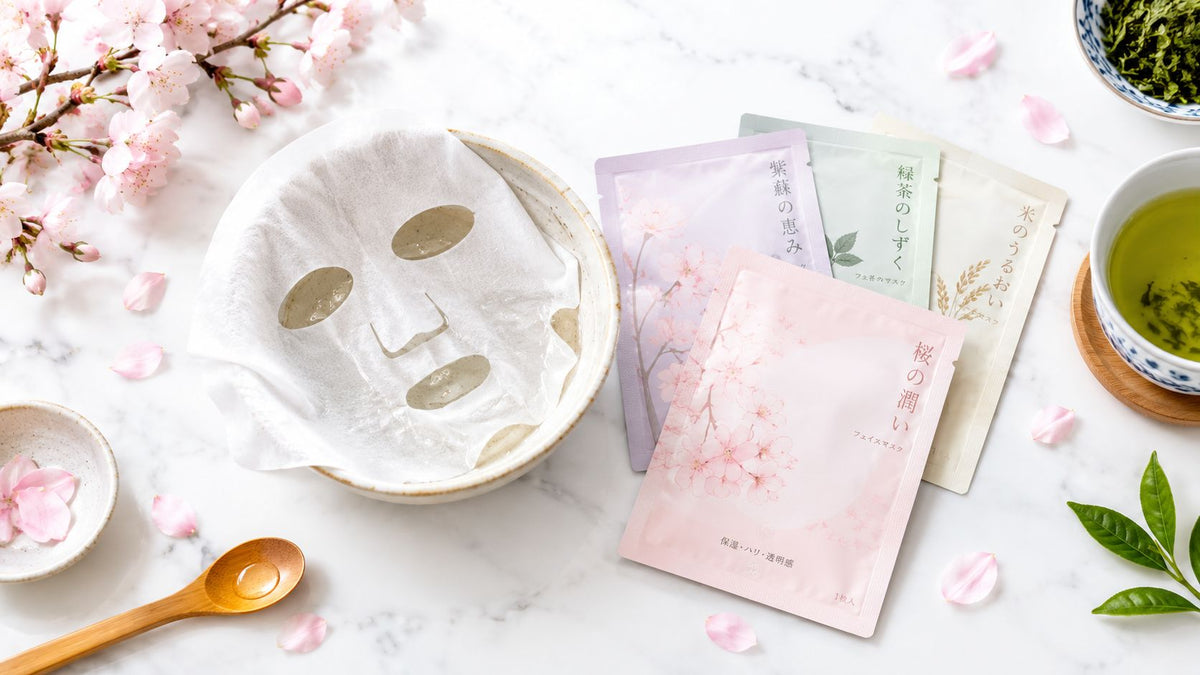
You've bought a bulk pack of Japanese sheet masks, placed one on your face, and then wondered whether leaving it on longer will make the hydration last longer. Or perhaps the packaging says “daily,” while the ingredient list includes a brightening active that feels more like a treatment than a simple moisture step. Japanese daily sheet masks work best when you judge the formula, the wear time, and your own skin tolerance together, rather than trusting the front label alone.
Japan's masking culture was built around convenient, repeatable hydration. The most suitable products are usually light, short-wear masks that fit between cleansing and moisturizer. This guide will help you distinguish those formulas from occasional treatment masks, read ingredient patterns, choose a suitable category for your skin, and use each sheet without turning a simple routine into an irritating one.
Why Daily Sheet Masks Became a Japanese Habit
A shopper can find a large pack labeled “daily,” use it after cleansing, and assume the label guarantees gentle everyday care. Japanese sheet masks became popular for a more practical reason: they turned a small hydration step into something people could repeat. One industry summary reports that domestic face-mask shipments grew from 5.0 billion sheets in 2011 to 20.0 billion sheets in 2023, while sales value rose from about ¥30 billion to about ¥150 billion. That equals roughly 4x volume growth and 5x value growth in 12 years, helping masks move from occasional treats toward routine maintenance. The Japanese sheet-mask market summary also estimates that online sales accounted for 20–25% in 2024, showing how digital shopping became part of the category.
The routine matters as much as the sheet
The appeal is straightforward. A daily sheet mask requires little preparation, comes saturated with essence, and fits after cleansing and toner or lotion. There is no powder to mix, clay to rinse, or long treatment session to schedule. Place the sheet, remove it according to the instructions, pat in the remaining essence, and apply moisturizer.
Japan's humid climate and layered skincare traditions also support a hydration-focused routine. Gentle steps used consistently can improve comfort and moisture without asking one aggressive product to create a dramatic change. Each application is a small commitment with a predictable cosmetic purpose, usually skin that feels fresher and more hydrated. Readers who want broader context can explore how routines developed in this Japanese skincare revolution guide.
Practical rule: A daily mask should feel like a repeatable skincare step, not a demanding rescue treatment.
Daily use feels different from a weekly treatment
Many shoppers first meet sheet masks through a special-occasion routine. The mask appears once a week, stays on during a period of relaxation, and feels like an intensive ritual. Japanese daily masks follow another pattern. Multi-sheet packs, including products sold in packs of 20 to 50 sheets, make repetition easy, while some budget options cost around ¥30 per sheet and many daily masks fall within a ¥30–110 per-sheet range. A consumer summary of Japanese sheet-mask habits and pricing describes this link between frequent use and accessible per-sheet pricing.
Usage figures should be read by source rather than combined as one definitive measurement. One consumer summary reports that 35% of Japanese women used sheet masks daily in 2023 and 82% used them at least weekly. A separate cited source reports 65% used masks at least once weekly and 58% used them three or more times per week. These surveys are not directly comparable, but both describe a market familiar with hydration-focused maintenance.
The packaging still needs scrutiny. A “daily” label suggests intended frequency, not proof that every formula suits every skin type every day.
What Counts as a True Daily Sheet Mask
A mask isn't a true daily sheet just because the package contains many pieces or uses the word “daily.” Look for three practical signals: a hydration-led essence, a modest active load, and a sheet designed for short wear. The product should support comfort and moisture without asking your skin to tolerate repeated exfoliation or a concentrated treatment every day.
Read the formula before the marketing
A daily formula usually places humectants and skin-conditioning ingredients at the center. Hyaluronic acid, glycerin, sodium PCA, amino acids, and similar moisture-supporting ingredients are more consistent with a repeatable hydration step than a strong peeling blend. The word “humectant” means an ingredient that helps attract and hold water at the skin's surface.
The sheet itself matters, too. Lightweight materials often work over a shorter period, while essence-rich treatment sheets may have different directions. Japanese skincare guides commonly describe daily masks as being used for about 5 to 10 minutes, although some products specify 10 to 15 or 15 to 20 minutes depending on the formula and brand. A guide to Japanese sheet-mask wear times is a useful reminder that the printed instructions should take priority over a generic routine.
Daily versus treatment signals
| Signal | Daily Mask | Treatment Mask |
|---|---|---|
| Formula focus | Hydration and skin comfort | Stronger corrective or exfoliating activity |
| Common ingredient pattern | Humectants, amino acids, barrier-supportive ingredients | Acids, retinoids, concentrated brightening or resurfacing ingredients |
| Directions | May be suitable for frequent use if skin tolerates it | Often limited to occasional use |
| Wear time | Usually short and clearly stated | May require more careful timing |
| Packaging language | Moisture, lotion, daily, gentle | Intensive, boost, peeling, intensive care |
"Overnight," "intensive," "boost," and "peeling" should make you pause. They don't automatically mean a product is unsuitable, but they signal that the mask may belong in a less frequent slot. If the directions say use 2–3 times a week, accept that instruction even when the rest of the packaging sounds gentle. A mask intended for two or three weekly applications isn't a daily mask just because it comes in a convenient box.
For a plain-language explanation of how essence-based hydration fits into skincare, see this guide to choosing an essence for the face. The same principle applies here: the delivery format doesn't remove the need to assess the formula.
Ingredients to Welcome and Ingredients to Watch
Ingredient lists become much less intimidating when you stop searching for one magical “star” ingredient and instead look for a pattern. For daily use, the most comfortable pattern is usually hydration first, treatment second. That means the formula supports moisture and the skin barrier without repeatedly forcing exfoliation or accelerated turnover.
Ingredients that usually suit frequent hydration
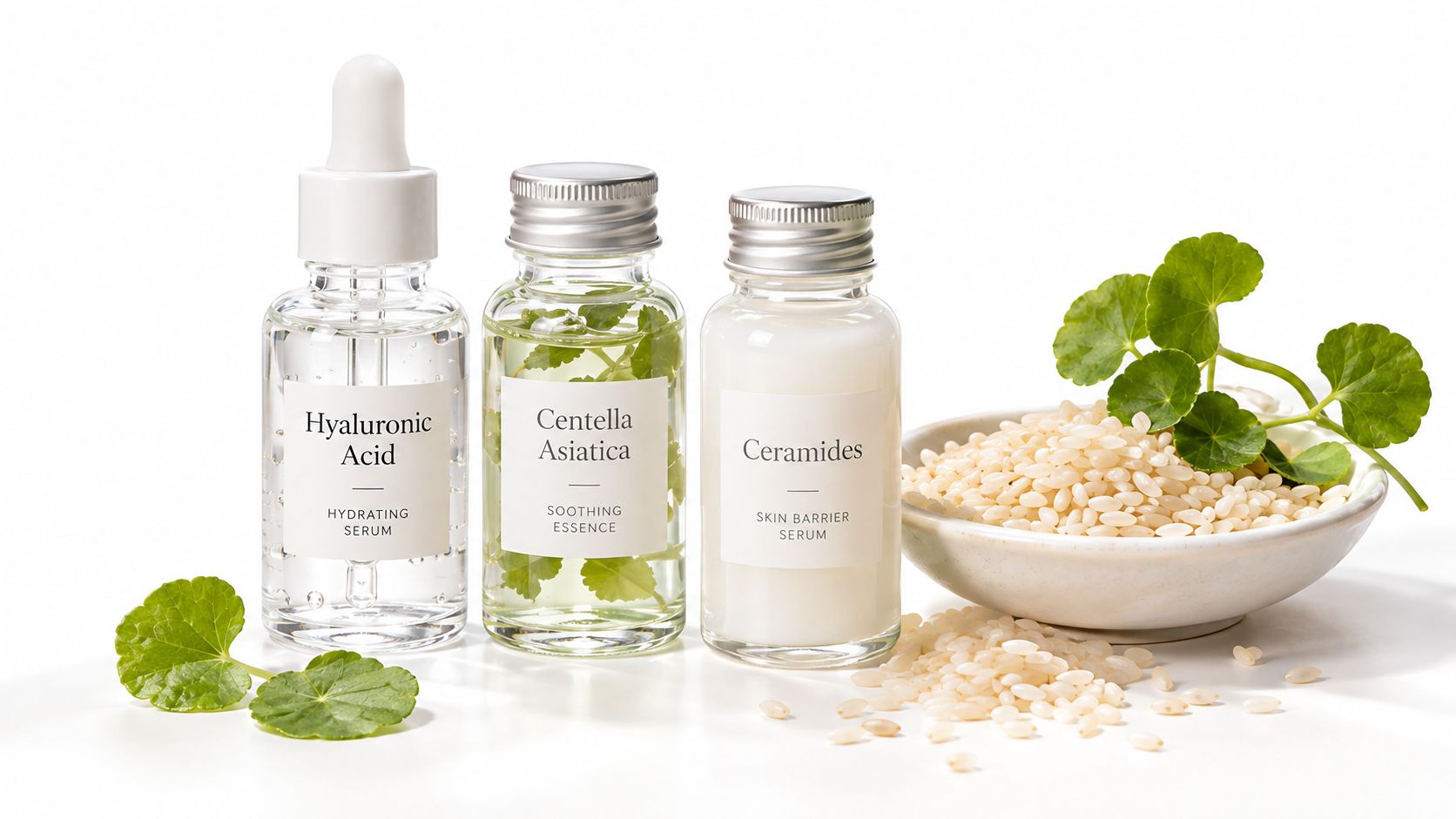
Welcome ingredients often include hyaluronic acid, sodium PCA, glycerin, ceramides, panthenol, allantoin, and centella asiatica. These ingredients serve different roles, but they generally belong to the moisture and comfort side of skincare rather than the aggressive resurfacing side.
Japanese formulas may also feature fermented rice or sake filtrates. Fermentation is part of the country's long cosmetic tradition, but the word itself isn't proof that a product is gentle. Read the complete formula, especially if your skin reacts easily to fragrance, alcohol, or multiple botanical extracts.
Hyaluronic acid can appear in different molecular forms, and its presence doesn't tell you how much the mask will hydrate. The sheet's fit, the essence amount, the surrounding formula, and the time on the skin all influence the experience. You can learn more about the ingredient's role in this plain-language guide to hyaluronic acid serum.
Ingredients that deserve a slower schedule
Treat these as watch points rather than automatic bans:
- High-strength AHA or BHA blends: Acids can support exfoliation, but frequent exposure may cause stinging, dryness, or visible irritation.
- Retinol and retinal: These are active ingredients that deserve careful introduction and shouldn't be treated like plain hydration.
- Vitamin C above roughly 5 percent: A stronger brightening focus may be better suited to occasional use, particularly alongside other actives.
- Papain and other active enzymes: Enzymes can contribute to exfoliation when used at active levels.
- High alcohol concentrations: Alcohol can make a formula feel light and fresh, yet repeated use may feel drying or uncomfortable for some skin types.
When the concentration isn't disclosed, use the ingredient order as a rough screening tool. Ingredients generally appear in descending order, so a potentially irritating active listed within the top five deserves extra caution for daily application. The list doesn't reveal every detail, and it can't predict your personal response, but it helps you avoid choosing a treatment mask by accident.
If the ingredient that makes the product exciting is also an exfoliant, reserve the mask for two or three nights a week rather than using it automatically every day. Dermatology commentary supports separating simple hydrating masks from exfoliating masks, especially because glycolic-acid masks aren't ideal for daily use and frequent occlusion may aggravate breakouts for some acne-prone users. Guidance on using sheet masks every day explains why the word “daily” needs to be interpreted alongside the ingredients.
How to Use a Japanese Daily Sheet Mask Step by Step
The most reliable routine is simple: cleanse, apply toner or lotion if you use one, place the mask, remove it before it dries, pat in the remaining essence, then seal with moisturizer. Japanese routine guidance generally places sheet masks after cleansing and toner or lotion, before moisturizer, with the leftover essence pressed into the skin rather than rinsed away. A practical overview of Japanese skincare steps follows this order.
Use the sheet for the time printed on the pack
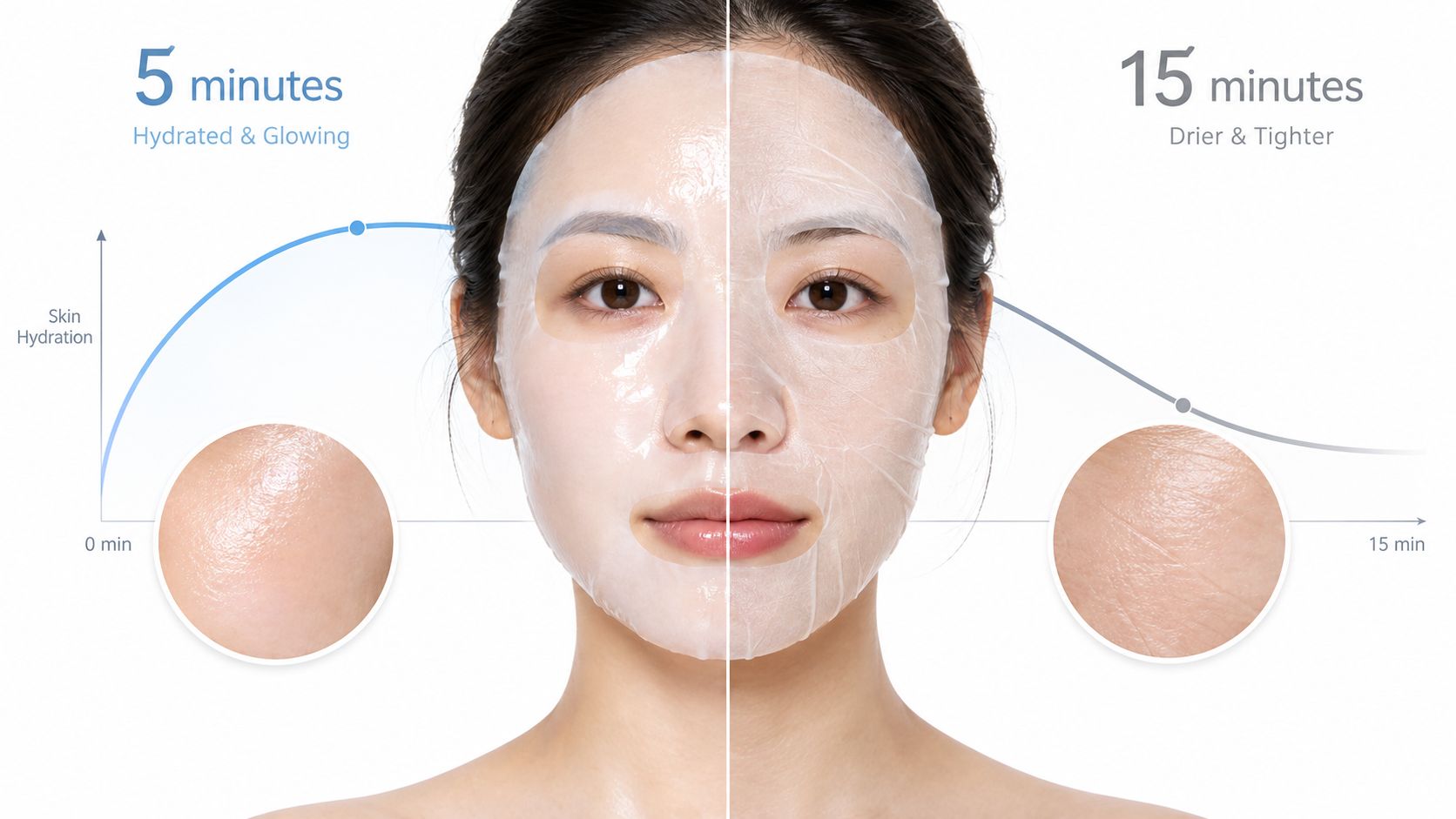
A lightweight hydration mask may need only 5–8 minutes. An essence-rich treatment can specify 10–15 minutes. Don't exceed 20 minutes, and remove the mask sooner if the sheet begins to feel tight or dry.
A controlled clinical study of a collagen sheet mask found that one 20-minute application increased periorbital skin hydration by about 59% at 20 minutes, 53% at 40 minutes, and 37% at 120 minutes versus baseline. The results were from one controlled study and one mask, so they shouldn't be applied to every Japanese product, but they illustrate an important practical point. Hydration benefits can be time-sensitive, and leaving a sheet on while it dries doesn't guarantee a better result. The controlled collagen sheet-mask study also reported improvements in erythema, wrinkle appearance, and skin-barrier-related outcomes.
Follow these application steps
- Cleanse thoroughly: Remove sunscreen, makeup, sweat, and surface residue. A mask works more predictably on clean skin.
- Apply toner or lotion if appropriate: Use a light layer, not a heavy cream. The standard Japanese order places the mask after this step.
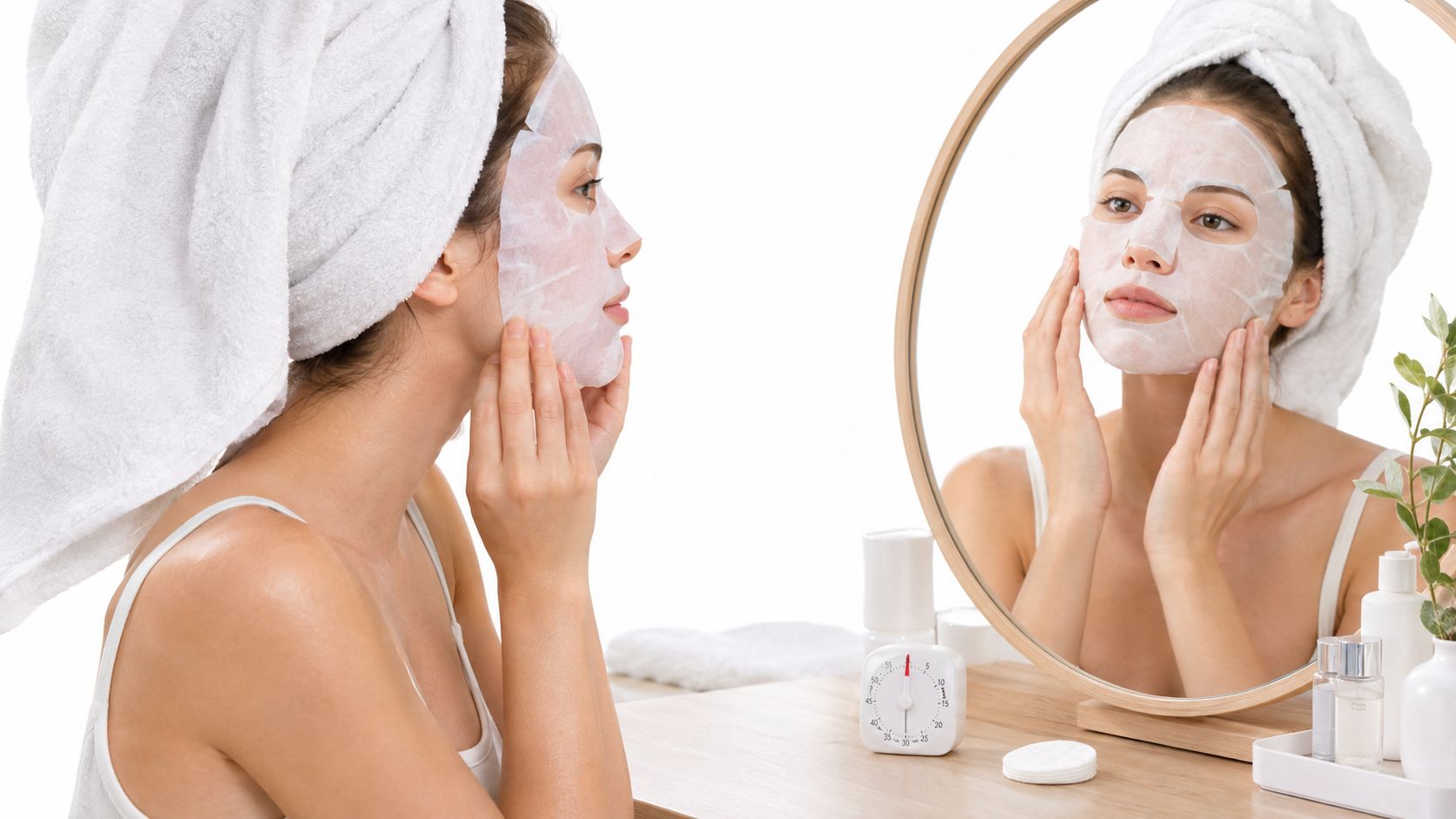
- Unfold carefully: Align the eye and nose openings first, then smooth the sheet from the center of the face outward. Press it around the nose, jaw, and sides of the face so the essence contacts the skin evenly.
- Remove before it dries tight: Follow the package timing. A drying sheet can feel uncomfortable and may leave skin feeling drier.
- Pat in the remaining essence: Use clean fingertips and gentle pressing motions. Patting distributes residue without the friction that rubbing can create.
- Seal with moisturizer: This helps keep the hydrated feel from disappearing quickly. In the morning, finish with sunscreen after your skincare has settled.
Watch the products you place around the mask. Layering a daily sheet over heavy cream can interfere with contact, while adding retinol or strong acids in the same routine can make an otherwise gentle mask feel irritating. For puffiness around the eyes, use a dedicated Japanese eye patch guide rather than forcing a full-face sheet into the eye area.
Here is a visual demonstration of the application rhythm and short wear-time principle:
Frequency should follow the formula and your skin, not the size of the pack. A gentle hydration mask may work with frequent use, while a treatment mask should stay occasional. If redness, stinging, persistent tightness, or new breakouts appear, stop the mask and return to a simpler routine.
Matching Masks to Skin Types and Concerns
Start with the concern, then choose the ingredient pattern, and only then consider a specific mask. A hydrated-feeling mask won't necessarily address every concern, and a product with more actives isn't automatically a better choice for daily use.
The Buy Me Japan catalog includes Japanese skincare categories and products, but product details can change. Check the current product page for the exact formula, pack size, directions, and availability before ordering.
| Skin Type | Primary Concern | Ingredient Pattern to Seek | Example Product |
|---|---|---|---|
| Oily | Dehydration without a heavy finish | Lightweight humectants and a simple essence | A catalog-listed hydrating sheet mask with a light lotion-style formula |
| Dry | Tightness and moisture loss | Hyaluronic acid, glycerin, panthenol, and ceramides | Kao Curél Intensive Moisture Care Repair Sheet Mask |
| Combination | Dry areas with midday shine | Balanced hydration, avoiding heavy occlusive residue | A short-wear daily hydration mask used mainly on drier areas |
| Sensitive | Stinging, redness, or a fragile-feeling barrier | Minimal fragrance, gentle hydrators, panthenol, allantoin, and ceramides | A simple barrier-focused sheet mask, patch tested first |
| Mature | Dehydration and the look of fine lines | Hydrators, ceramides, and carefully introduced peptides | A moisture-led mask, with stronger active masks kept occasional |
Oily and combination skin
Oily skin can still be dehydrated. Choose a watery or lotion-like essence rather than assuming that a dry-feeling finish is healthier. For combination skin, you can use the sheet across the face if the formula feels comfortable, or shorten the application and concentrate attention on areas that feel tight.
Clay and exfoliating masks may sound more relevant to shine, but they shouldn't be mixed into every masking session. Use them as separate occasional steps, and avoid pairing them with an acid or retinoid sheet in the same routine.
Dry, sensitive, and mature skin
Dry skin usually benefits from a moisture-first mask followed by a cream. Kao Curél Intensive Moisture Care Repair Sheet Mask is a relevant Buy Me Japan catalog example for shoppers looking for a sheet-mask format within a barrier-focused skincare line. Read the current Japanese ceramide skincare selection for related ingredient context, then confirm the exact product details before purchase.
Sensitive skin needs restraint. A short ingredient list may be easier to tolerate than a crowded formula containing fragrance, multiple botanical extracts, acids, and brightening actives. Mature skin also doesn't need the strongest available mask every day. Hydration can temporarily soften the look of fine lines, while peptides and other actives should be introduced according to the product directions and your tolerance.
For post-acne marks or dullness, brightening ingredients such as tranexamic acid or vitamin C derivatives may be appealing, but a mask isn't a standalone treatment for pigmentation or acne. Choose one active focus, introduce it slowly, and avoid stacking several exfoliating or brightening formulas across consecutive routines.
Common Myths About Daily Sheet Mask Use
Myth one, longer wear means more hydration
A damp sheet creates an occlusive environment while it stays wet. Once it begins to dry, the experience changes, and the sheet can contribute to tightness instead of delivering a continuing hydration benefit. The controlled study described earlier showed diminishing hydration values after the initial measurement point, which supports following the product's timing rather than extending the session.
Rule to remember: Remove the mask while it still feels moist.
Myth two, daily masking solves every concern
A sheet mask is a delivery format, not a complete acne, pigmentation, or anti-aging plan. It can make skin feel more hydrated and temporarily improve the look of dryness, but it won't replace sunscreen, a suitable moisturizer, or carefully chosen active products.
Rule to remember: Ask what the formula can cosmetically support, then keep bigger concerns in a complete routine.
Myth three, a higher price guarantees a better result
Price doesn't tell you whether the sheet fits well, whether the essence suits your skin, or whether the active concentration is appropriate. A simple daily mask that you tolerate may be more useful than a richer treatment mask that leaves you irritated.
Rule to remember: Judge fit, formula, and frequency before price.
Myth four, every Japanese sheet mask is safe for daily use
Japanese daily sheet masks are a broad category, not one uniform formula type. Some prioritize straightforward hydration, while others use acids, retinoids, concentrated brightening ingredients, or treatment-oriented directions. Frequent occlusion can also aggravate breakouts for some acne-prone users, and sensitive skin may react to fragrance or preservatives.
Rule to remember: Treat “daily” as a claim to verify against the ingredient list and directions.
Buying, Storing, and Patch Testing Daily Masks
A good shopping decision begins with the product page, not the front of the sachet. Look for a complete ingredient list, clear directions, a stated wear time, and a formula description that explains its purpose without relying only on words such as “intensive” or “boost.” Buy Me Japan offers Japanese beauty products through its online store, and shoppers should verify current product details, pack formats, and availability on the relevant page before ordering.
Check the information you can verify
For international shoppers, ingredient information shown in both Japanese and English can make comparison easier. A single sachet is useful when you're testing tolerance, while a multi-pack makes sense only after the formula has earned a place in your routine. Product pages that explain the formula clearly are more useful than listings that make broad promises without showing the relevant details.
The catalog includes products such as Kao Curél Intensive Moisture Care Repair Sheet Mask in 4-sheet and 10-sheet packs, according to the available product information. Confirm the current listing before purchase, since pack formats and stock can change.
Store masks as skincare, not bathroom decor
Keep sealed pouches in a cool, dry cupboard away from sunlight. Bathroom shelves may expose open packs to repeated steam and temperature changes, so a bedroom or other dry storage area is usually more practical. Reseal multi-packs tightly after removing a sheet, and don't leave the opening exposed.
Patch testing is a sensible precaution, especially with a new active, fragrance, or botanical-heavy formula:
- Apply a small amount of essence from a fresh sheet to the inner forearm or behind the ear.
- Leave the area alone for 24 hours.
- Watch for redness, stinging, itching, or breakouts.
- Introduce only one new mask at a time so you can identify the cause if your skin reacts.
Don't stack several new masks in the same week. If a pack smells unusual, appears dried out, has damaged seals, or shows inconsistent liquid distribution, don't use it. Daily-use products need clean handling and dependable storage because repeated exposure makes hygiene part of the selection decision.
Putting It All Together
A successful Japanese daily sheet mask routine comes down to formula fit, frequency, and placement. Formula fit means choosing hydration-led ingredients for regular use and treating acids, retinoids, strong enzymes, and concentrated brightening formulas as occasional products unless the directions clearly support more frequent application.
Frequency doesn't have to mean every day. Many readers will find that three to five applications per week provide a practical rhythm, while gentle formulas can be used more often if the skin remains comfortable. If your skin feels tight, hot, itchy, persistently red, or more congested, reduce frequency or stop and simplify the routine.
Placement keeps the rest of your skincare working properly. Cleanse first, apply toner or lotion if you use one, place the mask for the stated time, pat in the remaining essence, and finish with moisturizer. In the morning, apply sunscreen after the rest of your skincare has settled. At night, avoid placing a sheet over heavy cream or combining it with strong actives until you know how your skin responds.
Use this quick decision process when browsing:
- Need straightforward hydration: Choose a short-wear, humectant-led daily sheet.
- Need barrier comfort: Look for ceramides, panthenol, allantoin, and a simple formula.
- Want brightening support: Select one brightening focus and keep stronger formulas occasional.
- Have sensitive or acne-prone skin: Patch test, avoid prolonged wear, and be cautious with fragrance, acids, and heavy occlusion.
- Want a treatment effect: Follow the product's limited frequency rather than converting it into a daily step.
The most useful mask is the one your skin can tolerate consistently and your routine can accommodate. Explore the current Japanese sheet-mask options on Buy Me Japan, compare the ingredient lists and directions, and choose based on the skin profile you have today.
Buy Me Japan makes authentic Japanese beauty and lifestyle products accessible through a convenient online store, with products sourced through official suppliers in Japan, tracked shipping, secure payments, and helpful customer service. Visit Buy Me Japan to explore Japanese daily sheet masks and select a formula that fits your skin and routine.

Share:
Japanese Skincare for Mature Skin Over 40: A Practical Guide