

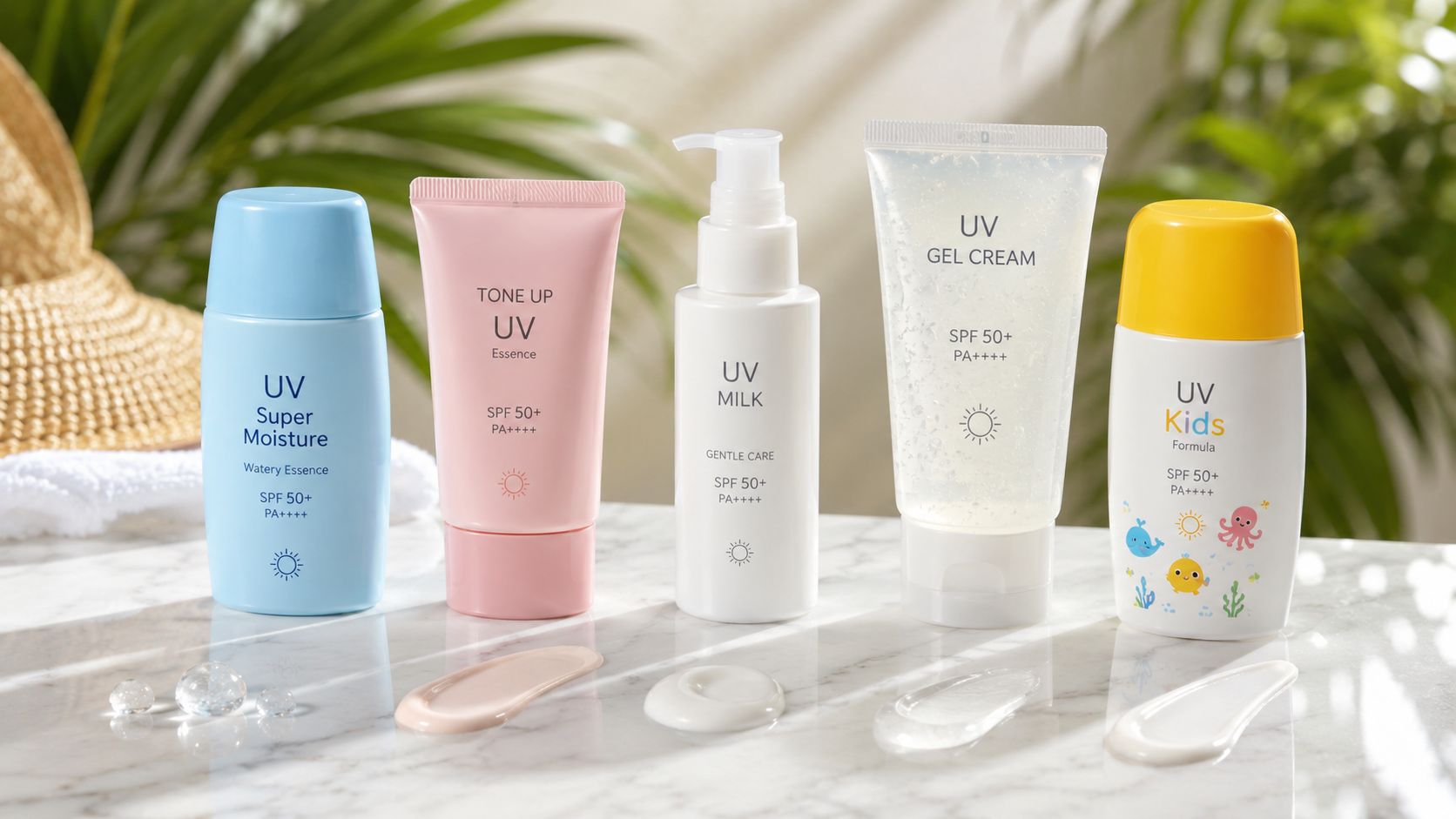
You've found the Skin Aqua sunscreen everyone seems to mention, but the bottle in your search results doesn't look quite like the one in a review. Then you see gel, essence, milk, mist, tone-up, and “barrier” versions, many carrying the same SPF50+ PA++++ label. The key question isn't just which Skin Aqua sunscreen has the highest protection. It's which texture will feel comfortable enough for you to apply generously and reapply in your actual climate and routine.
Skin Aqua sunscreen types are designed around those everyday differences. A lightweight gel may suit frequent commuting and indoor days, while a milk can make more sense for heat, sweat, or outdoor exposure. This guide breaks down how the formats behave, what the ratings mean, and how international shoppers can choose more confidently through Buy Me Japan, a Japanese online store focused on making authentic Japanese products accessible through a convenient, reliable shopping experience.
Why Skin Aqua Sunscreen Types Confuse Shoppers
You open a product page after seeing Skin Aqua recommended in a beauty forum. Several bottles appear almost identical, but one says Super Moisture Gel, another says Essence, and a third says Milk. The names are similar, the protection ratings often match, and the packaging may change as formulas are updated. It's easy to assume that the differences are mostly cosmetic.
They aren't. Skin Aqua is a Japanese sunscreen line under Rohto Pharmaceutical, a company founded in 1899, with a long history in skincare and sun-care development. Independent brand coverage describes the formulas as frequently reformulated and notes that their protection claims are tested to Japanese cosmetic standards rather than published in peer-reviewed studies. You can read more about the brand's background and product evolution in this overview of Skin Aqua sunscreen.

Texture is part of protection
A sunscreen only works as intended when you apply enough and keep it on your skin. A formula that feels too greasy, pills under makeup, stings around the eyes, or becomes uncomfortable in humidity may lead you to use less or skip reapplication. That makes texture a practical selection factor, not a minor preference.
Skin Aqua's product strategy reflects this. The current range includes gel, milk, and moisture-focused variants, with many products positioned for lightweight daily wear rather than only high-occlusion beach use. The Super Moisture Barrier UV Gel was released on 2024-01-31 and repackaged in 2025, showing how actively the line changes with consumer preferences around feel and protection. Those details are recorded in the Skin Aqua brand documentation.
A shopper in a humid city might prefer a fluid milk that forms a more persistent film, especially for an outdoor commute. Someone working indoors may value a gel or essence that spreads quickly and feels easy to refresh. A shopper with a dry-feeling complexion may accept a more dewy finish in exchange for a comfortable, moisturising sensation.
Practical rule: Choose the format you'll apply consistently, then compare finish, film feel, and water resistance within that format.
The broader Japanese skincare market also helps explain why these products attract international attention. If you're still learning how Japanese skincare categories are organised, this guide to the Japanese skincare revolution provides useful context. For Skin Aqua, the important point is simple: similar protection labels don't make every bottle interchangeable.
Understanding SPF and PA Ratings in Japanese Sunscreens
Before comparing textures, separate the two protection systems printed on the bottle. SPF measures UVB protection, while PA measures UVA protection, as Skin Aqua's official site explains. UVB is associated with sunburn, while UVA penetrates more and is a major concern for long-term sun exposure and visible skin changes.

Reading SPF correctly
SPF50+ indicates a very high level of UVB protection. Consumer-facing sunscreen education commonly associates SPF50+ with roughly 98% UVB protection, although the label doesn't mean you can apply less product or remain outdoors indefinitely. Real-world performance depends on coverage, application amount, rubbing, sweating, water exposure, and whether the sunscreen is reapplied.
The plus sign matters too. SPF50+ is used for products that exceed the SPF50 category, rather than identifying one exact protection percentage. You should treat it as a high-protection label, not as permission to stretch a small amount over a large area.
Understanding the Japanese PA system
Japan uses the PA system to communicate UVA protection. The scale runs from PA+ through PA++++, with each additional plus representing a higher category. PA++++ is the highest commonly labelled level in this system, according to Skin Aqua's official explanation.
Technical explanations of the Japanese PA framework associate PA++++ with a PPD of 16 or above. PPD refers to persistent pigment darkening, a testing approach used to assess UVA protection. For an international shopper, the practical takeaway is that SPF50+ PA++++ combines very high labelled UVB protection with the highest PA category.
Skin Aqua frequently uses this pairing across its range. The Super Moisture Milk is described as SPF50+ PA++++, and the Super Moisture Barrier UV Gel carries the same rating. The Japanese cosmetics buying guide can help place sunscreen within a broader Japanese beauty routine.
Ratings don't describe the finish
Two products can share SPF50+ PA++++ and still feel completely different. One may leave a fresh, hydrating film, while another may feel more persistent or look more matte. The protection label tells you about the tested protection category. It doesn't tell you whether the product will suit oily skin, humid weather, makeup, or repeated application.
That's why protection ratings should be your starting filter, not your final decision. Once the rating meets your needs, choose based on texture, film persistence, cosmetic finish, and the conditions you expect to face.
Comparing Gel, Milk, Essence, and Tone-Up Formats
The easiest way to understand Skin Aqua sunscreen types is to compare what each format contributes to the experience. The categories overlap, and product names can change during reformulation, but the broad distinctions remain useful.
| Format | Typical skin feel | Finish considerations | Practical use |
|---|---|---|---|
| Gel | Light, spreadable, low residue | Fresh or dewy film | Daily commuting, indoor routines, frequent reapplication |
| Milk | More fluid and film-forming | Often more set and persistent | Outdoor wear, heat, humidity, sweaty conditions |
| Essence | Hydrating and smooth | Can leave a noticeable moisturising film | Daily face use when comfort matters |
| Tone-up | Sunscreen with a cosmetic brightening effect | Tinted or visibly brightening | Makeup-adjacent routines and colour correction |

Gel formulas for low-residue daily wear
Gel and gel-essence products are usually chosen for their easy spread and lighter sensory profile. They're practical when you apply sunscreen every morning, wear it under makeup, or want a texture that's less demanding during reapplication. That doesn't mean every gel dries completely invisible or matte. Some leave a hydrating film that can read as glow, particularly on oily skin or in humid weather.
The Super Moisture Barrier UV Gel is listed at SPF50+ PA++++ and uses a multi-filter system that includes Octinoxate, Uvinul A Plus, Tinosorb S, and Uvinul T 150, according to RatzillaCosme's product analysis. This is a concrete reminder that “gel” describes the base feel, not a single ingredient system.
Milk formulas for a more persistent film
Milk formats tend to appeal to shoppers who want sunscreen to stay established on the skin during more demanding conditions. The fluid texture can spread quickly, but it often needs more careful blending than a gel because uneven application may be easier to notice. A milk can also feel more present on the skin, which some people appreciate outdoors and others dislike for casual daily wear.
The Super Moisture Milk is described as SPF50+ PA++++. Public product analysis also notes that milk formulas may add zinc oxide to a filter system, while a gel may rely on a different combination of organic filters. You can review the product-level discussion in this Skin Aqua Super Moisture Milk analysis.
Essence formats for a moisturising feel
Essence sunscreens sit between skincare comfort and daily UV protection. They're often selected by people who dislike a dry or tight finish and want the product to spread smoothly across the face. The trade-off is that a moisturising film can become shiny under heat, rich skincare, or makeup.
The UV Super Moisture Essence in the 2023 formula is listed as SPF50+ PA++++ and contains five named UV filters, Octinoxate, Uvinul T 150, Tinosorb S, Tinosorb M, and Uvinul A Plus, as documented by RatzillaCosme's essence listing. Its filter composition differs from the gel example, even though the labelled protection is the same.
For a broader explanation of how essence textures fit into skincare, see this guide to the best essence options for the face.
Tone-up formulas for cosmetic brightening
Tone-up versions add a visible brightening or colour-adjusting effect. They aren't just clear sunscreen in different packaging. The finish can make the complexion appear more even or luminous, but the tint may not suit every skin tone, foundation shade, or preference for a natural finish.
Choose tone-up when you specifically want that cosmetic effect. Choose a clear gel, essence, or milk when universal wearability and easier shade compatibility matter more.
Matching Skin Aqua Types to Your Skin and Climate
Choosing among Skin Aqua sunscreen types becomes easier when you start with your day rather than your skin-type label. Ask how long you'll be outside, how much you sweat, whether you wear makeup, and whether you'll realistically reapply. Those answers often point to the right texture faster than “oily” or “dry” alone.
Oily and combination skin
Gel formats can feel more comfortable when you dislike a heavy layer. Apply a moderate, even film and give it time to settle before adding makeup. If your skin becomes shiny quickly, avoid assuming that every gel will be matte. A hydrating gel or essence may still leave visible sheen, so the specific finish matters.
A milk can work for combination skin when the priority is outdoor persistence, but it may feel more noticeable across oilier areas. You might prefer to use the same product across the face for even coverage rather than trying to assign different sunscreens to different zones.
Dry-feeling skin
Essence and moisture-focused gel formats are natural starting points for dry-feeling routines because they're designed around a smoother, more comfortable film. They won't replace a moisturiser, and the best layering choice depends on how your skin feels and how the sunscreen sets.
If your routine already includes a rich moisturiser, a dewy essence may look shinier than expected. In that case, a lighter gel can provide a more balanced finish. This barrier-repair moisturiser guide offers useful routine context without requiring you to treat sunscreen as your only moisturising step.
Humid climates and outdoor routines
Humidity, sweat, and repeated contact with clothing or hands make film persistence more important. Milk formats are often the more logical place to start for outdoor activities or hot commutes because they're designed around a more tenacious layer. Some barrier essence and gel listings describe the products as waterproof for up to 80 minutes, with sweatproof positioning, as recorded in this product listing.
That claim doesn't mean you can apply once and forget about sunscreen. Swimming, heavy sweating, and towel-drying can remove product, so reapplication remains part of the routine.
Dry or temperate environments
A gel or essence may feel more comfortable when the air is dry and your skin doesn't need a strongly persistent outdoor film. If you spend most of the day inside and walk outdoors briefly, prioritise a texture you'll apply evenly each morning and refresh when your exposure changes.
Tone-up versions require one extra check. Test the finish in natural light, especially if your complexion is deeper or your makeup has a warm undertone. The brightening effect can be attractive, but it isn't automatically universal.
The right sunscreen is the one whose finish fits your day closely enough that you'll use it generously and consistently.
Application and Reapplication Tips for Each Format
Start with clean, comfortable skin and apply sunscreen as the final step of your morning skincare before makeup. If you use a moisturiser underneath, let the layers settle enough to reduce pilling. Skin Aqua's different textures don't require a completely different routine, but they do reward different application habits.

Apply evenly instead of rushing
Gel and essence formulas usually spread with little effort. Work in sections if needed, then check the hairline, jaw, sides of the nose, and ears. These areas are easy to miss when a product feels light and disappears quickly.
Milk formulas need more deliberate blending. Shake the container if the packaging directs you to do so, dispense enough product for the area, and smooth it across the skin without leaving thin patches. Tone-up products deserve the same care because uneven tint can look more obvious than an uneven clear film.
For the face, use a consistent amount you can distribute evenly rather than relying on a tiny dab. Don't reduce the amount because a sunscreen feels rich. Instead, choose a lighter format if the correct amount feels uncomfortable.
Reapply according to exposure
Reapplication should respond to what your skin has experienced. A person sitting indoors with minimal exposure has different practical needs from someone sweating outside, swimming, or wiping their face frequently. Makeup can make direct reapplication awkward, so plan the first layer carefully and refresh exposed areas when your routine allows.
Gels and essences are convenient for touch-ups because they tend to spread easily. Milk can offer a more established film, but reapplying it over sweat or uneven makeup may require more preparation. If possible, gently remove excess sweat first and apply in thin, even passes.
Understand water-resistance language
Some Skin Aqua UV Super Moisture Barrier UV Essence and UV Super Moisture Barrier UV Gel listings describe them as waterproof for up to 80 minutes and sweatproof. That is a specific product claim, not a universal promise for every Skin Aqua format, so check the current label for the exact variant you're buying.
Water resistance also has limits. Swimming, vigorous sweating, and towel-drying can disturb the layer, even when a product carries a water-resistance claim. Reapply after those activities, and don't treat “waterproof” as a reason to skip ordinary coverage checks.
For routine order and layering ideas, use this morning skincare routine guide.
Common Misconceptions About Finish and White Cast
Many shoppers approach Japanese sunscreen expecting every formula to vanish completely. Skin Aqua doesn't offer one universal finish because the range includes gels, essences, milks, and tone-up products with different base systems and cosmetic goals.
A clear gel or essence may avoid an obvious white cast while still leaving a glossy or moisturised film. On dry-feeling skin, that can look fresh. On oily skin, especially in humid weather, the same film may look like excess shine. “Lightweight” describes how a product spreads and feels, not necessarily how matte it appears after settling.
A bright finish isn't the same as a matte finish
Hydration and shine often overlap visually. If you want a more subdued appearance, consider a milk format or adjust the layers underneath rather than assuming the sunscreen is faulty. A rich moisturiser, several hydrating serums, and a dewy sunscreen can combine into a finish that looks much more luminous than any one product alone.
You can also test the product on one side of the face and wait before judging it. Initial slip may reduce as the film settles, while some formulas retain a noticeable sheen by design.
Tone-up is a cosmetic effect
Tone-up variants are intended to brighten the appearance of the complexion. They may help create a more even-looking base, but the effect can read as grey, pale, or visibly tinted depending on your skin tone and the amount applied. They may work beneath makeup, but compatibility depends on your foundation shade and the finish you want.
Use a tone-up sunscreen when you welcome visible brightening. If you want a product that disappears across different complexions and makeup looks, a non-tone-up option is usually easier to evaluate.
Finish check: Test sunscreen in daylight, after it has settled, and under the makeup you actually wear. Indoor bathroom lighting can hide unwanted shine or tint.
Eye comfort can also vary from person to person. If a formula irritates the eye area, keep it away from the immediate eye contour and patch test new skincare on a small area first. Cosmetic tolerance is individual, so a popular texture still may not suit you.
Finding Authentic Skin Aqua Sunscreens on Buy Me Japan
Once you know which texture fits your routine, shopping becomes more straightforward. Start with the exact product name and format, then check the current product page for the label, packaging, listed ingredients, and any water-resistance information. Don't rely only on an old review, because Skin Aqua formulas are frequently reformulated and packaging can change.
Buy Me Japan presents Japanese products sourced through official suppliers in Japan, with tracked shipping, secure payments, and customer service for shopping questions. Its catalogue includes multiple Skin Aqua formats, so shoppers can look for the specific gel, essence, mist, or tone-up product that matches the decision they've already made.
Use the product page as your final check
Before ordering, verify:
- Exact format: Confirm whether the listing is a gel, milk, essence, mist, or tone-up essence.
- Current packaging: Compare the product image and name with the version you intend to buy.
- Label information: Check the listed SPF and PA ratings and read the current product details.
- Routine fit: Decide whether you need easy reapplication, a more persistent film, or a cosmetic brightening effect.
- Personal tolerance: Patch test when appropriate, particularly if your skin or eyes react easily to new products.
The choice can be reduced to a practical sequence. Pick the required protection level, select the texture that fits your climate, then decide whether you want a clear, dewy, more persistent, or tone-up finish. That approach is more useful than choosing by bottle colour or social media popularity.
Check the packaging and ingredient label when your order arrives, especially if you've purchased a variant you used before. Reformulation means an older review may not describe the current product exactly. If the label or product details differ from what you expected, contact customer service before making it part of your regular routine.
Buy Me Japan also offers a 10% first-order discount, according to the publisher information provided for the store. Review the current terms at checkout, since introductory offers and product availability can change.
The short version is clear. Choose a gel or essence for comfortable daily use and easier refreshing, a milk when outdoor conditions make film persistence more important, and a tone-up essence only when you actively want a brightening cosmetic effect. Then confirm the exact current variant before buying.
Explore the Buy Me Japan Skin Aqua selection to compare available gel, essence, mist, and tone-up formats in one place. Choose the texture that matches your climate and routine, then check the current product details before placing your order.


Share:
Best Asian Beauty Products: A Complete 2026 Guide