


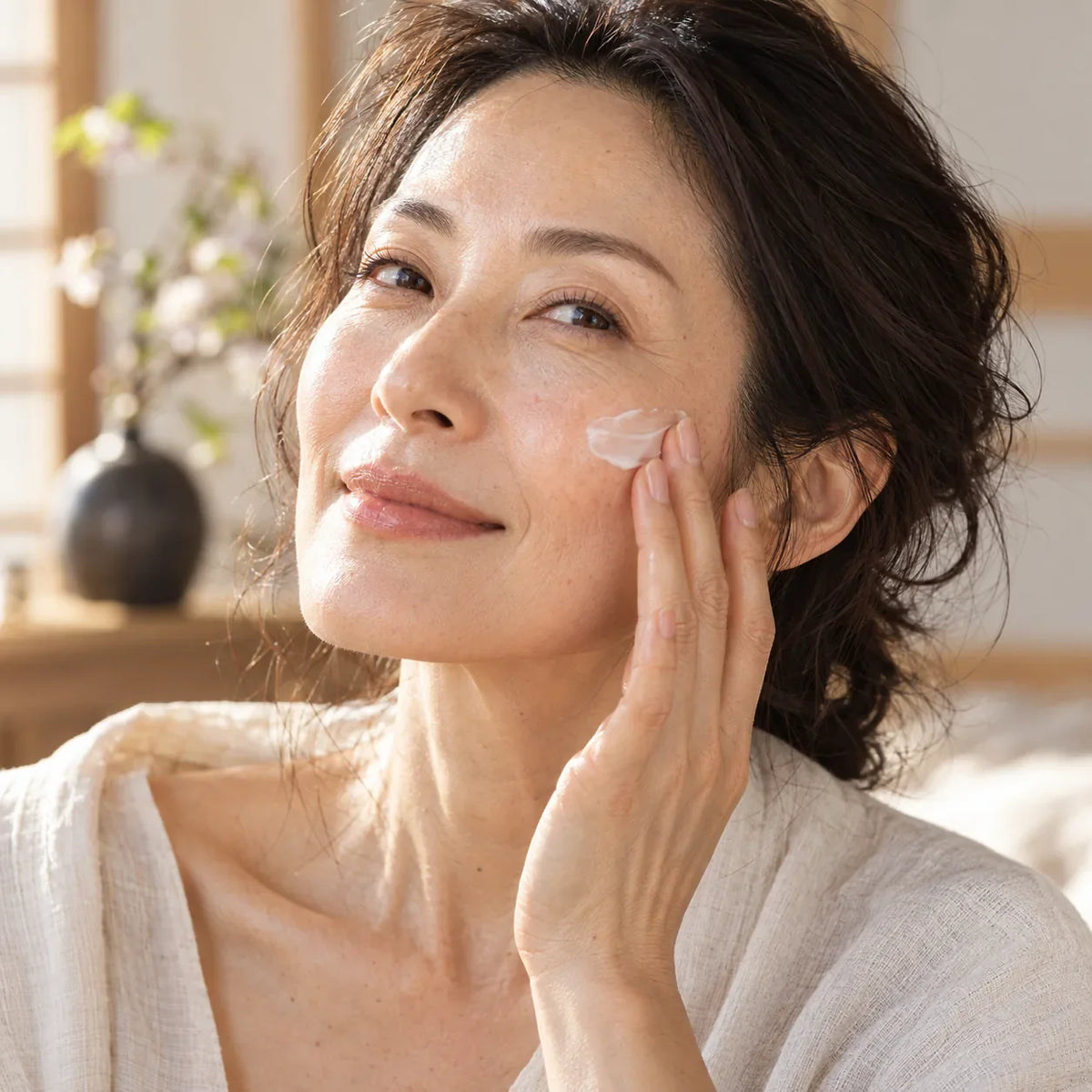
There is no birthday at which your skin suddenly needs an entirely new shelf of products. What often changes is how comfortable your usual routine feels: a cleanser that once seemed fine may leave tightness, or a moisturizer may no longer feel like enough. The most useful response is usually a small adjustment, not a complete overhaul.
For skincare over 40, focus first on what you can observe—dryness, sensitivity, uneven tone, or a texture you prefer—rather than trying to “fix” age itself. Skin changes are normal, and there is no topical routine that can stop time. A thoughtful routine can still help skin feel comfortable and protect it from avoidable irritation and sun exposure.
Start with the daily basics
Keep cleansing gentle and avoid washing until skin feels stripped. Follow with a moisturizer that fits your skin and climate. In the morning, use a broad-spectrum sunscreen with SPF 30 or higher and reapply as its label directs, especially after swimming or sweating. The AAD’s guidance for people in their 40s and 50s also emphasizes moisturizer and sun protection over a crowded collection of “anti-aging” products. Read the AAD’s routine advice for this age range.
That does not mean every product has to be plain or that one formula will suit everyone. It means the baseline should be stable before you add an active. If a new serum makes skin sting or peel, stop and return to the basics rather than layering more products over it.
Choose by texture, not age label
“Mature skin” is a broad category. Someone with oily skin at 45 may prefer a light gel; someone else may want a cream in winter or around dry areas. Try to notice what happens after a few hours, not only how a product feels in the first minute. Does it leave a film? Does it make sunscreen pill? Does your face feel comfortable after cleansing?
Use one new item at a time and give yourself a fair trial, while staying alert to irritation. A moisturizer’s job is to moisturize; the product name does not make it a medical treatment. For persistent redness, painful acne, sudden changes, or a rash, a dermatologist can help distinguish ordinary dryness from a condition that needs different care.
When hormones and seasons enter the picture
Hormonal transitions, including menopause, can change how dry or sensitive skin feels. The AAD notes that skin care during menopause may need a gentler cleanser and more moisturizing support. Its menopause guidance is a useful reference. Climate matters too: central heating, cold weather, frequent travel and air conditioning can all influence how a familiar routine feels. Adjust the texture when needed; there is no prize for using the same cream year-round.
If you are curious about retinol or another active, keep the rest of your routine simple while you assess tolerance. Stronger is not necessarily better, and persistent irritation is a reason to stop—not a sign that a product is “working.”
Three textures in the Buy Me Japan catalog

Hada Labo Ageing Care Gel Cream 100g
A gel-cream is a sensible format to explore if you want one moisturizer step without the feel of a heavy balm. Its catalog page describes it as an ageing-care gel cream; choose it for the texture and routine fit, not a promise to reverse skin changes.

Chifure Deep Moisture Cream Aging Care 54g
A cream format may appeal when skin feels tight or you prefer a more substantial final moisturizing step. It is a straightforward option to compare against a lighter gel.

Kose Grace One Perfect Milk Skin Moisturizer 230ml
A milk is often easier to spread than a dense cream. Consider this format if you like a fluid moisturizer and want a generous 230 ml bottle; check the product page for its current details.
A sensible way to build your routine
Try this order: gentle cleanser, optional treatment product, moisturizer, then sunscreen in the morning. At night, cleanse and moisturize; add an active only if you have a clear reason and your skin tolerates it. For makeup, allow skincare to settle first. The AAD cautions that using several anti-aging products at once can irritate skin and make it harder to tell what is helping. See its guide to choosing anti-aging products.
Over 40, good skincare is less about chasing a younger-looking version of yourself and more about a routine that feels good enough to keep doing. Start with comfort and sun protection; let the rest earn its place.
Do not build a routine around a birthday
Age-specific marketing can make ordinary changes sound like a problem that needs a special product. Try to translate a label into a practical question: is the product a cleanser, a lotion, a serum, a cream or sunscreen? What concern are you trying to address? Does the formula suit your comfort and budget? A “40+” badge cannot answer those questions for you.
If you want to address fine lines or uneven tone, choose one product with a clear, realistic role and read its instructions. Some active ingredients can irritate, particularly when combined or introduced too quickly. The AAD recommends paying attention to how your skin responds and avoiding the temptation to add multiple anti-aging products at once. If a product causes persistent burning or a rash, stop using it; do not assume discomfort means it is effective.
Also consider whether the product fits the rest of your life. A cream that feels pleasant at night might be too rich beneath daytime sunscreen; a light milk may be comfortable in humid weather but not enough in a cold, dry room. You can keep two textures for different conditions without turning your shelf into a project.
Give the routine time to settle
Skin care can be a long game, but there is no need to keep using a product that is uncomfortable while waiting for a result. If the formula is well tolerated, follow the directions consistently and assess it over an appropriate period rather than switching products every few days. Keep notes on what you introduced and when; this is especially helpful if you use more than one product category.
Retinol products also vary in how they are packaged and instructed. A cream, lotion and serum are not interchangeable just because all use the same ingredient word. Do not decant a product into another container, store it in direct sun, or use it beyond its stated period after opening. If the packaging is damaged, the formula has changed in smell or appearance, or the listing leaves the directions unclear, contact the seller or manufacturer before using it.
There is no need to treat a retinol product as an all-or-nothing commitment. If your skin is already comfortable with its routine, you can decide that you do not need to add one. If you do try it, keep a familiar moisturizer on hand and avoid experimenting with several new actives at once. A professional can help you weigh benefits against irritation if you have a history of eczema, rosacea or persistent sensitivity. The aim is a routine that remains comfortable enough to maintain—not a dramatic “before and after.”
Product details and availability can change; follow the current package directions and listing.


Share:
Japanese Retinol Products: A Practical Buyer's Guide
Japanese Daily Sheet Masks: A Practical Guide