


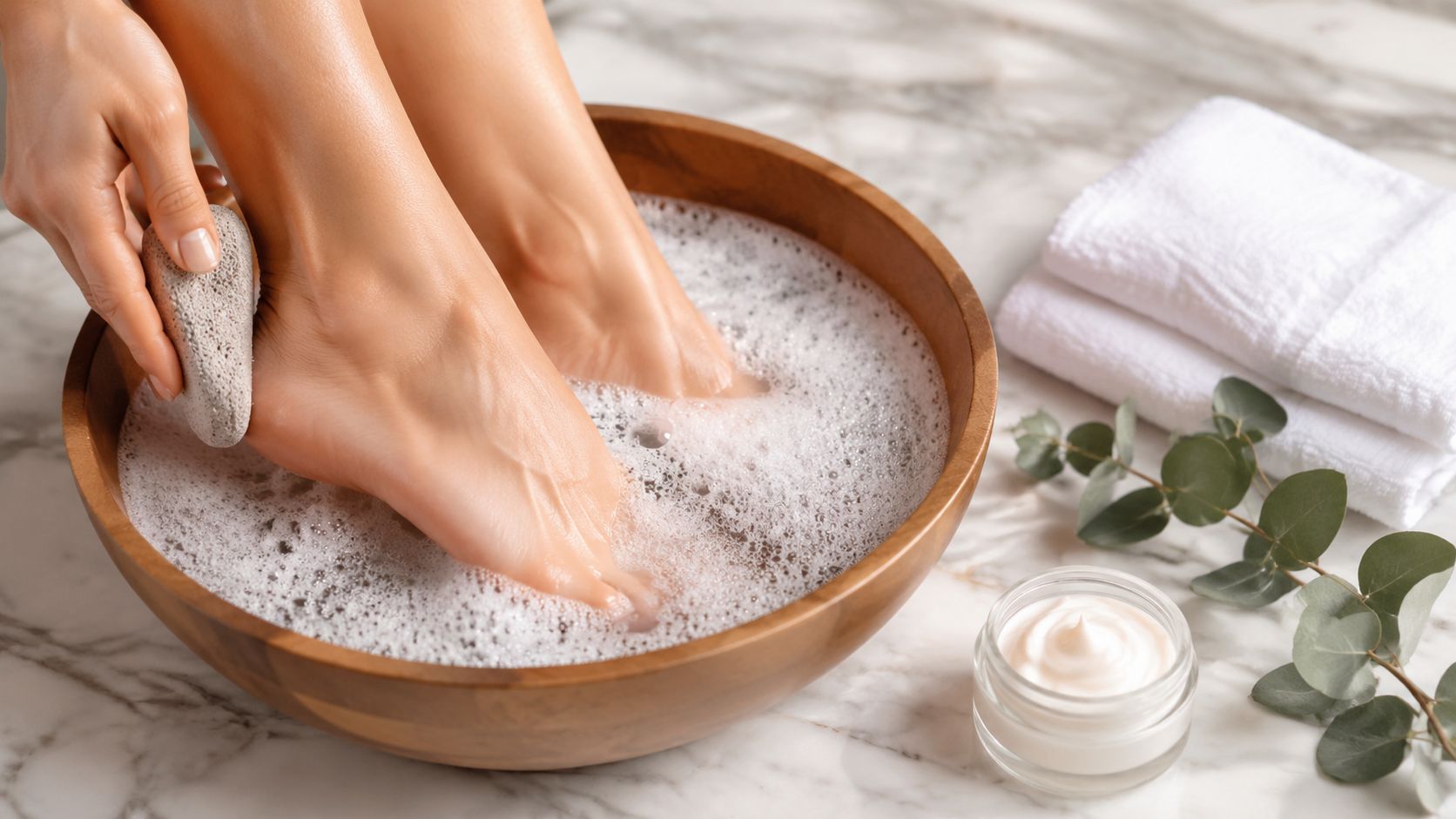
You've probably got a rough heel, a gritty shower shelf, and the feeling that if you just scrub a little harder, the dead skin will finally give way. That's usually where people overdo it. Pumice stone foot care works best when it's treated as a safety decision first and a beauty routine second, because the goal is softer skin without stripping the part of the heel that still needs protection.
Used well, a pumice stone can smooth mild calluses, help dry heels feel less rough, and fit neatly into a simple at-home routine. Used badly, it can leave skin red, sore, or more cracked than before. If you're already dealing with diabetes, neuropathy, poor circulation, open cracks, or anything that looks inflamed, the stone is not the first move. In some cases, a clinician should decide what's safe, and a resource like Shawnee plantar fasciitis treatment can be a useful reminder that heel pain isn't always a skin problem in the first place. For readers comparing exfoliation habits with other body-care routines, the broader context in this Japanese body scrub guide helps show where pumice fits and where it doesn't.
What Pumice Stone Foot Care Actually Does
A pumice stone is a porous abrasive tool, and that matters because the surface catches and lifts off dead skin instead of shaving into it. On heels, that usually means working on keratinized skin, the thickened layer that forms after repeated pressure or friction. The result at home is not glass-smooth feet, it's softer, less bulky calluses and a heel that feels more manageable in shoes.
That's also why the first question isn't “How hard should I scrub?” It's “Should I scrub at all?” If the skin is open, sore, red, itchy, inflamed, or cracked enough to bleed, pumice stone use can make things worse. The same caution applies to people who don't feel injuries well or who heal slowly, because a tool that seems harmless on a healthy heel can become a problem fast on compromised skin.
Practical rule: if the heel hurts before you start, don't treat the discomfort as a sign to work harder.
The best mental model is maintenance, not rescue. A stone helps when the skin is thick but intact, and it helps least when the issue is deeper, such as recurrent fissures, infection, or pain that changes how you walk. For anyone sorting out whether foot pain is a skin issue, not a callus issue, a clinical explanation from Shawnee plantar fasciitis treatment is worth reading because heel pain can come from the structures underneath the skin.
If your feet are just dry and rough, the at-home path can work well. If the skin is breaking down, the tool should stay on the shelf.
The 20-Minute Pumice Stone Foot Care Routine
A good session is short enough that you won't start improvising halfway through. The basic rhythm is simple, 5 to 10 minutes of soaking, a brief rubbing phase, then rinsing and moisturizing while the skin is still a little damp. That's the part many people skip, and it's also the part that keeps the skin from feeling stripped afterward, which is why this body-wash reference pairs well with a foot-care habit that starts clean and ends moisturized.
Keep the soak plain and warm
Warm water is enough. A mild bath additive can make the soak feel nicer, but the point is softening, not turning the routine into a spa ritual that lasts forever. The skin should come out flexible, not soggy, because softened skin gives the stone less resistance and lowers the chance of overworking one spot.
Think in minutes, not effort
The exfoliation window stays brief, around 2 to 3 minutes of light circular rubbing per area, which is long enough to smooth roughness and short enough to stop before the heel starts protesting. That short clock matters more than the tool itself. If the process starts feeling satisfying in the way social media videos look satisfying, that's usually the moment to slow down, not speed up.
Finish while the skin still has some moisture
Rinse the feet, pat them dry, and apply moisturizer right away. If the skin feels tight before the cream goes on, you waited too long. A deep moisturizer from the kind of Japanese skincare lineup Buy Me Japan carries, such as Hada Labo or Atrix, fits this stage well because freshly exfoliated heels usually respond better to rich hydration than to more rubbing.
Keep the whole routine contained. The stone does its best work when the skin is softened, the pressure stays light, and the finish is hydration, not more abrasion.
Step-by-Step Technique for Safe Exfoliation

Start with both the feet and the stone wet. That isn't a suggestion, it's the difference between gentle exfoliation and pointless scraping. Dry skin resists the stone, so people compensate by pressing harder, and that's usually where the redness starts. A stone should glide with a little water on it, not drag like sandpaper on bone-dry skin.
Work the heel first, then the outer edge of the foot, then the thick skin around the ball of the foot if needed. Small circular motions are usually easier to control than long aggressive passes, especially on spots that look pale and thick but still have healthy skin underneath. The stone should move with the weight of your hand and only the lightest extra pressure, because excessive force can strip skin that was doing its job.
Avoid the spaces between the toes, any cracked patch, and anything that feels tender. Those areas don't need more friction, they need protection. If a spot starts to feel sore or too sensitive, stop there. That isn't weakness, it's the point where the skin has told you enough.
A good aftercare routine keeps the skin from rebounding into dryness. Rinse the feet with cool water, pat them dry, and seal in moisture while they're still slightly damp. For that final layer, a hydrated texture matters more than an expensive label, and a Japanese moisturizer can be practical rather than fancy. The alpha hydroxy acid overview is useful if you're comparing chemical smoothing with mechanical exfoliation and want to understand why some people tolerate one better than the other.
The video details are less important than the pressure lesson. Light, wet, brief. That's the whole game.
How Often to Use a Pumice Stone Without Overdoing It
The temptation is to keep going until the heel looks perfectly uniform. That usually backfires. Conservative use wins because skin responds better to steady maintenance than to one aggressive session that leaves it raw, shiny, and touchy for days.
For many with callus-prone feet, one to two sessions per week is the sane rhythm, and some mild cases can tolerate gentle use more often if the pressure stays very light. The mistake is assuming that more rubbing equals faster progress. It doesn't. It usually just removes too much of the protective layer and creates the kind of sensitivity that makes even socks annoying.
If the heel looks polished but feels tender, you've probably gone too far.
There are a few early signals that the skin wants a break. Redness that lingers, a tight shiny look, new sensitivity to temperature, or the feeling that the heel is getting more reactive after each session all point to overuse. When that happens, pause. A 48-hour break is a small delay compared with the days it can take for irritated skin to settle down.
Tracking sessions helps more than memory does. A calendar note keeps the routine honest, especially if you tend to repeat a quick scrub whenever the heel catches your eye in the bathroom mirror. That's how people turn maintenance into damage.
For readers who prefer gentler, non-abrasive options, a treatment-oriented approach like chemical peels Southsea shows how exfoliation can be handled differently in a professional setting. The principle is the same at home, less force, more control, and a clearer reason for each session. If your skin is sensitive, the Japanese skincare for sensitive skin guide is a better match than trying to brute-force your way through rough patches.
Slow is not lazy here. Slow is what keeps the routine usable next week.
Cleaning, Storing, and Replacing Your Pumice Stone
A pumice stone is porous, so after every use it needs to be treated like a tool that can hold onto dead skin and moisture. Rinse it thoroughly under running water, then let it dry completely in open air. If you leave it damp in a closed space, the pores stay wet longer than they should, and that's the wrong environment for a tool you plan to reuse on skin.
Keep the storage simple
An open container or a dry mesh pouch is better than a sealed plastic bag. The goal is airflow, not protection from every speck of dust in the bathroom. A clean, dry shelf works fine if it's not constantly splashed.
Give it a deeper clean once in a while
Some references recommend boiling the stone in hot water for 5 minutes, and others mention antibacterial soaking once or twice a week. Either way, the point is the same, reduce buildup and let the stone dry fully afterward. A soft toothbrush can help dislodge trapped skin from the pores, which makes the stone work better the next time.
When it starts feeling smooth, shrinking, or hard to hold safely, replace it. A worn stone usually stops doing its job before it looks obviously broken. That's easy to miss, because people often keep using a tool that still feels solid in the hand even though it's no longer effective on the skin.
For readers who already keep a beauty cabinet organized, the same hygiene logic applies to other tools too. The makeup brush cleaning guide is a useful reminder that reusable items only stay useful when cleaning is part of the routine, not an afterthought.
Clean tool, dry storage, timely replacement. That's the quiet part that keeps foot care from becoming skin care with extra problems.
Alternatives Worth Considering for Stubborn Calluses
Not every heel responds the same way to a pumice stone. Some people need a faster mechanical tool, while others need a chemical softener because abrasion is too much for their skin type. The right answer depends on how thick the callus is, how sensitive the skin feels, and how willing you are to stay patient.
Compare the common choices
| Tool | Effort per Session | Overuse Risk | Best For |
|---|---|---|---|
| Pumice Stone | Low to moderate | Moderate if used too often or with too much pressure | Mild to moderate heel roughness, regular maintenance |
| Foot File or Metal Rasp | Moderate | Higher, because it removes skin faster | Thick calluses when the user has a steady hand |
| Electric Callus Remover | Low once you learn it | Moderate, especially if held in one spot too long | People who want speed and consistency |
| Urea-Based Cream | Low per use, but slow over time | Low when used as directed | Sensitive skin, people who should avoid abrasion |
Foot files and rasps work faster, but that speed can become a problem if you're impatient. Electric removers are convenient, although they still punish bad technique if you linger too long in one area. Urea-based creams work differently, they soften over time instead of scraping immediately, which is why they're often the calmer choice for people with delicate skin.
That's where Japanese moisturizers can be useful, not as a miracle, just as a smart alternative. Hada Labo, Atrix, and Kose all fit the category of supportive foot-care products that lean into hydration and softening rather than aggressive abrasion. One practical place to look is the foot and body-care range at Buy Me Japan, especially if you want products shipped directly from Japan and prefer buying from a source that focuses on authentic Japanese items rather than random marketplace listings.
If your feet tolerate a stone and you only need upkeep, the pumice wins on simplicity. If your calluses are stubborn and your skin is sensitive, a cream may be the better long game. If you want speed and already know your pressure control is good, a file or electric remover may fit better.
When to Skip the Stone and See a Professional
A pumice stone is a maintenance tool, not a replacement for proper care when the feet are telling a bigger story. If you have diabetes, peripheral neuropathy, poor circulation, recurring ulcers, or a history of cracks that keep reopening, the safer path is to ask a podiatrist or dermatologist before doing anything mechanical at home. The issue isn't fear, it's that reduced sensation and slower healing change the risk profile completely.
Red flags are easy to name and easy to ignore. Bleeding heels, warmth, swelling, pus, a rash, persistent thickened or yellow nails, or any patch that looks infected should move the conversation out of the bathroom and into a clinic. A stone can't sort out infection, and it definitely shouldn't be used over skin that's already struggling to heal.
Thin calluses are not automatically bad. They protect weight-bearing skin from constant friction, which is why over-removal can backfire and leave the heel more likely to split. That's the part social media rarely says out loud, because a dramatic before-and-after looks satisfying, even when it isn't the smartest outcome.
The safe routine is still simple. Soak, keep the stone wet, use light circular pressure for a short time, rinse, dry, moisturize, and clean the tool after every use. The moment the skin looks angry instead of smoother, stop. If the foot looks medically concerning, stop sooner.
For readers who want to finish a basic foot-care setup with moisturizing products, Buy Me Japan's skincare collection is a practical place to look, especially if you want Japanese items that ship directly from Japan and fit into a low-friction routine rather than a harsh one.
A CTA for Buy Me Japan.

Share:
What Does Gohan Mean in Japanese? Rice, Meal, & Culture
What Is All Purpose Cream? a Complete Guide for 2026