


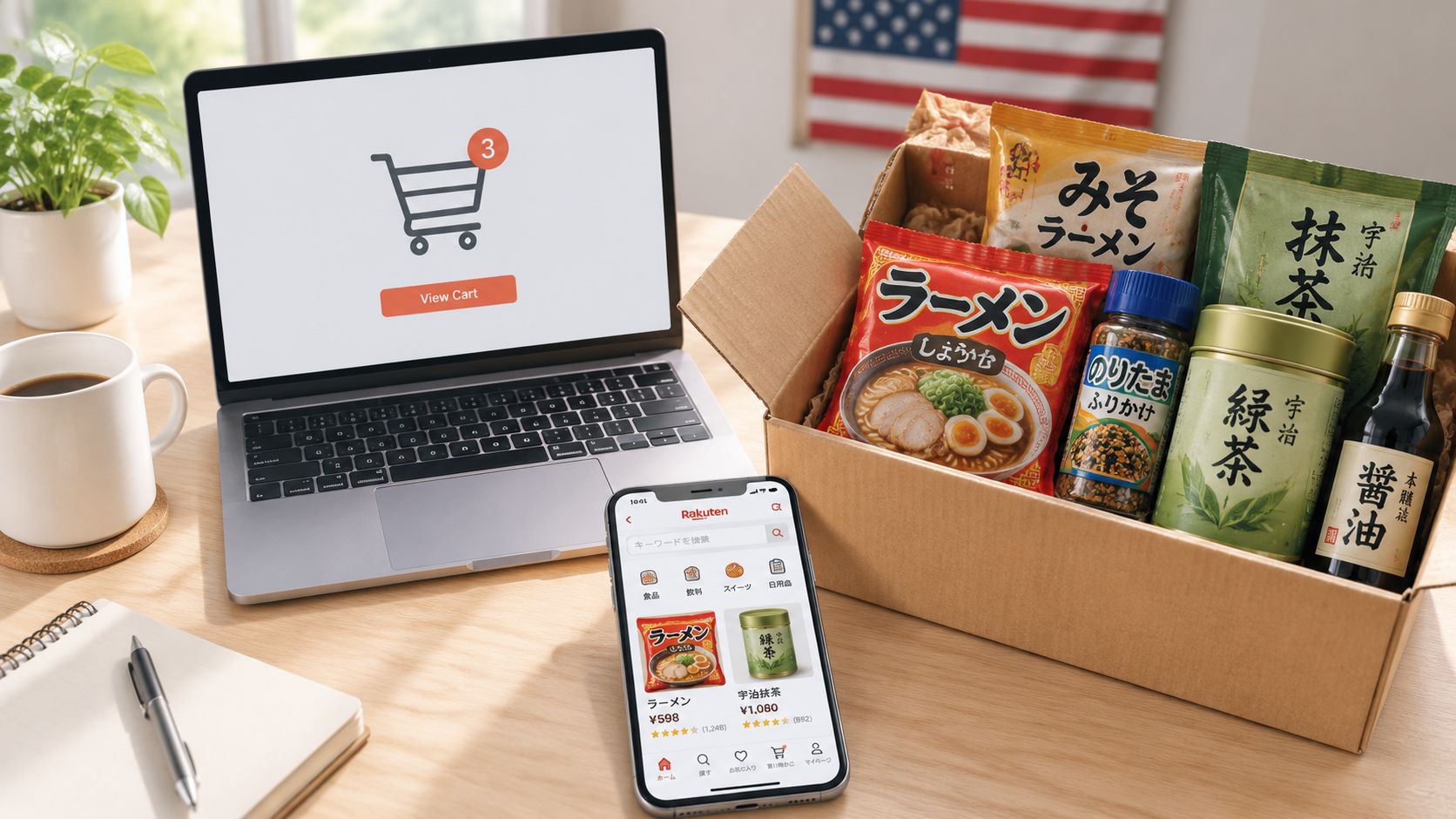
You're probably doing one of two things right now. You either have a cart full of Japanese snacks, ramen, tea, and condiments and you're hesitating at checkout because shipping and customs feel unclear, or you've already tried ordering Japanese food online in the USA and learned that “authentic” can mean very different things depending on who's selling it.
That hesitation is reasonable. Buying Japanese food from Japan isn't the same as ordering from a local supermarket app, and the biggest mistakes usually happen before the first item goes into the cart. Seller type, product category, labeling, shipping method, and customs all affect whether the order feels smart or frustrating.
The good news is that Japanese food online shopping in the USA gets much easier once you know what to look for. The practical advantage usually comes from choosing shelf-stable products, checking whether a store ships directly from Japan, and understanding the inherent trade-offs between speed, freshness, and total landed cost.
Finding Authentic Japanese Sellers Online
The first filter is simple. Figure out whether you're buying from a direct-from-Japan store or a U.S.-based reseller.
A U.S.-based reseller can be convenient, especially if you want faster domestic delivery. But if you care about original Japanese packaging, broader selection, seasonal flavors, or products that rarely stay in U.S. inventory, direct shipping from Japan usually gives you a more accurate shopping experience.
What authenticity looks like in practice
An authentic seller usually shows its hand pretty quickly. You'll see original Japanese brand names, product lines that make sense inside Japan, and categories that go beyond tourist-box snacks.
Good signs include:
- Japanese brand depth such as Glico, Meiji, Lotte, Calbee, Maruchan, Nissin Foods, Kikkoman, House Foods, Itoen, and UHA Mikakuto appearing in multiple variants instead of one token SKU.
- Region-specific or limited products that don't look like a generic wholesale catalog.
- Clear shipping origin so you know whether the order is leaving Japan or shipping from a U.S. warehouse.
- Detailed labeling photos that let you verify flavor, pack size, and brand identity before buying.
A weak seller usually looks broad but shallow. You'll see random Japanese items mixed with unrelated imports, sparse product details, and vague fulfillment language that doesn't tell you where the goods come from.
Practical rule: If a store never clearly says where it ships from, assume you're not getting the cleanest import experience.
Compliance matters more than shoppers think
This part gets ignored too often. If food is being shipped from Japan to the United States, the seller should operate with real export and import compliance in mind.
Exporting food and beverages from Japan to the U.S. requires obtaining a Food Export License from the Japanese Ministry of Health, Labor and Welfare, and imported food must comply with U.S. Food and Drug Administration requirements including allergen labeling, nutrition information, and full ingredient lists, as explained in this overview of shipping food from Japan to the USA.
That matters because the safest checkout experience usually starts long before payment. A compliant seller is more likely to present products clearly, package them correctly, and reduce surprises at the border.
A quick screening checklist
When I assess a new shop, I use a short checklist:
- Check origin first. If it ships directly from Japan, the selection usually reflects the actual Japanese market more accurately.
- Check category depth. A real specialist will have snacks, pantry goods, tea, and often beauty or lifestyle lines that match Japanese retail habits.
- Check content quality. Useful stores explain products instead of relying on vague “Asian grocery” labeling.
- Check operational clarity. Shipping policy, customs language, and labeling details should be easy to find.
If you want another reference point for evaluating stores that specialize in Japanese products, this guide to best online Japanese stores is useful for comparing shopping styles and product focus.
For merchants trying to improve how they answer pre-purchase questions about ingredients, shipping, and product fit, tools like Carti's AI chatbot for food brands are worth watching because shoppers often abandon carts when basic food questions aren't answered fast enough.
What to Buy A Starter Guide to Japanese Staples
Most first orders go wrong for one reason. People shop with their curiosity instead of shopping for shipping reality.
The easiest first cart is built around shelf-stable Japanese staples. In the United States, purchase intent for Japanese instant ramen, Japanese green tea, Japanese chips, and Japanese condiments ranks significantly higher than for premium items like Japanese beef or seafood, confirming that staple, shelf-stable items drive online sales, according to this analysis of Japanese food demand in the U.S..

The safest first cart
If you're new to Japanese food online shopping in the USA, start with items that travel well and still feel distinctly Japanese when they arrive.
A practical starter cart usually includes:
- Instant ramen: Not just for convenience. Japanese domestic ramen often has more distinct broth styles and better regional variation than what many U.S. shoppers are used to.
- Green tea: Easy to store, easy to gift, and one of the least risky categories for international shipping.
- Chips and savory snacks: Calbee, Koikeya, Kameda, and other Japanese snack makers do seasoning profiles that are lighter, more seaweed-forward, more umami-driven, or less predictable than standard U.S. snack aisles.
- Condiments: Soy sauce, ponzu, furikake, curry roux, sesame dressing, and soup bases can change what you cook at home without needing a full Japanese pantry.
Ramen is a better starting point than fresh noodles
A lot of buyers think “more premium” means “better first order.” It usually doesn't.
Fresh or refrigerated items introduce more handling risk and more disappointment if expectations are too high. Shelf-stable ramen from brands like Nissin Foods, Maruchan, Sanyo Foods, Acecook, and Miojo Foods is a smarter place to begin because it survives transit better and still gives you a genuine taste of Japanese product design.
For buyers who want to understand the category before choosing, this article on Japanese ramen and instant noodles is a good reference.
A quick visual helps if you're deciding what belongs in a first order.
The pantry items that earn repeat orders
Some products become reorders faster than snacks because they fit normal weekly cooking.
Here's what tends to work well:
| Category | Good first choices | Why they work |
|---|---|---|
| Condiments | Soy sauce, ponzu, furikake, wasabi seasoning | Easy to use with meals you already make |
| Tea | Green tea, roasted tea blends | Stable in transit and simple to store |
| Snacks | Chips, rice crackers, chocolate, gummies | Low commitment and easy to sample |
| Cooking bases | Curry roux, soup stock, noodle soup base | Makes Japanese home cooking easier fast |
Don't build your first cart around hard-to-judge freshness items. Build it around products that are hard to fake, easy to store, and satisfying even if shipping takes time.
One point beauty-focused shoppers often miss is that food and beauty habits overlap more than you'd think. If you already shop Japanese skincare brands like Hada Labo, Shiseido AQUALABEL, Canmake, or DHC because you trust Japanese formulation standards, the same logic applies to food basics. Country of origin, product labeling, and brand reputation all matter.
The Ordering and Payment Process Simplified
A first international grocery order usually stalls at the same moment. The cart looks good, then the questions start. Is the item listing clear, will payment go through, and did you just miss something that will cause trouble later?
The checkout itself is usually straightforward. The part that needs judgment is everything around it: choosing the right listing, catching pack-size differences, and checking whether the order still makes sense once shipping weight is factored in.

The cleanest way to place an order
Start with an account before you build the cart. That makes it easier to track past orders, save your address correctly, and resolve a problem if an item arrives damaged or substituted.
Then shop with more discipline than you would on a US grocery site. Search works well if you already know the exact brand or flavor. Category pages are better for comparing similar products, especially with ramen, tea, curry roux, seasonings, and snack multipacks. Japanese product names can be close enough to cause mistakes, and photos do not always make size differences obvious.
Before paying, check three things carefully:
- Product format. Confirm whether you are buying a single item, a bundle, or a refill pack.
- Weight and bulk. Bottles, cans, and large chip bags can push shipping costs up fast.
- Item compatibility. A mixed cart with sturdy pantry goods usually travels better than one packed with fragile snacks.
Payment is simple if you keep it boring
Use a payment method you already trust, usually a major card or PayPal. International orders are not the place to test a new payment app, a virtual card you have never used before, or a billing address that does not exactly match your bank record.
I also recommend saving the order summary and checking the confirmation email right away. If there is a problem, the easiest fixes happen in the first few minutes, before packing starts.
A few habits prevent most checkout headaches:
- Use your full legal name and complete address
- Match the billing details to your payment method
- Review the store's support and shipping pages before paying
- Keep screenshots of the final cart and confirmation page
Shoppers who have ordered from overseas fashion or beauty sites will recognize the pattern. Delivery communication can vary a lot from what US retailers provide. This guide to YesStyle shipping time and international fulfillment expectations gives a useful comparison point if you want a clearer sense of how overseas order updates often work.
A good international order should feel clear after checkout. You should know exactly what you bought, how you paid, and what kind of shipping updates to expect.
Mixed carts can be practical, but they need a quick check
Some shoppers combine food with Japanese beauty and personal care items such as Biore, Shiseido Fino, Kao Liese, Tsubaki, & Honey, or Mentholatum Acnes. Buy Me Japan is one option for that kind of order because it carries food, beauty, and lifestyle products in one catalog and ships from Japan.
That convenience has a trade-off. A mixed cart can save time and reduce the hassle of placing separate orders, but it also makes it easier to overlook weight, packaging differences, and product restrictions. The best approach is simple: build the cart, review it once for product accuracy, then review it again as a shipment. That second pass is what keeps an easy checkout from turning into an expensive one.
Navigating Shipping Costs and US Customs
This is the part that decides whether your order feels worth it.
Most shoppers focus too hard on product price and not enough on landed cost, which is the total cost after shipping, customs handling, and the practical effect of transit time on food quality. That's why two orders with similar cart totals can feel completely different once they arrive.

The customs rule change every U.S. buyer needs to know
Starting August 29, 2025, the U.S. government will end the $800 de minimis duty-free exemption for all low-value international packages, including orders shipped from Japan, which means every order will face import duties and customs processing that were previously waived, according to this update on the end of the de minimis exemption.
That changes the math for Japanese food online shopping in the USA.
Before this change, many shoppers treated low-value imported food orders as relatively simple. After the change takes effect, every order deserves a little more planning. Small impulse orders may feel less attractive once duties and customs processing become part of the equation.
Direct from Japan versus local U.S. Asian grocery delivery
There isn't one right answer here. There are two different use cases.
If you want speed, local U.S.-based Asian grocery delivery often wins. If you want original Japanese-market selection, direct import usually wins. The trade-off shows up most clearly with freshness-sensitive items.
The gap is practical:
- Direct from Japan gives you stronger authenticity, wider product variety, and access to Japanese-market packaging.
- Local U.S. importers or Asian grocers usually make more sense for freshness-sensitive basics that you want quickly.
- Beauty-adjacent food items like matcha or specialty pantry ingredients can be worth importing when product origin matters more than speed.
One overlooked issue is that “cheaper from Japan” claims can be incomplete if they ignore shipping, customs, and freshness risk. A buyer comparing a fresh or semi-fresh item from Japan against a nearby importer should compare the total experience, not just the item price.
If the food needs to feel fresh when it arrives, local often beats imported. If the product needs to be authentic and shelf-stable, Japan often beats local.
How to think about shipping without overcomplicating it
I use a simple filter:
| Situation | Better option |
|---|---|
| You want pantry staples, tea, ramen, or packaged snacks | Direct from Japan can make sense |
| You need fresh, fast, or highly perishable ingredients | Local U.S. source is usually safer |
| You're testing a new category for the first time | Start with shelf-stable items |
| You care about rare flavors or Japan-only variants | Importing is usually worth considering |
For a broader look at what shoppers often source from Japan across categories, this guide to products in Japan gives useful context.
The mistake I see most often is ordering as if every Japanese product should be imported. That's not how experienced buyers think. They import what benefits from origin and buy local when speed or freshness matters more.
Pro Tips for Saving Money on Every Order
Saving money on Japanese imports isn't about hunting the lowest sticker price. It's about building a cart that makes shipping and discounts work together.
The benchmark data for the Japanese food eCommerce market shows an average order value of US$86 and a discount rate of 10.4%, which is a useful reference for what a normal order and a meaningful discount can look like, based on these Japanese food eCommerce benchmarks.
Build fewer, better carts
Tiny orders feel safer, but they often create worse value.
A smarter approach is to group products that store well, such as ramen, tea, snacks, seasoning packets, curry roux, furikake, and stable condiments. That lets you spread shipping across more usable items instead of paying international shipping for a very small basket.
Use discounts with discipline
A discount only helps if it doesn't push you into a bad cart.
Good habits include:
- Buy what you'll finish. Imported deals stop being deals when half the cart sits unopened.
- Use first-order offers carefully. If a store offers a welcome discount, apply it to a cart built around repeatable staples.
- Watch for seasonal product drops. Limited-edition snacks can be fun, but your core savings usually come from stocking practical items when promotions line up.
If you want ideas for building a more efficient snack order, this guide on where to buy Japanese snacks is a good companion read.
What usually wastes money
The biggest budget leaks aren't dramatic. They're ordinary shopping habits.
- Impulse fresh-item experiments that don't travel well
- Overweight carts caused by too many bottled products at once
- Split orders that could have been combined
- Buying novelty without a pantry base so you pay shipping for fun but not for usefulness
The cheapest order isn't the one with the lowest subtotal. It's the one you finish, enjoy, and don't need to replace locally a week later.
For beauty shoppers crossing into food, this mindset already feels familiar. If you wouldn't buy random skincare just because it's Japanese, don't do that with food either. Choose categories with a clear use case.
How to Store Your Japanese Groceries Correctly
Once the box arrives, storage decides whether the order stays satisfying.
Japanese pantry items are usually easy to manage, but they lose quality fast if you treat everything the same. Snacks need protection from air, tea needs protection from light and heat, and opened condiments need a colder, more stable environment.
Simple storage habits that work
- Keep snacks crisp. Senbei, chips, crackers, and puffed snacks stay better in airtight containers or tightly resealed bags.
- Refrigerate opened sauces. Soy sauce, ponzu, sesame dressing, and similar condiments usually hold flavor better after opening when kept cold.
- Protect tea from light and humidity. Green tea should stay sealed and away from warm kitchen spots.
- Separate strong aromas. Tea, seaweed, and delicate snacks can pick up odors from nearby foods.
Treat the first week as a quality check
Open the most fragile items first. That usually means chips, rice crackers, and tea.
Shelf-stable ramen, curry roux, furikake, and unopened condiments are usually more forgiving, so they can wait. If you rotate that way, you'll enjoy the order at its best instead of finding the most delicate products at the back of the pantry later.
If you want a straightforward place to browse authentic Japanese food alongside beauty, hair care, and lifestyle products, Buy Me Japan is worth a look. It ships directly from Japan and carries brands across snacks, pantry staples, skincare, and cosmetics, which is useful if you prefer one well-organized order instead of juggling multiple overseas carts.

Share:
Japanese Skincare Revolution: Your 2026 Guide
Korean Beauty Products for Glass Skin: 2026 Guide