


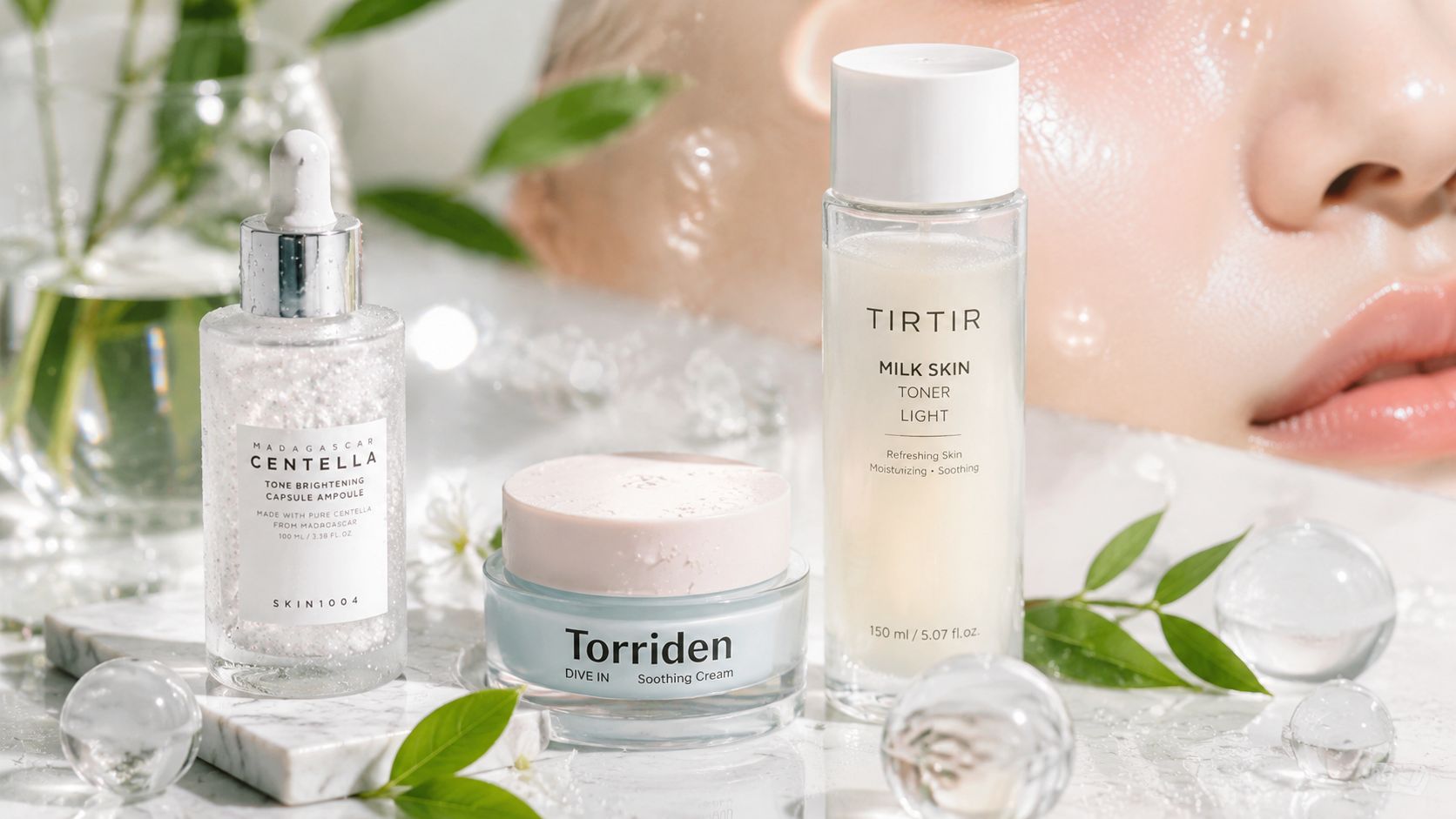
The popular advice around glass skin usually makes the routine sound harder than it needs to be. You do not need a crowded shelf or a perfect 10-step ritual. What matters is a skin routine that keeps moisture in, supports the barrier, and leaves the surface smooth enough to catch light cleanly.
That is why korean beauty products for glass skin became such a powerful search term in the first place. The look is tied to a real market, not just a social-media mood, and Japan fits into that conversation because its best skincare brands solve the same problem with a different philosophy, more restraint, more precision, and more focus on comfort.
What Is Glass Skin and Why Is It So Popular

Glass skin describes skin that looks well-hydrated, even-toned, smooth, and reflective, as if light is sitting cleanly on the surface. It is not oily shine. The goal is skin that looks calm, plump, and well cared for, with a finish that reads healthy rather than greasy.
The trend spread quickly because it links a visible finish to skincare habits people can readily understand: hydration, barrier support, and steady use. In the broader K-beauty market, skincare products held 56.78% of revenue in 2025, which shows how strongly hydration-first categories shape the industry (Grand View Research). The same source also shows steady market growth over time, with the K-beauty product market valued at USD 11.9 billion in 2026 and projected at USD 21.5 billion by 2036.
Why the look keeps spreading
Global demand helps explain the momentum. BBC reported that South Korea's beauty market was worth about USD 13 billion in 2024, and that in the first half of 2025 the country became the world's second-largest cosmetics exporter after France, with exports up 15% to USD 5.5 billion (BBC). This export strength shows that glass-skin products are part of a global buying pattern, not a short-lived niche.
Practical rule: If a routine gives you glow but leaves your skin tight, stinging, or flaky, it is working against the glass-skin goal.
For shoppers comparing routines across Korea and Japan, the shared theme is clear. Both beauty cultures value visible hydration, lightweight layering, and a finish that looks refined rather than heavy. Japanese skincare often approaches that result with more restraint and precision, which is why it can be a strong match for people who want the glass-skin look without an overloaded routine. If you want a closer look at hydration ingredients, this guide on hyaluronic acid serum is a useful place to start.
The Core Principles of a Glass Skin Routine
A glass-skin routine works best when it stays disciplined. The goal is a smooth, hydrated surface with enough support underneath to keep that finish steady, not a shelf full of products chasing the same result. A practical version usually centers on gentle cleansing, a humectant serum, barrier support with ceramides, a brightening active, and daily broad-spectrum SPF 50, as noted by Aesthetics Valley. The brand matters less than the sequence and the reason behind each step.
Start with cleansing that respects the barrier
Double cleansing earns its place because makeup, sunscreen, sebum, and city residue all cling to skin in different ways. An oil cleanser helps dissolve the oil-based buildup first, then a water-based cleanser removes what remains without leaving the skin feeling coated. That approach is common in both Korean and Japanese skincare because it clears away debris without the tight, squeaky finish that often signals barrier stress.
Build hydration in layers, not in one heavy layer
Hydration works better when it is built in stages the skin can absorb and hold. Humectants draw water in, then a moisturizer helps keep it from escaping too quickly. Japanese routines often use this method with a lighter touch, which suits people who want a healthy glow without a greasy finish.
Useful benchmark: The routine should leave skin comfortable, not “stripped clean.” Tightness is a warning sign, not proof that cleansing worked better.
Protect the barrier and keep actives under control
Ceramides matter because they support the barrier that helps keep moisture in place. Brightening ingredients such as niacinamide can help even out tone, but stacking too many actives usually pushes the skin in the wrong direction. Over-layering irritant actives can worsen skin conditions, and the best routine avoids that trap by choosing only what the skin can handle.
Sunscreen belongs in the routine every day. Without it, the smoothness you build in the morning is repeatedly worn down by UV exposure later on. Japanese formulation philosophy fits this goal well because it usually favors consistency, texture, and skin comfort over excess. For readers who want to understand texture-first hydration better, the guide on the best essence for face is a useful companion to this principle-led approach.
Building Your Morning AM Glass Skin Regimen

Morning routines should feel light, not crowded. If your skin is going under makeup or facing a long day outdoors, the priority is a smooth hydrated base that stays comfortable for hours. Japanese brands do this especially well because they often balance elegance in texture with practical wearability.
Cleanse lightly, then add water back in
A morning cleanse does not have to be aggressive. For many people, a gentle rinse or a mild cleanser is enough, as long as the skin is not left dry. The next step is where the glow starts, a hydrating toner or essence, especially one that uses a humectant base.
Hada Labo is a classic example of this philosophy. Its hydration-first style fits the kind of routine that keeps skin looking fresh rather than coated. If your main concern is dryness or that flat, tired look, Japanese skincare often feels more intuitive than trend-driven layering.
Use one serum with a clear job
The most confusing part for beginners is choosing a serum. Keep it simple. One serum with a clear purpose, hydration, tone support, or barrier comfort, is usually enough for daytime.
For a glass-skin goal, think in terms of texture and finish. A serum should absorb cleanly, then leave the skin looking supple instead of sticky. That matters because heavy layering can make makeup slide or make pores look more obvious, even when the ingredients are good.
Morning rule: Apply hydrating layers to slightly damp skin, then give each layer a short pause before the next one so the finish stays even.
Sunscreen is the final step, not an optional extra
Morning sunscreen is not optional in glass-skin routines. Several expert guides place it as the final daytime step, and one video guide specifically recommends SPF 50 or higher, with reapplication every two hours during extended outdoor exposure (YouTube guide). That advice matters because UV exposure is one of the fastest ways to undo the tone and smoothness you are trying to build.
Japanese sunscreens from brands such as Shiseido Anessa and Biore are popular for a reason, they tend to be comfortable, lightweight, and easy to wear daily. That daily comfort is not a small detail, it is the difference between a routine you follow and one you abandon.
If you want a product-selection framework for morning layering, the internal guide on morning skincare routine steps is a helpful companion.
Your Evening PM Routine for Repair and Renewal

Evening is when the skin gets the chance to reset. The job is not to scrub harder. It is to remove the day cleanly, then support repair so the surface looks calmer the next morning. That is where double cleansing earns its place in a glass-skin routine.
Remove sunscreen and makeup in the right order
An oil cleanser is the first move because it dissolves oil-based residue, including sunscreen and makeup. Japanese options like DHC and Fancl are often chosen for this type of first cleanse because they are built for thorough removal without a rough after-feel. After that, a water-based cleanser finishes the job.
That second cleanser should not leave your skin feeling tight. If it does, the formula may be too harsh for daily use. People often confuse that stripped feeling with deep cleansing, but it usually means the barrier is being pushed too far.
Use exfoliation sparingly
Glass skin does not come from constant peeling. Gentle exfoliation can help with dullness and texture, but only when it is used carefully. A good rule is to keep it occasional rather than daily, especially if your routine already includes active ingredients.
The safest version is a routine that stays steady during the week, then adds exfoliation only when skin needs it. That keeps the focus on smoothness without inviting redness or irritation.
The best overnight routine is the one your skin can wake up from without feeling tense.
Finish with repair, not overload
Night is the right time for richer moisturizers or sleeping packs if your skin is dry or exposed to a lot of stress during the day. A product such as Shiseido Elixir fits that repair-first idea well, because evening care should support overnight comfort rather than chase an instant finish.
For cleansing support, the internal guide on best cleansing balm can help readers compare textures before buying. The main point is straightforward, remove the day completely, then give skin enough support to recover.
Common Mistakes and How to Adapt for Your Skin Type

The biggest mistake is assuming every skin type needs the same glow routine. That idea causes a lot of congestion, irritation, and confusion. A better plan starts with skin behavior, not trend language.
Oily and acne-prone skin need clarity first
For acne-prone or oily skin, mainstream guides often under-explain the tradeoff between glow and congestion. The priority should be clarity first, lightweight hydration, calming ingredients such as centella, and only gentle exfoliation once or twice weekly rather than daily acids (Beauty From Korea). That approach helps keep the look fresh without feeding extra shine.
If your skin is oily, a rich cream can feel too heavy, but skipping moisturizer altogether usually backfires. The better choice is a light lotion, gel, or fluid moisturizer that supports water balance without clinging to the surface. The same logic applies to cleanser choice, gentle does not mean ineffective.
Dry skin needs more seal, not more friction
Dry skin often needs a fuller finish, especially at night. That does not mean piling on more actives. It means choosing a more cushioning moisturizer and making sure the hydrating steps are comfortable enough to use every day.
Japanese skincare tends to suit this problem well because many formulas are built to layer cleanly. A dry-skin routine that includes a mild cleanser, a hydrating toner, and a richer cream can look glassy without feeling greasy. The texture should feel supportive, not occlusive.
Sensitive skin should stay calm and predictable
Sensitive skin does best when the routine is boring in the best possible way. Fewer products, fewer new actives, and a stronger focus on comfort. Brands such as MINON are often valued for that reason, because fragrance-free, calming formulas reduce the chance of extra stinging.
Simple test: If toner, cleanser, or serum stings, the barrier may already be compromised, and the routine needs to get gentler.
The most practical adaptation is to change only one variable at a time. That makes it much easier to tell whether a product is helping or causing the problem. Glass skin should look refined, but it should also feel wearable every day.
Why Choose Japanese Products for a Glass Skin Goal
Japanese skincare is a natural fit for a glass-skin goal because it usually values precision, comfort, and consistency over dramatic routines. That mindset matters. The best glow comes from formulas you can keep using, not from aggressive products that you quit after a week.
Brands like Hada Labo and Shiseido reflect that approach in different ways, one through hydration-first simplicity, the other through long-standing formulation depth and strong brand trust in Japan. For a broader look at that tradition, the internal guide on Japanese skincare revolution gives useful context.
The practical advantage is easy to understand. Japanese products often make it easier to build a routine that stays lightweight in the morning, restorative at night, and gentle enough for daily use. That is exactly what a glass-skin finish demands.
When shoppers buy authentic Japanese skincare, they are also buying into a standard of quality control that Japanese consumers already trust. For international customers, that matters because the routine only works if the product you receive is the product the brand intended. Consistency is a true luxury here, and it shows in the skin over time.
If you want to turn this into a routine that fits your skin, start with the basics, cleanser, hydrator, moisturizer, and sunscreen, then choose Japanese formulas that suit your skin type instead of chasing every new trend. Shop the right Japanese skincare with confidence at Buy Me Japan, where authenticity, direct shipping from Japan, and carefully curated product choices make it easier to build a glass-skin routine that feels as good as it looks.

Share:
Best Japanese Food Online Shopping USA Sites 2026
What Does Gohan Mean in Japanese? Rice, Meal, & Culture