


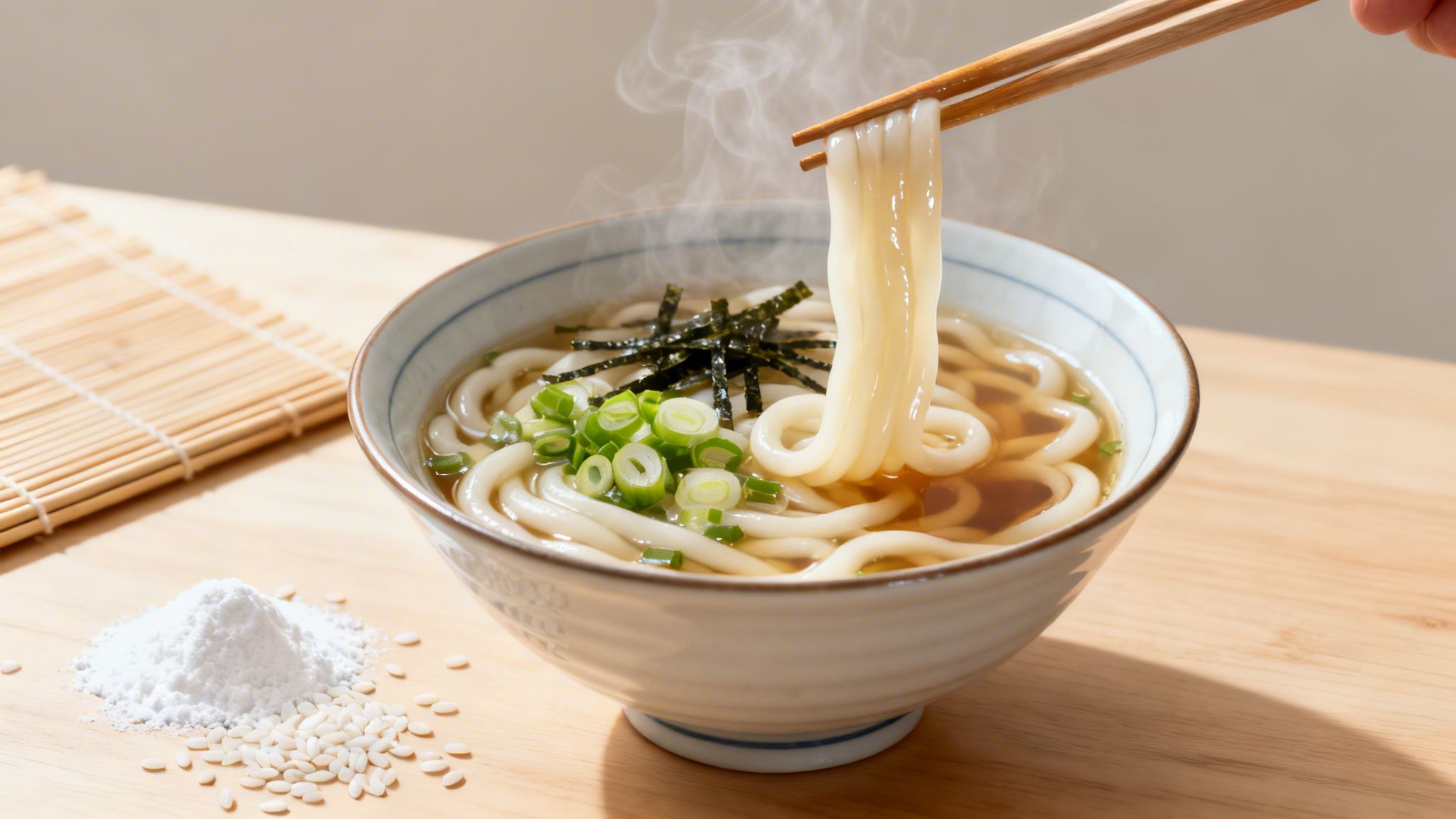
If you love Japanese food but have a gluten intolerance, the thought of giving up a hearty bowl of udon can be a real disappointment. Thankfully, you don't have to miss out. Authentic Japanese gluten-free udon is a game-changer, crafted by artisans in Japan to deliver that classic, slurp-worthy experience without a trace of wheat.
This guide will show you everything you need to know about Japanese gluten-free udon. You will learn what makes it different, how to cook it perfectly, and where to find the most authentic options shipped directly from Japan.
Enjoying Udon Without the Gluten

Navigating authentic Japanese cuisine with a gluten intolerance can seem daunting, but it’s far from impossible when you know what to look for. Gluten-free udon is a fantastic example of Japanese culinary innovation, blending tradition with modern dietary needs.
These are not your average gluten-free pastas trying to be udon. They are a completely re-engineered noodle. Instead of wheat, Japanese makers rely on specific blends of high-quality ingredients to get that signature udon character just right.
The Secret to That Perfect Bite
So, how do they achieve that famously chewy, bouncy texture without gluten? It all comes down to the flour. Most artisans start with a base of premium rice flour and then masterfully blend it with starches like potato or corn starch. This isn't a random mix; it's a precise science.
This careful combination results in a noodle that’s:
- Perfectly Chewy: The starches create a wonderful, springy bite that stands up beautifully in both hot broths and cold sauces.
- A Blank Canvas for Flavor: Just like traditional udon, the taste is clean and neutral, making it the perfect vehicle for whatever delicious broth or sauce you pair it with.
- Sturdy and Reliable: These noodles are designed to hold their shape during cooking, so you won’t end up with a mushy mess at the bottom of your bowl.
The whole point of Japanese gluten-free udon is to honor the original. It’s not just about taking gluten out; it’s about rebuilding that beloved texture and soul of the classic noodle with different, but equally high-quality, ingredients.
This dedication means you can dive back into the incredible world of Japanese noodle dishes. From steaming bowls of kake udon to chilled summer zaru udon, the possibilities are wide open. To get a better feel for the fundamentals, you might want to explore our guide on Japanese Cooking Basics. Understanding these core principles will give you an even deeper appreciation for the authentic, thoughtfully made products coming directly from Japan.
How It Compares to Traditional Wheat Udon

So, how does gluten-free udon stack up against the classic wheat noodle we all know and love? While they might look nearly identical in the bowl, they are two very different culinary experiences. The key is to manage your expectations and appreciate gluten-free udon for what it is—a delicious and distinct noodle in its own right, not a carbon copy.
The biggest distinction you'll notice right away is the texture. It’s the heart and soul of any udon experience.
Texture and Chewiness
Traditional wheat udon is famous for its koshi, a Japanese term that’s hard to translate but perfectly describes a satisfyingly firm, chewy, and elastic bite. That unique quality comes from the gluten developed in the wheat dough. It’s a texture that offers a bit of resistance.
Gluten-free udon, usually made from rice flour, simply can’t replicate that. Instead, it offers its own delightful texture: a softer, more tender, and gently springy mouthfeel. Think of the perfect consistency of high-quality steamed rice, just in noodle form. It’s less of a resistant chew and more of a supple, pleasant bounce.
This softer texture is fantastic at soaking up broths and sauces, almost melting into the dish while still holding its shape.
Flavor Profile
It’s not just about the bite, though. The flavor profile is different, too. Wheat udon has a very subtle, earthy taste that provides a neutral-yet-present backdrop for your soup.
Gluten-free udon, on the other hand, is even cleaner and lighter on the palate. Made from rice flour, its flavor is incredibly neutral. This is actually a huge plus. It means the complex, umami-rich flavors of a dashi broth or a spicy curry sauce can take center stage without any competition from the noodle. It aligns perfectly with the philosophy of Japanese cuisine, where the quality of each simple ingredient is meant to shine through, contributing to what makes Japanese food healthy and balanced.
To make it easier to see the differences, here’s a quick side-by-side comparison.
Gluten-Free Udon vs. Traditional Wheat Udon at a Glance
| Characteristic | Gluten-Free Udon (Typically Rice-Based) | Traditional Wheat Udon |
|---|---|---|
| Main Ingredient | Rice flour, potato starch, or other alternatives | Wheat flour |
| Texture | Soft, tender, slightly springy, gentle bounce | Firm, chewy, elastic, with a distinct koshi |
| Flavor | Very neutral, clean, and light | Subtle, earthy, wheaty undertones |
| Best For | Absorbing broths and sauces, letting other flavors shine | Providing a satisfyingly chewy contrast in soups and stir-fries |
| Gluten Content | 0% | Contains gluten |
This table shows that while they serve a similar purpose, their unique characteristics make them suited for slightly different culinary goals.
Do not go into a bowl of gluten-free udon expecting it to be an exact replica of wheat udon. Instead, embrace its unique qualities—a softer, gentler texture and a clean, neutral flavor that beautifully complements a wide range of Japanese dishes.
By appreciating these differences, you can fully enjoy the care and craftsmanship that goes into a great gluten-free noodle. It’s not just a substitute; it’s an excellent noodle that stands proudly on its own, opening up the world of Japanese cuisine to everyone.
The Secret Ingredients Behind the Perfect Texture

So, how do Japanese food artisans manage to create a perfectly chewy noodle without a single grain of wheat? It's not magic. The secret is all about a deep, masterful understanding of alternative ingredients and how they work together.
Crafting authentic gluten-free udon is a science. You can't just swap wheat flour for something else and call it a day. It’s a complete reimagining of the noodle, where each component is carefully chosen to build that beloved texture from the ground up. Knowing what goes into it really helps you appreciate the quality and care in every package.
The Foundation of Great Gluten-Free Udon
The main building block for most high-quality gluten-free udon from Japan is rice flour. Specifically, producers rely on a finely milled flour from uruchi-mai, the everyday short-grain rice that's a staple in the Japanese diet. This flour gives the noodle its essential body and structure.
But rice flour on its own can be crumbly and brittle. To get that signature chewiness and bounce, Japanese manufacturers turn to specific starches. This is where the real art comes in.
- Potato Starch: This is a key player for creating that springy, bouncy quality the Japanese call mochi-mochi texture. It gives the noodle a satisfying stretch and bite.
- Corn Starch: Often used as part of a blend, corn starch adds a smooth, soft finish and, importantly, keeps the noodles from getting overly sticky.
- Tapioca Starch: Derived from the cassava root, this is another go-to for adding chewiness and a slightly gelatinous quality that beautifully mimics the mouthfeel of traditional wheat udon.
These starches are the game-changers. While rice flour provides the base, it's the precise blend of these starches that elevates a simple rice pasta into a true gluten-free udon alternative.
Binding It All Together
Of course, you need something to make sure the noodles don't fall apart the moment they hit boiling water. This is where natural thickeners and binders come in, holding the noodle's integrity from the package all the way to your bowl.
A common and highly effective ingredient for this job is xanthan gum, a natural polysaccharide that acts as a fantastic binder. Another is glucomannan, which comes from the konnyaku plant—you can learn more about this incredible ingredient in our article explaining what konnyaku is and its many roles in Japanese cuisine.
This meticulous selection and balancing of ingredients is a true hallmark of Japanese food production. It ensures you get a product that not only fits your dietary needs but also delivers a genuinely delicious and authentic eating experience. When you shop from a source that values this expertise, that's exactly what you get.
How to Cook Gluten-Free Udon Perfectly

Cooking gluten-free noodles can sometimes feel like a gamble. Because they're made from rice and starches instead of wheat, they are naturally more delicate and can go from perfectly chewy to a sticky, mushy mess in a heartbeat.
But it doesn't have to be that way. With a couple of simple tricks borrowed straight from Japanese home kitchens, you can get that perfect al dente bite every single time.
The number one rule is to give your noodles space. A big pot with lots of rapidly boiling water is your best friend. Crowding the noodles lowers the water temperature and is a one-way ticket to a gluey texture.
A Step-by-Step Guide to Perfect Noodles
Cooking these udon noodles is a quick affair, so it is best to have your broth or sauce ready to go before you even turn on the stove. Once the water is boiling, it all happens fast.
-
Get That Water Rolling: Fill a large stockpot with plenty of water—at least 4 quarts (about 4 liters) for a single package. Bring it to a full, churning boil. There's no need to add salt or oil.
-
Add the Noodles: Gently slide the udon into the pot. As they start to soften, give them a gentle stir with chopsticks or a fork to keep them from sticking together or to the bottom of the pot.
-
Watch the Clock Loosely: Cooking times vary by brand, but most fall within the 8 to 12 minute range. Check the package for guidance, but start to test for doneness a minute or two before the recommended time.
-
Taste Test: The ideal texture is tender with a slight, satisfying chew. You don't want any hardness in the middle, but you definitely don't want it to be mushy.
The Crucial Final Step: Rinsing
Once your noodles are cooked just right, immediately drain them in a colander. Now comes the most important step, one that many people skip: rinse the noodles thoroughly under cold running water.
This is not just a suggestion; it's standard practice in Japan for a reason. Rinsing does two critical things. First, the cold water shocks the noodles and instantly stops the cooking process, locking in that perfect texture. Second, it washes away the excess surface starch that makes gluten-free noodles sticky and gummy, resulting in a much cleaner taste and a bouncier noodle.
After a good rinse, your gluten-free udon is ready for anything. Toss them straight into a hot, savory broth or with your favorite sauce. For a classic and deeply comforting meal, try them in a simple, umami-rich soup. If you're new to making Japanese broths, our guide on how to make dashi stock is the perfect place to start your journey.
Where to Find Authentic Gluten Free Udon
So, you're on the hunt for real-deal gluten-free udon. Where do you even begin? Honestly, finding genuine Japanese gluten-free udon outside of Japan can feel like a wild goose chase.
You might head to the international aisle of your local supermarket, hopeful, only to be met with a wall of "Asian-style" noodles. The problem is, many of these are generic rice noodles or export-grade products that just don't capture the specific, wonderful texture of true udon. They often miss that signature soft, chewy bite, leading to a meal that's good, but not great.
The Advantage of Buying Directly From Japan
That’s why going straight to the source is often your best bet. When you buy from a specialized retailer based in Japan, like Buy Me Japan, you're getting the exact same products that people in Japan buy for their own families. This isn't a small detail—it's everything.
Products made for the Japanese domestic market are held to an incredibly high standard. Manufacturers aren't tweaking recipes or simplifying ingredients for a foreign audience. By buying direct, you're ensuring you get:
- Uncompromised Quality: These noodles are crafted with the premium rice flours and starches we talked about, following the time-honored recipes that make Japanese food so special.
- True Authenticity: You’re not getting an "udon-style" noodle. You’re getting the genuine article, designed from the ground up to deliver the exact texture and flavor the maker intended.
- Expert Curation: A specialist seller knows the landscape. They can sift through the different brands to pick out the absolute best gluten-free udon on the market.
Buying from a Japan-based shop isn't just about convenience. It's your guarantee that the gluten-free udon arriving at your door is crafted with the same passion and precision that defines Japanese food culture.
Being based in Japan allows us to hand-pick the finest products and ship them directly to you. We take care of all the complex logistics, so you can simply look forward to enjoying a truly authentic bowl of udon. This direct-from-Japan approach removes all the guesswork, so you can be confident you’re getting the real thing, every single time.
Common Questions About Gluten Free Udon
As you get ready to dive into the world of gluten-free udon, a few questions naturally pop up. Let's walk through some of the most common ones so you can start cooking with total confidence.
Are Buckwheat Soba Noodles a Type of Gluten Free Udon?
That’s a great question, but no, they are two completely different kinds of noodles. It's a common point of confusion. While soba is made from buckwheat—which is gluten-free—most of the soba you'll find in stores has wheat flour blended in. If you want pure buckwheat soba, you need to look for packages specifically labeled juwari, which means 100% buckwheat.
Gluten-free udon, on the other hand, is designed from the ground up to mimic the texture of traditional wheat udon using ingredients like rice flour. Soba noodles are much thinner, with a distinct earthy flavor. Gluten-free udon aims for that classic soft, chewy bite and a neutral taste, making it the perfect stand-in for real udon. If you're building out a wider gluten-free lifestyle, exploring a comprehensive gluten-free meal plan can be a huge help.
Can I Use Gluten Free Udon in Any Udon Recipe?
Absolutely. Think of it as a direct, one-to-one swap in almost any recipe that calls for traditional udon. It works beautifully in everything from steaming hot soups like kake udon and curry udon to pan-fried yaki udon and even chilled dishes like zaru udon.
The only small thing to watch for is the cooking time, as gluten-free versions can cook a bit faster. For hot soups, add your cooked and rinsed noodles to the serving bowls first, then pour the hot broth over them right at the table. This keeps them from getting mushy and guarantees that perfect udon texture.
The neutral canvas of rice-based udon is perfect for soaking up rich, savory broths. To truly appreciate these complex tastes, it helps to understand the fifth taste at the heart of Japanese cooking. Take a look at our article on what umami flavor is to learn more.
How Should I Store Uncooked and Leftover Cooked Udon?
Storing your noodles correctly is the key to making them last. It’s pretty simple.
-
Uncooked Noodles: Keep dried gluten-free udon in a cool, dark place like a pantry. Just make sure the package is sealed up tight to keep out any moisture.
-
Cooked Leftovers: If you have some noodles left over, give them a good rinse under cold water and drain them well. Pop them in an airtight container in the fridge, and they’ll be good for up to two days. You can reheat them by giving them a quick dip in hot water or just tossing them straight into a simmering sauce.
Ready to enjoy authentic Japanese udon without the gluten? At Buy Me Japan, we source high-quality, genuine gluten-free udon directly from top producers in Japan. Explore our selection and have the true taste of Japan delivered right to your kitchen. Discover more at https://buymejapan.com.


Share:
Authentic Japanese Marinade for Beef Made Simple
Your Guide to Nori Komi Furikake the Ultimate Japanese Seasoning