


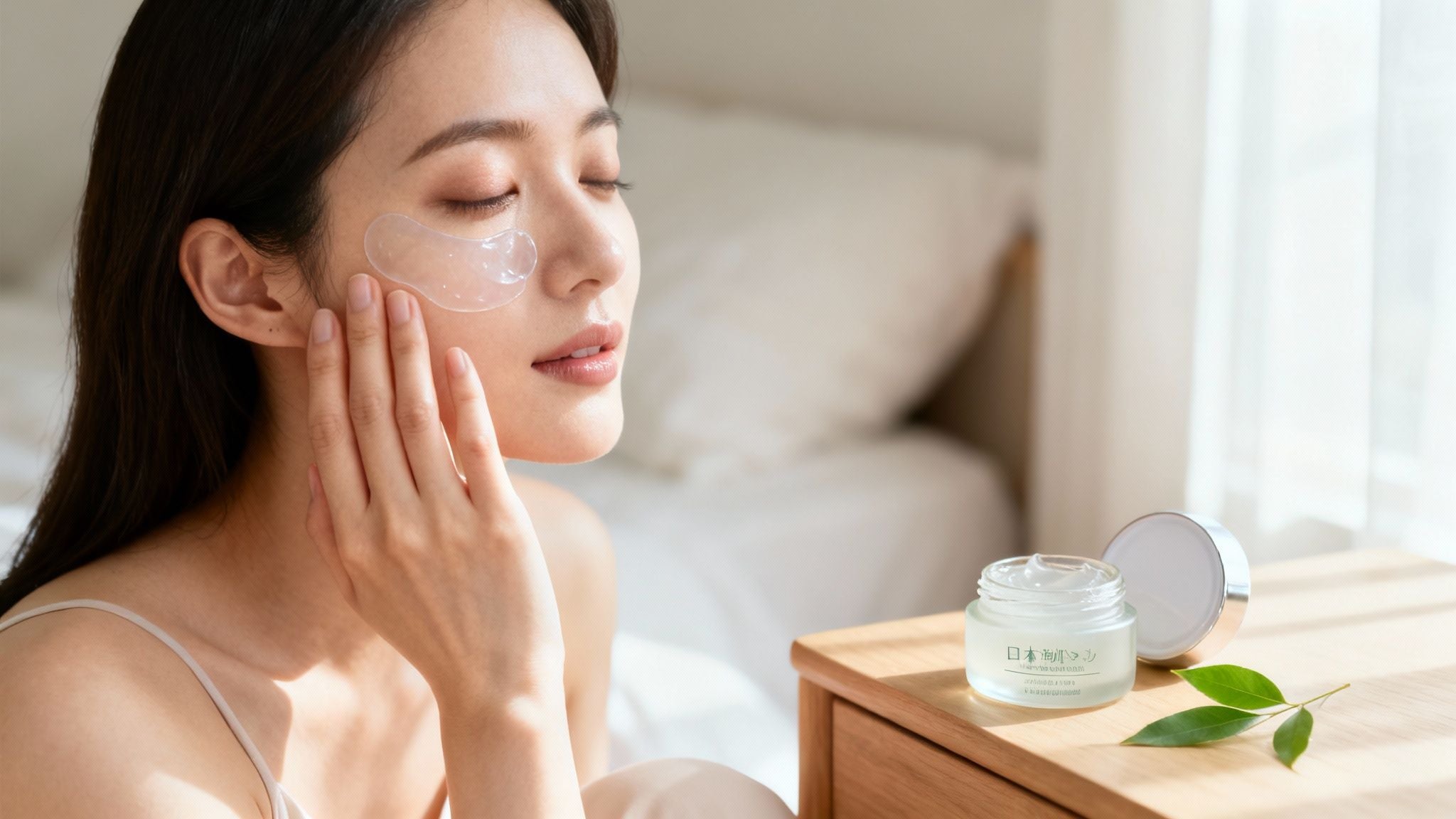
Picture this: you wake up, glance in the mirror, and see skin that’s undeniably brighter, plumper, and feels deeply hydrated. That’s the magic of a good Japanese sleeping mask. Think of it as the final, perfecting step in your nighttime routine that locks everything in for an overnight reset. It’s designed to work in harmony with your skin's natural repair cycle while you get your beauty sleep.
Why a Sleeping Mask is Your Nighttime Secret Weapon
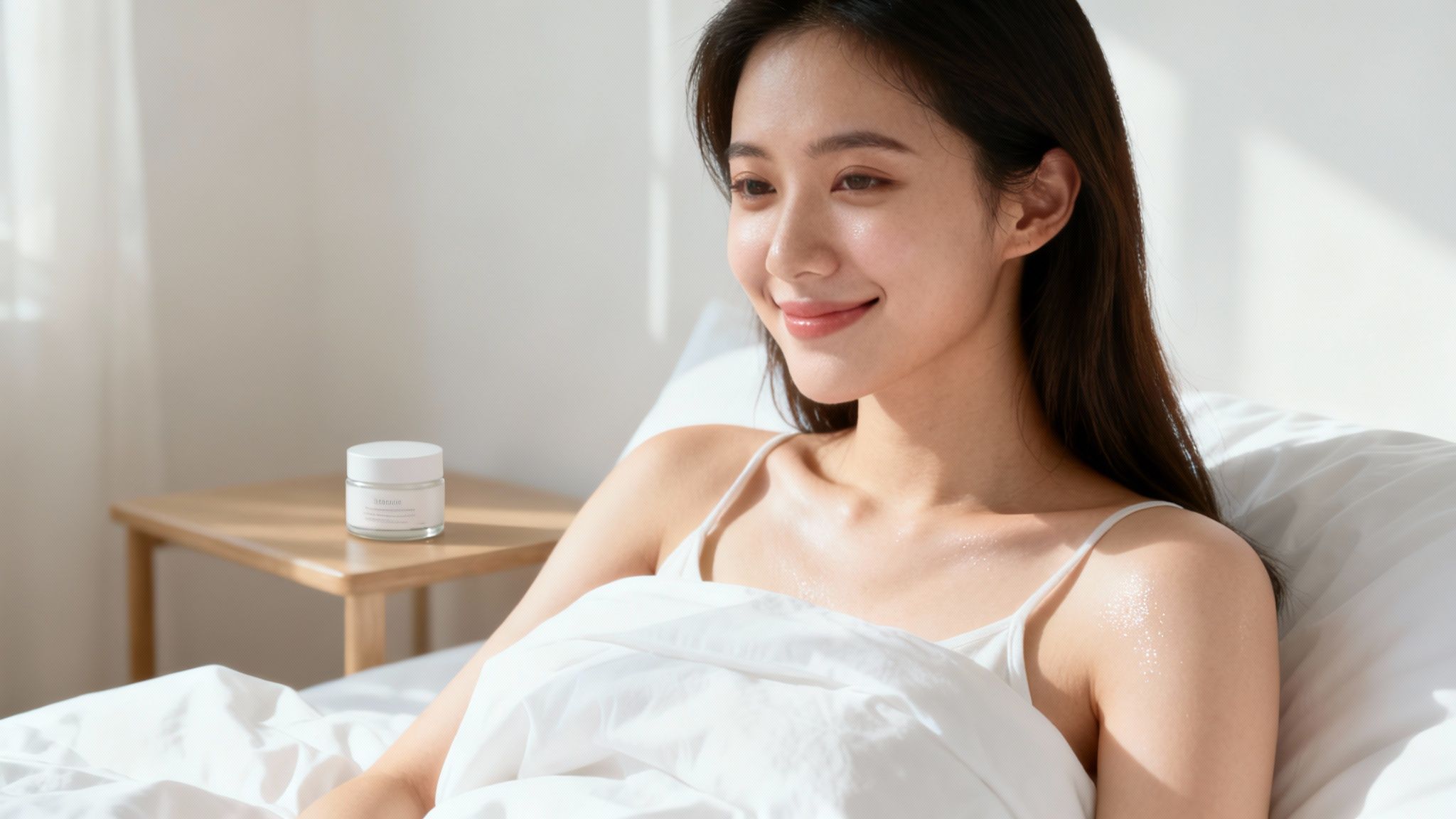
A sleeping mask is so much more than just a heavy night cream. It's a concentrated, intensive treatment meant to supercharge your skin’s recovery. While you're asleep, your skin is hard at work—its metabolism ramps up and cell turnover hits its peak. A sleeping mask takes full advantage of this crucial window, delivering a potent dose of ingredients and creating a protective seal to prevent moisture from escaping.
This isn't just a niche trend; it's a global beauty movement. The sleep mask market hit a massive USD 17.9 million in 2024 and is on track to jump to USD 26.6 million by 2032. Japan and the wider Asia-Pacific region are at the forefront of this growth, with people falling in love with masks that can visibly reduce puffiness by up to 25% overnight.
Of course, the mask is just one piece of the puzzle. To really boost its effects, it pays to look at your whole sleep environment. Even something as simple as your pillowcase plays a role in unlocking better sleep, skin, and hair, helping prevent those dreaded sleep lines and ensuring your products stay on your face, not on the fabric.
What Makes J-Beauty Masks Stand Out
Japanese brands have truly mastered the sleeping mask, creating elegant formulas that feel incredible on the skin while delivering serious results. They've busted the myth that these masks have to be sticky, messy, or only for those with desert-dry skin.
- Sophisticated Textures: You'll find beautiful gel-based packs, like those from Shiseido Elixir, that feel weightless but manage to provide deep, lasting hydration.
- Solutions for Every Skin Concern: Whether you need the gentle, amino-acid-packed formula from Minon Amino Moist for sensitive skin or a powerful brightening mask from Transino, there’s a Japanese mask out there for you.
- The Ultimate Sealant: A mask’s most important job is to lock in all the skincare steps that came before it. If you're using potent serums from brands like Hada Labo or Melano CC, this is key to maximizing their benefits.
Think of a sleeping mask as a protective shield for your skin. It stops the powerful ingredients in your serums and essences from simply evaporating overnight. By creating a breathable, humid environment, it allows your skin to soak up all that goodness, so you wake up looking refreshed and completely revitalized.
Choosing Your Perfect Overnight Partner
Finding the right sleeping mask is a bit like matchmaking for your face. To get those amazing overnight results, you need to pair your skin’s unique personality with a formula that truly gets it. The secret isn't just in the ingredients, but also in the texture—something Japanese skincare brands have perfected into an art form.
Decoding Textures for Your Skin Type
The way a product feels on your skin can make or break the experience. Here’s a quick guide to help you find the right feel for your face.
-
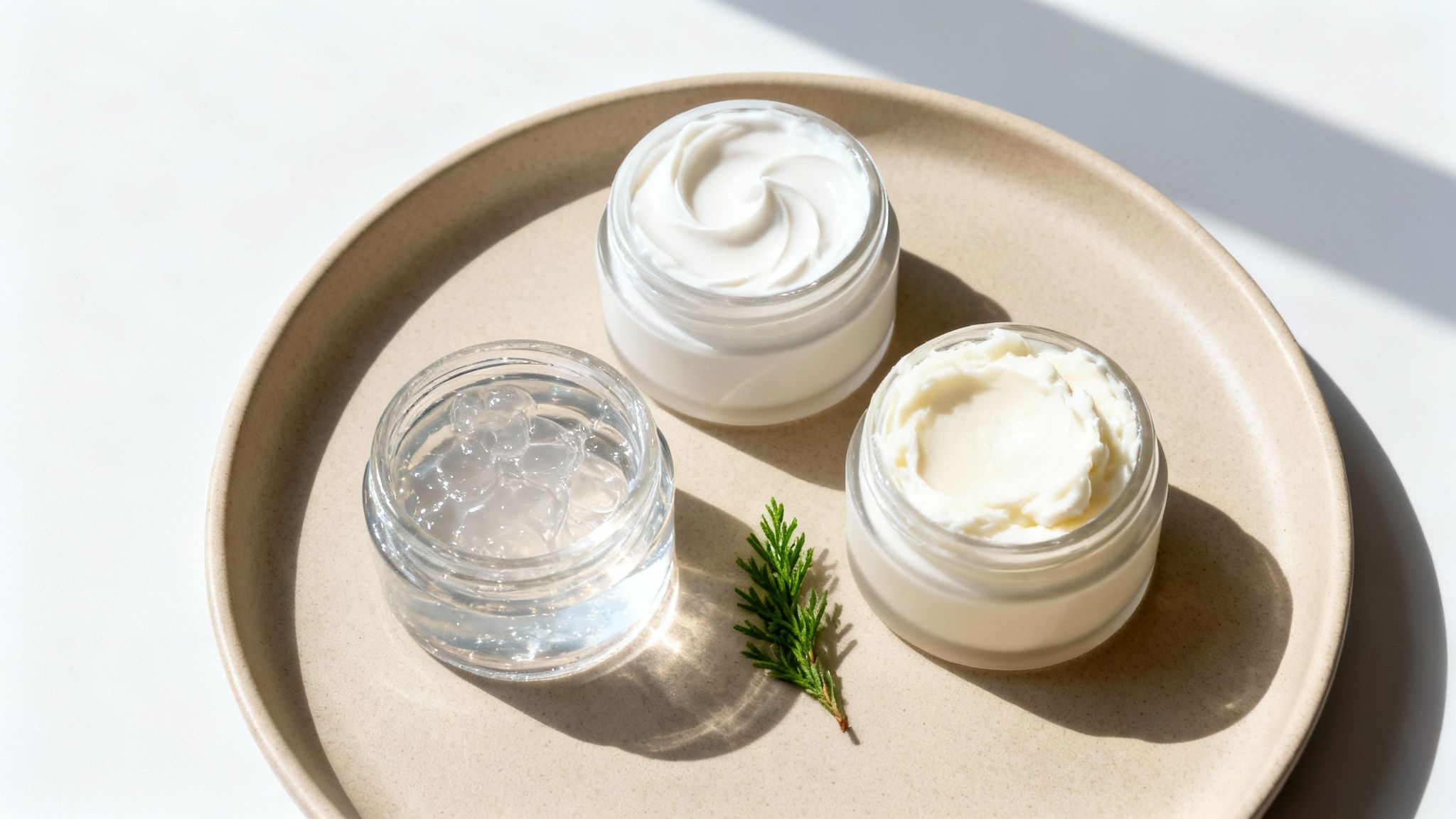
Gel Masks: If you have oily, combination, or acne-prone skin, a gel mask is your holy grail. These lightweight, water-based formulas sink in fast, delivering a huge splash of hydration without any heavy, pore-clogging feeling. They often have a lovely cooling sensation, which is a blessing for irritated skin.
-
Cream Masks: For my friends with dry, dehydrated, or mature skin, a rich cream mask is the way to go. Think of it as a cozy blanket for your face. These are loaded with nourishing ingredients that lock in moisture and create a strong barrier to prevent water loss while you sleep.
-
Gel-Cream Hybrids: Can't decide? Gel-cream hybrids offer the best of both worlds. They give you the refreshing, lightweight feel of a gel but with the lasting moisture of a cream, making them a fantastic choice for normal skin or combination skin that sometimes feels a little dry.
Gel formulas are a huge deal right now, especially in the J-beauty and K-beauty markets. These cooling masks can actually reduce puffiness by up to 25% and are becoming more popular for their do-it-all benefits. In fact, their sales are expected to jump by 18% in 2025.
Your J-Beauty Sleeping Mask Match
Finding your perfect mask is all about matching its texture and star ingredients to what your skin really needs. Use this table as a quick cheat sheet to find your ideal J-beauty partner.
| Skin Type | Best Texture | Key Ingredients to Look For | Product Example on Buy Me Japan |
|---|---|---|---|
| Oily/Acne-Prone | Gel | Hyaluronic Acid, Salicylic Acid, Green Tea Extract | Hada Labo Koi-Gokujyun Perfect Gel |
| Dry/Dehydrated | Cream | Ceramides, Squalane, Collagen, Royal Jelly | Shiseido Elixir Superieur Sleeping Gel Pack |
| Combination | Gel-Cream | Niacinamide, Vitamin C, Hyaluronic Acid | MINON Amino Moist Puru Puru Moist Skin Mask |
| Sensitive | Cream or Gel | Cica (Centella Asiatica), Licorice Root Extract | Shiseido d Program Skin Repair Cream |
| Dull/Uneven Tone | Gel or Gel-Cream | Tranexamic Acid, Vitamin C Derivatives, Pearl Extract | Transino Whitening Repair Cream EX |
| Mature/Aging | Cream | Retinol, Peptides, Collagen, Coenzyme Q10 | Sana Namerakahonpo Wrinkle Night Cream |
This is just a starting point, of course! Feel free to experiment, as sometimes your skin needs different things depending on the season or even the week.
Matching Ingredients to Your Skin Concerns
Once you have a texture in mind, it's time to zoom in on the ingredient list. This is where the magic really happens.
Think of ingredients as the dedicated team working the night shift on your skin. Your job is to hire the right specialists for the task, whether it's calming irritation, brightening dullness, or smoothing fine lines.
For example, if your skin is throwing a tantrum with redness and sensitivity, a mask with cica (Centella Asiatica) can be incredibly soothing. Brands like Shiseido's d Program are fantastic for calming down a compromised skin barrier.
Struggling with dark spots or an uneven complexion? Keep an eye out for tranexamic acid. It's a superstar ingredient for fading discoloration and is the hero in many products from the Transino skincare line.
And if your main battle is against dryness and the first signs of aging, you’ll want a formula packed with collagen and other powerful hydrators. The Shiseido Elixir Superieur Sleeping Gel Pack is a cult favorite for a reason—it’s designed to drench your skin in moisture and boost firmness overnight. If you're curious about this iconic product, check out our complete analysis of the Shiseido Elixir Sleeping Pack.
Mastering the Art of Application
It’s one thing to have a great product, but knowing how to apply it properly is what creates that truly game-changing experience. When it comes to sleeping masks, how you use them is just as critical as which one you choose. This isn't about slapping on a thick layer and calling it a night; it’s a mindful ritual that seals in your entire routine and kicks your skin’s overnight repair into high gear.
The process actually starts long before you even open the jar. Think of your skin as a canvas—it needs to be perfectly prepped to absorb all the goodness your mask is about to deliver. That means starting with a thoroughly cleansed face.
The Prep Work Foundation
To get a truly deep clean that dissolves makeup, sunscreen, and the day's grime, you can't beat the Japanese double-cleansing method. First, go in with a high-quality cleansing oil to melt everything away. Products like the Fancl Mild Cleansing Oil or the iconic DHC Deep Cleansing Oil are fantastic for this initial step, leaving skin soft and impurity-free without that tight, stripped feeling.
Next, follow up with a gentle foaming or cream cleanser. This second wash whisks away any remaining residue, ensuring your pores are completely clear and ready for what comes next.
Once your face is clean, it's time to layer your usual treatment products. Pat in your toner or lotion, like the cult-favorite Hada Labo Gokujyun Hydrating Lotion, to give your skin an immediate drink of water. Then, go in with any serums you use to tackle specific concerns—maybe the Melano CC Vitamin C Essence for brightening or another hydrating serum for extra plumpness.
Give these products a minute or two to really sink in. Rushing this part is a common mistake that can cause pilling and prevent everything from working as it should. You’ll know you’re ready for the main event when your skin feels slightly tacky, but not wet.
The Application Ritual
Alright, now for the mask itself. The golden rule here is that a little goes a long way. You really don't need a thick, goopy layer to see incredible results. In most cases, a nickel-sized amount is plenty for your entire face.
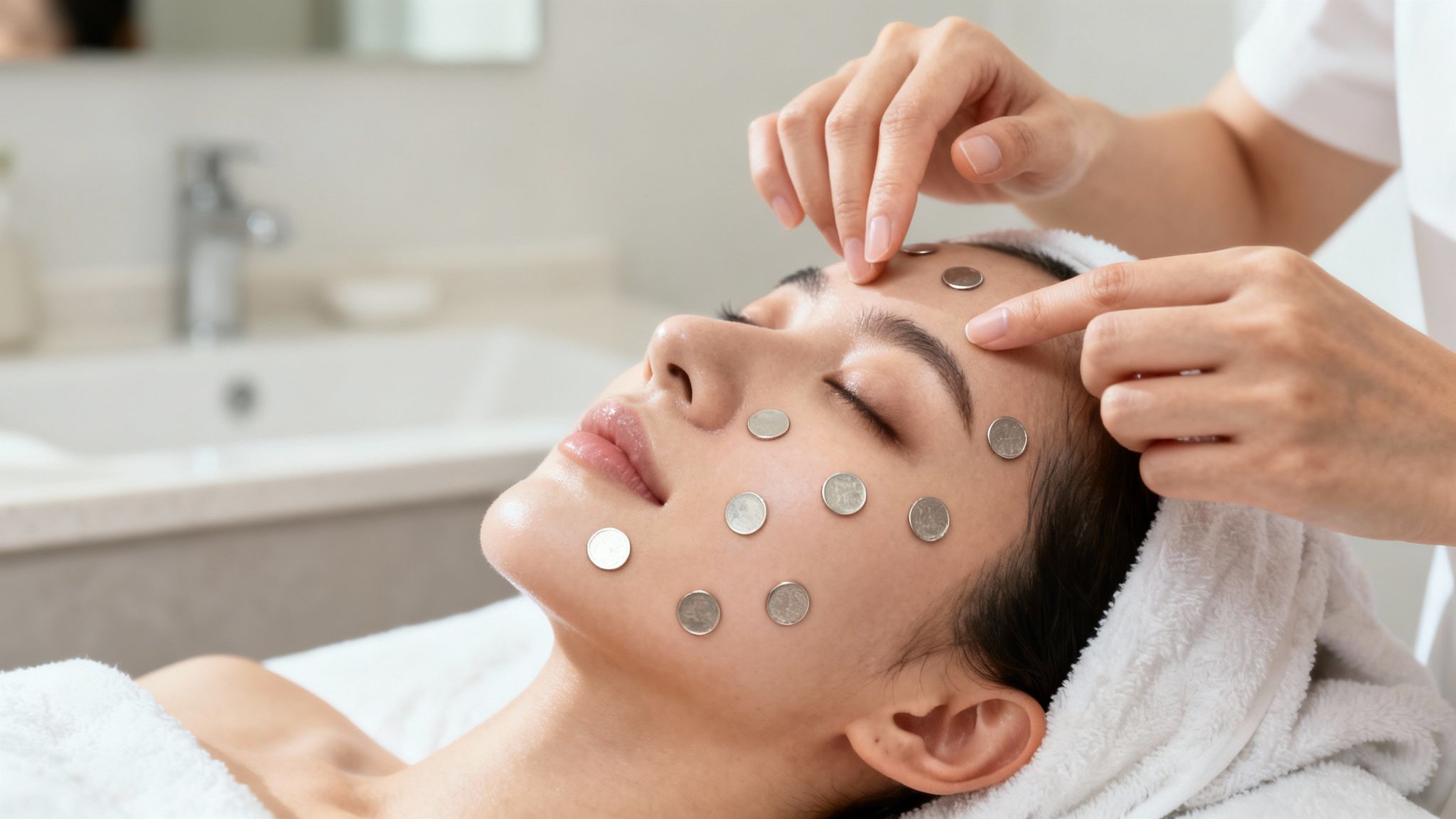
I find it helps to dot the product evenly across the five main points of your face: forehead, nose, chin, and both cheeks. This simple trick helps you get a nice, even layer without accidentally overloading any one area.
From there, gently massage the mask into your skin using upward, outward motions. This technique is about more than just spreading the product around; it also helps stimulate blood flow and encourage lymphatic drainage, which can visibly reduce puffiness. Treat it as a mini facial massage to help you wind down.
One of the most critical—and often overlooked—tips is timing. Apply your mask at least 20-30 minutes before your head actually hits the pillow. This gives the formula enough time to absorb and form that protective, breathable film on your skin.
This simple waiting period is the real secret to keeping the product on your face and off your expensive pillowcases. It ensures the mask can do its job all night long without being rubbed away.
Refining Your Technique
While this general approach works for most sleeping masks, it's worth knowing the nuances. Here are a few extra tips I've picked up to really elevate the experience:
- Don't Forget the Neck: Your neck and décolleté are extensions of your face and often the first to show signs of aging. Always extend your sleeping mask application down to these areas to give them the same nourishing treatment.
- Targeted Application: If you have combination skin, you don't have to go all-in. You can spot-treat by applying the mask only on drier areas, like your cheeks, while leaving your oilier T-zone bare.
- Use a Spatula: Many J-Beauty masks, like the Shiseido Elixir Sleeping Gel Pack, come with a tiny spatula for a reason. Using it not only keeps the product in the jar hygienic but also helps you scoop out the perfect amount every single time.
By turning your application into a deliberate, gentle ritual, you're doing more than just putting on a product. You’re setting the stage for your skin’s most effective recovery period.
Getting Your Skincare Layers Right
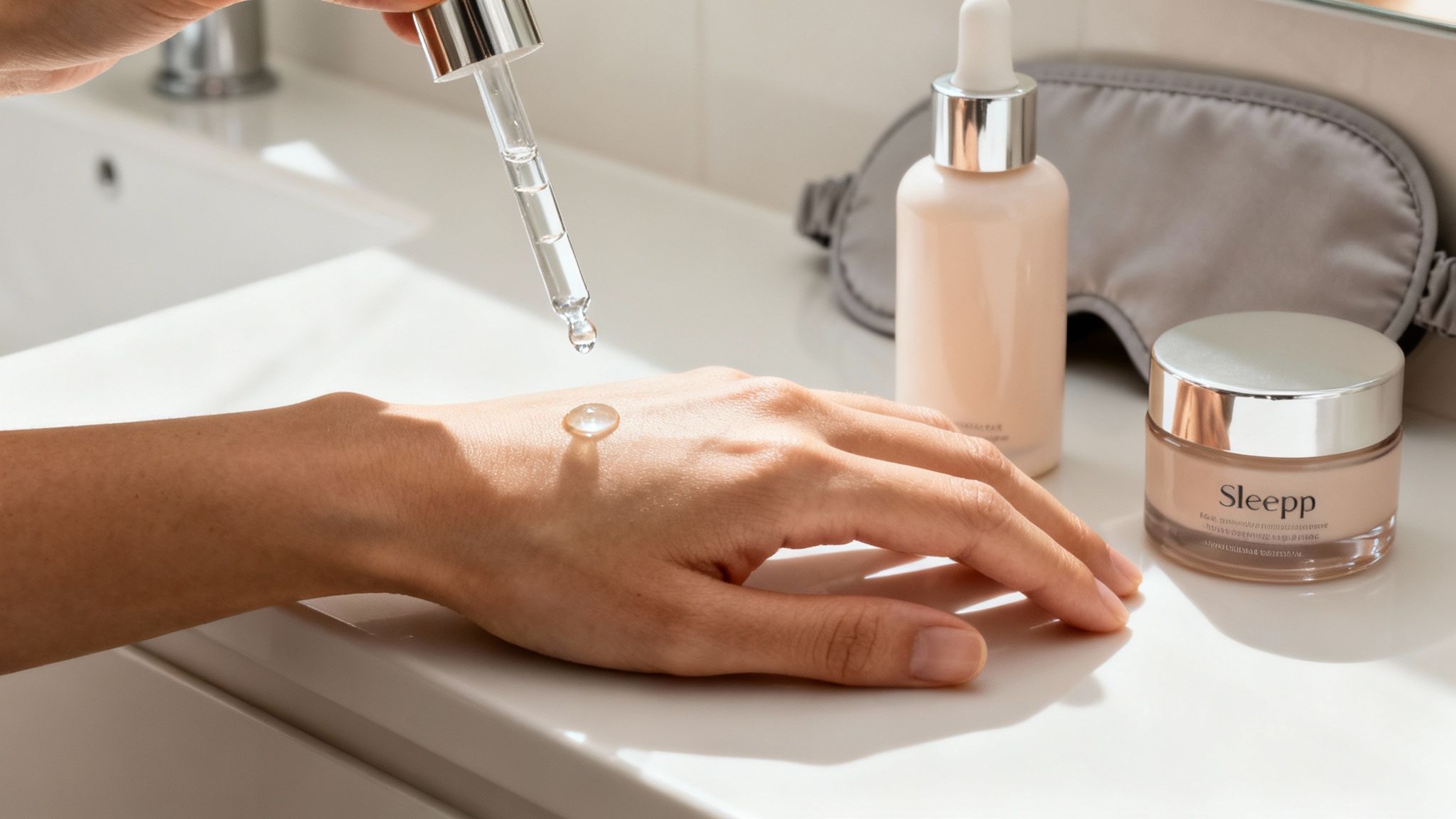
So, where does a sleeping mask actually fit into your routine? This is one of the most common questions I get, and the answer is refreshingly simple: it always goes last.
Think of your sleeping mask as the final, protective seal for your skin. Its whole purpose is to act as an occlusive shield, locking in all the goodness from the serums and creams you've already applied. This lets them penetrate deeper and work their magic all night long without evaporating.
It’s like tucking your skin into a cozy blanket, creating the perfect environment for it to repair and regenerate. That final step is what elevates a standard nighttime routine into a powerful, intensive treatment.
Smart Product Pairings
The real art of using a sleeping mask comes down to strategic layering. It’s not just about sealing everything in; it’s about creating powerful combinations that supercharge your results.
For example, if you’re trying to brighten your complexion, try layering a hydrating mask over a Vitamin C serum. A cult favorite like Melano CC Vitamin C Essence works wonders under a mask, as the occlusive layer helps the antioxidant work undisturbed to tackle dark spots and even out your skin tone.
Dealing with fine lines? Applying a soothing, calming mask over your gentle retinol can be a game-changer. A formula with cica, like something from Shiseido's d Program line, can really help buffer the potential irritation and dryness that retinoids sometimes cause. You get the benefits without the discomfort. If you want to get really granular on this, we've got a whole article on how to layer serums that breaks it all down.
What to Avoid When Layering
Now, just as some pairings are brilliant, others can be a disaster. A sleeping mask won't play nicely with everything, and getting the layers wrong can lead to that frustrating pilling, clogged pores, or just making your products less effective.
The whole point of a sleeping mask is to form a breathable seal. If you slather a heavy, non-absorbing product underneath, you’re just creating a barrier that stops both products from doing their job.
Here are a few things I recommend keeping away from that final mask layer:
- Heavy Facial Oils: I love a good facial oil, but really thick, slow-absorbing ones can prevent your mask from forming that crucial film on the skin. If you can't part with your oil, apply it before your moisturizer and give it a good 15-20 minutes to sink in before you even think about the mask.
- Potent Prescription Topicals: If you're using prescription-strength treatments for acne or rosacea, it's a good idea to chat with your dermatologist before layering anything occlusive over them. You don’t want to accidentally trap the ingredients and increase their potency, which could lead to serious irritation.
- Silicone-Heavy Products: Layering multiple products that are high in silicone is often the culprit behind pilling—when your skincare balls up into little bits. Check your ingredient lists and try to avoid stacking them.
Getting your layering right also means you'll rest easier. While North America holds a 49.3% market share for sleep masks, driven by wellness trends, Japan's innovative formulas from brands like Shiseido Elixir and Minon truly stand out. There's been a 22% compound annual growth rate in multifunctional masks that blend anti-aging and brightening benefits, a perfect fit for busy people looking to simplify their routine and wake up glowing.
What to Do When Your Sleeping Mask Isn't Working Out
Even the most raved-about sleeping mask can cause a few bumps in the road, especially when you're just starting. Don't get discouraged! These issues are almost always fixable with a few simple tweaks to your routine. Let's walk through the most common problems and get you back on track to that incredible morning glow.
The number one complaint I hear is about that sticky, tacky feeling after putting on a mask. If your face feels more like flypaper than freshly hydrated skin, the culprit is almost always using too much. These formulas are concentrated, so a little goes a very long way. A nickel-sized dollop should be more than enough for your face and neck.
"Help! I Think My Mask Is Making Me Break Out."
Waking up to new pimples is the last thing anyone wants. If you think your sleeping mask is to blame, there are usually two things going on.
First, the formula might just be too rich for your skin. Think of it like this: a heavy, occlusive cream mask on already oily skin can easily trap sebum and lead to clogged pores. It's a classic case of a product-skin type mismatch. If your skin is acne-prone, you might need a lighter gel formula, perhaps from a brand like Mentholatum Acnes.
The other possibility? Your morning cleanse isn't cutting it. A sleeping mask is a heavy-duty treatment that works all night, and a quick splash of water in the morning won't be enough to remove it. You need a good, gentle cleanser to properly wash away all that residue. For a truly fresh start, you might find that the benefits of double cleansing are just as important in the morning as they are at night.
Key Takeaway: Breakouts from a sleeping mask usually point to a mismatch. Either the formula is too heavy for your skin, or your morning cleansing routine needs a boost to fully remove the product.
Not Seeing the Results You Were Hoping For?
So, you've used your new mask for a few nights but aren't waking up with that promised radiance. What gives? More often than not, the answer is simple: consistency.
Skincare isn't an overnight fix; it's a long-term commitment. You'll see the best results from your sleeping mask when you use it regularly, about 2-3 times per week.
This rhythm gives your skin a steady supply of concentrated ingredients without overwhelming it. Of course, this is a guideline, not a hard-and-fast rule. The most important thing is to listen to what your skin is telling you.
- For very dry or sensitive skin: You might be able to use ultra-gentle, hydrating masks more often. Some formulas, like those from Minon or d Program, are designed to be so soothing you can use them on consecutive nights to help repair a damaged skin barrier.
- For masks with active ingredients: If your mask has exfoliants (like AHAs) or powerful brighteners, sticking to the 2-3 times a week schedule is your best bet to avoid irritation.
By adjusting how much you use, making sure your face is truly clean in the morning, and staying consistent, you can easily troubleshoot these common problems and finally get the amazing results you've been looking for.
Your Sleeping Mask Questions, Answered
Even after you've got the basics down, a few questions always seem to pop up when you're adding something new to your routine. Let's tackle some of the most common things people ask about sleeping masks so you can get the most out of yours.
Can I Use a Sleeping Mask Every Night?
This is a classic "it depends" situation, and it really comes down to the specific mask and your skin's personality.
If you're using a super gentle, purely hydrating formula, something like the Minon Amino Moist Moist Gel Pack, you can probably get away with using it every night. For seriously dry or dehydrated skin, it's like a drink of water that works while you sleep.
On the other hand, if your mask is packed with active ingredients—think exfoliants or powerful brighteners—you'll want to dial it back to 2-3 times per week. This gives your skin a chance to actually use those ingredients without getting overwhelmed or irritated. The best rule of thumb? Listen to your skin. How it looks and feels in the morning is your best guide.
Do I Wash My Face in The Morning?
Absolutely, yes. This is a non-negotiable part of the process.
A gentle morning cleanse is essential to wash away the mask itself, plus any oil and impurities your skin has pushed out overnight. Skipping this step means you're trying to apply your morning products on top of old residue, which just won't work.
Think of it as clearing the canvas. You need a clean, fresh surface for your daytime serums to sink in and for your sunscreen, like the fan-favorite Shiseido Anessa Perfect UV Sunscreen Skincare Milk or a lightweight option from Biore, to apply smoothly and protect you properly.
Your sleeping mask did its job sealing everything in and treating your skin all night. The morning cleanse is what reveals that fresh, hydrated skin, making it ready for the day ahead.
Is a Sleeping Mask The Same As a Night Cream?
I get this question a lot! While they both work their magic overnight, they have pretty different roles.
A night cream is your trusty daily moisturizer, designed for consistent, nightly hydration and nourishment. A sleeping mask is more like a special, intensive treatment you pull out a few times a week.
Its unique job is to create a breathable seal over all your other products, locking in moisture and delivering a much higher concentration of ingredients than your average night cream. It’s a booster for your routine, not a replacement for your moisturizer.
Can I Use It Around My Eyes and On My Lips?
It's best to steer clear of the immediate eye area. That skin is incredibly thin and sensitive, and it's just not worth the risk of irritation unless the product specifically says it's been tested and is safe for use around the eyes. Stick with a dedicated eye cream here.
As for your lips, you could technically put a little on, but you'll get much better results from a product made for the job. A thick, dedicated lip mask or balm, like one from Yuskin, is built to handle the unique needs of chapped lips far more effectively than a face mask ever could.
Ready to find the Japanese sleeping mask that will transform your skin overnight? Take a look at our curated collection at Buy Me Japan and get ready to wake up glowing. Shop our best-selling masks today!

Share:
How to Reduce Enlarged Pores: Japanese Skincare Guide
How to Use Vitamin C Serum for Radiant, Glowing Skin