


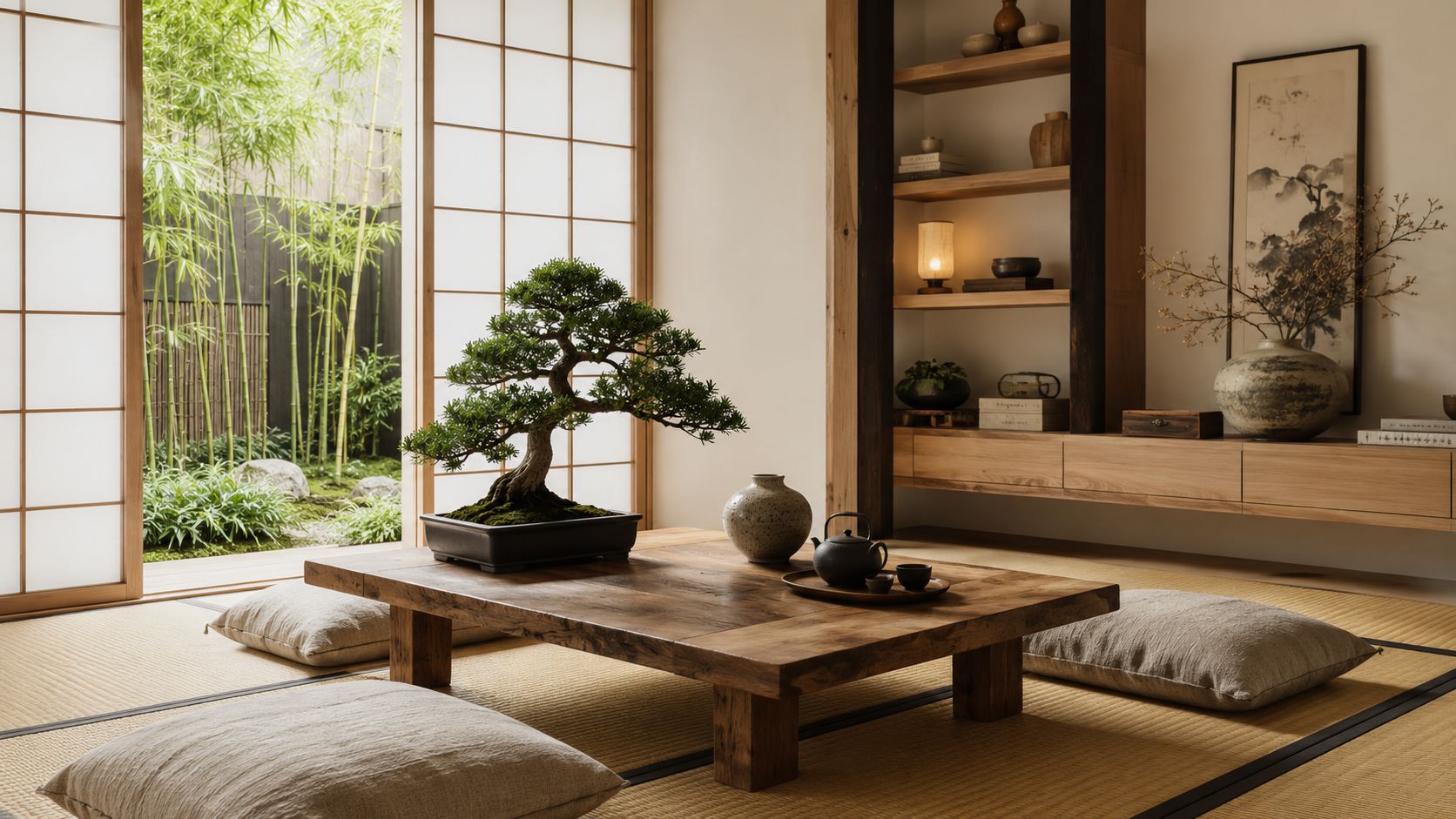
A cluttered home changes how your day feels. You wake up, reach for skincare, move aside random items on the counter, and start the morning already overstimulated. If that sounds familiar, Japanese home decorating ideas can help because they aren't just about style. They're about calm, order, and making everyday rituals feel intentional.
Japanese interiors have long emphasized simplicity, low furniture, uncluttered space, and natural materials such as wood, bamboo, stone, paper lanterns, and shoji screens, all working together to create a calm atmosphere, as outlined in this guide to Japanese-style decoration. That same design language works beautifully in homes built around beauty and self-care, especially if you already love authentic Japanese skincare, bath products, and hair care.
These ideas focus on what works for real homes, including rentals and small apartments. You don't need a full renovation. You need better editing, better storage, softer light, and a few pieces that make your space support the way you want to live.
1. Minimalist Zen Aesthetic with Natural Materials
Your morning routine gets easier when the room stops competing for attention. A clear counter, soft light on wood, and a short lineup of products you use can make cleansing, moisturizing, and getting ready feel steady instead of rushed.

The strongest Japanese-inspired rooms start with restraint. Keep the palette quiet, bring furniture lower to the ground, and let natural materials do the visual work. Wood, paper, linen, clay, and stone age well, feel calm under daily use, and support the understated look many people want from a space tied to wellness rituals.
A practical baseline is simple. Choose two or three soft colors, then repeat one main material throughout the room. Warm oak shelving with a linen curtain feels coherent. Pale walls with stone accessories can also work, but mixing too many grains, tones, and textures usually creates the kind of visual chatter minimalism is supposed to remove.
Empty space matters just as much as the objects.
That is especially true around beauty storage. A few well-designed items on a timber shelf can read as decor, while ten bottles spread across a vanity read as clutter, even if every product is beautiful on its own. I usually group skincare on a tray, keep backup stock behind closed storage, and leave breathing room around the display so the eye can rest.
For product styling, clear packaging and clean labels help. A bottle of DHC Deep Cleansing Oil or neatly arranged MUJI storage items fits naturally into this look because the shapes are simple and the function is obvious. If you want the room to support a more intentional ritual, borrow cues from traditional bathing and grooming habits described in these ancient Japanese beauty secrets. The point is not to create a showroom. It is to build a space that makes everyday care feel calm and repeatable.
Minimal rooms still need personality. Use a ceramic dish you reach for every day, a wooden stool beside the bath, or one symbolic object with meaning rather than several filler pieces. That approach lines up with this expert advice on personalizing spaces and also fits the symbolic charm of Japanese decorative traditions like the meaning behind maneki neko colors.
2. Wabi-Sabi Finding Beauty in Imperfection
You come home, set your cleanser on the counter, and notice the room feels cold even though it is tidy. The problem is usually not clutter. It is that everything looks too new, too matched, and too controlled. Wabi-sabi softens that feeling.
At home, wabi-sabi shows up in the objects you touch every day. A clay tray with an uneven rim. A stool with softened corners. Linen that creases instead of staying sharp. Japanese interiors often pair restraint with age, texture, and empty space, which is why this Japanese decor overview tied to wabi-sabi principles feels closer to real life than a perfectly staged showroom.
This matters in beauty spaces more than people expect. Skincare is a daily ritual, not a display exercise. A bottle of Mentholatum Acnes, Cow Brand, or Botanist looks more at ease on wood, stone, or handmade ceramic than on mirrored acrylic. The room feels quieter, and the routine feels less clinical.
The trade-off is important. Genuine wear adds character. Fake distressing usually reads as themed decor.
If a bathroom or vanity area feels too polished, make a few small changes instead of trying to redesign everything at once:
- Use one handmade piece: A ceramic soap dish, catchall, or small bowl adds variation without creating visual noise.
- Relax the layout: Line up products by function, but do not force perfect symmetry.
- Choose materials that improve with use: Wood, linen, cotton, and clay usually look better once they have been lived with.
- Edit hard surfaces: Too much glass, chrome, and lacquer can make a self-care corner feel sterile.
I have found that wabi-sabi works best when it supports a habit. Keep the products you use morning and night within reach, place them on something tactile, and leave a little empty space around them. That combination makes the ritual easier to repeat. It also connects well with the slower grooming rhythms described in these older Japanese beauty traditions and rituals.
Bathrooms are a natural fit because steam, water, and daily use already introduce softness over time. Let that happen. A small chip in a ceramic cup or a slightly faded wooden shelf often gives the room more warmth than a brand-new accessory ever will.
3. Tatami Mat Flooring and Traditional Seating
Tatami is one of the clearest visual signals of Japanese interiors. It keeps showing up in modern Japanese-inspired spaces because it connects the room to long-standing traditions of low furniture, floor seating, and simple natural materials.

You don't need to turn your entire home into a tatami room. In fact, that rarely works well outside the right climate and maintenance habits. A smaller zone is usually smarter. One corner for tea, reading, stretching, or skincare is enough.
Best uses in a modern home
In a bedroom, a tatami-style mat near a low platform bed creates a softer transition than a standard rug. In a living room, a low table with floor cushions can create a calm area for tea, journaling, or an unhurried weekend routine with Kyoto Cha No Kura tea and a hydrating mask from Hadabisei.
Tatami also teaches restraint. Once you sit lower, bulky furniture starts to feel wrong. A high sofa beside floor seating almost always looks disconnected.
A few practical trade-offs matter:
- Use real tatami selectively: It suits one room or one zone better than an entire mixed-use home.
- Protect it from moisture: Poor ventilation is the quickest way to ruin the look.
- Respect the threshold: Shoes off is part of the experience and the maintenance.
- Consider alternatives: Natural fiber mats or cork can give a similar feel with easier care.
Low seating changes how a room is used. It slows you down, which is exactly why it works for reading, tea, and skincare rituals.
4. Shoji Screens and Translucent Partitions
If you live in a rental or a small apartment, this is one of the most useful ideas in the whole list. Japanese-inspired interiors aren't only about architecture. They're also about circulation, privacy, and soft boundaries.
A better small-space approach is using removable dividers, low storage, wall-mounted lighting, and a single focal point in each room rather than attempting a complete makeover, which is why this Houzz feature on Japanese homes is so relevant for real apartments.
Where screens help most
A shoji-style divider works well between a bed and a vanity, between a desk and a relaxation corner, or beside a bathtub if you want a gentle visual screen. It creates privacy without making the room feel sealed off.
In beauty spaces, the light matters as much as the partition. Translucent panels soften daylight in a way that flatters skin and reduces hard glare on mirrors and bottles. That's especially useful if you keep products like Canmake, Cezanne, or Majolica Majorca on open display.
What works best is a screen that disappears into the room. Pale wood frames, frosted inserts, and simple geometry look right. Busy lattice patterns or very dark finishes can make the room feel themed rather than calm.
A good rule is to use screens to define function, not to decorate emptiness. If the divider creates a dressing corner, a reading nook, or a bathing area, it earns its place.
5. Ikebana Minimalist Floral Arrangements
You come home, set your cleansing oil on the vanity, and notice one stem catching the late light beside it. The room feels composed before you touch anything. That is what ikebana does well. It gives a space a clear point of attention instead of asking every object to compete.

Ikebana is the Japanese art of flower arrangement, but in the home it works more like disciplined placement. Line matters. Space matters. The container matters. A single branch with a bloom or leaf often has more presence than a supermarket bouquet because the eye can rest on it.
A simple way to start
Start with three elements. Use one taller branch for height, one shorter stem for direction, and one flower or leaf cluster for weight. Choose a low ceramic bowl, a simple vase, or a small container with a quiet finish so the arrangement does not fight with the materials around it.
This approach works especially well near daily ritual zones. On a bathroom ledge, entry console, or vanity shelf, an ikebana arrangement can soften the look of neatly arranged products without turning the space into décor for décor's sake. I have found that a restrained arrangement beside Himawari or Shiseido AQUALABEL feels intentional, while a dense mixed bouquet usually makes skincare storage look crowded.
Restraint is the trade-off. Fresh flowers need trimming, water changes, and occasional replacement, so keep the scale small enough that maintenance stays easy. One arrangement in one meaningful spot usually works better than several small ones scattered around the home.
For a visual lesson in proportion and movement, this short demonstration is useful:
If you're new to ikebana, treat it like styling one destination, not accessorizing every surface. Let it mark the place where you begin or end a routine, such as a morning skincare corner or the shelf near a bath. Seasonal changes then feel personal, and the room gains beauty without losing calm.
6. Strategic Lighting with Paper Lanterns and Diffused Glow
You finish your evening cleanse, reach for a treatment lotion, and the room decides how that ritual feels. Under a hard ceiling bulb, even a well-designed vanity looks flat and clinical. Under diffused light, wood looks warmer, ceramic looks quieter, and a short skincare routine feels like time set aside for yourself.
That soft effect is a consistent part of Japanese-inspired interiors, especially in rooms that rely on light woods, open surfaces, and negative space. This overview of Japanese decor pieces and design logic shows how much the atmosphere depends on gentle illumination rather than brightness alone.
Build the room in layers
A single overhead fixture rarely does the job. I get better results with three layers: ambient light for the whole room, task light where the face needs clarity, and one low, diffused source that softens the space at night.
Paper lanterns are useful because they blur edges and reduce glare. A lantern in a corner, a small lamp near a shelf, and a wall light or side light at the mirror usually creates enough range without making the room feel overdesigned. The trade-off is practical. Lanterns set the mood well, but they are not strong enough for shaving, makeup precision, or detailed grooming on their own.
A setup like this works in real homes:
- Use warm bulbs: Bedrooms, bathrooms, and unwind spaces usually feel better with warm light than cool white.
- Light the face from the side: Mirror lighting at the sides is usually more flattering and more useful than one strong fixture above.
- Soften reflective surfaces: Paper shades, frosted glass, and bounced lamplight reduce harsh glare on bottles, mirrors, and wet countertops.
- Give one ritual zone its own glow: A small shelf with your evening skincare, hair oil, or bath products looks more intentional when it has its own pool of light.
This matters for product styling too. Japanese beauty packaging often has clean lines, translucent bottles, and quiet color palettes, so lighting changes whether those items read as clutter or composition. If you want examples of brands whose packaging works especially well in open display, this guide to the best Japanese cosmetic brands is a useful reference.
Harsh light speeds everything up. Diffused light slows the room down.
That change sounds subtle, but it affects daily use. You notice it at the sink at 10 p.m., at a vanity before sunscreen, and in the few minutes when home should feel restorative instead of purely functional.
7. Organized Beauty Product Displays as Decorative Elements
Ultimately, a Japanese-inspired room should still support real routines. If your cleanser, lotion, sunscreen, and hair oil come out twice a day, they deserve a place that is both easy to reach and visually calm.
Japanese interiors often treat everyday objects as part of the composition. Beauty products fit that approach well, but only if the display is edited. A crowded shelf reads as storage. A restrained grouping reads as care.
Choose products by ritual first, then by appearance. I get better results when I group a small morning set together, keep evening repair products in their own zone, and place makeup in one compact tray. That layout saves time at the sink and keeps the room from looking like a shop display.
Material choice matters here. Wood, stone, unglazed ceramic, and simple glass usually let Japanese packaging sit unobtrusively in the room. Mirrored trays, shiny acrylic, and too many metallic finishes pull the look toward a generic vanity setup.
For inspiration on which labels display especially well, this guide to the best Japanese cosmetic brands is a useful starting point.
A few rules keep the arrangement usable and attractive:
- Leave breathing room: Empty space helps each bottle or jar read clearly.
- Group by routine: Keep the products you use together in the same area.
- Hide backups: Refill stock belongs in a drawer or cabinet, not on display.
- Use one tray or riser: Height variation adds order without making the shelf busy.
- Adjust with the season: UV products, facial mists, or richer creams can rotate in and out as your routine changes.
This approach works especially well near a bath or vanity. If you already enjoy Japanese bath salts and soaking rituals, placing a small cluster of bath products beside a stool, basin, or shelf makes the whole space feel connected.
For a stronger anchor, add a simple vessel sink or stone-look basin nearby. You can explore Tiles Mate Pty Ltd basins to see the restrained shapes that suit this style.
The trade-off is honesty. Open display looks good, but every item has to earn its place. If you do not use it weekly or do not want to see it daily, store it away. That discipline is what makes the shelf feel restful instead of crowded.
8. Water and Zen Garden Elements
Some rooms need a sensory anchor. Water and small rock-garden details can do that without taking over the space.
A tabletop fountain adds gentle sound. A stone basin creates a feeling of purification near an entryway or bath. A tray with sand and a few carefully chosen stones can make a desk or shelf feel more contemplative than decorative.
Small-scale ideas that actually fit apartments
Start modestly. A large indoor fountain is difficult to maintain and can quickly feel out of proportion. A compact water feature or dry mini garden usually has a better effect.
This also pairs naturally with bath rituals. If you already enjoy Japanese bath salts and soaking rituals, placing a small basin, bath tray, or natural stone detail near the tub makes the space feel coherent instead of pieced together.
For a stronger grounding element, a stone or ceramic basin can work well on a vanity or shelf. If you're looking at vessel-style options, these benchtop basins from Tiles Mate Pty Ltd show the kind of simple shape that suits the look.
A water feature should soften the room, not dominate it. If you hear the pump more than the water, it's too much.
If you prefer a dry option, use pale sand or fine gravel in a shallow tray with two or three stones. Keep it in a low-traffic area so the pattern stays intentional. It's less about decoration and more about creating a pause point in the room.
9. Natural Wood and Wooden Furniture as Focal Points
If you want one investment that makes the biggest difference, choose wood. Japanese interiors rely on natural wood because it adds warmth without visual heaviness.
This isn't about buying lots of wooden furniture. It's about letting one or two pieces carry the room. A low bench, an open shelf, a simple sideboard, or a wood-framed mirror is often enough.
Which wood choices feel right
Look for visible grain, matte finishes, and shapes with clean lines. Light and medium woods tend to support the calm, open feeling better than heavy gloss stains.
Wood is also one of the best backdrops for beauty organization. Shelves in natural wood make Kose, Shiseido, Fancl, or Transino products feel warm and considered rather than commercial.
One trade-off is maintenance. Soft wood dents. Natural finishes mark more easily than thick lacquer. But that aging can be part of the appeal if you're not chasing perfection.
Good uses include:
- Bathroom shelving: Warm wood softens tiles and glass.
- Bedroom benches: They create a low, grounded silhouette.
- Vanity trays: Better than shiny organizers for a Japanese-inspired room.
- Giftable display corners: A wood shelf is a good home for Japanese candles, tea, ceramics, or beauty sets, especially if you're collecting ideas for cool gifts from Japan.
Wood gives the room a center of gravity. Without it, Japanese-inspired styling can start to feel too flat.
10. Textile and Fabric Choices with Natural Fibers and Subtle Patterns
The fastest way to warm a Japanese-inspired room is through fabric. Hard surfaces set the architecture, but linen, cotton, and softly woven layers make the room feel calm enough to live in every day, especially in spaces tied to bathing, skincare, and rest.
Natural fibers do that job better than glossy synthetics. They hold light softly, wrinkle in a way that feels relaxed rather than sloppy, and age with more grace. I usually recommend staying with plain weaves, slubbed texture, or very quiet stripes instead of statement prints. The room stays restful, and your eye notices shape, light, and ritual objects, like a neatly folded robe or a tray of daily products, instead of fighting with the fabric.
Pattern still has a place. It just works best at a low volume.
One textured neutral curtain often does more for the room than a busy accent fabric. The same applies to bedding, cushion covers, hand towels, and small mats around a vanity or bath area. Analysts in this Japan home decor market analysis describe demand shaped by compact, multifunctional homes and practical household goods. That matches what works in real rooms. Smaller textile changes usually give better results than adding another decorative piece of furniture.
A few combinations are reliable:
- Linen curtains: They filter daylight gently and suit bedrooms, bathrooms, or a skincare corner.
- Neutral cotton bedding: It keeps contrast low and helps the room feel quieter at night.
- Simple floor cushions: Useful for reading spots, meditation corners, or low seated routines like masking or foot care.
- Small woven mats: Easier to place and maintain than oversized rugs, especially in compact homes.
Textiles also connect the decor to self-care in a direct way. A breathable robe on a wood hook, soft towels stacked in open view, a fabric basket holding Biore, Yuskin, or Kao essentials, and a simple headband set out for evening skincare can make the room feel used with intention.
There is a trade-off. Natural fabrics ask for a little tolerance. Linen creases. Cotton fades. Woven baskets and mats can hold moisture if the bathroom has poor ventilation. But in a Japanese-inspired home, that gentle wear often adds comfort instead of subtracting from it.
Japanese Home Decorating: 10-Point Comparison
| Item | Implementation complexity | Resource requirements | Expected outcomes | Ideal use cases | Key advantages |
|---|---|---|---|---|---|
| Minimalist Zen Aesthetic with Natural Materials | Medium, requires decluttering and coherent palette | Low–Medium, neutral furnishings, quality natural materials, storage | Calm, uncluttered, timeless spaces | Living rooms, bedrooms, spa-like bathrooms | Serenity, easy maintenance, versatile |
| Wabi-Sabi: Finding Beauty in Imperfection | Medium–High, curation and mindset shift needed | Low–Medium, vintage/artisanal sourcing, unique pieces | Authentic, lived-in character with philosophical depth | Intimate spaces, entryways, artful displays | Sustainable, celebrates imperfection, deeply authentic |
| Tatami Mat Flooring and Traditional Seating | High, installation and upkeep intensive | High, authentic tatami, proper ventilation, replacement cycles | Traditional warmth, floor-level seating, ritual-ready zones | Tea rooms, meditation areas, dedicated relaxation zones | Authentic atmosphere, temperature regulation, mindful living |
| Shoji Screens and Translucent Partitions | Medium, framing and installation required | Medium, frames, washi or alternatives, mounting hardware | Soft diffused light, flexible spatial division | Room dividers, beauty corners, bedrooms | Adaptable layouts, soft illumination, space-efficient |
| Ikebana: Minimalist Floral Arrangements | Medium, requires practice and composition skill | Low, few stems, vessels, kenzan tools | Artistic, seasonal focal points emphasizing simplicity | Entryways, shelves, vanity displays | Low-cost elegance, mindfulness, seasonal refresh |
| Strategic Lighting with Paper Lanterns and Diffused Glow | Medium, layered design and control needed | Medium, fixtures, warm bulbs, dimmers, possible rewiring | Warm, flattering ambient light that enhances skin and products | Bathrooms, bedrooms, makeup areas, product displays | Flattering for complexion, relaxation, highlights products |
| Organized Beauty Product Displays as Decorative Elements | Low–Medium, curation and regular upkeep | Low, shelves, stands, risers; occasional rotation | Functional decorative focal points; encourages routine | Vanities, bathroom shelves, living-room displays | Celebrates packaging, accessible routines, Instagram-friendly |
| Water and Zen Garden Elements: Fountains, Basins, Rock Gardens | Medium–High, plumbing/pump and ongoing maintenance | Medium–High, pumps, basins, stones, water care supplies | Meditative soundscape, humidity, natural focal point | Entryways, bathrooms, relaxation corners, desktops | Calming sound, skin-beneficial humidity, contemplative focus |
| Natural Wood and Wooden Furniture as Focal Points | Medium, selection and humidity control important | Medium–High, quality hardwoods, craftsmanship, finishes | Warm, authentic interiors that age with patina | Shelving, low furniture, vanities, frames | Timeless, sustainable, improves with age |
| Textile and Fabric Choices: Natural Fibers and Subtle Patterns | Low–Medium, sourcing and layering decisions | Medium, linen, hemp, silk, handwoven pieces, care needs | Added texture, comfort, subtle visual warmth | Cushions, curtains, wall hangings, seating | Sustainable, breathable, refines minimalist spaces |
Your Path to a Mindful Japanese-Inspired Home
You come home at night, set your bag down, wash your face, and reach for the products you use every evening. The room can either crowd that moment or support it. Japanese home decorating works best when it supports daily rituals with quiet, useful choices such as clear surfaces, gentle light, natural texture, and storage that keeps what you use close at hand.
That is a significant shift. Decor is not separate from routine. The tray that holds your cleanser, the stool where you sit after a bath, the small shelf that keeps cotton pads, combs, and lotions in order, and the lamp that softens the room before bed all shape how the ritual feels. A good Japanese-inspired home does more than look calm. It helps you move calmly.
Beauty products fit naturally into that approach. If you use Japanese skincare, bath items, tea, or hair care, display the pieces you reach for every day and store the rest. I have found that one wooden tray and one ceramic catchall do more for visual order than a larger vanity packed with containers. The trade-off is discipline. Open display looks beautiful only when the lineup stays edited and clean.
Authenticity matters here because the room is meant to be lived in. Choose materials that improve with use, and keep decorative objects tied to function. Real wood, woven baskets, linen, paper shades, stone, and handmade ceramics usually age better than glossy imitations. A product you use morning and night will always look more convincing in the space than a prop bought only for styling.
Start small.
A single corner is enough to set the tone. Place a low bench or stool near natural light. Add a lamp with a soft paper or fabric shade. Use a tray for your everyday skincare, a folded hand towel in a natural fiber, and one small branch or flower stem in a simple vase. That kind of corner supports grooming, rest, and order all at once, which is why it often feels more satisfying than a full-room makeover done too quickly.
The wider lesson is simple. Japanese interiors last because they are built on habits, not trends. Simplicity, restraint, and respect for materials still work in living rooms, bathrooms, bedrooms, and dressing areas because those principles solve everyday problems. They reduce noise, make cleaning easier, and turn basic acts such as washing your face or applying lotion into moments you look forward to.
If you want products that suit that kind of home, Buy Me Japan offers authentic Japanese beauty, skincare, bath, tea, and lifestyle goods shipped directly from Japan. It is a practical source when you want real brands and items that fit naturally into a mindful daily routine.

Share:
Body Scrub Japan: A Guide to Silky Smooth Skin
Softymo Cleansing Foam: A Complete Japanese Beauty Guide