


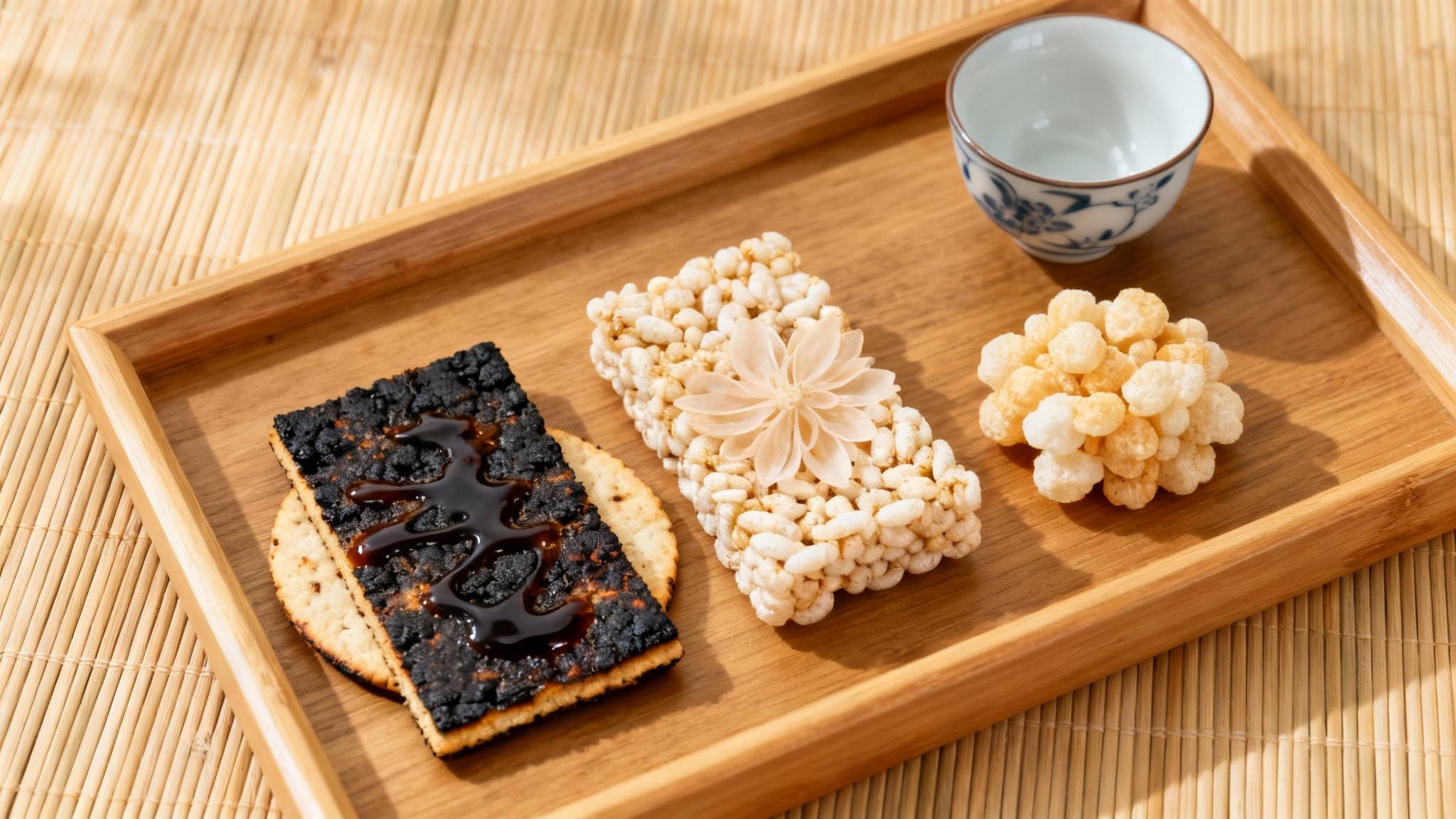
Welcome to the captivating world of Japanese rice snacks, a cornerstone of Japan’s rich food culture. More than just a crunchy treat, they are a window into a deep-rooted tradition of craftsmanship and balanced flavor. Made primarily from high-quality rice and simple seasonings, these snacks offer a delightful alternative to typical Western snacks, showcasing a culture of mindful eating and culinary artistry. Their popularity is growing globally, making now the perfect time to discover why these traditional Japanese snacks are so beloved.
What Are Japanese Rice Snacks?
At its core, a Japanese rice snack begins with rice, the single most essential grain in Japanese cuisine. The grains are steamed, pounded into a dough, carefully shaped, and then baked or grilled to perfection. This process honors the natural flavor of the rice, creating a light, satisfying crunch. These snacks come in many forms, from large, disc-shaped crackers to small, bite-sized puffs, each offering a unique texture and taste.
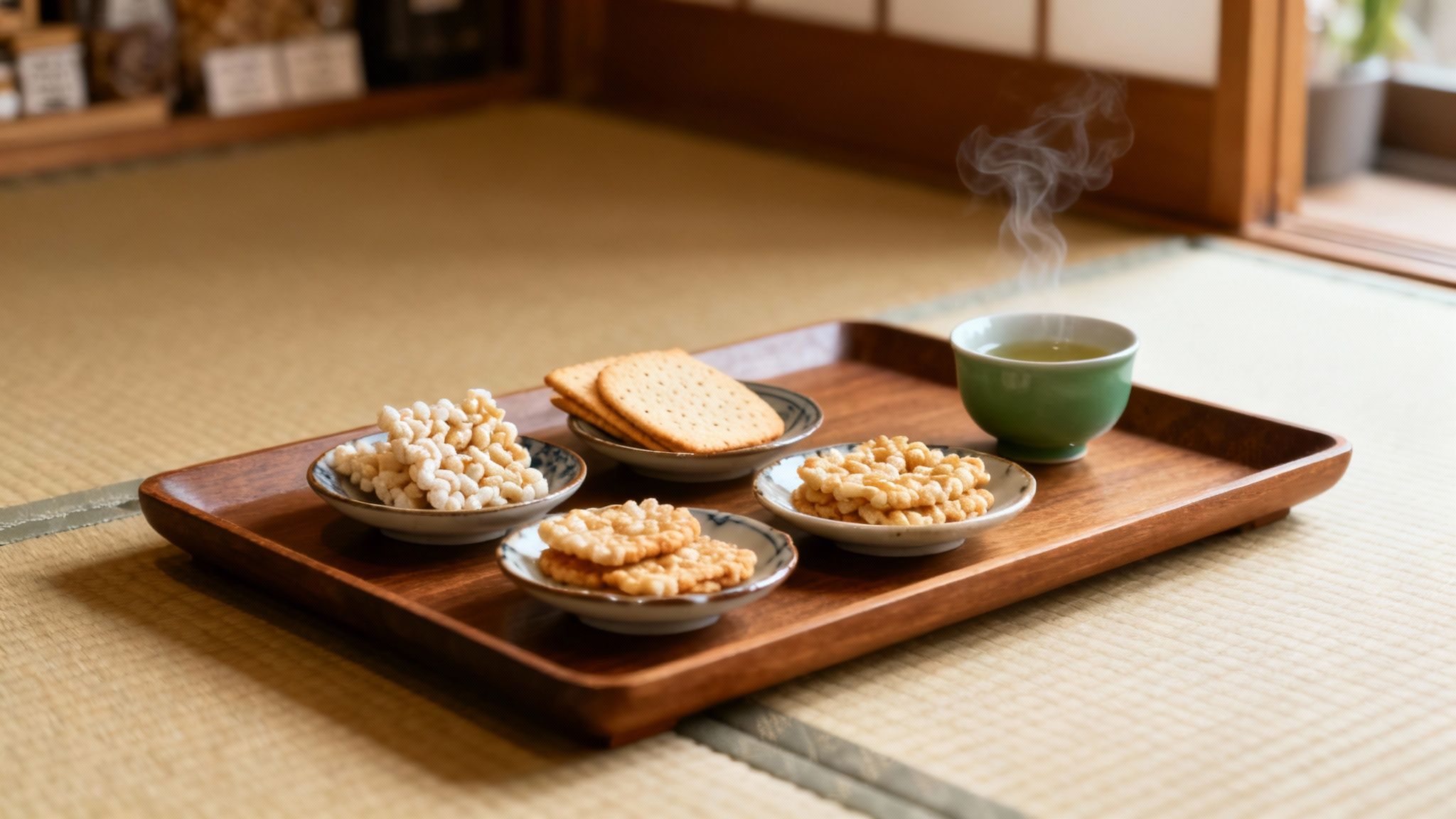
This dedication to quality ingredients and mindful preparation is what makes these snacks stand out. Renowned brands like Glico and Meiji have perfected timeless recipes, making authentic Japanese flavors accessible to everyone. What was once a household staple in Japan has now become a global sensation, with people drawn to their incredible textures, diverse flavors, and their reputation as a lighter, often gluten-free, snack option. As we dive deeper, you’ll discover the unique types and unforgettable flavors that make every bite an experience. While you're here, you might also be interested in our guide on finding healthy Japanese snacks.
Types of Japanese Rice Snacks
When you explore the world of Japanese rice snacks, you’ll find an incredible variety. While they all start with rice, the preparation and type of rice used create distinct personalities. Understanding these differences is your key to finding the perfect snack for any occasion.
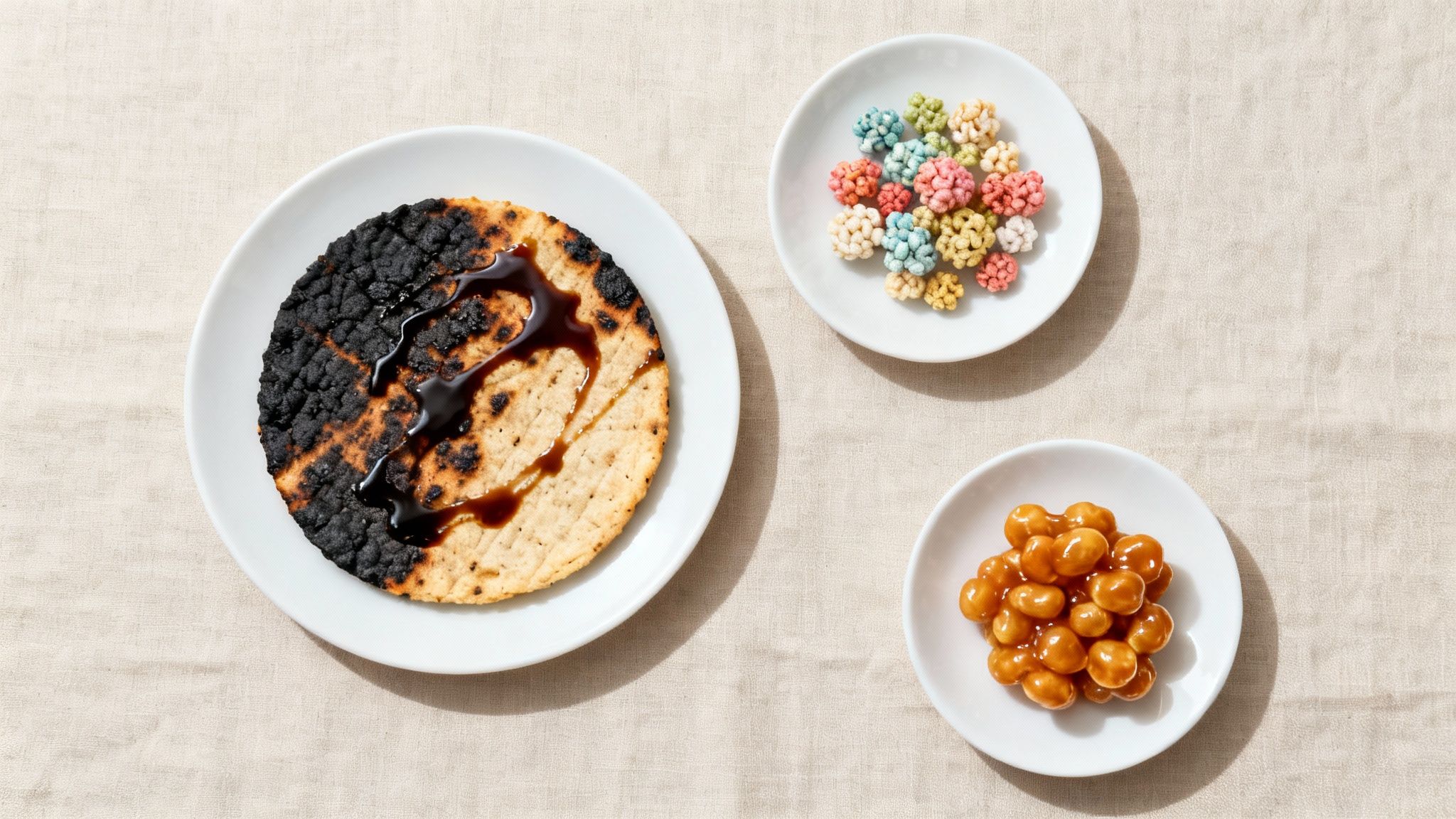
The three main categories you'll encounter are Senbei, Arare, and Okaki. Think of them as cousins—related, but each with its own unique character.
Senbei – The Classic Rice Cracker
If you picture a Japanese rice cracker, you're likely thinking of Senbei (煎餅). These are the iconic, large, disc-shaped crackers known for their deeply satisfying, hard crunch. Made from standard, non-glutinous rice flour (uruchimai), they are typically baked or grilled, sometimes over charcoal for a faint smokiness. A classic soy sauce glaze is the most common finish, but you'll find them in countless flavors. Their sturdy texture makes them a perfect partner for a hot cup of green tea.
Arare – Bite-Sized Rice Crackers
Next are Arare (あられ), which translates to "snow pellets." These are tiny, bite-sized Japanese rice crackers made from glutinous rice—the sticky kind used for mochi. This switch in ingredients gives Arare a lighter, airier crunch compared to Senbei. Because they're so small, Arare are perfect for snacking by the handful and often come in snack mixes with peanuts or other savory bits. They come in a dazzling array of shapes, sizes, and colors, seasoned with soy sauce, sugar, or seaweed.
Okaki – Puffy and Crunchy Snacks
Finally, there is Okaki (おかき). Like Arare, these are also made from glutinous mochi rice. The main difference is their size and texture. Okaki are typically larger and thicker than Arare, offering a wonderfully puffy and airy crunch that still feels substantial. The delicate process of making Okaki gives them a more refined feel, with a crisp shell that gives way to a light interior. This texture is perfect for absorbing rich glazes, making every bite incredibly flavorful. To see how amazing seasonings like seaweed can be, you can learn more about rice crackers with seaweed.
Popular Flavors and Seasonings
What truly sets Japanese rice snacks apart is the masterful art of flavor. Unlike many Western snacks that rely on heavy coatings, Japanese seasonings are designed to complement the delicate, toasty flavor of the rice itself, creating harmony in every bite.
Classic Japanese Flavors
The soul of most savory rice snacks comes from a few timeless ingredients deeply rooted in Japanese culinary history.
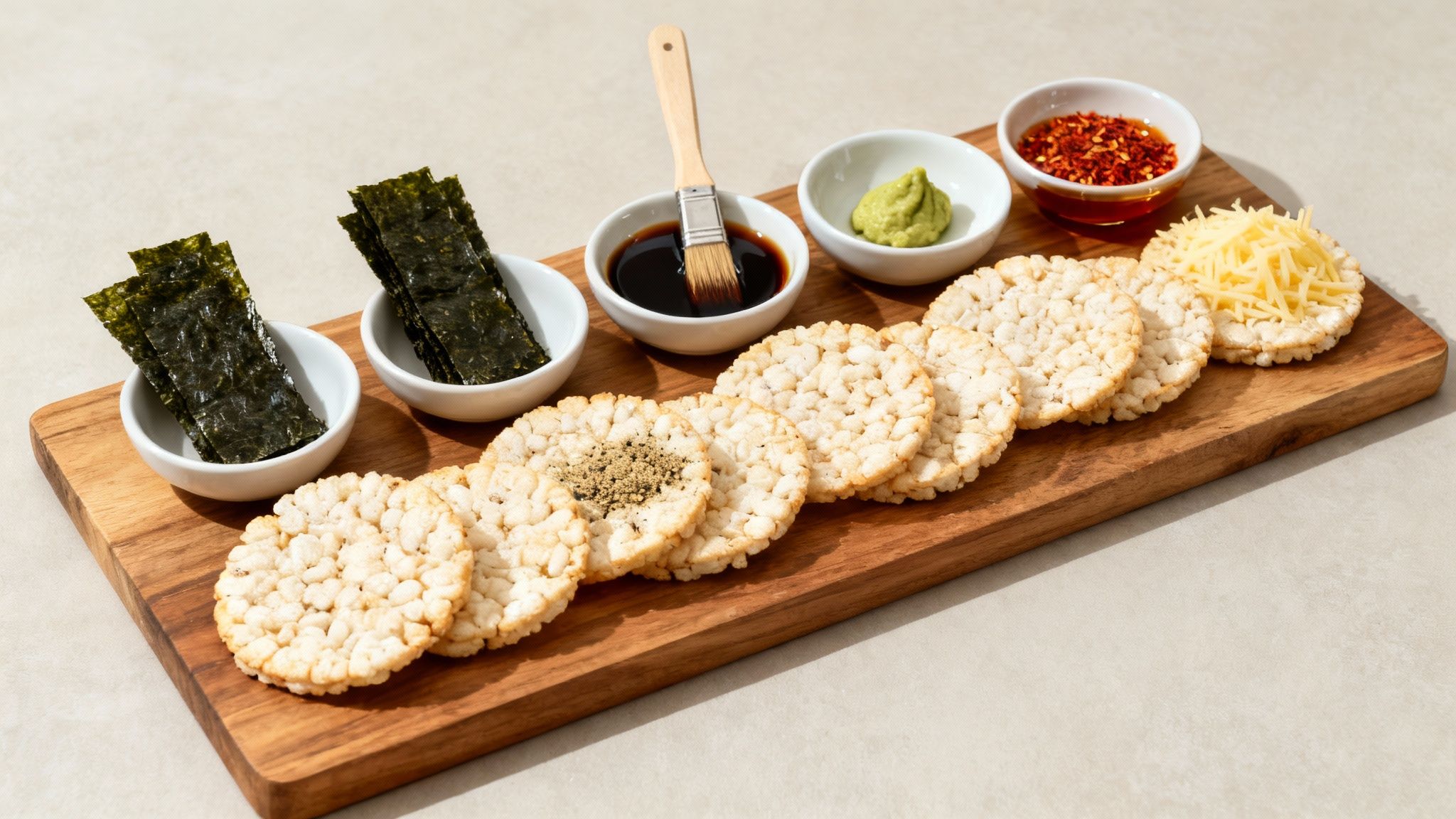
- Soy Sauce (Shoyu): The ultimate savory flavor, shoyu gives snacks a rich, salty, umami-packed glaze. It's often brushed onto senbei snacks before grilling to create an irresistible caramelized finish.
- Seaweed (Nori): This brings a subtle, oceanic saltiness and a crisp, papery texture. You’ll find it wrapped around a cracker or flaked into the dough for a burst of savory sea flavor.
- Wasabi: For those who love heat, wasabi delivers a sharp, pungent kick that provides a bold contrast to the mild rice base without being overpowering.
- Sweet Soy (Mirin-based): A beautiful blend of soy sauce, mirin (sweet rice wine), and sugar creates a glossy, sweet-and-savory coating that strikes the perfect balance.
Modern and Innovative Flavors
While tradition is central, Japanese snack makers are also masters of innovation. Today, you'll find an exciting lineup of rice snacks from Japan with contemporary flavors like bold chili, spicy curry, and rich cheese. These creative twists prove just how versatile Japanese snack food can be, blending timeless tradition with exciting new tastes. If you enjoy unique Japanese treats, you might also like to explore our recipe for Vanilla Mochi Ice Cream.
How Japanese Rice Snacks Differ from Western Snacks
When you compare traditional Japanese rice snacks to Western chips and crackers, you’ll discover a world of difference. This isn't just about taste, but about the entire philosophy behind them. The biggest distinction lies in the cooking method. While many Western snacks are deep-fried in heavy oils, the vast majority of Japanese rice crackers are baked or grilled. This creates a light, clean crunch without any greasy residue, making for a snack that feels refreshing, not heavy.
Another key difference is ingredient simplicity. The ingredient list on a bag of senbei often contains just a few high-quality items: rice, soy sauce, and perhaps seaweed. This contrasts with many Western snacks, which often have long lists of artificial additives. This commitment to purity allows the natural, toasty flavor of the rice to shine.
Finally, the culture around snacking differs. In Japan, snacks are often enjoyed with green tea, turning a simple break into a moment of calm. Portion sizes are generally more moderate, encouraging you to savor each bite. This fosters a healthier relationship with food, where snacks are a delightful part of the day.
Are Japanese Rice Snacks Healthy?
Many people turn to Japanese rice snacks as a lighter alternative, and for good reason. Being rice-based, they are a source of carbohydrates for energy. Since most are baked or grilled rather than fried, they often have a lower oil content than potato chips. Many are also naturally gluten-free, making them a great option for those with sensitivities, though it's always crucial to check the label for seasonings like soy sauce, which may contain wheat.
However, it's wise to be mindful of sodium. Soy sauce-based glazes can be high in salt, so enjoying them in moderation is key. The focus on balanced flavors and simple ingredients makes them a satisfying choice, but like any snack, they are best enjoyed as part of a balanced diet.
How to Enjoy Japanese Rice Snacks
The versatility of Japanese rice snacks makes them perfect for any occasion. Here are a few ideas to get the most out of your snacking experience:
- Everyday Snacking: Their light and crunchy texture makes them an ideal pick-me-up any time of day.
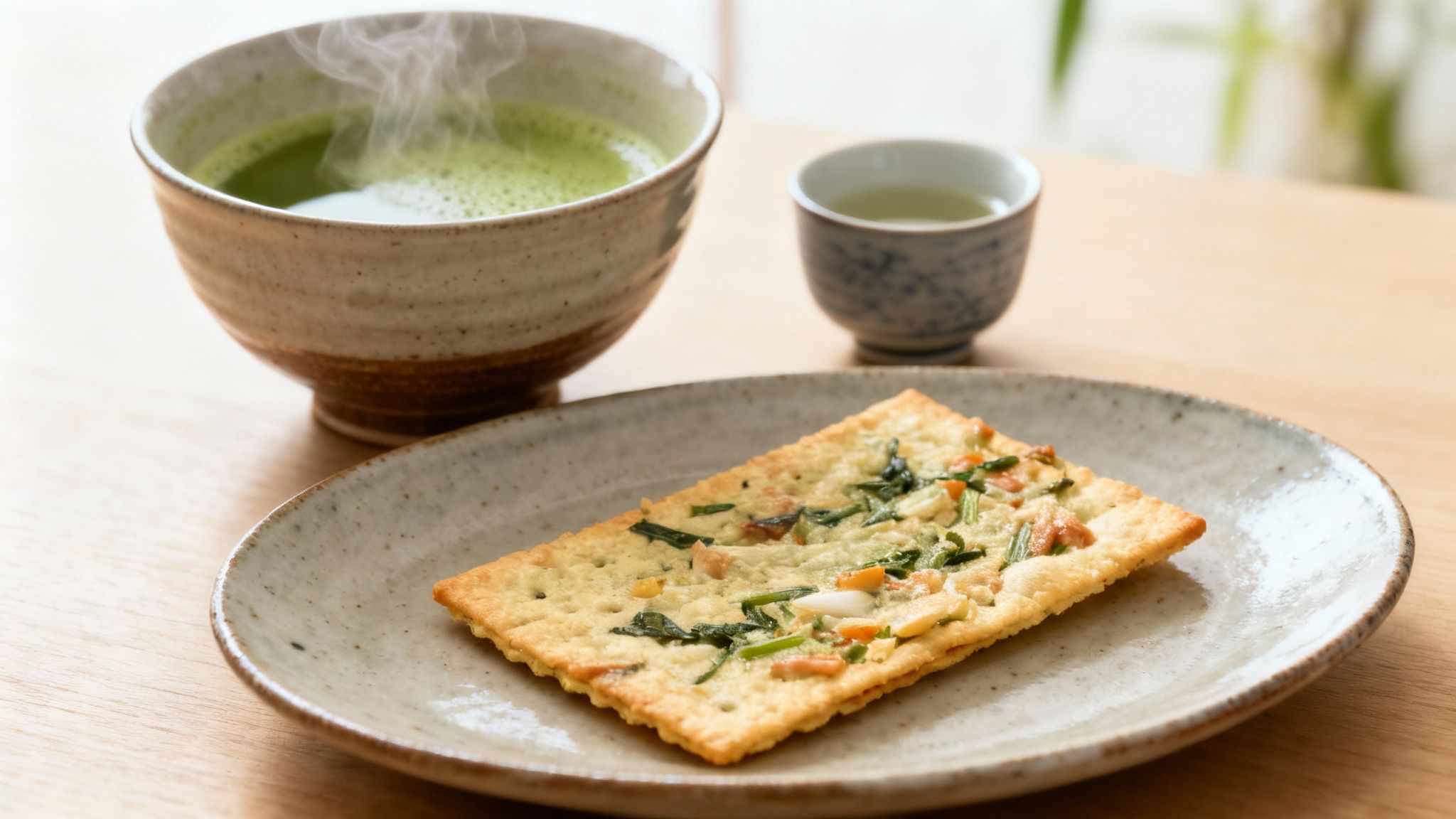
- Tea-Time Pairing: The classic way to enjoy these snacks is with a cup of Japanese green tea. The clean notes of sencha or the toasty aroma of hojicha perfectly complement the savory umami of a soy-glazed senbei. For another great pairing, try your rice snacks with a creamy matcha latte. If you want to get it right, learn how to brew Japanese green tea at home.
- Light Appetizers: Salty and spicy rice crackers are an excellent companion to a cold beer or a glass of sake, making them a go-to appetizer at gatherings.
- Gift Sets: Beautifully packaged assortments of rice snacks make for wonderful, thoughtful gifts. A curated selection with different shapes, flavors, and textures offers a fantastic tasting journey.
How to Choose the Best Japanese Rice Snacks
With so many options available, choosing the perfect snack comes down to personal preference. Here’s a quick guide to help you decide:
- Flavor Preference: Do you prefer savory or sweet? For a classic savory taste, go for soy sauce or seaweed-flavored senbei. If you like a hint of sweetness, look for snacks with a sweet soy glaze.
- Texture: Are you looking for a hard, satisfying crunch or something lighter and airier? Senbei offers a hard crunch, while Arare and Okaki are lighter and puffier.
- Traditional vs. Modern: Stick with classic flavors for an authentic experience, or explore modern variations like cheese or chili for something new and exciting.
- Packaging Size: Consider whether you want a small bag for a personal snack or a larger assortment for sharing or gifting.
Why Buy Japanese Rice Snacks from Japan?
While you might find basic options locally, sourcing your snacks from a specialized online retailer that imports directly from Japan unlocks a world of authentic flavors. This ensures you get fresher products and access to regional specialties and limited-edition releases from iconic brands that you won't find on a regular grocery shelf.
When it comes to traditional Japanese snacks, authenticity is everything. A dedicated retailer brings you a carefully curated collection from trusted makers, so you can be confident that every pack of senbei snacks or arare rice snacks is the real deal. When you buy from a source that specializes in Japanese products, you're not just buying a snack; you're getting a small piece of authentic culture, delivered with the freshness and quality it deserves. For more tips on tracking down authentic treats, check out our guide on finding Japanese food products online.
Conclusion
Japanese rice snacks offer a unique and delicious journey into one of the most cherished aspects of Japanese food culture. From the satisfying crunch of a classic senbei to the delicate airiness of arare, there is a snack to suit every taste. Their balanced flavors, simple ingredients, and mindful preparation set them apart, providing a more refined snacking experience. We encourage you to explore the diverse world of these traditional treats and discover your new favorite flavor.
Ready to find your new go-to snack? Buy Me Japan offers a curated selection of authentic Japanese rice snacks, from timeless soy-glazed senbei to exciting new flavors. Explore our collection and bring a taste of Japan's incredible culinary tradition right to your home.



Share:
Japanese Hair Mask: The Ultimate Guide to Restoring Dry, Damaged Hair
How to Make Dashi Stock: The Secret to Authentic Japanese Flavor