


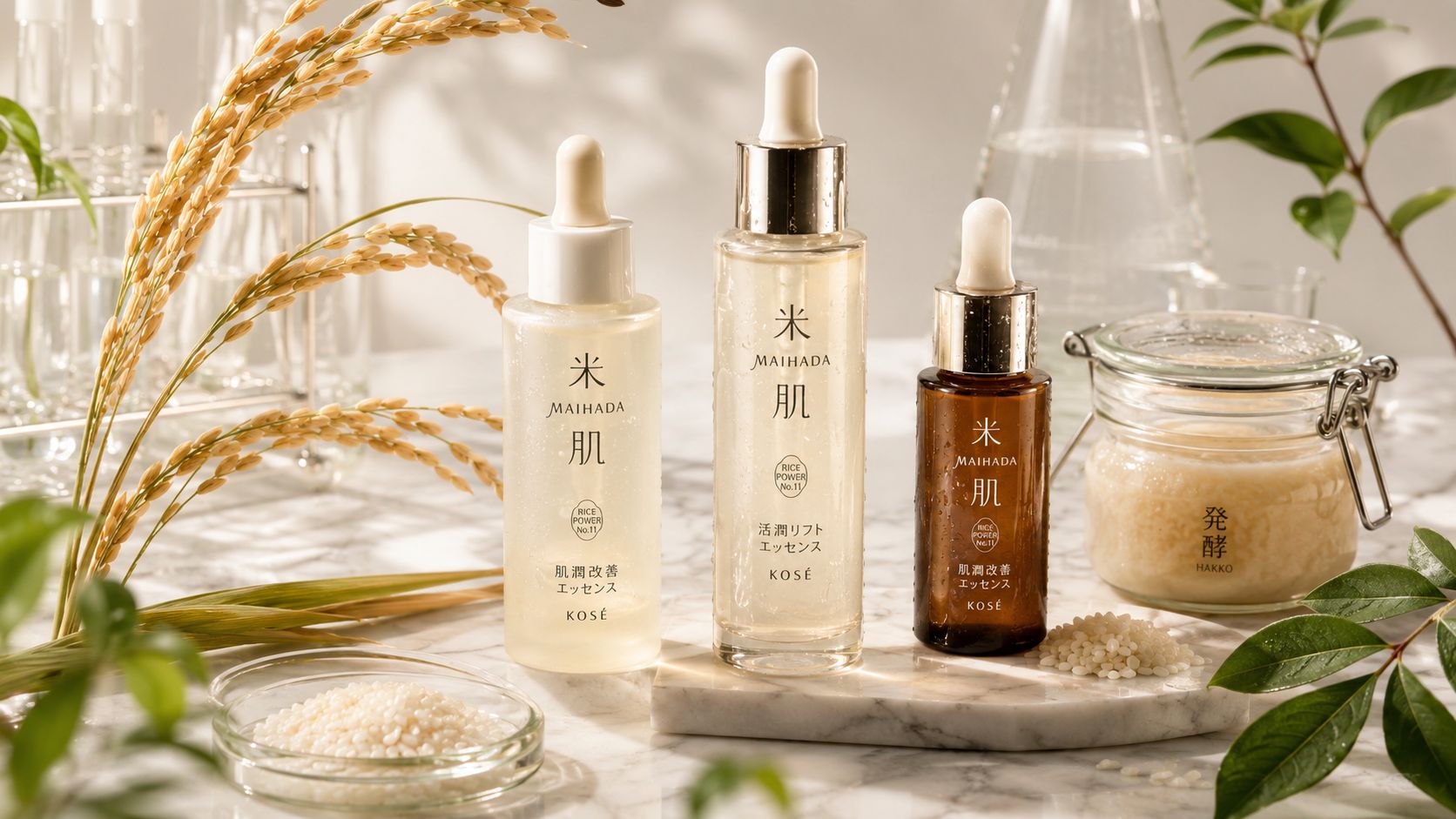
A friend once told me she stopped chasing “miracle” products when she noticed her Japanese lotion made her skin feel calm every single day. That small shift, from fixing damage to preventing it, is the heart of the Japanese Skincare Revolution.
If you've ever wondered why Japanese skincare feels so disciplined, gentle, and effective, the answer isn't one hero ingredient or one viral routine. It's a long-standing approach to skin health that combines ritual, restraint, and serious cosmetic science from Japan.
Why the World Looks to Japanese Skincare
The Japanese Skincare Revolution matters because it changed what many people expect from skincare. Instead of treating skincare like makeup prep or occasional repair work, Japanese beauty culture treats it as daily maintenance for the skin barrier, hydration balance, and long-term comfort.
That difference has shaped the global beauty industry in a visible way. The Japanese beauty market is one of the largest and most influential globally, valued at over $35 billion in 2022, which helped establish Japan as a foundational pillar of the global skincare industry, according to Japanese beauty industry statistics. That scale reflects decades of consumer trust in formulas that prioritize skin health over heavy coverage.

What makes J-Beauty feel different
Japanese skincare usually doesn't begin with “How fast can this transform my face?” It begins with quieter questions.
- How can I keep skin balanced every day?
- How can I support hydration without heaviness?
- How can I avoid irritating my skin in the first place?
That mindset is why many Japanese routines focus on soft cleansing, hydrating layers, emulsions, and daily UV protection. Brands such as Hada Labo, Shiseido Elixir, Kanebo DEW, Minon, Fancl, DHC, Biore, and Shiseido Anessa all fit into that broader tradition, even when their textures and target concerns differ.
Gentle routines often outperform aggressive ones for people who deal with tightness, reactivity, or inconsistent results.
For international shoppers, this is also why Japanese skincare can feel surprisingly trustworthy. Product categories are often very specific. A cleansing oil removes sunscreen and sebum. A lotion, often called kesho-sui, adds hydration. An emulsion seals it in lightly. That clarity makes routines easier to understand and easier to stick with.
If you want a broader view of the brands that shaped this reputation, this guide to the best Japanese cosmetic brands is a useful companion read.
The Roots of the Revolution From Geishas to Global Influence
Japanese skincare didn't appear overnight because of social media. It grew out of older habits built around cleanliness, refinement, and respect for the skin's surface. Long before modern bottles and pumps, beauty in Japan was tied to smoothness, softness, and careful upkeep rather than visible excess.
Traditional beauty practices often emphasized cleansing, delicate application, and ingredients associated with comfort and elegance, such as rice-derived preparations, botanical oils, and protective face powders. What matters here isn't romantic nostalgia. It's the continuity. Modern J-beauty still carries the idea that skin should be cared for patiently and consistently.
From ritual to modern discipline
The leap from cultural habit to global influence happened when Japanese skincare became easier to explain outside Japan. One major turning point came with Chizu Saeki. The Japanese skincare revolution was significantly catalyzed by the 2004 publication of Chizu Saeki's book The Japanese Skincare Revolution, which introduced Western audiences to a science-backed, multi-step Japanese beauty routine and shifted global perceptions from cosmetics toward essential skin health tools, as noted in this discussion of Chizu Saeki's The Japanese Skincare Revolution.
Saeki's influence was powerful because she translated Japanese beauty habits into something teachable. She didn't present skincare as a luxury performance. She presented it as a method. Cleanse properly. Hydrate thoroughly. Apply products with care. Repeat.
Why the message traveled so well
Her approach resonated internationally for a simple reason. Many people were tired of harsh cycles that left skin feeling stripped, irritated, or confused. Japanese skincare offered another path.
Three ideas helped it spread:
- Routines had logic Each step had a clear purpose, so people could understand why they were using a product.
- Textures felt approachable Watery lotions, light emulsions, and soft foams often felt easier to use than thick, occlusive formulas.
- Results were tied to consistency Japanese skincare taught people that good skin often comes from repetition, not drama.
The strength of J-beauty isn't novelty. It's the discipline of doing the right small things every day.
That historical continuity still matters today. If you want to understand the older beauty values behind modern formulations, this article on ancient Japanese beauty secrets gives helpful cultural context.
Core Philosophy Gentleness Prevention and Mochi Hada
If you only remember one idea, remember this. Japanese skincare is built around prevention over repair.
That doesn't mean Japanese brands ignore visible concerns. It means they often try to reduce the daily stress that leads to those concerns getting worse. Less friction. Less over-exfoliation. Better hydration. Better sun protection. More consistency.

A central visual goal in J-beauty is mochi hada, often understood as mochi-smooth skin, or tamago hada, egg-like skin. This ideal emphasizes hydration, translucency, and smoothness over aggressive texture correction. It also drives the practice of layering multiple thin hydrating products rather than relying on one heavy cream, as explained in this J-beauty guide.
What prevention looks like in real life
Readers often find this confusing. Prevention doesn't mean doing less care. It means doing care in a less disruptive way.
A prevention-focused routine usually includes:
- Low-friction cleansing so the skin doesn't feel squeaky or raw
- Repeated hydration through thin layers that absorb comfortably
- Barrier support from emulsions or creams that don't suffocate the skin
- Daily sunscreen because UV exposure progressively undermines nearly every skincare goal
That philosophy is especially useful for sensitive or easily overwhelmed skin. People who bounce between strong acids, retinoids, scrubs, and spot treatments often mistake stimulation for progress. Japanese skincare usually takes the opposite view. Calm skin is easier to manage, easier to hydrate, and more predictable over time.
For readers with reactive skin, this guide to Japanese skincare for sensitive skin fits naturally with this philosophy.
Why layering works
Layering can sound excessive until you try it correctly. The goal isn't to pile on product. The goal is to match texture to function.
A hydrating lotion sinks in fast. A serum targets a need or adds more hydration. An emulsion or cream helps reduce moisture loss. Each layer is usually light, so the skin feels cushioned instead of coated.
Practical rule: If your skin feels greasy but still dehydrated, the issue is often product balance, not a lack of products.
This is also why Japanese routines often feel elegant rather than overwhelming. They favor thin textures that can be adjusted with the season, your skin state, and your tolerance level. In humid weather, you might stop at lotion plus emulsion. In dry weather, you might add a richer final layer.
A good demonstration of that texture-first mindset is here:
Signature Ingredients The Science Behind J-Beauty Staples
Ingredients matter in Japanese skincare, but the primary consideration is how they're formulated and used. J-beauty rarely treats an ingredient as a magic headline on its own. Instead, brands tend to ask how an ingredient can support hydration, comfort, barrier stability, and long-term usability.
That is why familiar staples like hyaluronic acid, rice-derived ingredients, green tea extracts, and camellia oil remain so relevant. They fit the larger philosophy. They help the skin hold water, stay supple, and tolerate a routine that can be repeated daily.

The continuing role of hydration
Hydration is the backbone of J-beauty science. Hada Labo is one of the clearest examples. Its lotions are known for the watery, layerable style that Japanese skincare made globally familiar. Shiseido AQUALABEL, Kanebo DEW, Minon, and MUJI skincare also show how Japanese brands often build routines around comfortable water retention rather than harsh resurfacing.
If you're trying to understand why hyaluronic acid appears so often in Japanese products, this explainer on what hyaluronic acid serum does is worth reading.
A few ingredient families appear again and again in Japanese skincare because they fit everyday use so well:
- Hyaluronic acid Best known for helping the skin hold water and feel plumper.
- Rice-derived ingredients Often associated with softness, brightness, and a refined skin texture.
- Green tea extracts Popular in formulas designed to feel fresh, balanced, and comfortable.
- Camellia oil Used in both skincare and haircare for its smooth, conditioning feel.
Where Japanese ingredient science is heading
Modern J-beauty isn't frozen in tradition. It keeps moving, but it usually moves in a way that preserves the original philosophy. A strong example comes from Kao's Life Science Lab, which developed recombinant aquaporin-3 mimetics that facilitate directional water transport into the stratum corneum only when epidermal hydration falls below a physiological threshold, validated through real-time glycerol flux measurements. The same source describes these as examples of functional minimalism, where dynamic systems replace static solutions, in this report on adaptive Japanese moisturizers.
That sounds technical, so let's make it plain. The old model was simple hydration. The newer model is responsive hydration. Brands aren't only asking how to add moisture. They're asking when skin needs help, how to deliver it with less waste, and how to avoid overloading the barrier.
What that means for the products you choose
You can see this old-meets-new pattern across many Japanese brands.
| Ingredient focus | What it supports | Brand examples |
|---|---|---|
| Hyaluronic acid | Daily hydration and softness | Hada Labo, Shiseido AQUALABEL |
| Botanical oils | Comfort and flexibility | DHC, & Honey, Momori |
| Soothing moisture layers | Barrier-friendly care | Minon, MUJI, Shiseido d Program |
| Refined brightening and tone care | Daily maintenance routines | Transino, Kose Sekkisei |
The smartest way to read a Japanese formula isn't to ask, “Is this trendy?” Ask, “Can I use this consistently without upsetting my skin?” That question gets you much closer to how J-beauty brands think.
Building Your J-Beauty Routine A Practical Guide
A Japanese routine doesn't need ten steps. It needs the right steps in the right order.
The most useful way to build one is to start with the core elements, then adjust the middle layers based on your skin type. These generally include cleanse well, hydrate generously, protect daily.
Step one starts at night with cleansing
The defining mechanical pillar of Japanese skincare is the double cleanse. It starts with an oil-based cleanser to dissolve sunscreen, makeup, and sebum without stripping lipids, followed by a gentle water-based cleanser to remove sweat and water-based impurities. This two-step sequence is identified as the defining J-beauty technique and differs clearly from many Western single-step cleansing habits, as described in this article on Japanese skincare ritual and double cleansing.
Often, many beginners either overdo it or skip it. If you wear sunscreen, base makeup, or live in a humid city, oil cleansing can make the rest of your routine work better. If your skin is dry, you may need to use a gentler touch and pay close attention to how often you double cleanse.
Examples that fit this step well include DHC cleansing oils and other Japanese oil cleansers designed to rinse cleanly. Follow with a gentle foam or low-residue wash. Hada Labo, Cow Brand, Fancl, and Shiseido Senka all sit within this broader cleansing style.
Build the middle of the routine with light layers
After cleansing, Japanese skincare usually moves into hydration.
A simple structure looks like this:
- Hydrating lotion or kesho-sui This is the watery first layer. Hada Labo lotions, MUJI toning water styles, and Kanebo DEW hydration products fit here.
- Serum if needed Use this when you want a more focused layer. Shiseido Elixir, Transino, or d Program serums are examples of how Japanese brands handle this category.
- Emulsion or moisturizer Emulsions are a classic J-beauty step because they seal in hydration without always feeling heavy. This is a big reason Japanese routines work well in humid and temperate climates.
If you're new to J-beauty, don't start with every possible step. Start with cleansing, lotion, moisturizer, and sunscreen. Add a serum only when you know what problem you're trying to solve.
Sunscreen is part of skincare, not an extra
Japanese skincare treats sunscreen as a daily maintenance product, not a beach-only item. That's one reason Japanese sunscreens became so influential globally. They tend to focus on elegant textures, easy reapplication, and a finish that fits under makeup.
Common choices include Shiseido Anessa, Biore UV, Kanebo ALLIE, and Skin Aqua. People often stay loyal to Japanese sunscreens because they feel easier to wear every day. And in a prevention-based routine, wearability matters.
For morning routine flow, this guide to morning skincare routine steps is a useful reference.
How to tailor it to your skin
Different Japanese brands serve different needs. Here is a practical way to think about them.
- For sensitive skin Try Minon, Shiseido d Program, MUJI, or Yuskin. Look for fewer variables and gentler textures.
- For dehydration Start with Hada Labo, Kanebo DEW, or Shiseido AQUALABEL. Focus on repeated light hydration.
- For bright, even-looking skin routines Transino and Kose Sekkisei are often where shoppers begin.
- For acne-prone or oilier skin Mentholatum Acnes, Meishoku, Keana, and some Biore cleansers can make sense, but don't let “oil control” push you into over-cleansing.
- For a polished sunscreen step Shiseido Anessa, Biore UV, and Kanebo ALLIE are the names many people recognize first.
A practical evening routine could be DHC cleansing oil, a gentle foaming cleanser, Hada Labo lotion, a serum from Shiseido Elixir or d Program if needed, and a light emulsion or cream. A practical morning routine could be a gentle cleanse or rinse, hydrating lotion, light moisturizer if needed, then sunscreen.
Modern J-Beauty vs K-Beauty and Tech Innovations
Japanese skincare and Korean skincare get grouped together constantly, but they aren't the same. They overlap in some textures and product categories, yet the underlying emphasis often feels different.
A quick comparison helps clear up the confusion.
J-Beauty vs K-Beauty Key Differences
| Aspect | Japanese Beauty (J-Beauty) | Korean Beauty (K-Beauty) |
|---|---|---|
| Core mindset | Prevention and maintenance | Experimentation and visible transformation |
| Texture philosophy | Refined, layerable, often minimalist | Broad variety, often trend-driven |
| Skin ideal | Mochi hada or tamago hada, smooth and hydrated | Glass skin, luminous and ultra-dewy |
| Routine style | Purposeful steps with restraint | Often more flexible and novelty-friendly |
| Product loyalty | Strong loyalty to staples | Faster movement across trends and launches |
This isn't a value judgment. Many people enjoy both. But if your skin gets overwhelmed easily, J-beauty often feels more stable because it tends to reward repetition over constant switching.
Japanese skincare usually asks, “How can I protect skin from daily stress?” K-beauty more often asks, “What new format or finish can improve the look of skin right now?”
Tradition plus technology
What keeps J-beauty relevant is that it hasn't stayed old-fashioned. Japan's skincare industry invested ¥487 billion ($3.2 billion USD) in cosmetics R&D in 2025, driving breakthroughs in personalized AI skin analysis. Shiseido's OPTUNE system uses IoT sensors to customize serum blends dynamically and had reached over 50,000 active users in Japan by early 2026, according to this report on Japanese skincare innovations in 2026.
That's a useful example because it shows the underlying direction of modern J-beauty. The goal isn't complexity for its own sake. It's better matching. Better timing. Better precision. The technology changes, but the underlying philosophy still sounds familiar: understand the skin, support the skin, avoid unnecessary stress.
That balance also answers a modern concern many readers have. Can a traditional skincare philosophy still handle urban life, screen-heavy routines, changing indoor climates, and pollution exposure? In many cases, yes. J-beauty isn't succeeding by abandoning its gentleness. It's succeeding by updating that gentleness with smarter formulation and better diagnostics.
How to Shop for Authentic Japanese Skincare
Buying Japanese skincare from outside Japan can be confusing because packaging varies, product names often get translated differently, and counterfeit or grey-market listings can make it hard to know what you're getting.
A good shopping rule is to focus on three things.
- Brand clarity Stick with established Japanese brands such as Hada Labo, Shiseido Anessa, Shiseido d Program, Kanebo DEW, Biore, Fancl, DHC, Minon, Kose Sekkisei, Transino, and MUJI.
- Product category fit Don't buy by hype alone. Buy by function. Cleansing oil for sunscreen removal. Hydrating lotion for water layers. Emulsion for sealing. Sunscreen for daily prevention.
- Retail trust Choose stores that specialize in Japanese products, ship directly from Japan, and make authenticity a visible part of the shopping experience.
Japanese skincare works best when you choose products that suit your skin and use them consistently. The revolution wasn't built on chasing the harshest formula or the newest claim. It was built on gentle prevention, elegant textures, and science that serves daily life.
If you're ready to shop authentic Japanese skincare with more confidence, explore Buy Me Japan. It offers curated Japanese beauty brands shipped directly from Japan, which makes it easier to find trusted staples like Hada Labo, Shiseido, Biore, DHC, Minon, Canmake, Cezanne, Kose, Fancl, and more in one place.
Share:
Aquarius Japanese Drink: Flavors & Where to Buy 2026
Best Japanese Food Online Shopping USA Sites 2026