


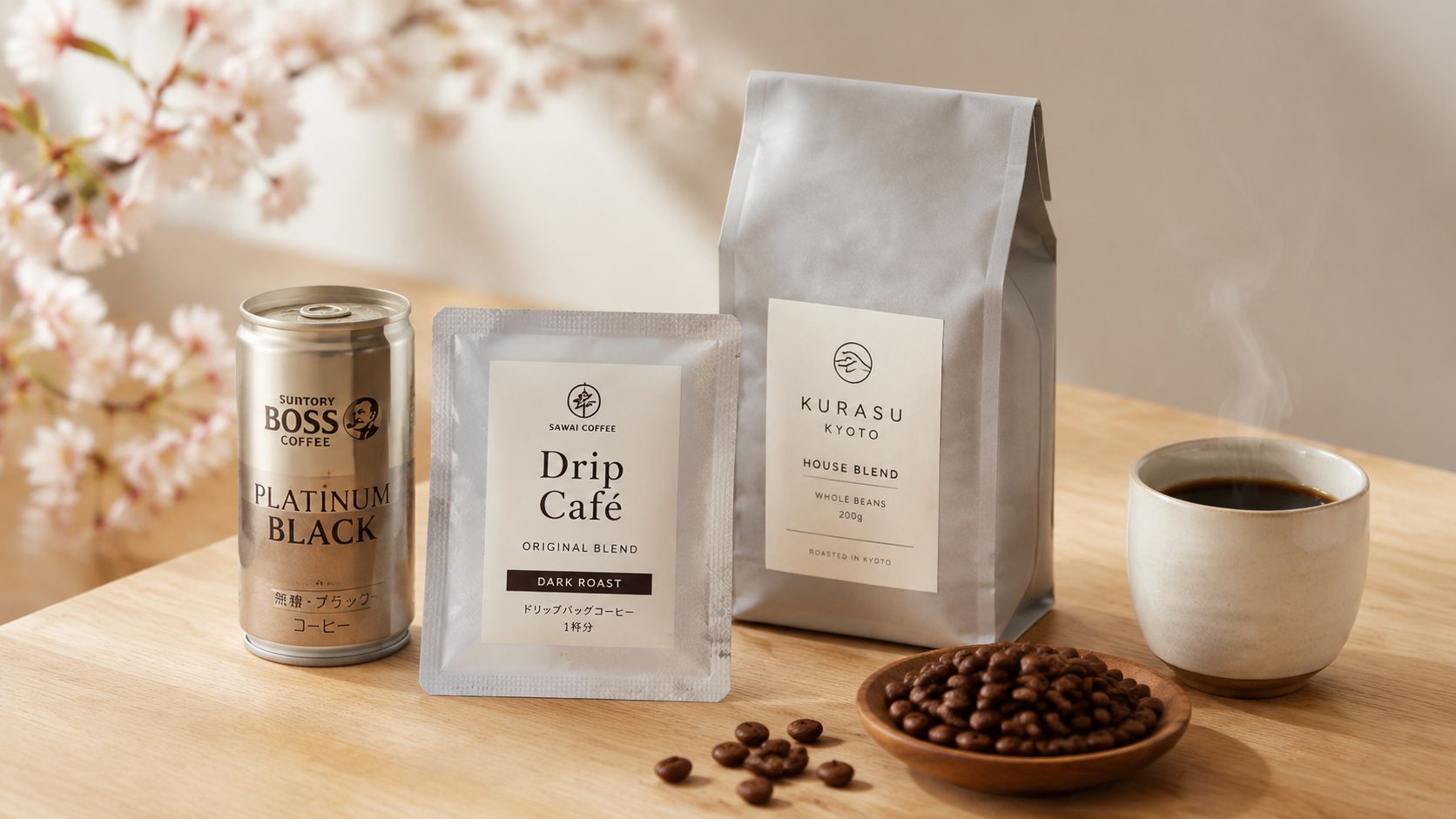
You're probably here because you've seen a Japanese coffee can in a convenience store, spotted Blendy sticks online, or watched someone pour hot water over a little paper drip bag and wondered whether Japanese coffee is different or just well packaged.
It is different. Japan turned coffee into something both highly practical and deliberately thoughtful. You can see that in vending machines, in compact home brewing tools, and in the way familiar brands build products for people who want a smooth cup without much fuss.
For international shoppers, the hard part isn't understanding the appeal. It's knowing which Japanese coffee brands to try first, what style fits your taste, and how to buy authentic products from Japan without guessing. That's where a little context helps.
Welcome to Japan's Unique Coffee Culture
My first real lesson in Japanese coffee didn't happen in a café. It happened in front of a vending machine on a quiet street, where rows of hot and cold coffee cans sat beside tea, water, and sports drinks. In Japan, coffee often meets you where you are. On the way to work, after a train ride, during a late-night walk, or between errands.
That small moment explains a lot about the local coffee scene. Japan values ritual, but it also values reliability and convenience. Coffee developed around both. You'll find careful hand-drip brewing in specialty spaces, but you'll also find people happily buying canned coffee from a machine because it tastes good, it's consistent, and it fits the rhythm of daily life.
Coffee isn't a niche habit in Japan. Japan consumed approximately 7.5 million 60kg bags of coffee in 2019, which made it one of the world's largest coffee-consuming nations, according to Perfect Daily Grind's look at Japanese coffee shop culture.
Why visitors often misunderstand it
A lot of international coverage focuses on aesthetic cafés or pour-over culture. Those are real parts of the story, but they're only part of it.
Japanese coffee culture also includes:
- Vending machine coffee: Fast, dependable, and available almost everywhere
- Instant coffee done well: Smooth, balanced, and easy to prepare
- Single-serve drip bags: A clever middle ground between convenience and craft
- Everyday home brewing: Coffee is part of the normal household routine
Japanese coffee makes more sense when you stop separating “serious coffee” from “convenient coffee.” In Japan, both matter.
If you already enjoy Japanese drinks more broadly, it's worth browsing this guide to non-alcoholic Japanese drinks, because coffee fits into that same wider culture of daily, well-designed beverages.
What Makes Japanese Coffee Taste Different
Many people describe Japanese coffee as smooth, mellow, or easy to drink. That sounds vague until you connect it to roasting.
A lot of Japanese coffee brands lean toward a medium-dark roast profile. That choice shapes what you taste in the cup. Instead of chasing sharp acidity or heavy smokiness, many brands aim for balance, body, and a softer finish.
The roast style behind the flavor
Verified market data states that Japanese coffee brands predominantly use a medium-dark roast profile at 180–200°C, which results in a lower pH of 5.2–5.4 and reduced bitterness, helping create the smooth flavor profile that dominates the market and drives over 65% of revenue.
That matters because roast level changes how coffee feels, not just how it tastes. A medium-dark roast often gives you more body and more rounded flavor than a lighter roast. If you've tried some European-style coffees and found them too bright or acidic, Japanese coffee may feel more approachable.
What smooth actually means
When people hear “smooth,” they often think it means weak. In Japanese coffee, it usually means something else.
It often means:
- Less sharp acidity: The coffee feels gentler on the palate
- Lower perceived bitterness: You don't get as much harsh edge
- More rounded body: The cup feels fuller, especially with milk or when served chilled
This is one reason Japanese coffee works so well across multiple formats. A roast that tastes balanced in a café can also work in instant coffee, drip bags, or canned products.
Practical rule: If you want Japanese coffee that feels familiar on the first try, start with medium-dark blends rather than lighter specialty roasts.
Why this matters for beginners
A lot of first-time buyers get confused because they expect all good coffee to taste bright, fruity, or intense. Japan took a different path. Many mainstream products are built to be pleasant every day, not challenging.
That same preference for soft bitterness and rounded flavor is part of why Japanese drink culture also values carefully processed tea products, as you can see in this article on Ujido ceremonial blend matcha. The products are different, but the attention to balance is familiar.
Here's a simple comparison:
| Style | Typical impression | Good for |
|---|---|---|
| Japanese medium-dark roast | Smooth, balanced, lower-acid feel | Daily drinking, milk coffee, ready-to-drink formats |
| Lighter roast styles | Brighter, more acidic, more delicate | Tasting notes, black coffee enthusiasts |
| Very dark roast styles | Strong roast character, heavier bitterness | Bold espresso-like preference |
If you've ever wondered why so many Japanese coffee brands feel easy to drink straight away, the roast profile is a big part of the answer.
The World of Canned Coffee Kan Kōhī
Canned coffee, or kan kōhī, is one of Japan's smartest food inventions. For many people outside Japan, canned coffee sounds like a compromise. In Japan, it became its own category with its own standards, textures, and expectations.

What surprises first-time drinkers is that a good can doesn't taste stale or flat in the way they expect. That's because the product isn't treated like leftover brewed coffee poured into metal. The canning process is part of the product design from the beginning.
Why canned coffee works so well in Japan
Japan built a whole ecosystem around portability. Commutes are structured. Convenience stores are everywhere. Vending machines are normal. A drink that can be bought cold in summer or warm in winter fits daily life perfectly.
But convenience alone doesn't explain its popularity. Verified data shows that brands such as Suntory Boss and Wonda use nitrogen-flush packaging and pressure-retort sterilization at 120°C for 15 minutes to retain 95% of the original volatile aromatic compounds, and canned coffee accounts for 20–25% of total coffee consumption in Japan.
That's a technical way of saying the industry spent serious effort protecting aroma and flavor.
The engineering behind the taste
Three details matter here:
- Nitrogen flushing: This helps reduce oxidation, which protects aroma
- Pressure-retort sterilization: This makes the drink shelf-stable while preserving a more complete flavor profile
- Tight packaging control: The can is part of the quality system, not just the container
This is why canned coffee in Japan can feel polished rather than improvised. It's designed for consistency.
A Japanese canned coffee is closer to a finished beverage format than a shortcut version of café coffee.
What to expect when you try it
Different cans serve different moods. Some are black and crisp. Others are milkier and sweeter. Some lean dry and roasted. Others feel rounder and softer.
A good way to approach the category is to think in use cases:
- Morning commute: Black canned coffee, chilled or warmed
- Afternoon reset: Milk coffee with a softer, sweeter profile
- Travel or office drawer: Shelf-stable coffee that doesn't need equipment
If you care about bean quality and production methods in coffee generally, Peak Performance's organic coffee insights offer useful background on how sourcing questions can shape flavor expectations, even though Japanese canned coffee is really its own format.
Why canned coffee became iconic
It solved a practical problem elegantly. People wanted access to coffee everywhere, not only in a café or at home. Japan answered that with a product that was stable, portable, and enjoyable.
That's why canned coffee isn't a novelty there. It's part of everyday life.
Beyond the Can Instant and Drip Bag Coffee
If canned coffee represents coffee on the move, instant coffee and drip bags represent coffee at home, at the office, and in those small in-between moments when you want something good without setting up a full brewing station.

Many international shoppers change their mind about Japanese coffee brands. They expect novelty, but they end up finding practicality.
Why these formats became staples
Verified consumer data notes that more than 80% of Japanese households own a coffee maker, while canned coffee from vending machines remains a daily convenience, with brands like Blendy, AGF, and UCC leading the ready-to-drink and instant segments, as described in this overview of Japanese household coffee habits.
That household context matters. It means coffee isn't only bought outside. It's built into home routines too.
Instant coffee in Japan feels different
In many countries, instant coffee still carries a budget image. In Japan, the category is broader. Products like Blendy sticks are made for ease, but they're also tuned for a reliable, smooth cup.
You'll usually see a few common formats:
- Plain instant granules: Good if you want to control strength and milk
- Stick packs: Measured portions for one mug
- Cafe au lait style mixes: Useful if you prefer creamy, sweet coffee fast
For many buyers, stick packs are the easiest starting point because there's almost no friction. Tear, pour, add hot water, stir.
What a drip bag actually is
A Japanese drip bag is a single-serving filter packet with paper arms that hang over your mug. You open the top, set it on the cup, and pour hot water through the grounds.
It gives you some of the feel of pour-over coffee without requiring a dripper, grinder, or scale.
If you want a cleaner cup than instant but don't want brewing gear on your counter, drip bags are the sweet spot.
A simple routine works well:
- Open the packet carefully
- Set the paper arms over the mug rim
- Pour a little hot water first
- Wait briefly so the coffee wets evenly
- Continue pouring in small rounds
If you want a practical shopping-oriented introduction to the category, this guide to instant Japanese coffee is a useful next read.
Iconic Japanese Coffee Brands to Try
Some Japanese coffee brands are important because of history. Others are important because they fit daily life so well that people keep buying them for years. If you're choosing from abroad, it helps to know which brands are known for what, not just which names appear often.

UCC
UCC matters because it shaped modern Japanese ready-to-drink coffee culture. Verified brand history notes that UCC was the first Japanese brand to introduce canned coffee to the market in 1969, as described in this write-up on top Japanese coffee brands and UCC's role.
If you're new to Japanese coffee, UCC is often the easiest historical starting point because the brand links together several parts of the market at once. It's associated with canned coffee, but it also appears in home-use formats that many international buyers find easier to order and try.
What to expect from UCC products:
- Classic profile: Balanced, familiar, easy to drink
- Strong everyday usability: Good for people who want dependable coffee rather than experimental flavor
- Broad format range: Helpful if you want to compare canned, instant, and drip styles within one brand family
Blendy and AGF
Blendy is one of the names many shoppers encounter early, especially if they're browsing Japanese grocery selections online. The appeal is straightforward. It makes coffee simple.
Blendy is especially useful for:
- Busy mornings
- Office drawers
- Travel kits
- Buyers who want a low-effort first step into Japanese coffee
Its stick-style products are one reason Japanese coffee brands feel accessible to international customers. You don't need a grinder or special kettle. You just need a mug and hot water.
Boss and Wonda
These brands are tightly connected to the canned coffee world. If your main curiosity is the Japanese vending machine experience, these brands make it real.
Boss is often associated with classic canned coffee identity. Wonda sits in the same wider conversation of reliable ready-to-drink coffee built around stability and convenience. They make the most sense for drinkers who value portability, chilled coffee, and that unmistakably Japanese grab-and-go style.
Nestlé Japan and familiar household lines
Nestlé Japan appears in the broader Japanese coffee market alongside domestic brands. In practical terms, that means some products feel more familiar to international buyers while still reflecting Japanese taste preferences in format and balance.
This category is useful if you want:
- A gentle entry point
- Recognizable brand structure
- Home-use coffee that fits routine shopping
A note on artisanal roasters
Many readers also get curious about tiny Tokyo roasters after watching travel videos. That's a real part of the scene, but buying from small-batch producers internationally can be harder than people expect. The gap usually isn't quality. It's consistency, export readiness, and communication.
This short video captures that side of the conversation well:
A quick comparison
| Brand | Best known for | Good first choice for |
|---|---|---|
| UCC | Historic canned coffee leadership, broad range | Readers who want a classic Japanese starting point |
| Blendy | Instant and stick coffee convenience | Beginners, office use, easy home prep |
| Boss | Iconic canned coffee identity | Fans of grab-and-go coffee |
| Wonda | Ready-to-drink canned coffee | Drinkers exploring vending-machine-style coffee |
| Nestlé Japan lines | Familiar structure with Japanese market adaptation | Shoppers who want an easy transition |
If you're shopping across categories and not just coffee, some retailers carry coffee alongside Japanese pantry items, snacks, skincare, and daily-use products. That mixed catalog can be useful if you're building a broader Japan order rather than buying one item at a time.
How to Choose The Right Japanese Coffee For You
The easiest way to choose isn't by chasing the most famous brand. It's by matching the coffee format to the way you live.
If you buy the wrong format, even a good product can feel disappointing. A great drip bag won't help much if you never have time to pour water slowly in the morning. A canned coffee won't satisfy you if what you really want is a brewing ritual.
If speed matters most
Choose instant sticks or canned coffee.
Instant sticks make the strongest case for simplicity. They're portioned, easy to store, and forgiving. Canned coffee is even easier if you like chilled coffee or want something for work, travel, or commuting.
This works well for:
- Busy professionals
- Students
- Anyone who doesn't want extra equipment
If you like the feel of brewing
Choose drip bag coffee.
Drip bags are ideal for people who enjoy a fresher, brewed taste but don't want to invest in a full pour-over setup. You still get aroma, bloom, and a more hands-on cup. You just skip the hardware.
The right Japanese coffee often depends less on taste alone and more on whether the format fits your routine.
If you want a classic Japanese coffee experience
Choose a mainstream Japanese brand before a niche roaster.
That might sound less romantic, but it's usually smarter for a first purchase. UCC, Blendy, and other established names give you a clearer baseline. Once you know what you like, then it's easier to branch out.
If caffeine is part of your comparison
A lot of buyers compare coffee with tea when deciding what to drink through the day. If that's you, this explanation of sencha green tea caffeine gives useful context for how Japanese drink choices fit different routines.
Here's a simple decision guide:
| Your priority | Better fit |
|---|---|
| Fastest preparation | Instant sticks |
| No brewing at all | Canned coffee |
| Better brewed feel without gear | Drip bags |
| First-time brand exploration | UCC or Blendy |
| Office-friendly storage | Sticks or cans |
A good first order is usually one instant product and one drip or canned product. That gives you contrast. You'll learn quickly whether you care more about ritual, portability, or convenience.
Buying and Enjoying Your Authentic Japanese Coffee
You order a few Japanese coffees online, open the box, and realize the main question starts now. Which one should go in the fridge, which one needs hot water, and which one is supposed to taste sweet on purpose?
That is the part many first-time buyers miss. Japanese coffee is easy to enjoy once you treat each product the way it was designed to be used.

Why buying from Japan matters
Japanese coffee brands often fine-tune products for daily life in Japan. You can see it in the can size, the sweetness level, the roast profile, and even how the drink is meant to be served. A canned latte made for a Japanese convenience store run is built with a different goal than a café-style bottled coffee made for export.
Buy Me Japan is one option international shoppers use to get products made for the Japanese market. That matters because small differences in local-market versions can change the whole experience. If you are building a mixed order beyond coffee, this guide to popular products in Japan also helps explain what people in Japan buy for everyday use.
How to get the best result at home
A few simple habits make Japanese coffee taste closer to how it is enjoyed in Japan.
- Chill canned coffee fully: Many canned coffees are balanced for a cold, crisp drink. Half-cold often tastes flatter.
- Warm canned coffee gently if it is meant to be hot: A mug of hot water or gentle reheating works better than boiling, which can make the flavor feel harsh.
- Use fresh hot water for instant coffee: Instant coffee is convenient, but water quality still shapes the cup.
- Pour drip bags in stages: A slow pour helps the grounds extract more evenly, much like a basic hand-drip at home.
- Store unopened coffee away from heat and humidity: Japanese packaging is practical, but coffee still loses character if it sits in a warm kitchen for too long.
What first-time buyers often get wrong
A lot of international buyers judge the whole category from one product. That is like deciding all tea tastes the same after drinking one bottled milk tea.
Japanese coffee makes more sense when you compare products by role. A sweet canned coffee is built for quick comfort. A black canned coffee is closer to a grab-and-go reset. Instant sticks are for speed. Drip bags are for people who want a brewed cup without equipment. If you compare each one to the job it is trying to do, the style becomes much easier to appreciate.
Start with the format that fits your routine, then judge the flavor from there.
A simple first order strategy
A good first order does not need to be large. It just needs contrast.
- Choose one instant product for the easiest weekday cup.
- Add one drip bag coffee if you enjoy aroma and a more brewed feel.
- Pick one canned coffee to experience the convenience-store side of Japanese coffee culture.
- Reorder the format you reached for most often.
This approach works well for international buyers because it answers two questions at once. What does Japanese coffee taste like, and which version of it fits your life outside Japan?
That practical match is a big part of the appeal. Japanese coffee is not only about origin or roast notes. It is also about daily usefulness. It respects time, portability, consistency, and small routines, which is why so many people end up keeping at least one Japanese coffee format in regular rotation.
If you want to try authentic Japanese coffee without guessing, Buy Me Japan is a practical place to start. You can browse real Japanese products shipped directly from Japan and build an order that fits how you drink, whether that means instant sticks, drip bags, canned coffee, or a wider mix of Japanese food and lifestyle items.



Share:
Shirataki Rice Where to Buy: A Complete 2026 Guide
Japanese Seaweed Snacks: A Complete Guide to Nori and More