


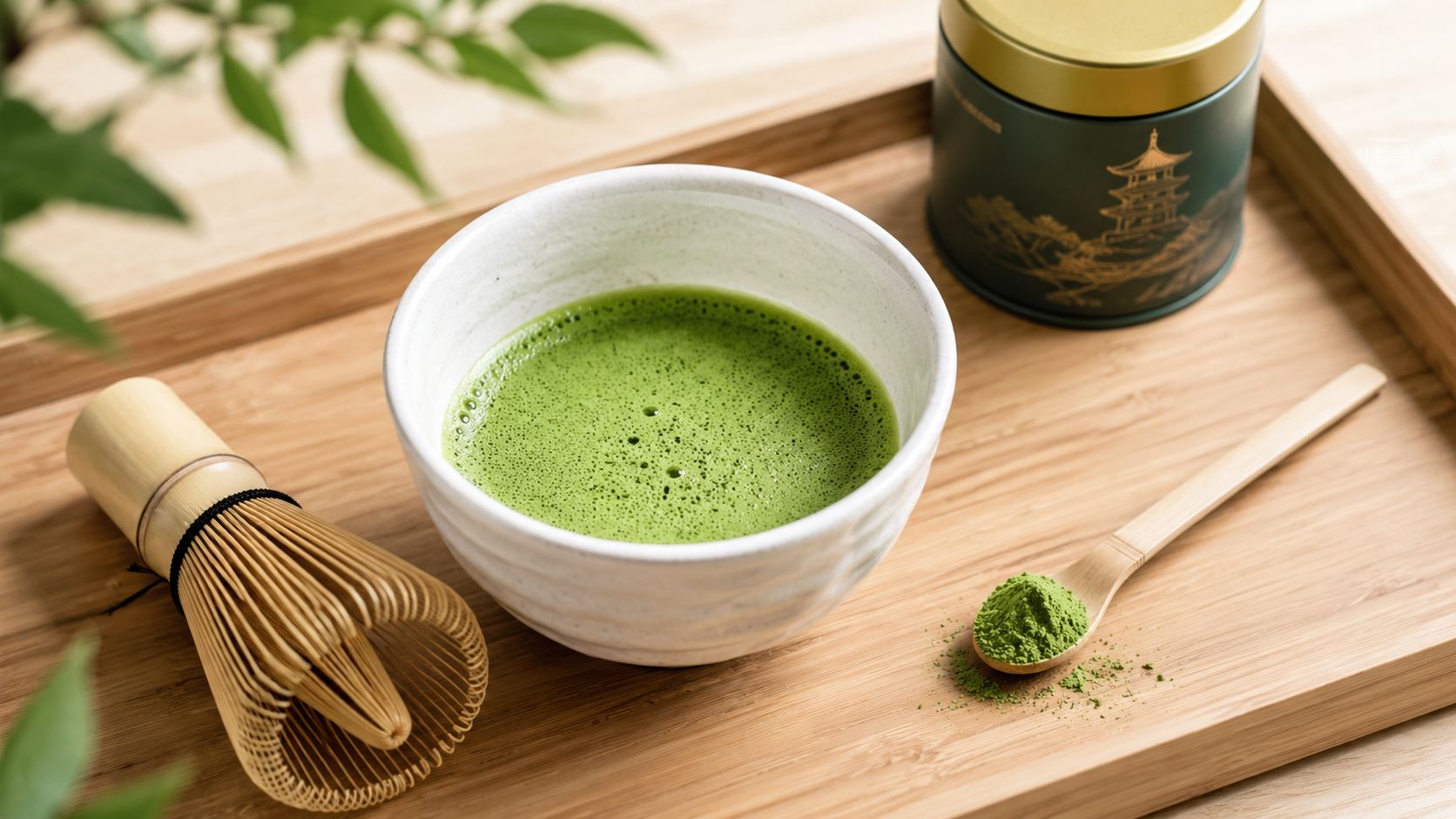
You're probably here because you want a better matcha than the dull, bitter powder sold in many supermarkets, but the labels aren't helping. “Ceremonial.” “Culinary.” “First harvest.” “Uji.” It can feel like every tin is asking you to already know the rules before you buy.
That's exactly where many first-time buyers get stuck. They want authentic Japanese matcha, but they also want something they'll enjoy every morning. Ujido Ceremonial Blend Matcha sits in that useful middle ground. It sounds premium because it is premium, but it's also made for real daily use, not just for a formal tea setting.
If you've been trying to figure out whether Ujido Ceremonial Blend Matcha is the right choice, the answer depends less on tea-snob labels and more on how you drink matcha. For many people, a well-made blend is the smarter buy.
Your Guide to Authentic Japanese Matcha
A common first purchase goes something like this. Someone decides to upgrade from café matcha lattes and starts searching online. Within minutes, they're comparing ceremonial grade, single origin, shaded leaves, stone-ground powders, and regional names they may not recognize. Instead of feeling closer to buying, they feel less confident.
That confusion makes sense. Matcha isn't just green tea in powder form. It comes with a long Japanese tradition, specialized growing methods, and modern product language that can blur the difference between authentic quality and clever packaging. If you want a solid starting point, it helps to begin with a product that is both rooted in Japanese tea culture and easy to use in everyday life.
Ujido Ceremonial Blend Matcha fits that role well. It gives you an entry into high-quality Japanese matcha without forcing you into a purist mindset that may not match how you drink tea at home. If you also want broader context on shopping for authentic Japanese foods online, this guide to Japanese food products online is a useful companion.
Many buyers don't need the most rigid definition of ceremonial matcha. They need matcha that tastes good, whisks well, and works whether they drink it plain or with milk.
That practical question matters more than people think. If your goal is a daily bowl in the morning, an afternoon iced matcha, or a homemade latte, a blend can be more useful than a stricter, more delicate powder that shines only in narrow conditions.
What Makes Ujido Ceremonial Blend Special
Ujido's identity starts with place. The brand says it was born in Kyoto's Uji region, an area strongly associated with premium matcha in Japan. For many shoppers, “Uji” appears on labels without much explanation. What matters is that this regional name carries weight because it connects the tea to a respected matcha-making tradition, not just to a pretty origin story.

Why ceremonial means more than a label
The word ceremonial often confuses beginners because it can sound absolute, as if a tea either qualifies for a sacred top tier or doesn't. In practice, the term matters because of its preparation lineage. Matcha's modern form traces back to a process refined in Japan. The history of matcha notes that Japanese tea farmers in Uji developed shading techniques in the 16th century to create tencha, the leaf material ground into matcha. That innovation is what produced the vivid green color and rich umami profile people now associate with high-quality ceremonial matcha.
So when Ujido uses ceremonial language, it isn't floating free from tradition. It's tied to the same Japanese cultivation and preparation lineage that shaped premium matcha as we know it.
Why the blend matters
Some buyers assume a blend is automatically a downgrade from a single-origin or all first-harvest powder. That's too simplistic. A blend can be a deliberate design choice.
Ujido describes its ceremonial blend as using first-harvest leaves for tenderness and umami, with second-harvest leaves adding a bolder, slightly more astringent edge, while also balancing flavor and affordability. That makes it easier to understand what this product is trying to do. It isn't pretending to be an ultra-delicate tea reserved only for formal whisking. It's built to be premium, consistent, and approachable.
If you want another perspective on how buyers evaluate Japanese matcha products, this review of Jade Leaf Matcha helps show how origin, grade, and use case affect the experience.
A good blend isn't a compromise by default. It's often a way to make quality matcha easier to enjoy in real kitchens, not just in ideal tasting conditions.
A Guide to the Tasting Profile and Quality
The easiest way to understand Ujido Ceremonial Blend Matcha is to taste it in your mind before you buy it. Think less about a single dramatic note and more about balance.

What the 80 and 20 blend does in the cup
Ujido states that its Ceremonial Blend Matcha is made from 80% first-harvest ceremonial-grade leaves and 20% second-harvest culinary-grade leaves, and that a 2 g serving contains about 30–45 mg of caffeine according to the brand's matcha help center. That one detail explains a lot about the drinking experience.
The first-harvest portion usually brings the softer side of matcha. With it come umami, a smoother body, and less roughness on the finish. The second-harvest portion contributes a stronger edge, which can help the flavor hold up better in milk.
For a daily drinker, that's useful. Straight whisked matcha still tastes premium, but the tea also keeps its character in a latte instead of fading into warm milk and sweetener.
What to look for when you open it
Quality matcha often signals itself before you drink it.
Look for these cues:
- Color first: A vivid green powder usually suggests careful cultivation and processing.
- Aroma next: You want a fresh, grassy scent with depth, not a stale or dusty smell.
- Texture matters: Fine powder should sift and whisk more easily, which helps reduce clumps.
- Taste balance: Good daily matcha shouldn't hit you with harsh bitterness right away.
This is also where many people misunderstand caffeine in matcha. They expect it to behave exactly like coffee. Ujido positions this blend as giving a steadier kind of lift, and the listed caffeine range supports that moderate, everyday-drinking profile.
If you want one matcha for both a quiet morning bowl and a weekday latte, balance matters more than purity language.
Who will like this profile most
This style tends to suit three kinds of buyers:
- New matcha drinkers: The flavor is easier to approach than a harsh lower-grade powder.
- Latte makers at home: The bolder edge helps the tea stay noticeable with milk.
- Daily tea drinkers: It offers a premium feel without demanding a ceremony every time.
How to Prepare Ujido Matcha Perfectly
Preparation changes your opinion of matcha fast. A good powder can seem disappointing if it's clumpy, overheated, or poorly whisked. The good news is that making a smooth bowl at home is simple once you know what each step is doing.

A simple traditional method
For a classic bowl of thin matcha tea, often called usucha, start with a small amount of powder in a bowl. Sifting matters because matcha naturally clumps, and those little lumps don't dissolve well just because you whisk harder.
Then add hot water that isn't boiling. Water that's too hot can flatten sweetness and push bitterness forward. Once the water is in, whisk briskly with a bamboo whisk in quick motions until the tea looks smooth and lightly frothy.
A practical routine looks like this:
- Sift the powder into your bowl.
- Add hot water, but not boiling water.
- Whisk quickly until the surface becomes smooth with a light foam.
- Drink immediately while the aroma and texture are at their best.
Where beginners usually go wrong
Most home mistakes come from one of three things:
- Skipping the sift: This leads to clumps that survive the whisk.
- Using boiling water: The tea can taste rougher than it should.
- Whisking too slowly: You want quick movement, not gentle stirring.
If you enjoy tea beyond matcha, this overview of oolong and jasmine tea is a helpful way to compare how different Asian teas reward different preparation styles.
Why this blend works beyond the tea bowl
Ujido describes its Ceremonial Blend as a “forever staple” that is “velvety, rich, and perfectly creamy for any kind of matcha creation” on the brand's product page. That wording matters because it matches how many international buyers use matcha.
This isn't only for formal whisking. It's also suitable for:
- Hot matcha lattes
- Iced matcha drinks
- Milk-based recipes
- Everyday morning tea
That flexibility is where the “blend” idea really earns its place. A stricter ceremonial powder may be lovely on its own but less practical if your normal routine includes oat milk, ice, or a slightly sweeter drink.
Here's a visual guide if you want to watch the whisking style in action.
Use the matcha you have the way you actually live. If your favorite cup is a latte, a versatile blend may serve you better than a more delicate powder.
Storing Pairing and Enjoying Your Matcha
Matcha is sensitive. Even a good product can lose its charm if you store it casually in a warm kitchen beside the stove.

How to keep it tasting fresh
Your main job is to protect the powder from air, light, heat, and moisture. An airtight container helps preserve flavor and color, and a cool, dry place is better than a bright counter near a kettle.
A simple storage checklist:
- Seal it well: Matcha picks up air and moisture easily.
- Keep it away from light: Bright light can dull both color and aroma.
- Avoid heat sources: Warm shelves and sunny windows speed up quality loss.
- Use clean tools: Moist or dirty scoops affect flavor over time.
What to eat with it
Matcha doesn't need a complicated pairing. It pairs well with foods that soften its grassy edge or highlight its gentle sweetness.
Try it with:
- Mochi or wagashi: Traditional Japanese sweets make the tea feel more ritual-like.
- Shortbread: The buttery texture works well with matcha's savory depth.
- White chocolate: Its sweetness can round out the tea nicely.
- Light afternoon snacks: A plain biscuit or mild pastry is often enough.
If you enjoy exploring Japanese drinks more broadly, this guide to non-alcoholic Japanese drinks gives useful context for how matcha fits into everyday Japanese beverage culture.
Why Choose Ujido and Where to Buy
Ujido Ceremonial Blend Matcha makes the most sense for people who want one product that covers real life well. If you're new to matcha, it gives you an authentic starting point without demanding expert-level preparation to taste good. If you drink matcha often, it offers a profile that can move between a plain whisked bowl and a latte without feeling out of place.
Who this matcha suits best
This is a strong fit for:
- First-time premium matcha buyers who want authentic Japanese origin and a more forgiving taste
- Daily drinkers who don't want every cup to feel like a special-occasion tea
- Home café fans who make lattes and iced drinks regularly
- Practical shoppers who care about quality but also want value
Ujido was described as being born in Kyoto's Uji region of Japan, with an emphasis on traditional Japanese methods in this Ujido matcha review. That regional grounding is important because it links the product to a widely respected tea area. Just as important, the blend of first and second harvests makes that style of quality more accessible.
Why the blend is the smart choice
A lot of buyers chase “pure ceremonial” because they think it's automatically the best answer. But “best” depends on use.
If you mostly drink matcha plain in a quiet morning ritual, you may eventually want to explore narrower, more delicate styles. But if you want a matcha that performs well across several habits, Ujido's blend is often the smarter pick. It keeps one foot in premium Japanese tea culture and one foot in modern daily drinking.
That's why the blend idea deserves more respect. It isn't lesser by definition. For many international consumers, it's the practical sweet spot.
If you're also comparing where to shop for genuine Japanese products in general, this guide on where to buy Japanese snacks touches on the wider issue of authenticity and trusted sourcing.
If you're ready to try authentic Japanese matcha without overcomplicating the choice, Buy Me Japan is a reliable place to shop. The store focuses on genuine Japanese products shipped directly from Japan, which makes it a strong option for international buyers who care about authenticity, quality control, and access to trusted Japanese brands.


Share:
Milky Candy Fujiya: A Guide to Japan's Famous Sweet
Japanese Symbols for Happiness: Meanings & Charms