


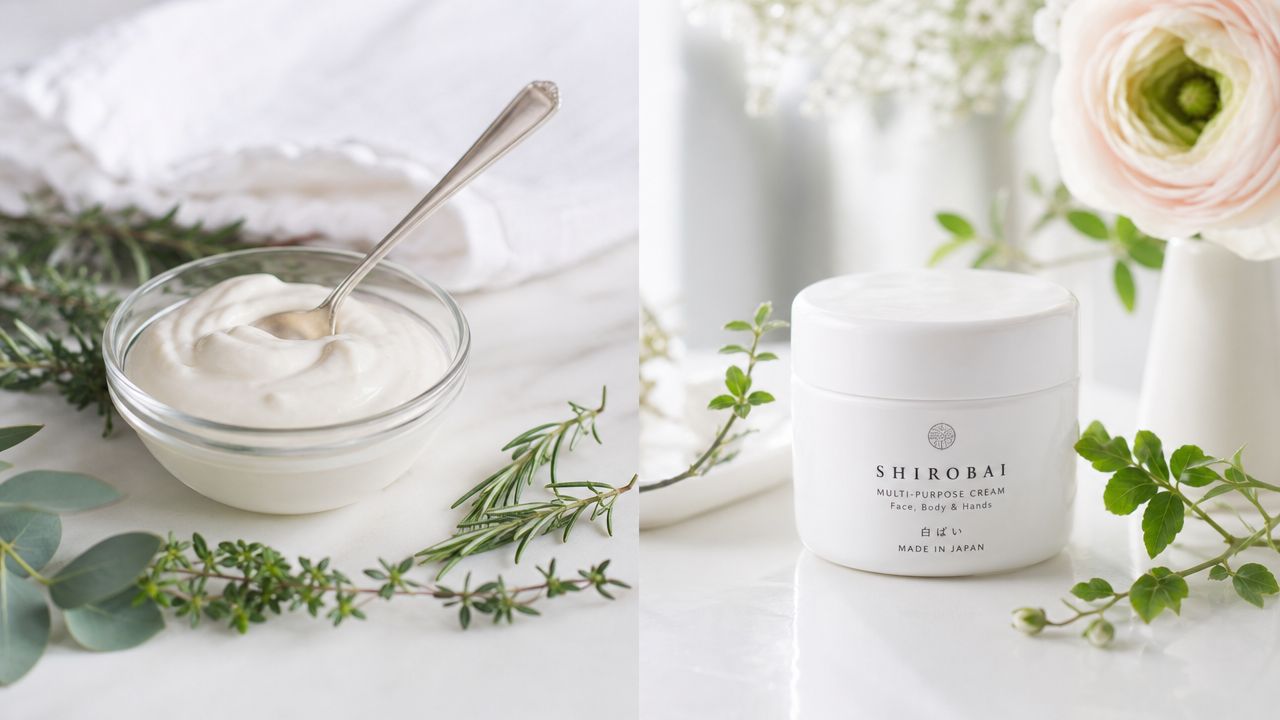
La crème tout usage est généralement une crème laitière avec 30 % à 36 % de matière grasse, ce qui la rend utile en cuisine mais pas idéale pour être fouettée. Dans les contextes beauté, la même expression peut désigner une crème de soin multi-usage, donc le bon choix dépend de si vous êtes dans la cuisine ou en train de lire une étiquette de produit japonais.
Si vous avez déjà regardé une recette, un carton d’épicerie ou une page de beauté japonaise et vous êtes demandé pourquoi la même étiquette semble avoir deux significations différentes, vous n’êtes pas seul. J’ai passé des années à déchiffrer les étiquettes de crème sur différents marchés, et la confusion commence généralement par une hypothèse simple : qu’un nom de crème vous dit exactement ce qu’elle fait.

Ce que signifie réellement la crème tout usage
La façon la plus simple de comprendre ce qu’est la crème tout usage est qu’il s’agit d’une crème avec une description de fonction large. En cuisine, l’expression désigne généralement une crème laitière avec 30 % à 36 % de matière grasse, assez riche pour apporter du corps et de la douceur, mais pas conçue pour être fouettée de manière stable. Cette gamme intermédiaire explique pourquoi elle est utilisée dans les sauces, desserts, soupes et boissons, et pas seulement pour un usage restreint Wisdom Lib.
Deux significations, une étiquette confuse
Les mêmes mots peuvent désigner quelque chose de complètement différent en soins de la peau. Sur une étiquette de beauté japonaise, « tout usage » peut signifier une crème multi-usage conçue pour la peau, pas un ingrédient laitier, d’où l’importance du contexte plus que de la phrase seule. Un carton dans le rayon laitier et un pot sur une coiffeuse ne remplissent pas la même fonction, même si le nom semble similaire.
La crème en tant que catégorie alimentaire a une longue histoire, mais la crème moderne est définie plus clairement grâce à la normalisation de la transformation laitière et à la classification des matières grasses Bakerpedia. Cela explique pourquoi la version culinaire est familière dans les supermarchés et varie légèrement d’une région à l’autre. Le terme est pratique, pas décoratif, et il vous indique comment le produit est fabriqué et vendu.
Règle pratique : si le produit est à côté du lait, du beurre ou de la crème culinaire, considérez-le comme un ingrédient culinaire. S’il est à côté des hydratants ou des crèmes pour le visage, considérez-le comme un soin de la peau.
Pour les lecteurs qui naviguent entre les rayons alimentation et beauté, une comparaison utile est une crème topique douce comme une crème corporelle naturelle de beautysecrets.agency crème corporelle naturelle de beautysecrets.agency. Cela montre pourquoi le contexte est important, car les crèmes pour la peau sont conçues pour la sensation et l’hydratation, pas pour les sauces ou les crèmes dessert.
Si vous essayez déjà de déchiffrer les étiquettes des soins de la peau japonais, notre guide sur la différence entre tonique et essence vous aidera à comprendre ce type de confusion d’étiquetage. Les noms de produits peuvent être trompeurs en beauté, tout comme en cuisine.
Comment la crème polyvalente est fabriquée et ce qu’elle contient
Pourquoi une crème s’écoule-t-elle comme une base de sauce, tandis qu’une autre est destinée à rester sur une cuillère ou à finir un plat ? La réponse commence par la façon dont le produit est séparé, standardisé et mélangé avant d’arriver en rayon.
La crème polyvalente commence avec la couche de lait la plus grasse, puis est ajustée pour que chaque carton se comporte de manière assez prévisible en cuisine. La séparation industrielle est importante ici, car les séparateurs centrifuges rendent la crème plus homogène et évolutive que l’écumage naturel ne pourrait jamais l’être. C’est une des raisons pour lesquelles les cuisiniers modernes peuvent l’utiliser avec confiance, quelle que soit la marque ou le marché.
Pourquoi l’émulsion est importante
Dans le carton, la matière grasse du lait est dispersée dans une phase aqueuse et maintenue par des émulsifiants et des stabilisants Food Research Lab. Cette structure explique la texture et la façon dont la crème s’écoule. Elle est assez épaisse pour enrober une cuillère, assez lisse pour se mélanger aux plats chauds, et moins susceptible de se séparer qu’un produit laitier plus liquide.
La plage de 30 % à 36 % de matière grasse est la fourchette technique qui donne à la crème son caractère culinaire Wisdom Lib. Elle apporte assez de richesse pour porter la saveur et enrober les ingrédients, tout en restant stable pour la cuisson à feu doux. Dans les sauces et les soupes, cet équilibre aide à créer une finition plus soyeuse sans alourdir le plat de manière maladroite.
Beaucoup de cuisiniers amateurs pensent que la crème est surtout une question de goût, mais c’est la texture qui justifie sa place dans le garde-manger. La matière grasse augmente la viscosité, de sorte que la crème adhère aux pâtes, aux légumes et aux bases de dessert au lieu de se fondre dedans. Elle aide aussi la crème à mieux supporter la chaleur que les produits laitiers plus liquides, ce qui la fait agir autant comme un outil de cuisson qu’un ingrédient.
Astuce de cuisine : si un plat nécessite de la richesse pendant la cuisson à feu doux, la crème polyvalente a généralement plus de sens qu'une crème destinée à être montée ou utilisée en garniture.
Si vous constituez un garde-manger à la maison autour des sauces ou des desserts cuits au four, les ustensiles de cuisine comptent aussi. Une casserole robuste et un fouet fiable font une plus grande différence que beaucoup ne le pensent, et ce guide explorant les listes de contrôle pour l'achat d'ustensiles de cuisine est un rappel utile pour adapter la casserole à la tâche.
Pour les lecteurs qui consultent également du contenu sur la nourriture japonaise sur Buy Me Japan, cette même réflexion pratique s'applique aux ingrédients de base en cuisine. Une crème polyvalente appartient à la même catégorie que les essentiels du garde-manger, et non comme un produit spécialisé que l'on ouvre une seule fois. Pour un exemple lié à la façon dont les étiquettes alimentaires varient selon les usages, consultez le guide du pain perdu japonais.
Utilisations culinaires quotidiennes à essayer cette semaine
La crème polyvalente est la plus adaptée quand une recette demande douceur, corps et finition crémeuse sans texture fouettée. Une soupe de tomates en semaine en est un bon exemple. Incorporer la crème vers la fin adoucit l’acidité et donne une bouche plus ronde, surtout si la base a mijoté avec de l’ail, de l’oignon ou des herbes.
Où elle s’intègre le mieux en cuisine
Elle fonctionne aussi bien dans les sauces en poêle pour poulet ou poisson, car la crème aide à lier les sucs et les assaisonnements dans la poêle. Les plats de pâtes en profitent aussi, surtout quand l’objectif est une sauce nappante et brillante plutôt qu’une finition épaisse à la Alfredo. Dans les deux cas, la stabilité à la chaleur de la crème fait la majeure partie du travail.
Les desserts sont un autre usage naturel. Les crèmes, tartes froides, panna cotta et cheesecakes sans cuisson bénéficient tous d’une crème qui apporte de la richesse sans exiger une structure fouettée. Le résultat est généralement plus lisse et moins fragile qu’un dessert à base de garniture.
Si vous voulez une règle pratique, utilisez la crème polyvalente quand la recette demande de l’humidité et de la richesse, pas de l’air. C’est pourquoi elle remplace souvent la crème plus épaisse dans les plats cuisinés où la fouettée n’est pas prévue. La saveur est généreuse, mais la texture reste maîtrisée.
Un simple remplacement peut sauver une recette, mais cela fonctionne mieux dans les plats cuisinés où la crème doit fondre, pas tenir seule.
Pour les lecteurs qui aiment préparer un brunch à la maison, notre guide du pain perdu japonais est un compagnon utile, car les recettes à base de crème reposent souvent sur la même logique douce et riche des produits laitiers.
Lorsque vous parcourez les ingrédients de cuisine japonais sur Buy Me Japan, cette même polyvalence est une des raisons pour lesquelles les produits à base de crème restent utiles dans les repas quotidiens. Ils conviennent aussi bien à la cuisine sucrée que salée sans nécessiter d’occasion spéciale.
Crème polyvalente comparée à la crème fouettée et à la crème épaisse
Le rayon peut vite devenir confus, donc la façon la plus claire de trier les options est par niveau de matière grasse et par l’usage de chaque crème en cuisine. La crème polyvalente se situe au milieu. La crème fouettée et la crème épaisse sont plutôt destinées à l’aération, la garniture et le maintien de la forme, tandis que des produits plus légers comme la crème simple et la moitié-moitié se comportent différemment à la chaleur et en texture.
Crème polyvalente vs autres crèmes courantes
| Type de crème | Pourcentage approximatif de matière grasse | Meilleure utilisation | Se fouette bien ? |
|---|---|---|---|
| Crème polyvalente | 30 % à 36 % | Cuisine, sauces, soupes, desserts | Non |
| Crème fouettée | Environ 30 % à 35 % | Pics mous à moyens, garnitures, desserts | Oui, dans une certaine mesure |
| Crème épaisse | Environ 36 % à 40 % | Pics fermes, glaçage, garnitures riches | Oui |
| Crème simple | Moins que la crème fouettée | Sauces légères, verser | Pas habituellement |
| Crème moitié-moitié | Beaucoup plus léger que la crème | Café, cuisine légère | Non |
La crème épaisse monte en pics fermes car sa structure grasse plus élevée emprisonne mieux l’air et le maintient en place. La crème à fouetter peut encore garder une certaine forme, mais le résultat est plus doux et moins stable. La crème polyvalente se situe entre les deux, elle se comporte donc plus comme une crème de cuisson que comme une crème à dessert Recipes.net.
Ce que les acheteurs se trompent
L’erreur la plus courante est d’acheter de la crème polyvalente en s’attendant à ce qu’elle se comporte comme de la crème épaisse. C’est là que commence la déception, car cet ingrédient est conçu pour enrichir les plats, pas pour créer une mousse. Si un dessert dépend du volume, de l’air ou d’une finition haute et dressée, ce n’est pas l’outil adapté.
Si l’objectif est une soupe crémeuse, une sauce pour pâtes ou une crème cuite au four, la gamme moyenne est souvent exactement ce qu’il faut. Elle apporte du corps sans alourdir le plat. C’est pourquoi l’étiquette « polyvalente » a plus de sens en cuisine qu’en nappage.
Pour les acheteurs comparant des produits d’épicerie importés du Japon, le nom des produits nécessite du contexte. Une crème qui fonctionne parfaitement sur un marché peut nécessiter un substitut différent sur un autre, donc le pourcentage de matière grasse et l’usage prévu comptent plus que l’étiquette avant. Pour un exemple pratique de ce type de traduction culinaire, le guide du substitut de saké montre comment les noms d’ingrédients peuvent changer sans prévenir selon les marchés.
Pourquoi la crème polyvalente ne monte pas et que faire à la place
La crème polyvalente ne monte pas bien car sa structure grasse est conçue pour être versée et cuisinée, pas pour tenir des pics stables. La crème peut toujours apporter du corps à une sauce ou une garniture, mais elle n’a pas le même comportement de rétention d’air qui permet à la crème fouettée de garder sa forme. C’est pourquoi elle reste généralement molle, fluide ou s’effondre dès que vous essayez d’en faire un nappage.
Ce qui se passe quand vous essayez quand même
Si vous la fouettez comme de la crème épaisse, la texture peut changer au début, puis devenir granuleuse, aqueuse ou incapable de rester montée. C’est un problème de recette, pas une erreur de technique. La crème est plus à l’aise à la chaleur, où elle se mélange aux soupes et sauces, qu’au bol où l’objectif est une mousse durable.
Pour les desserts qui ont besoin de volume, utilisez de la crème épaisse ou un autre produit conçu pour être fouetté. Si la crème polyvalente est le seul produit laitier dont vous disposez, choisissez des desserts qui misent sur la douceur plutôt que sur la fermeté. Les garnitures froides, les crèmes pâtissières et les couches sans cuisson sont généralement plus indulgents, car ils ne dépendent pas d’une finition haute et aérienne.
Quelques astuces pratiques
- Utilisez une base laitière différente : la crème épaisse est le choix le plus pur pour les desserts fouettés.
- Ajoutez de la structure : le fromage à la crème peut aider une garniture à tenir ensemble.
- Gardez-le au frais : les mélanges froids se comportent mieux dans les desserts sans cuisson.
- Acceptez le changement de texture : parfois, le meilleur résultat est un dessert plus crémeux, pas plus aérien.
Si vous comparez les étiquettes entre catégories d’aliments, un guide de substitution pour le saké montre le même type de problème de traduction d’ingrédients, où le nom sur l’emballage importe moins que la fonction que l’ingrédient est censé remplir.
La crème tout usage comme incontournable des soins japonais
Dans la beauté japonaise, une crème tout usage est généralement une crème de soin multi-usage, pas un ingrédient laitier. L’idée est plus simple que ce que laisse entendre l’étiquette : un produit qui peut hydrater, protéger la barrière cutanée et parfois servir de base légère pour le maquillage. Cela la rend utile pour ceux qui veulent moins d’étapes sans renoncer au confort.

Ce que ces crèmes contiennent généralement
Les crèmes japonaises polyvalentes combinent souvent de l’eau, des humectants comme la glycérine et l’acide hyaluronique, des huiles végétales et des émulsifiants doux. La formule est conçue pour être assez légère pour un usage quotidien tout en laissant la peau douce. Pour les peaux sèches ou sensibles, cet équilibre peut être particulièrement utile.
L’ordre dans la routine est simple. Utilisez-la après la lotion tonique et le sérum, puis appliquez un écran solaire le matin. Le soir, elle peut servir d’étape finale d’hydratation si votre peau n’a pas besoin d’une couche occlusive plus épaisse.
Règle de routine : si une crème remplit trop de fonctions, elle doit quand même rester agréable sur la peau, sans être collante ni grasse.
Parmi les options populaires de soins japonais que vous pouvez trouver via Buy Me Japan figurent Hada Labo, Minon, Naturie et Cezanne. Hada Labo est souvent choisi par ceux qui veulent une sensation d’hydratation prioritaire, Minon est un nom reconnu par beaucoup de personnes à la peau sensible, Naturie est un style courant de crème hydratante quotidienne économique, et Cezanne est souvent préféré pour un usage simple et pratique. Si vous réduisez vos options, notre guide pour trouver la meilleure crème hydratante japonaise pour votre peau vaut le détour.
Ici, la valeur d’acheter directement du Japon réside dans la clarté et l’authenticité. Lorsque les étiquettes sont traduites de manière incohérente selon les marchés, l’approvisionnement direct aide à réduire les suppositions, surtout pour les acheteurs qui comparent textures, listes d’ingrédients et versions de marques. C’est là que Buy Me Japan peut être une option pratique pour les acheteurs internationaux de soins de la peau à la recherche de produits japonais fiables.
Choisir la bonne crème et la conserver correctement
La meilleure façon de choisir est de commencer par le rayon, pas par l'étiquette. En cuisine, cherchez la gamme 30 % à 36 % de matières grasses et vérifiez la date de péremption avant d’acheter. En soins de la peau, lisez d’abord la liste des ingrédients, surtout si votre peau réagit facilement aux parfums ou aux huiles lourdes.
Une liste de contrôle simple pour l’achat
- Pour la cuisine : choisissez une crème laitière réfrigérée avec le bon taux de matière grasse pour sauces ou desserts.
- Pour la peau : privilégiez des formules douces et sans parfum si vous êtes sensible.
- Pour une première utilisation : faites un test cutané avec toute nouvelle crème visage sur l’avant-bras.
- Pour les produits importés : vérifiez si le produit est alimentaire ou cosmétique avant de l’ajouter à votre panier.
Le stockage se divise aussi clairement par catégorie. La crème culinaire doit être conservée au réfrigérateur, et une fois ouverte, elle doit être utilisée rapidement. Les crèmes de soin sont généralement stables à température ambiante jusqu’à ouverture, puis conservées dans un endroit frais et sec, à l’abri de la lumière directe.
Si vous stockez déjà vos sérums avec soin, la même logique s’applique ici. Notre guide sur le stockage du sérum à la vitamine C rappelle bien que la chaleur et la lumière peuvent modifier le comportement des produits de beauté avec le temps.
Pour les acheteurs qui essaient de distinguer les deux sens de la crème tout usage, voici le test le plus simple. Si elle est destinée à aller dans une poêle, elle appartient au rayon laitier. Si elle est destinée à être appliquée sur le visage, elle fait partie de la routine de soins.
Points clés et questions fréquentes
La crème tout usage est soit une crème de cuisine avec 30 % à 36 % de matière grasse, soit une crème de soin multiusage, selon le marché et le rayon. La version culinaire apporte richesse et stabilité à la chaleur, tandis que la version soin est conçue pour hydrater et simplifier une routine. La plus grande erreur est de supposer que ce nom signifie la même chose partout.
La crème tout usage peut-elle être congelée ? Pour la crème de cuisine, la congélation est possible dans certains cas, mais la texture peut changer après décongélation. Peut-elle remplacer la crème épaisse en pâtisserie ? Parfois dans des recettes cuites ou au four, mais pas quand le dessert nécessite une structure fouettée ferme. La crème japonaise multiusage est-elle sûre pour les peaux sujettes à l’acné ? Cela dépend de la formule, donc un test cutané et la vérification de la liste des ingrédients sont plus importants que le seul nom de la marque.
Où acheter des crèmes japonaises authentiques en ligne ? Un détaillant japonais direct est la solution la plus simple quand vous voulez une origine claire des produits et moins de confusion sur les versions. Si vous souhaitez comparer les soins de la peau japonais par texture, usage et marque, Buy Me Japan est un point de départ pratique car il se concentre sur des produits japonais expédiés directement du Japon.
Si vous comparez des ingrédients laitiers ou des soins de la peau japonais et souhaitez éviter toute confusion sur les étiquettes, parcourez Buy Me Japan pour des produits japonais authentiques avec des détails clairs par catégorie. C’est une façon simple de faire vos achats de soins de la peau, de beauté et de produits japonais du quotidien quand vous voulez un produit authentique, et non une supposition basée sur une traduction.


Comparter:
Soin des pieds à la pierre ponce : un guide sûr à domicile
Recourbe-cils Koji : Guide japonais de la perfection des cils