


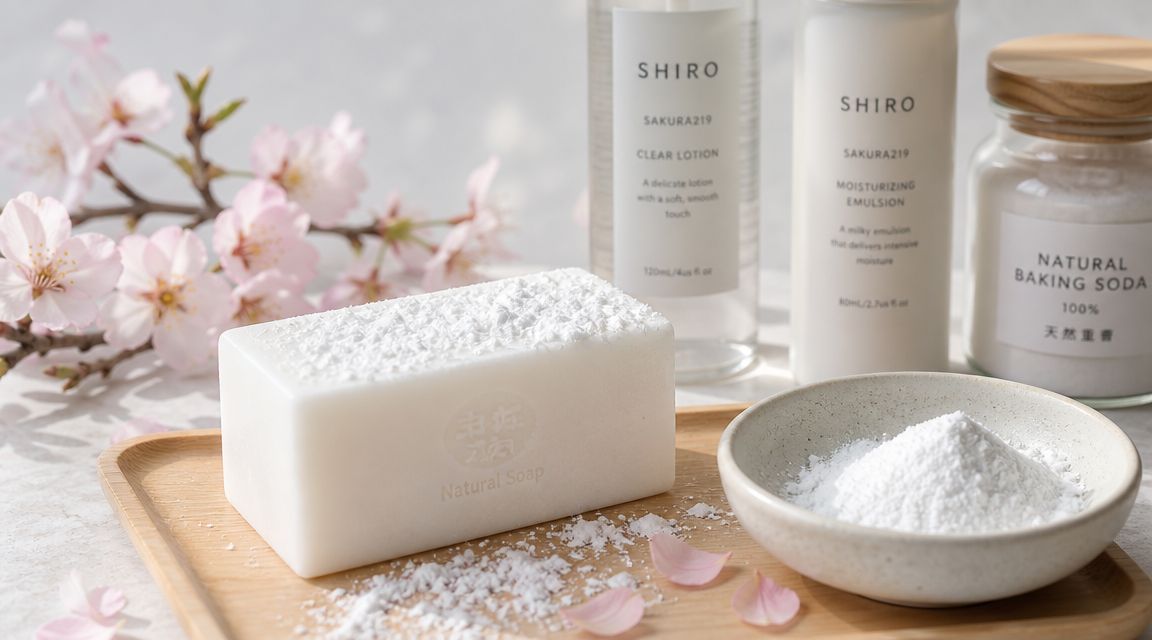
Probabilmente hai visto l’affermazione che il sapone al bicarbonato di sodio lascia la pelle “super pulita”, aiuta con gli odori e persino libera i pori. All’inizio sembra sensato. Il bicarbonato di sodio è presente nelle cucine e nei bagni da generazioni, quindi appare familiare e innocuo.
Questo è il punto debole dei consigli fai-da-te abituali. Qualcosa può essere utile in casa e comunque non essere adatto alla pelle del viso. Nella cura della pelle giapponese, questa distinzione è molto importante. I formulisti si concentrano di solito sulla detersione senza spingere troppo la pelle fuori equilibrio.
Se sei curioso riguardo al sapone al bicarbonato di sodio, questa guida ti offre la versione in chiaro. Vedrai perché sembra funzionare, da dove deriva il rischio e quali alternative giapponesi hanno più senso se il tuo vero obiettivo è avere pori più puliti, meno sebo e una pelle più calma.
La verità sul sapone al bicarbonato di sodio per la pelle
Molte persone arrivano al sapone al bicarbonato di sodio seguendo un ragionamento molto normale. Usano il bicarbonato in cucina, notano che aiuta con gli odori, poi si chiedono se possa aiutare anche con il cattivo odore corporeo, la pelle grassa o i pori ostruiti.
Quella logica non è nata dal nulla. Il bicarbonato di sodio è diventato un prodotto di uso comune dopo la sua prima produzione di massa negli Stati Uniti nel 1846, e in seguito è diventato noto non solo per la cucina ma anche per la pulizia e la deodorazione, il che spiega perché ancora oggi molte persone lo sperimentano nella cura personale fai-da-te (storia del bicarbonato di sodio).

Perché la gente pensa che funzioni
L’attrattiva è facile da capire:
- Dà una sensazione di potenza: La pelle spesso appare molto liscia subito dopo l’uso.
- Riduce gli odori: Il bicarbonato di sodio può neutralizzare gli odori acidi.
- Sembra naturale: Un ingrediente da dispensa può sembrare più sicuro di un detergente creato in laboratorio, anche quando in pratica non è così.
Quella sensazione di “pulito” è dove molti lettori si confondono. Quando un detergente rimuove troppo olio, la pelle può sentirsi tesa, scricchiolante e opaca. Le persone spesso interpretano quella sensazione come prova che il prodotto ha funzionato bene.
“Pulito fino a scricchiolare” non è sempre un buon segno. Sulla pelle, può significare che la superficie protettiva è stata disturbata.
Dove inizia il problema
Il sapone al bicarbonato di sodio non è automaticamente una cosa sola. Alcuni prodotti usano il bicarbonato di sodio come piccola parte di una formula progettata professionalmente. Questo è molto diverso dal strofinare una pasta fatta in casa sul viso.
Un detergente accuratamente formulato può bilanciare la texture, gli agenti detergenti, la sensazione al risciacquo e il rischio di irritazione. Una miscela fai-da-te di solito non ci riesce. Ecco perché lo stesso ingrediente può essere accettabile in un prodotto e aggressivo in un altro.
Se stai considerando il sapone al bicarbonato perché vuoi una pelle più liscia, meno sebo o pori dall'aspetto più pulito, la domanda principale non è “Il bicarbonato fa qualcosa?” Lo fa. La domanda migliore è se fa la cosa giusta per la pelle del viso senza causare nuovi problemi.
La scienza del bicarbonato sulla tua pelle
Il modo più semplice per capire il sapone al bicarbonato è pensare alla tua pelle come a uno scudo protettivo sottile. I professionisti della skincare spesso chiamano questo il mantello acido. Aiuta la pelle a rimanere confortevole, trattenere l'umidità e difendersi dall'irritazione.
La pelle sana rimane leggermente acida, di solito intorno a pH 4.5 a 5.5, mentre il bicarbonato in acqua è intorno a pH 8.3. Questa discrepanza può disturbare la barriera cutanea e portare a secchezza e irritazione (pH della pelle e pH del bicarbonato).

Cosa succede durante il lavaggio
Ecco la versione breve di cosa succede quando il sapone al bicarbonato tocca la pelle:
- Il pH della superficie si sposta verso l'alto
- I lipidi della pelle vengono disturbati
- L'acqua evapora più facilmente
- La pelle può reagire con tensione, desquamazione o bruciore
Ecco perché un lavaggio casalingo con bicarbonato può sembrare piacevole per qualche minuto, poi lasciare il viso scomodo più tardi durante la giornata.
Perché può sembrare utile all'inizio
Il bicarbonato può tagliare un po' di sebo e neutralizzare qualche residuo acido. Se la tua pelle è unta o sudata, quell'effetto può sembrare subito impressionante. Ma il beneficio a breve termine e la compatibilità a lungo termine non sono la stessa cosa.
Un'analogia semplice aiuta qui. Se la barriera cutanea è come un impermeabile leggero, il bicarbonato agisce meno come un sapone delicato e più come qualcosa che rovina il tessuto. Puoi rimuovere lo sporco, ma indebolisci anche il cappotto.
Regola pratica: Se un detergente lascia il viso che tira invece che confortevole, la tua pelle potrebbe pagare un prezzo troppo alto per quella sensazione di pulito.
Perché i detergenti formulati professionalmente si comportano diversamente
Un detergente giapponese progettato per pelli grasse o soggette a pori dilatati di solito non si basa sulla forza bruta. Spesso combina tensioattivi, polveri, enzimi, argille o umettanti in modo che la formula pulisca a fondo senza sbilanciare troppo la pelle.
Questo è uno dei motivi per cui molte persone che passano da una pulizia fai-da-te aggressiva a routine strutturate notano meno irritazioni nel tempo. Se vuoi una spiegazione più chiara su come gli ingredienti detergenti più forti si confrontano con i lavaggi esfolianti per il viso, questa guida su AHA facial wash nella skincare giapponese è una lettura utile.
Il punto chiave è semplice. Il sapone al bicarbonato può rimuovere il sebo, ma la pelle del viso ha bisogno di più della semplice rimozione del sebo. Ha bisogno di una pulizia che rispetti la barriera da cui dipende ogni giorno.
Benefici potenziali e principali rischi per la cura della pelle
Se siamo onesti, il sapone al bicarbonato non è inutile. In acqua, il bicarbonato di sodio si aggira tipicamente intorno a pH 8,1-8,6, il che aiuta a spiegare perché può funzionare come deodorante e leggero esfoliante. Quella stessa alcalinità può anche seccare eccessivamente la pelle sensibile se usata in modo improprio (proprietà del bicarbonato di sodio).
Questo è il compromesso in una frase. Le qualità che lo fanno sembrare efficace sono strettamente legate a quelle che possono renderlo aggressivo sulla pelle.
I vantaggi limitati
Un lettore potrebbe notare alcuni benefici a breve termine:
- Controllo degli odori: Può aiutare a neutralizzare alcuni odori acidi.
- Sensazione di riduzione del sebo: Può ridurre l'olio superficiale pesante.
- Effetto leggermente esfoliante: In alcune texture può sembrare leggermente esfoliante.
Questi benefici hanno più senso su aree del corpo più resistenti che sul viso.
Gli svantaggi maggiori
I rischi per il viso sono più difficili da ignorare:
- Disgregazione della barriera: La pelle può perdere rapidamente comfort.
- Chiazze secche: Sensazione di tensione e desquamazione sono lamentele comuni con una pulizia troppo alcalina.
- Maggiore sensibilità: Altri prodotti possono pizzicare di più dopo l'uso.
- Risposta confusa all'acne: La pelle può sembrare meno grassa all'inizio, poi diventare irritata o reattiva.
Se stai confrontando filosofie degli ingredienti, Fillaree ha un articolo riflessivo su come scegliere un sapone antibatterico naturale utile per pensare oltre il “naturale uguale delicato.”
Sapone fai-da-te al bicarbonato di sodio vs detergente enzimatico giapponese
| Caratteristica | Sapone fai-da-te al bicarbonato di sodio | Detergente enzimatico giapponese (es. Suisai, Keana) |
|---|---|---|
| Approccio principale | Ingrediente alcalino da dispensa usato direttamente | Detergente formulato professionalmente per uso facciale |
| Sensazione sulla pelle dopo il lavaggio | Spesso molto sgrassante o che lascia la pelle che scricchiola | Di solito più pulito ma più controllato |
| Stile di esfoliazione | Più ruvido, meno prevedibile | Più mirato e dipendente dalla formula |
| Compatibilità con la barriera cutanea | Maggiore rischio di secchezza e irritazione | Generalmente più adatto all'uso ripetuto sul viso |
| Caso d'uso migliore | Uso occasionale per odori non facciali o scrub | Pori, eccesso di sebo, opacità, pulizia regolare |
| Facilità di consistenza | Varia ogni volta che lo mescoli | Coerenza da un uso all’altro |
Per chi ha la pelle facilmente irritabile, questa guida alla skincare giapponese per pelli sensibili è una direzione molto migliore rispetto a sperimentare detergenti alcalini fatti in casa.
Una ricetta fai-da-te semplice e guida per un uso sicuro
Alcuni vogliono comunque una ricetta, quindi ecco il modo più sicuro per proporla. Usala per aree ruvide come i piedi o come scrub deodorante per il corpo di breve durata. Non usarla come detergente per il viso.
Questa distinzione è importante. La pelle del viso è meno tollerante rispetto a talloni, gomiti o zone del corpo da risciacquare.
Un uso fai-da-te più sicuro non per il viso
Prova questo come scrub per piedi o aggiunta per pediluvio:
- Per uno scrub semplice: Mescola una piccola quantità di bicarbonato con un po’ di acqua tiepida fino a ottenere una pasta morbida.
- Per un pediluvio: Aggiungi bicarbonato a acqua tiepida, non molto calda, e immergi i piedi per poco tempo.
- Dopo: Risciacqua bene e applica una crema idratante sulla zona.
Il bicarbonato di sodio inizia a decomporsi intorno a 80-100°C, rilasciando anidride carbonica. In termini pratici di fai-da-te, aggiungerlo a liquidi molto caldi può modificare il suo comportamento chimico e alterare la consistenza finale di ciò che stai preparando (stabilità termica del bicarbonato di sodio).
Regole di sicurezza più importanti della ricetta
Segui queste regole ogni volta:
- Evita il viso: Questo è il punto più importante.
- Fai prima un test su una piccola area: Prova una piccola zona sul braccio o sul corpo prima di un uso più esteso.
- Usa acqua tiepida: L’acqua molto calda non è utile in questo caso.
- Fermati al primo segno di irritazione: Rossore, prurito, bruciore o secchezza insolita indicano che non è adatto.
- Idrata dopo il risciacquo: La pelle più resistente del corpo ha comunque bisogno di supporto dopo lo scrub.
Se il tuo obiettivo è una pelle del viso più liscia, non lasciare che una ricetta per scrub corpo diventi un esperimento per il detergente viso.
Chi ama le sostituzioni pratiche per la casa potrebbe apprezzare anche questo articolo su alternative sicure alle pastiglie per lavastoviglie. È un buon promemoria che il fai-da-te domestico e il fai-da-te per la skincare non seguono le stesse regole di sicurezza.
Per una pulizia fisica delicata del viso, una soluzione migliore è una texture pensata per la pelle, come una spugna konjac nella skincare giapponese, che è uno strumento molto più adatto di una pasta di bicarbonato.
Alternative più intelligenti dalla skincare giapponese
Quando si considera il sapone al bicarbonato, quattro risultati sono comunemente desiderati. Porri più puliti, meno olio, texture più liscia o una sensazione di freschezza. Puoi puntare a questi obiettivi senza usare un metodo fai-da-te grezzo.
La skincare giapponese è particolarmente efficace qui perché molti detergenti separano l'obiettivo dal danno. Invece di costringere la pelle a sentirsi privata, cercano di pulire a fondo mantenendo la formula più tollerabile.

Se sei stato attratto dal bicarbonato per i pori
Un esempio forte è Keana Nadeshiko Baking Soda Scrub Wash 100g. Il contesto dell'ingrediente è fondamentale. Usa il bicarbonato all'interno di un detergente per il viso invece di chiederti di applicare una pasta fai-da-te grezza sulla pelle.
Questa è una proposta molto diversa dal sapone fatto in casa con bicarbonato. L'ingrediente non agisce da solo, e il prodotto è pensato per la detersione del viso.
Se la tua vera preoccupazione è l'accumulo e la texture ruvida
I detergenti in polvere a base di enzimi sono spesso la scelta più intelligente. Prodotti come Kanebo Suisai Beauty Clear Powder sono popolari perché mirano al tipo di residuo e alla sensazione ruvida che spesso si cerca di eliminare con gli scrub.
Invece di affidarsi a una sensazione fortemente alcalina, offrono un'esperienza di detersione più raffinata. Di solito è una scelta migliore per chi desidera una pelle più liscia senza la sensazione di tensione dopo il lavaggio.
Se olio e brufoli sono il problema principale
Un detergente pensato per pelli acneiche o grasse ha più senso di un esperimento da cucina. Mentholatum Acnes Creamy Wash è il tipo di prodotto da considerare perché è progettato per l'uso sul viso.
Puoi anche abbinare questo approccio a una detersione più leggera iniziale quando la protezione solare o l'accumulo di sebo sono parte del problema. Questa guida all'olio detergente leggero nella skincare giapponese è utile se pensavi che la detersione con olio potesse risultare troppo pesante.
La formulazione professionale cambia completamente la storia. Un ingrediente rischioso in una pasta fai-da-te può comportarsi in modo molto diverso all'interno di un detergente pensato per la pelle.
Per i lettori interessati a confronti più ampi sugli ingredienti nella cura del corpo, questa guida alla cura naturale del corpo con CBD offre una prospettiva utile su come “naturale” e “amico della pelle” non siano sempre la stessa cosa.
Perché ha senso acquistare la cura della pelle giapponese in questo modo
Quando acquisti tramite uno specialista che importa prodotti giapponesi direttamente, è più probabile che tu ottenga le formule e il packaging originali destinati al mercato giapponese. Questo è importante nella cura della pelle, dove texture, forza detergente e fiducia nel marchio sono parte della decisione d’acquisto.
Per gli acquirenti internazionali, questo è un motivo pratico per cui si preferisce rivolgersi a rivenditori giapponesi selezionati invece di provare sostituti a caso. Con prodotti di marchi come Keana, Hada Labo, Minon, Shiseido d Program e Mentholatum Acnes, puoi scegliere in base all’obiettivo della pelle invece di rischiare con scorciatoie fai-da-te aggressive.
Il tuo percorso verso una pelle chiara in sicurezza
Il sapone al bicarbonato ha la reputazione di essere semplice, economico ed efficace. Per la pelle del viso, questa reputazione è incompleta. Le stesse qualità che lo rendono utile per deodorare e pulire possono renderlo una scelta poco adatta per l’uso quotidiano sul viso.
Se la tua pelle si sente tirata dopo la detersione, non considerarlo un segno di successo. Consideralo un feedback. La pelle di solito sta meglio con una detersione equilibrata che con una rimozione aggressiva.
Come scegliere un’opzione migliore
Un modo semplice per decidere:
- Se hai la pelle grassa: cerca un detergente viso pensato per l’eccesso di sebo, non una pasta fai-da-te.
- Se i pori sono il tuo obiettivo: opta per un detergente enzimatico o specifico per i pori.
- Se sei sensibile: scegli marchi più delicati come Minon o le categorie Shiseido d Program.
- Se usi la protezione solare ogni giorno: considera un approccio delicato di doppia detersione invece di lavaggi più aggressivi.
Una saponetta tradizionale può ancora far parte della soluzione, purché sia progettata per la pelle e non mescolata in cucina. Questa panoramica delle opzioni di saponette giapponesi è un utile punto di confronto per stili di detersione più delicati.
La cura della pelle giapponese si distingue perché spesso considera la detersione come cura della barriera cutanea, non solo rimozione dello sporco. È questo il modo di pensare da cui prendere ispirazione. Se vuoi una pelle più chiara e liscia, l'obiettivo non è sovrastare il viso. È pulirlo abbastanza bene da mantenerlo calmo.
Se sei pronto a evitare le incertezze del fai-da-te, Buy Me Japan offre accesso a prodotti autentici per la cura della pelle giapponese spediti direttamente dal Giappone, inclusi detergenti specifici per i pori, lavaggi delicati per il viso e altre opzioni più sensate rispetto al sapone fatto in casa con bicarbonato.

Compartir:
Miglior Dentifricio in Giappone: Guida all'Acquisto (2026)
Guida alle Taglie di Reggiseni in Giappone: Come Trovare la Tua Vestibilità Perfetta