


You pour boiling water over a Japanese green tea bag, get distracted, and come back to a cup that tastes sharp and dry. The next time, you use cooler water and get a cleaner, grassier taste. The difference isn't just the bag: it's the tea style inside it, and how that style is brewed.
A tea bag is a convenient format, not a flavor category. Once you can read the style name on the pack, you can choose a bag that suits your taste and make a better first cup without special equipment.
What a Green Tea Bag Really Is
A green tea bag holds a pre-measured portion of tea, usually cut into smaller pieces and contained in paper, plant fiber, or mesh. It lets you brew without a strainer or teapot, but the packaging doesn't tell you what kind of tea is inside. The same format can contain a delicate shaded tea or an everyday roasted blend.
Say you leave a bag in boiling water while answering a message. Because smaller leaf pieces wet and release flavor quickly, the cup can become sharp sooner than a brew made with larger leaves in a Japanese kyusu, a teapot with a side handle. Lower-temperature water and a shorter steep can make the same tea taste more balanced.
It helps to read three separate details on the label: the tea style, whether the blend includes matcha, and the bag or seal material. They answer different questions. The style suggests flavor and brewing; the ingredients tell you whether powdered tea has been added; the material describes what holds the tea.
Green tea bags are a common way to serve the category: Market.us reports that they held a 43.9% share of the overall green-tea market in 2024. But a bag containing matcha still isn't the same as a bowl of whisked matcha. With an infusion, you remove the bag and leave the leaves behind; with powdered matcha, you drink the tea leaf suspended in water.
For a simple introduction to matcha as a drink, Buy Me Japan's instant matcha tea guide offers another useful starting point. And for a different way to encounter matcha outside the home, mint-green bikes serving matcha around Miami show how the drink can be presented in a casual, mobile setting.
If you don't own a kyusu, you can still choose confidently. Start with the style table below, then use the printed name on your package to guide the water and steep.
Japanese Green Tea Styles Side by Side
| Style | How it is made | Flavor | Water | Steep |
|---|---|---|---|---|
| High-quality sencha | Steamed green tea from young leaf | Fresh, grassy, lightly sweet | About 70°C (158°F) | About 1 minute 30 seconds |
| Medium-quality sencha | Everyday steamed green tea | Brighter and more astringent | About 90°C (194°F) | About 1 minute 30 seconds |
| Gyokuro | Young leaves shaded from sunlight | Savory umami, less bitter when brewed cool | Cooler than sencha | About 150 seconds |
| Kabusecha | Shaded more briefly than gyokuro | Between sencha and gyokuro | Start near 70–80°C (158–176°F) | About 1 minute 30 seconds |
| Tamaryokucha | Steamed tea finished into a curled leaf | Rounder and less sharp | Start near 80°C (176°F) | About 1 minute |
| Bancha | Later harvest or more mature leaves | Mild and light | About 90°C (194°F) | About 30 seconds |
| Genmaicha | Green tea blended with roasted rice | Toasty, popcorn-like | About 90°C (194°F) | About 30 seconds |
| Hojicha | Roasted bancha or stems | Roasted, low in bitterness | About 90°C (194°F) | About 30 seconds |
| Matcha | Powdered shaded leaf that is consumed | Vivid, full, creamy when whisked | Not an infusion | Powder is drunk, not steeped |
Japan's Ministry of Agriculture, Forestry and Fisheries' guide to Japanese tea types identifies sencha, gyokuro, matcha, kabusecha, tamaryokucha, and bancha as distinct teas. These names describe differences in cultivation, harvest, processing, or preparation, not just different kinds of packaging.
The table moves from familiar steamed teas to more specific styles. Sencha is a useful reference point: the recommended starting temperature changes with its grade, while the steep remains about the same. Gyokuro is shaded, and a cooler brew helps bring forward savory umami rather than a more bitter edge. Kabusecha, also shaded but for less time, sits between the two in style, so a middle-ground starting brew is practical.
Some rows use starting settings rather than a single official setting. For those styles, follow the package if it gives specific instructions, then adjust gently after tasting. A curled-leaf finish makes tamaryokucha distinctive, while bancha is generally made with later-harvest or more mature leaves.
The roasted rice in genmaicha gives it a toasty character; hojicha is roasted, too, and is typically made from bancha or stems. Both are commonly given a short infusion in Japanese brewing guidance. Matcha is the exception in the table: it's powdered tea that you whisk and drink, not leaves you steep and remove.
Reading the label: Find the tea's style name first. Use that row as your starting point, then change the brew only if the first cup tastes too weak or too sharp.
How to Brew Green Tea Bags
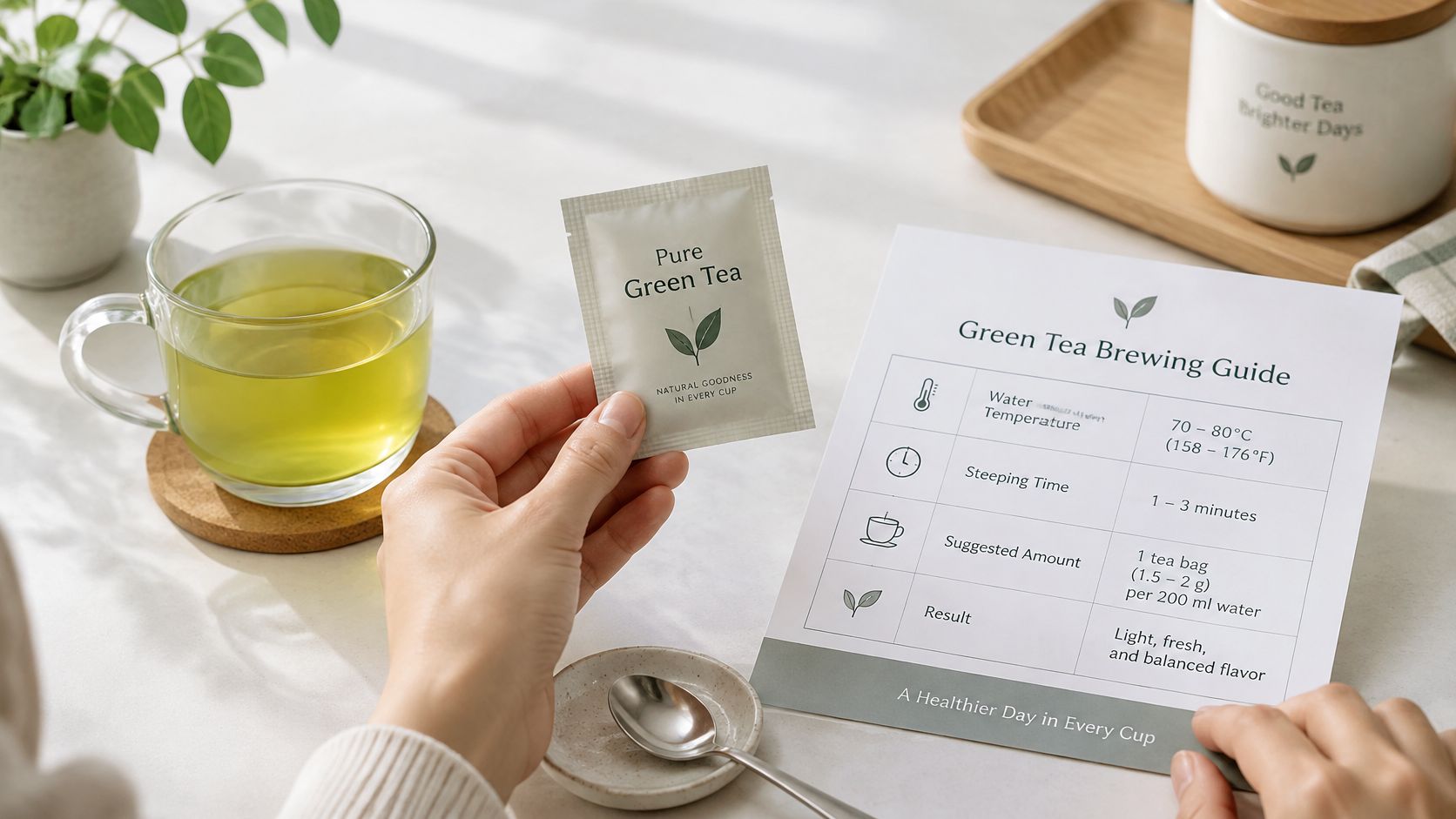
For most cups, the important first step is identifying the tea style. Japan's MAFF brewing guide gives starting settings of about 70°C (158°F) for high-quality sencha and 90°C (194°F) for medium-quality sencha, with a standard sencha steep of about 1 minute 30 seconds. It recommends about 150 seconds for gyokuro and about 30 seconds for ordinary bancha, genmaicha, and hojicha.
A repeatable first brew
- Read the style name. Find it in the comparison table. If the package doesn't name a style, try the medium-quality sencha setting as a starting point.
- Heat fresh water to the suggested temperature. For a cooler style such as gyokuro, let the water cool further. If the package gives different instructions, use those.
- Measure the water. Use one bag for roughly 150–200 mL, unless the package says otherwise.
- Steep for the style's suggested time. Cover the cup loosely while the tea infuses, then remove the bag. Squeeze it gently only if you want a stronger cup; squeezing and leaving the bag in can add bitterness.
- Taste before adjusting. Change one thing next time, such as steep length or water temperature, so it's easier to tell what improved the cup.
If you want another demonstration of the brewing process, this video is a visual companion:
Fix the taste, one change at a time
| What you taste | Likely cause | Change next cup |
|---|---|---|
| Bitter or harsh | Water too hot or bag left in | Drop toward 70–80°C and shorten the steep |
| Thin or watery | Too cool, too short, or bag not wetted | Add about 30 seconds or nudge the water hotter |
| Cloudy liquor | Hard water or fine leaf dust | Use filtered water and avoid squeezing hard |
| Flat or papery | Stale leaf, air, light, or moisture | Use a fresher bag and reseal the pack |
| Too stimulating at night | Caffeine from a long hot steep late in the day | Drink earlier or use a shorter, cooler cup |
A bitter cup doesn't automatically mean the tea is poor quality. The water may be too hot, or the bag may have steeped too long. Make one adjustment and taste again before changing the recipe more dramatically.
Caffeine Notes and Realistic Benefits
Brewed green tea contains caffeine, and the amount in a cup can't be treated as identical across every bag. Bag size, leaf particle size, water temperature, steeping time, serving size, and when you drink it all affect the experience. A larger serving or a longer, hotter steep may make a cup feel stronger, but it can also bring more bitterness.
Caffeine affects people differently. The U.S. government's green tea and caffeine information notes that caffeine may cause insomnia, anxiety, irritability, stomach upset, nausea, diarrhea, or frequent urination in some people. If you're sensitive, try a shorter, cooler brew and drink it earlier in the day. Decaffeinated tea is lower in caffeine, but don't assume it's entirely caffeine-free.
Extraction and drinkability aren't the same
Catechins, including EGCG, are naturally occurring compounds in tea leaves. They're a reason people ask about extraction, but their presence doesn't mean a daily bag treats or prevents disease.
One controlled study found an EGCG level of 50.69 mg per 100 mL at 85°C for 3 minutes, while another reported that total catechins peaked at 95°C after 10 minutes. Those are findings from specific test conditions, not guaranteed amounts in every cup. Extracting the most compounds isn't necessarily the same as making the most pleasant tea.
Green-tea extracts also aren't equivalent to an ordinary cup brewed from a bag. Concentrated products can provide a very different exposure, so don't use findings about one form of green tea as a promise about another.
Matcha differs from bagged sencha in a basic way: matcha is powdered leaf mixed into the drink, while a tea bag infuses water through leaves that are removed. If sleep is your concern, choose an earlier, shorter cup and check product labels for caffeine information. For any dietary restriction, read the current ingredients and packaging rather than assuming a tea is suitable.
Bag Materials Storage and Waste
Treat tea-bag material as a label question, not a reason to panic. Bags may use paper or cellulose, polypropylene mesh, nylon or polyamide, and separate heat seals or strings. A claim about a plastic-free mesh may not cover the seal, string, or outer packaging, so look for clear material information on the whole product.
The German Federal Institute for Risk Assessment's assessment of tea-bag particle claims explains why widely repeated figures need context. A frequently cited 2019 test estimated 11.6 billion microplastic particles and 3.1 billion nanoplastics from one plastic bag brewed at 95°C. The institute said the sample-preparation method was unsuitable for measuring microplastics, and that many detected particles could have been plastic oligomers or particles already on the bag surface. Its risk assessment found no health risk from the very small quantities reported.
That doesn't settle every question about every material. Later research reported particle release from some polymer bags and uptake in human intestinal-cell models, while noting that the health implications remain insufficiently understood. Particle release is a measurement; it isn't, by itself, proof of harm to people. Laboratory results can also depend on the bag, preparation method, temperature, and agitation used.
Keep tea fresh and waste it thoughtfully
- Check the material details. Prefer a product that names its food-contact bag material, and don't infer that every paper-looking bag is plastic-free.
- Use the package's brewing directions. When the tea calls for a lower temperature, there's no need to default to boiling water.
- Store bags sealed and away from light, heat, moisture, and strong smells. Tea can pick up odors and lose its fresh aroma when exposed to air.
- Follow the packaging for disposal. Compost a bag only if the pack says it's compostable, and keep wet tea waste out of recycling streams that don't accept it.
A clear label and sensible preparation are more useful than a blanket claim that every bag is either unsafe or entirely free of plastic.
How to Choose and Serve a Better Bag
A useful label check starts with the tea style, then moves to origin, ingredients, materials, and brewing directions. If the pack names sencha, gyokuro, or another Japanese style, use the comparison table to choose a starting brew. If it states an origin in Japan, a harvest detail, or a blend, treat those as additional information rather than substitutes for the style name.
Check the ingredient list for what's in the bag. A short list such as green tea, or green tea with matcha, tells you more than an unnamed flavoring. For genmaicha, look at the ingredients to confirm the blend details; don't assume a food product fits a particular diet unless its current packaging confirms it.
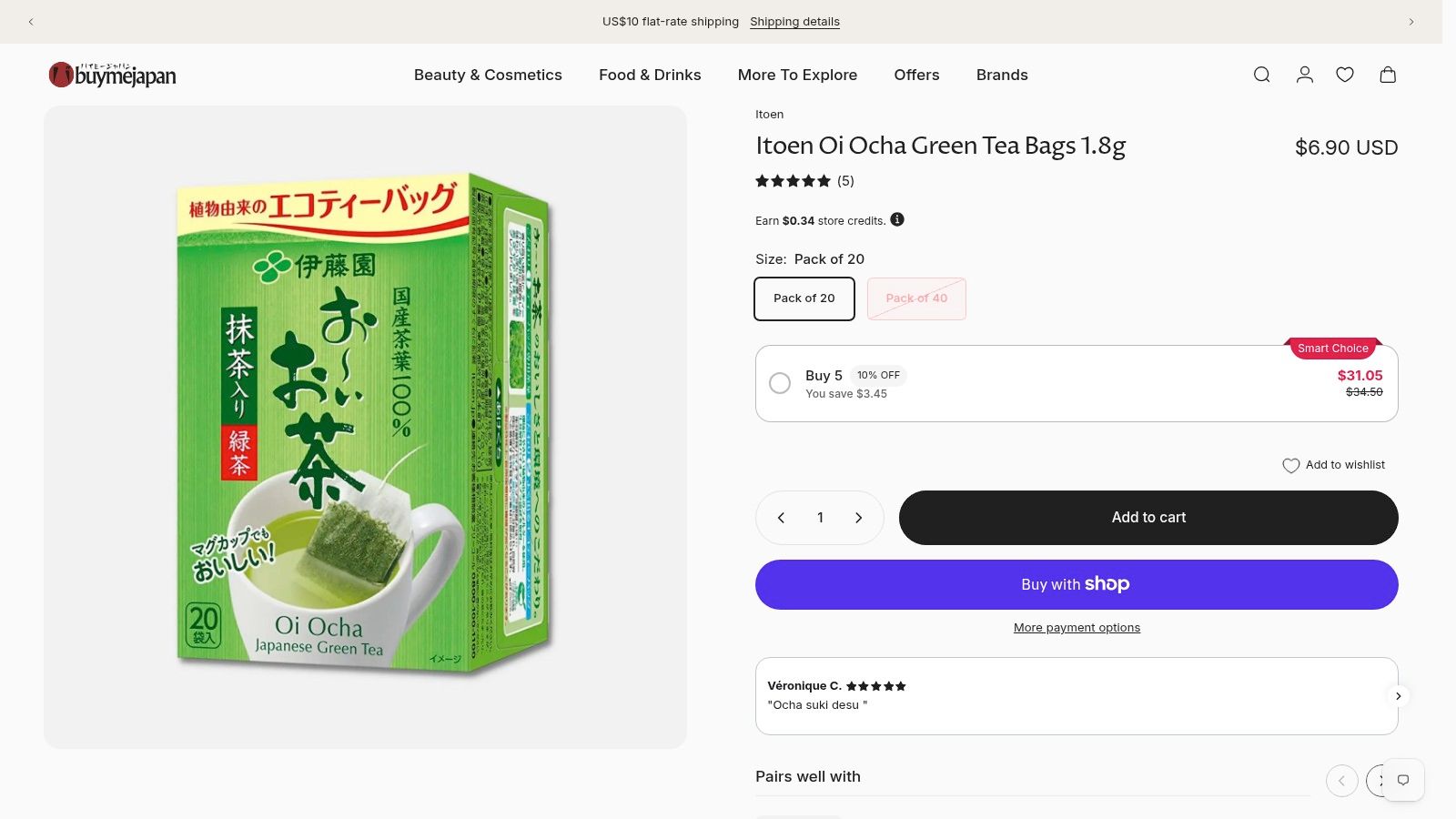
Once you've chosen a bag, serve it in a way that suits its flavor. A sencha-style cup works well as a simple morning drink. For iced tea, make a hot brew using the tea's suggested time, then pour it over ice rather than leaving the bag to infuse in a warm cup for too long. A light Japanese snack can round out either serving without competing with the tea's aroma.
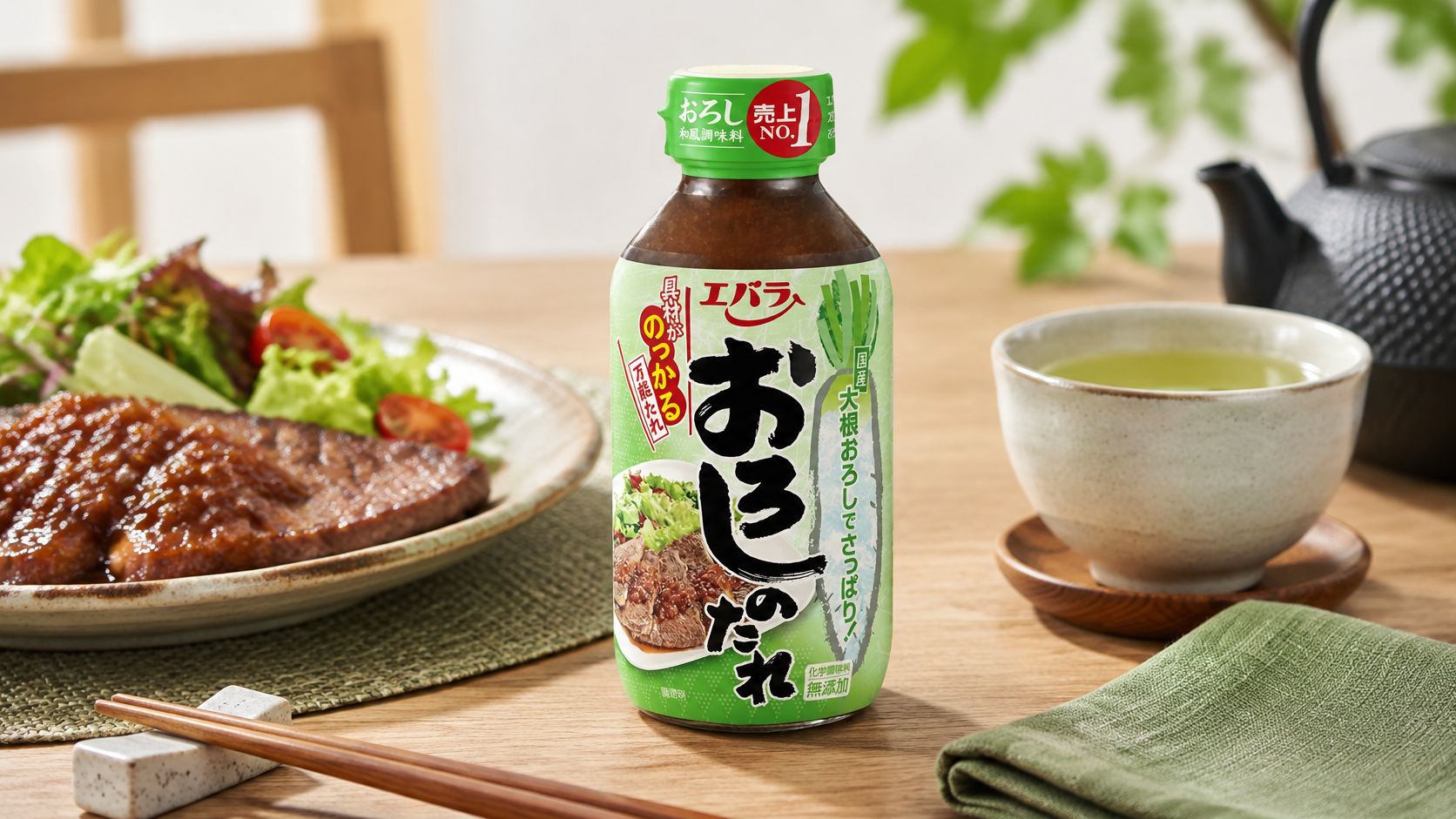
For a savory meal, Ebara Barbecue Sauce Japanese Vegetables 270g is described as containing traditional Japanese “Oroshi” vegetables for a balance of flavor and umami. Check the current product packaging for the ingredient list and any dietary information.
Choose a bag based on what you can verify on the pack: its style, ingredients, material, and brew instructions. That makes the cup easier to prepare and helps you know what you're buying.
Questions Before You Buy Japanese Tea
Can you steep one bag twice?
Yes. For a second steep, use slightly hotter water and less time than you used for the first cup. Expect a lighter brew, since the first infusion has already drawn flavor from the leaves.
How long do green tea bags keep?
Keep them sealed in a cool, dark place, away from moisture and strong smells. Rather than relying on a guessed month count, check the pack date and use the tea while its aroma still smells fresh.
Are green tea bags caffeine-free?
No, not unless a decaffeinated product states its caffeine information. Even then, treat “decaffeinated” as lower in caffeine, not automatically caffeine-free.
Does a matcha note mean the cup is the same as whisked matcha?
No. A tea bag is removed after it infuses, while whisked matcha stays in the cup as powdered leaf. If the bag includes matcha as an ingredient, check the product description and label to see what the blend contains.
Four quick reminders
- Identify the style on the package.
- Brew below a boil using the setting suited to that style.
- Remove the bag when the steep is finished.
- Choose transparent ingredients and materials, and check current packaging for dietary information.
Buy Me Japan is a trusted Japanese online store focused on making authentic Japanese products accessible through a convenient, reliable shopping experience. It offers Japanese drinks sourced through official suppliers in Japan, with tracked shipping, secure payments, and helpful customer service. Explore the green tea collection at Buy Me Japan and start with the style that matches how you like to drink tea.
Explore Japanese drinks and other authentic Japanese products through Buy Me Japan's convenient online store. Browse the Buy Me Japan collection for green tea bags, compare the tea styles and label details, and choose a bag that fits your preferred flavor and brewing routine.

Compartir:
Kate Lip Monster: tonalità, tenuta e come acquistarlo