


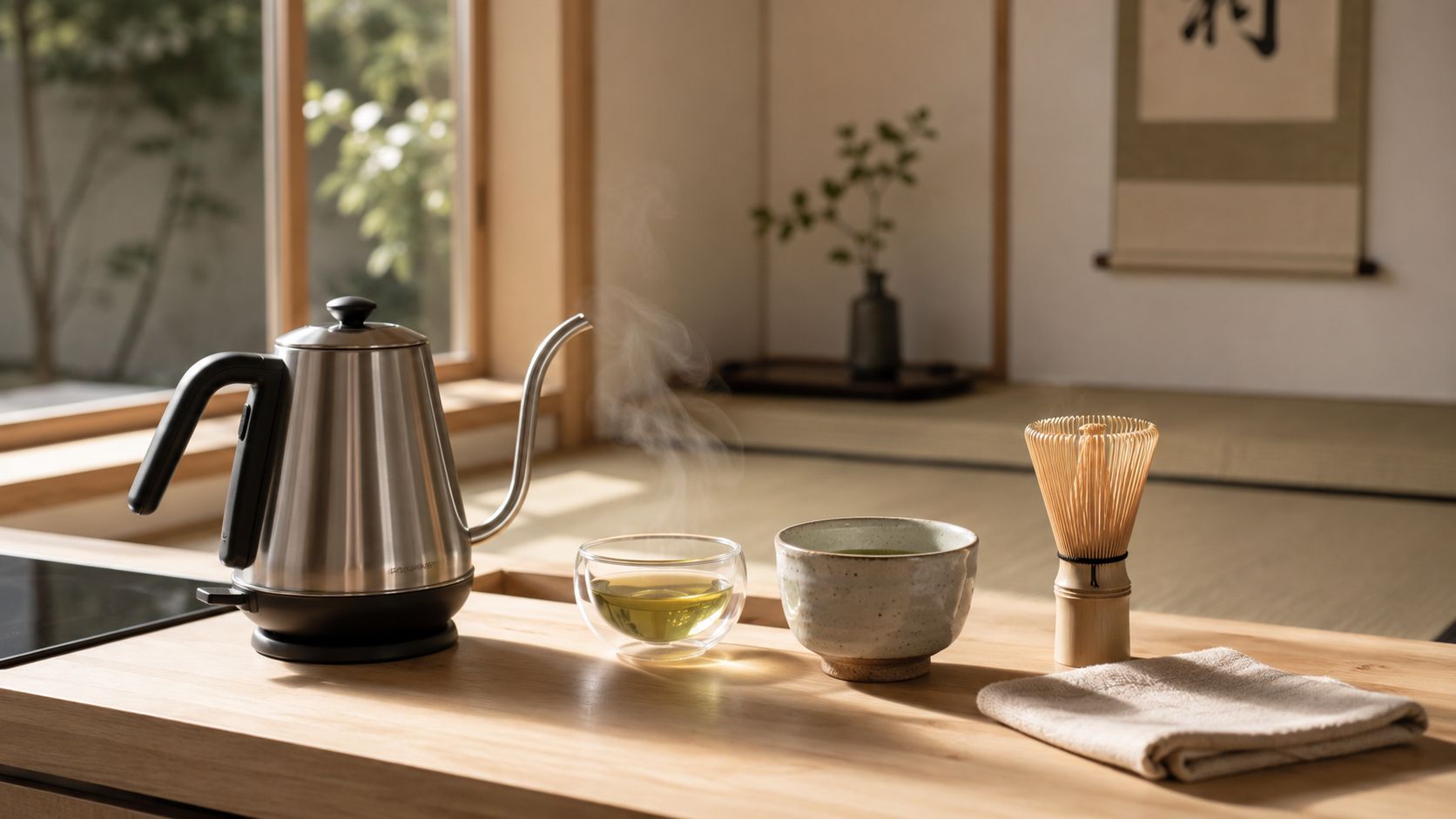
You're probably here because you bought a lovely Japanese tea, maybe sencha, maybe matcha, maybe even a premium blend you'd been saving, and then your everyday kettle turned it into something sharp, bitter, or flat. That moment confuses a lot of people. The tea is Japanese. The cup is beautiful. The method seems simple. Yet the result feels wrong.
That's usually where the search for an electric kettle Japanese style begins. Not with gadget collecting, but with a daily ritual that suddenly feels worth doing properly. For tea lovers, coffee drinkers, and even beauty-minded shoppers who care about homemade tea rinses or gentle kitchen-to-skincare routines, the difference comes down to control.
Japanese kettles are admired for a reason. They're built around precision, compact living, and calm usability. Once you understand how they work, the appeal becomes obvious.
Why Your Regular Kettle Is Ruining Your Japanese Tea
A common mistake is treating all tea like black tea. Many standard kettles have one job. Blast water to a full boil, as fast as possible. That works well enough for some uses, but delicate Japanese tea often responds badly to water that's too hot.
Sencha can turn bitter. Gyokuro can lose its sweetness. Matcha made with overheated water can taste harsher than it should. The problem isn't always the tea itself. It's the water temperature and how little control a basic kettle gives you.

The process is similar to cooking eggs. If you only know one setting, high heat, you can still make food. You just can't make it gently. Japanese kettles are valued because they treat hot water as something you shape, not just something you generate.
That helps explain why interest keeps growing. The Japanese electric kettle market reached USD 112.10 million in 2024 and is projected to expand to USD 216.43 million by 2033, reflecting a 6.80% CAGR, according to IMARC Group's Japan electric kettle market analysis. People aren't only buying a kitchen appliance. They're buying more control over daily habits.
A good kettle doesn't just boil water. It protects flavor.
Some readers also compare kettles with installed hot water systems before they buy. If that's your question, this practical look at kettle vs instant hot water tap efficiency is worth reading. It helps frame the actual tradeoff between convenience and focused, one-cup precision.
For Japanese tea especially, precision usually wins.
What Makes a Japanese Electric Kettle Different
The fastest way to understand an electric kettle Japanese style is this. It is usually designed around precision over brute force.
Many Western kettles chase maximum speed. Many Japanese kettles chase steadier heating, better control, safer operation, and a shape that fits a smaller kitchen and a more deliberate brewing culture.
Precision over power
Japanese electric kettles typically operate at 600W to 1500W, a range designed for energy efficiency and precision on 100V systems. Western models often exceed 1800W, which favors raw speed over the gentler temperature control used for delicate teas, as explained in this overview of Japanese electric kettle design and wattage.
That sounds technical, but the everyday meaning is simple. A Japanese kettle often behaves more like a careful hand than a strong shove.
Here's the contrast:
| Feature | Typical Japanese approach | Typical high-power approach |
|---|---|---|
| Heating style | More controlled | Faster full boil |
| Best use | Tea, pour-over, formula, measured tasks | Quick boiling for general use |
| Kitchen fit | Compact, tidy footprint | Often larger body |
| Pouring feel | Frequently more precise | Often more basic |
The spout matters more than people expect
A gooseneck spout is one of those details that looks minor until you use one. Then it becomes hard to go back.
With a broad spout, water exits in a rush. With a gooseneck, you guide the flow. That matters for pour-over coffee, but it also matters when wetting matcha tools, rinsing tea leaves gently, or filling a cup without splashing.
Practical rule: If you care how the water lands, not just how hot it is, the spout is part of the brewing tool.
Safety and calm usability
Japanese product design often aims to remove friction from routine tasks. In kettles, that usually means details such as:
- Automatic shut-off so the kettle stops heating once the cycle is complete
- Boil-dry protection to reduce risk if there isn't enough water inside
- Compact storage that suits apartments, shared kitchens, and smaller counters
- Simple controls that don't make a morning cup feel like operating a machine
That combination is why these kettles feel different in use. They aren't only engineered for output. They're engineered for repetition. You use them every day, often several times a day, so the little choices matter.
Why they feel so intentional
Japanese kettles often make more sense when you stop thinking of them as “small kettles” and start thinking of them as “specialized hot water tools.” For sencha, matcha, hand-drip coffee, or careful warming tasks, that design philosophy feels less like a luxury and more like basic competence.
The Art of Precise Temperature Control
The most important feature in many Japanese kettles isn't the finish, the shape, or even the speed. It's variable temperature control.
That feature sounds niche until you use it. Then it changes everything. Different drinks, and some beauty-adjacent uses, don't want the same water. Boiling water is not a universal answer.

In Japan, demand for that precision is rising. The variable temperature electric kettle segment is forecast to grow its market share from around 30% in 2026 to nearly 40% by 2035, reflecting strong consumer demand for accuracy in tea culture and modern food preparation, according to IndexBox market insights on Japan's variable temperature kettle segment.
Why boiling water can be the wrong answer
If you pour boiling water on every ingredient, you flatten differences that matter.
A simple way to think about it:
- Lower temperatures preserve gentler flavors
- Mid-high temperatures suit many coffee methods
- Very hot water is useful, but not always ideal
It's similar to skincare layering. You wouldn't treat every product the same way. A watery toner, a vitamin C serum, and a rich cream each need a different approach. Water temperature works the same way in the cup.
Everyday uses for temperature settings
These are the kinds of ranges people look for in practice:
- Sencha drinkers often prefer lower-than-boiling water to reduce bitterness
- Gyokuro lovers usually want an even gentler range
- Pour-over coffee fans often want hotter, more stable water
- Parents preparing formula usually value measured heat rather than guesswork
- Matcha users often want controlled heat for smoother flavor
For coffee readers, this guide on mastering your coffee's temperature is a helpful companion. It explains why stable heat affects extraction and why “hot enough” isn't the same as “right.”
The kitchen-to-skincare angle
This is the overlooked part, and it matters for a beauty-focused audience.
Some people brew tea not only to drink, but to use in gentle homemade routines such as compresses, rinses, or tea-based toners. In that context, precise lower-temperature water can be more useful than a violent full boil. The skincare-oriented discussion around Japanese kettles has highlighted how 40°C to 60°C control matters when brewing tea for routines that aim to preserve delicate tea compounds, rather than scorching them, as noted in this Japan electric kettle market commentary focused on skincare hydration routines.
That doesn't mean a kettle replaces skincare. It doesn't. But for beauty enthusiasts who already use Japanese products and enjoy ingredient-conscious routines, precise water becomes part of the ritual.
A practical example:
- If you're brewing a gentle green tea to cool and use as part of a DIY face compress, lower controlled heat helps you avoid the “burn first, wait later” cycle of overboiling.
- If you're mixing a warm bowl for matcha before a calming evening routine with products from brands like Hada Labo, Shiseido, or Fancl, temperature control makes the process feel intentional rather than improvised.
After the basics, seeing a kettle in use often makes the difference clearer:
Water temperature is to tea what texture is to skincare. Small shifts change the whole experience.
What to look for in the controls
Not every variable kettle is equally useful. Some buyers prefer exact degree settings. Others are happy with preset buttons for tea, coffee, and warm water. The best option depends on how specific your routine is.
If your habits include both tea and beauty rituals, broader flexibility matters more than sheer speed.
A Focus on Thoughtful Design and Materials
Japanese kettles often earn attention because they look calm on a countertop. That isn't accidental. In many cases, the design language is clean, compact, and restrained. The kettle blends into the room instead of demanding attention.
That's one reason style-conscious shoppers notice brands with a minimalist reputation, including names often associated with Japanese home aesthetics such as MUJI. The visual simplicity usually reflects a practical goal too. Fewer awkward edges, easier storage, and a shape that suits smaller living spaces.

Stainless steel, ceramic, and other common choices
Material changes both performance and feel.
| Material | What people like | What to consider |
|---|---|---|
| Stainless steel | Durable, clean-looking, widely preferred for everyday use | Exterior may get hot on some models |
| Ceramic | Even heat feel, taste neutrality for delicate tea | Usually heavier and more fragile |
| High-grade plastic with interior metal components | Lighter body, often easier to handle | Some buyers simply prefer less plastic |
Ceramic deserves special mention. Japan's ceramic electric kettles market was valued at USD 1.2 billion in 2024 and is growing at a 9.5% CAGR, with buyers favoring ceramic for even heat retention and for avoiding metallic taste transfer in delicate teas, according to this report on Japan's ceramic electric kettles market.
Why tea drinkers care about taste neutrality
If you mostly boil water for pasta, tiny taste differences may not matter to you. If you drink sencha, hojicha, or a more nuanced Japanese tea, they do.
Ceramic and well-made stainless interiors are appreciated because they let the tea speak more clearly. That's especially important if you rotate between subtle drinks instead of always making strong coffee.
Some kettles are invisible in the best way. They heat water without adding a personality of their own.
Design as part of the ritual
A Japanese kettle often lives in the same mental category as a favorite teacup, a chasen for matcha, or a tidy skincare tray. It is useful, but it also shapes the mood of the routine.
That's why design-conscious buyers don't only ask, “How fast does it boil?” They ask:
- Will it pour cleanly?
- Will it suit my counter every day?
- Will this material affect the taste of tea?
- Will I still enjoy using it months from now?
Those are smart questions. A kettle is one of the few appliances you may reach for every morning and evening. Thoughtful design matters because repetition magnifies every small annoyance.
How to Choose the Right Model for Your Needs
The easiest way to choose an electric kettle Japanese style is not by brand first. Start with your habit. The right kettle for gyokuro is not always the right kettle for rushed office mornings or pour-over coffee.

If you're the green tea purist
You care less about maximum speed and more about avoiding bitterness.
Choose a kettle with:
- Low-temperature settings for delicate tea
- Stable hold or keep-warm function if you make several small cups
- Taste-neutral interior materials such as stainless steel or ceramic
This is the buyer who notices when sencha turns sharp. If that sounds like you, don't compromise on temperature control.
If you're the pour-over coffee enthusiast
You need water placement, not just hot water.
Look for:
- A gooseneck spout for controlled pouring
- Comfortable handle balance
- Clear temperature display if you adjust for different beans or roast styles
Capacity matters here too. Some coffee drinkers prefer a smaller kettle because it feels more nimble in the hand. If you're deciding size, this 1 liter electric kettle guide is a useful reference for thinking through volume, control, and countertop fit.
If you're the busy professional
You want a kettle that removes friction from the morning.
Your best features may be:
- Fast enough heating for daily convenience
- Simple presets instead of deep menu settings
- Keep-warm mode for back-to-back cups
- Easy-to-read controls when you're half awake
A complicated kettle isn't better if it slows you down.
If you're the design-conscious minimalist
You care how an object works, but also how it lives in your home.
Focus on:
- Compact silhouette
- Clean base and cord storage
- Neutral finish
- Material quality that ages well
For this buyer, the wrong kettle can feel visually noisy even if the performance is fine. Japanese homeware tends to respect that concern.
If you're interested in tea and beauty rituals
The buying decision then gets more specific.
If your routine includes matcha, herbal steaming bowls, tea for cooling compresses, or warm water preparation around skincare habits, prioritize:
- Flexible lower temperature settings
- Predictable controls
- A body that's easy to clean
- A pour that isn't aggressive
That kind of kettle suits a lifestyle that might also include Japanese beauty favorites such as Hada Labo, Shiseido d Program, Kanebo DEW, Fancl, Minon, or Cezanne. The kettle isn't a beauty product, but it fits the same mindset. Gentle, precise, and routine-friendly.
Buy by use case, not hype. A kettle that fits your ritual will feel better than a “premium” model built for someone else.
A quick decision list
If you're still unsure, use this short filter:
- Mostly tea. Choose variable temperature first.
- Mostly coffee. Choose spout control first.
- Shared household. Choose easy presets and safety features.
- Small kitchen. Choose footprint and cord management.
- Tea plus beauty-minded rituals. Choose lower range flexibility and easy handling.
That approach prevents the most common buying mistake. People often shop by appearance alone, then realize the kettle doesn't match what they do each day.
Essential Care and Maintenance for Longevity
A good Japanese kettle is easier to enjoy when it stays clean inside. Mineral buildup affects performance, taste, and the feel of pouring. If your tea starts tasting dull, scale is one of the first things to check.
Descale before buildup gets stubborn
A simple cleaning routine works better than waiting until the interior looks rough.
Try this approach:
- Fill the kettle with water and a gentle descaling agent such as citric acid or vinegar.
- Heat the mixture, then let it sit for a while so residue loosens.
- Rinse thoroughly more than once, until no smell remains.
- Boil fresh water once and discard it before making tea again.
For tea drinkers, citric acid is often preferred because it cleans effectively without leaving as much lingering scent.
Clean the outside according to the finish
Stainless steel usually handles a soft cloth well. Matte finishes need a lighter touch so you don't create shiny patches. Ceramic bodies should be wiped carefully and never knocked around the sink.
If the kettle has a gooseneck spout, pay attention to the tip. A precise pour depends on keeping that narrow channel clean.
A kettle lasts longer when you clean it for flavor, not just appearance.
A few habits that help
- Empty standing water after use instead of leaving it overnight
- Don't overfill past the marked line
- Avoid abrasive scrubbers on delicate finishes
- Store with the lid open briefly after cleaning so the interior dries properly
The goal isn't perfect maintenance. It's small, regular care that protects taste and keeps the kettle pleasant to use.
Your Questions Answered About Buying from Japan
The biggest question international buyers ask is simple. Will a Japanese kettle work where I live?
Do you need a voltage converter
Often, yes. Many traditional Japanese kettles are built for Japan's 100V standard. That means you should always check the product specification before buying. The safest approach is to match the kettle to your local electrical system rather than guessing.
There is one important update. Recent 2025 developments from brands like Thermos and Pearl Metal include dual-voltage models (100–120V) suitable for North American use, according to this Research Nester report on the Japanese electric kettle market. That's useful for buyers in places where older advice still assumes every Japanese kettle is region-locked.
How do you know a product is authentic
Buyers usually worry about authenticity for good reason. Japanese goods are widely imitated, especially when demand rises overseas.
A trustworthy seller should clearly identify the Japanese brand, product details, and shipping origin. Look for retailers that specialize in Japanese products rather than generic marketplace listings with inconsistent descriptions.
What about shipping and import concerns
Shipping policies vary by destination, and import duties depend on your country. The practical step is to read the retailer's shipping information before checkout and confirm whether taxes or customs fees may apply on arrival.
That sounds basic, but clarity matters. Most buyer frustration comes from assumptions, not from the kettle itself.
Is it worth buying from Japan
If you want authentic Japanese design, specific Japan-market models, or a kettle suited to tea culture rather than generic boiling, yes, it often is. The key is buying carefully. Check voltage, confirm the exact model, and choose a seller that specializes in genuine Japanese products.
For shoppers who want authentic Japanese beauty, food, homeware, and lifestyle picks in one place, Buy Me Japan is a practical place to browse. It ships directly from Japan and curates products across trusted Japanese brands, including beauty names like Hada Labo, Shiseido Elixir, Canmake, Cezanne, Fancl, Tsubaki, & Honey, Mentholatum Acnes, and many more, alongside kitchen and lifestyle items for customers who want an authentic Japanese retail experience rather than a vague import listing.

共有する:
How to Apply Concealer for Dark Circles a Japanese Guide
Find the Best Essence for Face from Japan