


You're standing in front of two Japanese hair-care bottles after washing your hair. One promises a soft, creamy finish, the other a glossy, polished result. Both seem designed to tame dryness and frizz, yet using the wrong one can leave fine hair flat, thick hair under-conditioned, or humid-weather flyaways even more obvious.
That's why Japanese hair milk vs hair oil isn't just a choice between lightweight and heavy. The useful question is what each formula does to the hair fiber, then whether that action matches your porosity, damage level, climate, and styling routine.
Why the Milk versus Oil Question Is More Complicated Than It Looks
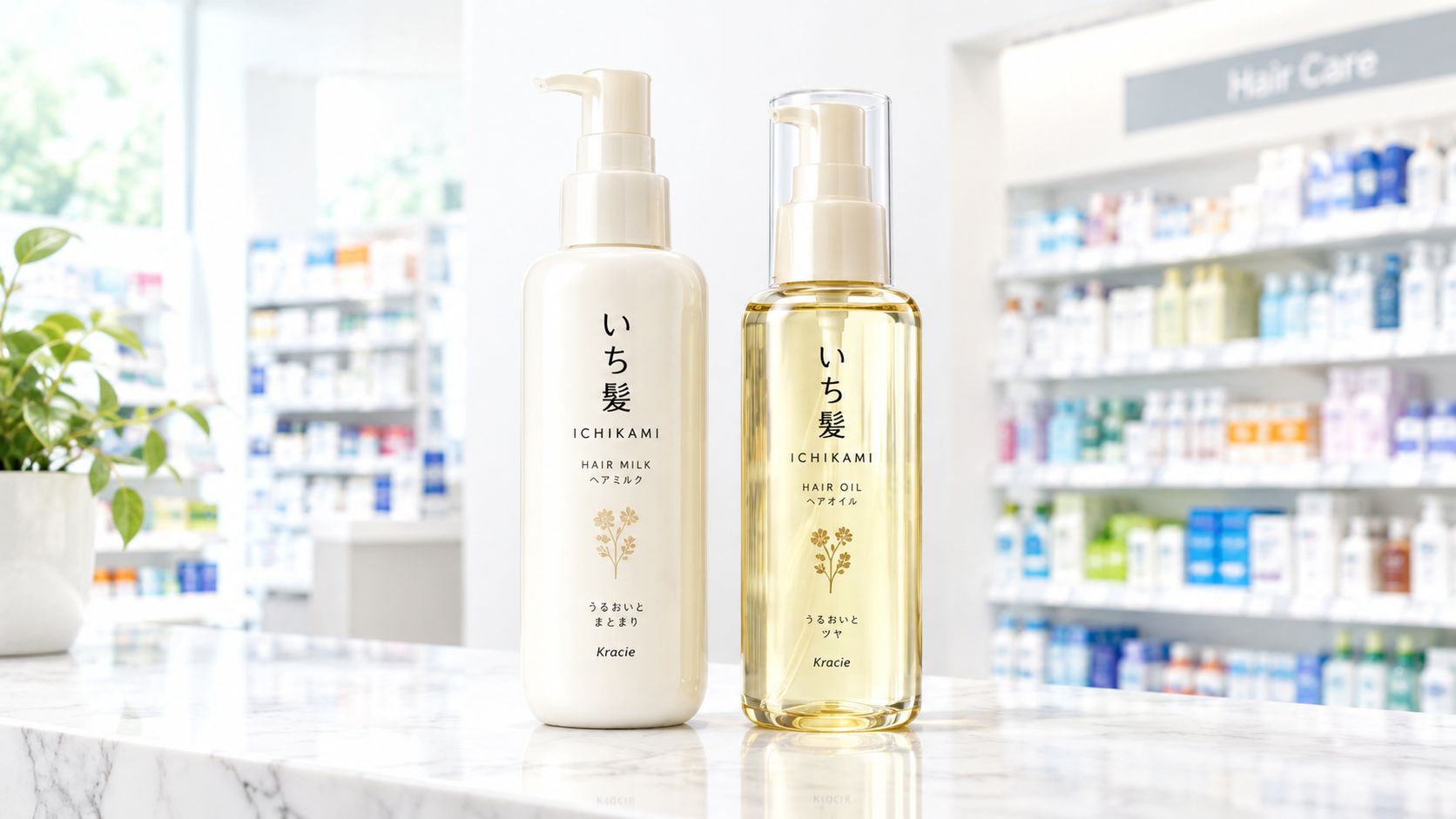
The confusion starts with the packaging. Hair milk and hair oil often come in similar pump bottles, sit beside one another in Japanese beauty aisles, and use overlapping language such as smooth, moisture, shine, and damage care. A shopper can reasonably assume that either product will perform the same job with a slightly different texture.
In practice, they're usually solving different problems. A milk is generally an emulsion-style leave-in treatment designed to improve softness, manageability, and combing. An oil mainly lubricates the surface, reduces friction, adds gloss, and helps limit moisture exchange. Neither format automatically provides deeper care because it feels richer.
This distinction fits the direction of the wider Japanese category. Japan's hair-and-scalp-care market was estimated at approximately US$6.34 billion in 2025, with projected revenue of US$10.51 billion by 2033 at a 6.7% CAGR, as consumers increasingly buy specialized products for different stages of a routine rather than one all-in-one formula, according to Grand View Research's Japan market outlook.
The real-world choice
Consider fine, color-treated hair that tangles after washing. A small amount of milk may reduce wet-combing friction without making the lengths look oily. The same person might still use one tiny drop of oil on dry ends after styling, but the oil isn't replacing the milk's detangling function.
Now consider coarse hair exposed to dry winter air. An oil may provide the surface lubrication and sealing effect that a light milk alone can't deliver. The correct purchase depends less on the word printed on the bottle and more on the job you need the formula to perform.
Practical rule: Choose by fiber behavior first. Texture, shine, and packaging are useful clues, but they don't tell you the whole formula story.
What Hair Milk and Hair Oil Actually Are
Hair milk is closest to a lightweight leave-in conditioner. It usually contains water, emulsifiers, conditioning agents, polymers, humectants, hydrolyzed proteins, silicones, and sometimes vegetable oils. Together, these ingredients can reduce friction between fibers, improve combability, soften the cuticle surface, and make hair easier to arrange.
A cosmetic-formulation reference recommends keeping non-volatile lipids at a maximum of about 3% by weight in leave-in hair creams. By comparison, hair-oil formulas for straighter hair types 1 and 2 may contain around 10% non-volatile oil, rising to approximately 10–20% for type 3 hair and 20–30% for type 4 hair, as outlined in this cosmetic formulation guide to hair-repair ingredients.
Those figures describe formulation ranges, not a guarantee about every product. A milk can still feel rich if it contains substantial silicones or oils, while a serum-style oil can feel surprisingly dry if volatile silicones or lightweight esters dominate the base.
What the ingredient groups contribute
- Cationic molecules attach to negatively charged areas of damaged hair and support conditioning.
- Silicones create a smoother surface, reduce friction, and can improve cosmetic heat-styling protection.
- Hydrolyzed proteins and amino acids help form a conditioning film and improve the feel of porous strands.
- Humectants attract water, which can make dry hair feel softer but may behave differently in high humidity.
- Vegetable oils provide lubrication, softness, and varying degrees of surface or penetrating action.
Hair oil begins with a different architecture. Its central function is usually to create a hydrophobic lipid film over the fiber. That film can improve slip, gloss, and surface smoothness, but oil alone may not provide the electrostatic conditioning associated with cationic ingredients.
Japanese hair oil also has a strong cultural connection to tsubaki, the Japanese term for camellia oil. Traditional botanical oils help explain why Japanese hair oils are often treated as multifunctional products for shine, conditioning, smoothing, and finishing rather than as one-purpose gloss products.
Ingredient lists matter more than the label category. For a useful example of how a Japanese leave-in cream fits into this format discussion, see Momori Peach Hair Cream, then compare its product texture and listed ingredients with an oil-based treatment.
Side by Side on the Criteria That Actually Matter
A useful comparison starts with what you can feel during and after application. Hair milk tends to distribute through damp lengths more evenly, while oil concentrates quickly on the areas where your hands place it. That difference affects detangling, shine, buildup, and how much control you have over the final finish.
| Criterion | Hair Milk | Hair Oil |
|---|---|---|
| Texture | Creamy, emulsion-style, usually lighter | Oily or serum-like, from light to rich |
| Main fiber action | Conditions, reduces friction, supports combability | Lubricates and forms a hydrophobic surface film |
| Best application stage | Damp mid-lengths and ends | Dry finishing, or pre-wash when the oil is penetrating |
| Detangling | Usually the stronger option for wet combing | Helps slip, but may not provide enough conditioning alone |
| Shine | Soft, natural-looking smoothness | More visible gloss and polish |
| Humidity response | Depends heavily on humectants and film-formers | Can reduce surface friction and moisture exchange |
| Buildup risk | Varies with polymers, silicones, and oils | Rises quickly when too much is applied repeatedly |
| Best starting point | Fine, porous, tangled, or easily weighed-down hair | Thick, coarse, dry, or highly frizz-prone lengths |
Detangling versus gloss
Hair milk is generally more useful immediately after washing because its conditioning system targets the friction that makes wet hair snag. The scientific review Hair cosmetics describes hair milk's type of multifunctional film-forming action as reducing interfiber friction, lowering combing force, neutralizing hair's negative surface charge, and helping restore hydrophobicity.
Oil can make dry hair feel smoother, but it doesn't automatically perform the same wet-combing job. If your main complaint is knots after shampooing, oil alone may add shine while leaving the underlying detangling problem unresolved.
Frizz, feel, and buildup
Oil often wins on immediate polish. A small amount can align flyaways and make rough ends look more cohesive. The trade-off is dosage. Too much can make fine hair look stringy, and repeated application can create a coated feel that shampooing needs to remove.
Milk usually offers more flexible daily control, though it isn't automatically buildup-free. Look for the actual ingredient system rather than assuming that “milk” means weightless. For another perspective on choosing oils for dry hair, you can find nourishing oil for dry hair, then apply the same scrutiny to the product's ingredient list and intended use.
The central distinction: Hair milk primarily targets friction, charge, and combing behavior. Hair oil primarily deposits a hydrophobic lipid film for lubrication, gloss, and sealing.
How to Apply Each One in a Real Routine
Start with hair milk on damp, towel-dried hair, not dripping wet hair. Water left on the surface can dilute the product and make distribution uneven, while completely dry hair may cause the cream to sit in patches instead of spreading through the lengths.
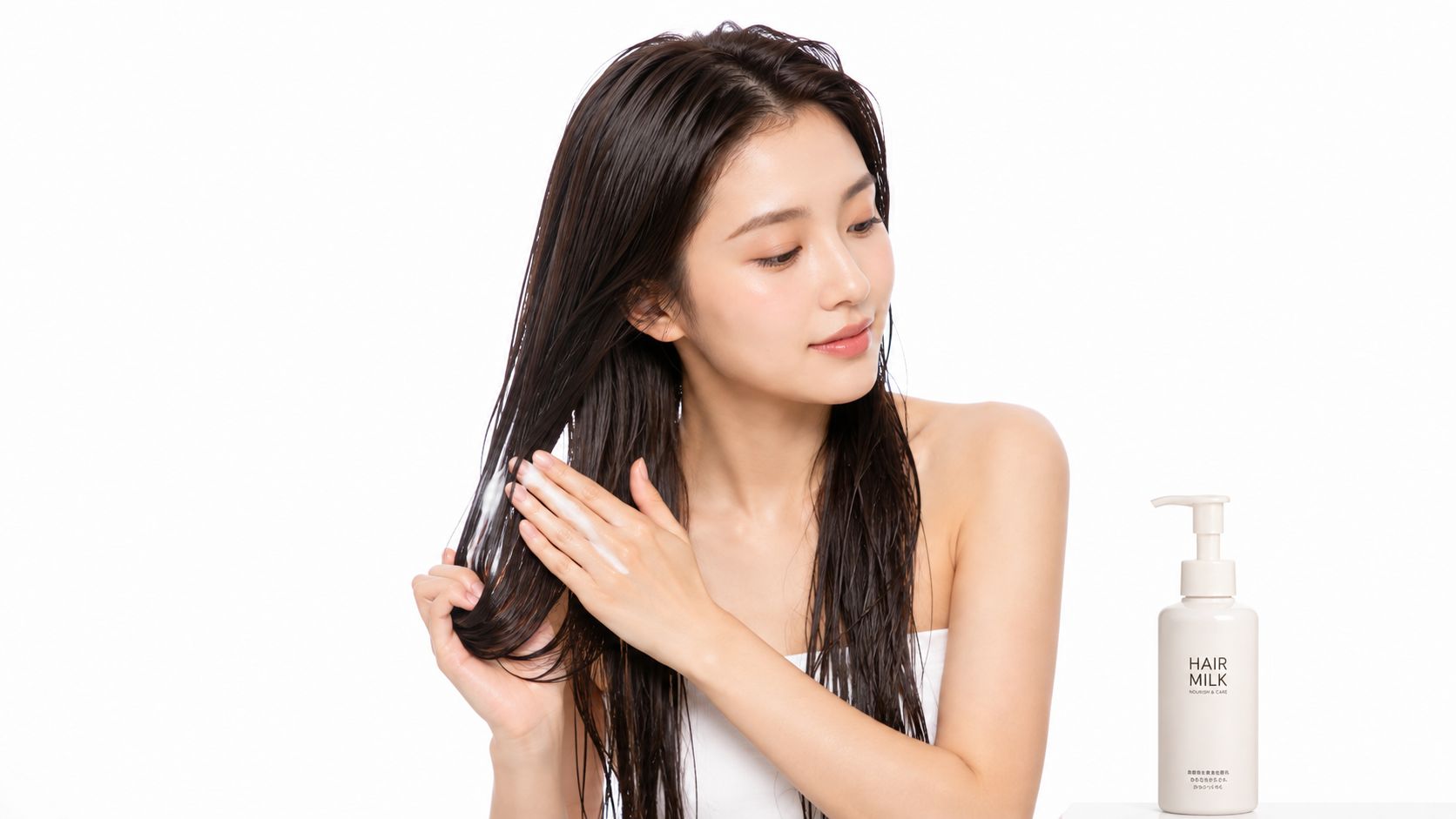
A reliable milk routine
- Remove excess water. Press the lengths gently with a towel.
- Dispense a small amount. Start below the ears, especially if your hair is fine.
- Spread it between your palms. This prevents one concentrated patch.
- Work through mid-lengths and ends. Avoid the scalp unless the product specifically says otherwise.
- Comb from the ends upward. This reduces unnecessary pulling through tangles.
- Air-dry or heat-style. The formula's finish will depend on its conditioning agents and your styling method.
Use less than you think you need. Hair milk should make the lengths easier to comb and arrange, not leave a visible coating.
If you use both formats, apply milk first and oil second. The milk needs access to the fiber and distributes best before a hydrophobic layer is added. After the hair is dry, warm a very small amount of oil between your palms and press it onto the ends and outer surface.
A practical routine for many people is:
- Milk on damp hair before combing.
- Dry and style as usual.
- Oil only where the ends still feel rough or look fuzzy.
This is also the point where a targeted guide to repairing dry, damaged hair can help you decide whether a leave-in product is enough or whether your routine needs a separate rinse-off treatment.
For pre-wash use, don't assume every oil behaves the same way. In a controlled hair-damage study, coconut oil was the only tested oil that significantly reduced protein loss in both undamaged and damaged hair when used before or after washing, because it penetrates the cuticle and cortex, while mineral oil did not penetrate the fiber, according to the published hair-damage study.
That finding supports a useful distinction. A penetrating oil may make sense as a pre-wash treatment, while a conventional finishing oil mainly improves surface feel and gloss. Don't use a finishing oil as though it automatically provides the same kind of fiber protection.
Climate, Humidity, and Seasonal Adjustments
Humidity can change the result of the same product dramatically. More than 60% of Japanese women experience hair problems during the rainy season, particularly frizz and flatness associated with humidity, according to Mordor Intelligence's Japan hair-care market analysis. A milk that feels comfortable in a dry winter climate may feel too soft, swollen, or flyaway-prone during a humid summer.
The reason is formulation behavior. Humectants in a milk can attract water and support a moisturized feel, but very humid conditions can also increase swelling in porous fibers. An oil or silicone-rich finish can reduce moisture exchange and surface friction, but it doesn't hydrate the fiber in the same way.
Use the weather as a product filter
In dry or cold weather, hair often benefits from milk for water-based conditioning, followed by a restrained oil finish on the ends. This combination can improve softness while reducing the rough, exposed feeling that appears after heating, brushing, or friction from clothing.
In humid weather, start with less product. Fine or low-porosity hair may need milk alone, particularly if the main goal is detangling. If flyaways remain a problem, add a minimal oil or serum layer only after the hair is dry.
After heat styling, an appropriate leave-in can support a smoother finish, but the product's actual claims and ingredients matter. Don't assume every milk is heat-activated or every oil provides heat protection.
A weather-based test
Try the same routine for several washes and change only the finishing step. If milk alone gives softness but leaves the surface fuzzy in humidity, test a smaller amount of oil on dry ends. If oil creates flatness or a coated feel, remove it before increasing the milk.
Japan's long-standing relationship with tsubaki oil also makes this seasonal discussion culturally relevant. Traditional oil use and modern serum-style products share an emphasis on smoothing, but contemporary formulas vary widely in how much oil, silicone, polymer, and conditioning material they contain.
For readers whose concerns include scalp comfort as well as lengths, Buy Me Japan's Japanese scalp-care products guide offers a useful reminder that scalp-focused products and leave-in lengths products shouldn't automatically be treated as interchangeable.
Which Format Suits Your Hair Profile
Hair type gives you a starting point, but porosity and damage level usually decide the final dosage. Two people with straight hair can need completely different routines if one has fine, low-porosity strands and the other has porous, bleached ends.
Fine or easily weighed-down hair
Begin with milk alone. Apply it from the mid-lengths downward and watch how your hair behaves after drying. If the hair feels soft and separates naturally, adding oil may solve a problem you don't have.
If the ends still look dry, test one very small amount of oil only on the last few centimeters. Stop if the hair becomes flat, stringy, or harder to refresh.
Thick, coarse, or frizz-prone hair
Oil is more likely to earn a place in this routine because thicker hair can tolerate a more substantial surface film. Milk can still help with damp detangling, especially when the hair feels rough after washing, but it may not provide enough finishing control by itself.
Apply milk first if you need combability. Add oil after drying when the priority is gloss, sealing, or flyaway control.
Color-treated or chemically processed hair
Porous, processed hair often benefits from a conditioning milk before combing because friction can make fragile lengths feel worse. A small oil layer may then help smooth exposed ends, but it shouldn't replace a complete wash-day conditioning routine.
The ingredient list remains decisive. A cosmetic-science review identifies polymers, oils, waxes, hydrolyzed amino acids, and cationic molecules as distinct conditioning-agent groups, so the product label, not the format name alone, determines detangling, softness, frizz control, and buildup risk, as discussed in this review of hair conditioners.
Sensitive scalp or scalp-prone routines
Keep both formats away from the scalp unless the label specifically directs otherwise. Leave-in products belong primarily on the lengths and ends, where dryness and friction usually cause the cosmetic concern.
Choose the format that targets your fiber's behavior, not the one that sounds more intensive.
A useful place to learn the difference between rinse-off conditioning and leave-in treatment is this guide to Japanese hair conditioner options. It can help prevent a common mistake, using a leave-in milk as though it replaces every conditioning step in the routine.
Buying Guide and Quick Checklist for Japanese Brands
A Japanese label can tell you more than the front-of-pack name if you know what to look for. Start with the texture and intended application, then confirm the ingredient architecture.
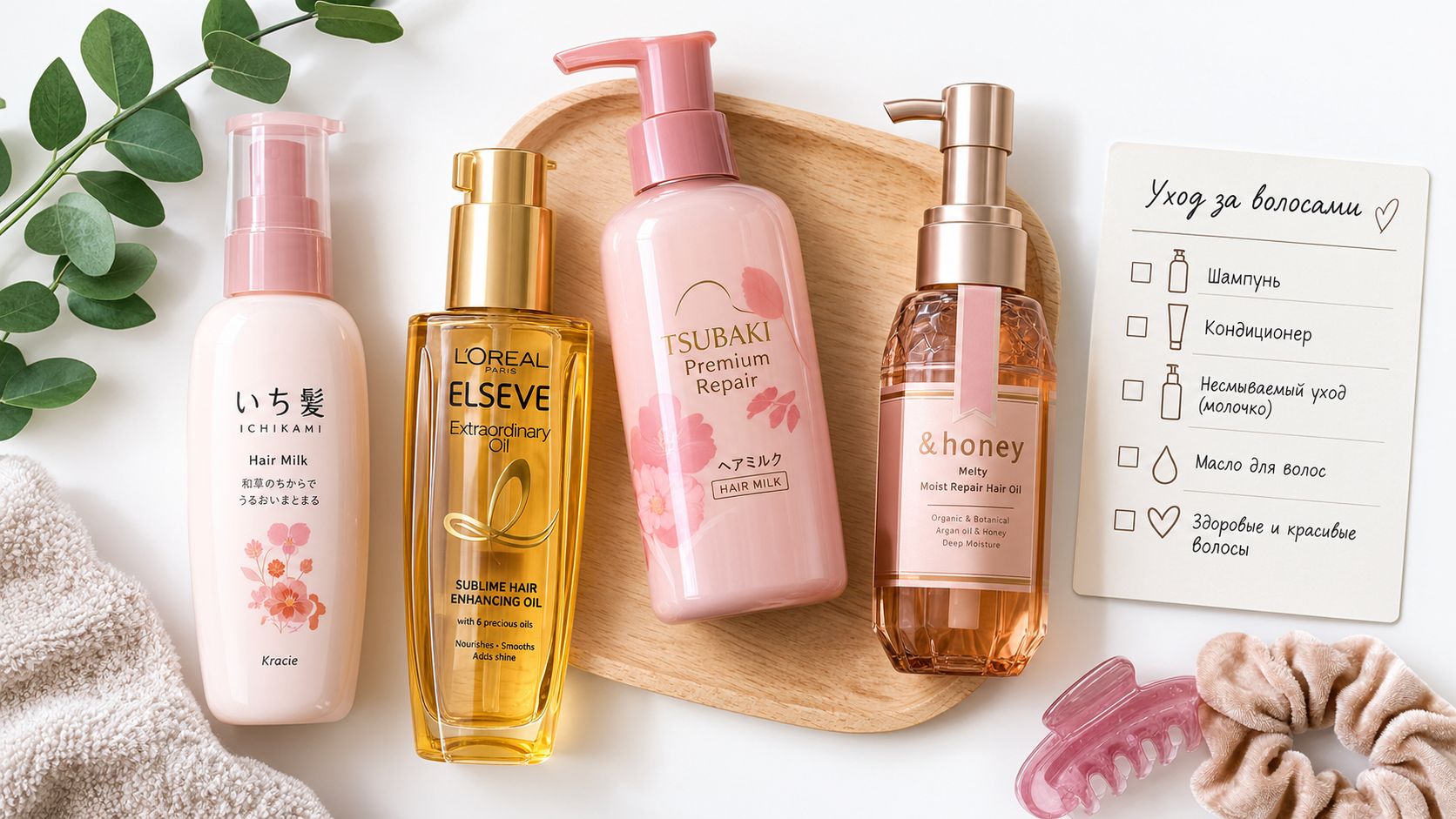
- For detangling: Look for conditioning agents, cationic ingredients, polymers, proteins, or amino-acid-based components in a leave-in milk.
- For shine and sealing: Look for oils, silicones, esters, or serum-style ingredients in an oil or finishing treatment.
- For fine hair: Choose a lighter texture and apply only to the lower lengths.
- For thick or porous hair: Consider a richer milk, an oil finish, or both in a controlled sequence.
- For humid weather: Avoid starting with a heavy dose. Test milk alone before adding an occlusive finish.
- For dry weather: A milk followed by a small amount of oil may provide a more comfortable finish.
- For damaged ends: Check whether the product is intended for daily leave-in use, pre-wash treatment, or rinse-off care.
Japanese brands use different naming conventions, so don't rely on English words such as “milk,” “essence,” or “oil” without checking the texture and directions. The Tsubaki and YOLU families are familiar starting points for shoppers comparing Japanese hair treatments, but the right choice still depends on the specific product page and current ingredient list.
For a rinse-off option that can complement a leave-in routine, review the Ichikami hair mask guide. Buy Me Japan makes Japanese beauty products available to international shoppers through its online store, so check the current listing, packaging, directions, and ingredients before purchasing.
Common Questions About Japanese Hair Milk and Hair Oil
Can I layer milk and oil?
Yes. Apply milk to damp mid-lengths and ends first, then use a very small amount of oil after drying. Fine hair may need milk alone.
How often should I use each?
Use milk according to the product directions and your hair's response. Use oil whenever your ends need extra lubrication, but reduce the amount if buildup or flatness appears.
Does hair milk replace conditioner?
Usually not. Hair milk is a leave-in product, while conditioner is typically rinsed out. They serve different stages of a routine.
What changes in humid or dry climates?
Use less product in humidity and test milk alone first. In dry conditions, a small oil finish can help reduce surface friction and moisture exchange.
Buy Me Japan offers Japanese hair-care products from brands such as Tsubaki, YOLU, Ichikami, and other available lines, with product details shown for international shoppers. Visit Buy Me Japan to compare current hair milk and hair oil options, then choose the format that matches your hair fiber, climate, and routine.

共有する:
Japanese Hair Care for Low Porosity Hair: A Practical Guide