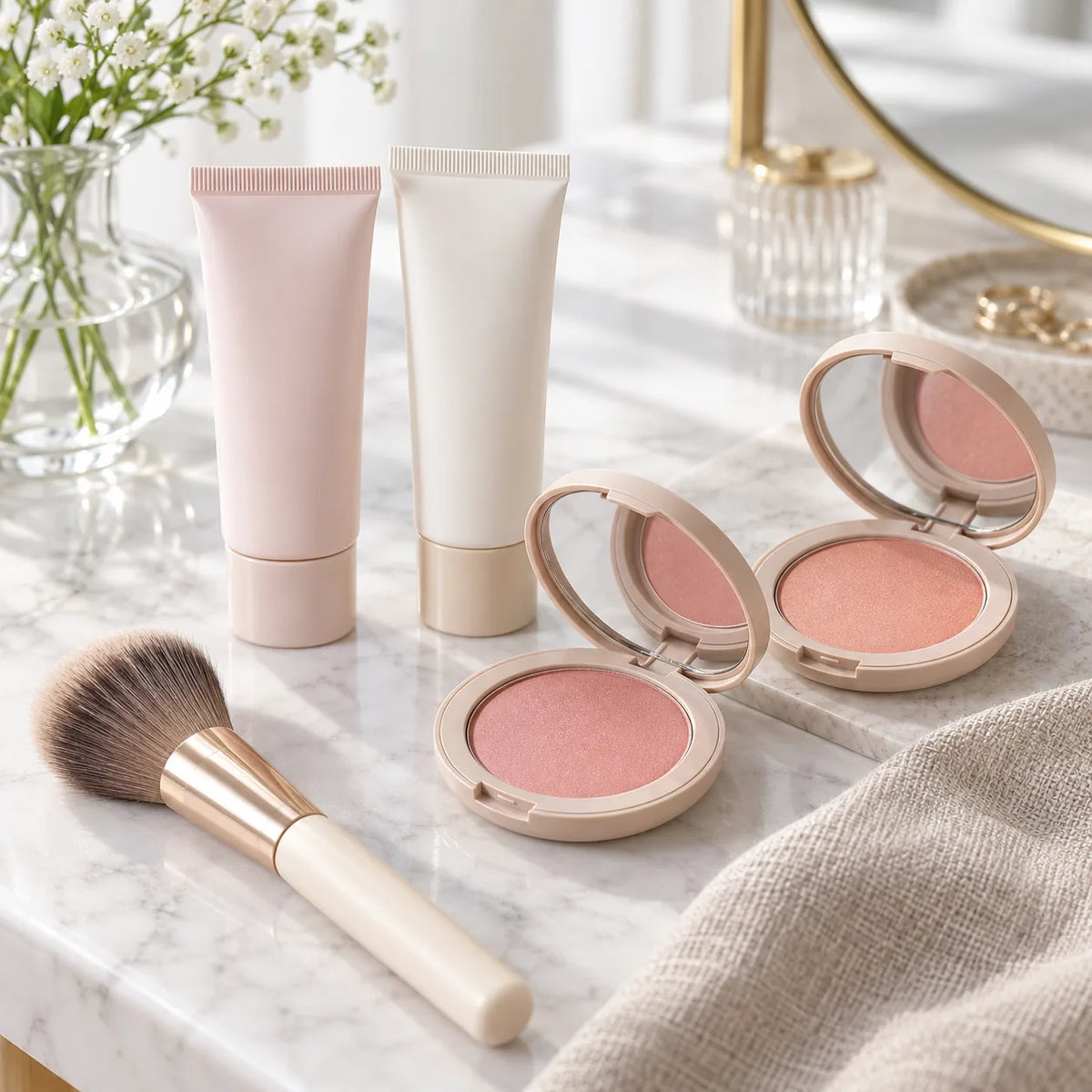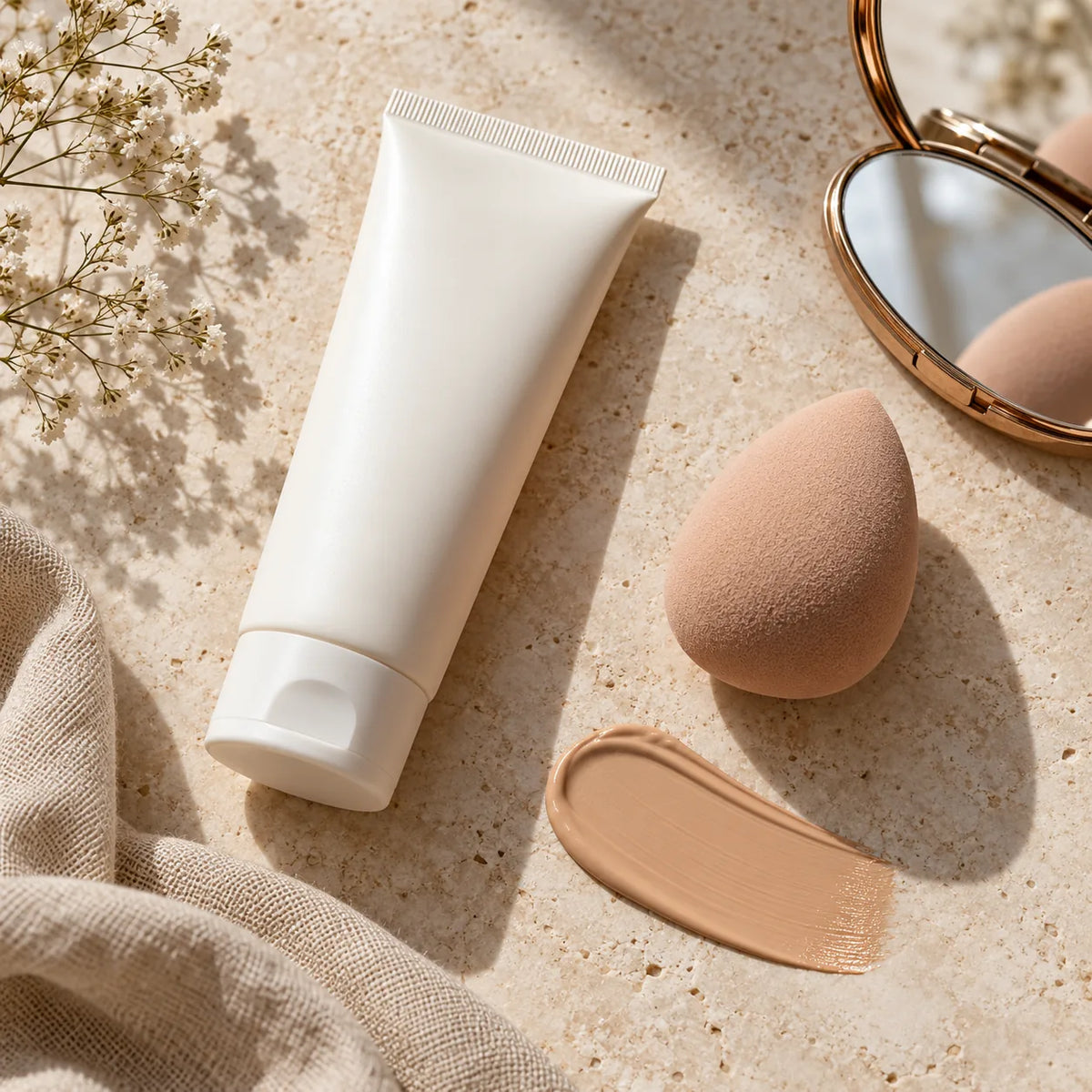
You've applied skincare, waited, and blended your foundation carefully. Then, a few minutes later, small rolls appear around the nose, the cheeks look uneven, and the sunscreen seems to have taken your base makeup with it. That frustrating result doesn't mean Japanese sunscreen under makeup is impossible. It usually means the texture, amount, or setting time is wrong for the layers beneath it.
Japanese sunscreens are often made for daily cosmetic wear, not only for beach days. The most successful formulas behave more like a lightweight SPF foundation or primer, forming a thin film that can support makeup instead of competing with it. The key is to choose the right finish, allow the film to settle, and press makeup over it rather than repeatedly rubbing the surface.
Why Japanese Sunscreen Works So Well Under Makeup
A common morning failure starts with a rich moisturiser, followed by a thick sunscreen rubbed vigorously across the face, then primer and foundation applied before the sunscreen has settled. The base may look smooth at first, but the film underneath hasn't stabilised. As the sponge or fingers move across it, the sunscreen gathers into tiny rolls.
Many Japanese sunscreen formats are designed around a different daily expectation. In Japan's sun care cosmetics market, SPF foundation was the largest revenue-generating product segment in 2024, while the wider market generated USD 578.6 million that year and is projected to reach USD 1,025.4 million by 2030, implying a 9.8% CAGR from 2025 to 2030. The Beauty Radar's overview of Japanese sunscreen connects this category structure with formulas intended to combine UV protection, skin finish, and compatibility with base makeup.
That context explains why watery gels, milks, and emulsions are so prominent. They're built to spread in a cosmetic-thin layer, dry down quickly, and leave a surface that foundation can grip without becoming patchy. A guide to gel-based Japanese sunscreen can help you recognise how these lighter formats differ from traditional cream textures.

Read both sides of the Japanese label
Japanese labels commonly use SPF for UVB protection and PA for UVA protection. PA runs from PA+ to PA++++, and SPF 50+ is the highest printed SPF rating used in Japan, so Japanese-market products won't display higher SPF numbers. This Japanese sunscreen label guide explains the distinction.
Don't treat the ratings as a makeup primer score. A high rating tells you about labelled UV protection, while under-makeup performance depends on whether the product forms an even, comfortable film. A sunscreen that feels elegant enough to apply consistently may fit your routine better than a heavier one you avoid.
For international shoppers, authenticity matters as much as texture. Buy Me Japan offers Japanese beauty products through its online store, so verify the exact product name, variant, and current product details before ordering rather than relying on a similar-looking image or translated listing.
How to Choose the Right Japanese Sunscreen Texture for Makeup
Texture determines how the sunscreen behaves during foundation application. I generally sort Japanese formulas into three practical groups: gel, milk, and emulsion. None is automatically right for everyone. The useful question is whether the finish suits your skin and your makeup technique.
| Texture | Finish and Feel | Best For | Makeup Compatibility Tip |
|---|---|---|---|
| Gel | Watery, fresh, and quick-spreading, with a lighter surface feel | Normal, combination, or oilier skin, especially when you prefer a natural finish | Use a thin, even layer and press foundation on after the gel has settled |
| Milk | Fluid and light, often with a more set, smooth finish | People who want a less dewy base or need a sunscreen that feels more polished | Shake liquid products when the label requires it, then avoid aggressive rubbing |
| Emulsion | Milky, moisturising, and softer on the skin | Dry or dehydrated skin, or anyone using a more luminous foundation | Reduce the moisturiser underneath so the combined layers don't become slippery |
Gel for a fresh base
A watery gel usually gives the easiest starting point for makeup. It spreads quickly and can feel less occlusive than a cream, which is helpful if your foundation already has a dewy or hydrating finish. The trade-off is that some gels can remain tacky, especially over several skincare layers. If your primer also feels sticky, the two products may grip each other and roll.
Milk for a cleaner finish
Milk formulas often suit people who want sunscreen to disappear into a smoother, more controlled base. They can work well beneath thin liquid foundation, but they need careful application. Too much product in one pass may sit on the surface, while a formula with a pale cast can become more visible around the hairline or jaw.
Emulsion for comfortable hydration
An emulsion is useful when your skin feels tight before makeup, but it can be too rich if you apply a generous moisturiser first. Try simplifying the morning routine instead of removing sunscreen. A lighter hydrating layer underneath may give the emulsion enough comfort without leaving excess slip.
Practical test: Apply the sunscreen to one side of your jaw, wait for it to settle, and place foundation over it. Check the result in daylight for rolling, streaking, tackiness, and any visible cast before committing to a full face.
The same test works on the back of your hand, but the jawline is more revealing because it shows how the finish looks beside your natural skin tone. For a useful texture comparison, see this Biore UV Watery Essence and Watery Gel comparison, then confirm the exact current listing in the Buy Me Japan catalogue.
Layering Japanese Sunscreen Under Makeup Without Pilling
The smoothest routine keeps the morning layers simple and gives each one a chance to settle. Sunscreen should be the last skincare step, followed by primer only if you need it, then foundation.
Use this order
- Cleanse gently: Remove overnight oil and residue without leaving the skin tight.
- Apply watery hydration: Press toner, lotion, or a light essence into the skin instead of rubbing it with a cotton pad.
- Keep moisturiser measured: Use enough to prevent uncomfortable dryness, but avoid a heavy layer if your sunscreen is already emollient.
- Spread sunscreen evenly: Work in sections across the forehead, cheeks, nose, and chin. Use light strokes first, then gentle pressing to even the film.
- Let it set: Allow roughly 60 to 120 seconds, or about 2 minutes, before foundation. This Japanese beauty timing guide gives the same practical waiting range.
- Add primer selectively: Apply it only where you need pore smoothing, oil control, or extra grip. Don't automatically cover the whole face.
- Press on foundation: Use a damp sponge or soft brush with short pressing motions. Repeated sweeping can disturb the sunscreen film.
The waiting period matters because the sunscreen needs time to form a stable surface. If the layer still feels wet, shiny, or mobile when you touch it, foundation will move it. A properly settled layer may still feel slightly flexible, but it shouldn't slide under a light fingertip press.
Adjust the finish, not the sunscreen
For a dewy foundation, choose a gel or a controlled milk and keep the moisturiser underneath light. For a matte foundation, an emulsion may prevent dry patches, but oily skin may need a less rich sunscreen and targeted moisturiser only on the cheeks.
A controlled laboratory study of facial cosmetics found that layering sunscreen with makeup improved effective SPF compared with using either product alone, even when each layer was applied below the recommended amount. The researchers attributed the improvement to more homogeneous coverage, not to adding SPF numbers together. Read the facial cosmetics layering study.
Daily cosmetic use also tends to involve thinner application patterns than outdoor leisure use. One academic usage study recorded a median sunscreen amount of 0.60 g per single daily application and 0.57 g per day, compared with 2.16 g per outdoor-leisure application and 3.58 g per day. It also recorded makeup-base sunscreen amounts with 90th percentile values as low as 0.29 g. The Journal of Toxicological Sciences study is discussed through this Japanese beauty product resource. These figures describe observed use, not permission to under-apply. For extended outdoor exposure, follow the product directions and protect exposed areas properly.
Watch the routine demonstration below for the pressing technique and order in practice.
If your foundation still gathers around the nose, change one variable at a time. First remove primer, then reduce the moisturiser underneath, then test a different sunscreen texture. A makeup sponge technique guide is useful when your application tool, rather than the sunscreen, is creating friction.
Reapplication Strategies That Keep Makeup Intact
Reapplication over makeup is less about piling on more SPF numbers and more about rebuilding an even layer without dragging the base underneath. SPF values don't add together, so a high-SPF foundation applied over sunscreen doesn't create a mathematically combined rating. The practical benefit depends on continuity, evenness, and how well the layers stay in place.
Match the method to the situation
At an office desk, start by pressing away excess oil with tissue or blotting paper. Then use a small amount of compatible sunscreen on a cushion puff or clean sponge, pressing it onto the skin rather than sweeping across the face. This can work around the cheeks and forehead, but take care near areas where foundation is already thin.
For an outdoor lunch or a commute, a fluid sunscreen can be pressed over the highest-exposure areas in light passes. The nose, cheekbones, forehead, and neck usually need the most attention. If you've lost coverage, touch up foundation afterward with the same pressing motion instead of trying to rub sunscreen through the makeup.
A sunscreen mist can feel convenient, but it's easy to apply unevenly. Keep the face still, follow the product's own directions, and don't assume a few passes create a complete film. Powder SPF products can help reduce shine and refresh the look, but powder alone may not replace a proper sunscreen layer when you're spending substantial time outdoors.
Keep the original base intact
The first layer's stability determines whether reapplication looks polished. If you rubbed foundation into the sunscreen before it had dried, later touch-ups will expose that weakness by lifting the base in patches. Independent guidance on how to apply SPF over makeup correctly offers additional techniques for pressing product over an existing complexion.
Use a simple sequence:
- Blot first: Remove surface oil without scrubbing.
- Press lightly: Work in small zones instead of dragging product across the whole face.
- Pause briefly: Let each touch-up settle before adding more complexion makeup.
- Check the edges: Blend along the jaw, hairline, and around the nose where unevenness shows fastest.
A setting spray may help the finished makeup feel more cohesive, but it shouldn't be treated as a replacement for sunscreen. This Japanese setting spray guide can help you decide where a finishing product fits in your routine.
Troubleshooting Pilling White Cast and Other Common Issues
Pilling usually has a physical cause. Too many skincare layers, incompatible polymers, vigorous rubbing, or insufficient drying time can make the sunscreen gather into rolls. The fastest diagnosis is to test the sunscreen over bare, clean skin on one side of the jaw. If it behaves well there but pills over your routine, the problem is underneath rather than the sunscreen alone.
Find the source of the problem
| Problem | Likely cause | Quick adjustment |
|---|---|---|
| Pilling around the nose | Rubbing, too much product, or a heavy layer underneath | Use fewer skincare layers, press instead of sweep, and allow more settling time |
| White cast | A pale or opaque formula, concentrated application, or incomplete blending | Test the jawline in daylight and choose a finish that disappears more naturally on your skin |
| Greasy foundation | Rich emulsion over rich moisturiser, or a dewy sunscreen under luminous base makeup | Reduce the moisturiser underneath or switch to a lighter gel or milk |
| Patchy foundation | Sunscreen hasn't formed a stable film, or the foundation is being moved during blending | Wait until the surface feels settled and press makeup on in thin layers |
| Eye discomfort | Fragrance, alcohol, filters, or product migration may not suit the eye area | Keep the product away from the lash line, patch test, and discontinue if discomfort persists |
White cast deserves a daylight check rather than a bathroom mirror check. It can appear strongest where product accumulates, including the eyebrows, sides of the nose, and hairline. A sunscreen described as clear may still look pale if you've applied too much in one area or haven't spread it evenly.
Oily skin often does better with a gel or a more set milk, while dry skin may prefer an emulsion with less moisturiser beneath it. Sensitive skin should be approached cautiously. Patch test a new product on a small area first, and stop using it if you develop persistent irritation or discomfort.
Diagnostic rule: Change only one layer at a time. If you replace the sunscreen, primer, moisturiser, and foundation together, you won't know which combination caused the reaction.
For readers specifically looking for a more invisible finish, Buy Me Japan's Japanese sunscreen options without a noticeable white cast provide a useful starting point, but always check the current formula and product details before purchase.
Your Next Steps to Flawless Sun Protection and Makeup
Successful Japanese sunscreen under makeup comes down to three decisions. Choose a texture that matches your skin and foundation finish, apply it in a controlled even layer, and give it time to settle before pressing on makeup. During the day, blot first and reapply gently, because a continuous film matters more than stacking SPF numbers.
The right formula should make your routine easier, not force you to rebuild your makeup around it. Check the jawline for cast, test the sunscreen over your actual skincare, and keep a simpler morning routine if several layers are causing friction.
Buy Me Japan presents authentic Japanese beauty products sourced through official suppliers in Japan, with secure payments, tracked shipping, and customer service for shoppers who need help verifying product details. Explore the current sunscreen range and compare the listed textures and formats before choosing your under-makeup option.
Visit Buy Me Japan to explore authentic Japanese sunscreens suited to daily cosmetic layering, including current gel, milk, and emulsion options. Check each product's exact label and finish, then choose the formula that fits your makeup routine rather than forcing your routine to fit the product.


共有する:
Japanese Sunscreen No White Cast: A Practical Guide