Finding a cleanser that removes sunscreen, oil, and the day's grime without leaving your face feeling stiff is harder than it should be. A lot of people end up bouncing between creamy cleansers that feel too weak and foaming washes that feel too harsh.
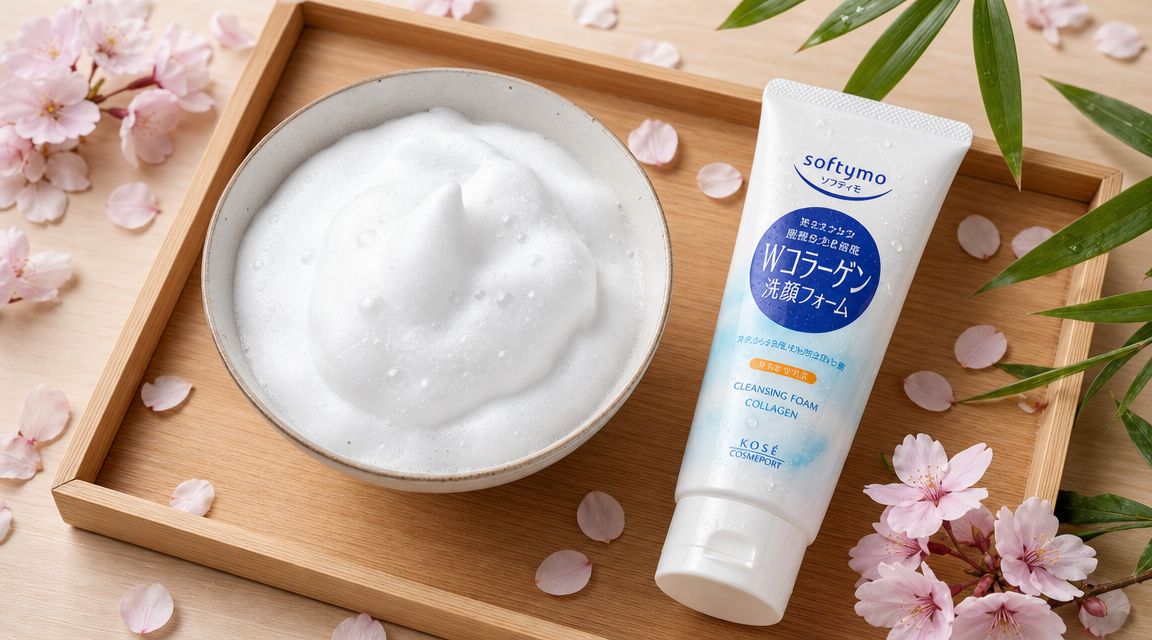
That's exactly why KOSÉ Softymo Cleansing Foam has stayed relevant in Japanese skincare for so long. It sits in a very specific lane. It's a traditional Japanese-style foaming cleanser that aims for a deep, satisfying wash, but it also comes in several versions that try to soften the rough edges of that strong-clean feel.
If you've been curious about Softymo Cleansing Foam, the primary question isn't just which color tube to buy. It's whether this soap-based style of cleanser suits your skin. That matters more than the marketing on the front of the tube.
Your Guide to a Japanese Cleansing Staple
You wash your face at night, rinse, and immediately know which kind of cleanser you used. Either your skin still feels coated around the nose and chin, or it feels very clean but a little too stripped. Softymo Cleansing Foam sits right in that tension, which is why it has remained a staple in Japanese drugstore skincare.
What makes Softymo interesting is not just the lineup of tube colors. The story lies in the formula style behind them. This is a classic Japanese foaming cleanser built around the rich-lather approach, and that matters more than the variant name if you are trying to choose well.
Japan has a long history with dense foam cleansers because a thick lather gives slip, spreads easily, and delivers that fresh-rinsed finish many people want. Softymo belongs squarely in that tradition. If you want more context on why this category is so common, this guide to Japanese foam cleanser routines gives a useful overview.
Softymo makes the most sense when you judge it by cleansing style first, not by packaging color first.
That is the practical way to approach it. Some versions are positioned for moisture, brightening, or firmness, but they still share the same general cleansing philosophy. Start with the base. Then use the variant claims as a secondary filter. That approach usually leads to a better match, especially for oily, combination, or resilient skin that likes a strong clean feel.
Understanding the Power of Softymo's Rich Foam
Softymo Cleansing Foam works the way many classic Japanese foam cleansers work. It starts with a soap-based surfactant system, not the kind of very mild low-foam base you'd expect in a barrier-first cleanser.

According to INCIDecoder's Softymo White ingredient breakdown, Softymo Cleansing Foam is formulated around myristic acid, stearic acid, and potassium hydroxide, and that system generates a dense foam that lifts sebum and impurities with strong cleansing action. In plain terms, the formula creates soap during manufacturing and use, which is why the lather feels thick, cushiony, and quick to spread.
What the foam is actually doing
When this kind of cleanser foams up, the lather helps loosen oil, residue, and dirt so they can rinse away cleanly. That's why many people with combination or oily skin like this format. It gives a very clear, fresh finish.
This also explains why Softymo often gets compared with other iconic Japanese foaming cleansers. If you've used products in the same category, such as Senka Perfect Whip, the overall experience will feel familiar, though each formula still has its own texture and after-feel.
Why some people love it and others don't
A soap-based cleanser usually feels more powerful than a mild gel cleanser. That can be excellent if your main frustration is leftover oil, heavy sunscreen, or a face wash that never feels like it cleans enough.
But there's a trade-off.
Practical rule: The stronger the degreasing feel, the more important your skin type becomes.
If your skin produces a lot of oil, this kind of foam can feel balanced and efficient. If your barrier is irritated, dehydrated, or easily reactive, the same cleanser can feel too stripping even if the foam itself feels luxurious. Softymo is best understood as a high-foam facial soap experience that has been refined for modern skincare preferences, not transformed into a completely gentle low-pH cleanser.
Choosing Your Perfect Softymo Variant
You wash your face, pat it dry, and decide within ten seconds whether a cleanser suits you. If your skin feels clean but comfortable, you chose well. If it feels squeaky, tight, or oddly coated, the variant was wrong for your skin even if the marketing sounded right.
That is the useful way to approach Softymo. These cleansers share the same soap-based foaming philosophy, but each version tweaks the after-feel and the user it suits best. Choose based on how much oil your skin produces, how easily it dehydrates, and whether you want a fresher or softer finish.
Softymo Cleansing Foam Variants
| Variant Name | Key Ingredient or Positioning | Primary Benefit | Best For Skin Types |
|---|---|---|---|
| Hyaluronic Acid Moist | Humectant-focused formula | Cleanses with the least dry after-feel in the range | Normal, combination, mildly dehydrated oily skin |
| Collagen | Firming-style positioning | Creamy foam with a richer, cushioned feel | Normal to combination skin |
| White | Brightening-focused positioning | Cleaner, fresher rinse for skin that looks dull or congested | Combination, oily, dull-looking skin |
| Speedy | Makeup-and-sebum removal focus | Faster one-step cleanse for light makeup days | Oily to combination skin, simple routines |
If you want more context on how foaming cleansers compare with creams, gels, and enzyme washes, this guide to the best Japanese face cleanser helps place Softymo in the broader category.
Hyaluronic Acid Moist
This is the safest starting point for anyone curious about Softymo but cautious about that classic foaming-cleanser tightness. It still gives you the dense lather the line is known for, yet the formula is aimed at reducing the stripped feeling that some soap-based cleansers can leave behind.
In practice, I recommend it for combination skin, summer dehydration, and anyone who likes a proper foam but does not want their face to feel bare afterward. It is still a cleanser, not a treatment step. The benefit is moderation, not miracle hydration.
Collagen
The Collagen version appeals to people who enjoy a plush, creamy wash and like the idea of a firmness-focused product. The trade-off is simple. A rinse-off cleanser has limited time on skin, so the collagen story matters less than the base cleanser and the finish it leaves behind.
That makes this one a texture choice more than a results choice. If your skin is normal to combination and you want a richer-feeling foam, it makes sense. If your skin is dry or barrier-impaired, the word "collagen" should not persuade you to ignore the fact that this is still a high-foam facial soap.
White
White is the variant for people chasing clarity and brightness from the cleansing step. In Japanese cleanser language, that usually means a more purified, polished finish rather than a treatment-level brightening effect.
I usually point oily and combination skin toward this one first, especially if the complaint is midday shine, sunscreen buildup, or skin that never feels fully fresh. If your skin is easily dehydrated, be more careful here. The cleaner the rinse feels, the more important it is to follow quickly with hydrating layers.
Speedy
Speedy is built around convenience. It makes the most sense for quick evening routines, gym bags, travel, or anyone who wants fewer steps on light makeup days.
Use it with realistic expectations. It can be enough for sebum, light base makeup, and daily residue, but stubborn sunscreen, long-wear foundation, and waterproof eye makeup often still respond better to an oil or balm first cleanse. If you want the reasoning behind that approach, you can discover double cleansing benefits.
A simple rule works well here. Choose Hyaluronic Acid Moist if you want the gentlest finish Softymo offers. Choose White if you want the cleanest feel. Choose Collagen if texture matters most. Choose Speedy if convenience matters most.
How to Use Softymo for the Best Results
Technique changes this cleanser a lot. If you rub the paste straight onto your face, it can feel harsher than it needs to. If you build the foam first, the wash feels smoother and more even.

The Japanese lather-first method
Use this method if you want the best version of what Softymo does:
- Start with damp hands and a damp face.
- Squeeze a small amount of cleanser into your palm.
- Add a little lukewarm water and work it into a dense foam.
- Build volume before application. A foaming net helps, but your hands work too.
- Press and glide the foam over your face instead of scrubbing with your fingertips.
- Rinse thoroughly until no slippery residue remains.
The key is friction reduction. The foam should do most of the cleansing work.
Where the Hyaluronic Acid version helps
The Hyaluronic Acid variant adds ingredients such as PEG-32 and sodium acetylated hyaluronate, and this humectant has a higher skin affinity than standard hyaluronic acid, which helps post-rinse hydration according to INCIDecoder's Hyaluronic Acid formula listing. In real use, that means it's the variant most likely to leave less of that hard, tight after-feel.
If you wear sunscreen daily or use long-wear base makeup, it also helps to discover double cleansing benefits before deciding whether Softymo should be your only cleanser or your second cleanser.
A foam cleanser like Softymo often performs best as the water-based step after makeup remover or cleansing oil.
For a routine built around Japanese skincare habits, this overview of the benefits of double cleansing gives the right context. Softymo usually shines most when it's removing what's left after the first cleanse, not when it's forced to do every job at once.
Pros Cons and Recommended Skin Types
Softymo Cleansing Foam has a very clear strength. It cleans thoroughly and gives the kind of rinse-off finish that many foam-cleanser fans actively want. If your skin gets shiny fast or you dislike cleansers that leave a film, that's a real advantage.
Its weakness is just as clear. The same cleansing style can feel too assertive for skin that's already dry, irritated, or barrier-compromised.
Where it works well
Softymo makes the most sense for these users:
- Oily skin types who want a cleanser that removes sebum decisively
- Combination skin that gets congested around the nose and chin
- Evening routines where you want a strong second cleanse after makeup remover
- People who enjoy foam and want that classic clean-rinse Japanese cleanser feel
A lot of brightening-focused routines also pair better with a cleanser that leaves less residue on the skin. If your overall goal is a clearer, more even-looking complexion, broader product categories like Maximum Health Products for brightening can help you think beyond cleanser choice alone.
Where it can disappoint
Softymo is less convincing for these situations:
- Very dry skin that already feels tight after washing
- Reactive skin that dislikes soap-based cleansing
- Damaged barriers after over-exfoliation or harsh acne routines
- Users committed to low-pH cleansing as a strict rule
This doesn't mean everyone with sensitivity will react badly. It means the odds of discomfort are higher because the formula philosophy leans toward cleansing power first.
My practical recommendation
If your skin is normal, combination, or oily, Softymo Cleansing Foam is easy to understand and easy to fit into a routine. Pick the Hyaluronic Acid version if you want the safest entry point. Pick White if your skin is oilier and you like a fresher finish. Pick Speedy if your routine is always rushed.
The “squeaky clean” feeling is only a benefit when your skin actually likes it.
If your skin is dry and easily flushed, look elsewhere. A milder amino acid cleanser will usually be a better long-term match, even if it feels less dramatic during the wash itself.
Softymo in the Japanese Skincare Landscape
Softymo makes more sense once you place it in the wider Japanese cleanser market. Japan has long had a strong category of foaming face washes built around dense lather, quick rinse-off, and a fresh finish. Softymo sits squarely in that tradition. Its formulas are designed to cleanse decisively first, then soften the experience with familiar support ingredients such as hyaluronic acid or collagen.

Why it still matters
After a humid commute, sunscreen, sweat, and sebum can leave skin feeling coated. A cleanser like Softymo appeals to people who want that film gone in one wash and who enjoy a foam that feels substantial in the hands. That preference has been part of Japanese drugstore skincare for years, especially among shoppers who value speed, a rich lather, and a very clean rinse.
This also explains why Softymo still has a place beside newer low-pH and amino acid cleansers. The goal is different. Softymo is built for cleansing efficiency and that unmistakable post-rinse freshness.
Where it fits beside other J-beauty options
Compared with many newer gentle cleansers, Softymo has a more traditional Japanese formula style. In practice, that usually means bigger foam, stronger oil removal, and less slip left behind after rinsing. The trade-off is straightforward. Skin that is oily or resilient may find that satisfying, while skin with a fragile barrier may read the same finish as tightness.
That is the useful way to judge Softymo. Look at the cleansing system before looking at the marketing name.
If you like comparing products by brand philosophy, this guide to Japanese cosmetic brands and their skincare styles gives helpful context for where Softymo sits relative to other well-known Japanese cleansers.
Softymo is a staple because it reflects an older but still popular idea of what a face wash should do. Make plenty of foam, remove buildup fast, and leave skin feeling unmistakably clean. For the right skin type, that is still a perfectly reasonable standard.
Frequently Asked Questions About Softymo
Can Softymo Cleansing Foam remove waterproof makeup
Not reliably on its own. It can help with light makeup, sunscreen, and leftover residue, but it works better as a second cleanse. If you wear long-wear mascara, heavy base makeup, or very tenacious sunscreen, use a first cleanser before it.
Is Softymo good for acne-prone skin
It can be, especially if your acne-prone skin is also oily. A cleanser that removes excess sebum well can be helpful. But if your breakouts come with redness, stinging, or a damaged barrier, the strong-cleansing style may be too much.
Is the Hyaluronic Acid version the gentlest one
It's the most sensible starting point for many people because it's the variant most clearly aimed at reducing post-rinse dryness. That doesn't turn it into a cream cleanser, but it does make it easier to recommend than the more clarifying-feeling options.
What skin type usually likes Softymo most
Normal, combination, and oily skin tend to be the easiest match. People who enjoy a rich lather and a clean-rinse finish usually understand the appeal right away.
Is Speedy enough as a one-step cleanser
Sometimes, yes, especially for light daily wear. But if your makeup is heavier or your sunscreen is stubborn, a dedicated first cleanse is still the safer routine choice.
If you want to shop Japanese cleansers with clearer product selection and Japan-based sourcing, Buy Me Japan is a practical place to browse Softymo and other Japanese skincare staples without guessing which version you're getting.


Share:
10 Japanese Home Decorating Ideas for a Serene Space
The Ultimate Guide to and Honey Shampoo from Japan