


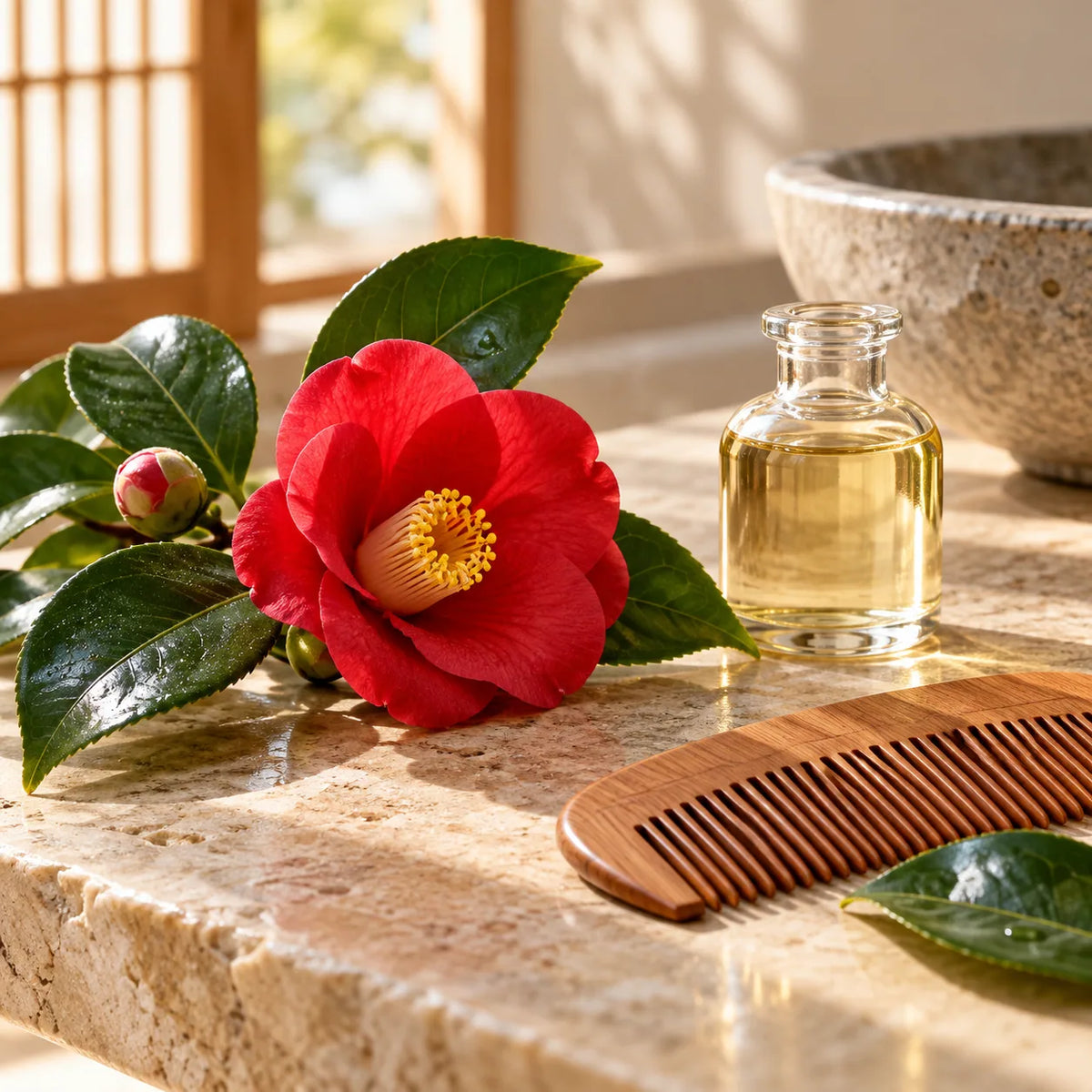
“Tsubaki” can mean two things on a Japanese beauty shelf: the camellia flower and the TSUBAKI hair-care brand. That is a small distinction with a big effect on what ends up in your bathroom. A bottle of pure camellia oil, a shampoo set and a rinse-off hair mask can all carry the same word, but they are not interchangeable.
So before choosing by the flower on a package, decide what you want the product to do in your routine. Do you need a daily wash, a conditioner for the lengths, an occasional richer mask, or a small amount of oil left on the ends? The answer is more useful than treating “tsubaki” as a single formula.
A flower, an oil and a product range
Tsubaki is the Japanese name for camellia. Camellia oil has a long association with Japanese hair care, while TSUBAKI is also the name of a range of finished shampoos, conditioners and treatments. The National Diet Library’s material on camellias offers a wider look at the plant’s place in Japan.
A finished shampoo or mask contains a blend of ingredients. Its name does not mean the bottle contains only camellia oil, and an oil from another brand is not the same product as a TSUBAKI conditioner. If a particular oil, fragrance or other ingredient matters to you, check the full list on the exact package. Formulas and sizes can change between editions.
The brand’s official TSUBAKI product information is a useful starting point for comparing its current lines. The store listing and the package are still the places to check the specific size and version you are ordering.
Choose the wash-and-condition pair first
For most routines, shampoo belongs at the scalp and conditioner belongs mainly through the lengths and ends. A shampoo removes the buildup of oil and styling products; a conditioner helps the hair feel easier to manage after washing. Neither step needs to be applied with force. Work the shampoo through a wet scalp, rinse it out, and distribute conditioner where your hair needs it most.
If your ends feel dry but your roots become oily quickly, do not assume you need a heavier product everywhere. Apply conditioner lower down and rinse the roots well. If the lengths are easily weighed down, use less at first. The amount of hair, its length and the way you style it all affect how much product feels right.


Both pairs include shampoo and conditioner. You do not need both sets at once to discover which direction you prefer. Start with one, use it for several washes and pay attention to the practical result: how your scalp feels, how easily your hair detangles, and whether the lengths look and feel comfortable after drying.
When a mask earns its place
A rinse-off hair mask is usually a richer conditioning step for the lengths. It can be useful when hair feels rough or difficult to comb, particularly after heat styling or coloring. It is not a requirement after every wash. Depending on your hair, you may prefer it occasionally in place of your usual conditioner, or you may find your regular conditioner is enough.
Follow the directions on the jar for the specific product instead of assuming every mask needs a long wait. Apply mainly through the mid-lengths and ends and rinse thoroughly. If your roots feel heavy afterward, use less or keep the mask farther from the scalp next time.

What “repair” can realistically mean
A conditioner, mask or oil can make the hair surface feel smoother, reduce the appearance of roughness and make detangling easier. Those are cosmetic effects you can often appreciate in the mirror and under your fingers. They are not the same as turning an already damaged hair fiber into newly grown hair.
If your ends split, a treatment may help them feel more manageable for a time, but it will not permanently join them back together. A trim and gentler handling may matter more than adding another rich product. If heat tools or color are part of your routine, using them thoughtfully also changes what you ask of your conditioner.
This is why the feel after rinsing matters. A mask that leaves one person’s thick, dry lengths soft may feel too heavy on someone else’s finer hair. Start small, adjust the placement and frequency, and give the product a few uses before deciding whether it belongs in your routine.
What about a separate camellia oil?
An oil is a different purchase from the three TSUBAKI products above. Some people like a little oil on their ends after washing; others prefer the lighter finish of a mist or milk. More is not necessarily better. If you use a leave-on oil, start with a very small amount through the lengths, avoiding the roots if they become greasy easily.
Do not pour a leave-on oil into a shampoo bottle or assume it replaces conditioner. Check whether the specific product is intended to be rinsed out or left on. Our comparison of Japanese hair milk and hair oil explains how those textures fit different routines, while our treatment versus conditioner guide covers rinse-off steps in more detail.
Reading the shelf without overthinking it
Check the full product name, size and format before relying on bottle color. A refill, a single bottle and a shampoo-and-conditioner set are different purchases; an older review may show packaging that no longer matches the current listing. If scent matters to you, read the information for the particular edition rather than assuming that every product in the line smells the same.
Choose a wash pair for the routine you already have, then add a mask or oil only if your lengths need something extra. That is a more dependable way to shop for tsubaki hair care than expecting the word on the front of the package to tell the whole story.

共有する:
Senka Perfect Whip: Skincare Benefits and Usage Tips
DHC Japan Guide: Products, Ingredients and Buying Tips