


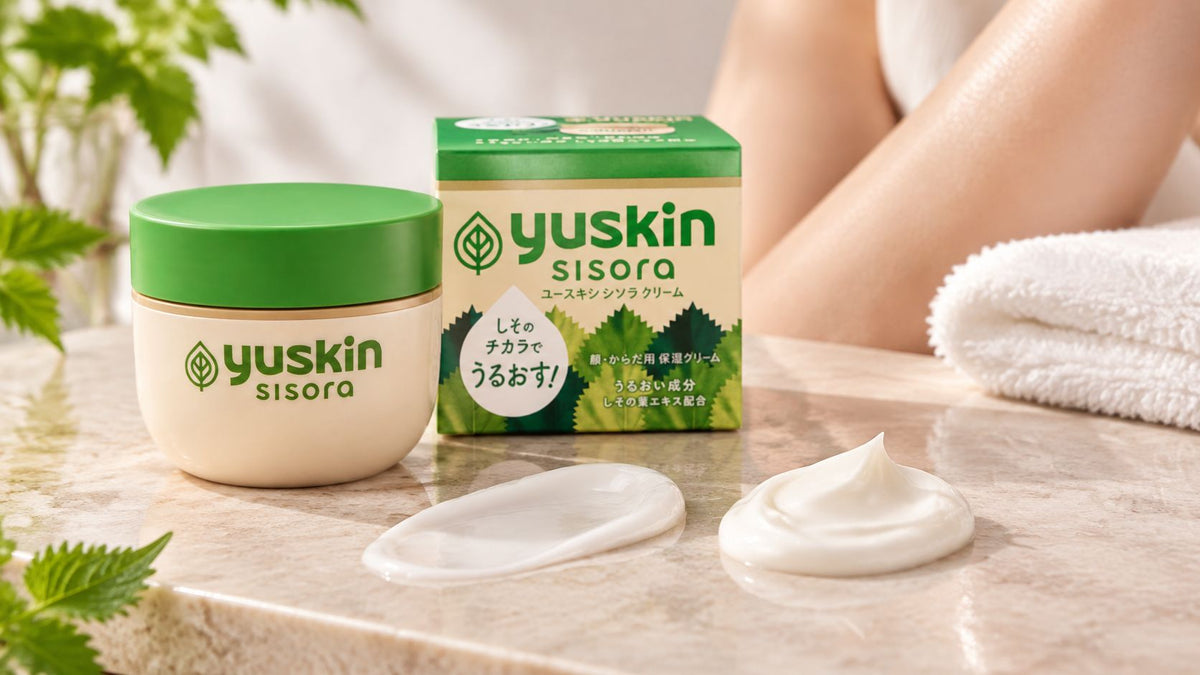
You step out of the shower, towel off, and within minutes the skin on your shins feels tight enough that you notice it. There's a bottle of Yuskin Sisora lotion on the shelf and a tube of the cream beside it. Both are sold for dry skin. Only one of them will get used tomorrow morning when you're already running late.
That's the decision behind Yuskin Sisora lotion vs cream, and it has nothing to do with which one is stronger. It's about which format you'll apply, over enough skin, often enough to matter. A lighter product you use twice a day beats a richer one that stays capped because it takes ten minutes before you can put on trousers.
What follows is how to match the format to your skin, your climate and your routine, plus what the labels can and can't tell you before you buy.
Lotion and Cream Side by Side
Lotion and cream are two different emulsions, and the format does more work than the word printed on the package. A review of moisturizers in dermatology describes lotions as generally thinner oil-in-water emulsions and creams as thicker oil-in-water or water-in-oil emulsions. That structural difference sets how the product spreads, how it feels, and how long the film lingers.
Both formats moisturize through the same three routes. Humectants attract water into the stratum corneum, emollients smooth the gaps between corneocytes, and occlusives reduce transepidermal water loss by leaving a hydrophobic film on the surface. What separates a lotion from a cream is the weight of that film and how fast it moves across skin.
Yuskin Sisora Lotion vs Cream on the Same Criteria
| Feature | Sisora Lotion | Sisora Cream |
|---|---|---|
| Emulsion type | Thinner oil-in-water emulsion | Thicker oil-in-water or water-in-oil emulsion |
| Texture on skin | Lighter, spreads quickly | Denser, more cushioned |
| Film left on skin | Thinner lipid film | Thicker lipid film, usually more persistent |
| Residue and dressing time | Lower residue, faster dressing | Heavier feel, more time before dressing |
| Best fit | Large areas, daytime use, warm or humid weather | Localized roughness, winter dryness, overnight use |
For Sisora, the lotion is the more practical benchmark for large-area, daytime use where fast spreading, low residue and getting dressed quickly are the priorities. The cream is the more technically appropriate choice when skin feels tight or rough, or dries again repeatedly after bathing, because a thicker lipid phase usually gives more persistence and occlusion.
Neither format is automatically stronger. Ingredient lists don't establish that one format carries a higher concentration of actives, so treat "cream" as shorthand for a heavier film, not a more potent product. Selection should follow dryness severity, season, body site and how your skin tolerates the formula.
Practical rule: choose the format by where the skin is dry and when it feels dry, then let reapplication cover the rest.
Timing matters as much as texture. Apply either format immediately after bathing while skin is still slightly damp, which supplies the water humectants need and lets the film slow what evaporates next.
The supply side runs on the same logic. Anyone who has compared the small tubes in a hotel bathroom with a pump bottle at home has already met the format question at scale, which is the reasoning behind this guide to sourcing hotel toiletries in bulk and why package format changes how much product a person uses. If hands are your main problem area rather than shins, the comparison in Yuskin Cream vs Hana Hand Cream weighs a similar set of trade-offs on a smaller surface.
Before picking a format, answer one question about your own skin: where is it dry, and when does it feel dry? The "where" points to area and friction. The "when" points to time of day and climate. Those two answers settle most of the decision.
How Moisturizer Formats Hold Water in Skin
Skin's outer layer behaves like a wall of bricks. The corneocytes are the bricks and the lipids packed between them are the mortar. Dryness doesn't come from missing bricks. It comes from gaps in the mortar and an open path for water to leave.
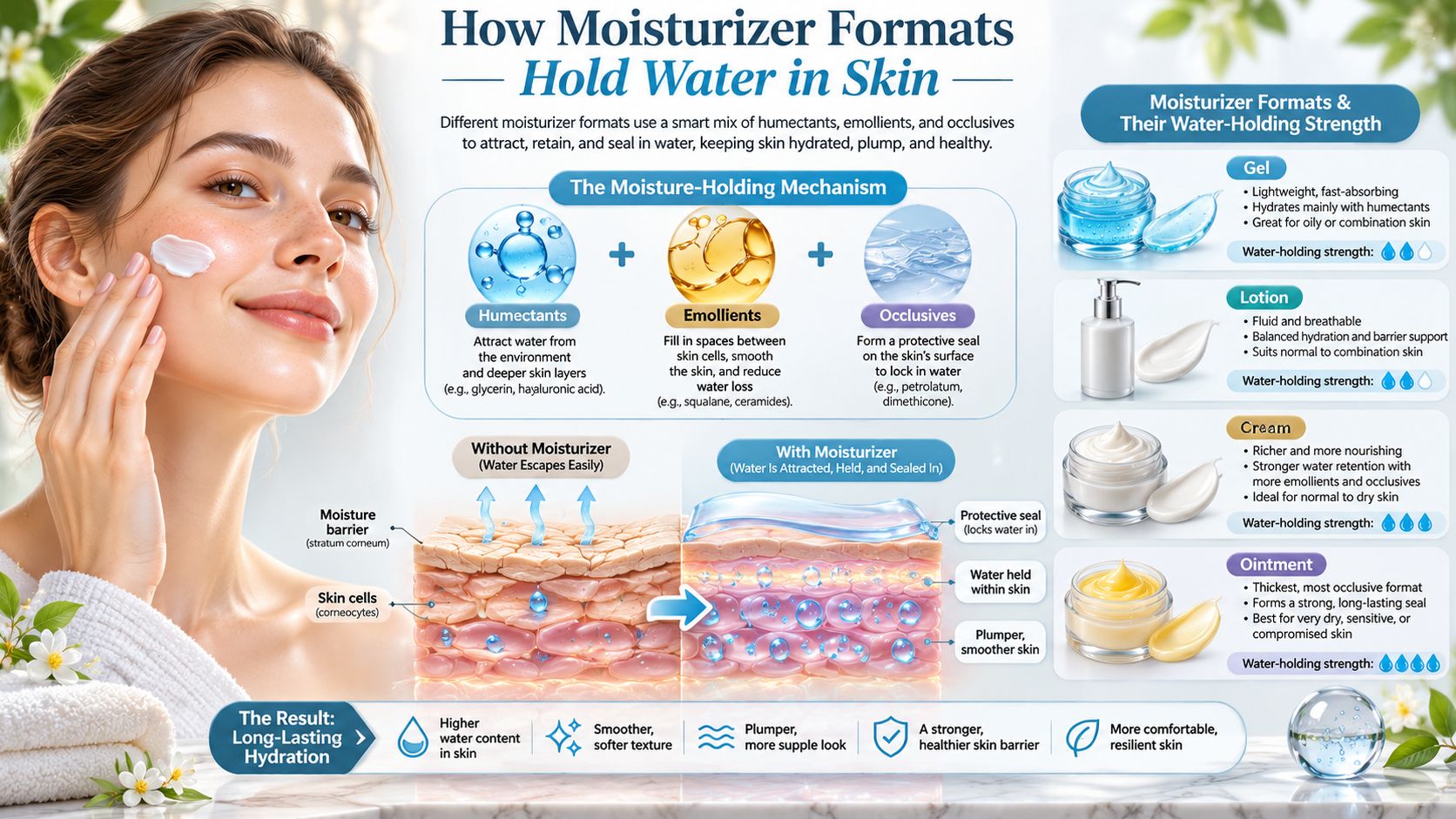
Every moisturizer works on one or more of three mechanisms, and the balance between them is what makes two products feel so different.
- Humectants such as glycerin, butylene glycol and betaine act like a sponge, drawing water into the stratum corneum. They need a water source, which is why damp skin after a bath matters so much.
- Emollients work as the mortar, filling the gaps between corneocytes so the surface feels smooth instead of rough and flaky.
- Occlusives work as a lid, forming a hydrophobic film that slows water from escaping through the surface.
Now attach format to mechanism. A lotion's lower viscosity spreads more evenly across a broad area with less drag, which is why it suits a full-body pass in the morning. A cream carries a thicker lipid phase that usually lays down a heavier occlusive film, useful on skin that keeps losing water through the day.
If a visual walk-through helps, this short video covers how the different moisturizer formats sit on skin.
Duration matters as much as mechanism. A StatPearls review of moisturizers notes that emollient effects can become apparent within approximately 30 to 60 minutes and commonly last around four hours. Read that against your own day. Washing hands, cold air, low indoor humidity and repeated cleansing all add barrier stress, and one morning application rarely survives all of it.
The format decides how the product feels in the first hour. Frequency decides how your skin feels by evening.
That's why topping up often does more for dry skin than choosing a richer texture. A thinner product refreshed twice a day usually leaves skin more comfortable than a heavy one applied once, because the film is renewed at the points where it wears thin.
If your skin stings or flakes rather than just feeling tight, the barrier needs attention rather than more product; this guide to barrier repair moisturizers explains which ingredients support it. The mechanisms only become useful once you attach them to a situation: a body part, a season and a time of day.
Which Format Fits Your Skin, Climate and Routine
Three variables settle the lotion-or-cream question: which body parts are dry, what the local climate and time of day are doing to the skin, and how often the product goes back on.
Open a typical lotion-versus-cream comparison chart and the columns read the same way: light against rich, fast-absorbing against intensive. The frame that helps more asks when the lighter option wins. Daytime use, hot or humid weather, large body areas, application straight after a shower, and anyone who dislikes residue all point to lotion. Localized roughness, winter dryness, elbows, knees, hands and overnight use point to cream.
Shopper priorities have moved in that direction. Reporting on the body-care boom notes that buyers increasingly judge body moisturizers by quick absorption, non-greasy feel, lasting moisture and suitability for seasonal or sensitive-skin needs, ahead of hydration claims alone. Circana reported in 2024 that consumer spending on prestige body-care products increased by 25%, as covered by Cosmetics & Toiletries.
Which Sisora Format to Start With, by Situation
| Situation | Start With | Why It Fits |
|---|---|---|
| Mild dryness in warm or humid weather | Lotion | Spreads thinly with less drag over large areas |
| Whole body, daytime use, quick dressing | Lotion | Lower residue and faster dressing |
| Elbows, knees, hands, shins, feet | Cream | Thicker film on high-loss or friction-prone spots |
| Winter dryness, rough or scaling skin | Cream | Thicker protective film for persistent dryness |
| Overnight use | Cream | Thicker layer suits longer contact time |
| Dislikes residue but has dry spots | Lotion first, cream on dry spots | Keeps daily use consistent while covering problem areas |
The deciding question is which format gets applied consistently, over enough body surface, in the climate where it is worn. A lighter formula used daily across the whole body does more for dry skin than a heavier one applied to two patches once a week. Thin texture also says little about strength. What a formula delivers depends on its ingredient balance, the amount applied and how often it goes back on. For lotion, that last variable is the main cost: it earns its comfort through frequency, so the format you skip is worse than the format you use.
Climate can move the answer within the same year. Skin that stays comfortable on lotion alone through a humid August may need cream on the shins by January, so I treat the table as a starting point and revisit it when the weather turns.
If your back or chest breaks out when you moisturize, texture matters for a different reason, and Neutralyze's non-comedogenic moisturizer guide covers what to look for in a body product.
How to Use Lotion and Cream in One Daily Routine
Say your shins and elbows crack in January, your trunk feels fine, and you want a routine that doesn't take ten minutes. You don't have to commit to a single format for your whole body. Split the job.
- Patch test a small area first. Apply a little to one forearm and wait a day. It separates a genuine product reaction from ordinary dryness before you commit to a full-body application. Stop if burning, worsening redness or irritation appears.
- Apply on damp skin after bathing. Pat rather than rub, leaving the surface slightly damp so humectants have water to work with. A towel-dried but still cool surface is the right moment to start.
- Take the lotion across the torso, arms and legs. Broad coverage with less drag is the whole point of the lighter format, and it's the step often skipped when a product feels slow to spread. Cleansing matters here too; this guide to Japanese body wash for dry skin covers how to choose one that doesn't leave skin tight.
- Switch to cream at elbows, knees, shins, hands and feet. These are the high-loss and friction-prone spots where a thicker film earns its place. Two small dots per elbow and a short pass down each shin is enough.
- Reapply after washing your hands and before sleep. These are the two moments when the film has worn thin and renewal costs you seconds. Keep the tube beside the sink if hands are the problem.
- Review the skin after a few days. Move another area to cream if it still feels rough, or retreat to lotion alone once the weather warms. The routine should follow your skin, not the calendar.
Seasonal adjustment is the easy part. In summer, the lotion usually covers everything, with cream reserved for heels and hands. In winter, the trunk often needs the cream too, and the whole routine shifts ten minutes earlier so the film settles before you dress.
If itch accompanies the dryness, Kowa Keratinamin Urea 20% Body Milk for Itchy Dry Skin comes in 100g and 200g sizes and lists urea alongside olive oil and squalane, with diphenhydramine hydrochloride and glycyrrhetinic acid among its ingredients. Read the full list and patch test before using it over a large area.
Ingredients in Yuskin Sisora Cream and What the Label Does Not Prove
An ingredient list earns a close read for what it says about a formula's build. The trouble starts when a buyer asks it to answer questions it can't.
Yuskin Sisora Cream is listed in the Buy Me Japan catalog in 38 g and 110 g sizes. The product page identifies three active ingredients: tocopheryl acetate, dipotassium glycyrrhizate and isopropyl methylphenol.
- Tocopheryl acetate is a form of vitamin E commonly used in skincare and appears here as a listed active.
- Dipotassium glycyrrhizate is a licorice-derived ingredient used widely in cosmetics.
- Isopropyl methylphenol is a preservative used in cosmetic formulas.
The remaining ingredients fall into two groups worth knowing.
- Humectant-type ingredients: glycerin, butylene glycol and betaine, which attract and hold water in the upper layer of skin.
- Plant-derived ingredients: perilla leaf extract, almond extract and oil-soluble chamomile flower extract, added as botanical components of the formula.
Formulas do change between production runs, so check the packaging of the tube in your hands rather than relying on a list you read somewhere else.
Now the part the label can't do. It doesn't establish that the cream treats a skin condition, guarantees a result, or that the product is allergen-free, vegan, halal or compatible with any particular diet. Almond and chamomile extracts are both present, so if you know you're sensitive to either, read the full ingredient list and patch test before regular use.
If you compare formulas by what supports the barrier rather than by texture, this overview of Japanese ceramide skincare covers the ingredients that come up most often.
The dense base is a format trait. It changes how the cream spreads and how long the film persists on skin, which is why it suits small, high-loss patches. The lotion earns its place a different way, covering large areas fast, and its real cost is that you reapply it more often.
Reading Sisora Sizes Without Mixing Units
Put a 38 g cream tube next to a 170 mL lotion bottle and the numbers look comparable. They are not. Millilitres measure liquid volume and grams measure product mass, so the figure printed on the front of each format cannot be read as the same kind of quantity.
Yuskin Sisora Sizes and Units
| Format | Size | Unit | Where Listed |
|---|---|---|---|
| Yuskin Sisora Cream, smaller size | 38 g | Grams (mass) | Buy Me Japan catalog |
| Yuskin Sisora Cream, larger size | 110 g | Grams (mass) | Buy Me Japan catalog |
| Yuskin Sisora Lotion | 170 mL | Millilitres (volume) | Reported in third-party listings; unconfirmed in the Buy Me Japan catalog |
A pump-style cream is also sold, which is a different product from the lotion despite carrying a similar number on the front.
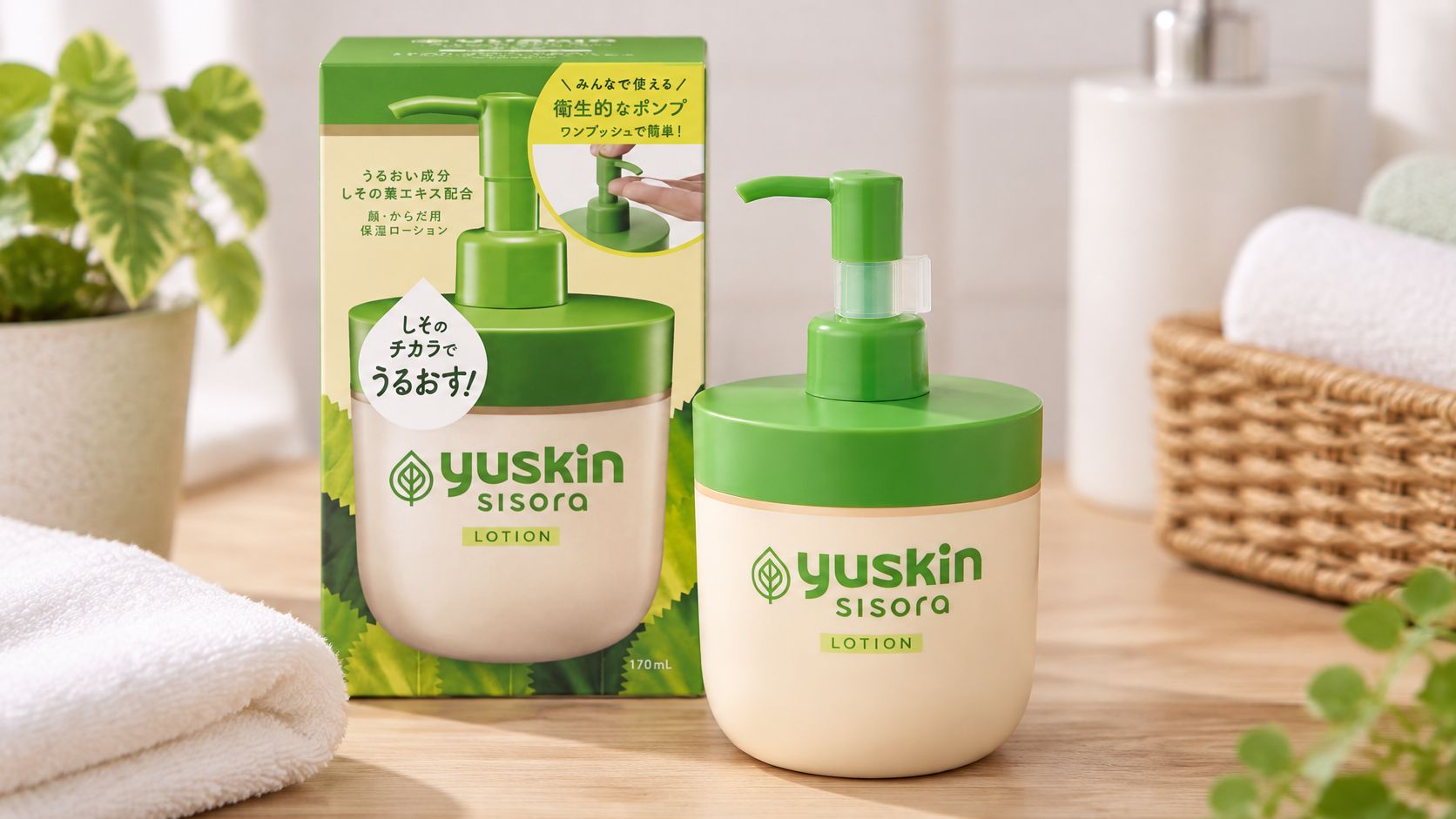
Converting between the two units would require the product's density, which appears on neither package, so treat volume and weight as separate figures rather than trying to reconcile them. The cream is commonly listed in 110 g and 38 g sizes. The lotion is reported as a 170 mL product, a figure that stays unconfirmed until you check the packaging in hand.
Fit follows the numbers. The 38 g cream is the travel or single-dry-area size, small enough for a handbag or a desk drawer. The 110 g cream suits regular use on localized spots. The lotion presentation, if the reported size holds, is the larger option for daily coverage across big areas. That matters because a lotion's real trade-off is how often it gets reapplied and repurchased, and the bottle size is what sets that rhythm.
Before comparing prices, note where each figure comes from. Both cream sizes appear in the Buy Me Japan catalog, while the lotion size is unconfirmed there, so verify it on the packaging before assuming the larger number means more product. The store also stocks Yuskin Sisora Moisturizing Cream Pump Family Size 170g, a family-size pump where the 170 refers to grams of cream, not millilitres of lotion.
Check the unit on every listing, then estimate how often you will apply before deciding which pack holds enough for your routine. Someone dabbing cream on two elbows twice a day empties a 38 g tube slowly. Someone spreading lotion over arms, legs and trunk twice a day works through a large bottle in weeks.
Choose the Format You Will Reapply Consistently
The choice between lotion and cream comes down to habit. A lotion you reapply after every wash serves you better than a cream you skip because it feels heavy at breakfast. The lotion's real trade-off is reapplication frequency: how many times a day you are willing to put it on.
One habit makes consistency easier: place the moisturizer where dryness starts. Keep the cream beside the sink for the minutes right after washing, and the lotion where you dress in the morning so it goes on before clothes do. Small placements do more for coverage than a larger tube kept in a cupboard.
Before you buy, read the product page for the current size and full ingredient list, and patch test a small area first. Stop using it if burning or worsening redness appears.
Hands tend to show dryness first because they're washed most often. This guide to Japanese hand cream for dry skin covers what to keep beside the sink. First-time shoppers who sign up get a 10% off coupon, which makes trying one format before committing to a larger size a little easier.
Start with the format that matches your most common dry area. The bottle you reach for without thinking is the one that will still be in use in three months.
Buy Me Japan carries Yuskin Sisora alongside cleansers, hand creams and barrier care that support the same routine, with flat and free shipping options and regular promotional deals. Browse Buy Me Japan and start with the size and format that fits the area you need to cover.
共有する:
KAI Auger Razor Refills: Matching the Handle and Counting Blades