

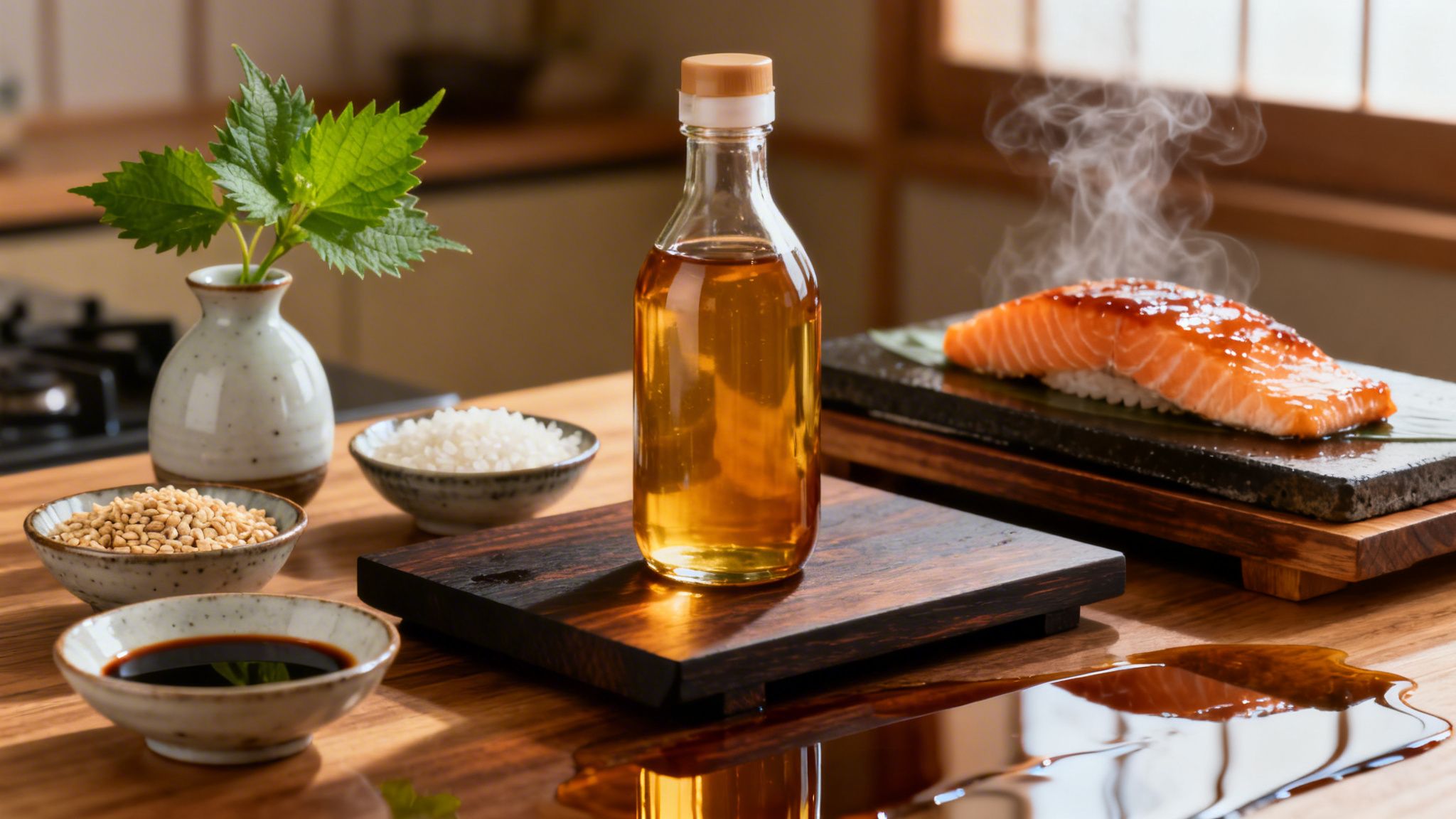
Har du nogensinde spekuleret på, hvad der giver teriyakisauce dens uimodståelige blanke glans, eller hvordan japansk bouillon får sin subtile, komplekse sødme? Svaret er ofte mirin, en grundlæggende ingrediens i det japanske køkken.
Mirin er en sød risvin lavet til madlavning, lige så essentiel som sojasauce og dashi. Det står for den karakteristiske sødme og fyldige smagsprofil, der definerer meget af det japanske køkken. I denne guide vil du lære præcis, hvad mirin er, hvordan du vælger den bedste slags, og hvordan du bruger den til at bringe autentiske japanske smage ind i dit hjem.
Denne krydderi er hemmeligheden bag at balancere smagene. Det blødgør saltigheden fra miso og sojasauce på mesterlig vis og skaber en rundere, mere harmonisk smag. Dens sødme er nuanceret og dyb, et resultat af dens unikke fermenteringsproces, ikke bare tilsat sukker.
Hemmeligheden bag autentisk japansk smag

Mirin gør mere end bare at tilføre sødme; det forbedrer maden på flere vigtige måder. Det er et alsidigt redskab, der løfter retter fra simple til enestående.
Hvad gør Mirin så speciel?
Mirins unikke egenskaber gør det til en uundværlig del af japansk madlavning. Det forbedrer smagen, teksturen og udseendet af maden på én gang.
- Tilsætter fyldig dybde (Umami): Under fermenteringen udvikles komplekse aminosyrer, som giver en rig, fyldig karakter. Dette er den mundvandende "femte smag" kendt som umami. For at lære mere, se vores guide om hvad umami smag er.
- Skaber en smuk, blank glasur: De naturlige sukkerarter i mirin karamelliserer perfekt under varme. Dette skaber det karakteristiske skær, eller teri, på alt fra grillet ål til kylling teriyaki.
- Mørner og maskerer lugte: Dets beskedne alkoholindhold hjælper med at mørne proteiner og kan blidt maskere enhver alt for fisket eller vildtpræget aroma i kød og skaldyr.
At forstå, at mirin er en smagsbalancer, glansgiver og mørner, er nøglen til at mestre japansk madlavning. Det er et vigtigt element i utallige opskrifter, fra simple glasurer til den indviklede verden af sushi-kunsten i Japan.
Fra luksusdrik til køkkenfast ingrediens: Historien om Mirin
Mirin var ikke altid en fast ingrediens i madlavningen. Dets historie begynder for århundreder siden under Japans feudale æra, hvor det var en luksuriøs, sød alkoholisk drik, nydt af eliten, meget lig en fin dessertvin.
Denne gyldne væske blev traditionelt brygget af kun tre ingredienser: klæbrigt ris, koji (en slags skimmel) og shochu (en japansk destilleret spiritus). Overgangen fra en eksklusiv drik til en kulinarisk nødvendighed skete under Edo-perioden (1603-1868). Mens Japans kulinariske kunst blomstrede, opdagede kokke dens unikke egenskaber. For mere om denne overgang, udforsk de historiske markedstendenser for mirins fremkomst.
Da kokke opdagede, at mirin kunne tilføje en smuk glasur og kompleks sødme, ændrede dens rolle sig. Den gik fra koppen til gryden og blev hemmeligheden bag de blanke, velsmagende saucer, der definerede en æra af japansk mad. Denne historie forklarer, hvorfor autentisk, traditionelt fremstillet mirin fra Japan er så værdsat. Det er ikke bare en ingrediens; det er et stykke kulinarisk arv.
Mirin er ikke den eneste traditionelle alkohol, der bruges i japansk madlavning. For at lære om en anden, læs vores guide om hvad sake er i madlavning.
Valg af den rigtige flaske: Hon-Mirin vs. Mirin-lignende krydderier

Når du køber mirin, vil du bemærke forskellige typer. At forstå etiketterne er nøglen til at få autentisk japansk smag. Den flaske, du vælger, vil helt sikkert ændre, hvordan din mad smager.
Valget står mellem autentisk, traditionelt fremstillet mirin og de mere almindelige "mirin-lignende" krydderier. De kan se ens ud, men de er meget forskellige i, hvordan de fremstilles, og hvad de tilfører en ret.
Hon-Mirin: Guldstandarden
Hon-mirin betyder "ægte mirin" og er den højeste kvalitet, der findes. Det fremstilles gennem en langsom, naturlig fermenteringsproces med kun klæbrigt ris, ris koji og shochu. Denne traditionelle metode, perfektioneret i Japan, sikrer et rent og komplekst produkt.
Denne proces skaber en dyb, naturlig sødme med en alkoholprocent på omkring 14%. Det er kokkenes og seriøse hjemmekokkes hemmelige våben. Dets naturlige sukkerarter giver retterne den smukke, blanke glans, mens dets aminosyrer tilføjer en rig umamidybd, som billigere alternativer ikke kan efterligne. På grund af alkoholen vil du gerne lade det simre i din sauce, så alkoholen fordamper og efterlader en ren sødme.
Mirin-lignende krydderier: De almindelige alternativer
Mange flasker mærket "mirin" er faktisk mirin-lignende krydderier, kendt i Japan som aji-mirin ("smager som mirin"). Disse blev skabt som billigere, lavalkoholiske alternativer, der kunne sælges i almindelige dagligvarebutikker uden alkoholbevilling.
- Shio-mirin: Dette er "salt-tilsat mirin." Den indeholder noget ægte mirin, men der er tilsat salt for at gøre den udrikkelig, hvilket hjælper med at undgå alkoholafgifter.
- Shin-mirin: Dette er en "mirin-lignende" krydderi med meget lidt eller ingen alkohol, ofte under 1%. I stedet for naturlig fermentering får den sin sødme fra glukose eller majssirup og indeholder ofte andre tilsætningsstoffer.
Selvom disse krydderier tilføjer sødme, mangler de de komplekse, fyldige noter fra ægte mirin. Smagen kan føles flad og ensidig sammenlignet med hon-mirin lavet i Japan. For virkelig autentiske resultater er det altid værd at finde ægte hon-mirin. Det sikrer, at du ikke får et produkt, der er afhængigt af majssirup eller tilsætningsstoffer for sin smag.
For en dybere indsigt i lignende japanske basisvarer er vores guide, der sammenligner risvinseddike vs mirin, en nyttig ressource.
Brug af mirin i dit køkken

Når du har din flaske mirin, er det tid til at begynde at lave mad. Mange tænker på teriyaki, men det er kun begyndelsen. En god mirin er et af de mest alsidige redskaber i japansk madlavning, der åbner op for autentisk, restaurantkvalitetssmag i dit eget køkken.
En af mirins mest kendte anvendelser er at skabe en smuk, blank finish på mad, en teknik kaldet tsuya på japansk. At pensle mirin på fisk som Hamachi Kama (gulhalet hals) før grillning giver den en utrolig glans og et strejf af karamelliseret smag. Det ser professionelt ud, men er utroligt nemt.
Ud over glasuren
Den smukke glans er kun én fordel. De naturlige sukkerarter og den subtile alkohol i mirin arbejder sammen om at balancere og uddybe smagene på fantastiske måder.
- Balancerer stærke smage: Hvis en ret er for salt på grund af sojasauce eller miso, vil et skvæt mirin blødgøre de skarpe kanter. Det mildner også den vilde smag af visse kødtyper eller den stærke aroma af fede fisk.
- Mørner og tilføjer fylde: Den lille mængde alkohol i ægte mirin fungerer som en fantastisk mørner for kød og skaldyr, hvilket hjælper det med at bevare saftigheden. Derfor er det en fast ingrediens i mange marinader.
- Uddyber bouillon og supper: En smule mirin tilsat nudelsupper gør en stor forskel. Det giver en subtil, kompleks sødme, der får en skål ramen eller udon til at smage rigere og mere fuldendt.
Mirin findes i de fleste traditionelle japanske hjem, fordi det er så essentielt. Som den søde base for utallige saucer og glasurer er det en vigtig spiller på det globale marked for dyppesaucer. Fra simple glasurer til komplekse nimono (simrede retter) er mirin rygraden i smagen.
Når du laver retter som stir-fries, tilføjer lidt mirin den perfekte sød-salte note. For at lære mere om at opbygge smagslag, vil forståelsen af grundprincipperne i krydderi til stir fry løfte din madlavning til næste niveau. Et godt udgangspunkt er at blande mirin med sojasauce til en klassisk marinade. For flere idéer, udforsk vores guide til lette japanske opskrifter til hver aften.
Sådan vælger og opbevarer du din Mirin

Når du køber mirin, er hemmeligheden enkel: læs altid ingredienslisten. Den fortæller dig alt, hvad du behøver at vide om kvaliteten.
En ægte autentisk hon-mirin fra Japan har en kort, ren ingrediensliste: klæbrigt ris, koji (ris malt) og shochu (en destilleret spiritus). Det er det hele. Hvis du ser majssirup, glukose eller andre tilsætningsstoffer, kigger du på en "mirin-lignende krydderi." Selvom disse tilføjer sødme, mangler de den dybe, komplekse umami, der gør ægte mirin speciel. For autentisk smag er enkelhed nøglen.
Sådan holder du din Mirin frisk
Når du har bragt din flaske hjem, er korrekt opbevaring vigtig for at bevare kvaliteten.
- Før åbning: En uåbnet flaske mirin bør opbevares et køligt, mørkt sted som et spisekammer eller køkkenskab, væk fra direkte sollys og varme.
- Efter åbning: Ægte hon-mirin indeholder omkring 14% alkohol, som fungerer som et naturligt konserveringsmiddel. Du kan opbevare det i et mørkt skab i et par måneder. For bedste resultat anbefales det dog at opbevare det i køleskabet.
Opbevaring af åben mirin i køleskabet bremser oxidation. Dette enkle trin hjælper med at bevare dens delikate søde smag og aroma, så hver ret du laver er lige så frisk som den første. At vælge kvalitetsingredienser er det første skridt mod at skabe fantastiske japanske måltider. For at udforske andre essentielle varer, se vores udvalg af autentiske japanske fødevarer online.
Almindelige spørgsmål om mirin besvaret
Her er svar på nogle almindelige spørgsmål, folk har, når de først begynder at bruge mirin.
Hvad er en god erstatning for mirin?
I en nødsituation kan du bruge en tør hvidvin eller sake blandet med lidt sukker. Et godt forhold er cirka en 1/2 teskefuld sukker for hver spiseskefuld væske.
Dette er dog kun en midlertidig løsning. Ingen erstatning kan virkelig fange den komplekse umami og dybe, naturlige sødme fra korrekt fermenteret mirin. At bruge den autentiske ingrediens fra Japan gør en mærkbar forskel i smagen.
Hvad er forskellen på mirin og riseddike?
Dette er et almindeligt forvirringspunkt, men mirin og riseddike er modsætninger. Mirin er en sød risvin, der tilføjer dybde og blid sødme. Riseddike er derimod fermenteret, indtil den bliver skarp og sur.
Tænk på det sådan: mirin balancerer salte smage, mens riseddike tilføjer en frisk, syrlig note. At bruge riseddike i stedet for mirin ville gøre en ret sur i stedet for sød og fyldig.
Kan man drikke mirin?
Teknisk set kan du godt drikke hon-mirin (ægte mirin). Det er en naturligt brygget risvin med omkring 14% alkohol, som historisk blev nydt som en sød likør.
De fleste mirin i dag er dog lavet til madlavning, ikke til at drikke. De lavere kvalitets mirin-lignende krydderier er bestemt ikke til at drikke, da de ofte indeholder tilsat salt og majssirup.
Traditionen med mirin-produktion opretholdes af japanske mærker, der har mestret håndværket i århundreder. Denne dedikation sikrer den utrolige kvalitet. Du kan se, hvordan denne arv former branchen, ved at udforske arven fra de førende mirin-producenter.
Fordamper alkoholen i mirin ved tilberedning?
For det meste, ja. Når du tilsætter mirin til en simrende sauce eller en varm pande, får varmen det meste af alkoholen til at fordampe, så kun den vidunderlige smag og sødme bliver tilbage. Jo længere det koger, desto mere alkohol fordamper.
Hvis du har strenge kostbehov, skal du være opmærksom på, at der kan være en meget lille mængde alkohol tilbage i den færdige ret.
Hos Buy Me Japan mener vi, at autentisk smag starter med autentiske ingredienser. Vi gør det nemt for internationale kunder at få adgang til produkter af høj kvalitet. Udforsk vores nøje udvalgte sortiment af ægte japanske basisvarer, som er hentet og sendt direkte fra Japan til dit køkken, og oplev forskellen selv.

Del:
Hvad er Umami-smag: En guide til den femte smag
Hvad er Kani, og er det ægte krabbe?