


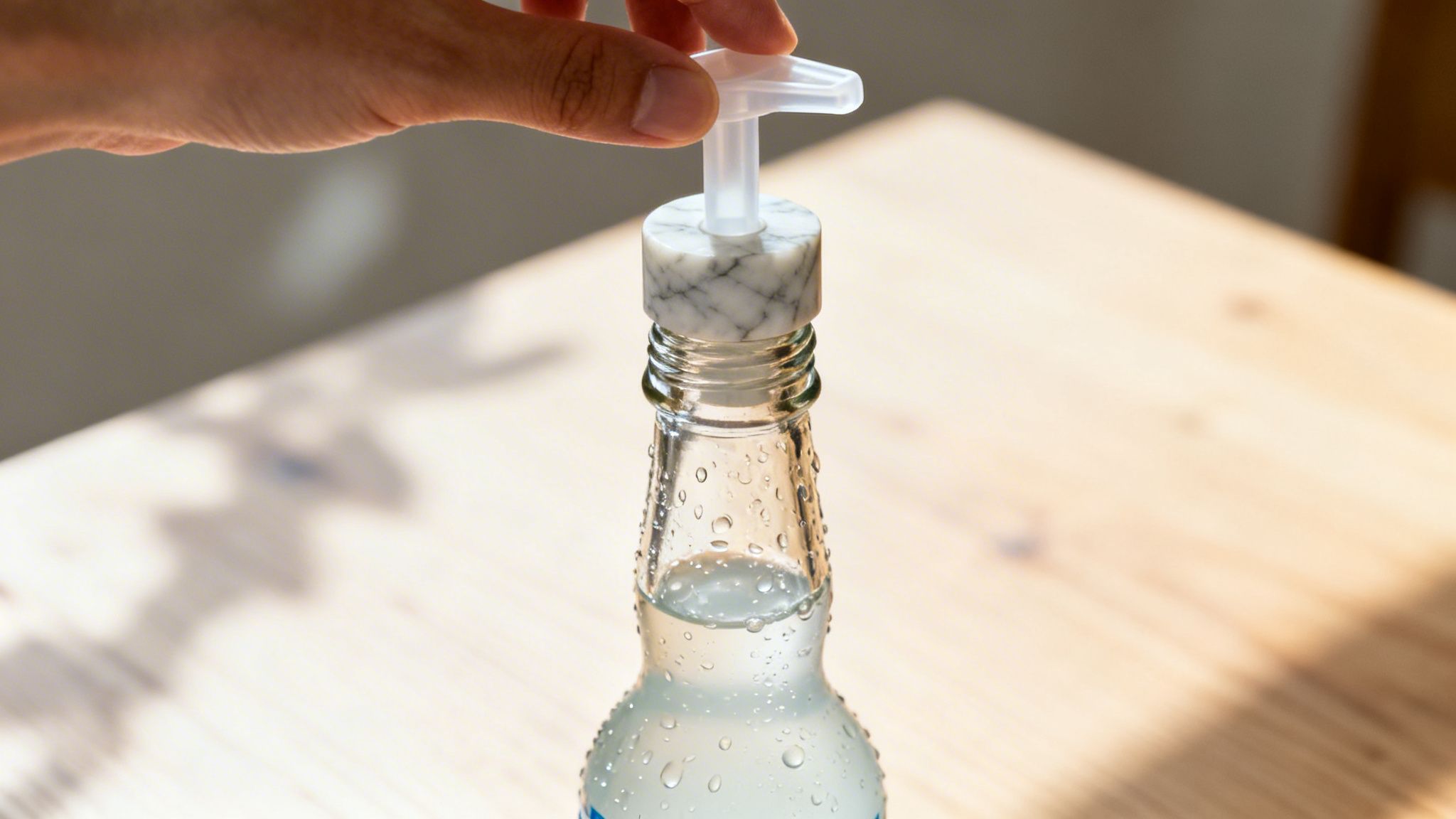
Du hältst wahrscheinlich gerade eine Ramune-Flasche in der Hand, drehst sie und fragst dich, warum eine Limonade wie ein Rätsel wirkt. Diese Reaktion ist normal. Ramune ist eines dieser japanischen Getränke, die schon vor dem ersten Schluck verspielt wirken.
Wenn du Ramune zum ersten Mal probierst, kann die Murmel im Flaschenhals verwirrend wirken. Die gute Nachricht ist, dass das Öffnen, sobald du die Flasche verstanden hast, zum Teil des Spaßes wird. Du öffnest nicht einfach nur eine Limonade. Du nimmst an einem kleinen Ritual teil, das seit Generationen mit der japanischen Trinkkultur verbunden ist.
Dieser Leitfaden zeigt dir genau, wie man eine Ramune öffnet, was die Murmel macht, wie man Verschütten vermeidet, was zu tun ist, wenn die Murmel klemmt, und ein paar clevere Tipps zu Barrierefreiheit und Hygiene, die viele Anleitungen auslassen. Wenn du gerne besondere japanische Getränke entdeckst, ist diese Übersicht über beliebte japanische Getränke auch eine tolle nächste Lektüre.
Willkommen in der spaßigen Welt der Ramune-Limonade
Ramune ist eines der bekanntesten japanischen Erfrischungsgetränke, weil die Flasche Teil des Erlebnisses ist. Statt eines gewöhnlichen Verschlusses wird eine Glaskugel verwendet, um die Kohlensäure zu versiegeln. Das macht das erste Öffnen etwas ungewöhnlich, aber auch unvergesslich.
In Japan wird Ramune eng mit dem Sommer verbunden. Viele Menschen assoziieren es mit Festen, warmem Wetter und dem einfachen Vergnügen eines kalten, sprudelnden Getränks. Für Ersttrinker außerhalb Japans erzeugt dieselbe Flasche oft eine Mischung aus Neugier und Zögern.
Viel Verwirrung entsteht durch eine Frage: Dreht man etwas, zieht man etwas, oder drückt man die Murmel gerade nach unten? Die Antwort ist drücken, aber die Details sind wichtig.
Tipp: Halte die Flasche beim ersten Mal aufrecht und bewege sie langsam. Ramune belohnt Geduld mehr als Kraft.
Es gibt auch ein paar Stellen, an denen Anfänger oft stolpern:
- Den Öffner wegwerfen: Das kleine Plastikteil am Flaschenhals ist kein Verpackungsmüll. Man braucht es.
- Schräges Drücken: Wenn der Druck ungleichmäßig ist, fällt die Murmel vielleicht nicht sauber herunter.
- Zu schnelles Trinken: Die Murmel hat einen Ruheplatz im Flaschenhals, aber man muss die Flasche richtig kippen.
Wenn man die Reihenfolge kennt, wirkt das Ganze ganz einfach. Noch besser: Es wird sogar charmant. Dieses kleine Ploppen und das Aufbrausen sind ein großer Teil davon, warum Ramune so beliebt bleibt.
Das geniale Design einer Ramune-Flasche
Die Ramune-Flasche ist aus gutem Grund clever. Sie wurde entwickelt, um ein echtes Problem zu lösen, nicht nur, um ungewöhnlich auszusehen.
Laut Bokksus Übersicht über wie die Ramune-Flasche funktioniert wurde die Ramune-Flasche 1872 vom schottischen Apotheker Alexander Cameron Sim in Japan erfunden und verwendet ein Codd-Hals-Design mit einer Glasmurmel als druckdichtem Verschluss. Dieselbe Quelle stellt fest, dass dieses Design ein wichtiger Teil der japanischen Limonadenkultur wurde und bis zu 99 % Kohlensäure im Vergleich zu herkömmlichen Flaschen mit Korkverschluss bewahren kann.
Warum die Murmel funktioniert
Im Flaschenhals wird die Murmel durch den Druck des kohlensäurehaltigen Getränks an Ort und Stelle gehalten. Einfach gesagt hilft die Kohlensäure, die Flasche dicht zu verschließen. Das bedeutet, der Verschluss ist nicht getrennt vom Drucksystem des Getränks. Er ist Teil davon.
Das ist es, was Ramune so anders als eine normale Limonadenflasche macht. Sie schrauben keinen Deckel ab. Sie lösen eine versiegelte Murmel-Sicherung.
Einige Designmerkmale machen das möglich:
- Der schmale Hals: Er führt die Murmel in die Dichtungsposition.
- Die Glasmurmel: Sie fungiert als Verschluss.
- Die Vertiefungen im Flaschenhals: Sie verhindern, dass die Murmel beim Trinken den Weg blockiert.
Warum das für Trinkende wichtig ist
Das Verständnis des Designs erleichtert das Befolgen der Öffnungsanleitung. Wenn Sie wissen, dass die Murmel unter Druck steht, macht es Sinn, die Flasche aufrecht zu halten und gerade nach unten zu drücken.
Er erklärt auch, warum Ramune mehr als nur eine Neuheit ist. Die Flasche ist ein Stück Getränketechnikgeschichte, das überlebt hat, weil es gleichzeitig effektiv und spaßig ist.
Wenn Sie gerne mehr über Getränke mit tiefen Wurzeln in Japan erfahren, bietet dieser Artikel zur beliebten japanischen Getränkeszene nützlichen kulturellen Kontext.
Wichtig: Die Murmel ist keine Dekoration. Sie ist die Dichtung.
Ihr Leitfaden für ein perfektes Ramune-Öffnen
Das Öffnen von Ramune gelingt reibungslos, wenn Sie es als kurze Abfolge behandeln, nicht als Wettlauf. Stellen Sie die Flasche zuerst auf eine ebene Fläche. Ein Tisch oder die Küchenarbeitsplatte sind ideal.

Die Öffnungsschritte
-
Stellen Sie die Flasche aufrecht hin
Halten Sie die Flasche beim Öffnen nicht in der Luft. Eine stabile Oberfläche gibt Ihnen bessere Kontrolle und verringert die Gefahr des Abrutschens.
-
Entfernen Sie die äußere Plastikfolie
Ziehen Sie es vorsichtig vom oberen Abschnitt ab. Achten Sie auf den kleinen Plastiköffner, der am Verschlussbereich befestigt ist.
-
Nehmen Sie das Stößelwerkzeug heraus
Das ist der Teil, den viele Erstnutzer übersehen. Du benutzt ihn, um die Murmel in die Flasche zu drücken.
-
Setze den Kolben direkt über die Murmel
Positioniere ihn sorgfältig mittig. Wenn der Kolben schief sitzt, geht deine Kraft seitlich statt gerade nach unten.
-
Drücke fest mit dem Handballen
Drücke in einer kontrollierten Bewegung nach unten. Du solltest das vertraute Ploppen hören, wenn die Murmel fällt.
-
Halte den Kolben kurz an Ort und Stelle
Kelly Loves erklärt in seinem Guide zum richtigen Öffnen von Ramune-Flaschen, dass du nach dem Ploppen 5 Sekunden halten solltest. Dieselbe Quelle sagt, das hilft, den anfänglichen Druck von 2 bis 3 atm abzulassen und kann Schaumaustritt um 80% im Vergleich zum schnellen Öffnen reduzieren.
So sollte sich der Moment anfühlen
Ein richtiges Öffnen gibt dir normalerweise drei Signale gleichzeitig. Du hörst das Ploppen, siehst einen schnellen Aufstieg der Bläschen und fühlst, wie der Kolben sich setzt, während die Murmel fällt.
Wenn das passiert, hast du es richtig gemacht.
Tipp: Drücke gerade nach unten, nicht hart und wild. Kontrollierter Druck funktioniert besser als ein plötzlicher Schlag.
Bevor du den ersten Schluck nimmst
Kippe die Flasche nicht sofort, während die Kohlensäure noch aktiv ist. Gib ihr einen kurzen Moment zum Beruhigen. Entferne dann den Kolben und schaue auf den Flaschenhals. Du wirst sehen, dass die Murmel sich jetzt in der Kammer bewegt.
Für weitere japanische Vorrats- und Getränkefunde über Ramune hinaus, stöbere in diesem Guide zu japanischen Lebensmitteln online.
Was zu tun ist, wenn die Murmel stecken bleibt
Eine festsitzende Murmel ist die häufigste Ramune-Frustration. Meist liegt das Problem nicht an der Flasche, sondern am Winkel oder der Kraft des Drucks.
Wenn du nicht mittig drückst, kann die Murmel sich weigern, vollständig zu fallen. Wenn du mitten im Vorgang zögerst, verlierst du auch die saubere Abwärtsbewegung, die das Siegel öffnet.
Sichere Methoden zur Behebung
Fange ruhig noch einmal an. Stelle die Flasche auf eine ebene Fläche und achte darauf, dass sie aufrecht steht.
Versuche dann diesen kurzen Reset:
- Entferne und überprüfe den Kolben erneut: Stelle sicher, dass er genau über der Murmel sitzt.
- Passe deine Handposition an: Nutze den Handballen für einen direkten Druck.
- Drücke in einer gleichmäßigen Bewegung: Vermeide Klopfen oder wiederholtes Stupsen.
Manchmal kippen Leute die Flasche auch zu früh nach dem Öffnen. Das kann die Murmel in eine ungünstige Position bringen und die Flasche blockiert wirken lassen. Wenn das passiert, stelle die Flasche wieder aufrecht hin und lasse die Murmel sich setzen.
Was man nicht tun sollte
Verwenden Sie kein Messer, keinen Löffelstiel, keinen Stift oder irgendeinen anderen Gegenstand, um die Murmel zu erzwingen. Schlagen Sie die Flasche nicht gegen eine Tischkante. Die Flasche ist aus Glas, und Ungeduld ist hier das größte Sicherheitsrisiko.
Wenn die Murmel beim ersten Mal nicht fällt, positionieren Sie neu, bevor Sie mehr Kraft anwenden.
Wenn Ramune richtig geöffnet wird, ist der Vorgang einfach. Wenn es schiefgeht, ist die sicherste Lösung fast immer eine bessere Ausrichtung, nicht mehr Kraft.
Fortgeschrittene Tipps für Barrierefreiheit und Hygiene
Viele Ramune-Anleitungen gehen davon aus, dass jeder Leser eine starke Griffkraft hat und keine Probleme mit dem Öffner. Das schließt viele Menschen aus.
Ein besserer Leitfaden sollte reale Situationen berücksichtigen. Einige Leser haben Arthritis, Handschmerzen oder eingeschränkte Geschicklichkeit. Andere möchten eine sauberere Methode zum Öffnen der Flasche, wenn sie Getränke teilen oder mit Lebensmitteln umgehen.
Einfacheres Öffnen bei eingeschränkter Handkraft
Wenn das Drücken des Kolbens schwierig ist, kann eine einfache Greifhilfe helfen. Verifizierte Anleitungen weisen darauf hin, dass die Verwendung eines Gummideckelöffners um den Flaschenhals die benötigte Kraft um bis zu 40 % reduzieren kann. Das erleichtert das Stabilisieren der Flasche, während Sie sich auf das Drücken vorbereiten. Dieselbe verifizierte Anleitung hebt auch eine sauberere alternative Öffnungsmethode mit einer Tischkante hervor, die hier als suchgestützte Ressource zum barrierefreien Öffnen von Ramune erwähnt wird.
Das bedeutet, dass Sie nicht immer nur auf den bloßen Handgriff angewiesen sind.
Praktische Anpassungen umfassen:
- Verwenden Sie eine Gummihilfe zum Greifen: Sie verhindert, dass die Flasche wegrutscht, während Sie den Kolben ausrichten.
- Bitten Sie um eine zweite helfende Hand: Eine Person hält die Flasche fest, während die andere drückt.
- Nehmen Sie sich Zeit: Die Ausrichtung ist wichtiger als die Geschwindigkeit.
Für Leser, die an alltäglichen japanischen Pflegeartikeln interessiert sind, die auf Komfort und Routine ausgelegt sind, ist dieser Artikel über was ein Konjak-Schwamm ist eine interessante Ergänzung.
Eine visuelle Demonstration kann die Bewegung ebenfalls verdeutlichen:
Sauberere Gewohnheiten rund um den Kolben
Der Öffner wird oft schnell und ohne viel Nachdenken benutzt. Wenn Ihnen Hygiene wichtig ist, lohnt es sich, das zu ändern.
Eine nützliche Alternative ist die verifizierte Werkzeugfreie Methode mit einer sauberen Tischkante, um den Kolben zu hebeln, die in der oben genannten verifizierten Anleitung als effektive und hygienische Option beschrieben wird. Wenn Sie den mitgelieferten Kolben verwenden, stellen Sie sicher, dass Ihre Hände und die Oberfläche zuerst sauber sind.
Saubere Hände, ein sauberer Flaschenhals und eine saubere Öffnungsfläche machen das gesamte Erlebnis besser.
Dieser Teil des Ramune-Rituals wird leicht übersehen, ist aber wichtig. Kleine Gewohnheiten können eine ausgefallene Limonade für mehr Menschen angenehmer und zugänglicher machen.
Wie man Ramune serviert, lagert und genießt
Nach dem Öffnen genießt man Ramune am besten gekühlt. Eine kalte Flasche lässt die Kohlensäure schärfer und erfrischender wirken, was zum hellen, verspielten Charakter des Getränks passt.
Beim Trinken die Murmel beobachten. Der Flaschenhals hat eingebaute Vertiefungen, die helfen, die Murmel vom Fluss abzuhalten. Wenn die Murmel sich zur Öffnung bewegt, drehe die Flasche leicht, damit sie sich in einer dieser Ruhepositionen absetzt.
Beste Art zu trinken
Ein paar einfache Gewohnheiten verbessern das Erlebnis:
- Kühl halten: Am besten direkt aus dem Kühlschrank servieren.
- Sanft im Winkel trinken: Das hilft, die Murmel aus dem Weg zu halten.
- Nach dem Öffnen nicht schütteln: Das Sprudeln macht den Spaß aus, aber zu viel Bewegung macht das Trinken unordentlich.
Lagerungstipps
Ungeöffnete Flaschen sollten aufrecht an einem kühlen Ort gelagert werden. Nach dem Öffnen ist Ramune am besten, wenn es bald getrunken wird, denn der besondere Reiz ist die lebendige Kohlensäure und das frische Gefühl beim ersten Einschenken.
Deshalb sticht authentisches japanisches Ramune auch hervor. Das Flaschendesign, das Öffnungsritual und die Trinkmethode arbeiten alle zusammen. Es geht nicht nur um den Geschmack. Es geht um das Erlebnis, es so zu trinken, wie es gedacht ist.
Dein nächstes japanisches Snack-Abenteuer wartet
Ramune ist eines dieser seltenen Getränke, das dir etwas beibringt, bevor du es überhaupt probierst. Sobald du weißt, wie man eine Ramune-Flasche richtig öffnet, wirkt die Flasche nicht mehr einschüchternd, sondern erfreulich.
Die Murmel, das Ploppen und der sprudelnde erste Schluck ergeben zusammen ein kleines, aber unvergessliches Stück japanischer Trinkkultur. Wenn es Probleme gibt, ist die Lösung meist einfach. Bessere Ausrichtung, eine stabilere Oberfläche und etwas Geduld beheben die meisten Schwierigkeiten.
Wenn Sie gerne Getränke mit etwas Knusprigem oder Herzhaftem kombinieren, sind diese japanischen Reissnacks die natürliche nächste Station.
Wenn Sie authentisches Ramune und andere japanische Snacks entdecken möchten, ist Buy Me Japan ein praktischer Ort, um Produkte zu durchstöbern, die direkt aus Japan versendet werden. Es ist eine praktische Option für Käufer, die echte japanische Getränke, Süßigkeiten, Schönheitsartikel und Alltagsprodukte an einem Ort suchen.


Compartir:
Japanische Garnelen-Cracker: Ein Einkaufsführer für Ebi Senbei
Ryo Shampoo gegen Haarausfall: Ihr Guide 2026 für dichteres Haar
1 Kommentar
Blir knust på gangveier, antar for å få kula. burde forbys da det er farlig for hunder, katter, sykler og folk