


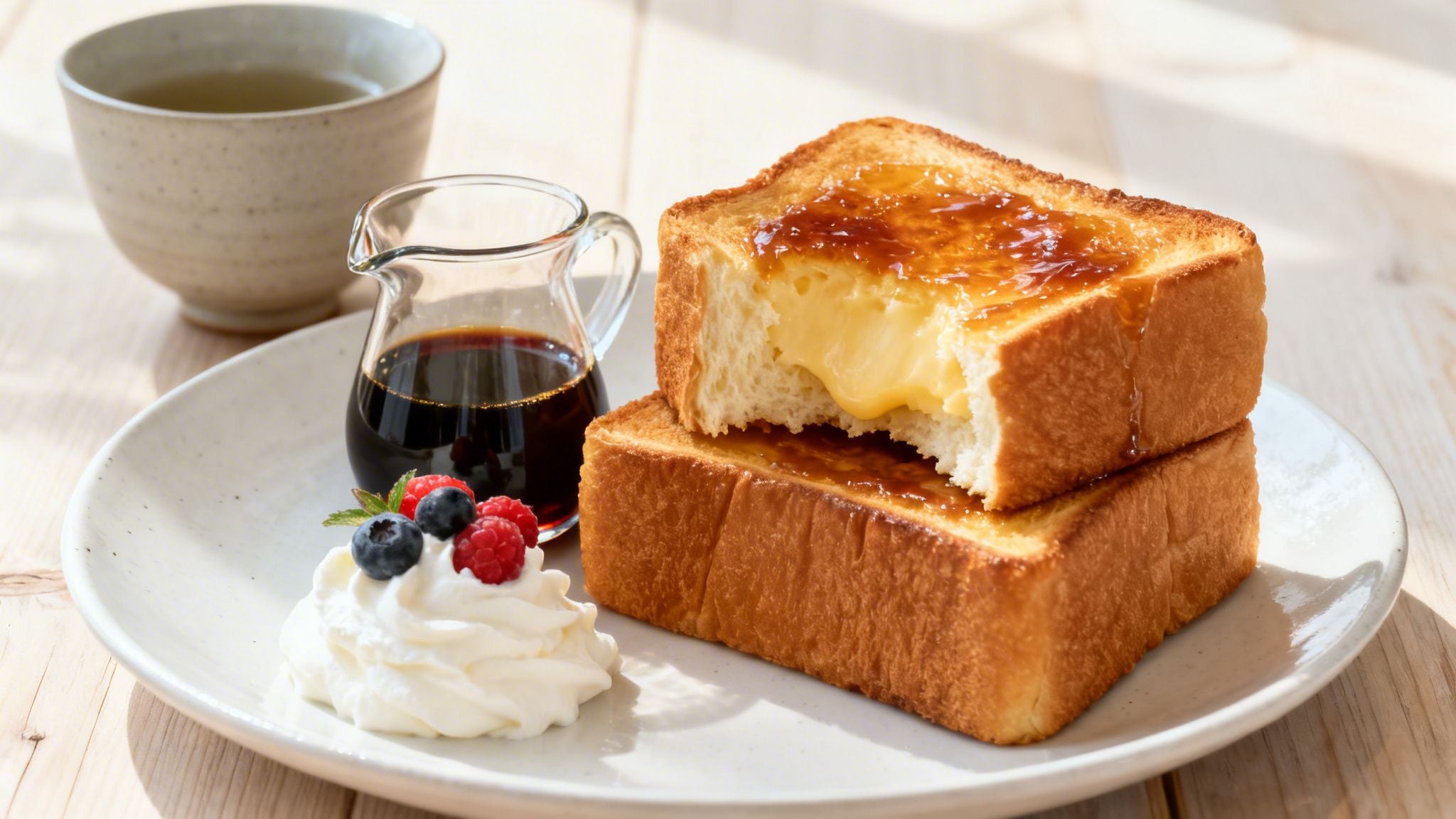
If you've ever had Japanese French toast, you know it's a completely different experience. That legendary, cloud-like texture isn't an accident—it's the result of a very specific combination of ingredients and technique. It all starts with the right bread, shokupan, or Japanese milk bread. Its impossibly soft crumb is the perfect sponge for a rich, custardy soak.
This guide is all about helping you master this beloved cafe staple right in your own kitchen. We'll go through the entire process, from whipping up the perfect egg custard to getting that signature golden-brown, caramelized crust without turning the delicate inside to mush. It's not just about what to do, but why each step is so important.

The magic really comes down to a few core principles that set it apart:
- The Bread is Everything: Using a thick-cut shokupan is non-negotiable. Its high moisture content and slightly sweet flavor mean it can absorb the custard without falling apart, giving you that incredible pudding-like center.
- A Decadent Soak: The custard isn't an afterthought. It's often made with heavy cream or high-fat milk, creating a much richer and more flavorful base than what you'd find in standard recipes.
- Patience is a Virtue (Low and Slow): You have to be patient with this one. Cooking over low heat is the key. It allows the custard-soaked interior to steam and set perfectly while the outside develops a gentle, even color.
In Japan, this dish has evolved beyond just breakfast. Around 2013, it became a full-on meal known as shokuji French toast (meal-style French toast), captivating food lovers across the country. This was part of a larger, recurring trend for flour-based treats that often cycle in popularity.
Once you get these basics down, you open up a whole world of culinary creativity. To build up your confidence, check out our guide on Japanese cooking basics to really hone your skills. Before you know it, you’ll be making French toast that tastes just like it came from your favorite Tokyo cafe.
Gathering Your Authentic Japanese Ingredients
To truly capture that fluffy, custard-like texture of authentic Japanese French toast, you have to start with the right ingredients. It’s less about a strict recipe and more about a philosophy of quality. This is what separates a good attempt from a truly memorable, cafe-quality breakfast.

The single most important ingredient is the bread. You absolutely need shokupan, or Japanese milk bread. Its pillowy-soft, slightly sweet crumb has a unique springiness that allows it to soak up an incredible amount of custard without falling apart. This is the secret to getting that dreamy, pudding-like center. Standard sandwich bread just turns to mush.
Building a Richer Custard
Now, for the soak itself. While any milk and eggs will get the job done, using a richer, creamier Japanese milk lends a subtle sweetness and decadent mouthfeel that really elevates the final dish. It’s a small change that makes a big difference.
When it comes to sweeteners, this is a great chance to add some complexity. Instead of just plain sugar, consider these authentic alternatives for a more nuanced flavor:
- Kuromitsu: This Japanese black sugar syrup has a rich, molasses-like depth that’s worlds away from maple syrup.
- Mirin: Just a small splash of sweet rice wine not only adds a unique savory-sweet note but also helps create a gorgeous caramelized crust.
The goal isn’t just sweetness; it's harmony. Each ingredient should support the bread's texture, creating a perfect balance of flavor and richness in every single bite.
If you're feeling adventurous and want to try a savory shokuji style French toast, a couple of Japanese pantry staples are key. The beloved tangy and creamy Kewpie mayonnaise adds an unbelievable richness, while a little Kikkoman soy sauce provides that essential savory umami kick. You can find a huge variety of these authentic seasonings by exploring our guide to Japanese food products online.
To see what makes these choices so critical, let's compare them directly.
Key Ingredient Comparison: Standard vs. Japanese French Toast
This table breaks down how specific ingredient swaps create the signature Japanese-style experience.
| Component | Standard French Toast | Japanese French Toast |
|---|---|---|
| Bread | Sliced sandwich bread, brioche, or challah | Shokupan (Japanese milk bread) is essential for its soft, springy texture. |
| Milk | Regular whole milk | Richer, creamier milk for a more decadent custard base. |
| Sweetener | White sugar, maple syrup | Kuromitsu or Mirin for complex, deep sweetness and umami. |
| Savory Add-ins | Typically none | Kewpie mayonnaise and soy sauce for shokuji style variations. |
Ultimately, sourcing these items from Japan is the best way to guarantee you're getting the real deal. At Buy Me Japan, we ship these products directly from Japan to you, so you can stop dreaming about that perfect Japanese French toast and finally make it in your own kitchen.
Your Guide To Crafting The Perfect Custardy Toast
Let's get down to the details. The secret to truly spectacular Japanese French toast isn't a long list of complicated ingredients—it's all in the technique. With a few simple adjustments, you can take this breakfast staple and turn it into something truly special, right in your own kitchen.

Preparing The Perfect Foundation
It all starts with the bread. For that signature pudding-like texture, you need thick-cut shokupan. I’m talking about slices that are 1.5 to 2 inches thick. Don't be tempted to go any thinner; that substantial thickness is what allows the bread to soak up a massive amount of custard without becoming a soggy mess.
Next, it’s time to mix the custard soak. This isn’t your typical quick egg dip. We’re aiming for a rich, balanced base that will fully saturate the bread.
- The Ideal Ratio: A good rule of thumb is about a half cup of liquid for every large egg. I find that a mix of whole milk and heavy cream—at about a 3:1 ratio—hits the sweet spot. It gives you incredible richness without feeling overly heavy.
- Balancing Sweetness: Gently whisk in about a tablespoon of sugar per egg to start. For a more authentic Japanese flavor, I often add a small splash of mirin. It adds a subtle, complex sweetness and helps the toast develop a beautiful golden-brown color as it cooks.
Just be careful not to over-whisk the mixture. You want to combine everything until it’s smooth, but introducing too much air will give you a foamy texture instead of that dense, silky custard we’re after.
Mastering The Soak And Cook
This is where your patience will be rewarded. Make sure each thick slice of shokupan is completely submerged in the custard. The amount of time you let it soak is what really determines the final texture.
For a wonderful custardy center that still has a little bit of that satisfying bready chew, a 30-minute soak is perfect. If you want to replicate that ultra-creamy, almost soufflé-like texture you find in Tokyo's best cafes, let it soak overnight in a sealed container in the fridge. That's the pro move.
Finally, it’s time to cook, and the key here is to go low and slow. Melt a generous pat of unsalted butter in a non-stick skillet over low heat. Once it’s gently bubbling, lay in your soaked bread.
Cook the toast for about 5 to 7 minutes on each side. You have to resist the temptation to turn up the heat! If the pan is too hot, you'll scorch the outside long before the custard-soaked interior has a chance to set, leaving you with a disappointing raw center. I like to cover the pan for a few minutes while it cooks; this helps trap steam and ensures the inside gets perfectly cooked through while the outside develops that beautiful, even crust.
If you love making simple dishes that deliver impressive results, you'll probably enjoy our other easy Japanese recipes for more weeknight inspiration.
Advanced Techniques for Next-Level Texture and Flavor
Once you've got the basic recipe down, you can start playing with the techniques that Japanese cafes use to create their truly next-level French toast. These are the little secrets that transform a simple breakfast into something you'll be thinking about all day, focusing on incredible textures and deeper flavors.
The Soufflé and Crème Brûlée Methods
One of the most popular pro techniques is what I call the "soufflé" method. It’s surprisingly simple. After you’ve placed the soaked bread into your hot pan, just pop a lid on it. Trapping the steam causes the bread to puff up dramatically, creating a texture that’s impossibly light, airy, and soft.
For a completely different kind of textural magic, try the "crème brûlée" finish. Once the toast is cooked, sprinkle a fine, even layer of sugar over the top. Then, using a kitchen torch, carefully caramelize the sugar until it bubbles and hardens into a glassy, golden-brown crust. That crackle when you cut into it is pure satisfaction.
This dedication to premium ingredients and refined techniques is not just a passing trend. It's a key reason why Japanese French toast is making waves internationally.
The global French toast market was valued at a staggering USD 818.1 million in 2024 and is only expected to climb. The Japanese approach, with its focus on high-quality, natural ingredients, is a huge part of this growth, especially across the Asia-Pacific market. It’s a delicious movement to be a part of.
Infusing Authentic Japanese Flavors
This is where the real fun begins and you can let your creativity shine. Weaving in authentic Japanese ingredients adds a whole new dimension to your French toast. A perfect example is whisking a bit of high-quality matcha powder into your egg custard. It gives the dish a beautiful green tint and a complex, earthy flavor that balances the sweetness perfectly.
For the best results, you'll want to use good matcha. For example, Glico's Pocky Cream Covered Biscuit Sticks in a Rich Matcha Latte Flavor shows how well rich matcha pairs with sweet, creamy flavors. Sourcing authentic ingredients directly from Japan through Buy Me Japan is the best way to ensure you're getting the genuine flavor profile. If you're looking for more ways to cook with this amazing ingredient, check out our guide on 7 delicious matcha recipes to get inspired.
How to Serve and Pair Your Japanese French Toast
Once you’ve perfected that golden, custardy French toast, the real fun begins: plating it up like you’d find in a Tokyo cafe. The way you present a dish is a huge part of Japanese food culture, and it’s what turns a great breakfast into an unforgettable one.

Classic and Elegant Sweet Pairings
Sometimes, the simplest toppings let the toast shine the brightest. A delicate dusting of powdered sugar is a classic for a reason, highlighting the beautiful golden-brown crust. A handful of fresh berries adds a bright, tart counterpoint, while a drizzle of high-quality Japanese honey, like the one found in &honey's Deep Moist Shampoo, can introduce a wonderfully complex floral sweetness.
But if you want to really lean into that authentic Japanese cafe vibe, these toppings are where it’s at. They create incredible combinations of flavor and texture.
- Matcha Ice Cream: A scoop of earthy, slightly bitter matcha ice cream is my personal favorite. It melts slowly into the warm toast, creating a fantastic hot-and-cold sensation.
- Anko (Red Bean Paste): Don't be shy! A dollop of sweet anko gives you that classic Japanese dessert flavor that works so well with the eggy richness of the bread.
- Kinako (Roasted Soybean Flour): A generous sprinkle of nutty, toasty kinako adds a savory-sweet layer and a unique, powdery texture that’s absolutely delightful.
Creative Savory Shokuji Toppings
If you went the savory shokuji route, treat the toast almost like a savory bread pudding. It’s an incredible base for a perfectly fried egg with a jammy, runny yolk. Some crispy bacon or a simple side salad tossed with a sharp wafu (Japanese-style) dressing also works wonders.
The key is to find toppings that complement the toast's rich, custardy texture. Whether you go sweet or savory, the pairings should enhance the dish, not overwhelm it.
To round out your meal, think about the drink. The rich flavors of the French toast are balanced beautifully by a thoughtfully prepared cup of green tea. Taking a moment to learn how to properly brew Japanese green tea is that final touch that will make your homemade brunch feel truly special and authentic.
Answering Your Japanese French Toast Questions
If you've tried making Japanese-style French toast, you've probably run into a few common hurdles. Let's clear up some of the questions I hear most often so you can get that perfect, cafe-quality result right at home.
The big one is always about the bread. Can you just use regular sandwich bread instead of shokupan? Honestly, you can, but the result won't be the same. Shokupan's dense crumb is what holds all that custard and gives you the signature pudding-like center. Standard bread just tends to get soggy.
Nailing the Perfect Cook
Another classic problem is ending up with French toast that’s beautifully golden on the outside but still raw and eggy inside. This almost always comes down to one thing: your heat is too high. The low-and-slow approach is everything here. It gives the thick, custard-soaked bread the time it needs to cook through gently without burning the exterior.
So, what's the ideal soaking time? For a great custardy texture that still has some firmness, 20 to 30 minutes is a fantastic starting point. But if you want that unbelievably soft, almost bread-pudding consistency, the secret is an overnight soak in the fridge. That's the technique many Japanese cafes swear by.
You might also wonder how this dish stacks up against other breakfast favorites, like a stack of fluffy pancakes. While both are delicious, French toast has had its own unique journey in Japan. The game really changed around 2013 with the emergence of "shokuji French toast"—a savory, meal-style version that took off just as the sweet pancake boom was hitting its peak. You can dig deeper into global french toast trends to see how it's evolved worldwide.


Share:
Discover Black Garlic Oil: A Japanese Beauty & Flavor Secret
A Guide to the Best Japanese Ramen Instant Noodles