


Keana Rice Mask is a thick, Japanese-made rice-based sheet mask sold as a 10-sheet pack, applied for about five minutes after cleansing. If you're comparing Japanese sheet masks or wondering whether to follow longer routines you've seen online, the useful distinction is simple: this one is designed for a short, single-use session, not an extended wear treatment.
A sheet mask is a serum-soaked cloth that holds skincare liquid against your skin for one session. The 10-sheet format makes it a manageable first purchase, while the practical questions are how the rice-focused formula works, how your skin might respond, and why following the short wear time matters.
What Keana Rice Mask Is and Where It Comes From
Keana Nadeshiko Rice Mask launched in Japan in November 2015. Its thick, Japanese-made sheet and serum with rice-derived moisturizing ingredients were part of the original product's defining features. The original pack contained 10 sheets, making it a smaller commitment than the larger-volume packages available at the time.
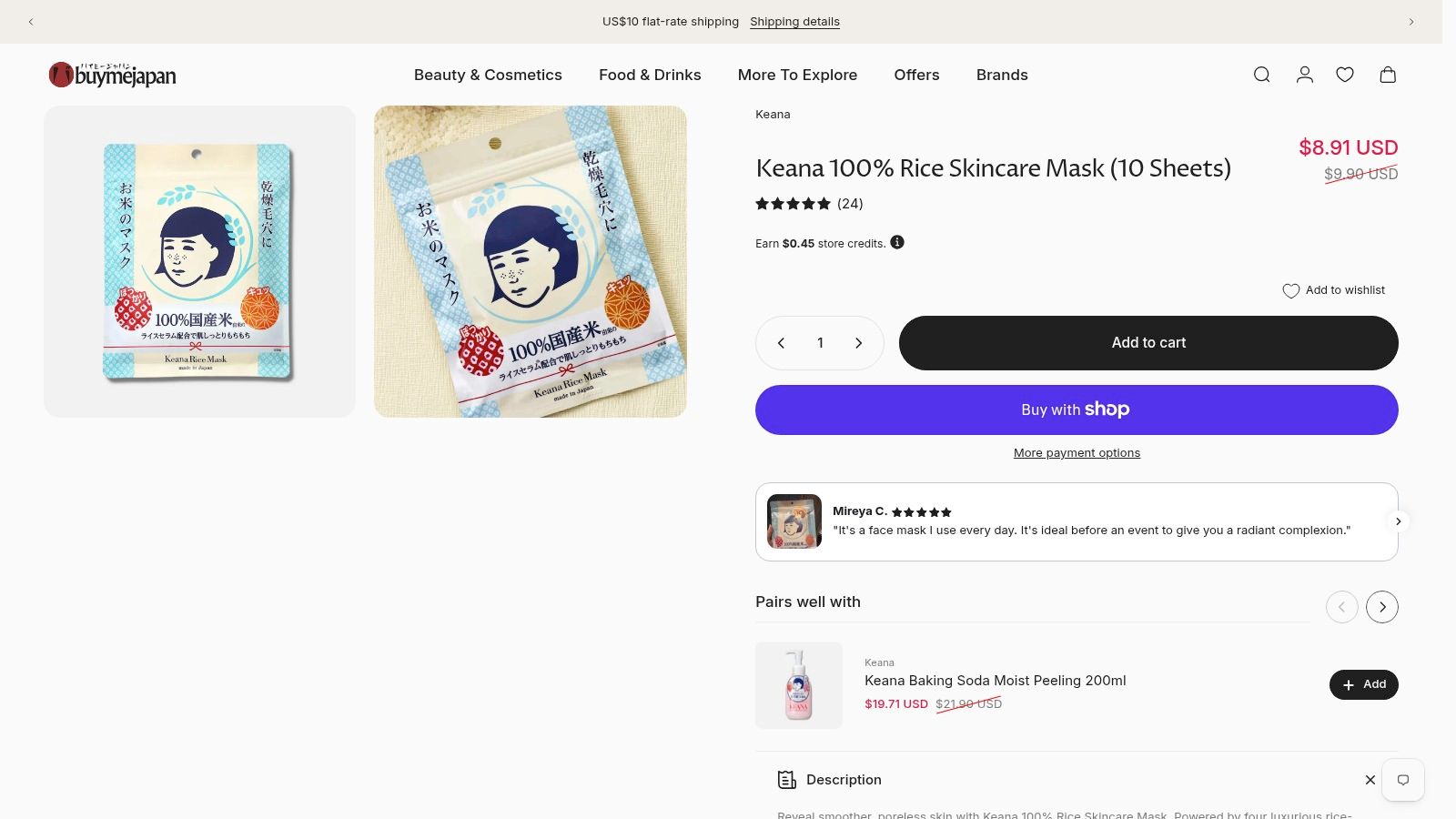
The manufacturer calls its rice-derived ingredient set Rice Serum and describes it as made with moisturizing ingredients derived from Japanese rice. In 2020, Ishizawa Laboratories introduced a limited-edition 28-sheet Rice Mask BOX after repeat customers asked for a larger pack. The manufacturer's product history traces the shift from the original smaller format to a larger option, while retaining the rice-based positioning.
Keana Rice Mask at a glance
| Attribute | Detail | Source |
|---|---|---|
| Catalog name | Keana 100% Rice Skincare Mask (10 Sheets) | Buy Me Japan catalog |
| Format | 10 single-use sheets | Buy Me Japan catalog |
| Country of manufacture | Japan, described as a Japanese-made sheet | Manufacturer product page |
| Rice-based ingredients | Ingredients described as derived from Japanese rice | Manufacturer product page |
| Original launch | November 2015, Ishizawa Laboratories | Manufacturer history page |
| Larger pack | 28-sheet limited edition introduced in 2020 | Manufacturer history page; not listed in the Buy Me Japan catalog |
The table distinguishes the current catalog listing from the product's history. The 28-sheet limited edition is part of that history, but it is not listed in the Buy Me Japan catalog. If packaging details differ, check the printed pack and the manufacturer's product page.
The catalog listing identifies the product as a 10-sheet pack. Check its current listing and the package before buying if the sheet count or other product details matter to your choice.
Key Ingredients and What Each One Contributes
The rice components sit inside a serum that also relies on humectants, solvents, a film former, a thickener, and preservatives. Think of the rice ingredients as the flavour in a cup of tea: they help define the formula, but the carrier and water-attracting ingredients determine how the liquid gets onto the skin and feels during use.
The product's “Rice Serum” includes fermented rice liquid, rice-bran oil, rice-bran extract, and rice-derived ceramide-type lipids. The ingredient sequence places water, glycerin, propylene glycol, and ethanol before that rice complex. That points to conventional humectants and solvents doing much of the immediate hydration work, while the rice materials contribute conditioning and emollient functions. For more background on rice ingredients in skincare, see this guide to rice water and skin benefits.
| Ingredient | Role in the mask | Note for readers |
|---|---|---|
| Fermented rice liquid (rice fermentation extract) | Brings fermented rice ingredients into the serum | Cosmetic role only; check the pack for the exact listing |
| Rice-bran oil | Supplies a lipid phase that can reduce the feeling of dryness | Oils suit some skin types better than others |
| Hydrolyzed rice-bran extract | Rice-derived extract within the serum | Available sources don't show a pore-shrinking effect |
| Rice-derived ceramide-type lipids (glycosphingolipids, glucosylceramide) | Structurally relevant to skin-conditioning | Supportive role, not a proven treatment |
| Glycerin, propylene glycol, butylene glycol, pentylene glycol | Humectants that attract water to the outer skin layer | Main source of immediate softness |
| Ethanol | Solvent listed high in the ingredient order | Use caution with alcohol-sensitive skin |
| Styrene/VP copolymer | Film former that helps serum stay on the sheet | Part of the delivery system, not a rice ingredient |
| Xanthan gum | Thickener that keeps an even serum layer | Gives the serum its body |
| Preservatives | Help keep the serum stable | Check the pack for the listed preservatives |
Rice-bran oil supplies a lipid phase that may reduce the feeling of dryness, and rice-derived lipids have a conditioning role. Those roles don't establish a controlled clinical effect on pore size or barrier function for this particular mask. It's best understood as a short-contact hydrating and smoothing treatment, not a proven pore-shrinking product.
Ingredient lists can change between batches. Check the pack as the authoritative reference, especially if you have sensitive skin or react to alcohol in skincare.
Who Suits This Mask and When to Skip It
Skin situation matters more than a fixed skin-type label. The hydrating focus may appeal if you want a brief moisture treat, but the formula also contains ethanol and rice-derived lipids, so the same sheet may feel comfortable to one person and irritating or heavy to another. If you're choosing Japanese skincare for reactive skin, this guide to Japanese skincare for sensitive skin offers a useful way to think about introducing products cautiously.
| Situation | Likely fit | First step |
|---|---|---|
| Dry or tight-feeling skin wanting a short hydrating treat | Good match for the hydrating focus | Patch test, then use as directed |
| Normal or combination skin wanting a smoother look | Reasonable match | Try it once and note how your skin feels after removal |
| Oily skin | Possible, depending on personal tolerance | Watch for heaviness and keep the follow-up moisturizer light |
| Sensitive or alcohol-reactive skin | Use with caution, since ethanol is high in the ingredient list | Patch test first and stop if stinging starts |
| Rosacea or a compromised skin barrier | Check with a dermatologist before use | Stop if stinging or persistent redness appears |
| Known sensitivity to rice-derived ingredients | Check with a healthcare professional first | Read the full ingredient list on the pack |
If your skin is already irritated, waiting until it feels calm is more sensible than testing a new mask on it. Anyone with a medical skin condition should ask a dermatologist or other healthcare professional before use. This is a cosmetic product, not a treatment for a skin condition.
For many readers, a patch test is the reasonable first step. The full sequence is simple, but don't skip that test if you have a history of reacting to skincare ingredients.
How to Use the Mask and Avoid Common Mistakes
At the sink, the main choice is whether to follow the label's about five-minute contact time or leave the sheet on while doing other things. Follow the shorter, stated time. A longer session is not automatically more effective, and the sheet should come off before it dries. The mask's application directions describe patting the remaining essence into the skin after removal.
A sink-side routine
- Patch test first. Apply a little serum to a discreet area, such as behind your ear or along your jaw, and wait a day. If stinging, burning, or persistent redness develops, do not apply the mask to your face.
- Cleanse and pat your face dry. This gives the sheet a clean surface to sit against.
- Use toner if it is already part of your routine. Cleansing is the main step before masking; toner is optional.
- Unfold and position the sheet. Align the eye and mouth openings, then smooth out folds and air pockets for even contact.
- Set a timer for about five minutes. The label's contact time is a limit to follow, not a reason to stretch the session.
- Remove the sheet gently. Lift it away without rubbing.
- Pat in the remaining essence. Use light movements, and stop if your skin feels irritated.
- Discard the sheet, then moisturize. It is single-use. A moisturizer can help if your skin feels tight after removal, particularly in a dry room.
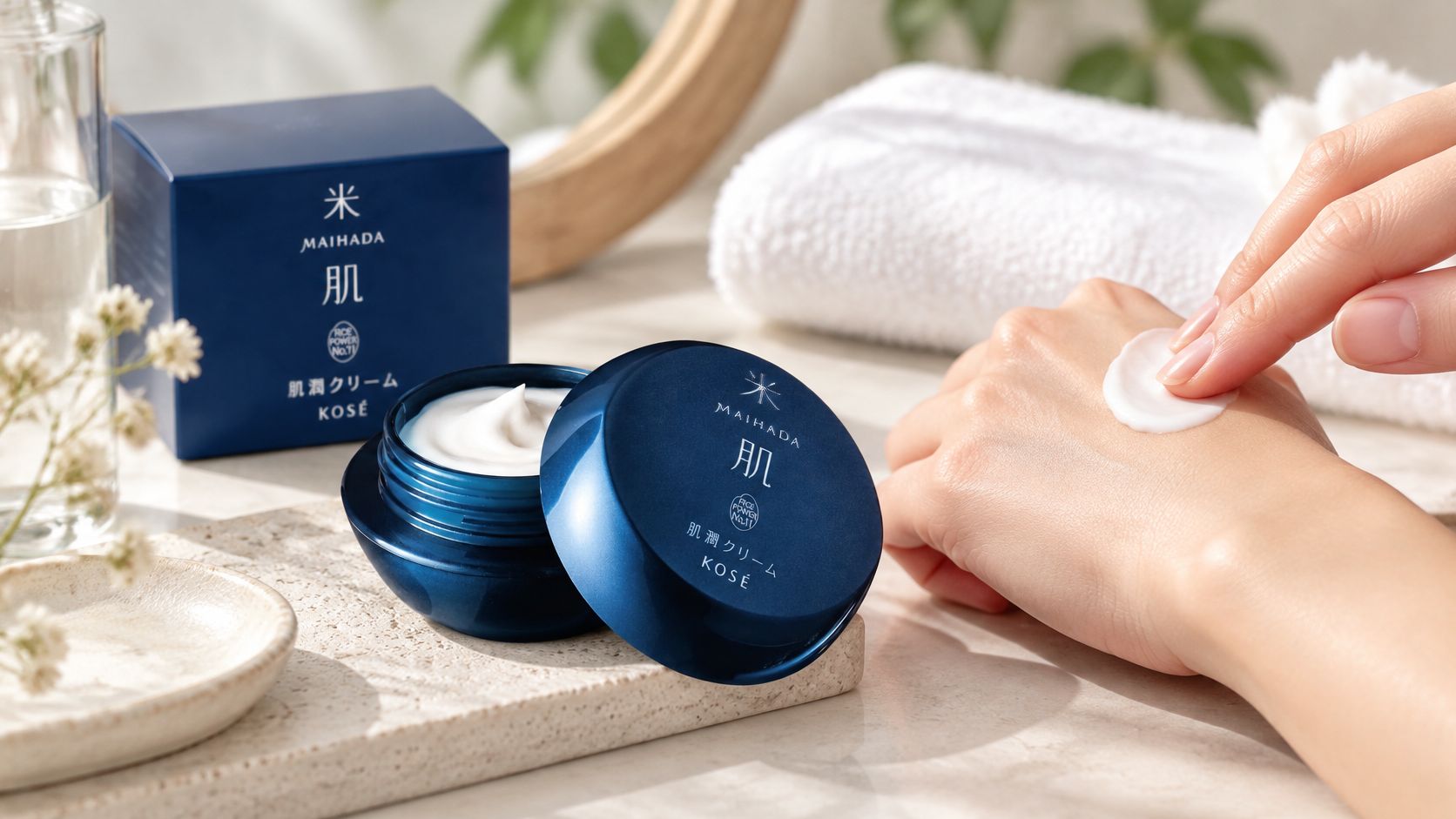
The manufacturer says the mask can be used daily, but daily use is optional. Pay attention to your skin during the first few applications and adjust the frequency if it feels uncomfortable. After patting in the essence, you can follow with a separate moisturizer, such as Kose Maihada Rice Skin Cream 40g, which is described as containing rice bran extract and rice germ oil. For more guidance on timing and application, see this guide to using sheet masks.
Common mistakes and better habits
| Mistake | Why it matters | Better habit |
|---|---|---|
| Leaving the sheet on beyond the labeled time | As the sheet dries, it may leave skin feeling tighter | Remove it at about five minutes |
| Falling asleep in the mask | The unattended sheet can dry on the face | Keep masking as a timed step |
| Applying it to irritated skin | Contact may cause stinging, particularly if your skin is sensitive to alcohol | Wait until your skin feels calm |
| Skipping the patch test | Individual tolerance varies | Test a discreet area and wait a day |
| Reusing a sheet | The product is designed for one use | Discard it after removal |
| Treating longer wear as better | More contact time does not guarantee a better result | Follow the label's timing |
| Skipping moisturizer when skin feels tight | Skin may feel less comfortable after the sheet comes off | Apply a moisturizer after patting in the essence |
If you develop stinging, burning, or persistent redness during use, remove the mask, rinse your skin, and pause until it settles.
Realistic Results and What Reviews Show
After removing the sheet, judge the result by how your skin feels and looks, not by claims about changing pores. The formula's humectants and rice-bran oil can support a temporarily softer, more comfortable feel. A single mask does not change pore structure or create a lasting skin change.
“Brightening” and “refining” describe appearance, not a structural effect. Pore visibility can vary with oil production and skin firmness. A sheet mask cannot alter those underlying factors.
Look for modest, short-term results:
- A softer feel: Skin may feel more comfortable after removal.
- A smoother appearance: Texture may look smoother for a time, then return to its usual appearance.
- A routine step: Use the mask as a hydrating step if it suits your skin, without expecting a particular result over several weeks.
Manufacturer shipments indicate interest in the product, not how it works for each user. Ishizawa Laboratories reports cumulative shipments exceeded 400 million sheets by October 31, 2023, and 500 million sheets in October 2025, counting from November 1, 2015, through October 31, 2025. These are shipment figures, not retail sales, unique users, or evidence that every user sees the same outcome. For context on how the product fits into a broader routine, read this overview of Japanese daily sheet masks.
A practical review checklist helps separate useful details from personal preference:
- Skin type: Does the reviewer describe skin similar to yours?
- Wear time: Does their experience reflect the label's five-minute contact time?
- Frequency: How often did they use the mask?
- Other products: Did they change other parts of their routine at the same time?
- Result described: Is the reviewer reporting a visible change or a feeling of softness?
Use the checklist alongside your own observations. After a first use, note whether your skin feels comfortable and whether redness or stinging appears. If the mask leaves your skin irritated, stop using it rather than relying on positive reviews to override that reaction. When it feels comfortable, compare how your skin looks and feels after removal with its usual condition, and keep expectations limited to a temporary cosmetic effect.
Frequently Asked Questions About Keana Rice Mask
How long does a 10-sheet pack last?
At one use per day, a 10-sheet pack provides 10 sessions. Using it less often stretches the pack accordingly.
Is the 28-sheet edition available?
Availability can vary. Check the retailer's current listing for the available pack size.
Can I use it every day?
The manufacturer allows daily use. Adjust the frequency if your skin reacts poorly.
Is it vegan, halal, or gluten-free?
The available product information doesn't confirm those attributes. Check the packaging and ingredient label if any of them matter to your purchase.
How should I store an opened pack?
Close the resealable package securely after taking out a sheet, and follow any storage directions printed on the packaging. This helps keep the remaining sheets from drying out.
What if the mask stings or leaves my skin uncomfortable?
Remove it and rinse your skin if discomfort develops. Stop using it if irritation persists, and consult a healthcare professional if you have concerns.
Where can I check the current price?
Prices may change, so check the Buy Me Japan product page for the current listing.
Buy Keana Rice Mask from Buy Me Japan
At the sink, check the current listing, then compare its details with the packaging when your order arrives. The Buy Me Japan skincare collection lets you browse skincare options by product type. For another product in the Keana range, read this review of Keana Nadeshiko Rice Serum Cream.
Before using the mask, patch test it and check the ingredient list on the pack. If you have a skin condition or are unsure whether it suits you, ask a healthcare professional.
| Common mistake | Better approach |
|---|---|
| Choosing based on a listing alone | Confirm the sheet count and current details on the product page, then check the pack on arrival. |
| Skipping the ingredient check | Read the package list before use, especially if you know you react to particular ingredients. |
| Reusing a sheet | Treat it as a single-use product and discard it after one session. |
If this label-led option suits your routine, visit Buy Me Japan to browse the Keana Rice Mask and other Japanese skincare products.

Comparter:
Guide DHC Japon : produits, ingrédients et conseils d’achat