


Le doppie punte sono uno di quei problemi dei capelli che sembrano ricomparire quasi subito dopo averli risolti. La parte frustrante è che nessun olio o maschera può riunire permanentemente una ciocca una volta che si è divisa. L’aspetto positivo è che una routine più delicata può ridurre l’attrito, il calore e lo stress chimico che causano nuovi danni.
La cura dei capelli giapponese è particolarmente efficace per questo tipo di prevenzione. L’attenzione è rivolta meno a una pretesa di “riparazione” spettacolare e più a rendere i capelli più facili da lavare, districare, asciugare e mettere in piega senza sottoporli a un’usura inutile. Ecco come creare questa routine senza trasformarla in un progetto di dieci passaggi.
Le doppie punte possono essere davvero riparate?
Non in modo permanente. Una doppia punta è un danno fisico al fusto del capello. Balsamo, siero e olio possono rivestire la superficie, ridurre la ruvidità e rendere le punte più lisce, ma l’effetto è cosmetico. Una volta che una ciocca si è separata, spuntare i capelli è il modo più affidabile per rimuovere la parte danneggiata.
Questo non rende inutili i trattamenti. Ridurre l’attrito è importante perché le doppie punte si sviluppano quando la cuticola protettiva si consuma e le crepe si propagano nella fibra. Una ricerca sulla formazione delle doppie punte durante la pettinatura mostra che lungo il fusto possono formarsi e propagarsi diversi tipi di crepe. Una rassegna sulla struttura della fibra capillare e sui cosmetici individua inoltre nell’attrito dovuto alla cura dei capelli, nel calore, nei trattamenti chimici e negli agenti atmosferici importanti fonti di danno.
In breve: i trattamenti possono far apparire più sane le punte danneggiate, ma la prevenzione consiste nel cambiare la routine che le danneggia.
Quali sono le cause delle doppie punte?
I capelli vicino alle punte sono stati esposti a più lavaggi, spazzolature, sole, calore e styling rispetto alla ricrescita più recente vicino al cuoio capelluto. Questo logorio accumulato spiega perché i capelli lunghi sono solitamente più secchi alle punte. I fattori più comuni sono:
- Calore ripetuto: asciugatura frequente con il phon, stiratura o arricciatura a temperature elevate.
- Attrito meccanico: asciugare i capelli strofinandoli energicamente con l’asciugamano, passare la spazzola a forza tra i nodi, usare elastici stretti e acconciarli continuamente.
- Trattamenti chimici: decolorazione, colorazione, permanente e stiratura possono rendere il fusto più vulnerabile, soprattutto quando i trattamenti si sovrappongono.
- Usura quotidiana: luce solare, acqua, abbigliamento, biancheria da letto e normali manipolazioni consumano gradualmente la superficie.
I capelli che sembrano secchi sono un utile campanello d’allarme, ma secchezza e doppie punte non sono la stessa cosa. Puoi migliorare la morbidezza già con un lavaggio; prevenire le rotture richiede di ridurre costantemente lo stress.
Una routine di lavaggio e districatura più delicata
Inizia applicando lo shampoo principalmente sul cuoio capelluto. La schiuma che scorre sulle lunghezze durante il risciacquo è di solito sufficiente; strofinare le punte tra loro crea solo più nodi. Applica poi un balsamo o una maschera quando le lunghezze risultano ruvide.
Districa i capelli in piccole sezioni. Inizia dalle punte, libera i primi centimetri e poi procedi verso l’alto. Tieni la sezione sopra il nodo con la mano libera, così non tiri la radice. Un pettine a denti larghi funziona bene quando il balsamo rende i capelli più scivolosi, mentre le dita possono offrire un controllo migliore sui capelli molto ricci o che si annodano facilmente.
Il tipo di capelli è importante. I capelli lisci e mossi possono richiedere abitudini diverse per districarli da bagnati o da asciutti rispetto ai capelli molto ricci, quindi fai attenzione a quando i tuoi capelli oppongono meno resistenza. L’obiettivo non è seguire una regola universale, ma evitare di trascinare uno strumento attraverso un nodo difficile da sciogliere.
Asciuga riducendo l’attrito
Dopo il risciacquo, elimina l’acqua in eccesso strizzando delicatamente i capelli con le mani. Usa una T-shirt morbida o un asciugamano liscio in microfibra per tamponare le lunghezze, invece di strofinarle avanti e indietro. Se usi il phon, tienilo in movimento, imposta la temperatura più bassa efficace ed evita di riscaldare ripetutamente sezioni già asciutte.
Gli strumenti a caldo richiedono cure extra. Lascia asciugare completamente i capelli prima di usare una piastra o un ferro arricciacapelli, applica un prodotto termoprotettivo seguendo le istruzioni ed evita di passare più volte sulla stessa ciocca. Se lo styling a caldo fa già regolarmente parte della tua routine, la nostra guida alla cura dei capelli danneggiati dal calore spiega come semplificare la routine di riparazione.
Tre prodotti giapponesi per una routine di prevenzione delle doppie punte
Questi prodotti svolgono funzioni diverse. Scegli il formato più adatto ai tuoi capelli invece di applicarli tutti e tre insieme.
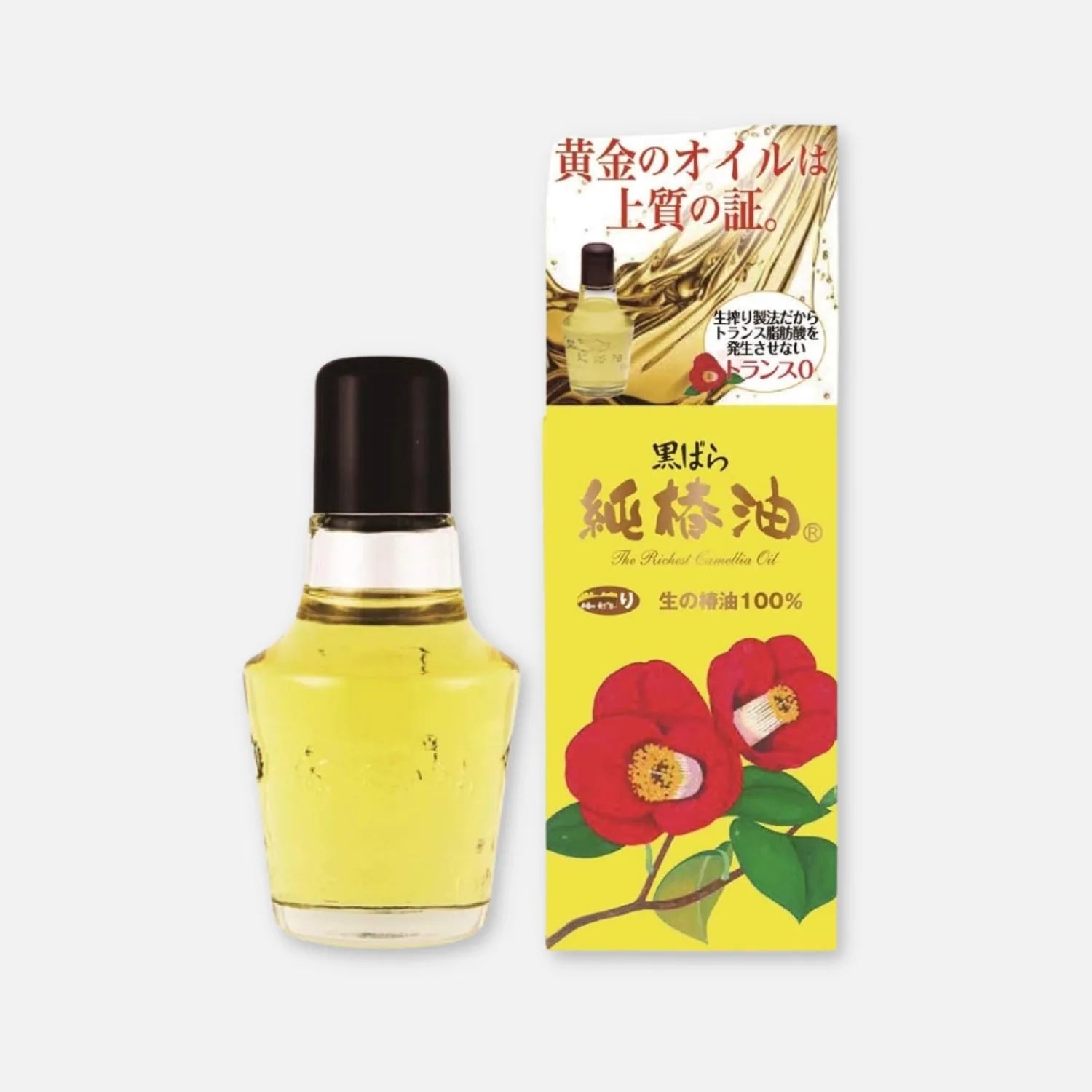
Olio per capelli Kurobara 100% puro di tsubaki 72 ml
Kurobara 100% Pure Tsubaki Hair Oil è l’opzione più semplice per chi desidera un trattamento tradizionale a base di olio di camelia. Scalda una quantità davvero minima tra i palmi delle mani e distribuiscila sulle ultime lunghezze di capelli umidi o asciutti. È particolarmente adatto alle punte secche o spesse che beneficiano di maggiore scorrevolezza; chi ha i capelli fini dovrebbe iniziare con la quantità più ridotta possibile.
Consideralo un trattamento superficiale. Può rendere le punte più lisce e ridurre gli impigliamenti, ma non può ricongiungere una ciocca con doppie punte.
Shiseido Fino Hair Serum Treatment 70 ml

Shiseido Fino Hair Serum Treatment è adatto a chi preferisce l’effetto levigato di un siero, anziché un singolo olio botanico. Applicalo soprattutto sulle lunghezze e sulle punte, usandone meno nelle zone che tendono a ungersi rapidamente. È una scelta pratica prima dello styling o ogni volta che le punte ruvide hanno bisogno di maggiore scorrevolezza e lucentezza.
Un aspetto più liscio è utile perché i capelli che si impigliano meno sono più facili da trattare delicatamente. Va comunque descritta come un trattamento cosmetico condizionante, non come una riparazione permanente delle doppie punte.
MUJI Fermented Botanical Liquid Hair Mask 200 ml

MUJI Fermented Botanical Liquid Hair Mask è un trattamento da risciacquare ideale nei giorni di lavaggio, quando le lunghezze hanno bisogno di più nutrimento rispetto a quello offerto da un siero quotidiano. Il catalogo offre attualmente le versioni Smooth, Moisture e Volume, rendendo più facile scegliere il risultato adatto ai propri capelli invece di usare lo stesso trattamento pesante per tutti.
Usalo seguendo le istruzioni riportate sull’etichetta, poi districa i capelli quando sono ancora scivolosi. La maschera può migliorare morbidezza e pettinabilità, aiutandoti a usare meno forza; non può eliminare una doppia punta già esistente.
Proteggi i capelli tra un lavaggio e l’altro
Le piccole abitudini contano perché si ripetono ogni giorno. Una treccia morbida può evitare che i capelli lunghi sfreghino contro i vestiti. Una federa liscia o una cuffia da notte può ridurre i nodi durante la notte. Gli elastici rivestiti in tessuto sono generalmente più delicati sulla stessa ciocca rispetto alle fasce sottili con giunture esposte.
Cambia la posizione di code e chignon invece di stringere ogni mattina la stessa zona. Se un'acconciatura fa male, tira l'attaccatura o lascia una piega marcata quando la sciogli, allentala. Le acconciature protettive dovrebbero rendere i capelli più facili da gestire, non creare un altro tipo di stress.
Per un altro approccio ispirato al Giappone alla cura a base di oli, consulta la nostra guida alla cura dei capelli con olio al miele.
Scegli con criterio i trattamenti di colorazione e chimici
Decolorazione, colorazione, permanente e stiratura chimica modificano la fibra capillare, quindi combinarli richiede più pianificazione che limitarsi ad aggiungere una maschera più intensiva in seguito. Informa il tuo hairstylist sui trattamenti recenti, inclusi quelli fatti a casa, ed evita di sovrapporre prodotti chimici aggressivi su lunghezze già trattate.
Se le punte rimangono ruvide anche dopo il balsamo, tagliarle prima di un altro trattamento potrebbe offrirti una base più uniforme. I prodotti possono migliorare la sensazione al tatto, ma non possono far comportare una punta molto trattata come una ricrescita intatta.
Quando dovresti tagliare le doppie punte?
Non esiste una regola universale di sei o otto settimane. L'intervallo ideale dipende dalla lunghezza, dalla texture, dall'uso del calore, dai trattamenti chimici e da quanto vuoi mantenere la forma. Osserva i capelli: biforcazioni visibili, nodi persistenti, puntini bianchi e punte che rimangono ruvide anche dopo il balsamo sono segnali utili che indicano che è arrivato il momento di spuntarli.
Un taglio professionale è l'opzione più sicura quando il danno è diffuso, la forma è irregolare o non sai fin dove si è propagata la doppia punta. Se la rottura compare all'improvviso, è concentrata vicino al cuoio capelluto o si accompagna a caduta o sintomi del cuoio capelluto, rivolgiti a un dermatologo o a un professionista sanitario qualificato invece di considerarla un normale problema di doppie punte.
Un semplice piano di prevenzione
- Pulisci il cuoio capelluto senza strofinare le punte tra loro.
- Applica il balsamo sulle lunghezze e sciogli i nodi partendo dalle punte e risalendo verso l'alto.
- Tampona i capelli per asciugarli invece di strofinarli.
- Usa temperature più basse, fai meno passate e non usare la piastra calda sui capelli bagnati.
- Scegli un olio, un siero o una maschera adatta per migliorare la scorrevolezza.
- Proteggi le punte dall'attrito ripetuto tra un lavaggio e l'altro.
- Taglia le doppie punte visibili invece di cercare di sigillarle permanentemente.
La migliore routine per le doppie punte non è quella più complicata. È quella che rende i capelli più facili da gestire ogni giorno. Usa trattamenti per donare morbidezza e scorrevolezza, riduci lo stress che puoi controllare e lascia che siano le forbici a occuparsi dei danni già presenti.


Compartir:
Come evitare che il trucco si ossidi: guida completa
Guida ai lip tint giapponesi: formule, finish e come acquistarli