


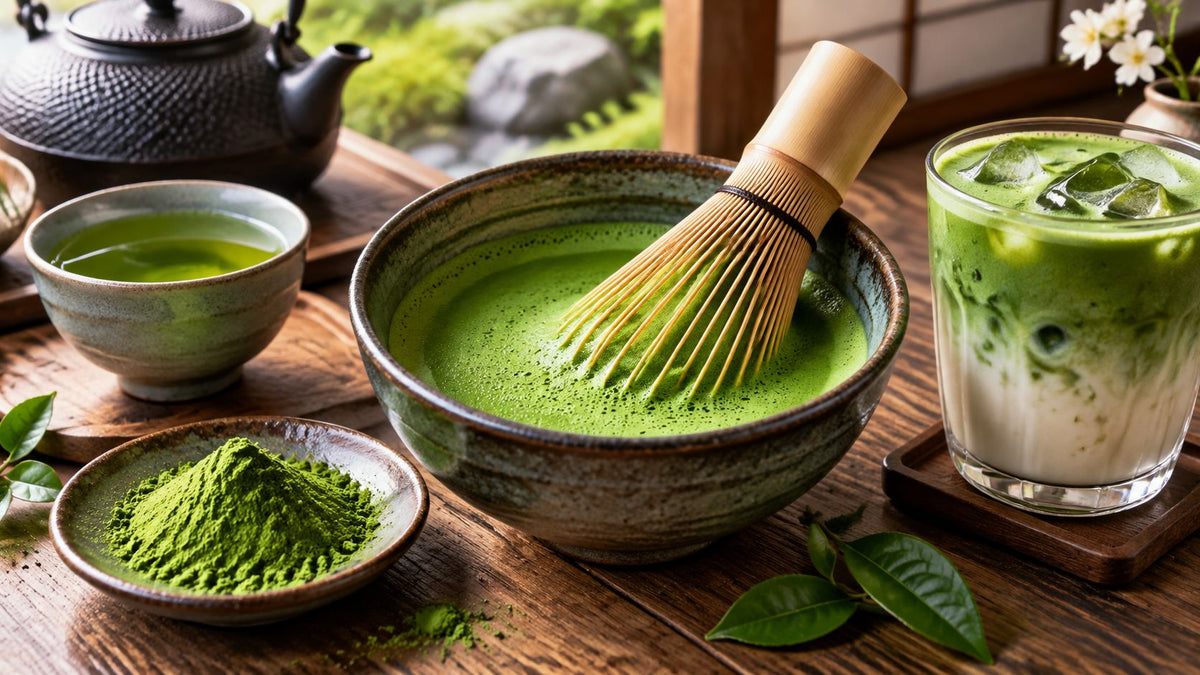
Buying the tin marked ceremonial grade isn't a reliable shortcut to good matcha powder. That wording can suggest how a seller intends you to use the tea, but it doesn't tell you enough about the leaf, its freshness, or what else is in the package.
A better choice starts with your cup. Do you want plain, whisked tea, a creamy latte, or something for baking? Once you know that, details such as tencha origin, harvest timing, milling, ingredients, and packaging date become more useful than an impressive grade name.
What Matcha Powder Is Made From
Say you're comparing a pouch of matcha with a box of green tea bags. Both may make a green drink, but you use them differently. With ordinary leaf tea, you steep the leaves and remove them; with matcha, you whisk finely ground leaf into water and drink the suspended powder.
The distinction begins before milling. Tencha is the specially cultivated and processed tea leaf used to make matcha, not another name for any green tea.
From shaded leaf to fine powder
Japan's Ministry of Agriculture, Forestry and Fisheries describes the production sequence: growers cultivate vividly green buds under shade, steam the harvested leaves, and dry them without rolling. Producers then remove stems and leaf veins and grind the prepared leaf in a stone mortar.
Each stage helps explain a term you might find on a label:
- Shade-grown describes cultivation before harvest, rather than a color added during manufacturing.
- Unrolled leaf distinguishes tencha processing from the rolling typically used for sencha, a familiar Japanese leaf tea.
- Stone-ground identifies a milling method, although modern producers can also use machine grinding.
- Tencha identifies the starting material that matters most when you're checking whether a powder is matcha.
Crushing ordinary green tea doesn't reproduce that sequence. A powder can be green, finely textured, and useful in the kitchen without being equivalent to matcha made from tencha.
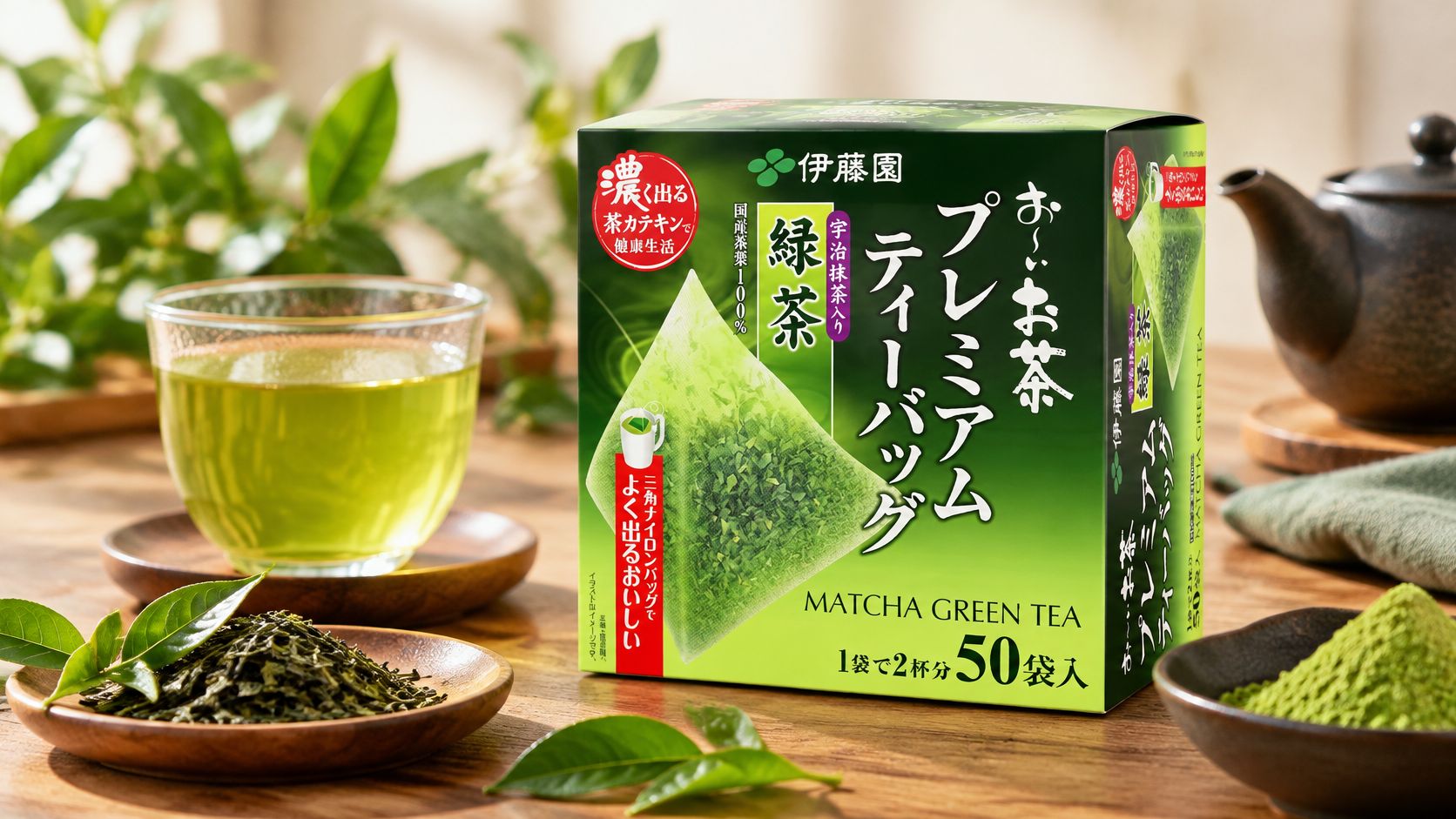
The image below shows a tea-bag format, which shouldn't be confused with loose powder intended for whisking.
A useful map of Japanese origins
The history and production overview of tencha places matcha's arrival in Japan more than 800 years ago and the establishment of the modern tencha method around Uji by the middle of the 16th century. Kyoto remains historically important, while Kagoshima and Shizuoka are also major contemporary supply regions.
A regional name gives you a starting point for understanding origin, not a complete quality verdict. Ask whether the listing identifies where the leaf was grown, rather than assuming that a Japanese place name explains every production detail.
For another practical introduction to label terminology, IFM Gourmet Food Store's guide can help you compare matcha grades before buying. Keep the underlying distinction in mind: a production description tells you more than a grade word alone.
Ceremonial and Culinary Grades Compared
Matcha powder labels and what they are for
| Label you may see | What it usually means | Best use | What it does not prove |
|---|---|---|---|
| Ceremonial grade | Earlier-harvest tencha, finer mill, meant to drink straight | Usucha and koicha | A government or industry certificate |
| Culinary or cooking grade | Later harvest or stronger, more bitter leaf | Lattes, baking, and smoothies | That the powder is poor or unsafe |
| Cafe or premium | A seller-defined middle tier | Everyday drinking if the taste suits you | A shared standard across brands |
| Green tea powder with dextrin | Matcha or green tea plus a carrier, sometimes vitamin C | Quick drinks and desserts | That the tin is pure tencha |
These are useful shopping categories, but they aren't fixed specifications. Ceremonial grade, premium, and cafe grade are seller language, not interchangeable certificates of quality.
Choose a use before choosing a tier
Usucha means thin tea, the lightly textured whisked drink many people associate with matcha. Koicha means thick tea, a more concentrated preparation in which the powder's bitterness and texture are harder to hide. A seller's ceremonial-style powder is generally positioned for these plain preparations.
For a latte, the priorities change. Milk softens the tea's sharpness and can obscure delicate aromas, so a stronger culinary powder may deliver a more satisfying result than a subtle, expensive drinking powder. In baking, the tea also has to remain noticeable alongside butter, sugar, flour, and other ingredients.
A cafe or premium label doesn't resolve that choice. One seller might use it for a smooth everyday drinking tea; another might use it for a strong latte powder. Read the intended preparation and flavor description rather than assuming the middle tier means the same thing everywhere.
Practical rule: Buy for the preparation you'll actually make, not for the highest-sounding word on the tin.
What a grade cannot certify
The matcha-origin guide from Luna Matcha explains that ceremonial grade isn't a standardized certification issued by the Japanese government or a single tea-industry authority, and reports that in 2024, tencha represented about 7.3% of Japan's crude-tea production, averaging approximately ¥3,278 per kilogram, compared with about ¥1,197 for sencha.
Those are raw-material figures, not retail prices for finished matcha. They help explain why genuine tencha-based powder can cost more, but they don't establish what an individual tin should cost or how it will taste.
Instead of treating price as proof, look for information that lets you compare products fairly:
- Origin and cultivar identify the growing region and, when stated, the tea plant variety.
- Harvest timing helps explain the leaf selection behind the seller's flavor description.
- Tencha and shading details describe the raw material and cultivation.
- Milling method tells you how the producer turns prepared leaf into powder.
- Harvest and packaging dates help you judge the timeline rather than relying on a vivid photograph.
- Batch information can support traceability when it's available.
Bright green color and a silky feel can suggest careful processing and freshness. They don't independently prove superior flavor, authenticity, or safety.
Blended powder belongs in its own category
A powder containing dextrin isn't directly comparable with pure tencha. Dextrin acts as a carrier in some drink powders, and some formulations also include vitamin C.
That doesn't automatically make the blend unsuitable. It means you should judge it as a formulated drink or cooking ingredient, checking its directions and ingredient list rather than expecting the same concentration and behavior as pure matcha.
How to Whisk Lattes and Bake with Matcha
Matcha powder amounts for common drinks and baking
| Method | Powder | Liquid | Temperature or mix-in |
|---|---|---|---|
| Usucha thin tea | About 2 g or 1 teaspoon | 70 ml water | 70–80°C, not boiling |
| Koicha thick tea | About 4 g | 30–40 ml water | 70–80°C, kneaded thick |
| Hot or iced latte | About 2 g | 30 ml warm water, then 150–180 ml milk | Whisk paste first, then milk or ice |
| Baking or smoothie | 1–2 teaspoons | Batter, dough, or blended drink | Culinary powder or a blend, sifted |
Treat these as home preparation starting points, not a serving instruction that overrides the package. Powder density differs, so a small kitchen scale gives you a more repeatable result than a generously heaped teaspoon.
For baking, that spoon measure is only a starting experiment for a standard cake or cookie batch. A dedicated matcha recipe is more dependable because the amount of flour, fat, and sugar determines how much tea tastes balanced.
A straightforward whisking routine
You'll need a dry bowl, a fine sieve, a measuring spoon or scale, and either a chasen, the traditional bamboo whisk, or a small electric frother.
- Sift the powder into a dry bowl. Break up compacted lumps before adding liquid.
- Add a small splash of warm water and stir into a smooth paste, checking the bottom of the bowl for dry pockets.
- Add the remaining water gradually.
- Whisk briskly in an M or W motion. For usucha, aim for a lightly foamy surface without visible dry specks.
- Drink it soon after preparation, since the suspended leaf gradually settles.
Keep the whisk moving through the liquid rather than scraping hard against the bowl. A bowl with enough width makes it easier to move your wrist freely and limits splashing.
Koicha needs a different finish. Use a powder you find pleasant without milk, then work the smaller amount of water through it until it's smooth and thick rather than trying to build a frothy surface.
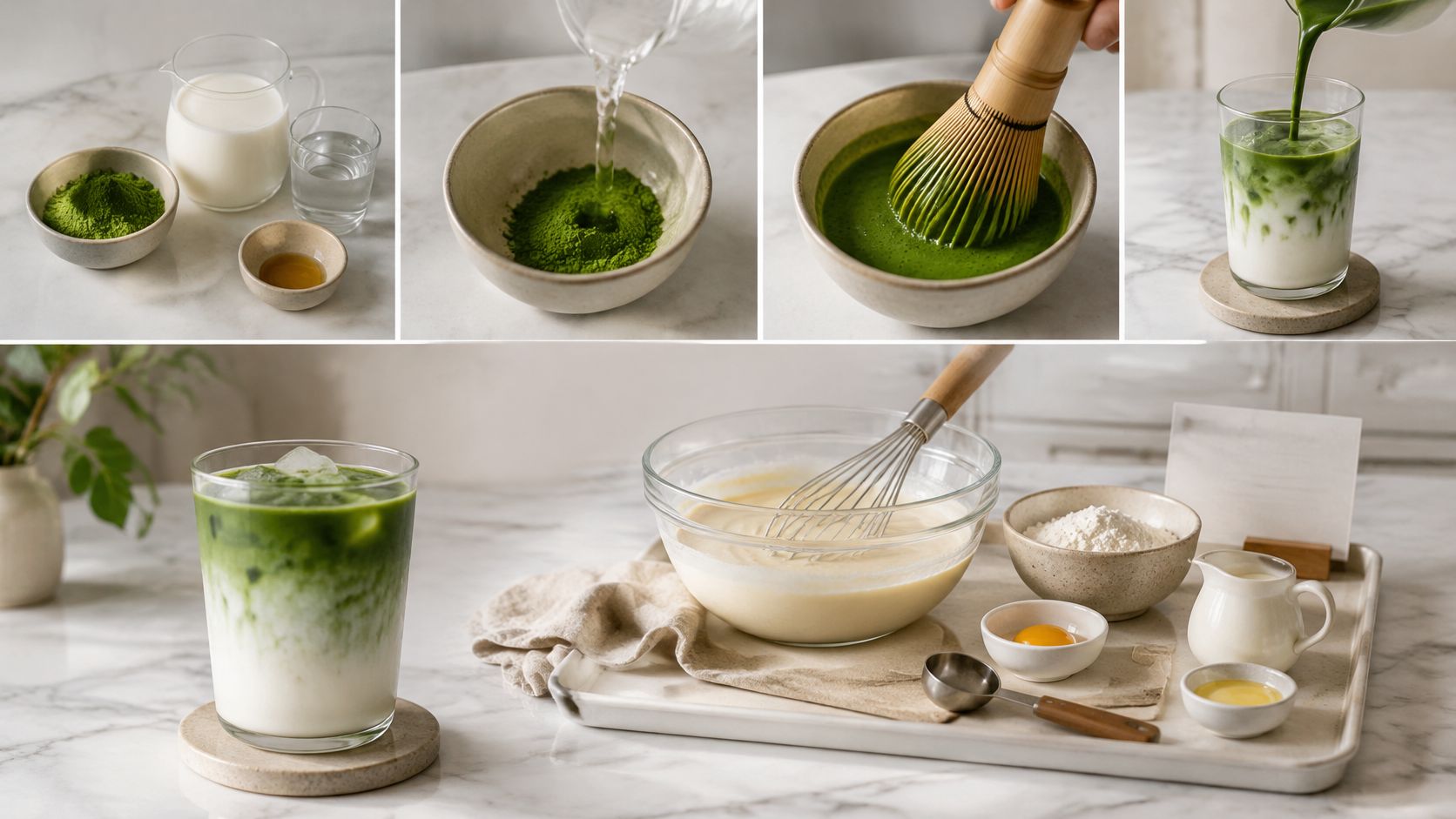
The preparation image illustrates the useful separation between making the tea mixture and incorporating it into a latte or batter.
Make the paste before adding milk
For a hot latte, prepare the smooth matcha mixture first, then add heated milk. For an iced latte, pour the prepared mixture over milk and ice and stir thoroughly.
Don't tip dry powder directly onto a full glass of cold milk and expect it to disperse evenly. The outside of a clump can become wet while its center remains dry, leaving floating green dots and an uneven drink.
A frother is convenient for this method, but use a vessel deep enough to contain the spray. For powders designed for quick mixing, the instant matcha tea guide offers a useful companion to traditional whisking instructions.
Fold matcha into baking deliberately
Sift matcha with flour or the other dry ingredients so it distributes throughout the batter. For a smoothie, blend it thoroughly with the liquid rather than sprinkling it over the finished drink.
Expect a savory green-tea edge, not a cocoa-like flavor. Don't substitute it directly for cocoa and assume the result will have the same balance; begin with a recipe developed for matcha or adjust a small test batch.
If you'd like a dessert to serve alongside your tea, Just Cook It's collection of easy Japanese desserts to make at home provides ideas for planning the pairing.
A traditional whisk is enjoyable to use, but a smooth, well-balanced drink matters more than owning every tea utensil.
If your cup tastes harsh, let the water cool before the next attempt. If it contains specks, improve the sifting and paste-making before adding more whisking time.
How Shade Changes Color and Taste
Matcha's savory character begins in the field, not with a grade printed on the package. Growers change how much sunlight reaches the tea plants, and those conditions influence the composition of the harvested leaves.
A scientific review of matcha composition describes plants commonly being covered for more than 20 days before harvest, with reduced sunlight suppressing catechin production while promoting chlorophyll, caffeine, L-theanine, and other free amino acids.
Translate the chemistry into your cup
Chlorophyll contributes the green appearance. L-theanine and other free amino acids contribute to the savory character described as umami, a rounded taste that can suggest broth or seaweed rather than sweetness alone.
Catechins contribute bitterness and astringency. Bitterness is a taste; astringency is the drying, slightly gripping feeling you may notice on your tongue and gums. A tea can have some bitterness without feeling aggressively drying.
These distinctions make tasting more useful than deciding whether a powder is green enough:
- Look at the prepared tea. Check its appearance under ordinary light, not only against a seller's edited photograph.
- Smell the dry powder. Notice fresh green, sweet grassy, or seaweed-like aromas without expecting every tea to smell identical.
- Taste it plain first. A small usucha lets you notice bitterness, savory depth, and texture.
- Try your intended preparation. A powder that seems forceful alone may taste balanced with milk.
Cultivar, shade intensity, harvest timing, and processing all influence the outcome. A very dark powder isn't automatically better, and poorly controlled shading doesn't become good cultivation just because it produces a dramatic color.
Keep concentration claims in perspective
The same review describes one analytical comparison in which, on a dry-leaf basis, matcha supplied more than 100 times the EGCG exposure of a tested commercial brewed green tea. EGCG is a catechin, and that comparison depends on the tested products, serving size, and preparation method.
It isn't a prediction that your bowl delivers a fixed multiple of every brewed tea. Nor does a larger laboratory measurement establish a greater everyday health benefit.
Caffeine also forms part of matcha's composition, but you can't reliably read its amount from color or grade wording. A small drink can still contain a meaningful amount when you use a concentrated measure of powder.
Judge the tea you'll drink, prepared the way you'll drink it. Color alone can't tell you whether you'll enjoy it.
Freshness changes that experience, too. As aroma and color dull, the powder may become less appealing even if you haven't changed your recipe.
Benefits and Safety for Everyday Drinking
The most useful health distinction isn't between ceremonial and culinary labels. It's between matcha as an ordinary food or drink and a highly concentrated extract marketed around its compounds.
Matcha contains caffeine, L-theanine, and catechins, but their amounts change with the leaf and the quantity you use. Enjoying it as an alternative to coffee is a personal preference, not evidence that it will suit everyone or produce a particular feeling.
What a bowl can and cannot promise
Some drinkers describe matcha as providing calm alertness. That experience shouldn't become a promise of improved concentration, guaranteed relaxation, or a predictable response to caffeine.
There's no need to turn a pleasant drink into a treatment. Don't choose matcha on the assumption that it will cause weight loss, detoxify your body, prevent disease, or cure a condition.
Its practical appeal may be simpler: you enjoy its savory flavor, it fits your morning routine, or you prefer an unsweetened tea to a sweetened drink. Those are valid reasons to buy it without adding medical claims.
Whole-leaf drinking makes testing relevant
A scientific review of matcha safety notes that consuming powdered leaf can increase exposure to soil-derived metals such as lead and cadmium compared with conventional brewed tea, with concentrations affected by origin, soil, raw-material quality, and processing.
The review characterizes adverse effects as unlikely for healthy adults consuming typical amounts. It also distinguishes normal consumption from concentrated extracts or excessive catechin doses, which raise different concerns, including possible liver toxicity and interactions with medicines.
That's a reason to ask better sourcing questions, not to assume every powder is unsafe. Japanese origin is useful traceability information, but origin alone isn't a contaminant test.
When you're evaluating a supplier, prioritize:
- Traceable production information rather than an unexplained premium claim.
- Batch testing or a certificate of analysis, when available, identifying what was tested.
- Clear serving guidance for the actual product.
- An accessible ingredient label that distinguishes tea from a formulated mixture.
Frequent drinkers should pay particular attention to those details. For children, pregnancy, or anyone taking medication, ask a clinician about suitability rather than using a general shopper's guide as individualized advice.
Keep the serving relevant
Follow the current package's serving directions and consider your other sources of caffeine. If you're sensitive to caffeine, don't assume a tea-based drink will be gentle because it isn't coffee.
Check for dextrin, sugar, milk powder, and added vitamin C where relevant. Don't infer vegan, gluten-free, halal, or allergen-free suitability from the word matcha; those decisions require the current product information.
A normal bowl or latte is the useful reference point. Adding increasingly large scoops or substituting a concentrated extract creates a different product and a different safety question.
Labels Storage and a Fair Price Check
Use the product page and the package together. A listing can help you narrow the choice, but the current tin or pouch remains important for ingredients, storage instructions, and serving directions.
Read the label in a useful order
- Identify the tea. Look for tencha or a meaningful description of shade-grown, unrolled leaf rather than stopping at a grade name.
- Check the production region. Uji, Kyoto, Kagoshima, or Shizuoka gives you geographic context. Note the cultivar if the maker names it.
- Look for harvest and packaging information. A packaging date and a harvest date describe different events; neither should be used as a substitute for the other.
- Read the milling description. Stone-ground is useful if stated, but don't infer it from traditional-looking packaging.
- Inspect the ingredient line. Separate pure tea from products containing dextrin, sugar, milk powder, or added vitamin C.
- Check traceability information. Review origin details, batch identification, or testing documents when the seller supplies them.
Missing detail doesn't automatically establish poor quality. It does mean you have less evidence for a like-for-like comparison, especially if a costly product relies mainly on atmospheric photographs and ceremonial wording.
If a listing doesn't show the back label clearly, ask for clarification before ordering. That's particularly useful when translations shorten an ingredient list or when a package contains preparation guidance you can't comfortably read.
Protect the powder after opening
Matcha's fine powder needs careful handling. Keep it airtight, cool, dry, and away from light and strong smells, following the storage instructions for that particular product.
Use a clean, dry spoon, then close the package promptly. Don't leave a wet whisk resting in the tin or scoop directly with a damp measuring spoon.
- Choose a practical package size. Buy an amount that matches how often you prepare tea.
- Avoid kitchen steam. Measure away from a boiling kettle or steaming saucepan.
- Respect product-specific guidance. Don't assume every unopened pouch and opened tin needs identical treatment.
If the manufacturer recommends refrigeration, keep the package sealed while it comes toward room temperature before opening, so you limit moisture collecting on cold powder.
Compare price without mistaking it for proof
Supply conditions help explain price pressure, but not the quality of any individual listing. Reuters reports that Japan produced 5,336 metric tons of tencha in 2024, nearly 2.7 times the volume roughly a decade earlier, while Kyoto experienced weak yields after severe heat during the previous summer.
More production doesn't guarantee that every region or harvest can meet demand. Equally, a shortage narrative doesn't prove that a particular expensive powder is exceptional.
This guide doesn't quote shelf prices. Compare the price per gram on the live listing, checking that you're comparing equivalent products rather than pure tea against a sweetened or carrier-based mix.
If the listing doesn't display a unit price, divide its current price by its net weight. Then weigh that result against the information you can verify, not just the package design.
Matcha Powder Questions Shoppers Ask
Can I use ceremonial powder for baking?
Yes, but culinary powder or a suitable blend is usually the practical choice when tea sits alongside sugar, butter, or milk. Save a delicate drinking powder for plain tea if you want to appreciate its subtler character.
Is matcha vegan, gluten-free, or allergen-free?
Only make that decision when the current packaging or product listing confirms the relevant suitability. A matcha-flavored powder may contain additional ingredients, so don't rely on the category name.
Do I need a bamboo whisk?
No. A bamboo chasen is traditional and helps create fine foam, while a small electric frother works well for lattes.
Why does my matcha taste bitter?
Water that's too hot, an overly generous measure, or a forceful culinary powder can make the drink taste harsh. Try cooler water or less powder, then consider milk if that suits the tea's intended use.
Why does the powder clump?
Compacted powder and moisture make smooth mixing harder. Sift before whisking, work it into a paste, and keep the storage container dry.
Can I prepare matcha like a tea bag?
Not if you want the usual whisked drink: loose matcha needs to be dispersed rather than steeped and removed. For the separate method used with leaf tea, consult the guide to brewing Japanese green tea.
Troubleshooting shortcut: Change one preparation detail at a time. You'll learn more from adjusting water temperature or powder quantity separately than from changing everything at once.
A disappointing first cup doesn't necessarily mean you bought the wrong tea. Check preparation first, then judge whether the powder suits your preferred drink.
Pick the Right Matcha Powder for Your Use
The right purchase is the powder that fits your preparation, provides enough label information for a confident choice, and comes in a quantity you'll use while it's appealing. You don't need to chase the most prestigious-sounding tier.
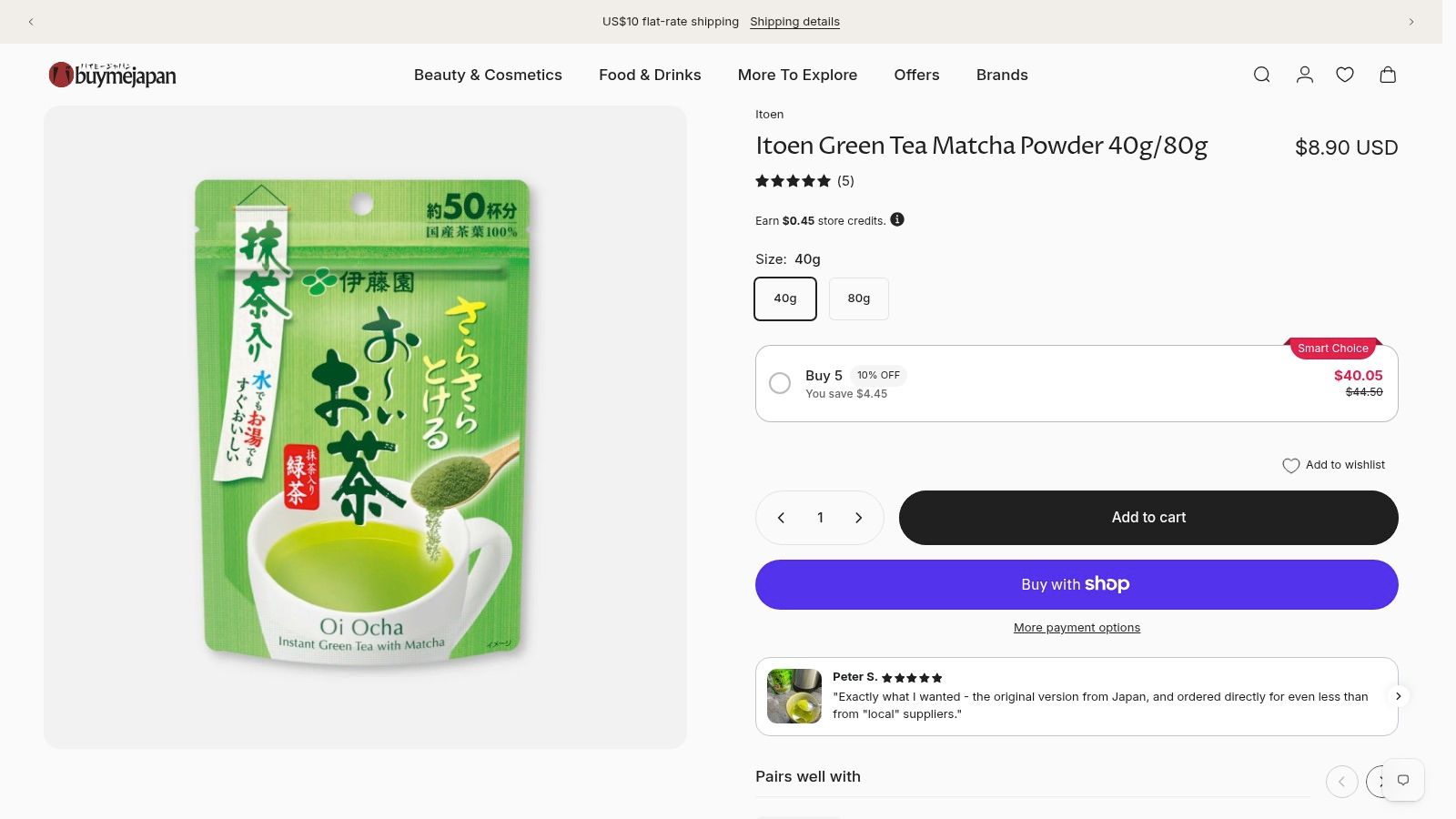
Use the package format as an initial prompt to inspect the label, not as evidence of what the product contains.
Match the choice to your routine
For straight usucha or koicha, prioritize a powder identified as tencha, useful freshness information, and a flavor description that suits plain drinking. Start with a manageable package rather than buying a large supply before you know whether you enjoy it.
For daily lattes, baking, and desserts, choose a powder with enough character to remain noticeable in the finished recipe. A culinary label isn't a reason to dismiss it, and a ceremonial label isn't a reason to pay extra for characteristics you won't notice under milk or sugar.
For quick-mixing drinks, inspect the formulation first. A blend can be convenient, but its directions, concentration, and ingredients should guide your preparation rather than a recipe written for pure tencha.
- Plain-tea drinker, Look for clear sourcing and a flavor profile you'd enjoy without additions.
- Latte maker, Consider how the tea tastes with your usual milk, not just how attractive the powder looks.
- Home baker, Choose according to the recipe and keep an eye on any added sugar or carriers.
- Occasional user, Favor a practical quantity and packaging you can reseal securely.
The video below offers a visual companion for thinking about preparation and handling.
Make the final check on the current listing
Browse the current Japanese tea and food listings in the all-products collection, then inspect the item that matches your intended use. Confirm its ingredients, net weight, preparation guidance, and any packaging details shown before ordering; a photograph alone can't establish the current specification.
If you're also exploring tea beyond powdered preparations, the Japanese tea brands guide can help you consider the wider category without treating every green-tea format as interchangeable.
Decide whether your next cup will be plain tea, a latte, or a quick-mixing drink. Then choose the listing that answers the questions relevant to that cup, rather than the one with the grandest grade name.
Buy Me Japan makes authentic Japanese food, drinks, beauty, and lifestyle products accessible through a convenient online store, with products sourced through official suppliers in Japan, tracked shipping, secure payments, and helpful customer service. Visit Buy Me Japan to explore current tea listings and compare the ingredients, format, and package details that fit your next bowl or latte.

Compartir:
Bustine di tè verde: varietà giapponesi e come prepararle