A cold evening tends to make simple drinks feel more important. You want something warm, fragrant, and easy on the throat, but you also want it to taste like more than hot sugar water.

That's where Brown Sugar Ginger Tea earns its place. In Japanese home kitchens, ginger drinks are valued for comfort first. When made with care, this cup feels warming, clean, and soothing without becoming heavy.

This guide focuses on what improves the drink. You'll see how to brew it properly, where common shortcuts fall flat, and why ingredient choice matters so much if you want a more authentic Japanese-style result, especially when you use Okinawan kokuto, a traditional unrefined brown sugar. If you enjoy cozy Japanese drinks, the creamy fruitier side of Japanese tea culture is also worth exploring in this guide to strawberry milk tea.

A Soothing Introduction to Japanese Ginger Tea

Some drinks are tied to a mood. Brown Sugar Ginger Tea belongs to rainy afternoons, winter mornings, and those small moments when your body wants heat more than caffeine.

A person holding a warm mug of ginger tea with brown sugar next to a window during rain.

In practice, this tea sits between two long traditions rather than one fixed recipe. Ginger tea has been used for centuries across Asia as an herbal drink, while sweetened tea developed along its own path. The broader history of ginger tea and ginger's spread into many food cultures is outlined in this overview of ginger tea history and tradition.

Japanese-style ginger drinks aren't complicated, but they reward attention. The appeal isn't only flavor. It's the way sharp ginger, dark sugar, and steam work together to create relief you can feel immediately in your hands and throat.

That's also why herbal tea lovers often keep returning to preparations like this one. For a broader grounding in how herbal teas are approached, Wellness Apothecary's herbal insights offer useful context on why people reach for these cups in daily life.

A good mug of ginger tea shouldn't taste one-note. It should feel lively from the ginger and rounded by the sugar.

The Japanese home-cook angle

In my kitchen, this is the sort of drink that asks you to slow down just enough to slice ginger properly and let the pot rest with the lid on. That final covered steep matters. The aroma stays in the cup instead of disappearing into the room.

That quiet, practical style is part of what makes the drink feel so Japanese in spirit. It isn't flashy. It's thoughtful, seasonal, and built around ingredient quality.

Why Authentic Japanese Ingredients Matter

The difference between an ordinary cup and a memorable one usually comes down to the sugar and the ginger. With Brown Sugar Ginger Tea, that difference is obvious from the first sip.

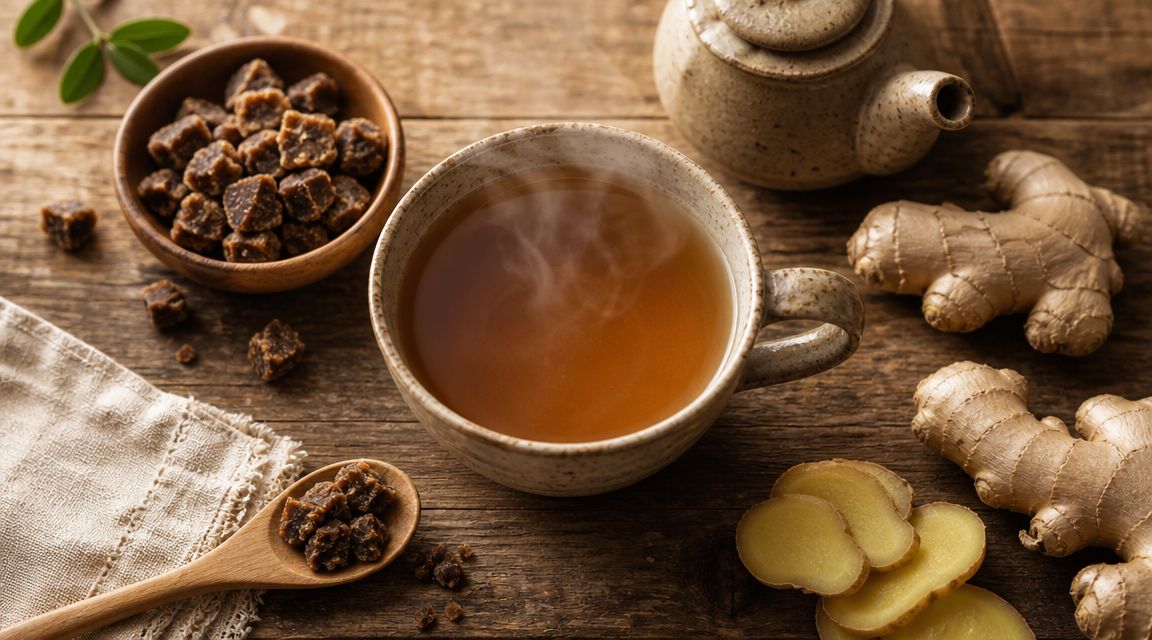
A rustic wooden board holds dark brown sugar cubes, fresh ginger slices, and a ceramic cup of tea.

Kokuto gives the tea depth

Standard brown sugar sweetens. Okinawan kokuto does more than that. It brings darker, fuller notes that feel closer to molasses, but with a cleaner finish when used carefully. In a ginger drink, that matters because ginger is naturally assertive. A flat sugar makes the tea taste sharp and thin. A richer sugar helps the heat of the ginger feel rounded instead of harsh.

This is why many home cooks who try the drink with generic supermarket brown sugar end up thinking the tea is pleasant but forgettable. The structure is there, but the character isn't.

Ginger quality affects everything

Fresh ginger is just as important. It isn't a generic pantry ingredient with identical flavor from one source to another. The ingredient sits within a concentrated trade network. A tea and spice reference notes that half of the world's ginger comes from India's Malabar Coast, and most ginger shipped to the United States comes from Hawaii, which is explained in this look at how ginger tea connects to global sourcing.

That matters in the kitchen because fresher, more aromatic ginger produces a clearer cup. Older ginger often tastes woody or dull. If the cut surface looks dry or fibrous and the aroma is faint, the tea will be weaker no matter how carefully you brew it.

Kitchen rule: If your ginger doesn't smell bright when sliced, don't expect the pot to rescue it.

What to prioritize when shopping

If you want a better result, focus on these points:

  • Choose dark, fragrant sugar: Kokuto or another richly flavored unrefined sugar gives the tea body.
  • Buy firm ginger: Look for smooth skin, juicy flesh, and a strong aroma when cut.
  • Avoid stale sweetness: Sugar that only adds sweetness makes the drink feel blunt.
  • Think of pairing, not ingredients in isolation: This tea works because pungent ginger and deep sugar balance each other.

If you enjoy comparing Japanese pantry ingredients with more familiar global versions, this review of Jade Leaf matcha and what quality tastes like shows a similar principle. Better raw materials create a more distinct final cup.

The Perfect Brown Sugar Ginger Tea Recipe

A good recipe for Brown Sugar Ginger Tea is simple enough for a weekday and precise enough to reward care. The version below is the one I'd hand to anyone who wants a reliable, balanced cup.

Gather the right ingredients

A strong benchmark is to use about 12 g of ginger and 16 g of brown sugar for 600 ml of water, then boil until the liquid reduces to about 400 ml and steep it covered off the heat for 20 minutes, as shown in this practical brown sugar ginger tea method.

You'll need:

  • Fresh ginger: About 12 g, sliced thinly
  • Brown sugar or kokuto: About 16 g
  • Water: 600 ml

If you want the cleanest flavor, slice rather than grate. Grated ginger extracts faster, but it also makes the tea cloudier and more aggressive.

How to brew it well

Put the ginger and water in a small pot and bring it up to a boil. Once it's boiling, keep it going until the volume drops noticeably. That reduction concentrates the ginger without needing a long, violent boil.

Add the sugar once the liquid has reduced. Stir just until dissolved, then turn off the heat and cover the pot. Leave it alone for the full rest.

That covered rest is the detail many people skip. The tea tastes more complete when the aroma stays trapped in the pot.

Don't keep boiling after the sugar goes in for too long. You'll get sweetness, but you'll lose some of the brighter ginger aroma that makes the drink feel alive.

What the finished tea should taste like

The best version isn't candy-sweet. It should open with warmth from the ginger, then soften into a dark, mellow sweetness. If it tastes fiery and thin, you likely used too much ginger or too little sugar. If it tastes muddy, the ginger may have been old or the pot boiled too hard for too long.

A cup like this should feel focused, not busy.

Fresh Ginger vs. Powdered Ginger

Characteristic Fresh Ginger Powdered Ginger
Flavor Brighter, sharper, more aromatic Warmer, flatter, less vivid
Texture in tea Cleaner if sliced and strained Can taste dusty if not blended well
Convenience Requires peeling or slicing Very convenient
Best use Traditional home-brewed tea Emergency shortcut
Overall result More nuanced and satisfying Acceptable, but less expressive

Powdered ginger works if that's all you have, but it won't give the same layered aroma. For this drink, fresh ginger is the better choice almost every time.

Small adjustments that actually help

A few practical changes can improve your cup without changing its identity:

  • For a gentler cup: Slice the ginger a little thicker.
  • For more heat: Slice thinner, not more aggressively.
  • For cleaner serving: Strain into a warmed mug.
  • For better sweetness balance: Start with less sugar if your brown sugar is especially dark and rich.

That last point is important with kokuto. It isn't just sweet. It carries flavor, so it doesn't need to be treated like plain sugar.

Health Benefits and Practical Cautions

Brown Sugar Ginger Tea has a strong reputation as a wellness drink. Some of that reputation comes from tradition. Some comes from the immediate comfort of drinking something hot and fragrant. Those aren't the same thing, and it helps to separate them.

What's reasonable to expect

This tea can feel soothing when you're chilled, tired, or dealing with a scratchy throat. A warm drink often helps you slow down, hydrate, and settle your body. Ginger also has a long culinary and traditional wellness history, which is one reason the drink remains popular.

That said, popular claims often go further than the evidence does.

A 2020 study on a related formula containing brown sugar, ginger, longan, and jujube found antioxidant and anti-inflammatory effects in lab-grown human hepatocyte models, but it wasn't direct clinical proof that Brown Sugar Ginger Tea treats colds, pain, or other conditions in people. The study context is discussed in this peer-reviewed article on a related ginger-based formula.

Where people overstate the drink

The overhyped version of this tea turns it into a cure-all. That's not a careful way to talk about food.

A more grounded view is better:

  • Plausible comfort: Hot liquid can feel soothing and relaxing.
  • Reasonable culinary benefit: Ginger brings a warming, stimulating character.
  • Not established: Claims that the drink itself cures illness, “detoxes” the body, or reliably relieves pain in a clinical sense.

Tradition can guide what we brew. It shouldn't be mistaken for proof of medical effect.

A practical caution about sugar

The tea's comforting quality often depends on sweetness, but that doesn't mean more sugar makes it better. Too much sugar dulls the ginger and can make the drink feel heavy rather than restorative.

If you're trying to be more mindful about sweet drinks, keep the cup small and balanced. Let the ginger carry the drink, with the sugar supporting it rather than dominating it.

People who enjoy functional Japanese drinks sometimes make similar distinctions with green drinks and wellness blends. This piece on aojiru green juice and what it's actually for is useful if you like a more evidence-aware approach to health-oriented beverages.

Creative Variations and Serving Ideas

Once you know the base recipe, Brown Sugar Ginger Tea becomes very flexible. The key is to change the format without losing the clean ginger profile that makes the drink satisfying.

A steaming mug and a glass of iced ginger tea with brown sugar and fresh lemon slices.

Serve it hot, cold, or creamy

The classic hot version is still the best place to start, but there are a few changes worth trying.

  • Iced version: Brew the tea a touch stronger, strain it, then chill it before pouring over ice. This keeps the flavor from tasting diluted.
  • Milk tea version: Add a small amount of warm milk after brewing. Don't add too much or the ginger disappears.
  • With citrus: A slice of lemon can brighten the cup, but use it lightly so it doesn't overwhelm the sugar's depth.

If you like Japanese dessert-style drinks, the same balance of sweetness and warmth appears in treats such as black sesame mochi ice cream and other cozy flavor combinations.

Add spices with restraint

Cinnamon and star anise can work, but they change the drink quickly. Ginger is already assertive, so extra spices should stay in the background.

A useful approach is to think of them as accents rather than equal partners. If the cup starts tasting like generic spiced tea, you've gone too far.

A variation should still taste like ginger first.

Make a quick syrup for busy days

For a more convenient version, you can prepare a syrup by simmering sliced ginger with brown sugar and rock sugar over low heat until it reaches a honey-like viscosity in about 5 to 7 minutes, then cool it and portion it into cubes. One cube dissolved in hot water makes a more consistent serving, as shown in this method for homemade brown sugar ginger syrup.

That syrup approach is especially good if you want the drink on workdays without pulling out a cutting board every time.

Here's a visual reference if you want to see the style of preparation in action.

Best pairings at home

This tea pairs well with lightly sweet Japanese snacks, plain butter cookies, and wagashi that aren't too rich. It also works beautifully on its own in a small ceramic cup, especially when the weather is cool and you want something quiet rather than stimulating.

Storing Your Tea and Sourcing Ingredients

Freshly made Brown Sugar Ginger Tea is at its best right after brewing, but it can still fit into a practical routine if you store the components well.

How to keep the ingredients in good shape

Fresh ginger should stay firm and fragrant. Once it dries out, the tea loses energy. Keep it in a way that reduces drying and check it before brewing. If the cut face looks tired and the aroma is weak, replace it.

Brown sugar matters too. Keep it sealed so it doesn't harden and turn clumpy. If you're using kokuto, protect it from moisture and strong surrounding odors.

Storing brewed tea

Brewed tea can be cooled and kept for later, but quality changes with time. The ginger heat tends to feel rounder after sitting, while the aroma softens. That can still be pleasant, especially if you plan to reheat gently rather than boil it again.

If you make syrup instead of a full brewed batch, storage is often easier. A portioned syrup gives you speed and consistency without forcing you to commit to a whole pot.

Where sourcing makes the biggest difference

This is one of those drinks where authentic ingredients aren't just a romantic idea. They change the result in the cup. If you can find genuine Okinawan kokuto and good-quality ginger, the tea tastes fuller, calmer, and more deliberate.

For shoppers trying to find reliable Japanese pantry goods online, this guide to the best online Japanese stores is a helpful place to compare what to look for in authenticity, selection, and direct-from-Japan sourcing.

A final practical rule is simple:

  • Buy sugar for flavor, not just sweetness
  • Use fresh ginger, not tired ginger
  • Store in small amounts you will use
  • Treat this as a comfort drink, not a miracle drink

Brown Sugar Ginger Tea doesn't need exaggeration. With the right ingredients and a careful hand, it already does enough.


If you want authentic Japanese pantry staples, seasonal drinks, snacks, and beauty finds in one place, Buy Me Japan is a practical starting point. The store ships directly from Japan, which makes it easier to find genuine products with the quality and character that are often missing from generic alternatives.

Latest Stories

すべて見る

Red Clay Mask: Benefits, Usage, & Skincare Tips

Red Clay Mask: Benefits, Usage, & Skincare Tips

Unlock the benefits of a red clay mask for your skin. Learn how to use it, compare it to other clays, and find Japanese beauty tips.

もっと読むRed Clay Mask: Benefits, Usage, & Skincare Tipsについて

Japanese Eye Patch Guide for Brighter, Youthful Eyes

Japanese Eye Patch Guide for Brighter, Youthful Eyes

Discover the secret to refreshed eyes with our guide to the Japanese eye patch. Learn about ingredients, types, and how to choose the best for you.

もっと読むJapanese Eye Patch Guide for Brighter, Youthful Eyesについて

Mastering Sashimi Soy Sauce: Your Guide to Authentic Shoyu

Mastering Sashimi Soy Sauce: Your Guide to Authentic Shoyu

Find the perfect sashimi soy sauce. Our guide details authentic Japanese shoyu types, ideal pairings, and how to buy genuine products directly from Japan.

もっと読むMastering Sashimi Soy Sauce: Your Guide to Authentic Shoyuについて