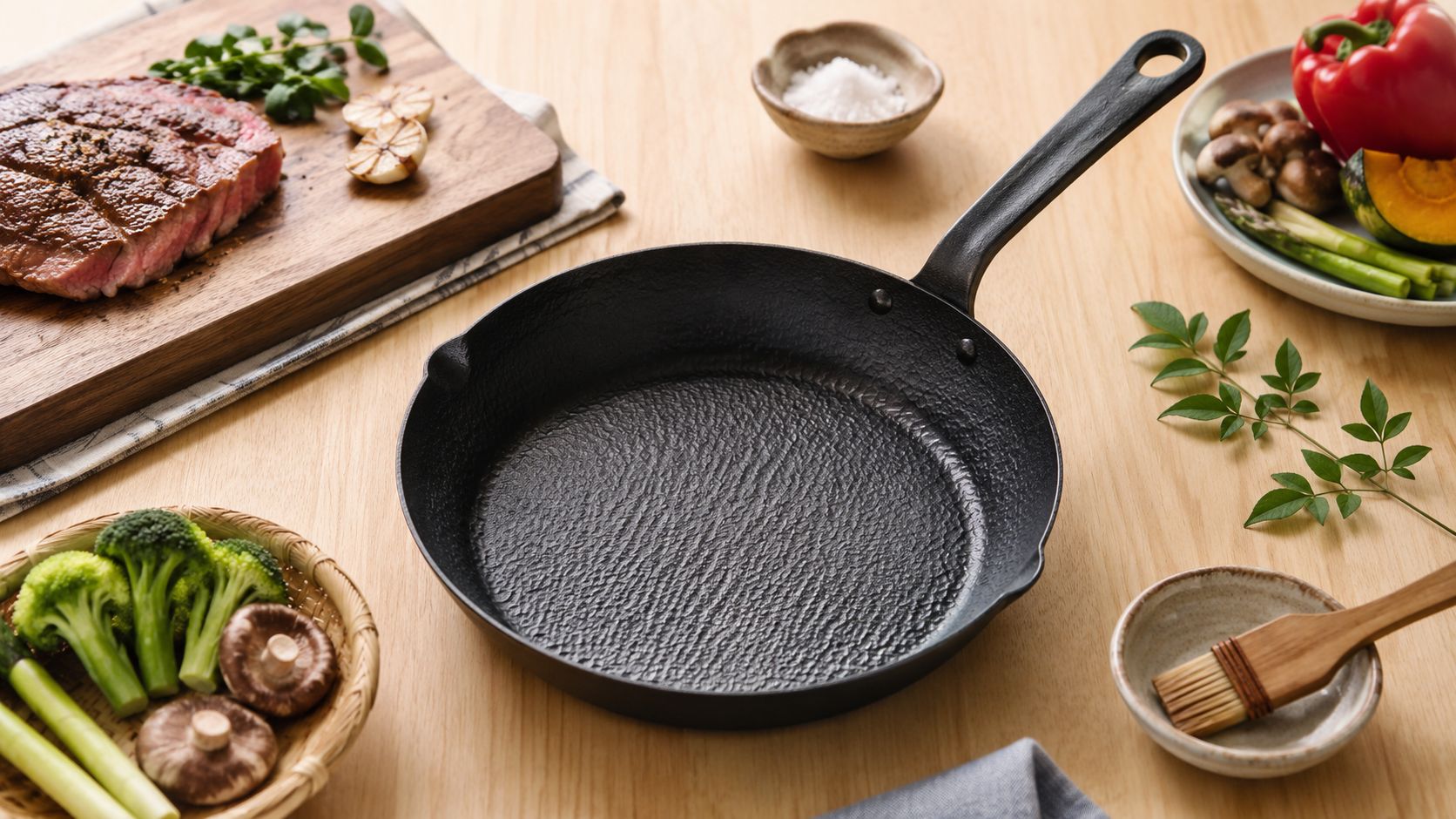
A lot of home cooks reach the same point with cookware. One pan heats too fast in the center and leaves the edges underdone. Another loses its surface after regular use. A third works well enough, but never feels like a tool you'll still be using years from now.
That's where a Japanese cast iron frying pan starts to make sense. It isn't only about owning something traditional. It's about getting a pan that holds heat well, rewards good technique, and carries a craft history that still matters in modern kitchens in Japan.
If you're curious but unsure, that's normal. Cast iron can sound demanding, and Japanese cookware can feel difficult to buy confidently from abroad. This guide clears that up in plain language so you can understand what these pans are, how they cook, how they compare with other options, and how to care for one without anxiety.
Your Journey to Better Cooking Starts Here
A Japanese cast iron frying pan appeals to people who are tired of replacing cookware. If you want stronger browning, steadier heat, and a pan that feels substantial in the hand, this category deserves attention.
It also helps to place it in the wider world of Japanese cooking tools. In many Japanese kitchens, the pan isn't an isolated object. It sits alongside sharp prep habits, careful heat control, and ingredient-first cooking. That mindset is one reason simple food often tastes so precise. If you enjoy building that kind of kitchen foundation, this guide on how to make dashi stock pairs well with the cookware side of the story.
What often confuses first-time buyers
Concerns rarely center on cast iron's cooking ability. They center on practical questions.
- Weight concerns: Will it feel too heavy for daily use?
- Care worries: Is seasoning difficult, and what happens if rust appears?
- Buying uncertainty: How do you tell an authentic Japanese pan from a generic listing with vague descriptions?
- Performance doubts: Is Japanese cast iron better for your cooking than carbon steel or a coated pan?
A good pan should make your cooking more predictable, not more stressful.
Those are the questions worth answering before you spend money. A Japanese cast iron frying pan can be a long-term kitchen companion, but only if its strengths match how you cook.
What this pan does best
For the right cook, this kind of pan shines in a few specific situations:
- Searing proteins: The pan stays hot when food hits the surface.
- Cooking with patience: It rewards preheating and steady technique.
- Keeping a tool for years: Cast iron is valued for durability when cared for properly.
That mix of function and heritage is what makes these pans so appealing. They're practical objects, but they also carry the feel of a craft tradition that hasn't been flattened into disposable convenience.
A Legacy of Craft The Story of Japanese Cast Iron
Japanese cast-iron cookware is usually traced to Nanbu Tekki, the ironware tradition of Iwate Prefecture. Its origins are commonly placed in the 17th century, when craftsmen from Kyoto were invited to Morioka under the Nambu clan, as described in this history of Nanbu Tekki and Japanese cast iron.
That origin matters because it tells you what you're really buying. A Japanese cast iron frying pan didn't appear as a trend piece. It grew out of a metalworking tradition shaped by local craft, tea culture, and generations of refinement.

Nanbu Tekki and why the name matters
When people first hear Nanbu Tekki, they often think of kettles and teapots. That's fair. Those forms are widely recognized. But the same forge-and-casting tradition also helps explain Japan's broader cast-iron cookware culture.
The lineage is local and specific, yet it belongs to a much older East Asian story. The same reference notes that the first known cast-iron cookware appeared in China around 220 AD, showing that Japanese cast iron sits within a deep regional history while developing its own identity later in Japan.
Why authenticity matters more here than with ordinary cookware
Mass-market cookware usually asks one question. Does it work right now?
Traditional Japanese cast iron asks a second one. Who made it, and within what craft tradition?
That doesn't mean every old-looking pan is automatically superior. It means origin and maker matter more than they do in a generic pan category. Buyers who care about Japanese household goods often already understand this from ceramics, knives, or textiles. The same mindset carries over to cookware and even to broader lifestyle choices such as Japanese home decorating ideas, where material, place, and workmanship all shape value.
The appeal of Japanese cast iron isn't only that it lasts. It's that the object still reflects the hands and traditions behind it.
A craft that stayed narrow on purpose
One of the most interesting things about Japanese cast iron is that it still feels like a specialist category. That's part of its attraction. You're not buying a pan designed mainly for shelf turnover. You're buying into a slower standard of making.
That history changes how you look at the pan in your kitchen. The surface, the weight, the shape, and even the patience it asks from you all make more sense once you understand that it comes from a craft lineage rather than a disposable product cycle.
Why Chefs and Home Cooks Love These Pans
The main reason people stay loyal to cast iron is simple. It cooks with steadiness. Japanese cast iron is valued for heat retention, durability, and the ability to maintain high temperatures for longer, and these products are still made in Morioka and Mizusawa in Iwate Prefecture by artisans using traditional techniques, according to this overview of Japanese cast iron craftsmanship.
In practical cooking, that means the pan doesn't panic when cold food lands in it. The temperature drops less sharply than it would in a lighter pan, so browning tends to be more even and controlled.

What heat retention feels like in real cooking
Heat retention can sound abstract until you cook something familiar. Think about chicken thighs, sliced mushrooms, or dumplings. In a lighter pan, the surface temperature can fall quickly when ingredients go in, especially if they release moisture. That can lead to pale spots, steaming, and sticking.
A Japanese cast iron frying pan helps by staying more stable.
- For searing: You get a better chance at deep color before the food overcooks.
- For batch cooking: The pan recovers more steadily between rounds.
- For vegetables: You can keep stronger surface heat for blistering and browning.
Why that matters more than “even heating” claims
People often use “even heating” as a catch-all phrase. The better way to think about cast iron is thermal stability. The pan's mass helps resist sudden change. That's especially useful if your stovetop runs hot, your ingredients come straight from the fridge, or you like hard sears.
Practical rule: Preheat the pan gradually, then let the iron do the work. Cast iron rewards patience more than constant adjustment.
Durability is part material, part habit
Cast iron's reputation for durability is deserved, but it isn't magic. A Japanese cast iron frying pan lasts because the base material is strong and because the user learns a few basic habits. Dry it well. Oil it lightly. Don't leave acidic or wet ingredients sitting in it for long periods.
For many cooks, that care becomes part of the pleasure. The pan develops character through use. Instead of degrading in the way many coated pans do, it often becomes more familiar and more responsive over time.
That combination explains the appeal. You're getting strong cooking performance, but you're also getting a tool that teaches you to cook with more control.
Japanese Cast Iron vs Other Frying Pans
The most useful buying question isn't “Is Japanese cast iron good?” It is. The better question is whether it's good for you.
A key question for buyers is whether a Japanese cast iron pan is the right choice versus alternatives like carbon steel. Japanese cast iron is prized for artisanal quality and durability, but some users may prefer carbon steel for lighter weight and faster response to heat changes, as discussed in this look at the craftsmanship and trade-offs of Japanese cast iron cookware.
Pan Comparison
| Feature | Japanese Cast Iron | Western Cast Iron | Carbon Steel |
|---|---|---|---|
| Heat behavior | Strong heat retention and stable cooking | Also known for strong heat retention | Faster response to heat changes |
| Weight feel | Often substantial, but model-dependent | Often heavy and substantial | Usually lighter and easier to maneuver |
| Daily handling | Good for cooks who don't mind slower, steadier use | Familiar choice for those who like classic heavy skillets | Attractive for frequent tossing and quick adjustments |
| Maintenance | Needs drying and basic oil care | Needs drying and basic oil care | Also needs seasoning and rust prevention |
| Buying appeal | Heritage, Japanese craftsmanship, specialized feel | Broad availability and classic skillet format | Versatility and speed |
Japanese cast iron versus Western cast iron
These two categories overlap in many ways. Both suit cooks who want durable cookware and stronger browning than a typical lightweight pan usually gives.
The difference often comes down to design language and buying motivation. A Japanese cast iron frying pan is often chosen not just for function but for connection to Japanese metalcraft. A Western cast iron skillet is often chosen as a familiar all-purpose workhorse. If you already love old-style cookware and want something with a more distinctly Japanese craft identity, the Japanese option becomes more compelling.
Japanese cast iron versus carbon steel
This is the harder decision for many people. Carbon steel often wins on agility. It tends to feel easier to lift, tilt, and move quickly. That makes it attractive if you cook every day, toss ingredients often, or want a pan that reacts quickly when you raise or lower the heat.
Japanese cast iron wins when you care more about stability than speed.
- Choose cast iron if: You value searing, heat retention, and a slower, more deliberate cooking rhythm.
- Choose carbon steel if: You want lighter handling, faster heat response, and an easier pan for repetitive daily movement.
- Pause before buying either if: You want minimal upkeep and strongly dislike hand-care routines.
One useful adjacent reference, especially if you also bake, is this Cast iron bread baking pot. It's a different tool, but it shows the same broad cast-iron appeal: heat retention can be a real advantage when the cooking method benefits from stored heat.
If you want one pan that feels fast and nimble, cast iron may frustrate you. If you want a pan that stays calm under heat, cast iron starts to make sense.
So is it worth it
For some kitchens, yes. For others, no.
A Japanese cast iron frying pan makes the most sense if you enjoy cookware with personality, you don't mind a bit of maintenance, and you cook foods that reward strong retained heat. If your style is fast, repetitive, and weight-sensitive, carbon steel may be the more practical buy.
That isn't a failure of cast iron. It's good cookware matching.
How to Choose Your Perfect Japanese Frying Pan
When you shop for a Japanese cast iron frying pan, the spec sheet can look more technical than it really is. Most buyers only need to understand three things. Size, weight, and shape.
The easiest mistake is choosing by appearance alone. A pan can look elegant online and still feel wrong in daily use if it's too heavy for your wrist, too shallow for your food, or too small for your stove habits.

Start with weight, not just diameter
A useful benchmark shows how much mass changes performance. An Iwachu Yaki Frypan of about 24.5 cm weighs about 1.9 kg, while a similar-sized Japanese non-stick iron pan of 26 cm is listed at about 1.2 kg, which illustrates the trade-off between thermal stability and easier handling in this guide to Japanese cast iron pan selection.
That tells you something important. Two pans can look similar in width but feel very different in daily cooking.
- Heavier pan: Better thermal inertia, stronger support for searing, more effort to lift.
- Lighter pan: Easier for quick meals and frequent handling, less stable when cold food is added.
Match the pan to your cooking style
A pan is easier to choose once you think in dishes instead of materials.
If you often cook eggs, dumplings, sliced meat, mushrooms, and pan-fried fish, a medium frying pan shape tends to be the most flexible. If you regularly make one-pan meals with sauces or want more room for turning food without crowding, you may prefer a broader or slightly deeper form.
Here's a simple way to understand it:
-
Weeknight cook
You'll probably appreciate a pan that doesn't feel tiring to lift and clean. -
Sear-focused cook
More mass can help you hold surface heat where it matters. -
Small kitchen cook
Storage, handle length, and total weight matter almost as much as cooking performance.
Look for clear product descriptions
Buying method matters. If you're shopping internationally, clear English descriptions are useful because they reduce guesswork around size, finish, and care expectations. For people browsing Japanese goods more broadly, products in Japan offers context on how curated access can make specialist categories easier to understand.
You can also consider marketplace selection carefully. Buy Me Japan is one option if its cookware catalog includes Japanese cast iron items, since a curated product page can help international buyers verify origin details and basic specifications before ordering from Japan.
The right pan isn't the one with the most romance. It's the one whose weight, shape, and heat behavior fit your real kitchen habits.
Mastering Seasoning and Lifelong Daily Care
Care is the part that scares people off, but it's usually much simpler than expected. Most problems come from two things. Leaving moisture on the pan, or assuming seasoning has to be a dramatic ritual every time.
Some Japanese pan makers use a useful factory treatment. One manufacturer description notes that the pan body is fired at 700°C before being soaked in oil, a process described in this guide on choosing a Japanese cast iron pan. The point of that treatment is better rust resistance and a protective starting layer, so the user doesn't need to begin from completely raw iron.

What seasoning actually means
Seasoning is not a thick, sticky coat of oil. It's a thin, cooked-on layer that helps protect the metal and improve release over time.
That means your job is modest. You're maintaining the surface, not performing a ceremony.
- After cooking: Remove food residue while the pan is still manageable to clean.
- After washing: Dry it fully. Residual water is the enemy.
- Before storing: Wipe on a very thin film of oil if the surface looks dry.
A simple care routine that works
Many home cooks do best with a routine they can repeat without overthinking.
-
Let the pan cool slightly
Don't shock hot iron with unnecessary extremes. -
Clean with restraint
Use warm water and a gentle scrub as needed. If stuck bits remain, loosen them without grinding the surface aggressively. -
Dry thoroughly
Heat on the stove briefly if needed to drive off lingering moisture. -
Oil lightly
A faint sheen is enough. If it looks wet or gummy, it's too much.
Rust usually means the pan stayed damp, not that the pan is ruined.
For cooks who are already comfortable with Japanese iron cookware, this article on the River Light wok is helpful because the broader habits around drying, oiling, and building a working surface are closely related.
Can you fix mistakes
Yes, in most cases. Minor rust can usually be addressed with patient cleaning, drying, and renewed oil care. A patchy surface often improves through normal cooking with oil and proper storage.
This short video gives a useful visual sense of cast iron maintenance in practice.
What not to obsess over
You don't need a flawless black mirror surface from day one. You don't need to panic over every mark or color change. Cast iron often looks a little uneven as it develops.
What matters is function. If the pan is clean, dry, protected, and cooking well, you're doing it right.
Buying With Confidence From Japan
By the time you're ready to buy, the remaining questions are usually small but important.
Can you use soap? Some cooks do, sparingly, while others avoid it. The safer principle is moderation and immediate drying. Is rust fixable? Usually, yes. Should you expect perfect non-stick behavior right away? No. A Japanese cast iron frying pan improves as your handling improves.
What to check before you order
International buyers should focus on clarity more than hype.
- Origin details: The listing should clearly identify the Japanese maker or production context.
- Pan specs: Weight, diameter, and surface treatment should be understandable.
- Packaging confidence: Cast iron is durable, but it still needs careful packing for international transit.
- Care instructions: Good listings explain first-use and storage basics in plain language.
If you often shop across categories and want a broader sense of where curated Japanese goods are easier to buy online, this guide to the best online Japanese stores is a useful starting point.
A Japanese cast iron frying pan makes sense when you want more than utility alone. You're buying better heat behavior, long-term durability, and a living craft tradition that still shows up in the object itself. The right purchase is the one that fits your cooking habits and arrives with enough trustworthy information that you can use it confidently from the first meal.
If you're ready to explore authentic Japanese cookware and other carefully selected goods shipped from Japan, Buy Me Japan is a practical place to browse. Look for clear product details, maker information, and care notes so you can choose a pan that suits the way you cook.


Share:
Brown Sugar Ginger Tea: Your 2026 Perfect Brew Guide
Kokuho Rose Rice: Your Guide to This Premium Japanese Rice