


You're probably staring at two Hada Labo bottles that look close enough to be cousins and wondering which one fits your skin. That confusion is fair. Hada Labo Gokujyun vs Shirojyun isn't a simple “blue bottle for one thing, white bottle for another” decision, because both lines sit on a hydration base and only start to separate once you look at your real goal.
My blunt take is this. If your skin is mainly thirsty, easily irritated, or overloaded by actives already, start with Gokujyun. If your main frustration is dullness, uneven tone, or lingering post-blemish marks, Shirojyun makes more sense. The twist is that Shirojyun's March 2024 reformulation changed the equation for a lot of people, especially if you've avoided brightening toners because they felt sticky or too much for acne-prone skin.
The Two Hada Labo Lines at a Glance
A lot of shoppers make the wrong decision for the right reason. They assume Gokujyun is for dry skin and Shirojyun is for brightening, then stop there. That's too shallow to be useful.
Both lines are built around hydration. That's why they can feel deceptively similar at first touch. The actual choice comes down to what problem you want your toner or lotion step to solve every day.
The real difference
If I had to reduce them to one sentence each:
- Gokujyun is the moisture-first workhorse.
- Shirojyun is the hydration-plus-brightening branch.
That's why shoppers compare them so often. They aren't opposites. They're more like two versions of the same routine slot with different priorities.
A simple example makes this easier. If your skin feels tight after cleansing, gets cranky when you use stronger serums, or needs a reliable layer under moisturizer, Gokujyun usually fits better. If your skin already gets enough moisture but still looks flat, uneven, or marked after breakouts, Shirojyun is usually the smarter pick.
Practical rule: Choose your Hada Labo line based on your top skin goal, not the prettiest bottle or the most popular review.
Why people get stuck between them
Hada Labo uses “lotion” in the Japanese sense. That means a watery hydrating step, not a Western body lotion. Then you'll also see milk, emulsion, and sometimes serum-like formats depending on the line. That creates a lot of hesitation, especially for international shoppers trying to build a routine from translated names alone.
Here's the cleanest way to approach this.
- Lotion: Your first leave-on hydration layer after cleansing
- Milk or emulsion: A lighter moisturizing layer
- Serum or premium brightening step: More goal-focused support
If you already enjoy the brand's cleansing side, the feel of the Hada Labo Gokujyun Cleansing Oil guide gives you a good clue about the line's general philosophy. It's simple, functional, and built around comfort.
My short verdict upfront
If you want the safest default, pick Gokujyun.
If you know you want hydration but also want your toner step to pull some weight for visible tone concerns, pick Shirojyun, especially the newer formula if you've found older brightening lotions too syrupy or too glycerin-heavy.
That's the key shift most older comparisons miss.
Where Gokujyun and Shirojyun Came From
Shoppers usually frame this choice too rigidly. Gokujyun hydrates. Shirojyun brightens. That was a fair shortcut for years, but it is no longer enough if you are buying based on skin behavior, climate, and routine compatibility.
Hada Labo launched in Japan in 2004, and these two lines grew out of two different jobs. Gokujyun became the line for straightforward moisture support. Shirojyun was developed for people who wanted hydration in the same step as tone-focused care. The split was deliberate, not cosmetic branding. In 2019, the brand also updated packaging across both lines to plant-derived materials, as noted in the Hada Labo brand history.
Why the lineup split still matters
Gokujyun is the base line. It is built for comfort, water retention, and that cushioned, replenished feel people expect from Hada Labo.
Shirojyun came from a different brief. It still hydrates, but it was always meant to do more work for skin that looks dull, uneven, or marked after inflammation.
That history matters because it explains why these lines can sit in the same category while fitting very different routines. If your routine already has enough treatment steps, Gokujyun makes more sense. If you want your hydrating step to also address visible tone concerns, Shirojyun earns its spot.
The 2024 reformulation that changes the recommendation
This is the part older comparisons miss.
A guide to the line notes that Shirojyun was reformulated in March 2024, with allantoin added and glycerin removed from the formula (Hada Labo complete guide). That changes who I recommend it to.
Older Shirojyun formulas were easier to write off if you disliked glycerin-heavy layers or found brightening lotions sticky under sunscreen, acne treatments, or humid-weather routines. The newer version shifts the buying decision. Allantoin makes it more appealing for skin that gets reactive. The glycerin-free base also makes it more relevant for people who break out easily, feel congested under rich humectant layers, or hate that syrupy finish some Japanese lotions can leave.
So the line's origin story is no longer just hydration versus brightening. It is also old Shirojyun versus post-2024 Shirojyun.
What first-time buyers should take from that
Read the line names as formula intent.
- Gokujyun is the safe pick if your priority is barrier-friendly hydration.
- Shirojyun is the smarter pick if you want hydration plus visible tone support.
- Shirojyun after March 2024 deserves a fresh look if you avoided the older formula because it felt too heavy or too glycerin-loaded.
That is the shift. Gokujyun still wins as the default. Shirojyun is now easier to recommend to sensitive, acne-prone, and humidity-frustrated shoppers than many older reviews suggest.
Key Ingredients and Formulation Differences
The decision gets practical. Gokujyun and Shirojyun overlap more than people think, but they diverge where it counts.
A verified comparison notes that Gokujyun Premium and Shirojyun Premium share 9 ingredients in common, which helps explain why they can feel related on skin while still serving different goals.
What Gokujyun is built to do
Gokujyun centers on Super Hyaluronic Acid and moisture-focused hydration. In ingredient architecture terms, versions commonly feature multiple hyaluronic acid forms such as sodium hyaluronate, hydrolyzed hyaluronic acid, and acetylated sodium hyaluronate, creating a layered humectant system designed to bind water across different molecular sizes.
In plain English, Gokujyun is trying to do one job very well. Pull in water, hold onto it, and keep skin feeling less depleted.
If your skin barrier feels stressed, if your cleanser is fine but your face still feels tight after rinsing, or if your actives already do enough “treatment” work, that focus is a strength.
What Shirojyun adds on top
Shirojyun keeps the hydrating structure but layers in brightening-oriented ingredients. Verified references describe it as the brightening line using tranexamic acid, vitamin C derivatives, and in some variants arbutin or related actives depending on the formula. Shirojyun Premium is also noted as a quasi-drug in Japan, which puts its brightening actives under a stricter efficacy framework than a standard cosmetic toner.
Another verified product reference describes Shirojyun Premium whitening lotion as centered on tranexamic acid, supported by hydrolyzed hyaluronic acid, sodium hyaluronate, magnesium ascorbyl phosphate, and vitamin E (Shirojyun formula overview).
If you've been wondering why Shirojyun gets recommended for post-blemish marks more often than Gokujyun, that's why. It isn't “better hydration.” It's hydration with a more specific job.
The reformulation angle most shoppers should care about
The under-discussed part is the March 2024 Shirojyun reformulation, which added allantoin and removed glycerin according to the guide cited earlier. That makes the line more interesting for people who:
- dislike that syrupy, tacky humectant feel
- live in humid climates and want faster layering
- break out easily and prefer lighter-feeling hydration
- want a brightening lotion without defaulting to a heavy texture
If you want a better grasp of why hyaluronic acid behaves so differently across formulas, this explainer on what hyaluronic acid serum does in a routine helps clarify why ingredient family alone doesn't tell you everything.
My ingredient-based recommendation
Pick based on the active cluster that matches your actual routine:
- Choose Gokujyun if your KPI is moisture retention, comfort, and barrier support.
- Choose Shirojyun if you want hydration plus tone-evening support.
- Choose newer Shirojyun first if you avoided brightening lotions because they felt too sticky.
If your toner step already has to coexist with retinoids, exfoliants, or acne treatments, a lighter reformulated brightening lotion can make more sense than the old hydration-vs-brightening binary.
Texture, Finish, and What the Results Feel Like
Texture decides whether you'll use a product consistently. That matters as much as ingredients.
How Gokujyun feels
Gokujyun usually feels straightforward. It spreads easily, sinks in quickly, and leaves a hydrated, slightly dewy base rather than a coated finish. On bare skin after cleansing, it tends to take the edge off tightness fast.
Within minutes, skin usually feels more comfortable and less papery. Under serums and sunscreen, it rarely tries to compete for attention. That's one reason it's such an easy recommendation for routine minimalists.
How Shirojyun feels
Shirojyun tends to feel a touch more intentional. Even when the texture isn't dramatically thicker, it often leaves a more cushioned, slightly more luminous finish. The Moist versions especially can sit on the skin a bit longer before settling.
By the end of a full routine, Shirojyun often reads as fresher and a little more polished, while Gokujyun reads as hydrated. That's a subtle difference, but if you care about finish, it's real.
Gokujyun feels like support. Shirojyun feels like support with a visible agenda.
Layering and pilling
For layering, Gokujyun is the easier diplomat. It usually plays well with almost everything because it stays in its lane.
Shirojyun can still layer nicely, but I'd be more careful with over-application if you're using multiple serums or a film-forming sunscreen. One or two thin layers generally work better than trying to flood the skin.
If you're unsure where a milk or emulsion fits after lotion, this guide to how a skin care emulsion works in a routine is useful because Hada Labo naming can trip people up.
The reformulated finish
The newer Shirojyun formula is the reason I'm less likely to push sensitive or acne-prone shoppers automatically toward Gokujyun. The glycerin-free shift suggests a lighter post-feel, and that matters if older brightening toners always felt too damp or too clingy on your face.
Gokujyun still wins for pure comfort. Shirojyun now feels more competitive than it used to.
Skin Types, Climates, and Routine Placement
I stop being diplomatic.
If you don't have a strong brightening goal, buy Gokujyun. It's the easier fit for more people, more routines, and more seasons. But if you do have a strong brightening goal, don't play it safe and then complain your toner isn't doing enough. Buy Shirojyun.
Best match by skin profile
Here's the blunt version:
- Dehydrated skin: Gokujyun
- Barrier-stressed skin: Gokujyun
- Sensitive skin: Usually Gokujyun first, but newer Shirojyun is now worth testing
- Acne-prone skin: Depends on whether you want pure hydration or tone support after breakouts
- Dull or uneven-looking skin: Shirojyun
- Post-summer discoloration concerns: Shirojyun
- Combination to oily in humidity: Shirojyun has become more appealing after the reformulation
A verified discussion of market gaps around these lines notes that current shoppers increasingly care about acne-safe and sensitive-skin compatibility, and that the decision often involves how each line behaves alongside exfoliants, retinoids, or acne treatments rather than asking which one is “stronger” (ingredient deep dive on compatibility questions).
Best match by climate
Climate changes the answer more than many people expect.
In dry or cold weather, Gokujyun's moisture-first approach makes more sense as a default daily toner. In humid weather, especially if your skin gets congested or shiny easily, reformulated Shirojyun can be more comfortable.
A lot of people don't need one permanent winner. They need a seasonal switch.
- Winter: Gokujyun usually makes more sense
- Summer: Shirojyun can be the better daily pick
- Transitional seasons: choose based on your main concern, not the calendar
Where each one sits in a routine
Use Gokujyun right after cleansing as your first hydration layer. It's excellent when you want the rest of your routine to sit better and sting less.
Use Shirojyun in that same toner slot when uneven tone is the priority. You can keep the rest of the routine simple, or pair it with a moisturizer that supports comfort.
If your barrier feels unreliable, a guide on choosing a barrier repair moisturizer helps with the step that should follow either line.
My routine rule: Don't ask your moisturizer to do all the work. Pick the line that matches your first real leave-on goal.
Side by Side Comparison at a Glance
Some shoppers only need one clean chart. If that's you, use this and move on.
Hada Labo Gokujyun vs Shirojyun at a Glance
| Attribute | Gokujyun | Shirojyun |
|---|---|---|
| Hero ingredient | Multiple hyaluronic acid forms | Tranexamic acid plus hydrating base |
| Secondary focus | Moisture retention and comfort | Brightening support and tone-evening focus |
| Target concern | Dehydration, tightness, routine support | Dullness, uneven tone, post-blemish marks |
| Best skin type | Dry, dehydrated, barrier-stressed, easily irritated | Combination, dull, uneven-looking, pigmentation-focused |
| Climate suitability | Cold, dry, indoor-heated environments | Humid, warm, layered daytime routines |
| Texture feel | Simple, easy, hydration-first | Slightly more cushioned, more treatment-coded |
| Finish | Soft dew, low drama | Fresher, more luminous look |
| Reformulation status | No key reformulation point discussed here | Reformulated in March 2024 with allantoin, glycerin-free |
| Routine role | Daily default hydrating lotion | Daily brightening lotion |
| Value judgment | Better all-purpose default | Better goal-driven pick |
The fast recommendation
If your brain keeps flipping between the two because the bottles feel too similar, that's a classic comparison problem. In behavioral terms, people often judge choices more clearly when differences are framed side by side. If you want a quick read on that decision pattern, what is the contrast effect is a useful explanation.
My snap judgment stays the same:
- Pick Gokujyun if you want the safer universal choice.
- Pick Shirojyun if you want your hydrating step to also address visible tone concerns.
- Pick reformulated Shirojyun sooner than you would have before if you dislike glycerin-heavy textures.
Which Hada Labo Line Should You Buy
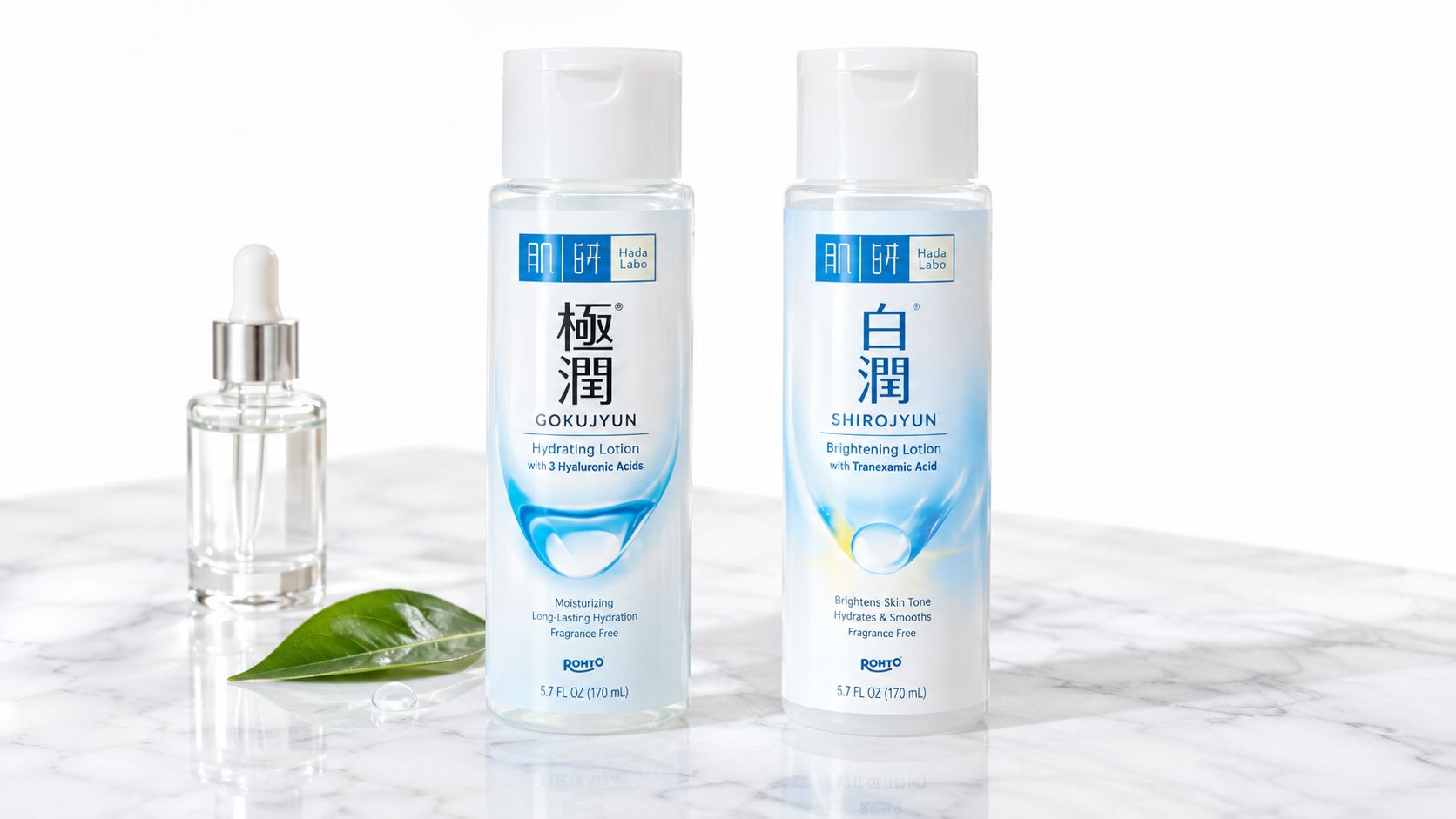
My final answer is simple.
Buy Gokujyun if you want reliable layered hydration, better routine flexibility, and the least complicated path to comfortable skin. It's the line I'd hand to someone whose skin gets dry, touchy, over-processed, or overwhelmed by too many treatment products.
Buy Shirojyun if your hydration step also needs to work on visible dullness, uneven tone, or the marks that hang around after breakouts. The newer formula deserves more credit than it gets, especially for people who avoided older brightening lotions because they felt heavier than necessary.
My situational verdict
Here's exactly how I'd decide:
- Choose Gokujyun when hydration is the mission.
- Choose Shirojyun when tone correction is the mission.
- Choose Gokujyun first if you're reactive and unsure.
- Choose Shirojyun first if you're frustrated by a flat, uneven complexion and you know that's your priority.
If you're the hybrid type, you don't always need to stay loyal to one branch. Some shoppers do well using a hydrating base from Gokujyun and then adding a more targeted brightening product elsewhere in the routine. Others prefer Shirojyun in warm weather and Gokujyun in winter.
For shoppers trying to sort out which Japanese beauty picks are worth bringing into a routine, this guide on what to buy in Japan for cosmetics is a helpful companion.
Before you buy, patch test if your skin is reactive. That's especially sensible if you're introducing brightening actives or switching from a very basic routine.
A quick visual rundown can help if you still want to see the bottles and hear the distinction explained more casually:
One practical note for international shoppers. Buy Me Japan carries authentic Japanese products sourced through official suppliers in Japan, so it's a straightforward option if you're trying to find Hada Labo products that can be difficult to access locally. That matters with staple lines like these, where shoppers often want the Japanese-market formulas rather than vague marketplace listings.
The short version is this. Gokujyun is the better default. Shirojyun is the better specialist. The March 2024 Shirojyun reformulation narrowed the comfort gap enough that I'd no longer reserve it only for people willing to tolerate a heavier brightening lotion.
If you're deciding between hydration-first and brightening-focused Hada Labo products, Buy Me Japan makes it easier to browse authentic Japanese skincare in one place, with tracked shipping, secure payments, and helpful customer service. If your goal is a clear, practical pick, start by comparing the Hada Labo options that match your skin priority now, not the routine you think you should have later.

共有する:
Ichikami Kracie Shampoo Guide to Variants and Care