You're on a Japanese website, you've found a bra you like, and then the sizes appear: D70, C75, E65. If you're used to 34C, 36D, or EU sizing, that label can stop you cold.

That confusion is normal. Japan bra size labels follow a different system, and the tricky part isn't only the numbers. The bigger surprise is that even when you decode the size correctly, the bra can still feel different because of shape, padding, and construction.

If you want to shop more confidently, the best approach is to treat Japanese sizing as its own language. Once you know how the band works, how the cup is calculated, and why fit can still vary, the whole thing gets much easier.

Your Guide to Navigating Japanese Bra Sizes

A lot of visitors to Japan have the same experience. They walk into a lingerie section, see beautiful colors and detailed lace, pick up a tag, and realize they suddenly can't tell what size they are.

A woman looks at a Japanese bra size conversion chart displayed on a computer screen.

The first time you see a label like B70, it looks backwards. Then you notice the number doesn't match what you wear at home. Then you start wondering whether the bra itself is designed to fit the same way. That's where most guides stop too early.

Japanese sizing is logical once you know the rules. A key challenge is that the printed size alone doesn't tell you how the bra will feel on your body. Japanese bras can differ in band feel, cup depth, center gore pressure, and built-in padding, so a simple conversion isn't always enough.

Practical rule: Treat your usual size from home as a clue, not an answer.

This is also why understanding Japanese beauty and presentation culture helps. Fit, silhouette, and finishing details matter a lot in Japan, just as they do in makeup and personal care. If you enjoy that side of shopping, this overview of Japanese beauty standards gives useful context for why many products are designed with a specific look and feel in mind.

Here, the goal is simple. Read the label correctly, measure yourself in centimeters, and learn how to spot the common fit mismatches before you buy.

The Japanese Bra Sizing System Explained

The easiest way to understand japan bra size is to split it into two parts. There's the band size and the cup size.

How the band works

Japan uses a centimeter-based underbust system, and the sizes usually move in 5 cm steps such as 65, 70, 75, 80, and 85. The cup letter is written before the band number, so you'll see labels like B70 or C75 rather than 70B or 75C, as explained in Aimerfeel's guide to measuring Japanese bra size.

That number refers to the underbust area, not a direct translation of your US or UK band. This causes confusion for many shoppers. A familiar number from home doesn't automatically become the same number in centimeters.

A second detail matters here too. A general bra sizing reference notes that Japan and Korea use this same metric approach, and that a loosely measured underbust of about 78–82 cm corresponds to band 80, with cup-first labeling such as B75 rather than 75B, as summarized in this bra size reference.

How the cup works

The cup letter comes from the difference between your full bust and your underbust. Japan commonly uses a finer graduation than many Western shoppers expect, so each increase is based on a relatively small measurement difference.

That's why direct letter conversion often causes mistakes. A C cup in one market isn't always the same practical fit as a C cup in another market, because the system behind that letter differs.

The safest starting point is your actual underbust in centimeters, not your old tag size.

Why the label looks unfamiliar

If you grew up reading bra sizes as number first, letter second, Japanese tags can seem reversed. They aren't reversed by accident. They just follow a different labeling convention.

A quick way to read them is this:

  • Letter first: Cup size
  • Number second: Underbust band in centimeters
  • Think metric first: Don't convert by guesswork
  • Use local labeling: Shop by the brand's own chart whenever possible

Once you stop trying to force a US or UK system onto the tag, Japanese labels start making sense fast.

How to Measure Yourself for a Japanese Bra

The most useful thing you can do is ignore your old size for a moment and start fresh with a tape measure. For Japanese bras, centimeters matter.

A woman measuring her torso with a measuring tape to find her correct bra size.

If your tape is stretched, warped, or hard to read, your result will be off from the start. If you need a quick refresher on choosing precise tape measures, that guide is a practical place to start.

Step one and underbust measurement

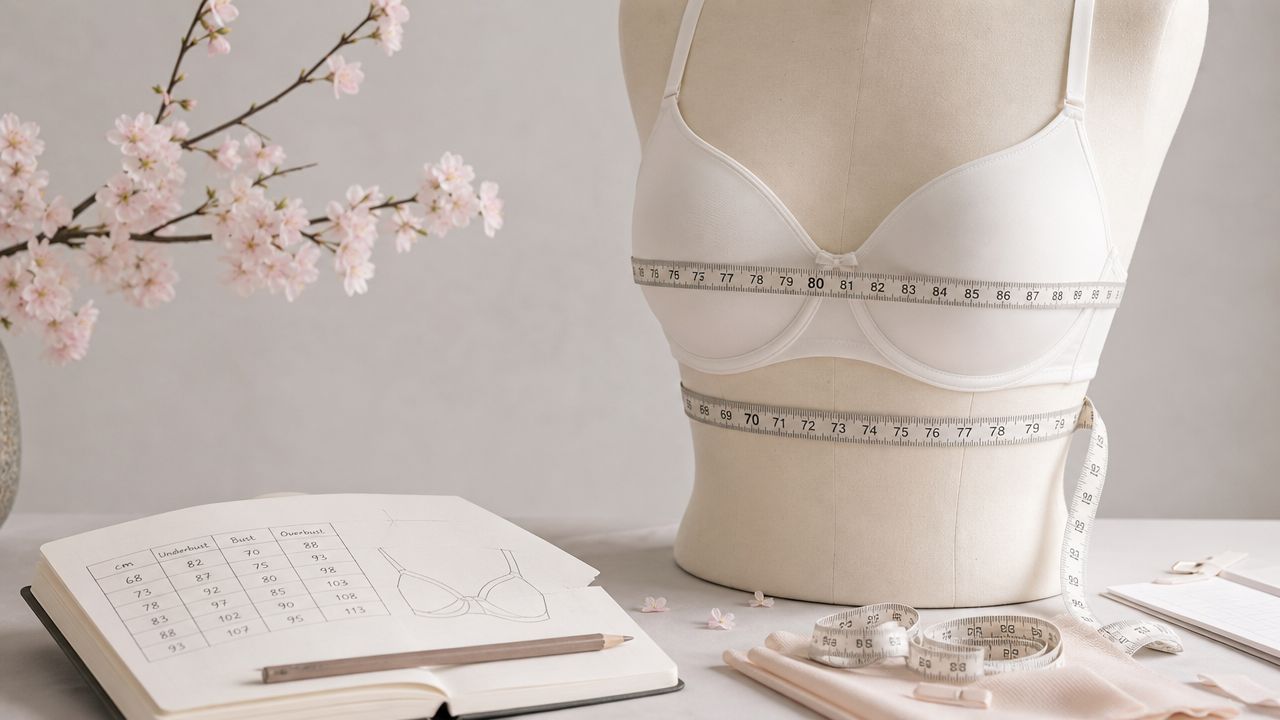
Stand naturally and wrap a soft tape around your ribcage directly under your bust. Keep it level all the way around your body.

The tape should feel snug, but not painfully tight. If it rides up at the back or sits lower in front, remeasure. The goal is a clean underbust number in centimeters.

Japanese band sizing is built on this measurement. In general shopping practice, people then use the nearest size step offered by the brand.

Step two and full bust measurement

Measure around the fullest part of your bust. Keep the tape level and don't compress the tissue.

A mirror helps here. So does measuring while wearing a light, non-padded bra if you want a more stable reading, especially if your shape is soft or asymmetrical.

Step three and cup difference

The cup is based on the difference between the full bust and the underbust. A common consumer chart uses roughly 2.5 cm cup steps, with about 10–12.5 cm = A, 12.5–15 cm = B, and 15–17.5 cm = C. A person with a 75 cm underbust and 90 cm bust has a 15 cm difference and is typically a Japanese C cup, according to this Japanese bra size converter guide.

That example helps because it shows how the math works. You're not guessing the cup. You're calculating it.

Here's a simple version:

  1. Measure underbust in cm
  2. Measure full bust in cm
  3. Subtract underbust from full bust
  4. Match that difference to the cup chart

If you'd rather watch the measuring process, this walkthrough is useful:

Measure twice if your first result surprises you. Most errors come from a tilted tape or pulling too tightly.

A small measuring mistake can shift both the band and the cup, so patience pays off here.

Japan Bra Size Conversion Charts

Conversion charts help, but they work best as a rough bridge between systems. They're not a promise that every bra will fit the same way.

That's because brands use different materials, cup shapes, padding levels, and underwire designs. A chart can point you in the right direction, but it can't account for construction details.

International Bra Size Conversion Chart Approximate

Japan (cm) USA/Canada (in) UK (in) EU (cm)
65 30 30 65
70 32 32 70
75 34 34 75
80 36 36 80
85 38 38 85

This table is intentionally approximate. It's most useful when you already know your measurements and want a starting point for browsing product listings.

How to use the chart without getting burned

Don't start with your home-country letter and search for the same letter in Japan. Start with the underbust measurement you took in centimeters, then compare.

A better shopping sequence looks like this:

  • Check your measured underbust first: That gives you your most realistic band range.
  • Use the chart to narrow options: It helps you read international listings faster.
  • Expect variation by style: A balconette, molded cup, and wireless bra won't fit the same.
  • Read product notes carefully: If a listing mentions firm bands or heavy padding, that matters as much as the size code.

A conversion chart is a map. It isn't the fitting room.

If a Japanese retailer gives both body measurements and garment notes, trust those details over a generic international chart every time.

Beyond the Chart Why Shape and Padding Matter

Japan bra size presents an interesting challenge. You can measure correctly, convert carefully, and still end up with a bra that doesn't feel right.

One of the biggest gaps in online advice is that most guides explain the size code but not the practical mismatch between Japanese sizing and overseas expectations for shape, padding, and fit. Existing guides note that Japanese cups and bands can feel smaller or tighter, but they often miss the real question, which is whether the bra will suit your breast shape at all, as discussed in this overview of Japanese bra fit concerns.

Common fit mismatches

A bra can be your nominal size and still fail in very specific ways.

  • Shallow cups: If your breast tissue projects more forward, the cup may feel too flat even when the volume seems correct.
  • Center gore pressure: The middle panel may dig in if the bra is built for a different spacing or shape than yours.
  • Firm band feel: Some shoppers notice less stretch than they expect from Western brands.
  • Built-in padding: Extra padding can reduce the usable room inside the cup.

These details explain why a converted size can look right on paper but feel wrong after five minutes of wear.

What to check when trying one on

Start with the center gore. If it presses uncomfortably or floats far away from your chest, the issue may be shape rather than simple size.

Then check the cup edge. If tissue spills at the neckline, the cup may be too closed or too small. If the top wrinkles, the cup may be too tall, too open, or padded in a way that doesn't match your shape.

Band feel matters too. A firm band isn't automatically bad. It only becomes a problem when it causes discomfort, riding, or distorted cup placement.

The tag tells you size. The bra itself tells you shape.

This is one reason many shoppers who love Japanese beauty products also enjoy learning the details behind Japanese design choices. The same attention to finish and intended effect shows up across categories. If that broader product culture interests you, this guide to the best Japanese cosmetic brands gives a useful parallel.

Padding changes the fit more than people expect

Japanese bras are often associated with lift and shaping. That doesn't mean every style is heavily padded, but it does mean you should read descriptions closely.

Removable pads, molded cups, side-support panels, and push-up construction all change how much real space is available inside the cup. If you're between sizes, this design detail can matter more than the conversion chart.

Shopping Tips for Japanese Bras and Brands

Once you understand the label and the shape issue, shopping gets much calmer. You stop asking, “What's my Japanese size?” and start asking a better question. “Which brand and which style are likely to work for me?”

Lingerie store display featuring mannequins wearing lace bras and panties surrounded by an organized selection of undergarments.

A useful retail guide makes exactly that point. The underexplored question is which Japanese brands stock your size. That guide notes that some stores carry up to a J cup and 90 band, while conversion charts show bands extending to 110, which shows the market is broader than many articles suggest, as noted in this large-size bra shopping guide for Japan.

How to shop more strategically

Not every store carries the same range, and not every bra line inside the same brand is cut the same way. That's why browsing by brand alone isn't enough.

A practical approach looks like this:

  • Search by your measured size range: Start with the size you calculated, then keep neighboring sizes in mind.
  • Look for fit language in product descriptions: Words that suggest shaping, side support, or push-up structure tell you a lot.
  • Check whether pads are removable: That gives you more flexibility if the cup feels crowded.
  • Notice whether the bra is wired or wireless: The same nominal size can feel different across those categories.

Size range and assumptions

Many overseas shoppers assume Japanese lingerie is only made for smaller bodies. That assumption doesn't hold up well in real shopping.

Availability still varies a lot by brand, store, and product type, but the overall market is wider than the stereotype suggests. The issue usually isn't whether a size exists at all. It's whether the specific store you're browsing stocks it in the style you want.

A note for online shoppers

If you're buying from outside Japan, it helps to compare several listings before committing. Product photos can reveal cup height, strap placement, and how much padding is built in.

For broader advice on finding trustworthy retailers from abroad, this guide to the best online Japanese stores is helpful when you're deciding where to shop.

When possible, favor listings that show multiple angles of the bra and explain construction in plain language. That information often matters more than a basic size chart.

Common Japan Bra Fit Questions Answered

A few questions come up again and again when people start shopping by japan bra size.

Why does the band feel tighter than I expected

This usually comes down to construction and fabric feel rather than a simple labeling error. If the band feels firmer than what you wear at home, check whether the bra has limited stretch, a more structured frame, or a shape that pulls differently across the body.

If the cups fit well but the band is the main issue, try a nearby band option within that brand's chart if available.

Are all Japanese bras heavily padded

No. Many popular styles do include shaping features, but the market includes a wide range of designs.

Look for terms such as unlined, lightly lined, removable pads, wireless, or soft cup in the product details. Photos of the inside of the cup are especially useful if the retailer provides them.

What if I'm between two sizes

Use the fit problem to decide.

  • Band feels fine, cup feels small: Go up in cup volume first.
  • Band feels too firm, cups seem acceptable: Consider the next band option if the brand offers it.
  • Top of cup gapes: The cup shape may be wrong, not just too large.
  • Center digs in hard: Check shape compatibility before assuming you need a totally different size.

I'm shopping after pregnancy or while nursing. Does the same advice apply

The measuring principles still help, but body changes can make fit less predictable. If that's your situation, a guide focused on ultimate postpartum bra confidence can be a useful companion because it addresses comfort and shape changes in a more specific context.

For shoppers who already buy Japanese beauty and self-care items online, this roundup of Japanese beauty products online can also help if you're building a broader personal care routine alongside wardrobe basics.

The main thing to remember is simple. The label gets you close. The actual fit depends on shape, structure, and how that specific bra was designed.


If you enjoy discovering authentic products from Japan, Buy Me Japan is a useful place to explore Japanese beauty, skincare, hair care, snacks, and lifestyle items shipped directly from Japan. It's especially helpful when you want trusted access to well-known brands without guessing whether the product is sourced from the Japanese market.

Latest Stories

すべて見る

Red Clay Mask: Benefits, Usage, & Skincare Tips

Red Clay Mask: Benefits, Usage, & Skincare Tips

Unlock the benefits of a red clay mask for your skin. Learn how to use it, compare it to other clays, and find Japanese beauty tips.

もっと読むRed Clay Mask: Benefits, Usage, & Skincare Tipsについて

Japanese Eye Patch Guide for Brighter, Youthful Eyes

Japanese Eye Patch Guide for Brighter, Youthful Eyes

Discover the secret to refreshed eyes with our guide to the Japanese eye patch. Learn about ingredients, types, and how to choose the best for you.

もっと読むJapanese Eye Patch Guide for Brighter, Youthful Eyesについて

Mastering Sashimi Soy Sauce: Your Guide to Authentic Shoyu

Mastering Sashimi Soy Sauce: Your Guide to Authentic Shoyu

Find the perfect sashimi soy sauce. Our guide details authentic Japanese shoyu types, ideal pairings, and how to buy genuine products directly from Japan.

もっと読むMastering Sashimi Soy Sauce: Your Guide to Authentic Shoyuについて