


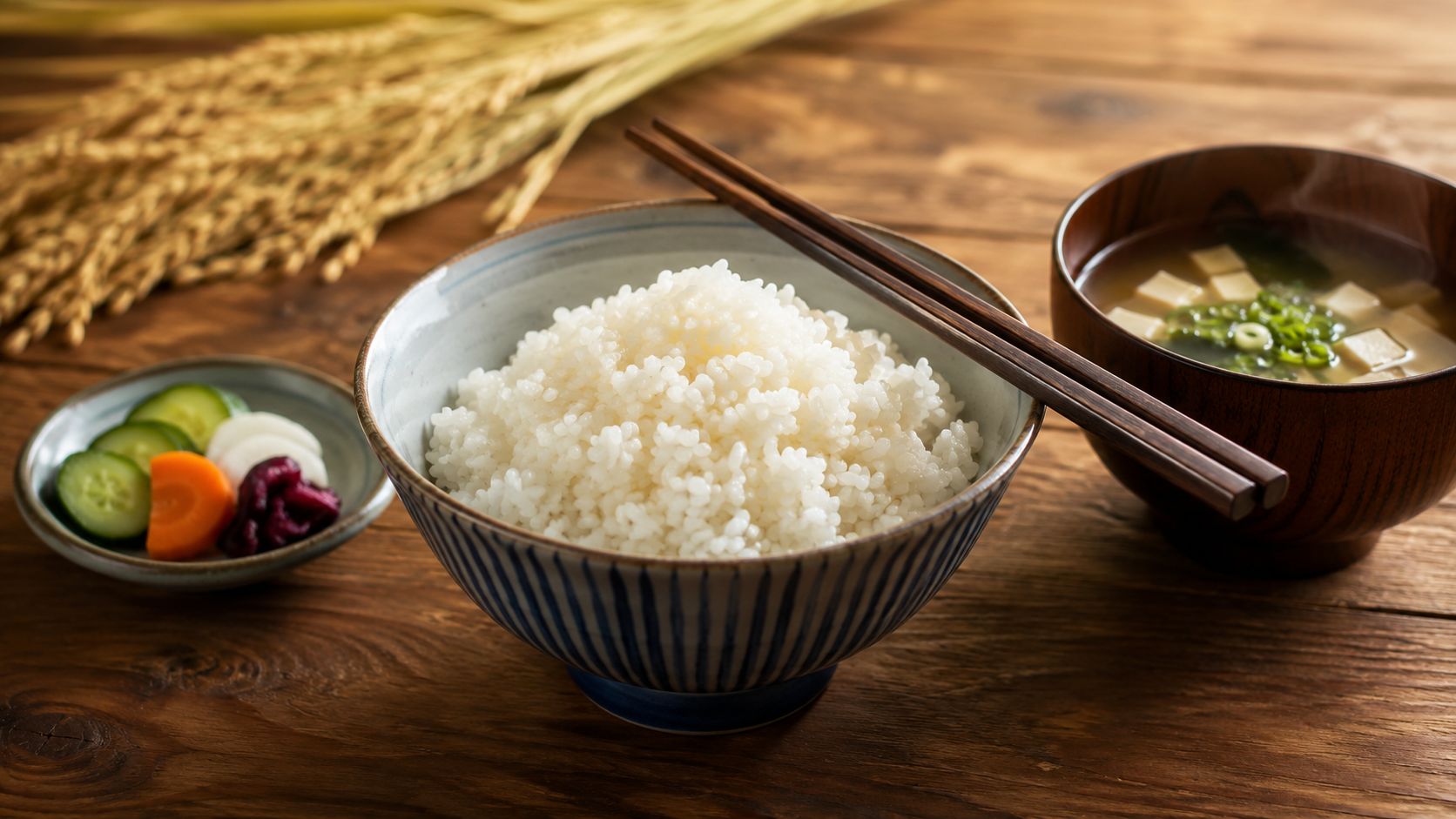
If you've heard someone say gohan in an anime episode, seen it on a menu, or noticed it in a character name, you've probably wondered what it means. The short answer is simple, but the full answer is richer because the word sits right at the center of Japanese daily life, language etiquette, and even pop culture.
That's why what does gohan mean in Japanese is such a useful question for beginners. It can mean cooked rice, but it also means a meal in everyday speech, and that dual meaning opens a small window into Japanese food culture and how people talk about eating in a polite, natural way.
Your Introduction to Gohan in Japan
A lot of people first meet the word gohan through anime rather than a textbook. You might hear it in dialogue, see it written on a subtitle, or notice it in a character name and assume it only means “rice.” That's understandable, but Japanese uses the word more flexibly than a literal translation suggests, and that's where beginners often get stuck.
In ordinary conversation, gohan is a word that feels both everyday and culturally loaded. It points to food, but it also points to the rhythm of daily life in Japan, where meals are so central that the language itself grew around them. If you're curious about Japanese culture and also about real food products from Japan, that connection matters, because language and dining habits are tied together much more closely than they are in English.
For a broader look at how rice appears in modern Japanese food culture, a practical example is this guide to shirataki rice from Buy Me Japan, which helps show how rice-related products fit into everyday eating habits.
The Two Core Meanings of Gohan
The most literal meaning of gohan is cooked rice. In that sense, it refers to rice that's already been prepared and is ready to eat, not the grain in its raw state. That distinction matters, because Japanese has a separate word, kome (米), for uncooked rice.

Cooked rice first
If you're standing in a kitchen in Japan and someone says gohan, the basic idea is usually the rice on the table, not the crop in the field. That's why language references distinguish it from kome, which is the raw material before cooking. In practical terms, gohan implies something prepared, present, and ready to serve, while kome points to the ingredient stage. See the distinction explained in a Japanese-English language reference on gohan and uncooked rice.
That matters because the word is tied to the final form people eat. It's one reason the term feels so natural in Japanese daily speech, especially around mealtimes and family routines.
Meal in everyday speech
The second meaning is a meal, more generally. Japanese speakers use gohan to refer to breakfast, lunch, or dinner, depending on context, because the word expanded from the staple food itself to the act of eating a meal.
A useful English analogy is daily bread. In English, that phrase can mean more than bread alone, it can point to sustenance or a daily meal. Gohan works in a similar way, except rice is the cultural center of the expression. A plain explanation of this broader meaning appears in a Japanese language guide to gohan as “cooked rice” and “meal”, and another reference notes how compounds such as asagohan and hirugohan use the word for morning and midday meals.
For a food example that fits this idea, rice-based dishes such as Kokuho Rose rice from Buy Me Japan show how central rice still is in Japanese eating habits.
Practical rule: if the context is mealtime, gohan usually means the meal itself. If the context is food preparation, it usually means cooked rice.
| Phrase (Romaji) | Japanese (Kanji/Kana) | English Meaning |
|---|---|---|
| asagohan | 朝ご飯 | breakfast |
| hirugohan | 昼ご飯 | lunch |
| yuugohan | 夕ご飯 | dinner |
The Cultural Importance Behind the Word
The reason gohan carries two meanings is cultural, not accidental. Rice has long been the core staple in Japanese food culture, so the word for the staple food naturally stretched to cover the whole meal. That's why the language feels so meal-centered, and why gohan sounds completely normal in contexts that would need a different word in English.
Why the honorific matters
One source explains that the go- prefix is honorific, while han refers to cooked rice, so the term carries a polite sense closer to “honorable cooked rice.” That helps explain why gohan feels more respectful than a bare, plain word for food. It also shows how etiquette lives inside the language itself, not just in manners at the table. You can read that explanation in this discussion of the polite structure behind gohan.
That same respect shows up in how people talk about meals at home and in public. Japanese often keeps food vocabulary closely tied to family routine, so the word isn't just descriptive, it carries social warmth.
Everyday tone versus more casual speech
Japanese speakers also choose words based on formality and tone. In many settings, gohan feels neutral or polite, while a more casual food term can sound rougher or more masculine depending on context. That difference matters for learners because the wrong word can make speech sound oddly blunt.
A useful way to think about it is this, gohan belongs to the register of ordinary, respectful mealtime language. If you're learning Japanese for travel, dining, or reading product labels, that distinction helps you understand why the word appears so often in polite settings. For another everyday meal example, what donburi means shows how bowl meals fit naturally into this same food vocabulary.
If you're interested in how Japanese kitchen tools support this kind of cooking, a helpful external reference is Chef Shop's 2026 guide to Japanese knives in NZ, which is useful context for anyone curious about the tools behind precise Japanese meal preparation.
Common Japanese Phrases Using Gohan
The most useful thing about gohan is that you'll hear it constantly in daily life. Once you know the word, Japanese meal expressions become much easier to read and remember. These compounds are especially helpful for travelers, because they show up in conversation, menus, and casual mealtime talk.
Daily phrases you'll actually hear
A simple pattern is that another time word is placed before gohan. That makes the phrase easy to decode once you know the parts.
| Phrase (Romaji) | Japanese (Kanji/Kana) | English Meaning |
|---|---|---|
| asagohan | 朝ご飯 | breakfast |
| hirugohan | 昼ご飯 | lunch |
| yuugohan | 夕ご飯 | dinner |
Here's how they work in context:
- Asagohan wa mou tabeta. 朝ご飯はもう食べた。Breakfast already got eaten.
- Hirugohan wa nan ni suru? 昼ご飯は何にする?What will we have for lunch?
- Yuugohan o tsukuri masu. 夕ご飯を作ります。I'm making dinner.
These aren't fancy textbook lines. They're the kind of phrases that help you recognize what's happening at the table. The broader use of gohan for meals, including breakfast and lunch compounds, is also described in a Japanese language explanation of gohan in everyday speech.
Good learner habit: when you hear gohan, don't stop at “rice.” Ask whether the speaker is talking about the food itself or the whole meal.
A food word that travels beyond language
Because gohan can mean a meal, it's useful when reading product descriptions, restaurant menus, and recipe names. If you're exploring Japanese pantry items, that's where rice seasonings, soup bases, and meal toppings start to make more sense as part of a wider eating pattern.
For a practical cooking-related example, how to use rice vinegar connects neatly with the same meal culture that the word gohan comes from. When you understand the word, a lot of Japanese food labeling becomes easier to follow.
Gohan in Pop Culture The Famous Dragon Ball Connection
Anime fans often know gohan before they know the language lesson behind it. The most famous example is Son Gohan from Dragon Ball, whose name is widely explained as a pun on the ordinary Japanese word gohan, meaning rice or meal. The character's name is written 悟飯, which differs from the common noun ご飯, and that difference matters because it shows the name is a play on sound and writing, not just a dictionary entry.
Why the name works as a joke
That kind of naming is very common in Japanese fiction. A familiar everyday word gets repurposed as a character name, and native speakers immediately catch the playful connection. In the case of Son Gohan, the joke only works because the base word is so ordinary in Japanese life.
This is one reason the character became such a recognizable entry point for global audiences. A simple food word gained international visibility through a franchise that traveled far beyond Japan, and the name stayed memorable because it's short, familiar, and culturally specific. The explanation of Son Gohan as a pun on gohan captures that naming logic clearly.
Why this matters for readers
If you came to this term through anime, you're not alone, and you're not misunderstanding it. The pop culture version and the everyday language version are connected, which is exactly why the word has such strong search intent online.
That's also why Japanese culture feels so layered to many visitors. A single word can point to dinner at home, a polite way to talk about food, and a character name in a global manga franchise. For fans who enjoy themed snacks or media-related collectibles, generate Ghibli look for shorts is a playful example of how Japanese visual culture keeps circulating across platforms.
Your Next Step into Japanese Culture
Gohan means cooked rice first, but it also means a meal, and that broader meaning comes straight from Japanese food history. The word is polite, practical, and ordinary, which is exactly why it reveals so much about how Japanese people talk about eating every day. It's also the kind of word that shows up in unexpected places, from mealtime phrases to Dragon Ball character names.
If you remember just three things, make them these. Gohan is cooked rice, not raw rice. It can also mean a meal in everyday speech. And in Japanese culture, rice isn't just a side dish, it's part of the language itself.
For a deeper food connection, mirin and sushi rice is a useful next read if you want to keep building your understanding of Japanese pantry staples and how they fit into authentic home cooking.
If you want to keep learning through real Japanese products, explore Buy Me Japan for authentic items shipped directly from Japan. It's a practical way to turn a word like gohan into something you can taste, cook, and enjoy with more confidence.


共有する:
Korean Beauty Products for Glass Skin: 2026 Guide
Pumice Stone Foot Care: A Safe At-Home Guide