


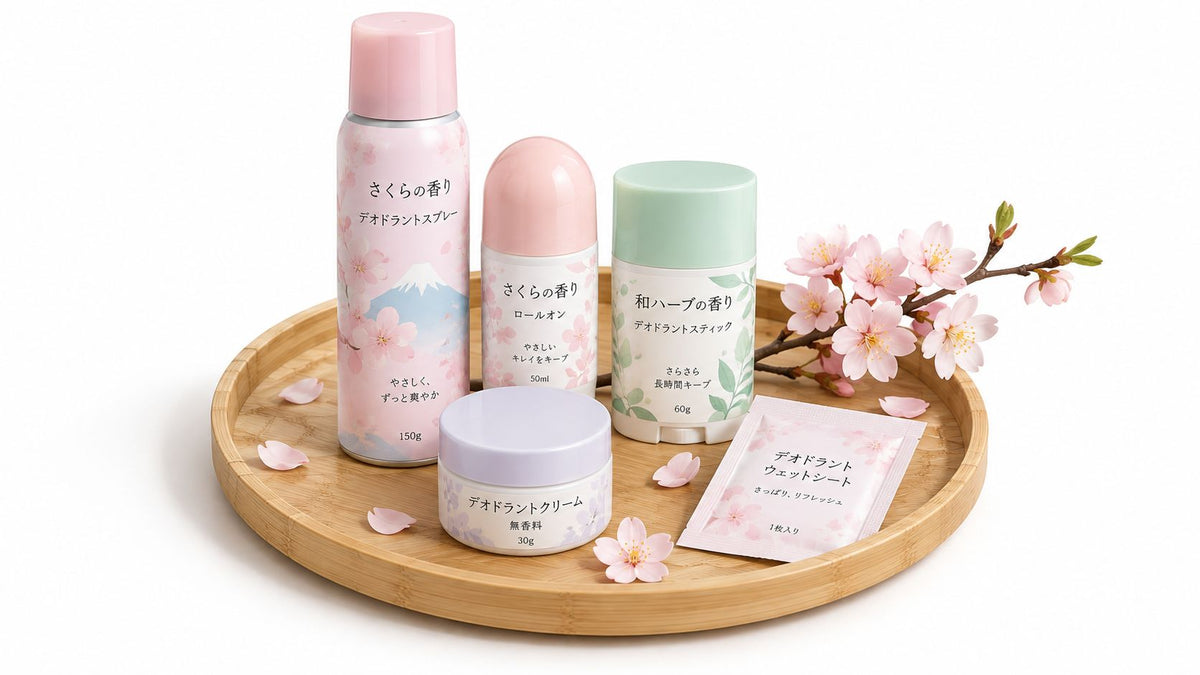
You're packing for a humid Tokyo day, or browsing Japanese beauty products from overseas, and keep seeing words like seikan, sakkin, and shōshū. They can look like variations on the same promise, but they point to different jobs: reducing sweat, targeting odor-causing bacteria, or neutralizing odor. Choosing well starts with knowing which of those you want to manage.
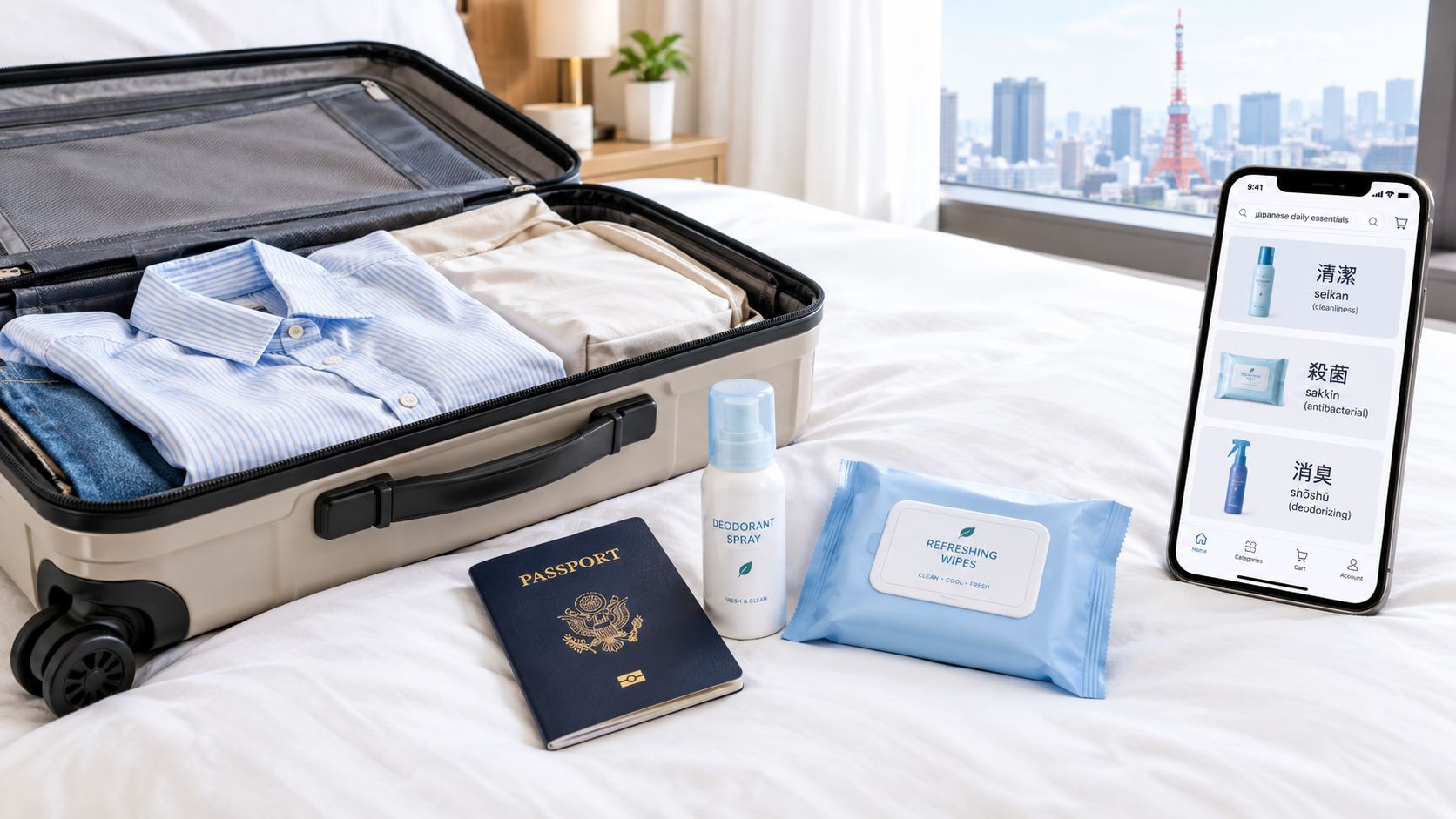
Why Japanese Deodorant Products Feel Different From Western Aisles
In many Western shops, “deodorant” is a catch-all label for products that may add fragrance, reduce sweat, or do both. Japanese labels often make the intended function more visible. A cooling wipe, for example, can leave skin feeling fresh without necessarily reducing perspiration; a product labeled for sweat reduction has a different purpose.
That distinction matters because odor, sweat, bacteria, and the sensation of stickiness aren't the same problem. Sweat reduction targets moisture. Antibacterial ingredients aim to limit odor-producing microorganisms. Odor-neutralizing ingredients act on odor compounds, while fragrance can add a scent that helps the user feel refreshed. One product may combine functions, but the word “deodorant” alone doesn't tell you which ones.
Japanese regulation also shapes what the package can say. Products making physiological antiperspirant claims generally fall under the quasi-drug framework, while products limited to cosmetic claims such as fragrance or odor masking can be classified as cosmetics. For international shoppers, that means an imported product's original claim can't automatically be carried over into Japan; its active ingredients, label, claim, and classification need to align with local requirements.
Start with the problem, not the package: Decide whether you want to reduce sweat, manage odor, or simply feel fresh. Then compare formats and claims that match that need.
Once you've made that choice, the differences between a spray, roll-on, wipe, stick, and cream become easier to judge. It's also easier to shop thoughtfully at Buy Me Japan, a Japanese online store focused on making authentic Japanese products accessible through a convenient, reliable shopping experience.
A Brief History of Japanese Deodorant Innovation
A packed morning train explains a lot about this category. When commuters stand shoulder to shoulder in summer humidity, an underarm product has to apply fast, dry fast, and leave nothing on clothing. Japan's deodorant history reads like a series of answers to constraints like those.
In 1974, Japan saw its first powder-spray antiperspirant, launched through a European-Japanese technology partnership. At the time, deodorant products were marketed mainly for underarm odor rather than everyday personal care. A fine, dry mist changed that framing: it applied in seconds, left skin feeling dry, and was easy to carry. It caught on quickly with younger users, teenage girls in particular.
The launches that followed each solved a different daily problem. A roll-on version in 1977 traded broad coverage for controlled contact, suiting anyone who wanted product only on the underarm. A men's line in 1980 added fragrance and menthol for a cooling feel, widening the audience beyond the original users.
That pattern still shapes the shelf today. Each format exists because it answered a specific situation, and later regulation gave those answers a vocabulary: sweat reduction (seikan), antibacterial action (sakkin), and odor neutralization (shōshū) are treated as distinct claims rather than one generic promise. The same habit of matching a product to a purpose runs through the broader evolution of Japanese skincare.
The Main Formats Explained Side by Side
Format is a practical choice: where you'll apply the product, how much time you have, and whether you need something easy to carry. Market data helps explain why spray is so visible on Japanese shelves. Body sprays accounted for 62.89% of Japan's anti-perspirant and deodorant market value in 2023 and were the fastest-growing format from 2018 to 2023, with a 2.07% CAGR. Those figures describe the market, not which product will suit your skin best.
| Format | Application feel | Best for | Watch out for |
|---|---|---|---|
| Aerosol or powder spray | A fine mist or dry-feeling powder across a broader area | Quick application before commuting or getting dressed | Use in a well-ventilated space and let the product settle before clothing; powder may show on some fabrics |
| Roll-on | Liquid applied in a controlled line, usually directly to the underarm | Targeted application when you want to avoid a broad spray | Allow it to dry before dressing, since damp product can transfer |
| Wipe | A cool, damp swipe that cleans and refreshes the skin's feel | Travel, workouts, and midday reapplication | A wipe may provide freshness without reducing sweat |
| Stick | A solid product gliding over a small area | A portable, no-mess option for controlled application | Check the label for scent and intended function rather than assuming it's an antiperspirant |
| Cream | A soft product applied with fingers to a defined area | Targeted application where you want control over placement | Use sparingly and check how the finish behaves with clothing |
A wipe is handy when there's no time or place for a full routine. Creams suit small, targeted areas, while sticks avoid the wet application of a roll-on or wipe. Sprays cover more quickly, but use them according to the package directions and give the skin time to dry.
Think of the table as a shortlist, not a ranking. A spray may suit a rushed morning, while a wipe may make more sense in a bag for later. The useful question is which format fits the moment you're preparing for.
Key Ingredients and How They Work
Pick up two Japanese deodorant products off the same drugstore shelf and their ingredient lists can look unrelated. One leads with an aluminum salt, another with a synthetic antibacterial, and a third lists mostly fragrance. The quickest way to read them is to separate the product's job from its format. A spray can reduce sweat or add scent, and a cream may target odor without touching sweat at all. Check the active ingredients and the package claim together, because the claim tells you which job the formula was built for.
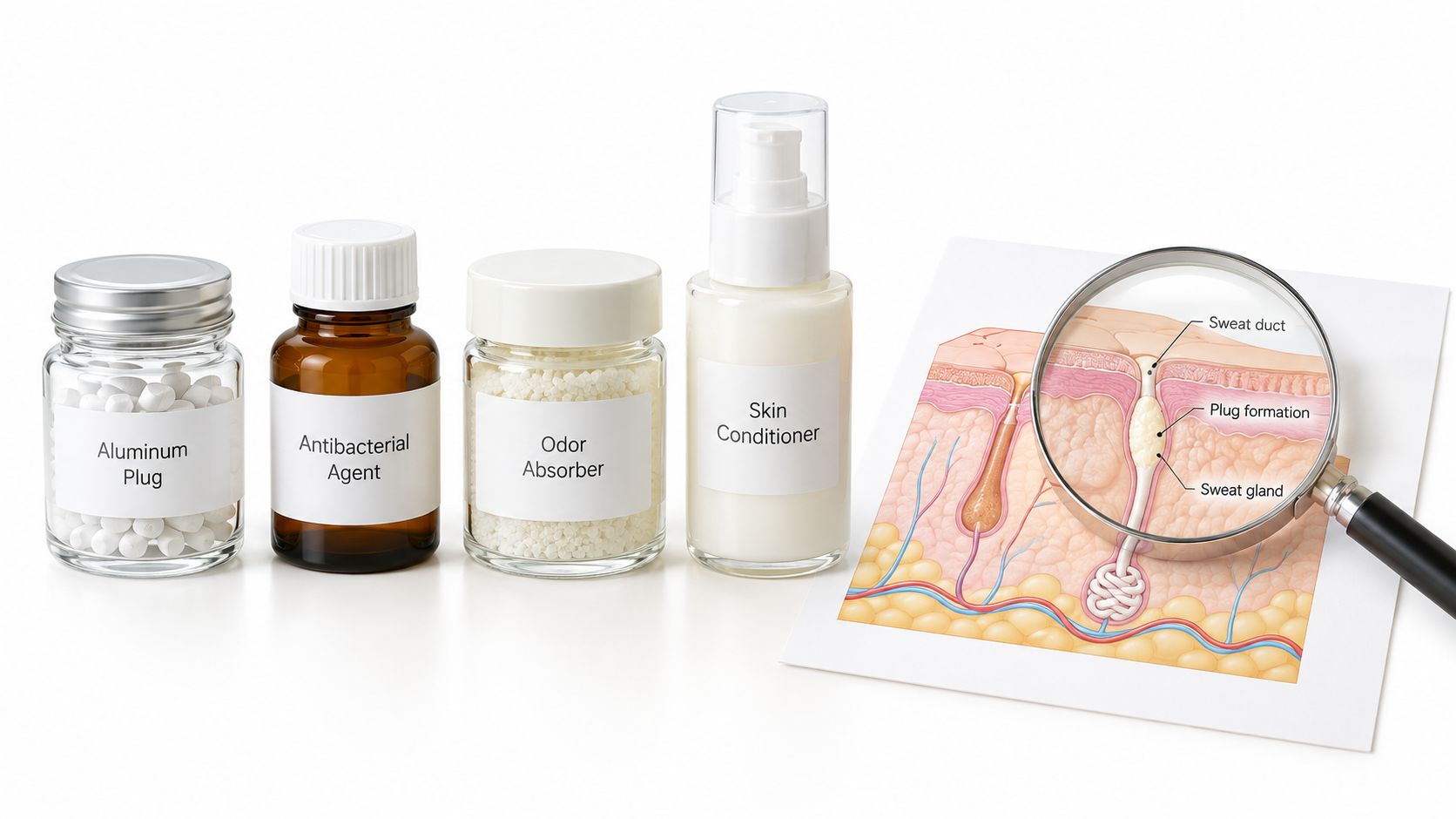
Aluminum-based antiperspirant ingredients handle the sweat side. They dissolve in perspiration and form temporary gel plugs inside the sweat duct openings, working like a cork that slows flow through a narrow neck, so less moisture reaches the skin's surface. Japanese cosmetic standards set a maximum of 1.0 g per 100 g for aluminum chlorohydroxy allantoinate in cosmetics (official cosmetic standards). That cap applies to this specific ingredient and tells you nothing about how dry a given product will keep you.
Antibacterial ingredients go after the bacteria instead. Isopropyl methylphenol, usually shortened to IPMP on Japanese labels, is the most common example, and it targets the microorganisms that break sweat down into odorous compounds. Japanese product research has described differences in how antibacterial ingredients perform as skin moisture changes, which helps explain why so many labels emphasize germ control rather than sweat blocking.
Odor-neutralizing ingredients work on the odor compounds themselves. Japanese cosmetic research has identified short-chain fatty acids as contributors to sour body odors and found that zinc oxide can neutralize them. That is a targeted mechanism, and it should be read as one: evidence that a specific compound handles a specific molecule family, nothing broader.
The same cosmetic standards describe an acetic-acid-bacterial enzyme extract that reduced certain aldehydes by more than 99% in laboratory testing. A lab result like that proves the mechanism exists under controlled conditions, and it cannot promise the same reduction on your skin after a packed train commute in August.
Fragrance and cooling agents such as menthol change what you smell and feel on the skin's surface. A fresh scent can sit on top of completely unchanged sweat production, which is worth remembering when fragrance is the product's main selling point.
Formulas often stack these jobs together. One Japanese patent describes a combination of an aluminum compound, a phenolic antibacterial, an aldehyde fragrance, and a chelating agent held within specified mass-ratio ranges, designed so each component supports the others. Read it as an illustration of how ingredients can interact, and a reminder that a single product may chase sweat, bacteria, and odor at once. The same read-the-active logic applies across Japanese personal care, and this guide to soap bars and natural cleansing shows how similar ingredient choices play out in another everyday category.
When shopping, read the Japanese ingredient list and the claim printed on the box rather than relying on the English marketing copy. The ingredient column tells you the mechanism; the claim tells you the job.
Understanding Japanese Label Terms and Regulatory Claims
Japanese labels give useful clues about a product's intended function. These terms aren't interchangeable, so it helps to recognize the main ones before choosing a format.
| Japanese term | Plain-English meaning |
|---|---|
| 制汗 (seikan) | Sweat reduction |
| 殺菌 (sakkin) | Antibacterial action |
| 消臭 (shōshū) | Odor neutralization |
| わきが (wakiga) | Underarm odor |
| 皮ふ汗臭 (hifu ase-shū) | Sweat odor on the skin |
| 薬用 (yakuyō) | Medicated, commonly used on regulated products |
Products making claims such as seikan, wakiga, or hifu ase-shū are generally sold as 医薬部外品 (iyakubugaihin), meaning quasi-drugs. Purely fragrance-based or cooling products may instead fall under the cosmetics framework. Labels can also distinguish 制汗成分, a sweat-reducing ingredient, from 殺菌成分, an antibacterial ingredient, and 消臭成分, an ingredient intended to neutralize or absorb odor (Japanese product-label guide).
The category tells you something about the permitted claims, but it doesn't promise that a product will suit every skin type or feel the same on everyone. Nor should “medicated” be read as a guarantee of a particular result. Follow the package directions and check the full ingredient information if you know your skin reacts to certain ingredients.
For international shoppers, this distinction matters when comparing a product's original claims with its Japanese packaging. An imported antiperspirant cannot automatically preserve every overseas claim by default; the claim, active ingredient, labeling, and classification must fit Japanese requirements. If you're already learning to read Japanese beauty labels, this guide to sunscreen for oily, acne-prone skin offers another example of why matching the product's stated purpose to your own needs is useful.
Choosing the Right Product for Your Situation
Start with your routine and skin preferences, then choose a format and claim that fit. You don't need one product to handle every situation, and you don't need the strongest-feeling formula if odor management or a fresh sensation is your main concern.
- Sensitive or reactive skin: Look for fragrance-free or low-fragrance options, and consider whether a roll-on or stick would be more comfortable than a spray. Check the ingredient list, follow the directions, and patch test a new product on a small area first. “Alcohol-light” can be difficult to confirm without the full ingredients, so don't infer it from the package design.
- Sports and heavy-sweat days: If your goal is sweat reduction, look for a product with a seikan claim and verify its category. A body wipe can be useful afterward for a cleaner, fresher feel, but don't assume a wipe reduces perspiration.
- Summer commuting and office wear: A powder spray may suit a quick morning routine, while a small wipe can be practical for a midday refresh. If clothing marks matter, check the product's own directions and finish claims, and try it carefully with the fabrics you wear most.
- Clothing care: Avoid assuming that any cream or spray is invisible on fabric. Use the product as directed, allow it to dry, and choose one whose package specifically describes a low-residue or invisible finish if that's important to you.
Some users may prefer a morning antiperspirant followed by a wipe later; others may want only occasional odor care. Japanese body-care routines offer plenty of ways to keep cleansing and deodorant choices distinct, as explored in this guide to body wash for dry skin.
The point isn't to build a complicated routine. It's to avoid expecting a cooling wipe to do an antiperspirant's job, or a fragrant product to suit someone who prefers little scent. Choose for the situation you face, then check the label for the function you want.
How Japanese Usage Habits Shape Product Expectations
Deodorant use is lower in Japan than in the United States and Europe, and one market summary estimates that about 60% of people in Japan use deodorant products. That context may help explain why shoppers encounter products designed around portability, quick application, and particular seasonal situations rather than one assumed year-round routine.
The same market coverage forecasts annual growth of 2.7% in Japan from 2024 to 2028, compared with 0.5% in the United Kingdom from 2023 to 2027, linking Japanese growth partly to intensifying heat and rising beauty awareness (market outlook and usage context). These are forecasts, not a guarantee that any individual product or format will become more popular.
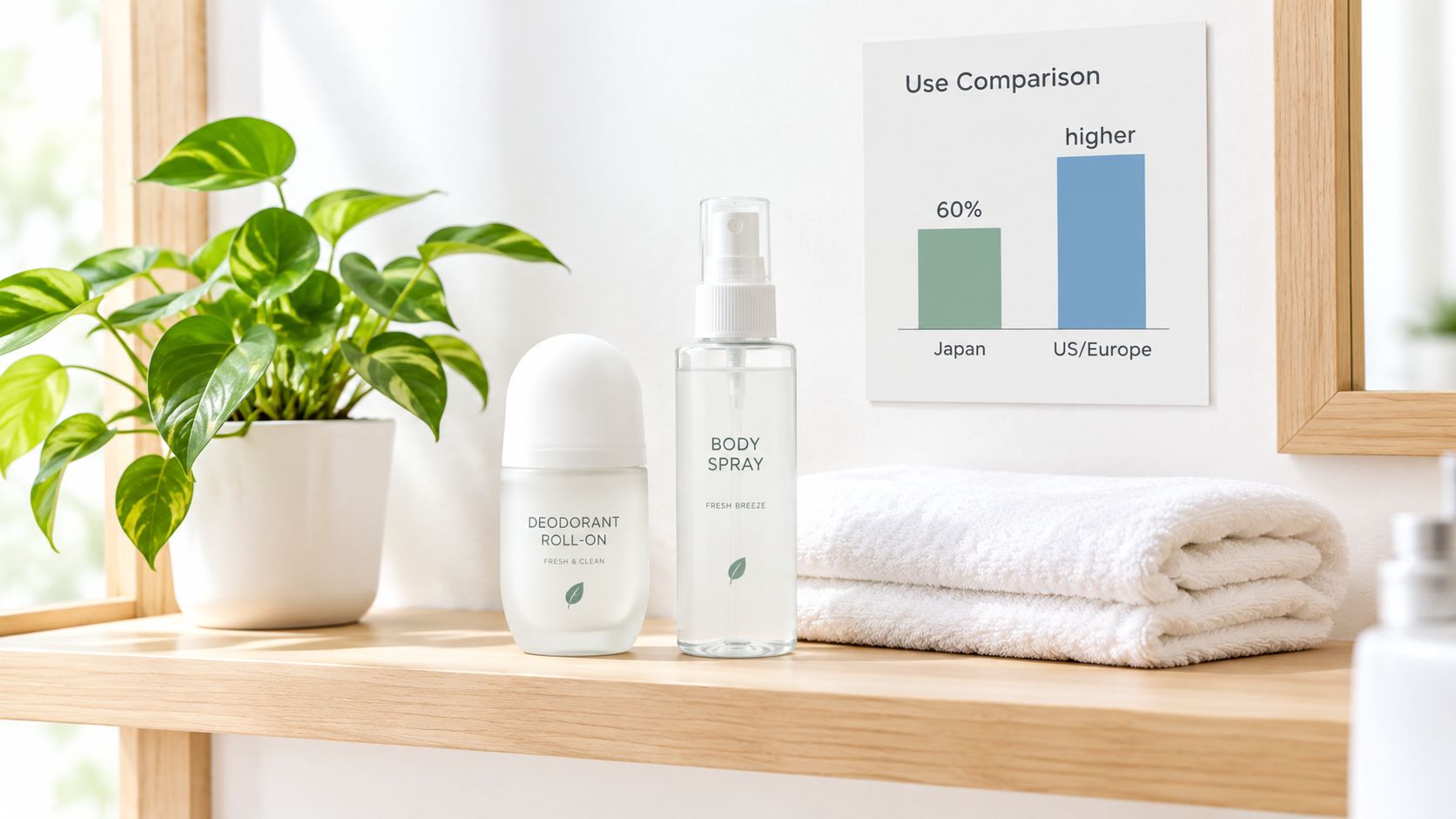
For a tourist, expatriate, or overseas shopper, the practical takeaway is simple: maximum sweat suppression isn't always the goal. A fragrance-free or low-residue product may fit a lighter-use routine better, while someone who commutes in heat may want a sweat-reducing product and a separate option for refreshing later.
When browsing Buy Me Japan, check the product's stated purpose, Japanese claim terms, format, ingredients, and directions. Patch test before regular use, especially if the product is new to your skin or has a strong cooling feel. If you're comparing everyday bath and body routines too, the guide to Japanese bath products can help you think about personal care as a set of choices rather than a single category.
Shopping Japanese Deodorants on Buy Me Japan Safely
A product page can help you narrow down options, but the package label and directions should guide how you use the product. Before regular application, patch test a small area of skin, particularly with sprays and wipes that contain alcohol or feel strongly cooling. Stop using a product if it causes discomfort, and don't apply it outside the areas or conditions allowed by the directions.
Check the Japanese label for the intended function and whether the product is classified as a cosmetic or quasi-drug. English packaging can be useful, but it may not show every ingredient or explain the regulated claim as clearly as the Japanese label. If a listing doesn't answer a question about ingredients, format, or use, ask customer service rather than guessing.
You can begin with the Buy Me Japan all-products collection and narrow your search to relevant deodorant or body-care items. Buy Me Japan focuses on authentic Japanese products sourced through official suppliers, with tracked shipping, secure payments, and helpful customer service for product details that aren't clear from a listing. Prices, availability, and promotions can change, so confirm them on the live product page before checkout.
For readers interested in how personal-care essentials are selected for hospitality settings, Avistar's guide to hotel toiletries provides useful context on choosing practical toiletries for different routines and users.
Before you buy, answer three questions: What do you want to control: sweat, odor, bacteria, or the feeling of freshness? Which format fits your day? What does your skin tolerate? Those answers will take you further than choosing by packaging alone.
Buy Me Japan offers a convenient way to explore authentic Japanese beauty and personal-care products sourced through official suppliers in Japan. Browse the Buy Me Japan collection to compare available formats and check each product's current label, ingredients, and directions before choosing.


共有する:
Japanese Body Wash for Dry Skin: How to Choose