


Oily skin has a frustrating sense of timing: it can feel tight after cleansing and look shiny again by lunch. That is why skipping moisturizer rarely solves the whole problem. The better move is to keep hydration in the routine, but change the texture and the amount.
Japanese skincare is especially useful here because it gives you more choices than “light lotion” or “heavy cream.” You will see watery lotions, milky emulsions, gels, and gel creams—and they do not all perform the same job. Here is how to tell them apart and choose one you will actually enjoy wearing.
What oily skin actually needs from a moisturizer
Oil and water are different. Skin can produce plenty of sebum while still feeling dehydrated, particularly after strong cleansers, acne treatments, air conditioning, or a long day in the sun. A good moisturizer for oily skin should take away that tight feeling without leaving a thick film behind.
Look for a finish that settles within a few minutes. Your skin should feel comfortable and flexible, not coated. If your T-zone becomes greasy quickly, use a thinner layer there and a little more on the cheeks. You do not have to apply the same amount everywhere.
- Very oily or humid-weather skin: start with a gel.
- Oily but easily irritated: try a light, fragrance-conscious gel or emulsion.
- Combination skin: use gel on the T-zone and a slightly richer layer on dry areas.
- Oily skin using retinoids or acne treatments: prioritize barrier comfort over the lightest possible finish.

The Japanese texture guide that makes shopping easier
One small translation detail causes a lot of confusion: in Japanese skincare, “lotion” usually means a watery hydrating step, closer to a toner or essence than a Western body lotion. It often comes before the product that seals moisture in.
| Label | What it usually means | Best use for oily skin |
|---|---|---|
| 化粧水 (keshōsui) | Watery hydrating lotion or toner | A first layer after cleansing; not always enough on its own |
| 乳液 (nyūeki) | Light, milky emulsion | Useful when a gel feels too light but a cream feels too rich |
| ジェル (jeru) | Gel or gel moisturizer | The easiest starting point for a fresh, low-residue finish |
| クリーム (kurīmu) | Cream | Better for dry patches, cooler months, or a stressed barrier |
You may also see さっぱり (sappari), which suggests a refreshing, lighter finish, and しっとり (shittori), which signals a more moisturized or richer feel. These words are often more useful than a long list of trendy ingredients because they tell you how the formula is meant to wear.
Four useful options from our Japanese skincare catalog
These are not interchangeable recommendations. Each one makes sense for a different routine, so choose by texture and use case rather than trying to find a single “best” moisturizer.
1. Curél Sebum Trouble Care: the most direct match
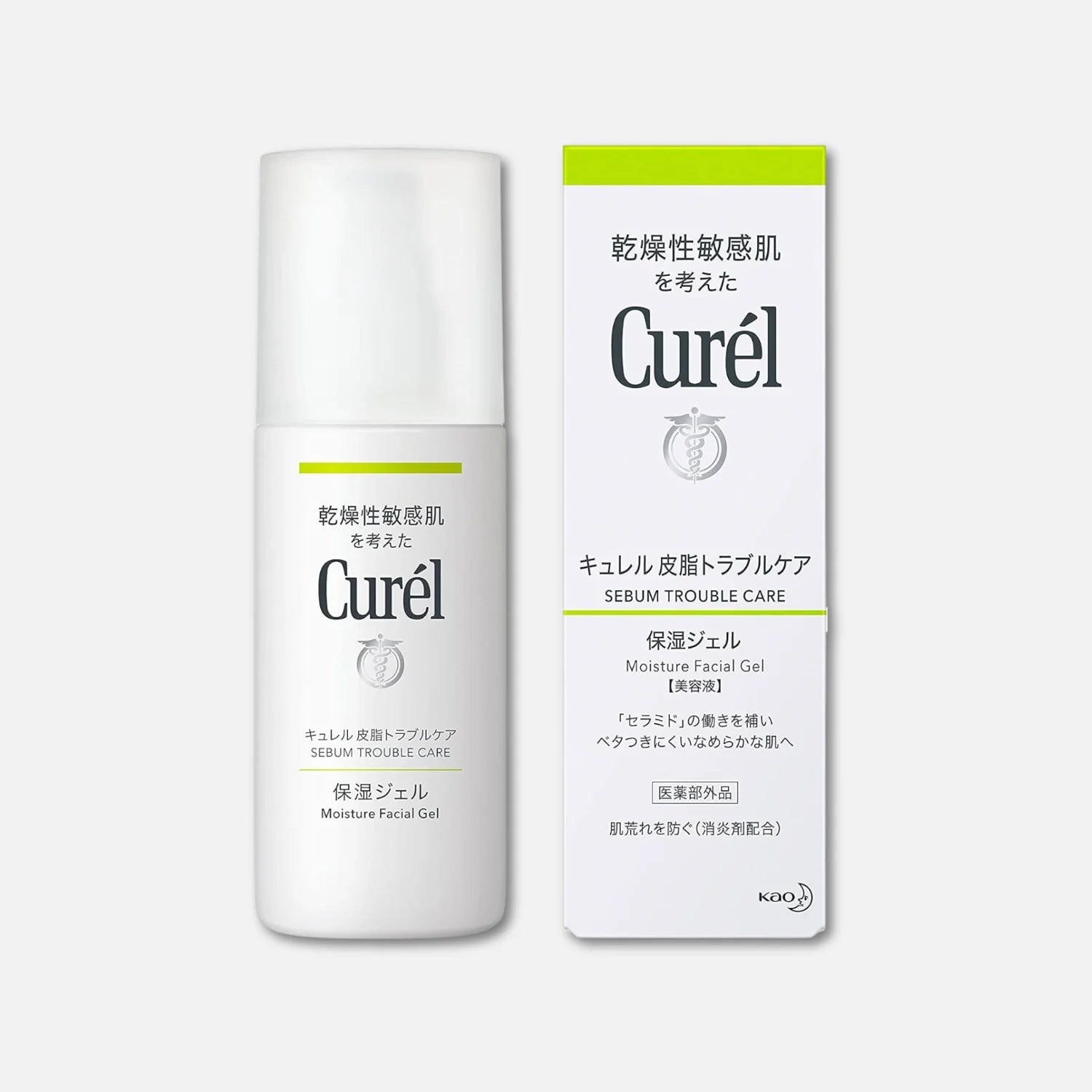
If your skin is both oily and sensitive, the Kao Curél Sebum Trouble Care Moisture Facial Lotion 150ml and Kao Curél Sebum Trouble Care Moisture Facial Gel 120ml make a sensible pair. The lotion is the watery hydration step; the gel goes on afterward to hold that moisture in with a lighter finish than a traditional cream.
You do not have to use both. If your cleanser already leaves your skin comfortable, the gel alone may be enough. If your skin feels tight but becomes shiny later, the two thin layers can feel better than one thick layer of cream.

2. Sana Soy Isoflavones Gel Cream: an easy all-in-one option
The Sana Soy Isoflavones Brightening & Acne Care Gel Cream 100g is worth a look if you prefer a single gel-cream step and your routine is focused on blemish-prone skin. Its appeal is convenience: you can apply a modest amount after cleansing instead of building several layers.
Because “acne care” does not guarantee that every formula will suit every person, introduce it gradually if your skin is reactive. A small patch test is more informative than assuming a label will predict your skin perfectly.
3. Kose Grace One Moist Repair Gel Cream: for more cushion
The Kose Grace One Wrinkle Care Moist Repair Gel Cream EX 100g has a more substantial gel-cream feel. It is not our first pick for someone who wants the driest possible finish, but it can work well for combination skin, mature skin that still gets shiny, or anyone who wants more comfort at night.
A simple way to use it is by zone: a rice-grain amount on oilier areas and a little more on the cheeks. That keeps the richer texture where it is useful without overloading the entire face.
4. Hada Labo UV Gel Cream: a streamlined morning step
The Hada Labo UV Gel Cream SPF 50+ PA++++ 90g is a daytime option for people who like to keep mornings short. It combines a hydrating gel-cream texture with high UV protection. Treat it as your sunscreen step and apply enough for reliable coverage; a tiny moisturizer-sized dab is not the same as a full sunscreen application.

Ingredients matter, but the base matters more
Humectants such as glycerin and hyaluronic acid help attract and hold water. Niacinamide is common in formulas aimed at barrier support and the appearance of balanced skin. Ceramide-focused products can be helpful when oily skin is also easily irritated or over-cleansed.
Still, an ingredient list cannot tell you everything about the finish. Two products can both contain hyaluronic acid and feel completely different—one watery and quick to disappear, the other glossy and cushioning. Texture, climate, and the layers underneath it matter just as much as the headline ingredients.
Be cautious about choosing the strongest “oil-control” formula you can find. If a product stings, leaves the skin tight, or makes you dread using it, it is not a good everyday match. Consistent, comfortable hydration usually makes a better routine than repeatedly stripping the skin and starting over.
A simple AM and PM routine
Morning
- Cleanse gently, or rinse with water if that is enough for your skin.
- Apply a thin hydrating lotion if you wake up feeling tight.
- Use a small amount of gel moisturizer where needed.
- Finish with sunscreen. If you use the Hada Labo UV Gel Cream, that is the sunscreen step.
Give each layer a moment to settle before the next one. If sunscreen pills, the usual culprit is too much product underneath, not necessarily the sunscreen itself.
Evening
- Remove sunscreen and makeup thoroughly without scrubbing.
- Add a watery lotion only if your skin wants it.
- Finish with a gel or gel cream, adjusting the amount by area.
On very humid nights, one gel may be enough. In winter or after a drying treatment, add a slightly richer product only to the areas that need it. Your routine is allowed to change with the weather.
How to tell when a moisturizer is too heavy
A little glow immediately after application is normal. The warning signs are more practical: your sunscreen slides around, makeup separates, the product remains tacky long after application, or you consistently wake up feeling coated rather than comfortable.
Before giving up on a formula, try using half as much. Many Japanese gels spread farther than expected. If reducing the amount does not help, move the richer product to nighttime or use it only on dry areas.
The short version
For most people searching for a Japanese moisturizer for oily skin, a gel is the safest place to begin. Choose a watery lotion only as an optional hydration layer, an emulsion when you need a little more softness, and a richer gel cream when climate or treatment-related dryness calls for it.
If you want the most targeted starting point from our catalog, begin with the Curél Sebum Trouble Care Moisture Facial Gel. Add the matching lotion only if your skin still feels tight after cleansing. Keep the routine simple for a couple of weeks, then adjust based on how your skin actually feels—not how many steps a routine says you should have.
Buy Me Japan ships authentic Japanese skincare directly from Japan. Browse our Japanese skincare collection to compare textures, ingredients, and formats that fit your routine.
共有する:
Rice Flour Cakes: Easy Recipes & Tips 2026
Japanese Pore Care Products: What Actually Helps (and What to Skip)