


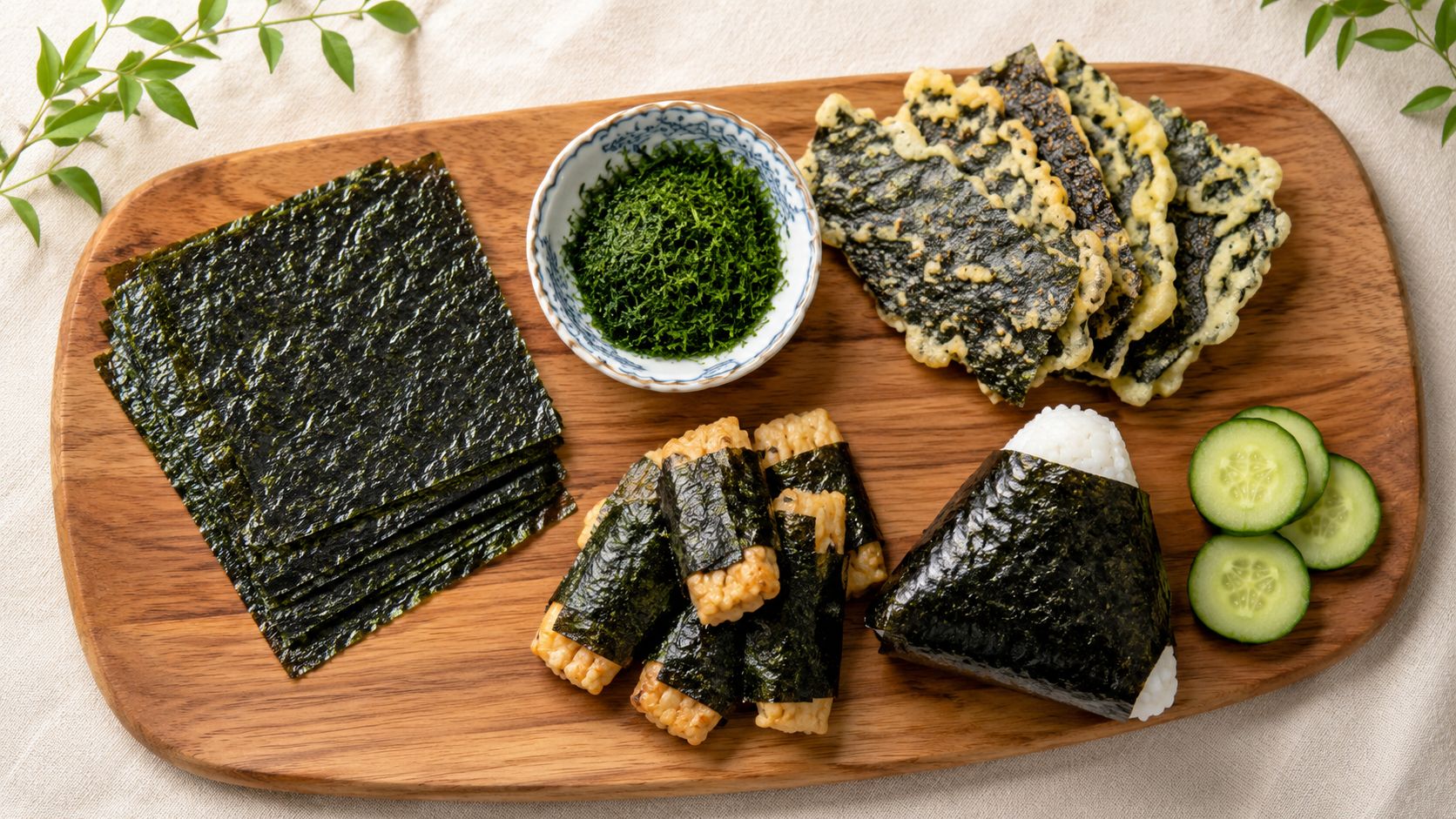
You're probably here because you've seen those slim, glossy packs of seaweed snacks at an Asian grocery, in a friend's pantry, or all over social media, and you're wondering one thing. What do they taste like, and how do you choose a good one?
Japanese seaweed snacks look simple, but they're not all the same. The type of seaweed, how it's dried or roasted, and the seasoning on top can completely change the experience, from light and crisp to intensely savory and almost broth-like in flavor.
If you want to try them with confidence, it helps to learn a few basic Japanese terms and a few quality clues. Once you do, the whole category starts making sense, and buying authentic snacks from Japan feels much less like guesswork.
The Foundation of Flavor A Guide to Seaweed Types
Many international shoppers hear “seaweed snack” and picture a thin roasted sheet that crackles when you bite it. That picture is correct, but it is only the beginning. In Japan, the seaweed itself matters as much as the seasoning, because each type brings its own texture, aroma, and level of savoriness.
Seaweed works a lot like leafy vegetables. Cabbage, spinach, and kale all belong to the same broad family, yet each one cooks and tastes differently. Japanese seaweeds behave the same way. Once you know the personality of nori, wakame, and kombu, snack labels start to make sense and choosing becomes much easier.

Nori
Nori is often the first seaweed encountered. It is pressed into the familiar thin sheets used for many snack packs, and that production method is a big reason it feels so light and crisp.
The flavor is gentle compared with other Japanese seaweeds. Good nori smells faintly toasty after roasting, tastes mildly of the sea, and finishes with a clean savory note instead of a heavy fishy one. A high-quality sheet usually starts brittle, then melts a little on the tongue as you chew.
Nori carries the same quiet savoriness found in broth, mushrooms, or soy sauce. That flavor is called umami. If you want a simple explanation, this guide to what umami flavor means is helpful.
For many first-time buyers, nori is the easiest starting point. Its shape is familiar, its crispness is immediate, and its flavor does not ask too much of you at once.
Wakame
Wakame has a very different personality. Instead of papery thinness, it feels softer and more flexible, even before preparation changes it further.
Its taste is greener and fresher than nori. If nori suggests toast and broth, wakame leans more toward tender leaves and clean ocean air. In soup, it turns silky. In snack form, it can be lightly crisp, satiny, or pleasantly chewy depending on how it is dried and seasoned.
That connection between method and texture is useful to remember. With wakame, the same seaweed can feel delicate in one product and substantial in another.
Kombu
Kombu is where the flavor becomes deeper and more concentrated. It is thicker and denser than nori or wakame, which is why it rarely appears as a feather-light sheet snack.
Many people first know kombu from dashi, the stock that gives Japanese cooking its calm, savory backbone. As a snack, kombu is usually cut into strips, knots, or small seasoned pieces. The bite is firmer. Sometimes it is chewy enough that you keep tasting it for several seconds, almost like a savory candy for adults.
Some people love kombu right away. Others prefer to meet it after trying nori first, which is perfectly normal.
Here is a simple field guide:
| Seaweed type | Usual texture | Flavor style | Best for |
|---|---|---|---|
| Nori | Thin and crisp | Toasty, mild, savory | First-time buyers |
| Wakame | Tender or lightly chewy | Fresh, green, oceanic | Soup lovers and salad fans |
| Kombu | Thick and chewy | Deep umami, concentrated | Strong savory snack fans |
If you remember one quick rule, use this one. Nori is crisp and approachable, wakame is softer and greener, and kombu is richer and chewier. Those differences come from both the seaweed itself and the way it is processed, which is why authentic snacks from Japan often feel more distinct and better balanced than generic “seaweed snacks” grouped together on a shelf.
Exploring the World of Seaweed Snack Varieties
The fun starts once you realize seaweed snacks aren't one single product. They come in several formats, and each format changes how the seaweed tastes in your mouth.
The most recognizable style is still the roasted sheet. According to Meticulous Research's seaweed snacks market overview, roasted seaweed sheets (nori snacks) are the largest product segment in the global seaweed snacks market in 2026, because these individually portioned roasted and seasoned packs are the most established and widely recognized format.

Roasted sheets
These are the classic packs many people call seaweed snacks. They're often labeled as yaki nori, which means roasted nori. The sheets are thin, dry, and crisp, often brushed with a little oil and seasoning.
This style works because it delivers the seaweed's aroma fast. The sheet touches your tongue, softens for a second, then turns crisp and light again as you chew. It feels almost weightless.
Common flavors include:
- Sea salt for a clean, simple taste
- Teriyaki for sweetness plus soy-based savoriness
- Wasabi for a sharp nose-tingling kick
- Ume, or Japanese plum, for a tangy and slightly fruity edge
If you eat vegetarian or want more plant-based snack ideas from Japan, this roundup of vegetarian Japanese snacks is a useful next stop.
Seaweed tempura and crispy coated snacks
Some seaweed snacks are coated in batter or combined with other crunchy ingredients. These feel closer to chips or light crackers.
The seaweed flavor becomes softer here because the coating adds body. Instead of a papery crispness, you get a louder crunch. This is often the best style for someone who says, “I want to try seaweed, but I'm not ready for the pure version yet.”
Rice crackers wrapped in seaweed
This is a very Japanese combination. A rice cracker gives you the crunch and the toasted grain flavor. A strip of seaweed around it adds fragrance and savory depth.
These snacks often feel more balanced for new eaters because the rice acts as a bridge. The seaweed doesn't dominate. It lifts the cracker.
Seasoned strips and chewy pieces
Kombu strips and other seasoned seaweed pieces belong here. They're less airy and more concentrated.
These are good if you enjoy snacks that last longer in the mouth. Instead of crackle and disappearance, you get a slow release of saltiness and umami. They're excellent with tea and popular with people who like savory snacks more than sweet ones.
Practical rule: If you're unsure where to start, choose roasted nori sheets first. If you already enjoy strong savory foods, try kombu strips next.
Flavor matters more than many shoppers expect. In a consumer survey discussed in this seaweed consumption study, 89.1% of respondents cited flavor as the decisive factor when choosing to eat seaweed, ahead of nutrient content at 49.1% and health benefits at 44.6%. That matches real life. People may buy seaweed for wellness, but they come back for taste.
More Than a Snack The Health Benefits of Seaweed
Seaweed snacks earn their reputation as a smart pantry item because they offer more than crunch. They sit in that pleasant middle ground between indulgent snack and functional food.
A market overview from MarkNtel Advisors on seaweed snack positioning describes seaweed snacks as healthy alternatives because they're low in calories, free from gluten and GMOs, and high in fiber, minerals including potassium, antioxidants, and iodine, which fits the wider demand for plant-based and allergen-free snack options.
Why those nutrients matter
Fiber helps a snack feel more satisfying. That matters if you want something light that doesn't feel empty five minutes later.
Minerals are another reason seaweed stands out from ordinary salty snacks. Potassium and iodine are part of what gives seaweed its wellness image. You're not just eating something crispy. You're eating an ingredient long used in everyday Japanese food.
Antioxidants also help explain why seaweed appears so often in conversations about balanced eating and functional ingredients.
Why seaweed feels different from chips
Seaweed snacks are usually thinner, lighter, and more aromatic than potato chips. The pleasure comes less from heaviness and more from contrast. Crisp texture. Toasted aroma. Salty-savory finish.
That's why they often suit people who want a snack that feels neat and clean rather than greasy. They also fit naturally into plant-based eating patterns.
For shoppers interested in Japanese wellness foods more broadly, aojiru green juice is another useful category to explore. It's a very different product, but it reflects the same Japanese habit of treating simple ingredients as part of daily wellness.
A good seaweed snack doesn't feel like “diet food.” It feels like a small, savory snack that happens to bring nutritional advantages with it.
A quick note on balance
Seaweed's benefits are real, but balance still matters. Seasoning levels vary, and some products are more snack-like than others. It's worth checking ingredients and choosing a style that matches how you eat.
If you want the cleanest experience, plain or lightly salted roasted nori is usually the best place to begin.
From Ocean to Package The Art of Making Nori
You open a pack of nori, lift out one thin sheet, and it almost feels too delicate to matter. Then it touches your tongue. First comes the dry, glassy crispness. A second later, the savory depth spreads out. That change is the result of careful work long before the package is sealed.
Most Japanese nori snacks begin with seaweed from the Pyropia family, which is a red algae even though the finished sheet looks dark green. After harvest, the seaweed is washed, chopped into tiny pieces, mixed with water, spread into thin layers, and dried into sheets. The method works a lot like papermaking. The goal is not just to make seaweed flat. It is to create an even sheet that roasts predictably and breaks cleanly when you bite it.
That production step shapes the eating experience more than many first-time buyers expect.
A sheet with consistent thickness roasts more evenly, so the aroma comes out balanced instead of patchy. Once the dried sheet is toasted, it becomes yaki nori, or roasted nori. Roasting softens the raw, ocean-like character and brings out warmer notes, a little nutty, a little toasty, with deeper umami. If raw seaweed is like a fresh green vegetable, roasted nori is closer to the aroma of toasted bread crust, light but fuller.
Good nori also depends on moisture control from factory to home. Seaweed absorbs humidity quickly, so packaging is doing real work here, not just decoration. A well-packed product keeps that signature snap instead of turning limp on the way to you. If you want to explore where to buy authentic Japanese snacks online, this is one reason source matters. Direct sourcing from Japan often means better handling, fresher stock, and fewer chances for the texture to fade before you open the bag.
You can often spot quality before the first bite:
- Deep green to green-black color, not dusty or faded
- Even sheets with relatively smooth coverage
- A clean toasted aroma without a stale smell
- A quick crisp snap instead of bending like paper left in a damp room
Packaging affects perception too, especially with a fragile snack like nori. Protection, portioning, and freshness all shape what reaches your hand. For a useful comparison from another snack category, branded popcorn box solutions show how packaging design can support handling, presentation, and the final eating experience.
The best nori usually feels precise and calm. Clean aroma. Light crackle. A savory finish that lingers for a moment, then disappears.
That is why authentic Japanese seaweed snacks often stand apart from lower-grade versions. The ingredient may look simple, but the link between seaweed type, production method, roasting, and packaging has a direct effect on taste and texture.
A Buyer's Guide to Quality Japanese Seaweed Snacks
You open a bag of seaweed snacks expecting a light crackle and a clean, savory finish. Instead, the sheets taste flat or feel slightly chewy. That disappointing moment is why buying well matters with seaweed more than with many other snacks.
As noted earlier, flavor is the main reason people choose seaweed snacks. Health matters too, but the first test is simple. Does it smell fresh, break with a crisp snap, and leave a pleasant umami finish instead of a stale aftertaste?

Read the package like a local shopper
A seaweed snack label can tell you a lot if you know what to look for.
Start with the seaweed type. Nori is the classic roasted sheet used for many Japanese snacks. It is usually thin, crisp, and quick to melt on the tongue. Wakame is softer and more supple, so it shows up less often in crisp snack sheets and more often in seasoned pieces or salad-style products. Kombu is thicker and firmer, with a deeper, almost brothy umami.
Then look at how the product was made. Roasted nori gives you a dry, toasty snap. Seasoned nori, often brushed with oil and salt, has a richer aroma and a slightly fuller bite. Fried seaweed snacks can be appealing, but they taste very different from plain roasted nori, much like the difference between toasted bread and a potato chip.
A few checks help you choose with more confidence:
- Look for a Japanese producer or clear origin listing if authenticity matters to you
- Read the ingredient list to see whether you want pure seaweed flavor or a stronger seasoning style
- Check the product photos closely for intact sheets rather than lots of crumbs
- Notice the format because full sheets, strips, tempura-style pieces, and rice-cracker mixes all eat differently
Signs of quality you can trust
Good Japanese seaweed snacks usually feel precise rather than heavy-handed. The seasoning supports the seaweed instead of covering it. You should still be able to taste the ocean-grown character underneath the salt, sesame oil, wasabi, or soy-based glaze.
Brand familiarity helps, especially if you are shopping from abroad. Makers such as Calbee, Kameda, Hagoromo, and Marumiya are names many Japanese shoppers recognize from everyday snack shelves and pantry staples.
Where you buy matters too. Shops that focus on Japanese imports are more likely to handle fragile snacks with care and keep a better range of fresh stock. If you want a starting point, this guide on where to buy authentic Japanese snacks online can help you compare retailers.
If you are choosing a present for someone who enjoys edible treats beyond seaweed, curated collections like browse food and drink gifts can give you ideas for presentation and gifting styles.
How to match the snack to your palate
The best choice depends on the kind of bite you enjoy.
| If you like... | Choose... | Why |
|---|---|---|
| Light savory snacks | Plain or lightly salted nori sheets | Thin, crisp, clean-tasting |
| Strong umami | Kombu strips or richly seasoned nori | Deeper, longer finish |
| Familiar crunch | Seaweed rice crackers or coated snacks | An easy entry point for beginners |
| Bright, tangy flavors | Ume-seasoned products | The sour-salty note balances the seaweed |
If you are new to Japanese seaweed snacks, plain roasted nori is often the clearest place to start. It lets you taste the base ingredient before extra oil, sugar, or spice change the picture.
A small but useful safety note
Seaweed is nutrient-dense, and iodine levels can vary by type. If you eat it often, or if you are buying for children or during pregnancy, moderation is sensible and product labels are worth reading.
Confidence comes from knowing the difference between seaweed types, how they were processed, and whether the product was handled well before it reached your kitchen. That is the shortcut to finding a snack you will want to buy again.
Simple Recipes and Serving Ideas for Your Snacks
The easiest way to enjoy Japanese seaweed snacks is straight from the pack. But some of the best uses are the simplest home combinations, the kind Japanese households make without thinking twice.
A bowl of hot rice is the most natural starting point because seaweed loves warmth, steam, and plain grains.

Easy ways to use seaweed at home
Try these ideas when you want more than a plain snack:
- Crumble over rice for instant aroma and a little salty crunch
- Add to salads right before serving so the seaweed stays crisp
- Layer into ramen or udon for a roasted finish
- Wrap around rice balls if you want a very classic Japanese feel
- Pair with cold drinks such as sparkling water, green tea, or beer for contrast
One especially good pantry companion is furikake, a Japanese rice seasoning blend that often includes seaweed, sesame, and savory seasonings. If you want to understand that category better, this guide to nori komi furikake is worth reading.
The quickest onigiri idea
Onigiri are Japanese rice balls. Don't let the shape intimidate you. At home, they can be rustic.
Here's an easy version:
- Cook short-grain rice and let it cool slightly.
- Wet your hands lightly so the rice won't stick.
- Shape the rice into a triangle, oval, or simple round ball.
- Add a pinch of salt if you like.
- Wrap a strip of nori around the outside just before eating.
The nori acts like an edible handle. It also adds the crisp-savory contrast that makes onigiri so satisfying.
This short video gives a helpful visual for working with seaweed and rice in a home kitchen:
Pairings that work surprisingly well
Seaweed snacks also fit into non-Japanese meals more easily than people expect.
They work well with:
- Avocado toast when crushed on top
- Scrambled eggs for a savory finish
- Tomato salads where the marine note replaces some of the salt
- Plain popcorn if you crumble in strips for extra umami
A little seaweed goes a long way. Start small, taste, then add more.
That's the easiest way to build confidence. Treat it like a seasoning first, then like a snack category of its own.
Proper Storage for Lasting Crispness
Seaweed loses its charm quickly when it absorbs moisture. That perfect crisp bite can turn soft and leathery if the packet stays open too long.
The fix is simple. Move opened seaweed snacks into an airtight container as soon as possible, or reseal the original pack tightly if it has a proper zipper closure. Keep any food-safe desiccant packet that came inside. It helps control moisture.
A few habits make a big difference:
- Close fast after each use
- Store cool and dry away from steam and sunlight
- Avoid the fridge unless the product specifically recommends it, because condensation can make texture worse
- Use clean dry hands so you don't introduce moisture
If the snack was beautifully crisp when opened, good storage will keep it much closer to that original texture.
If you want authentic Japanese snacks, beauty, and lifestyle products shipped directly from Japan, Buy Me Japan is a practical place to explore. You can browse Japanese favorites across food, skincare, hair care, and everyday essentials, with a curated selection that makes it easier to find products that feel authentically Japanese rather than vaguely “inspired by” Japan.



共有する:
Best Japanese Coffee Brands: Find Your Perfect Brew
Calbee Potato Chips Flavors a Complete Guide to Every Taste