


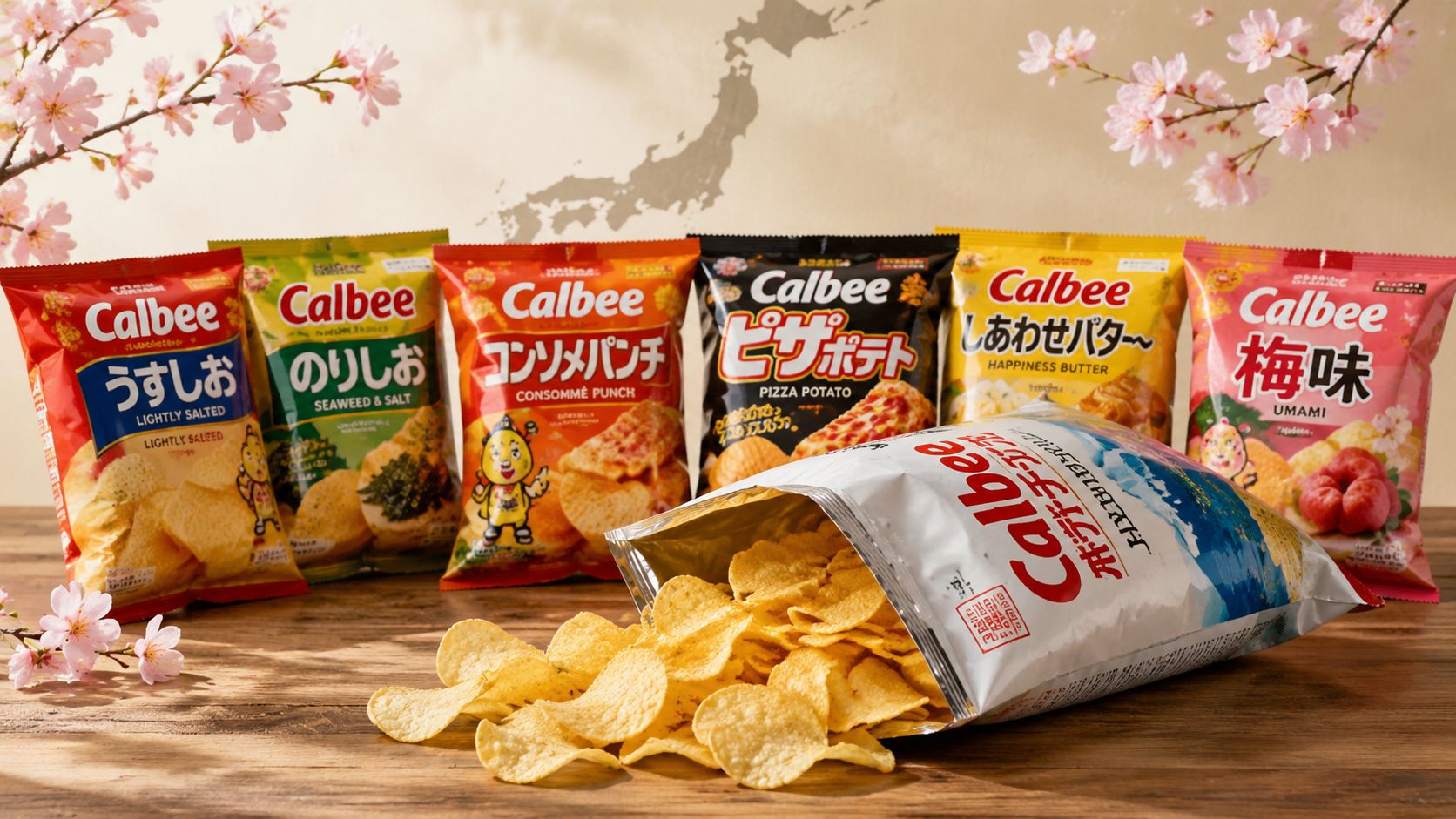
You're probably here because you saw a wall of Calbee bags in a Japanese supermarket, convenience store, airport shop, or online snack store and had the same reaction most newcomers have. They all look good, half the names sound familiar, half sound mysterious, and it's hard to tell which bag is a safe first pick and which one is a very specific regional flavor with a cult following.
That confusion makes sense. In Japan, Calbee isn't just another chip brand. It's part of everyday snack culture, and the flavor range reflects how Japanese people think about food: balance, texture, seasonality, and local specialties. Once you understand that, the lineup stops feeling random and starts feeling surprisingly logical.
Your Guide to the World of Japanese Calbee Chips
A first Calbee shopping trip in Japan often goes the same way. You reach for Seaweed Salt because it sounds safely familiar, notice Honey Butter beside it, spot Pizza Potato a shelf over, and then pause because none of them clearly says “original.” I have watched that moment happen with visiting friends more than once in Tokyo. The shelf looks chaotic at first, but Calbee's lineup follows a logic that becomes much easier to read once you know how Japanese snack flavors are built.
Calbee earned that space over decades. According to Calbee's product history, the company introduced Seaweed Salt potato chips in 1976, and Consomme Punch followed right after. That pairing explains a lot about the brand. One flavor reflects everyday Japanese comfort with seaweed and savory seasoning. The other shows Japan's fondness for richer, layered Western-inspired flavors adapted to local taste.
That mix is the key.
Why Calbee feels so Japanese
Calbee flavors make more sense once you see them as small lessons in Japanese food culture. A bag is rarely built around pure intensity alone. The seasoning usually aims for balance first, then personality. Salt tends to support the potato instead of burying it. Sweet notes often sit next to butter or dairy. Even stronger flavors usually leave room for the base chip to stay recognizable.
This is why Seaweed Salt, French Salad, Honey Butter, and Pizza Potato can all feel coherent under one brand. Each one points to a familiar part of eating in Japan. Seaweed connects to pantry staples such as nori and kombu. “Salad” flavors often refer to bright, lightly tangy seasoning rather than leafy greens. Butter-based flavors reflect Japan's love of gentle sweet-savory combinations. If you already enjoy other Japanese savory snacks, such as Japanese shrimp crackers and other umami-rich rice snacks, that flavor logic starts to feel very natural.
For newcomers, this helps answer a key question. The goal is not to find the single “correct” Calbee bag. The goal is to choose the style of flavor that matches your taste and your curiosity level.
What helps a first-time buyer most
The easiest way to sort Calbee potato chips flavors is to place them into three practical groups:
- Core classics for understanding the brand's baseline taste
- Signature flavors that show off Calbee's stronger personalities
- Regional or seasonal editions that reflect local food culture and are often the most exciting bags for overseas shoppers to hunt down
That last group matters more than many guides admit. Limited editions are popular partly because Japan treats regional foods almost like local ambassadors. A chip flavored after Hokkaido butter, Kyushu soy sauce, or a festival-style dish is not just a novelty. It is a snack version of souvenir culture. That is also why international buyers often have the most fun shopping through Buy Me Japan. It gives you a practical way to find standard favorites and rarer releases without standing in front of a convenience store shelf trying to decode every bag at once.
Once you start reading Calbee this way, the variety feels less random and much more inviting.
The Core Calbee Flavors Everyone Loves
You are standing in a Japanese convenience store, staring at a wall of Calbee bags after a long day of travel. Some names are familiar. Some sound puzzling. The easiest way to choose well is to start with the flavors that Japanese shoppers come back to again and again.
According to this guide to popular Calbee chips in Japan, the regular lineup includes staples such as Lightly Salted, Consomme Punch, Seaweed Salt, Honey Butter, Pizza Potato, and French Salad. These are the reference points. Once you know how these taste, the bigger Calbee world makes much more sense.

How to read the core lineup
Start with Lightly Salted if you want to understand Calbee itself. This bag is the baseline. It shows you the company's style of potato flavor, crispness, and seasoning balance without extra noise.
Move to Seaweed Salt next if you want a flavor that feels clearly Japanese but still easy for a first-time buyer. Seaweed works in Japan the way sour cream and onion works in North America or cheese and onion works in the UK. It is not treated as an unusual experiment. It is a familiar pantry taste, so putting it on chips feels completely natural.
Choose Consomme Punch if you like fuller savory snacks. In Japanese chips, consommé usually signals a mixed, rounded seasoning with sweetness, salt, and meat-like umami all working together. The word "Punch" matters too. It tells you the flavor is meant to hit a little harder than a simple broth seasoning.
Then come the bags that often surprise international shoppers.
Honey Butter shows how Japanese snack makers often prefer balance over extremes. The sweetness is present, but it usually sits in harmony with salt and fat rather than turning the chip into dessert. Pizza Potato takes the opposite route. It is heavier, richer, and built for people who want a louder snack with cheese-forward satisfaction. French Salad causes the most confusion by name, but it makes sense once you taste it. It is closer to a gentle vinaigrette-style seasoning than anything leafy or creamy.
Calbee core flavor lineup at a glance
| Flavor Name | Primary Taste Profile | Best For... |
|---|---|---|
| Lightly Salted | Clean, simple potato and salt | First-time tasters who want a baseline |
| Seaweed Salt | Savory, seaweed-led, balanced | People who want a classic Japanese flavor |
| Consomme Punch | Rich, deep savory seasoning | Snackers who like bolder everyday chips |
| Honey Butter | Sweet and salty with buttery softness | Fans of sweet-savory combinations |
| Pizza Potato | Cheesy, savory, fuller body | Anyone craving a more indulgent snack |
| French Salad | Tangy, mild acidity with layered seasoning | People who enjoy brighter, zippier flavors |
Why these classics stay popular
Their popularity comes from how closely they match everyday Japanese flavor habits.
Seaweed Salt stays popular because seaweed is woven into daily eating, from rice balls to soups to table seasonings. Consomme Punch lasts because Japanese consumers often enjoy layered savory flavors that feel complete in one bite rather than sharply focused on only salt, heat, or vinegar. French Salad keeps a loyal following for a similar reason. Its acidity is lighter and rounder than many Western salt-and-vinegar chips, which makes it easier to snack on for a long time.
That is also why the core lineup matters so much for overseas buyers using Buy Me Japan. These bags help you figure out your lane before you start chasing rarer editions. If Seaweed Salt clicks, regional flavors tied to kombu, nori, or dashi may suit you. If Pizza Potato is your favorite, richer limited releases are usually the safer bet. The classics are like a flavor map.
If you enjoy comparing how Japanese snack makers handle umami across different textures, the world of Japanese shrimp crackers and other savory rice snacks is worth a look too. That comparison helps many first-time buyers read Calbee flavors with much more confidence.
Exploring Japan Through Limited Edition Flavors
The thrill for many fans starts when Calbee moves beyond its regular lineup and turns chips into a map of Japan. Seasonal and regional flavors aren't side projects here. They're one of the reasons collecting Japanese snacks becomes so addictive for travelers and international buyers.

Why regional flavors matter in Japan
Japan places a lot of value on local specialties. Every prefecture has ingredients, dishes, or seasonings people feel proud of. Snack makers tap into that pride by translating famous local tastes into something portable and fun.
Calbee did this in a particularly memorable way when it officially released 47 distinct potato chip and snack flavors in July 2020, each one themed to one of Japan's 47 prefectures, as reported by Time Out Tokyo's coverage of the campaign. The same report notes examples such as Osaka's Benishoga flavored chips and Hokkaido's Salt Kombu flavored Jagariko, with releases split across July 6, July 13, and July 20.
That structure matters. It turns snack buying into a mini event. People don't just buy a flavor because it tastes good. They buy it because it represents a place they love, a trip they remember, or a region they've always wanted to visit.
What these flavors teach you about Japanese taste
Regional Calbee flavors often make more sense if you know a little food context:
- Benishoga means pickled red ginger, a sharp and lively flavor often associated with Osaka comfort foods.
- Salt kombu points to seasoned kelp, which brings concentrated savory depth.
- Other regional editions can spotlight citrus, onion, local seafood ideas, or famous prepared dishes.
That's why these bags feel more personal than ordinary limited editions in many countries. They're tied to local identity.
A quick look at the idea in motion helps too.
Seasonal textures and side lines
Regional flavors aren't the only way Calbee keeps things fresh. The brand also rotates seasonal and texture-focused products on its official products page, including Natsu Potato with a Japanese plum taste, Frugra with a Tropical Coconut taste, and texture-specific items such as Potato Chips The Atsugiri and Super Thin Potato. The same page also highlights Kataage Potato Green Onion, which shows how texture and seasoning are often paired intentionally.
A rare Calbee flavor isn't only about scarcity. It often captures a local ingredient, a season, or a texture preference that standard export shelves never show.
For international snack fans, that's the appeal. A limited-edition Calbee bag can feel like a small piece of Japan rather than just another novelty chip.
A Deep Dive into Iconic Flavor Profiles
Some Calbee potato chips flavors become favorites because the names sound exciting. Others earn their place because the flavor design is ingenious. A few bags stand out so clearly that they help you understand how carefully Japanese snack makers think about texture, aroma, and aftertaste.
Pizza Potato and why it works
Pizza Potato is one of the easiest examples to explain because the appeal is visible before you even take a bite. According to Calbee America's Potato Chips page, Pizza Potato chips include visible creamy cheesy bits embedded within the chip matrix through a micro-particle incorporation process. That creates a dual-texture experience with a crispy chip and creamy cheese inclusions, and it's described there as a top-selling variant in Japan.
That technical detail matters because it changes the snack from “pizza-flavored” to something more convincing. You get crunch from the potato, then little pockets of cheese richness.
The same flavor also appears in the standard lineup discussed earlier, where it's known for being crinkle-cut and loaded with actual cheese bits. That crinkle helps hold seasoning and gives each bite a sturdier chew.
Hot and Spicy without the burn overload
Hot and Spicy is another bag people often misunderstand. Many expect an extreme chili experience, but Calbee's version aims for a pleasant kick rather than brute force. The Palate Project write-up on Calbee flavors notes that this flavor uses cayenne pepper as the main heat source and describes the result as a moderate spice profile that complements the potato instead of overwhelming it.
That approach fits Japanese snack preferences well. Spice is present, but the flavor still has room to breathe.
If you like the sweet heat category more broadly, it can also help to compare the idea with high-protein sweet chili alternatives, especially if you enjoy understanding how different snack brands balance chili, sweetness, and crunch.
Seaweed, butter, and umami logic
Seaweed-forward Calbee flavors often surprise first-time buyers because they taste deeper than the ingredient list suggests. Part of that comes from Japan's broader taste vocabulary. If you're new to the concept, this primer on what umami flavor means gives helpful context for why seaweed-based chips taste so satisfying.
On Calbee's own product history page, the company describes its Potato Chips Crisp variant as including a subtle hint of kelp as a secret ingredient to enhance natural umami and balance. That helps explain why seaweed-related flavors don't just taste salty. They often feel rounded and savory.

A practical tasting shortcut
If you don't know where to begin, think in flavor families instead of product names:
- Cheesy and rich points you toward Pizza Potato
- Sweet-savory points you toward Honey Butter
- Savory Japanese pantry notes point you toward Seaweed Salt
- Gentle heat points you toward Hot and Spicy
Practical rule: If you usually like balanced snacks more than intense ones, start with Seaweed Salt or Honey Butter before moving to Pizza Potato or Hot and Spicy.
That order helps your palate notice what makes Calbee distinctive.
How to Best Enjoy Your Calbee Chips
Good Japanese chips are easy to eat straight from the bag, but they become more interesting when you pair them the way people often do in Japan. A small change in drink, serving style, or timing can make the flavors feel clearer.

Pairing chips with drinks
The easiest pairing is tea. Unsweetened green tea works well with Seaweed Salt, Lightly Salted, and French Salad because it refreshes your palate without fighting the seasoning.
For richer flavors, people often move toward beer or sparkling drinks. Calbee's black pepper flavor is explicitly marketed as a chip that “goes great with beer” in this Instagram feature. That makes sense because peppery chips benefit from a cold, clean drink that can cut through the seasoning.
You can use that same idea for other bold bags too. If a flavor is cheesy, peppery, or full-bodied savory, a crisp drink usually works better than a sweet one.
Easy serving ideas at home
You don't need a special setup to make the experience feel more Japanese. These simple habits help:
- Use a small bowl: Pouring the chips out lets you see texture, seasoning, and cheese bits more clearly.
- Serve with tea first: This is especially good for Seaweed Salt and lighter flavors.
- Open stronger flavors in company: Pizza Potato, black pepper, and Hot and Spicy feel more at home as sharing snacks.
- Keep limited editions unopened until you're ready: Part of the fun is noticing the aroma and first bite when the bag is fresh.
Chips in Japan often sit somewhere between a casual solo snack and a social table snack. The stronger the flavor, the more naturally it fits a sharing situation.
When people in Japan tend to eat them
Calbee chips fit several everyday moments. They show up as an afternoon snack, a movie-night snack, something to bring to a picnic, or part of a casual gathering at home.
If you're building a snack spread, it can be smart to include variety in flavor intensity. Put one lighter bag beside one richer bag. Seaweed Salt beside Pizza Potato is a great example. If you prefer a snack table without meat ingredients, this guide to vegetarian Japanese snacks can help you think through pairings more broadly.
A final tip from living here: don't rush through the first few bites. Calbee flavors often reveal themselves gradually, especially the ones built around seaweed, butter, or layered savory seasoning.
A Buyer's Guide to Authentic Calbee Chips
For international shoppers, the biggest challenge usually isn't choosing a flavor. It's knowing whether the bag you found is indeed the Japanese version you wanted.
What to look for when buying
Authentic Japanese Calbee products often stand out through packaging details, flavor naming, and lineup variety. If a store only carries a tiny set of generic flavors, you're probably seeing a narrow export selection rather than the broader Japanese experience.
That matters most when you want regional editions, seasonal releases, or Japan-specific texture lines. Those are the bags that usually disappear first outside Japan because supply is naturally more limited.
A careful buyer should pay attention to:
- Flavor specificity: Names like Seaweed Salt, French Salad, or prefecture-themed releases tell you more than generic labels.
- Seasonal timing: Limited bags may appear for a short period and then vanish.
- Texture variants: Thick-cut, super-thin, or specialty potato lines can be part of the appeal.
- Condition on arrival: Chips travel best when packed with care, especially crinkle-cut or cheese-topped varieties.
Why rare editions are harder to find
Limited editions are difficult to source internationally because they're tied to Japanese release schedules and local demand. The prefecture campaign mentioned earlier is a good example. Once people in Japan start collecting those bags, stock can become uneven very quickly.
Seasonal products create a similar issue. If you wait too long, the market moves on to the next wave.
The best buying strategy is simple. Decide whether you want a reliable classic or a rare experience. Those are two different shopping missions.
How to choose with confidence
A practical approach looks like this:
- Pick one familiar flavor family, such as salted, cheesy, or sweet-savory.
- Add one bag that feels specifically Japanese, such as Seaweed Salt or a regional specialty.
- If you're curious about hard-to-find items, buy when you see them rather than assuming they'll still be available later.
If you want more context on sourcing authentic snacks online, this guide on where to buy Japanese snacks is a helpful next read.
The goal isn't to chase every rare bag at once. It's to build your palate gradually, so when an unusual Calbee flavor appears, you'll know whether it matches your taste.
Your Next Favorite Snack Awaits
Calbee chips are easy to underestimate if you only see them as flavored potato slices. In Japan, they're also a small lesson in regional food culture, texture preference, and snack design. That's what makes exploring Calbee potato chips flavors so satisfying.
The classics give you a safe entry point. Seaweed Salt, Consomme Punch, Honey Butter, Pizza Potato, and French Salad each show a different side of Japanese snacking. Limited editions take things further by tying flavors to places, seasons, and local pride. Once you've tried both kinds, the range starts to feel less overwhelming and much more fun.
You also don't have to eat them blindly. Pair lighter bags with tea, save richer bags for sharing, and treat regional releases like small food souvenirs. Even a simple bag of chips feels more memorable when you understand why that flavor exists.
If you enjoy building a full Japanese snack experience, drinks matter too. Pairing your chips with ideas from this guide to non-alcoholic Japanese drinks can make the tasting feel much more complete.
The best first choice is rarely the “most famous” one. It's the one that matches how you like to snack. Start there, stay curious, and Calbee will do the rest.
If you're ready to try authentic Japanese snacks for yourself, Buy Me Japan is a practical place to start. The shop carries Japanese brands directly from Japan, including Calbee, which makes it easier to find genuine products with the packaging, flavor range, and seasonal character international fans are usually looking for. That direct-from-Japan approach also helps if you want to explore beyond chips into other well-known names across snacks, beauty, and daily-use favorites.



共有する:
Japanese Seaweed Snacks: A Complete Guide to Nori and More
What Is Hyaluronic Acid Serum: Expert Guide 2026