


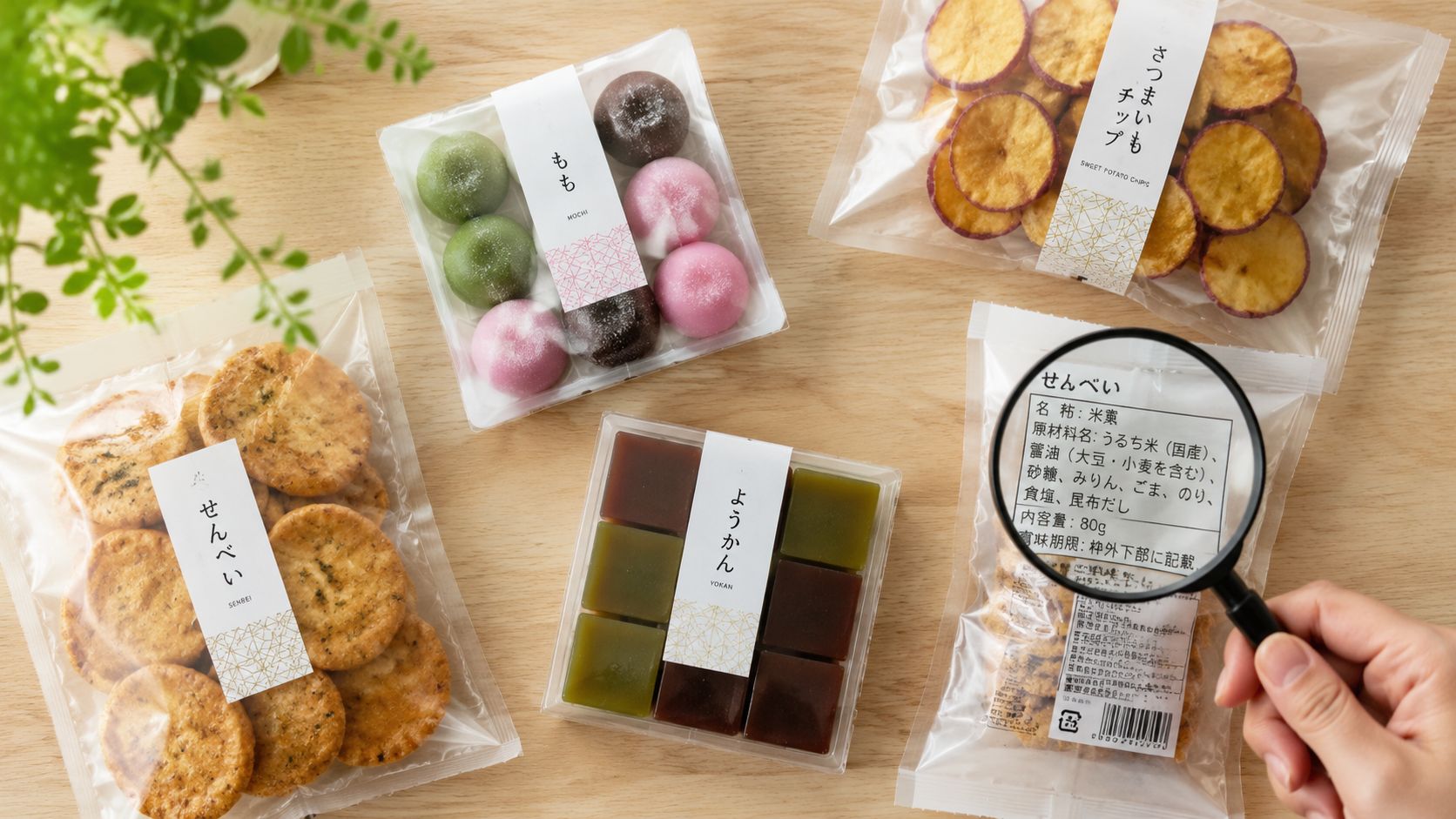
You're probably here because Japanese snacks look amazing, but the ingredient lists don't always make you feel welcome. You spot mochi, crackers, gummies, chocolate, maybe a seasonal sweet potato treat, and then the doubt kicks in. Is it vegetarian, or does it hide fish stock, gelatin, or milk powder somewhere in tiny print?
That uncertainty is normal. Japan has a huge snack culture, and many options are surprisingly friendly to plant-based eaters, but you need a different skill than “find the vegetarian label.” In Japan, the key skill is learning how to check.
This guide is built for that exact moment in the snack aisle. You'll learn how to spot common ingredient traps, how to read labels without needing fluent Japanese, and how to choose vegetarian Japanese snacks with a lot more confidence.
Finding Your Perfect Vegetarian Japanese Snack
A friend once told me that shopping for snacks in Japan felt like being a kid in a candy store, until she had to turn every package over and squint at the back. That's often the vegetarian experience here. The front of the package is fun. The back is where the decision happens.
The good news is that Japan gives you a lot to work with. The country has a deep tradition of plant-based sweets made from rice, beans, starches, and sugar. It also has a modern appetite for premium and “better-for-you” snacks. Japan's healthy snacks market generated USD 3,774.8 million in 2025 and is projected to reach USD 6,271.3 million by 2033 according to Grand View Research's Japan healthy snacks outlook. That tells you something important. There's real depth in this category, and vegetarian-friendly choices sit inside a large, active snack market.
A useful mindset: Don't ask “Is Japanese snacking impossible for vegetarians?” Ask “What patterns can I learn so I can shop with confidence?”
If you already enjoy broader plant-based snack ideas, this ultimate guide to plant-based snacks is a helpful companion because it gives you a wider frame for how brands position meat-free snacking outside Japan too.
A good place to start is with categories that are often fruit-based, bean-based, rice-based, or sweet potato-based. Sour sweets can also be fun to explore, although ingredients still need checking. If you like that style, this guide to sour Japanese candy gives you a sense of how varied Japanese snack shelves can be.
Three habits will make the biggest difference:
- Turn the package over: Front-of-pack images can be misleading.
- Look for ingredient patterns: Fish, gelatin, egg, and milk appear in unexpected places.
- Treat every flavor separately: One version of a snack may be vegetarian, another may not be.
That sounds cautious, but it quickly becomes second nature.
Why Finding Vegetarian Snacks Can Be Tricky
Japan has plenty of snacks that look vegetarian at first glance. The challenge is that “vegetarian” and “vegan” aren't always clearly separated in everyday food labeling, and many products are made for a general audience that isn't actively looking for meat-free certification.

Traditional sweets are often a good sign
Many well-known Japanese sweets have historically been made from plant-derived staples like rice, sweet rice flour, agar, and red bean paste. That includes snacks such as mochi, dango, warabimochi, anko-based sweets, and monaka, as noted by I Travel for Vegan Food's guide to vegan snacks and street food in Japan.
That history matters because it means vegetarian Japanese snacks aren't some imported trend. They already exist inside everyday food culture. You can find these sweets in supermarkets, department stores, and convenience stores.
Modern versions can change the formula
The tricky part is modern manufacturing. A sweet that was traditionally plant-based may now include milk powder, cream filling, egg, or flavoring additives that change whether it's suitable for you.
Savory snacks are even more complicated. A rice cracker may look simple, but seasoning can include fish-based stock. A soup-flavored snack may use bonito. A jelly candy may use gelatin. A chocolate biscuit may be meat-free but still include dairy or egg.
Assume the snack is unknown until the ingredient list proves otherwise.
That's why I tell people not to shop by appearance alone. “Rice cracker” is not a verdict. “Bean sweet” is not a verdict. “Seaweed flavor” is not a verdict.
The hidden ingredients that catch people
These are the ingredients that cause the most confusion:
- Fish stock and bonito: Common in savory Japanese flavoring, even when a product doesn't look fish-based.
- Gelatin: Often used in gummies, marshmallow-like sweets, and some jellies.
- Milk and egg: Frequently added to modern confectionery, filled cakes, and coated snacks.
If you've ever wondered why snack labels feel so important in Japan, this is the reason. The issue isn't that vegetarian options are rare. It's that ingredient shortcuts are common enough that label-checking matters every time.
For a good example of how seafood flavoring shows up in familiar snack categories, this article on Japanese shrimp crackers is a useful contrast. It helps train your eye to separate “looks vegetarian” from “is vegetarian.”
How to Read Japanese Snack Labels Like a Pro
The fastest way to get better at buying vegetarian Japanese snacks is to stop relying on package photos and start recognizing a few key words. You don't need fluent Japanese. You only need a shortlist of ingredient markers.
Find the ingredient list first
Look for 原材料名, pronounced roughly as genzairyo-mei. This means ingredients.
Once you spot that heading, scan for the items that matter most to your diet. A common source of confusion in Japan is that products that seem vegetarian can still contain hidden ingredients like egg yolk powder (卵黄) or fish dashi (鰹), so label-decoding is the practical skill that makes shopping safer.
Common non-vegetarian ingredients to watch for
| Ingredient (English) | Japanese (Kanji/Kana) | Commonly Found In |
|---|---|---|
| Fish, bonito | 魚, 鰹, かつお | Savory crackers, soup-seasoned snacks, sauces |
| Fish stock, dashi | だし, 出汁 | Rice crackers, noodle snacks, seasoning powders |
| Gelatin | ゼラチン | Gummies, jelly sweets, soft candies |
| Egg | 卵, 卵黄 | Cakes, cookies, filled snacks, batter coatings |
| Milk, dairy | 乳, 乳成分, 乳固形粉 | Chocolate, creamy sweets, biscuits, flavored snacks |
| Chicken | 鶏 | Savory seasoning mixes, snack coatings |
| Pork | 豚 | Savory snacks, ramen-flavored products |
| Beef | 牛 | Curry or stew-flavored snacks |
A few of these are especially worth memorizing because they show up often and don't always look obvious on the front of the pack.
The smallest useful cheat sheet
If you only remember five items, make it these:
- 鰹 means bonito, a fish-based ingredient
- ゼラチン means gelatin
- 卵 means egg
- 卵黄 means egg yolk
- 乳 means milk or dairy
Practical rule: If you can recognize 鰹, ゼラチン, 卵, and 乳, you'll avoid a large share of the most common mistakes.
Don't trust flavor names too much
Japanese snack flavors can sound harmless in English translation. “Soy sauce,” “salad,” “seaweed,” and “consommé” can all carry hidden non-vegetarian ingredients depending on the recipe.
That's why a translation app should be your backup, not your main method. Apps help, especially with long additive names, but a quick visual scan for key characters is often faster and more reliable.
A similar habit helps with seasoning products too. If you want to practice reading labels on a pantry item, this guide to nori komi furikake is useful because furikake often looks simple while hiding fish-based components.
A simple shopping routine that works
Use this in a store, online listing, or unboxing at home:
- Identify the category: Is it a rice snack, gummy, chocolate, mochi, or cracker?
- Find 原材料名: Go straight to the ingredients.
- Scan for red-flag characters: Especially 鰹, ゼラチン, 卵, and 乳.
- Check each flavor separately: Plain may be fine. “Rich” or “creamy” may not be.
- If still unsure, skip it: There are plenty of other snacks worth trying.
This approach is more useful than any static “safe list,” because product formulas change and seasonal editions appear all the time.
Vegetarian-Friendly Japanese Snack Categories
Some snack categories give you better odds from the start. That doesn't mean they're automatically vegetarian. It means they're the smartest shelves to check first.

Rice-based sweets and bean sweets
This is often the friendliest area for vegetarians. Mochi, dango, yokan, monaka, and many anko-based sweets come from a long tradition of plant-based ingredients such as rice and red bean paste.
Still, modern twists matter. Cream-filled mochi, custard-style fillings, and cake-like wrappers can introduce egg or milk. The safest instinct is to trust the category, but verify the specific product.
Good signs include simpler ingredient lists and traditional flavor profiles such as red bean, kinako, black sesame, or plain sugar syrup.
Rice crackers and savory senbei
Rice crackers can go either way. Some are beautifully simple. Salt, plain soy sauce, seaweed, or chili versions may work better than flavors inspired by shrimp, grilled seafood, mayonnaise, or broth-based seasonings.
This is also where people get tripped up by dashi. A cracker can look dry and straightforward while carrying fish-based seasoning powder.
If you're comparing snack styles more generally, Vendmoore Enterprises' snack recommendations can be a useful reminder that ingredient density often rises with “functional” or heavily seasoned formats. The same instinct helps in Japan too. Simple is usually easier to verify.
Sweet potato and fruit-based snacks
These are often very approachable. Dried sweet potato, baked sweet potato snacks, roasted chestnut-style sweets, and fruit snacks can be good starting points because the base ingredient is already plant-centered.
But again, coating and texture agents matter. A sweet potato snack with butter flavor isn't the same as a plain roasted version. A fruit jelly may use pectin, or it may use gelatin.
Here's a quick visual guide before you keep shopping:
Chocolate and candy need the most caution
Dark chocolate can sometimes work, but Japanese confectionery often uses milk solids even when the product doesn't look creamy. Gummies and soft candies need especially close attention because gelatin is common.
That's also why broad candy assumptions don't help much. For example, Milky candy by Fujiya is famous, but the name itself tells you exactly why category recognition matters. “Candy” is too broad. Ingredient style matters more than shelf placement.
Traditional shape doesn't guarantee traditional ingredients. A modern mochi dessert and a classic shelf-stable bean sweet can belong to very different ingredient worlds.
A short shortlist of good starting points
- Plain anko sweets: Often simpler and closer to traditional formulas
- Basic mochi or warabimochi: Better odds than cream-filled versions
- Salted or plain soy rice crackers: Usually easier to evaluate than seafood flavors
- Plain dried fruit or sweet potato snacks: Often straightforward, but still worth checking
- Simple bean jellies like yokan: Frequently one of the more reassuring categories
These aren't guarantees. They're smart first stops.
Where to Buy Authentic Vegetarian Japanese Snacks
Once you know how to read labels, the next problem is access. Outside Japan, local Asian grocery stores often carry only a small slice of the full snack market. You might find a few familiar brands, but not much depth in seasonal items, regional products, or newer releases.
That matters because Japanese snacking is highly variety-driven. One line may have several flavors with completely different ingredient profiles. If your local shelf only stocks one or two exported versions, your choices stay narrow.
Why buying from Japan changes the experience
When you shop closer to the Japanese market, you usually get a broader view of what people in Japan are buying. That means more traditional sweets, more seasonal snack runs, and more packaging exactly as sold domestically. For vegetarian shoppers, that can be useful because you're comparing more real options rather than settling for whatever happened to be exported.

If you're trying to understand the wider shopping scene, this article on where to buy Japanese snacks is a practical next step.
One useful option for international shoppers
Buy Me Japan is one option for people who want Japanese products shipped directly from Japan, including snack categories alongside other domestic products. For this topic, the main practical advantage is access to authentic Japan-market items in one place, which can make it easier to compare products and ingredients than relying only on a small local import shelf.
A few buying habits help no matter where you shop:
- Choose simpler formats first: Traditional bean sweets and plain rice snacks are easier than highly flavored novelty items.
- Check product photos carefully: Look for clear shots of the ingredient panel if available.
- Treat limited editions cautiously: Seasonal flavors are fun, but they often add cream, butter, or specialty seasonings.
- Rebuy what you've verified: Once you find a snack that fits, keep a list.
Fresh snacks are a separate category
Packaged snacks are easier to verify than stall food, bakery items, or festival treats. Fresh snacks can be excellent, but unless ingredients are clearly listed or confirmed, they carry more uncertainty.
That's why many vegetarian shoppers build confidence first with packaged foods. Once you've trained your eye on labels, your instincts improve everywhere else too.
Your Vegetarian Snack Adventure Awaits
Vegetarian Japanese snacks get much easier once you stop hunting for perfect labels and start looking for reliable patterns. The biggest shift is mental. You're not guessing anymore. You're checking.
A lot of Japanese snacks are built from ingredients vegetarians already know well, such as rice, beans, starch, seaweed, and sweet potato. The confusion comes from hidden extras, especially fish-based seasoning, gelatin, egg, and dairy. Once you know the key warning words, the aisle feels far less intimidating.
Keep your process simple. Find the ingredient list. Scan for the main red flags. Be extra careful with savory seasonings, gummies, and modern cream-filled sweets. Give yourself easier wins first with traditional bean sweets, simple mochi, and plain rice-based snacks.
The goal isn't to memorize every snack in Japan. It's to build enough label confidence that new snacks stop feeling risky.
That's when the fun returns. You can enjoy the discovery part of Japanese snacking without feeling like every purchase is a gamble. And if you're shopping from abroad, using a reliable Japan-based retailer can make that process smoother because you get closer to the full range of products sold in Japan.
Japanese snack shopping as a vegetarian doesn't have to feel restrictive. It can feel like what it should be. Curious, delicious, and full of small wins.
If you want to explore authentic Japanese products shipped from Japan, Buy Me Japan is a practical place to browse snacks and compare Japan-market items more closely before you buy.



共有する:
Skin Care Regimen for Acne Prone Skin: A Japanese Guide
Japanese Hair Straightening Products: A Buyer's Guide 2026