


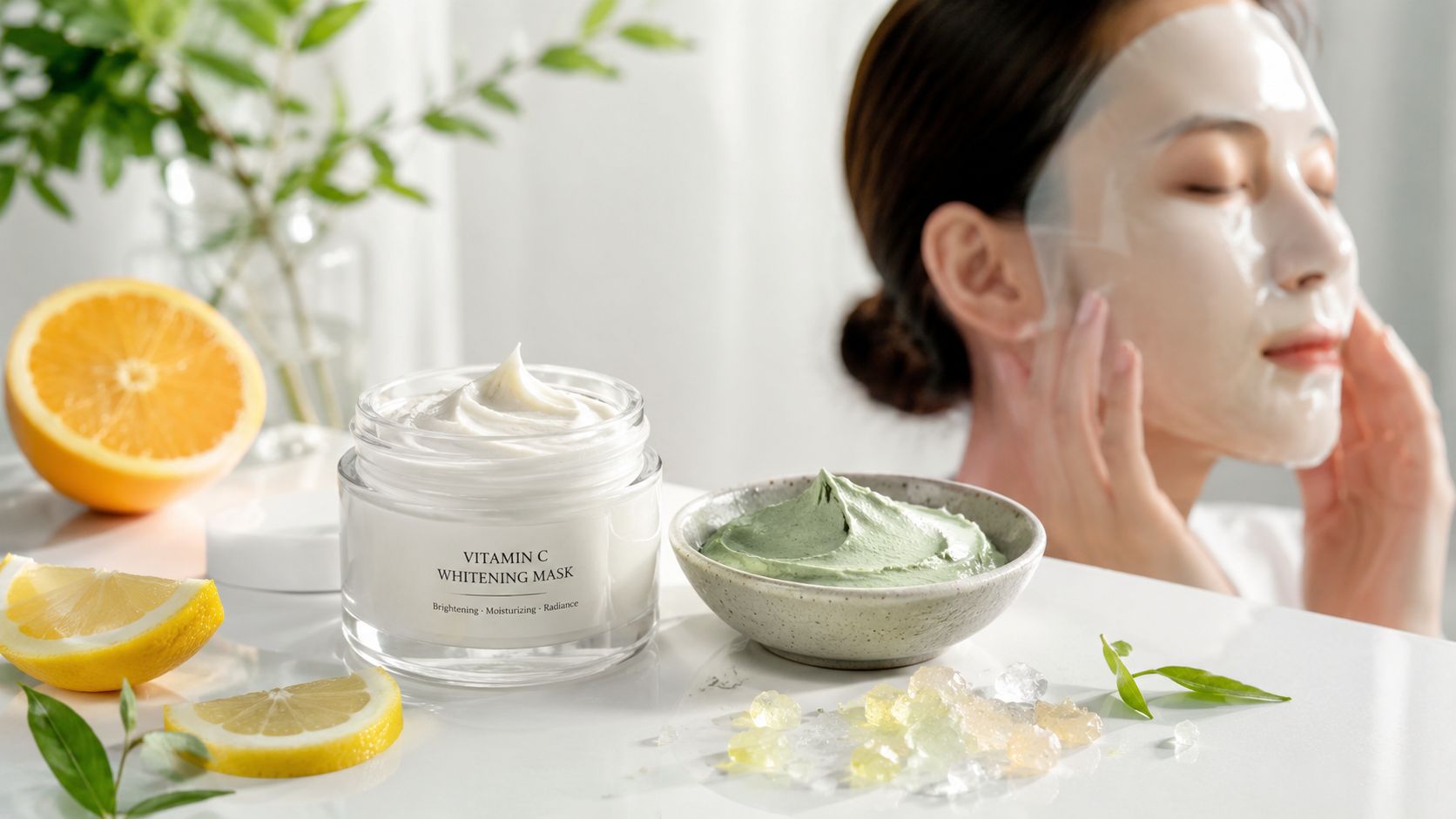
“Whitening” can be a confusing word in skincare. In Japanese beauty, it usually refers to brightening the look of uneven tone and dullness, not changing your natural skin colour. A good whitening face mask should leave skin looking fresher and more even, while still feeling comfortable enough to use as part of a sensible routine.
The best choice depends on what you actually want from the mask. Are you looking for a quick glow before an event, a hydrating sheet mask for tired skin, or gradual tone support for post-blemish marks? Those are different jobs. Once you separate them, the ingredient list and the format become much easier to judge.
What a Whitening Face Mask Can and Cannot Do
A mask can improve the way skin looks on the surface. Hydration can make the complexion look plumper, and a gentle exfoliating step can lift some of the dull, rough feel that makes tone look flat. Those changes can be noticeable after one use.
Longer-term pigment concerns are different. A mask has limited contact time, so it is better thought of as one supporting step rather than a complete treatment. Persistent melasma, deep sun spots, or marks that keep returning may need a broader routine and advice from a dermatologist. No mask should promise to erase every type of discoloration.
A practical expectation: choose a mask for a fresher, more even-looking complexion, then judge progress over several weeks instead of expecting an overnight transformation.
Brightening Ingredients by Goal
“Brightening” is a broad label. The ingredients underneath it can have very different roles, so read the formula by the result you want rather than by the front-of-pack claim.
- Niacinamide: a common choice for gradual tone support and a comfortable, repeat-use routine.
- Vitamin C and its derivatives: often used when the goal is a brighter-looking complexion and antioxidant support.
- Arbutin: closely associated with Japanese brightening formulas and useful when you want a more targeted tone-evening step.
- Tranexamic acid: often chosen for routines focused on the look of uneven pigmentation over time.
- Azelaic acid: a useful option to consider when uneven tone and blemish-prone skin overlap, provided your skin tolerates it.
- Alpha-hydroxy acids such as glycolic or lactic acid: exfoliate the surface and can give a quicker glow, but they also require more care if your skin is sensitive.
Japanese skincare has a long history of using ingredients such as arbutin, kojic acid, and vitamin C derivatives in brightening products. That does not make every formula suitable for every person, but it is a helpful starting point when you are comparing authentic Japanese masks. If you want a clearer explanation of exfoliating acids, see our guide to alpha-hydroxy acid basics.
Choose the Right Mask Format
The format changes how the product feels and how long the formula stays on your skin.
Sheet masks
Sheet masks are the simplest choice when dullness is tied to dehydration. They are easy to use, give the skin a temporary cushion of moisture, and work well before makeup or whenever your face looks tired. Look for a formula that feels soothing rather than one that leaves your skin hot or tight.
Wash-off and clay masks
Wash-off masks give you more control over contact time. Clay can be useful for oily skin, while a cream or gel mask may suit dry or sensitive skin better. If a wash-off mask contains acids, start slowly and do not use it on the same night as every other active in your routine.
Sleeping masks
Sleeping masks are usually more about hydration and comfort than a dramatic exfoliating effect. They can be a good fit when your complexion looks dull because your skin is dry, but they should still feel breathable and easy to rinse off the next morning.
Japanese Whitening Face Mask Picks
These are current active products in the Buy Me Japan catalog. Their product pages and packaging are the best place to confirm the latest directions and ingredients before ordering.


Build a Routine Your Skin Can Repeat
Start with clean, dry skin and follow the product directions. With a sheet mask, more time is not automatically better; remove it when the label says to, then press the remaining essence into the skin instead of rubbing hard.
Keep the rest of the routine quiet on mask night. If you use a retinoid, a strong exfoliating toner, or another acid, give your skin some space rather than stacking everything together. A simple moisturiser afterwards is usually enough.
- Dry skin: choose a hydrating sheet or sleeping mask and avoid anything that leaves the face tight.
- Oily skin: consider a lighter sheet or controlled wash-off formula instead of a heavy overnight layer.
- Sensitive skin: prioritise a short ingredient list, patch-test first, and introduce one new active at a time.
- Acne-prone skin: avoid treating every blemish with a new exfoliating mask. Irritation can make the overall tone look less even.
Daily sunscreen also matters. Brightening products cannot do much for an uneven-looking complexion if unprotected sun exposure keeps triggering new darkening. If your skin is stinging, peeling, or unusually hot after a mask, stop and let it recover.
Common Whitening Mask Mistakes
Using a mask too often
More frequent use is not the same as faster progress. A mask that is comfortable once or twice a week may become irritating when used every day, especially if it contains exfoliating acids.
Mixing too many actives
Brightening masks are easy to over-layer with vitamin C, retinoids, scrubs, and acid toners. Introduce products one at a time so you can tell what your skin actually likes.
Trusting the word “whitening” on its own
The word tells you very little about the formula. Check the ingredients, directions, seller, and batch information. Avoid products with unclear labels or promises of dramatic colour change, and never use DIY lemon, vinegar, or abrasive scrub recipes on your face.
What to Look for When Shopping from Japan
Buy from a seller that clearly identifies the product, provides an ingredient list, and uses a direct product page rather than a vague marketplace listing. Compare the Japanese-market name and package carefully, especially when several versions of a mask look similar.
At Buy Me Japan, you can browse authentic Japanese skincare by product type and concern. Keep the choice simple: one mask, one clear goal, and enough time to see whether your skin remains comfortable.
The Takeaway
A whitening face mask is best used as a small, repeatable part of a brightening routine. Sheet masks are convenient for hydration and a quick fresh look; wash-off masks give you more control; and stronger actives deserve a slower introduction. Choose the formula that fits your skin, keep your expectations realistic, and stop if irritation appears.
If you are ready to compare Japanese options, start with the three Buy Me Japan picks above and read each product page before ordering. The right mask is not the strongest one on the shelf—it is the one you can use consistently without upsetting your skin.

共有する:
Retro Floral Bedding: Guide to Choosing & Styling Vintage
Stainless Steel Carafe Buyer's Guide for Hot Drinks