


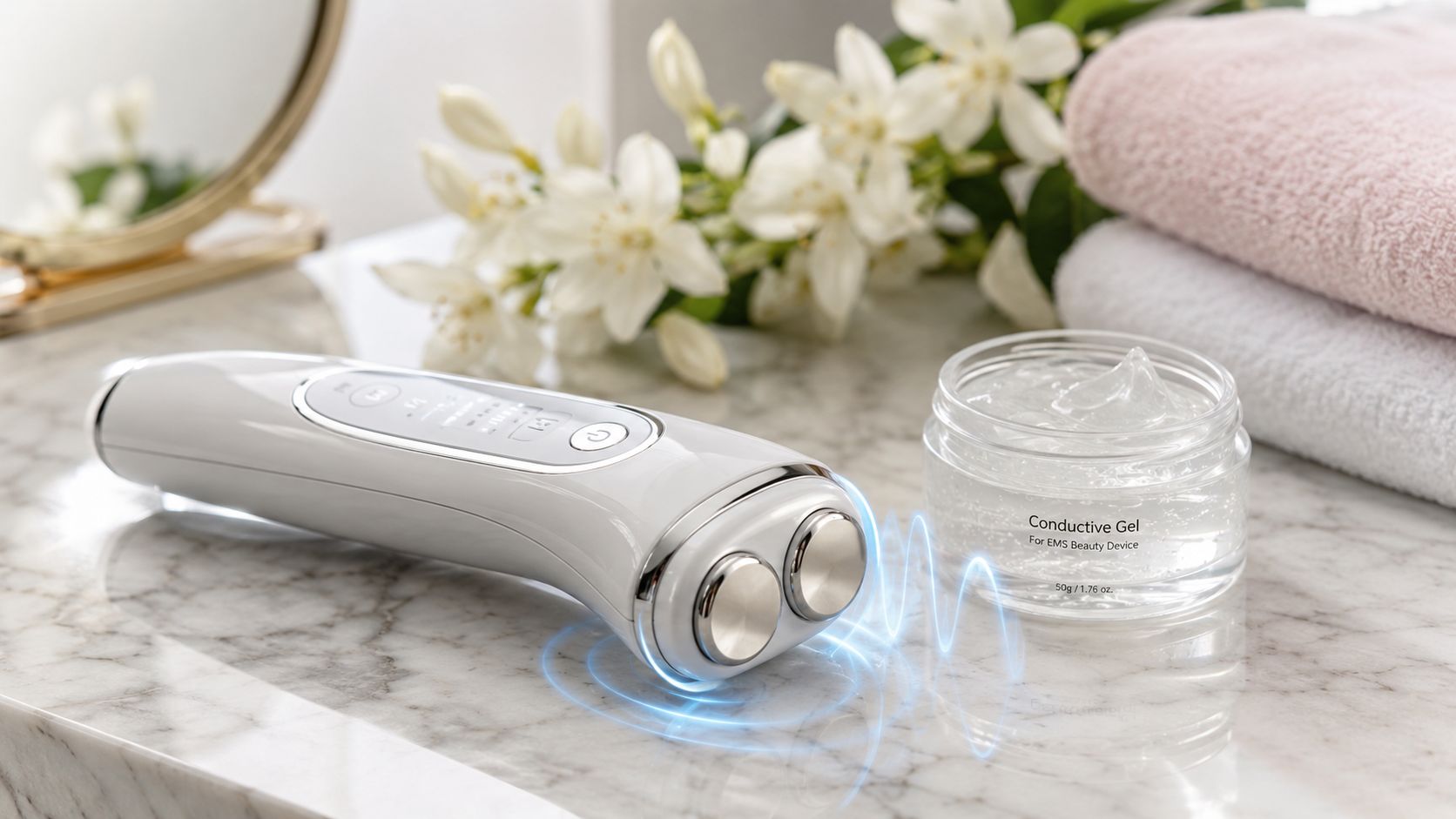
Du har apparaten i handen, produktsidan är full av löften och den enda viktiga frågan är enkel: vad gör en EMS-skönhetsapparat, och hur använder man den utan att behöva gissa? Den förvirringen är vanlig, särskilt när apparaten står sida vid sida med mikroström, RF och andra hemmaverktyg som alla påstår sig kunna lyfta, strama upp eller fräscha upp huden.
För läsare som uppskattar japansk skönhetsteknik märks den osäkerheten snabbt. Japanska hudvårdsrutiner brukar vara disciplinerade, avskalade och produktmedvetna, så en EMS-apparat passar ofta bäst när den ingår i en bredare rutin – inte när den behandlas som en mirakellösning. Om du vill ha hela sammanhanget kring den typen av rutin är översikten i den japanska hudvårdsrevolutionen ett användbart komplement.
Varför en EMS-skönhetsapparat har fångat din uppmärksamhet
Många söker efter en EMS-skönhetsapparat eftersom de redan har köpt en eller sett en fungera i en kort video och vill veta om den verkligen fungerar. Lockelsen är uppenbar. Den ser mer aktiv ut än en kräm, mindre skrämmande ut än en klinikbehandling och är enklare att få in i kvällsrutinen än en omfattande behandlingsplan.
Japanska skönhetskonsumenter kommer ofta i kontakt med den här kategorin när de redan använder välbekanta basprodukter som essence, fuktkräm och solskydd. Därför kan apparaten kännas både spännande och förvirrande på samma gång. Den befinner sig i gränslandet mellan hudvård och teknik och kräver en annan typ av användningsdisciplin än ett serum eller en ansiktsmask.
Varför kategorin fortsätter att växa
Den bredare marknadskontexten hjälper till att förklara varför utbudet fortsätter att bli större. Den globala marknaden för EMS-ansiktsapparater värderades till 1,8 miljarder dollar 2025 och beräknas nå 3,8 miljarder dollar 2034, vilket motsvarar en årlig tillväxttakt på 9,2 % under prognosperioden. Hemmabruksapplikationer stod för 65,2 % av intäkterna 2025, eller cirka 1,17 miljarder dollar (marknadsrapport). I praktiken visar det att detta inte längre är en liten nisch för entusiaster.
Praktisk regel: om en apparat är utformad för hemmabruk är de viktigaste egenskaperna vanligtvis komfort, konsekvent användning och enkel rengöring – inte maximal styrka.
Det bästa sättet att läsa den här guiden är att se den som ett arbetsflöde. Börja med att förstå vad EMS är. Jämför sedan med mikroström och RF. Därefter går du igenom rutin, säkerhet och kriterier vid köp. Den ordningsföljden spelar roll, eftersom marknadsföringsspråket på produktsidor ofta suddar ut skillnaderna, medan den faktiska användarupplevelsen beror på dem.
En bra plats för att jämföra hudvårdsrutiner och texturkombinationer är den relaterade guiden om bästa essensen för ansiktet. Den hjälper till att sätta in EMS i samma rutinlogik som människor redan använder för återfuktande steg och behandlande lager.
Vad en EMS-skönhetsapparat faktiskt gör
EMS står för elektrisk muskelstimulering. Enkelt uttryckt skickar den kontrollerade elektriska pulser som får ansiktsmusklerna att dra ihop sig och slappna av, vilket är anledningen till att vissa användare beskriver det som ett mini-träningspass för ansiktet. En vanlig massage flyttar huden utifrån. EMS fungerar genom att försiktigt få muskeln under huden att röra sig på egen hand.
Skillnaden spelar roll eftersom effekten inte är densamma som att fördela en kräm över hudytan. En ansiktsapparat för EMS beskrivs ofta som att den använder elektriska pulser i intervallet 1 till 100 mA för att få ansiktsmusklerna att rycka och dra ihop sig (förklaring av apparaten). Målet är inte bara avslappning, utan stimulering.
EMS och mikroström är inte utbytbara
Mikroström är ett annat verktyg. Det arbetar med mikroampere under känseltröskeln och beskrivs i allmänhet som en skonsammare, cellinriktad teknik, medan EMS verkar på motornivå och skapar synliga sammandragningar. Därför kan de två kännas helt olika i användning, även när marknadsföringen får dem att låta lika.
Enkel skillnad: mikroström beskrivs vanligtvis som ett subtilt stöd, medan EMS vanligtvis beskrivs som synligt muskelarbete.
Om du försöker förstå apparaten utifrån hur den känns kan du tänka så här: En ansiktsmassage är som att trycka på deg utifrån. EMS är mer som att knåda inifrån, med små pulser som talar om för muskeln vad den ska göra. Därför kan känslan också vara starkare runt käklinjen och kindområdet än i pannan.
Vissa läsare jämför också EMS med verktyg för kroppsskulptering, vilket kan vara användbart för att skapa en intuitiv förståelse men inte som direkt ersättning. Om du vill få en bredare bild av hur konsumenter ser på kostnader och förväntningar kring apparatbaserad konturering ger artikeln om förklarade kostnader för kroppsskulptering ett praktiskt perspektiv på hur kategorin uppfattas.

Vetenskapen bakom EMS-skönhetsapparater
Ett bra sätt att förstå EMS är att börja med själva signalen. Elektriska impulser passerar genom huden och når musklerna under den, där de utlöser en sammandragning. Därför tillhör EMS en annan kategori än krämer, masker och verktyg som bara verkar på hudytan. Mekanismen är inte enbart kosmetisk, utan också mekanisk.
Den starkaste kliniska referenspunkten är en 12 veckor lång studie av neuromuskulär elektrisk stimulering i ansiktet. I studien ökade den genomsnittliga muskeltjockleken med 18,6 % i EMS-gruppen, medan kontrollgruppen inte uppvisade samma ökning. Forskarna rapporterade också statistiskt signifikanta skillnader mellan grupperna efter 6 och 12 veckor och drog slutsatsen att en 12 veckor lång behandlingskur var förknippad med ökad tjocklek hos zygomaticus major-muskeln samt subjektiva förbättringar av ansiktets utseende (PubMed-studie). För en kategori hemmabehandlingar som ofta beskrivs med vaga marknadsföringspåståenden ger detta EMS en konkret klinisk förankring.
Vad evidensen visar – och inte visar
Evidensen är lovande, men den behöver tolkas med försiktighet. En separat klinisk rapport om EMS-baserade hudvårdsenheter visade att kombinationen av en EMS-enhet med medelfrekvens och funktionella kosmetiska produkter mot rynkor gav bättre resultat för hudens elasticitet, slapp hud och lyft av dubbelhaka än kosmetiska produkter ensamma. Det tyder på synergi, inte ersättning. EMS kan komplettera en hudvårdsrutin, medan rutinen fortfarande står för barriärstöd och lokal behandling. Om du vill få den delen av rutinen förklarad på ett enkelt sätt är guiden om en hudvårdsrutin för att reparera hudbarriären en användbar referens.
Ett annat påstående i litteraturen om enheten handlar mer om användarupplevelsen än om ett tydligt kliniskt resultat. En produktbeskrivning rapporterar en ökning av hudtemperaturen med 1,5–2 °C efter användning, synliga effekter som varar i cirka 8–12 timmar samt en påstådd ökning av ingrediensabsorptionen med 20–30 % eftersom strömmen tillfälligt öppnar jonkanaler (produktbeskrivning). Dessa punkter bör främst ses som en kontext för hur enheter marknadsförs och hur användare kan uppleva huden direkt efter behandlingen. De bidrar till att förklara varför huden kan se något fylligare eller klarare ut kort efter en behandling, även om det inte innebär att effekten är permanent.
Helhetsbilden är lovande, men fortfarande ofullständig. De flesta studier är korta, så det bäst underbyggda sättet att se på EMS är som en teknik som används upprepade gånger snarare än som en engångslyftning. Det innebär också att regelbundenhet spelar roll. Hud som redan är irriterad eller försvagad har mindre sannolikhet att tåla regelbunden användning av apparaten väl, vilket är en anledning till att en stabil hudvårdsrutin med fokus på hudbarriären är klok vid sidan av att testa en EMS-apparat.
För läsare som jämför energibaserade verktyg hjälper en professionell genomgång av RF-mikronålsbehandling till att tydliggöra varför RF vanligtvis beskrivs som en uppstramande och kollagenfokuserad teknik, medan EMS förknippas med muskelsammandragning. Jämförelsen är viktig eftersom båda apparaterna kan kallas ”uppstramande” verktyg, men de riktar sig mot olika vävnadslager.
EMS jämfört med mikroström och RF för hemmabruk
Det smartaste sättet att köpa en hemmabehandling är att matcha tekniken med det problem du bryr dig om. EMS, mikroström och RF ingår alla i samtalet om ”uppstramning”, men de gör olika saker. Om du väljer fel kan apparaten fortfarande fungera, men inte ge det resultat du förväntade dig.
Vad varje teknik passar bäst för
EMS är vanligtvis det mer logiska valet om din oro gäller djupare strukturell slapphet eller definition av käklinjen. Mikroström används generellt för fina linjer och ytliga ålderstecken, med en skonsammare känsla. RF tillhör en annan kategori eftersom den används för djupare huduppstramning och kollagenfokuserade mål.
För läsare som vill ha en klinisk jämförelse mellan professionella energibaserade apparater och hemmaverktyg är förklaringen av RF-mikronålsbehandling en användbar referenspunkt. Den tydliggör varför RF vanligtvis beskrivs som en teknik för fastare hud snarare än som ett verktyg för muskelsammandragning.
| Teknik | Målvävnad | Bäst för | Känsla | Typisk behandling |
|---|---|---|---|---|
| EMS | Muskler | Definierad käklinje, stöd vid slapp hud | Märkbara pulser, synlig sammandragning | Korta, upprepade behandlingar |
| Mikroström | Ytligt stöd och cellstöd | Fina linjer, skonsam toning | Ofta subtilt eller knappt kännbart | Lugn, regelbunden användning |
| RF | Dermis och djupare uppstramning | Huduppstramning och kollagenstöd | Värme och värmebaserad komfort | Enhetsspecifika behandlingar |
Det populära påståendet om ”500 procent ATP” som ofta kopplas till mikroström upprepas ofta, men det är en förvrängning snarare än en tydlig sanning för konsumenter (jämförelseartikel). Ett bättre sätt att förstå de tre teknikerna är att utgå från vilken vävnad de försöker påverka. Med det perspektivet blir valet mycket enklare.
Den bästa enheten är den som passar det problem du försöker lösa, inte den som har den mest dramatiska marknadsföringsfrasen.
En praktisk rutin med en EMS-skönhetsenhet
En fungerande rutin med en EMS-skönhetsenhet börjar innan enheten slås på. Tvätta och torka ansiktet och använd sedan en vattenbaserad ledande gel eller ett serum så att strömmen kan fördelas jämnt över huden. Oljebaserade produkter kan försämra kontakten, vilket gör sessionen mindre jämn.
En enkel sekvens som fungerar
Börja med den lägsta intensiteten och öka endast om inställningen känns bekväm. För enheten från ansiktets mitt och utåt och följ ansiktsmusklernas riktning i stället för att svepa verktyget slumpmässigt över ansiktet. Om ditt främsta mål är att stödja käklinjen kan du stanna lite längre vid käklinjen än på kinderna.
Sessionens längd spelar också roll. En skönhetsartikel rekommenderar 5 till 10 minuter per session, 3 till 5 gånger i veckan (användningsguide), medan en annan säkerhetsguide föreslår 3 till 5 gånger i veckan i 10 till 20 minuter per session för att undvika överanvändning, trötthet eller utslag. En standardtid på 10 minuter är den mest praktiska kompromissen för nybörjare, eftersom den håller rutinen tillräckligt kort för att kunna upprepas utan att belasta huden.
Efter sessionen återgår du till dina vanliga hudvårdssteg. En vattenbaserad toner först, sedan EMS och därefter en rikare kräm är en klok ordning. Om du föredrar en lättare rutin kan en japansk morgonrutin som avslutas med en essence eller fuktkräm kännas lättare att tåla än att lägga något tungt innan du börjar, och guiden steg i morgonens hudvårdsrutin är en användbar referens för att hålla resten av rutinen konsekvent.
Det vanligaste nybörjarmisstaget är att höja intensiteten för snabbt. Mer ström innebär inte automatiskt bättre resultat. Det leder oftast till mer rodnad, större trötthet och större risk att du hoppar över nästa session eftersom upplevelsen kändes för stark. Om en inställning gör ansiktet spänt eller ömt i stället för att aktivera muskeln är den för stark.
Regelbundenhet är viktigare än styrka. En rutin som känns hanterbar är den du med störst sannolikhet fortsätter med, och det är det som ger enheten en rättvis utvärdering över tid.
Säkerhet, biverkningar och vem som bör undvika EMS
Säkerheten är den del som de flesta produktsidor slätar över, men det är också den del som skyddar din hud och ditt självförtroende. EMS är inte automatiskt riskfritt, men det passar inte heller alla. Vissa bör undvika det helt om inte vårdpersonal säger något annat.
Vem bör avstå eller först rådgöra med vården
Personer med pacemaker eller implanterade defibrillatorer bör inte använda EMS i ansiktet. Samma försiktighet gäller personer som är gravida eller ammar, personer med epilepsi, personer med metallplattor eller stift i ansiktet samt alla som har fått fillers, botulinumtoxin eller genomgått operation under de senaste två veckorna. Det bör inte heller användas på skadad hud, inflammerade områden eller under aktiva akne- eller rosaceautbrott.
Den medicinska litteraturen om apparater för ansiktsföryngring i hemmet rapporterar främst tillfällig rodnad och svullnad i studier, utan allvarliga händelser i de citerade prövningarna, men kunskapsunderlaget är fortfarande begränsat (medicinsk översikt). Det innebär att kortsiktig tolerans är bättre dokumenterad än långsiktig säkerhet.
Praktisk regel: om hudbarriären redan är försvagad bör du vänta med att använda enheten.
En rimlig strategi för att minska risken är enkel. Testa först på ett litet hudområde bakom örat, ta av smycken före varje session, använd aldrig enheten över halsen eller sköldkörtelområdet och sluta om du får huvudvärk eller yrsel. Om det börjar klia efter en session kan en icke-steroidbaserad lindrande kräm, till exempel Yuskin I medicinsk kräm för kliande hud 110 g, vara ett praktiskt sätt att lindra torr och irriterad hud, så länge du inte applicerar den under själva EMS-sessionen.

Så väljer du rätt EMS-skönhetsenhet att köpa
Ett bra köp börjar med specifikationsbladet, inte annonstexten. De viktigaste siffrorna är de som visar hur enheten fungerar på huden. För ansiktsbehandling hemma ligger ett praktiskt frekvensintervall ofta omkring 1 till 125 Hz, med användning i mellanregistret, omkring 20 till 50 Hz, för muskelarbete, medan pulsbredd på 50 till 450 μs är vanligt i konsumentenheter (köpguide).
Vad du bör kontrollera innan du betalar
Leta efter en tydlig skillnad mellan maximal effekt och varaktig effekt. Ett enda framträdande tal kan vara missvisande om det inte visar hur strömmen beter sig vid faktisk användning. För hemmabruk tenderar effektnivåerna att vara låga, ofta omkring 3,7 V till 5 V och 4 till 6 W, vilket passar för korta, intermittenta sessioner snarare än kontinuerlig effekt (produktspecifikationer).
- Frekvensintervall: Välj en enhet som tydligt anger sitt intervall, eftersom det avgör om behandlingen känns mer som mild stimulering eller muskelarbete.
- Impulsbredd: Bredare och smalare impulsinställningar kan påverka komforten och typen av muskelkontraktion, så specifikationen bör vara tydligt angiven.
- Strömkälla: Batteridetaljer är viktiga för portabiliteten och för att avgöra om verktyget är utformat för korta behandlingar.
- Certifieringar: Leta efter relevanta efterlevnadsmärkningar för din region, till exempel CE, FCC eller PSE.
- Ledande ekosystem: Vissa apparater fungerar bäst endast med sina egna geler, så kontrollera vad varumärket förväntar sig att du ska köpa på nytt.
Ett stänksäkert eller lättstädat hölje är ytterligare en praktisk fördel, särskilt vid användning i ansiktet där gelrester snabbt samlas. Garanti och kundservice efter köpet är också viktigt, eftersom internationella köpare ofta upptäcker att den billigaste importen är svårast att få service på senare. Det är en anledning till att vissa kunder föredrar japanska återförsäljare och inhemska versioner med tydliga supportvillkor.
För läsare som jämför kategorier före ett köp kan den bredare shoppingguiden vad man kan köpa inom japansk kosmetika hjälpa till att sätta köp av apparater i samma kvalitetsorienterade perspektiv.
Vanliga frågor om EMS-skönhetsapparater från köpare
Hur lång tid tar det innan resultaten syns? Det ärligaste svaret är att synliga förändringar vanligtvis är resultatet av en regelbunden rutin, inte av ett enda behandlingstillfälle. Det starkaste kliniska tidsintervallet i underlaget sträcker sig till 12 veckor, så det är den tidsramen som bör forma förväntningarna. Tidigare förändringar känns oftare som en tillfällig uppstramning eller ett lyft efter behandlingen.
Kan EMS ersätta en professionell behandling? Vanligtvis inte. En apparat för hemmabruk bör snarare ses som ett verktyg för underhåll och regelbundenhet, medan en klinikbehandling kan erbjuda en annan nivå av övervakning, styrka och anpassning.
Kan man använda EMS med retinol, syror eller C-vitamin? Var försiktig med starka aktiva ingredienser och undvik allt som hindrar ledningsförmågan, särskilt oljor eller tunga ocklusiva produkter. Vattenbaserade produkter passar bättre för behandlingen, och enklare rutiner är vanligtvis skonsammare för huden.
Är EMS okej för känslig hud? Ofta ja, om du sänker intensiteten, förkortar behandlingarna och gör ett lapptest först. Känslig hud är inte automatiskt ett nej, men det betyder att du bör ta det långsammare och respektera tecken på irritation i stället för att ignorera dem.
Om du jämför japanska hudvårdsverktyg och vill ha en källa som fokuserar på äkthet, ett direktimporterat urval från Japan och tydlig produktinformation, kan du besöka Buy Me Japan. Det är ett praktiskt ställe att hitta japanska skönhetsapparater och hudvårdsstegen som passar ihop med dem, så att du kan välja med större trygghet och mindre gissande.

Dela:
Enzympulverrengöring: Så fungerar den och varför den är viktig
Hudvård med pärlpulver: Fördelar, användning och köpguide