


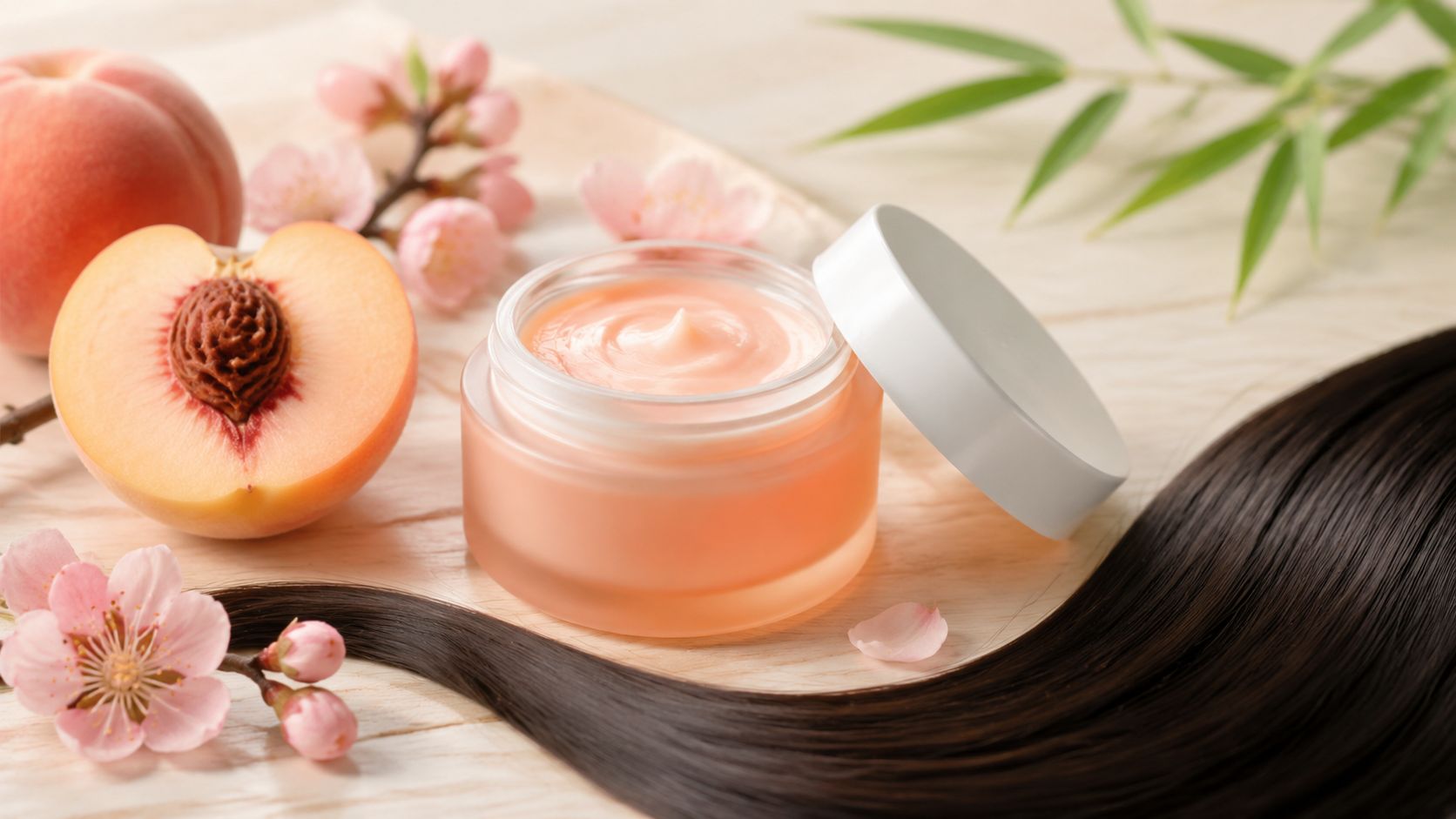
Du tvättar håret, smörjer in en leave-in, och i ungefär tjugo minuter ser allt bra ut. Sedan slår fukten till. Eller topparna börjar puffa ut efter föning. Eller lockar som såg definierade ut när de var fuktiga torkar till ett fluffigt moln. Om det låter bekant letar du förmodligen efter en produkt som tillför fukt, kontrollerar friss och inte tynger ner håret.
Den sökningen är precis varför så många blir nyfikna på Momori Peach Hair Cream, en japansk leave-in-behandling som har byggt upp en lojal följarskara för att mjuka upp torrt hår och ge det en slät, beröringsvänlig finish. Den befinner sig i det användbara mellanläget mellan en behandling och en stylinghjälp, vilket är varför den sticker ut i J-beauty hårvård.
För detaljer om vad den gör, hur du använder den, om den passar din hårtyp och hur försiktig du bör vara om ditt hår är färgat eller kemiskt behandlat, är du på rätt plats. Jag går igenom formeln, texturen, vetenskapen och den praktiska verkligheten av att använda den i en rutin inspirerad av japansk hårvårdskultur, där mjukhet och hanterbarhet är lika viktiga som glans. Om du gillar att lära dig hur japanska skönhetsprodukter prioriterar vård först, styling sedan, är denna artikel om gamla japanska skönhetshemligheter ett trevligt komplement.
Introduktion Den japanska hemligheten till slätt hår
I japansk hårvård dyker en vanlig idé upp om och om igen. Håret ska kännas friskt i handen, inte bara se polerat ut på avstånd. Därför är leave-in-krämer fortfarande populära. De hjälper mot daglig torrhet, friktion från borstning och den sträva känsla som värmestyling kan lämna efter sig.
Momori Peach Hair Cream passar väl in i det tillvägagångssättet. Det handlar inte bara om doft eller ytsken, även om persikoprofilen är en del av dess attraktionskraft. Den fungerar som en fuktfokuserad kräm för personer som vill ha mjukare toppar, mindre friss och en mer kontrollerad finish utan stelheten från en gel.
Många läsare blir förvirrade över var en produkt som denna hör hemma. Är det ett balsam, en lockkräm, ett värmeskydd eller en avslutande kräm? Det är ärligt talat så att den kan överlappa dessa roller beroende på hur mycket du använder och när du applicerar den. Det är en anledning till att den har blivit en så användbar vardagsprodukt för personer vars hår blir torrt, fluffigt eller ostyrigt mellan tvättarna.
Hårkrämer är mest meningsfulla när ditt problem inte bara är stadga. Det handlar om textur, torrhet och kontroll.
En annan anledning till att den här produkten får uppmärksamhet är att japanska skönhetsköpare ofta värdesätter formler som känns behagliga att använda varje dag. Rutinen måste vara realistisk. Om en kräm känns klibbig, fet eller krånglig kommer den inte att användas regelbundet. Momoris rykte kommer från att den är lätt att arbeta in i en normal rutin, särskilt efter schamponering när håret fortfarande är fuktigt och mottagligt för leave-in-vård.
Vad är egentligen Momori Peach Hair Cream?
Momori Peach Hair Cream är en leave-in-behandling från Dariya, ett japanskt skönhetsmärke känt för lättillgängliga hårprodukter för dagligt bruk. Detta är inte en kräm du sköljer ur i duschen. Den är designad för att stanna kvar i håret och hjälpa till med mjukhet, fuktbevarande och enklare styling efter tvätt.

En användbar detalj är att produkten inte är vag eller svår att identifiera. Enligt Targets produktbeskrivning för Dariya Momori Peach Rich & Moisturizing Hair Cream är det en 150 g (5,29 oz) hårvårdsprodukt med UPC 3711704102552. Dessa detaljer är viktiga om du vill bekräfta att du tittar på rätt artikel hos olika återförsäljare och marknader.
Hur du kan tänka kring dess roll
Om du är van vid västerländska stylingkategorier kan det hjälpa att placera denna kräm i en enkel ram:
- Som en leave-in-behandling hjälper den till att mjuka upp torra längder och toppar.
- Som en förberedande produkt kan den göra håret mjukare innan värmestyling.
- Som en avslutande hjälp kan den lugna puffighet och förbättra utseendet på risiga toppar.
Den sista punkten överraskar ofta nya användare. Folk hör "hårkräm" och antar något tjockt, vaxigt eller alltför stylingfokuserat. Momori Peach Hair Cream är närmare en vårdande kräm som också hjälper din styling att hålla bättre.
Vem brukar gilla detta format
Den här typen av produkt brukar tilltala några grupper:
- Torrt hår som vill ha mer komfort i topparna efter tvätt
- Vågigt eller lockigt hår som behöver fukt innan definierande produkter
- Värmeverktygsanvändare som vill ha en mjukare, mindre spröd känsla innan föning
Om du redan gillar japansk hårvård från märken som Ichikami, Tsubaki, Kao Liese eller Shiseido Fino, passar Momori in i samma bredare samtal. Den har det välbekanta J-beauty-målet att göra håret mjukare, mer vårdat och lättare att styla istället för att ge dramatisk stadga.
Persikans kraft – en titt på nyckelingredienserna
Många persikoinspirerade hårprodukter stannar vid doften. Momori är mer intressant än så, eftersom persikokonceptet också syns i vårdsidan av formulan. Serien är byggd kring persikobaserade ingredienser som syftar till att skydda torrt hår så att det känns mjukare, böjs lättare och trasslar sig mindre vid styling.

Det spelar roll eftersom friss ofta börjar med ett enkelt problem. Hårets yta blir ojämn, sträva områden hakar fast och fukt försvinner från längderna snabbare än du vill. Oljor, fuktbindare och mjukgörande ämnen hjälper alla från olika vinklar. Persikoolja lägger till ett mjukgörande lager. Fuktbindare hjälper till att hålla kvar vatten. Rikare balsam gör att stråna känns mindre trådiga och mer sammanhållna.
Den rikare Moist & Cohesive-versionen är den som folk vanligtvis menar när de pratar om att krämen känns lyxig eller något dämpad. Sheasmör är en del av den historien. På hår som är tjockt, poröst, värmestylingat eller kemiskt behandlat kan sheasmör hjälpa topparna att kännas mindre spröda efter torkning. Om ditt hår är mycket fint kan samma rikedom kännas bäst i en liten mängd fokuserad från mitten till topparna.
Vad ingredienslistan antyder
SkinSort-listan för Dariya Momori Peach Moist & Cohesive Hair Cream beskriver en relativt koncis formula som inkluderar Myristylalkohol och Butylenglykol, och noterar frånvaron av parabener och sulfater. Det gör inte automatiskt produkten rätt för alla, men ger dig en användbar första uppfattning om hur krämen sannolikt beter sig.
Här är den praktiska uppdelningen:
| Ingredienstyp | Vad den gör i verklig användning |
|---|---|
| Emollienter härledda från persika | Hjälper torrt hår att kännas mjukare och mindre strävt |
| Sheasmör | Tillsätter rikedom och en mer dämpad känsla i topparna |
| Butylenglykol | Fungerar som en fuktbindare och hjälper formulan att hålla kvar fukt |
| Myristylalkohol | En fet alkohol som förbättrar glid, mjukhet och krämig textur |
Myristylalkohol förvirrar många köpare eftersom ordet "alkohol" låter uttorkande. I en hårkräm gör fetalkoholer tvärtom. De fungerar mer som den krämiga delen av ett balsam än de skarpa, snabbt avdunstande alkoholerna som finns i vissa spray. Om du någonsin använt ett balsam som gjorde det lättare att reda ut håret har du redan sett denna kategori göra sitt jobb.
Det här är också rätt plats att svara på en fråga som många recensioner hoppar över. Är det säkert för kemiskt behandlat hår? För många, ja, eftersom formulan är byggd kring mjukgörande och täckande snarare än hård rengöring. Det sagt, "säkert" beror på ditt hårs nuvarande tillstånd. Blekt eller högporöst hår brukar behöva rikare stöd. Fint hår som är färgbehandlat kan fortfarande behöva en lättare hand. Ett lapptest och en liten första applicering är smart, särskilt om ditt hår lätt tyngs ner eller reagerar på doft.
Japansk hårvård behandlar ofta glans och mjukhet som ett ytvetenskapligt problem, inte bara ett fuktproblem. Släta ut fjällskiktet, minska friktionen, och håret ser vanligtvis lugnare ut. Om du gillar det ingrediensfokuserade tillvägagångssättet ger denna guide om hur man använder kameliaolja för hår en hjälpsam jämförelse med en annan klassisk J-beauty mjukgörande ingrediens.
Hur formulan tämjer friss och definierar lockar
Det mest intressanta med Momori Peach Hair Cream är inte bara att den återfuktar. Det är hur formulan hjälper håret att motstå de förhållanden som vanligtvis förstör en frisyr. I fuktig luft sväller håret ofta, lyfts och tappar formen. En kräm som bildar ett jämnare yttre lager kan göra en synlig skillnad.

En förklaring från thatcurllblog på TikTok beskriver krämens silikonmatris, inklusive Dimethicone och Diphenylsiloxy Phenyl Trimethimer, som skapar en hydrofob barriär som minskar fuktförlusten med cirka 40% och ger en 3,5 gånger ökad lockdefinition jämfört med vattenbaserade leave-ins för asiatiska lockiga hårtyper. Det är ett mycket specifikt påstående och hjälper till att förklara varför vissa användare tycker att krämen är mer effektiv än lättare, mer vattniga leave-ins.
Varför silikoner är viktiga här
Vissa kunder ser ordet silikon och antar att det betyder tungt byggande. I praktiken beror det på formulan och hårtypen. I en produkt som denna kan silikoner fylla en användbar funktion:
- De jämnar ut hårstrånas yta så stråna glider mot varandra med mindre friktion
- De motstår yttre fuktighet vilket hjälper till att kontrollera puffighet
- De förbättrar glidningen så lockar och vågor klumpar sig renare
För lockigt eller vågigt hår som lätt frissar spelar den kombinationen ofta större roll än en rent botanisk formula.
Vad det betyder för riktigt hår
Om ditt hår blir större under dagen är barriäreffekten troligen viktigare än bara återfuktningen. Om dina lockar faller för att produkterna är för våta och lätta kan den rikare strukturen i denna kräm ge bättre definition.
En leave-in kan kännas återfuktande men ändå misslyckas med att kontrollera friss. Skillnaden är ofta filmen den lämnar på håret.
Därför använder vissa en kräm som denna innan någon gel eller mousse. Den skapar en jämnare bas. Om friss är din största utmaning kan du också gilla denna praktiska läsning om hur man minskar frissigt hår naturligt, särskilt om du försöker förbättra hela din rutin istället för att förlita dig på en enda produkt.
Din stylingguide för att använda Momori för perfekt hår
Du tvättar håret på kvällen, det känns mjukt i tio minuter, sedan torkar det och blir ett frissigt halo eller en form som ser puffigare ut än planerat. Det är här appliceringstekniken är lika viktig som själva produkten. Momori fungerar oftast bäst när du behandlar det som ett avslutande lager för fuktigt hår, inte som en slumpmässig kräm du smörjer på i slutet.

Håret är oftast mest samarbetsvilligt efter handdukstorkning eftersom lite vatten hjälper krämen att spridas i en tunnare, jämnare film. Det är viktigt för att kontrollera friss. Om all produkt hamnar på ett ställe får du belagda partier istället för en jämn, konsekvent definition. Som nämnts tidigare positionerar märket denna kräm som en icke-klibbig leave-in som används efter tvätt, med extra fokus på topparna.
Grundmetod för de flesta hårtyper
Börja med mindre än du tror du behöver. Du kan alltid lägga till mer, men att ta bort överflödig kräm innebär oftast att håret måste fuktas igen.
- Handdukstorka först. Håret ska kännas fuktigt, inte droppande.
- Värm en liten mängd mellan handflatorna så att krämen mjuknar och sprids lättare.
- Pressa in den i mellanlängder och toppar där torrhet och strävhet oftast visar sig först.
- Använd resterna på händerna för det yttre lagret eller flygiga hårstrån.
- Styla direkt med lufttorkning, fön eller diffusor.
Om ditt hår är skadat, blekt, permanentat eller färgbehandlat blir denna ordning ännu mer användbar eftersom kemiskt behandlat hår ofta har en grövre, mer porös fjällskikt. Det betyder att det kan ta upp för mycket produkt på ett ställe och ändå kännas torrt någon annanstans. Att applicera på fuktigt hår hjälper till att fördela krämen jämnare, vilket minskar risken för feta fläckar.
Om din rutin också inkluderar en rikare sköljbehandling kan denna guide om hur man använder Fino hårmask i en tvättdag-rutin hjälpa dig att lägga lager av fukt och stylingstöd i rätt ordning.
Justera efter hårmål
Den bästa mängden beror mindre på längd och mer på täthet, porositet och den form du vill ha i slutändan.
- För vågigt hår använd en lätt mängd och krama uppåt. Vågor behöver vanligtvis glid och ytslätning, men för mycket kräm kan luckra upp mönstret.
- För lockigt hår applicera i sektioner så att varje område får tillräckligt med täckning. Krama sedan eller snurra med fingrarna de delar som lätt separerar.
- För rakt hår håll krämen mestadels på den nedre halvan. Det bevarar rörelse och hindrar rötterna från att kännas platta.
- För fint hår börja med en ärtstor mängd för hela huvudet.
- För tjockt eller högporöst hår kan du behöva lite mer, särskilt på topparna.
Ett enkelt sätt att föreställa sig det är handlotion jämfört med kroppssmör. Ju rikare formulan känns, desto viktigare blir placeringen. Momori ger oftast bäst resultat när den appliceras exakt där ditt hår är torrast.
En liten mängd kan också fungera på torrt hår senare under dagen. Använd den bara som en touch-up för frissiga toppar, böjda sektioner eller fluffiga partier runt ansiktet. Om du börjar din rutin på helt torrt hår är det mer sannolikt att krämen lägger sig ovanpå hårstrået istället för att spridas jämnt.
Här är en snabb video om du vill se produktens sammanhang i rörelse innan du provar din egen rutin.
Vanliga misstag att undvika
Några små vanor gör stor skillnad.
- Att applicera för nära hårbotten kan tynga ner fint hår och minska volymen vid rötterna.
- Att använda för mycket vid första försöket kan få även friskt hår att kännas täckt.
- Att bara applicera på ytan kan lämna underhåret torrt och puffigt.
- Att kamma igenom blött hår kan späda ut stadgan och den utjämnande effekten mer än du vill.
- Att anta att skadat hår alltid behöver mer produkt kan slå tillbaka. Behandlat hår behöver ofta bättre fördelning, inte bara en större mängd.
Vid första användningen, sikta på kontrollerad mjukhet, inte maximal mättnad. Håret ska kännas mjukare och mer organiserat, inte vaxigt eller tungt.
Var du kan köpa äkta Momori Peach Hair Cream
Japansk hårvård fungerar bäst när du vet att du får den avsedda produkten, inte en gammal tub från oklara förvaringsförhållanden eller en annons med ofullständig märkning. Det är viktigt med leave-in-formler eftersom textur, doft och prestanda är en del av upplevelsen. Om produkten har förvarats dåligt eller inte är äkta är det ofta de detaljerna som först känns fel.
Detta är särskilt relevant för japanska skönhetsmärken som blir populära utanför Japan. När en produkt börjar cirkulera på marknadsplatser kan köpare stöta på blandade förpackningsbilder, osäker färskhet på batchen eller vag säljarinformation. Även när tuben ser rätt ut finns inte alltid förtroendet där.
Ett bättre tillvägagångssätt är att köpa från en specialist som fokuserar på japanska produkter och förstår vad internationella kunder bryr sig om, såsom äkthet, direkt inköp och pålitlig frakt från Japan. Om du vill ha bredare vägledning innan köp hjälper denna översikt över de bästa japanska nätbutikerna att förklara vad som skiljer en dedikerad japansk återförsäljare från en slumpmässig marknadsplatsannons.
När du jämför butiker, leta efter några grundläggande saker:
- Tydlig produktidentifiering så att du kan matcha exakt den artikel du undersöker
- Japanbaserad inköp vilket minskar risken för gammal eller felaktig lagerhållning
- En fokuserad japansk katalog snarare än en allmän marknadsplats med blandade säljarstandarder
Dessa kontroller är enkla, men de minskar mycket av köparens tvekan. Med en produkt som Momori Peach Hair Cream handlar äkthet inte bara om varumärkeslojalitet. Det handlar om att få den formel och användarupplevelse som folk pratar om.
Vanliga frågor
Kan Momori Peach Hair Cream användas på färgat eller kemiskt behandlat hår
Det här är en fråga som fler produktsidor borde besvara tydligt. Ett Instagraminlägg som diskuterar hårproblem efter behandling noterar att en obesvarad fråga är säkerheten för hår efter behandling, och säger att en branschundersökning från 2025 visade att 44 % av konsumenterna med hår efter behandling undviker leave-in-krämer av rädsla för irritation, men få produktsidor erbjuder dermatologvalidering.
Vad betyder det i praktiken? Det betyder att försiktighet är rimligt. Produkten innehåller persikobaserade ingredienser och fuktgivande komponenter, men det finns ingen oberoende klinisk eller dermatologgranskad säkerhetsinformation i det verifierade materialet för skadat hår efter keratinbehandlingar, färgning eller hårbotteninflammation. Så jag skulle inte presentera den som specifikt säker för behandling.
Ett förnuftigt tillvägagångssätt är enkelt:
- Gör ett test först om din hårbotten är känslig eller nyligen irriterad
- Applicera på hårlängder och toppar istället för att gnugga in den i hårbotten
- Fråga din frisör om du nyligen har gjort en utjämning, blekning eller kemisk behandling
Gör den håret fett eller klibbigt
Produkten beskrivs som att ge en mjuk, silkeslen känsla utan klibbighet i den tidigare citerade produktinformationen. Det sagt kan vilken kräm som helst kännas för rik om du använder mer än vad ditt hår behöver. Fint hår behöver vanligtvis en mindre mängd och lägre placering. Tjockt, torrt eller texturerat hår tål ofta mer.
Kan man använda den tillsammans med andra produkter
Ja, många använder en kräm som denna som ett första leave-in-steg och lägger sedan till en starkare stylingprodukt ovanpå om de vill ha mer stadga. Den passar oftast bäst under mousse, gel eller en lätt olja snarare än blandad med för många rika produkter samtidigt.
Om du upptäckte Momori genom korta skönhetsvideor och är nyfiken på hur produkttrender sprids så snabbt via social commerce, ger denna förklaring om förståelse för TikTok Shop-vinst användbar kontext om varför vissa skönhetsprodukter plötsligt dyker upp överallt.
Är den bara för lockigt hår
Nej. Den kan vara särskilt intressant för lockigt och vågigt hår på grund av dess fördelar mot friss och för definition, men rakt hår som känns torrt, strävt eller värmestylingat kan ändå dra nytta av en leave-in-kräm. Den största justeringen är mängd och placering.
Är den nybörjarvänlig
Ja. Det är en av dess styrkor. Du behöver inte en komplicerad rutin för att använda den väl. Fuktigt hår, en liten mängd, fokusera på topparna och styla sedan som vanligt.
Om du är redo att prova äkta japansk hårvård är Buy Me Japan en pålitlig plats att handla noga utvalda produkter som skickas direkt från Japan. Det är ett praktiskt alternativ för att hitta betrodda J-beauty-märken, inklusive Momori, med fokus på äkthet, kvalitet och en smidigare köpupplevelse.


Dela:
Instant Matcha-te: En guide till Japans snabba gröna te
Bästa smaken på ramen: En guide till japanska buljonger