


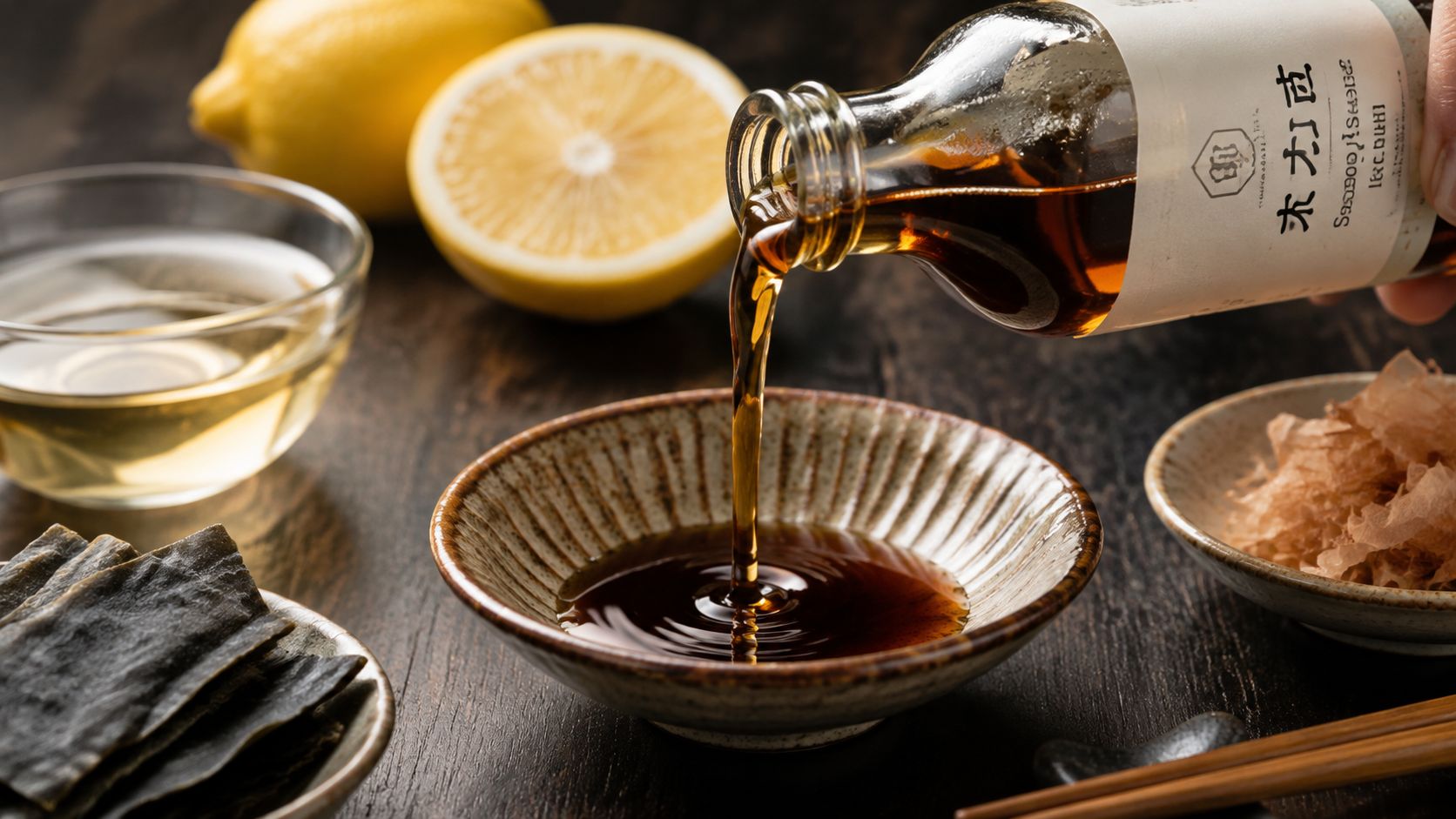
Att stå framför en hylla med soja kan kännas märkligt stressande. Flaskorna ser likadana ut, etiketterna flyter ihop och det är svårt att avgöra vilken som passar bäst för din matlagning. Om du handlar japanska ingredienser från utlandet blir förvirringen ännu större, eftersom smaksatt soja kan betyda flera olika saker beroende på varumärke, rätt och etikett.
Den goda nyheten är att den här kategorin blir lättare att förstå när du vet vad du ska leta efter. Japansk soja har en lång bryggeritradition, med omkring 1 200 bryggerier i Japan som tillverkar regionala varianter från söta till fylliga, och en enda sats kan ta sex månader till tre år att färdigställa (Umami Information Centre). Den traditionen är en del av förklaringen till att smaksatt soja kan användas till så mycket i köket, från enkel dippning till djupare smak i matlagningen.
Din hemliga ingrediens för djupare smak
En förvirrad kund vill ofta ha en enda flaska som får maten att smaka mer komplett utan att behöva lägga till en hel rad andra smaksättningar. Smaksatt soja fyller ofta den rollen. Den börjar med en bas av soja och får sedan andra smaker tillsatta, så att resultatet blir rundare, sötare eller mer smakrikt än vanlig shoyu.

Därför är den så användbar i praktisk matlagning
I det japanska köket betraktas soja som mer än bara en saltkälla. Ur livsmedelsvetenskaplig synvinkel är sojasåsens kvalitet nära kopplad till totalkväve, salthalt och balansen mellan organiska syror, och smaken utvecklas genom fermentering och efterföljande bearbetning (Luh, översikt över livsmedelsvetenskap). Smaksatta varianter behåller denna bas och gör den enklare att använda i vardagsmatlagningen.
En flaska som Kikkoman Shoyu Soy Sauce With Traditional Glass Bottle 150ml kan kännas bekant för hemmakockar, samtidigt som den ger rätterna en fylligare avslutning. Den passar bra i marinader, wokade rätter, sushi och andra rätter där du vill att sojasmaken ska få större djup utan att behöva göra en sås från grunden. Det bidrar också till att förklara varför vissa kockar jämför olika smakalternativ för bowls och nudlar, bland annat i guider som bästa smaken på ramennudlar, eftersom rätt bas för kryddningen kan forma hela måltiden.
Praktisk regel: om du vill ha en renare sojasmak väljer du naturell shoyu. Om du vill att flaskan ska sköta mer av kryddningen åt dig är smaksatt sojasås vanligtvis det bättre köpet.
Det är viktigt för internationella konsumenter, eftersom en krydda som ser enkel ut på butikshyllan fortfarande kan vara en genväg till japansk smak hemma. Det är praktiskt när du vill ha resultat som känns autentiska snarare än improviserade, särskilt om du jämför etiketter och försöker avgöra om en sötare, fylligare eller mer renodlad flaska passar rätten du planerar att laga.
Idén är inte ny. Sojasås nådde Japan under Yamato-kejsarhovets era, och senare utvecklades bryggericentra på platser som Noda i Chiba-prefekturen (Britannica). Smaksatt sojasås ingår i denna långa tradition, även när den moderna flaskan är utformad för bekvämlighet.
Vad gör sojasås smaksatt?
Smaksatt sojasås börjar med sojasås och justeras sedan med sötningsmedel och andra smakämnen. Ett exempel på en sådan sammansättning innehåller fruktos-glukossirap, socker och jästextrakt, vilket ger den färdiga smaken mer sötma och umami än vanlig sojasås (Lee Kum Kee UK).
Se det som ett färdigt smaksystem
En flaska naturell shoyu är som en ensam röst. En smaksatt flaska liknar mer en liten kör. Sötman rundar av saltets skarpa kanter och jästextrakt tillför ett mustigt djup, så att såsen känns fylligare på tungan.
Det är därför den beter sig annorlunda i recept. Om du använder den i en risbowl kan kryddningen fästa och sprida smak snabbt. Om du använder den i en marinad kan den hjälpa rätten att få en rundare smak redan innan den hamnar i pannan. För kockar som föredrar japanska basvaror som kan användas till mer än en sak blir dess fördelar uppenbara.
Vissa konsumenter tycker också om att jämföra en smaksatt sås med en smaksatt latte. Kaffebasen finns fortfarande kvar, men de tillsatta ingredienserna förändrar upplevelsen. Samma sak händer här, fast med shoyu i stället för kaffe.
För hemmakockar som bygger upp ett japanskt skafferi spelar kombinationen med risrätter och såsrätter stor roll. En resurs som mirin till sushiris hjälper till att förklara varför sötma är så viktig i japansk matlagning, eftersom smaksatt sojasås ofta befinner sig i samma smakregister.
Etiketten är viktigare än löftena på framsidan av förpackningen. Ingrediensernas ordningsföljd visar om flaskan är framtagen för sötma, umami eller en mer neutral sojasmak.
När du förstår det slutar du köpa sojasås av gammal vana och börjar köpa den utifrån användningsområde.
Jämförelse av olika typer av sojasås
Olika sojasåser löser olika problem. Vissa tillför sälta, andra färg, och vissa sötma eller en djupare, tillagad smakton. I japansk och bredare asiatisk matlagning är kategorin större än många kunder förväntar sig, och etiketten berättar ofta mer än varumärkets historia.
| Jämförelse av sojasåser | Smakprofil | Färg och konsistens | Bäst för |
|---|---|---|---|
| Smaksatt sojasås | Mustig med tillsatt sötma och extra umami | Vanligtvis fylligare och rundare än vanlig sojasås | Doppning, snabb finish, marinader |
| Standardiserad japansk shoyu | Salt, umamirik och balanserad | Medelbrun, relativt lättflytande | Vardagsmatlagning, allmän kryddning |
| Ljus sojasås | Mildare smak i vissa märkningssystem, men inte alltid lägre natriumhalt | Vanligtvis tunnare och ljusare i färgen | Rätter där du vill ha kryddning utan kraftig färg |
| Tamari | Djupare sojabönssmak, ofta mindre vetebetonad | Mörk och len | Doppning, glutenkänslig matlagning när detta har verifierats på etiketten |
Smaksatt sojasås ingår också i en bredare familj av specialsåser. En praktisk köpguide är användbar eftersom begreppet kan omfatta umamiförstärkta, skaldjursbaserade, söta och vita sojasåser, som alla används till olika rätter och färgmål (Chill Crisp av Xueci).
Så läser du skillnaden på hyllan
Om du lagar en rätt som ska behålla en ljus färg kan en smaksatt sås i vit stil eller en ljusare blandning passa bättre än en djup, mörk flaska. Om du tillagar något som behöver fyllighet och glans kan en fylligare smaksatt variant fungera bättre än en mycket enkel sojasås.
För sashimi är en specialanpassad sås ännu viktigare. Därför kan en fokuserad guide som köpguide till japansk sojasås för sashimi hjälpa kunder att undvika att använda fel flaska till rå fisk. Samma logik gäller för smaksatt sojasås – användningsområdet avgör rätt val.
Det vanligaste misstaget är att anta att alla sojasåser kan ersätta varandra. Så är det inte. En smaksättningssås som är framtagen för sötma och fyllighet påverkar ett recept på ett annat sätt än en ren shoyu-sås, även om båda kommer från samma allmänna japanska tradition.
Så väljer du autentisk japansk smaksatt sojasås
Autentisk japansk smaksatt sojasås är en bred kategori, så det smartaste sättet att köpa är att välja flaska efter maträtten. Börja med att kontrollera om etiketten anger dashi shoyu, ponzu eller en teriyakiliknande bas, eftersom de är framtagna för olika användningsområden i köket.

Läs ingrediensförteckningen innan du köper
Ingredienslistan visar vilken typ av smakprofil du får. Tillsatta sötningsmedel innebär vanligtvis en rundare och mer lättillgänglig sås. Tillsatta extrakt, till exempel smakämnen med skaldjurs- eller svampton, pekar vanligtvis på en mer specialiserad användning. Om etiketten ser komplex ut betyder det ofta att tillverkaren har utformat såsen för ett specifikt matlagningsmål snarare än för allmän användning vid bordet.
För den som vill laga fler japanska rätter hemma kan en resurs som Japanese Home Kitchen recipes ebook vara användbar, eftersom den visar hur skafferivaror som såser passar in i riktiga måltider, inte bara i teorin. Det är viktigare än att jaga efter en enda ”bästa” flaska.
Begreppet omfattar även såser som är utformade för dippsåser, wokning eller för att bevara rättens färg. Därför beror rätt val på receptet, inte bara på varumärket.
Om du handlar på Buy Me Japan tittar du också på produkter som kommer direkt från Japan, vilket är en fördel när du vill ha etiketter och formuleringar som motsvarar japanska matlagningsvanor snarare än generiska internationella varianter. Ett alternativ som passar den här typen av användning är Uchibori Mino Special Seasoned Ponzu Sauce, en specialiserad smaksättare som tillhör familjen kryddade sojasåser och fungerar särskilt bra när en frisk citruston är en del av rätten.
Snabbtips vid köp: välj först utifrån rätten, sedan utifrån ingredienslistan och därefter utifrån färgen.
En bredare köpguide som Japansk mat online i USA kan också hjälpa internationella köpare att avgöra vad som är värt att importera och vad som kan ersättas lokalt. Det sparar pengar och minskar antalet flaskor som blir stående ofärdiga.
Tips för matlagning och förvaring
En flaska kryddad soja fungerar bäst när du använder den med avsikt. I marinader kan den mjuka upp och smaksätta ingredienser väl. I tillagade rätter blir resultatet ofta renare om den tillsätts mot slutet, eftersom långvarig upphettning kan göra smaken skarpare eller alltför koncentrerad (Pearl River Bridge).

Om flaskan är sötare bör du justera resten av rätten med omsorg. Såsen kan redan bidra med sötma, fyllighet och färg, så receptet behöver ofta mindre extra socker eller salt än om du hade använt vanlig soja. Den enkla kontrollen hjälper till att hålla den färdiga rätten balanserad i stället för tung.
Enkla vanor som bevarar smaken
- Tillsätt det mot slutet: sen kryddning hjälper aromen att förbli friskare och smaken att kännas mindre platt.
- Mät noggrant: en kryddad sås kan vara starkare än den verkar, särskilt i små mängder.
- Förvara den kallt efter öppning: kylförvaring hjälper till att bevara arom och smak.
- Använd den inom rätt tidsperiod: öppnad sojasås bör användas inom 3 till 6 månader för bästa kvalitet.
Förvaring är lika viktigt som matlagningen. När syre och upprepnade öppningar kommer in i flaskan börjar smaken gradvis avta, ungefär som när uppskuren frukt förlorar sin fräschör på köksbänken. Om du håller korken ordentligt stängd och flaskan i kylskåpet går förändringen långsammare.
Vissa rätter visar tydligt på skillnaden. I nishime, där ingredienser sjuds försiktigt och absorberar vätska över tid, kan kryddad sojasås bygga upp djup utan att den färdiga smaken blir för salt. En praktisk guide som den här referensen för nishime-recept visar hur balansen fungerar i ett hemmakök.
Förvara flaskan i kylskåpet när den har öppnats och smaka av innan du tillsätter extra salt. Den vanan löser många överkryddade rätter.
Om skafferiet är välfyllt hjälper ett system som att bemästra matförvaring i köket och FIFO dig att rotera smaksättarna så att flaskorna inte hamnar längst bak och glöms bort. Det är viktigt även för kryddad sojasås, eftersom en flaska som används upp smakar mer som den ska.
Förhöj skafferiet med autentisk smak
Kryddad sojasås är inte bara en sötare version av shoyu. Det är en praktisk japansk basvara som är framtagen för specifika ändamål, från snabba smaklyft till rätter som behöver mer djup, bättre färgkontroll eller mild sötma. När du väl har lärt dig att läsa etiketten blir valet mycket enklare.
Det viktigaste är att matcha flaskan med rätten. Det är samma vana som japanska hemmakockar använder, och det är det enklaste sättet att slippa gissa i butikshyllan och börja laga mat med självförtroende. När dina smaksättare kommer från Japan kommer du också närmare den smaklogik som formade dem från början.
Om du vill få bättre ordning i skafferiet kan du organisera såserna, använda dem i rotation och välja den flaska som passar din faktiska matlagningsstil. Det är ett enkelt sätt att få mer värde av varje köp och göra varje måltid mer genomtänkt i smaken.
Buy Me Japan väljer ut autentiska japanska livsmedelsprodukter som skickas direkt från Japan, så att du kan välja kryddad sojasås och andra basvaror med större trygghet. Om du är redo att skapa ett bättre japanskt kök hemma kan du besöka Buy Me Japan och utforska flaskor, smaksättare och importerade basvaror som passar ditt sätt att laga mat.



Dela:
Sugi-bihonung: En komplett guide till denna japanska favorit
Sängkläder med retromönster: Guide till att välja och styla vintage-sängkläder